Reviewed · ROME TOURS
Rome: La Traviata at St. Paul’s Within the Walls
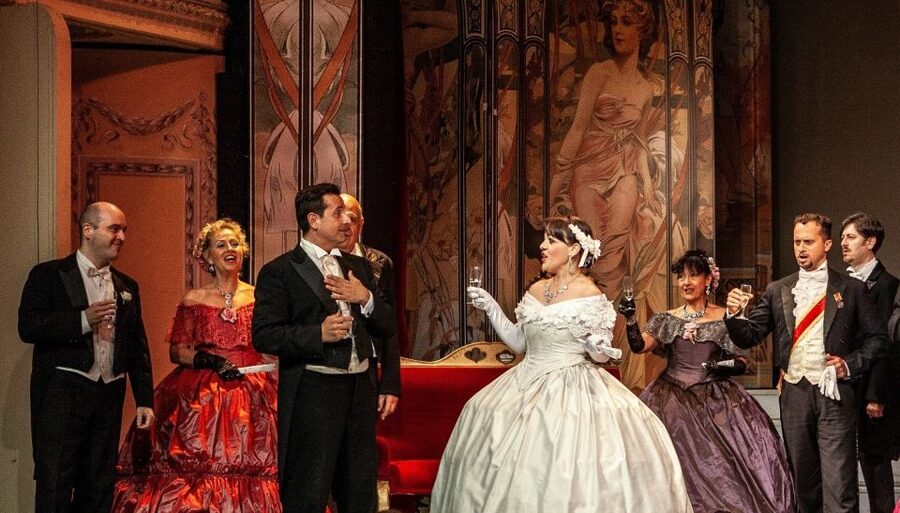
Rome does opera differently here. At St. Paul’s Within the Walls, La Traviata trades the grand theater for a beautiful church, where professional singers and the Orchestra I Virtuosi dell’opera di Roma perform Verdi’s tragic love story. I especially like the intimate setting and the chance to hear a full opera with costumes and scenery for about $47. The main catch is practical: the seats are on a flat floor, so sightlines can be poor from the back.
I also like the strong musical quality, with singers trained in the Italian lyrical tradition and an orchestra formed by professors from leading Italian conservatories. You should know that the church acoustics can sometimes make the orchestra overpower the voices, and the wooden seating may feel hard during the 130-minute performance.
In This Review
- Key points to know before booking
- Why La Traviata works so well in Rome
- St. Paul’s Within the Walls changes the mood
- What the 130-minute performance feels like
- Seating is the decision that matters most
- The orchestra and singers provide the real value
- The church setting is intimate, but not a full opera house
- Practical comfort and evening planning
- Who will enjoy this opera most
- Is La Traviata at St. Paul’s Within the Walls worth $47?
- FAQ
- Where does La Traviata take place?
- How long is the opera experience?
- What opera is performed?
- Is La Traviata performed in full?
- What language is used?
- Are food and drinks included?
- Is the venue wheelchair accessible?
- Are pets allowed?
- Can I cancel my booking?
Key points to know before booking
- Verdi’s best-known opera: La Traviata follows the doomed love between Violetta and Alfredo in three acts.
- A church instead of a theater: St. Paul’s Within the Walls provides striking architecture, unusual acoustics, and a close-up atmosphere.
- Front seats matter: The floor is not sloped, so paying more for VIP or front-row seating can make a real difference.
- Professional Italian musicians: The orchestra specializes in opera and the Italian lyrical tradition.
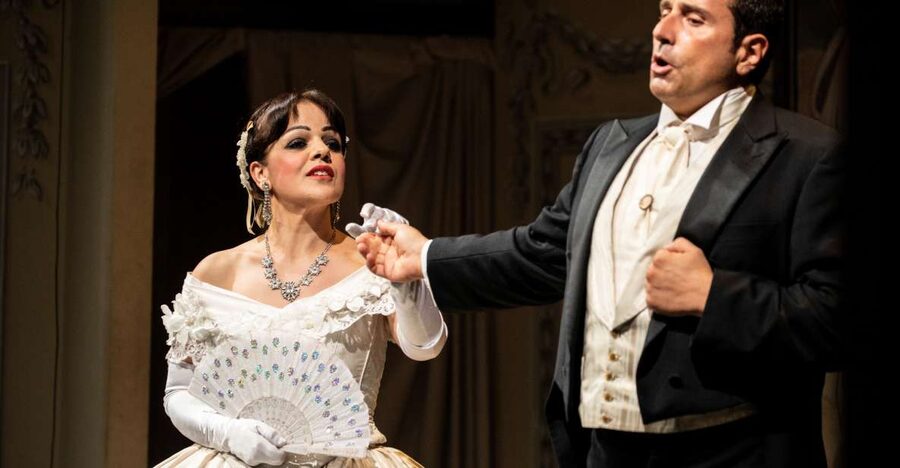
- A good first opera: Even without Italian, the emotional story, acting, costumes, and music are easy to follow.
- Plan for a full evening: Food and drinks are not included, and there is no standard theater-style comfort.
Why La Traviata works so well in Rome
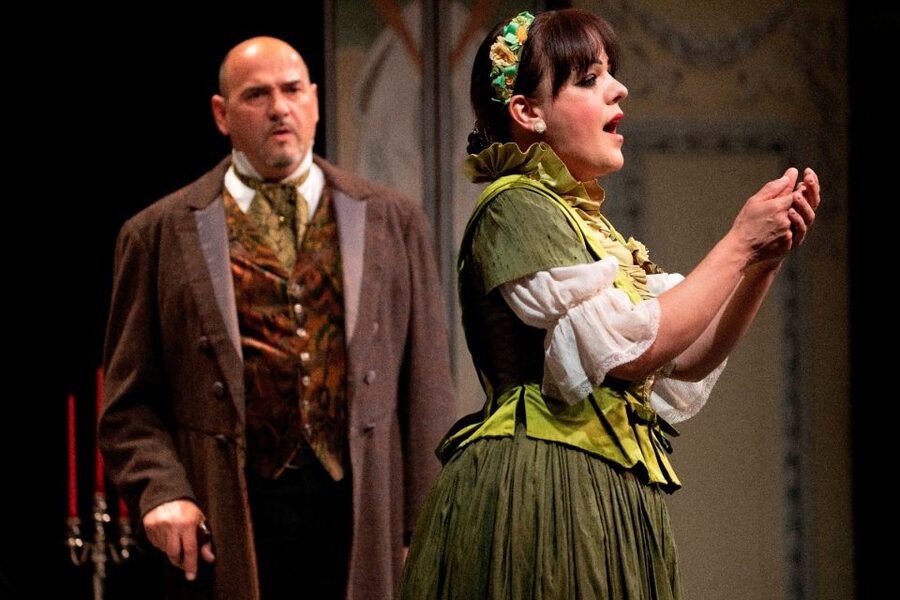
If you have never attended an opera, La Traviata is one of the easiest places to begin. Giuseppe Verdi’s music is instantly expressive, and the plot has a clear emotional path: love, sacrifice, social pressure, illness, and loss.
The opera takes place in Paris during the mid-1800s. Violetta is a famous courtesan whose life changes when she meets Alfredo, a young nobleman. Their relationship is sincere, but society, family expectations, and Violetta’s failing health push the story toward tragedy.
You do not need to understand Italian to follow the basic plot. The acting, costumes, music, and familiar dramatic structure carry the story. One first-time opera attendee found the performance understandable despite not speaking the language, which is a useful reminder that opera is often felt before it is translated.
The performance is presented in three acts, with scenes and costumes rather than a bare concert version. That matters. You are not simply listening to arias in a church. You are watching a staged story, with singers acting as well as singing.
A few more Rome bookings to compare
- Vatican: Museums & Sistine Chapel Entrance Ticket
★ 4.5 · 144,003 reviews - Vatican Museums & Sistine Chapel Tour with Optional Basilica
★ 4.3 · 67,413 reviews - Colosseum, Roman Forum & Palatine Guided Tour
★ 4.7 · 63,148 reviews
St. Paul’s Within the Walls changes the mood
The venue is one of the most appealing parts of the evening. St. Paul’s Within the Walls is a historic church in central Rome, and its architecture gives the opera a solemn, almost dreamlike frame.
An opera house tells you how to watch. The stage is raised, the seats are arranged in rows, and the lighting directs your eyes. In this church, the experience is less formal and more intimate. The performers feel close, and the building becomes part of the production.
The acoustics are a major strength. Many performances are praised for powerful sound and clear musical impact, and the church’s reverberation can make the voices feel unusually large. The setting adds emotional weight to the quieter scenes and gives the ensemble a distinctive character.
There is a tradeoff. Church acoustics can blur fast passages or make the orchestra sound stronger than the singers. A few parts of the performance may not have the crisp separation you would expect in a purpose-built opera house. If perfect sound balance is your top priority, Rome’s major theaters may suit you better. If you want atmosphere and a memorable setting, the church is a fair exchange.
What the 130-minute performance feels like
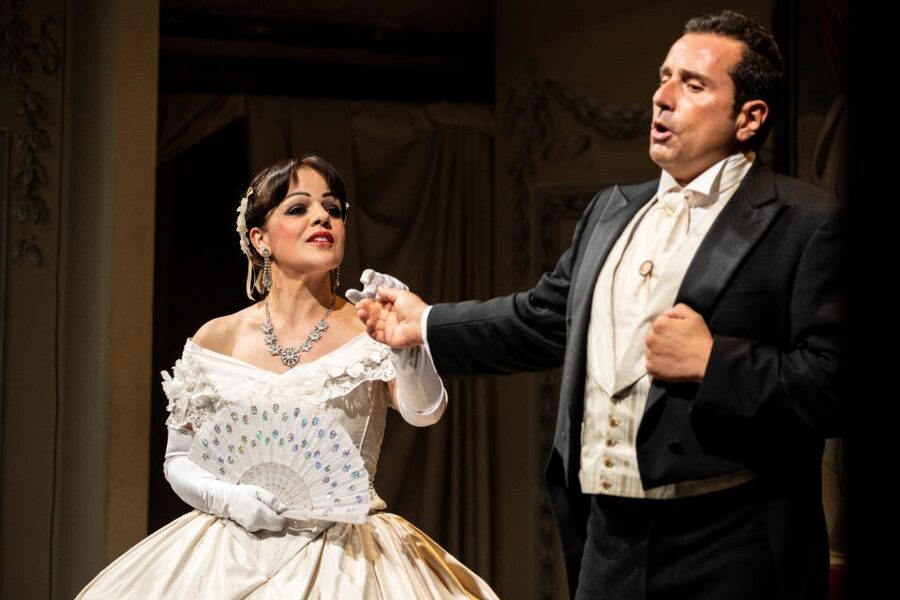
The advertised duration is 130 minutes, so plan to remain in your seat for roughly two hours. The performance has the shape of a complete opera, not a short selection of famous songs.
The first act introduces Violetta’s social world and her meeting with Alfredo. This section is lively and melodic, with the famous drinking song, Brindisi, providing one of the best-known moments in the opera. The small orchestra and close seating can make this opening feel direct and personal.
The second act shifts toward the central conflict. Alfredo and Violetta try to build a life together, but their happiness is threatened by family honor and social judgment. Here, the acting becomes just as important as the singing. You will want to watch the faces and gestures, not only listen to the music.
The final act becomes darker and more intimate. Violetta’s illness and emotional isolation take over, and the opera reaches its tragic end. The church setting can work especially well here, giving the closing scenes a serious, reflective tone.
The pacing may feel long if you are new to opera. Some people enjoy the pauses and changes between acts, while others find the breaks excessive. The warm church interior and hard wooden seats can also become tiring, especially after a full day walking around Rome.
Seating is the decision that matters most
The seating arrangement is the biggest practical weakness, and you should take it seriously before buying the cheapest category. The church floor is flat rather than tiered, so people seated behind taller audience members may struggle to see the singers.
This is not just a minor annoyance. Opera depends on expression and movement, and seeing the performers helps you follow the story. From the rear, you might catch every note but miss important acting. Even some people in front seats have found that the piano or the angle from a far side position blocked part of the view.
VIP and front-row seats are worth considering, particularly if this is your first opera or you care about watching the singers closely. Several people found the extra cost worthwhile, and the difference is more than simple prestige. A closer position lets you see the performers’ faces and the interaction between the singers and musicians.
Arriving early is also sensible. You must exchange your voucher at the St. Paul’s Within the Walls ticket counter before the performance begins, and getting there early gives you a better chance of settling into your assigned seating area without a rushed start.
You should not expect plush theater chairs. The wooden benches and cushions have drawn complaints, especially during a two-hour performance. If comfort is important, choose a better seating category when possible and avoid treating this like a casual standing concert.
Still Rome, but a slower afternoon:
- Vatican Museums, Sistine Chapel & St Peter’s Basilica Guided Tour
★ 4.5 · 39,149 reviews - Rome: Colosseum, Palatine Hill and Roman Forum Guided Tour
★ 4.8 · 32,814 reviews - Rome: Guided Tour of Colosseum, Roman Forum & Palatine Hill
★ 4.7 · 27,897 reviews - Rome: Colosseum & Forum with Audio Guide App -Optional Arena
★ 4.2 · 24,770 reviews
The orchestra and singers provide the real value
The orchestra is formed by professors from some of Italy’s most prestigious conservatories. The ensemble, I Virtuosi dell’opera di Roma, specializes in the full opera repertoire, with particular attention to Italian lyrical works.
That background helps explain why the performance offers good value at about $47 per person. You are paying for live musicians, trained singers, costumes, staging, and a central Roman venue. It is not the same production scale as a major opera house, but it is much more than a music recording or a shortened tourist recital.
The vocal quality is the strongest part of the show. The cast is expected to project without microphones, and the church gives the voices a full, ringing sound. The dramatic delivery is also important. Violetta and Alfredo are not merely standing in place to sing famous arias, and the emotional changes help keep the story accessible.
The orchestra balance is not perfect every night. In some passages, the instruments can cover the tenor or other singers. The reverberation adds beauty but can soften the edges of the sound. For most people, this is a small flaw in an otherwise strong musical experience, but serious opera listeners may notice it more.
The church setting is intimate, but not a full opera house
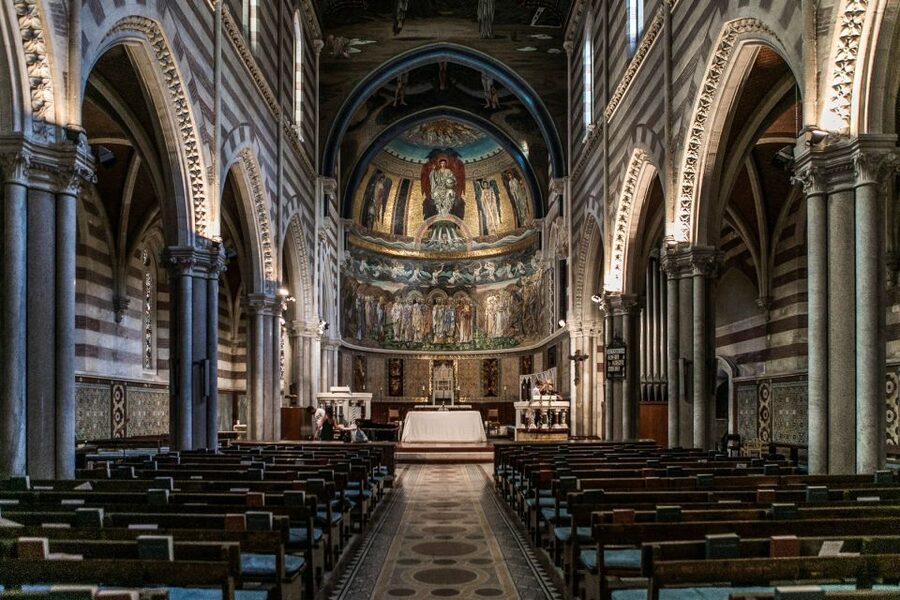
I would describe this as a good opera performance in an unusual Roman setting, not a substitute for a major theater production. That distinction helps set the right expectations.
There is less visual grandeur than you might find in a traditional opera house. The church makes scenery harder to imagine, and the flat seating can prevent the production from feeling fully theatrical. Some scenes rely more on your imagination than on elaborate sets.
On the other hand, the smaller setting brings you closer to the performers. The singers’ voices seem immediate, and the building’s architecture adds character that a standard theater may not provide. The intimacy can feel more personal, particularly during Violetta’s quieter scenes.
The production also includes audience interaction at times. The encore of Brindisi has invited the audience to join in, giving the evening a cheerful release after the opera’s tragic ending. That moment may not be part of every performance in exactly the same way, but it shows the less formal spirit of the venue.
Practical comfort and evening planning
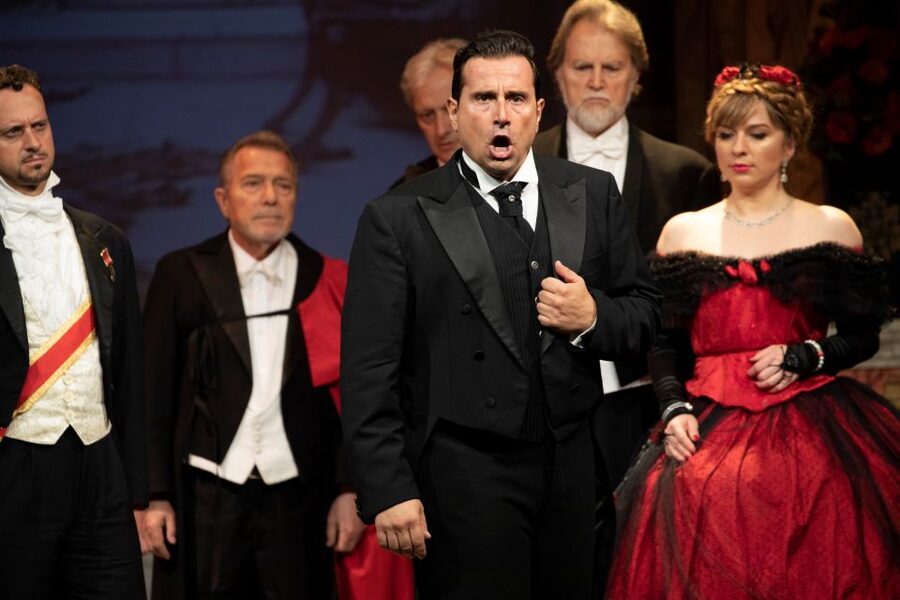
Food and drinks are not included. You should eat beforehand or make a plan for afterward, especially since the performance lasts 130 minutes. One person noted that drinks were not available inside, although bringing your own drink was possible in that instance. Since arrangements can vary, do not count on refreshments at the venue.
The experience is wheelchair accessible, which is useful information when planning a Rome evening. Pets are not allowed.
The host or greeter speaks Italian, and the listed language for the activity is Italian. If you need extensive explanations in another language, you should not assume that interpretation will be available. Still, the opera itself can be followed through the music, acting, costumes, and familiar story.
The cancellation policy is friendly: you can cancel up to 24 hours in advance for a full refund. You can also reserve now and pay later, which helps if you are organizing several Rome activities and want to keep your schedule flexible.
Who will enjoy this opera most
I would recommend this experience to several kinds of visitors:
- First-time opera attendees: La Traviata has a clear story and famous music, while the church setting feels less intimidating than a formal opera house.
- Rome visitors seeking an evening activity: It gives you a cultural night out without committing to the cost of a major theater production.
- Music lovers: The live orchestra and classically trained singers provide the main reason to book.
- Couples and families with older children: The setting is memorable, and the emotional story gives you plenty to discuss afterward.
- People who value atmosphere: The architecture and acoustics are central to the experience.
I would be more cautious if you need excellent sightlines, soft seats, precise sound balance, or a large-scale theatrical production. The performance can still be enjoyable, but you should pay attention to the seating category and accept the church’s limitations.
Is La Traviata at St. Paul’s Within the Walls worth $47?
For most visitors, yes. At roughly $47, you receive a complete performance of one of Verdi’s most famous operas, live musicians, professional singers, costumes, scenery, and an atmospheric central Rome venue.
The value is strongest when you treat it as a cultural experience rather than a perfect theater production. You may not get ideal views from the rear, and the seating is not luxurious. The church acoustics can also blur the sound or let the orchestra overpower the singers in places.
My best advice is simple: pay extra for front or VIP seating if your budget allows, arrive early to exchange your voucher, and do not schedule a demanding activity immediately afterward. If you want to try opera without spending a fortune, this is an approachable and memorable choice. If you already know opera well and demand polished theater acoustics and tiered views, choose with more care.
FAQ
Where does La Traviata take place?
The performance takes place at St. Paul’s Within the Walls in central Rome, in the Lazio region of Italy.
How long is the opera experience?
The stated duration is 130 minutes, or about two hours and ten minutes.
What opera is performed?
The performance is La Traviata by Giuseppe Verdi, with a libretto by Francesco Maria Piave.
Is La Traviata performed in full?
The production is presented as a complete version in three acts, with costumes and scenes.
What language is used?
The activity language is Italian, and the host or greeter is Italian-speaking.
Are food and drinks included?
No. Food and drinks are not included in the entrance ticket.
Is the venue wheelchair accessible?
Yes, the activity is listed as wheelchair accessible.
Are pets allowed?
No. Pets are not allowed.
Can I cancel my booking?
Yes. You can cancel up to 24 hours in advance for a full refund. You can also reserve now and pay later.
Recently added around Rome
- Palatine Hill and Roman Forum Tour with Fast-Track Entrance★ 4.2 · 417 reviews
- Tivoli: Villa D’Este & Villa Adriana Pass & App Audioguide★ 4.4 · 364 reviews
- From Rome: Villa D’Este & Villa Adriana Day Trip with Lunch★ 4.4 · 289 reviews
- Vatican Museums & Sistine Chapel Skip-the-Line Guided Tour★ 4.6 · 254 reviews
- Rome: The Three Tenors at St. Paul’s Church Concert Ticket★ 4.7 · 699 reviews
- Tivoli: Villa D’Este Entry Ticket and App Audio Guide★ 4.3 · 191 reviews
- Rome: Capitoline Museums and Centrale Montemartini Tickets★ 4.4 · 328 reviews
- Rome: St. Peter’s Basilica and Papal Tombs Guided Tour★ 4.6 · 477 reviews
Rome Tours, compared.
Vatican Museums & Sistine Chapel Tour with Optional Basilica
Read our review →
Colosseum, Roman Forum & Palatine Guided Tour
Read our review →
Vatican Museums, Sistine Chapel & St Peter’s Basilica Guided Tour
Read our review →
Colosseum, Palatine Hill and Roman Forum Guided Tour
Read our review →
Guided Tour of Colosseum, Roman Forum & Palatine Hill
Read our review →
Colosseum & Forum with Audio Guide App -Optional Arena
Read our review →