
Reviewed · WINE TOURS
Rome: Jewish Ghetto & Campo de Fiori by Night Food Wine Tour
Rome tastes better after sunset. This four-hour walking tour links the Jewish Ghetto, Campo de’ Fiori, and Piazza Navona with seven food and drink stops, giving you a generous dinner while the city cools and its grand squares light up. I like the mix of Roman history and local eating, especially the chance to hear about recipes passed through generations. I also like the small groups, capped at 14 people. The main drawback is dietary: vegetarian options are available, but vegan, gluten-free, dairy-free, and kosher diets are not accommodated.
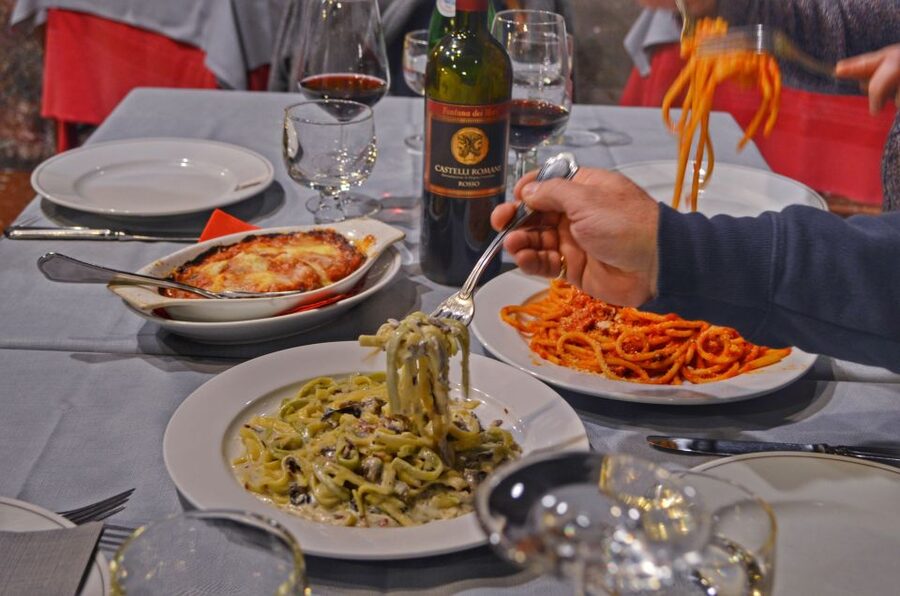
You should arrive hungry. The tastings can add up to 15 samples, including pasta, pastries, fried artichokes, Jewish-Roman specialties, tiramisu, gelato, espresso, wine, beer, and soft drinks. I especially like the progressive-dinner format: you walk between courses, pause for fountains and ruins, then sit down for more substantial food. Guides such as Marco, Fabrizia, Maria, Andrea, and Julia have been praised for making the evening both lively and informative, though the exact guide and food stops can vary.
In This Review
- Key points at a glance
- Starting beneath the Turtle Fountain in Piazza Mattei
- Jewish Ghetto tastings with a local connection
- Pompey Theatre and the story of Julius Caesar
- Piazza Navona and Bernini’s Four Rivers Fountain
- Campo de’ Fiori after the market crowds fade
- The meal grows from snacks into a full dinner
- Guides make the difference
- Who should book this Rome food tour?
- My final take: a strong first-night choice
- FAQ
- Where does the Rome food tour begin?
- How long does the tour last?
- How many food stops are included?
- How much food will I taste?
- Are drinks included?
- Can vegetarians join the tour?
- Is this a kosher food tour?
Key points at a glance
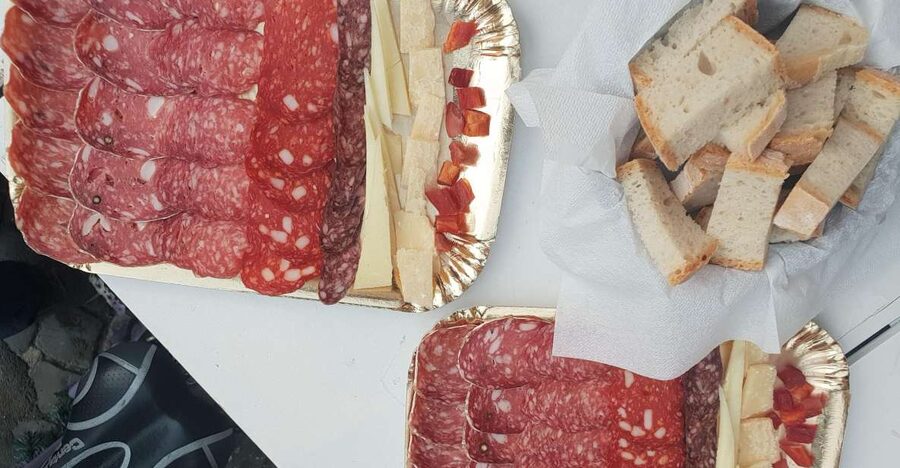
- Seven food stops: Expect a full evening of tastings at restaurants, delicatessens, and other local food spots, with enough food to replace dinner.
- Jewish-Roman cooking: Learn about the Jewish Ghetto while trying traditional foods from this distinctive corner of Rome.
- Rome after dark: See Piazza Navona, Campo de’ Fiori, the Theatre of Marcellus, and other historic places with fewer daytime crowds.
- Small-group feel: Groups are limited to 14 people, which makes it easier to ask questions and share the meal.
- Wine with the meal: Wine, beer, and soft drinks are included, so you are not paying separately at each tasting.
- Come prepared to walk: Transportation is not included, tours operate rain or shine, and the route is not suitable for wheelchair users.
Starting beneath the Turtle Fountain in Piazza Mattei
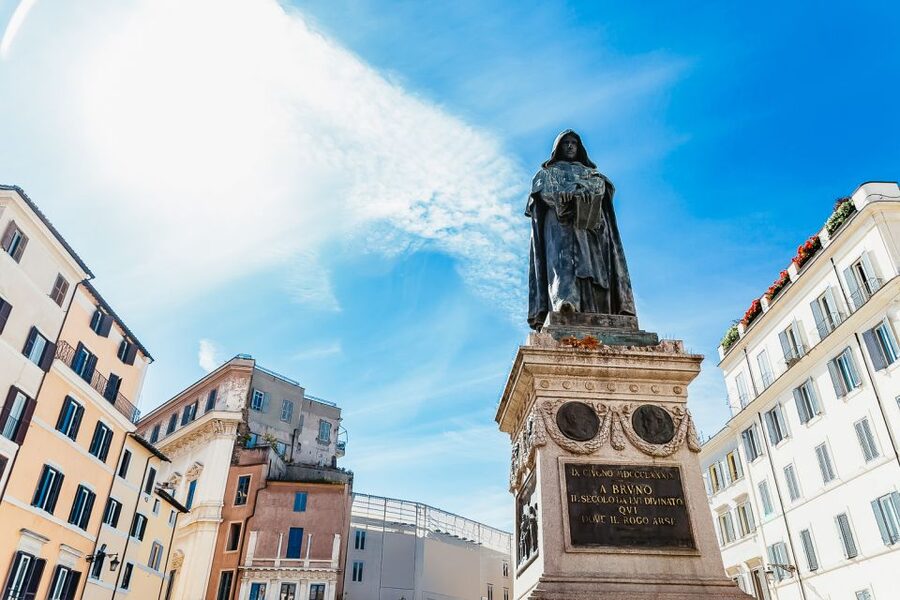
The tour begins at Piazza Mattei, beside the Turtle Fountain in the Jewish Ghetto. This is a pleasant meeting point because the square is compact, easy to recognize, and removed from the traffic of Rome’s larger avenues.
From here, your guide sets the tone for the night. The best part of this tour is not simply eating one dish after another. You also learn how Rome’s neighborhoods, religious communities, markets, restaurants, and old buildings fit together.
The Jewish Ghetto is one of the most meaningful parts of the route. You hear about the long-established Jewish community and the area’s place in Roman life. Food gives the story a practical shape. Instead of treating the neighborhood as a collection of monuments, the tour connects it with dishes and cooking traditions that remain part of local identity.
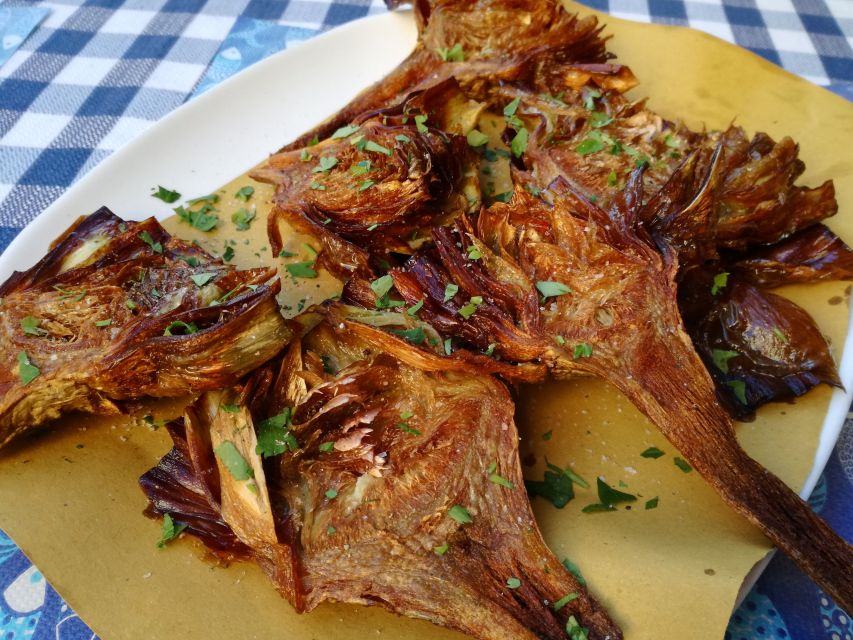
This is also where you may encounter Jewish-Roman specialties such as fried artichokes and other small plates. The exact menu is not fixed in the information provided, but past tour meals have included Jewish appetizers, pasta, and desserts. You should not confuse this with a kosher food tour. The experience explores Jewish food and history, but it does not promise kosher dining.
More Food Tours in Rome
- Rome: Tuscany & Montepulciano Day Trip with Lunch & Wine Tasting
★ 4.5 · 5,232 reviews - Winner 2025 Rome Twilight Trastevere Food Tour by Eating Europe
★ 5.0 · 5,157 reviews - Rome: Trastevere or Jewish Quarter Street Food Tour
★ 4.8 · 3,839 reviews
Jewish Ghetto tastings with a local connection
The food stops are spread through the walk, so the evening never feels like four hours at one restaurant. You may begin with smaller bites, then move through several courses before reaching the larger sit-down portion of the meal.
That pacing matters. A food tour can become tiring when it is just a long list of samples. Here, the walking breaks give you time to talk, look around, and make room for the next taste. Several people found the portions much larger than expected, and the repeated advice is simple: do not eat a big dinner beforehand.
The venues include restaurants, delicatessens, and food businesses used by local residents. You meet producers, innkeepers, and food artisans who take pride in what they serve. That personal contact gives the meal more meaning than a standard restaurant reservation, since your guide explains why a dish matters and how it fits Roman cooking.
Expect a broad range of food rather than one narrow specialty. Past menus have included homemade pasta, fresh vegetables, pizza, pastries, fried artichokes, tiramisu, gelato, and espresso. The tour also includes wine, beer, and soft drinks. Up to 15 samples are advertised, although the precise number and selection can change.
Pompey Theatre and the story of Julius Caesar
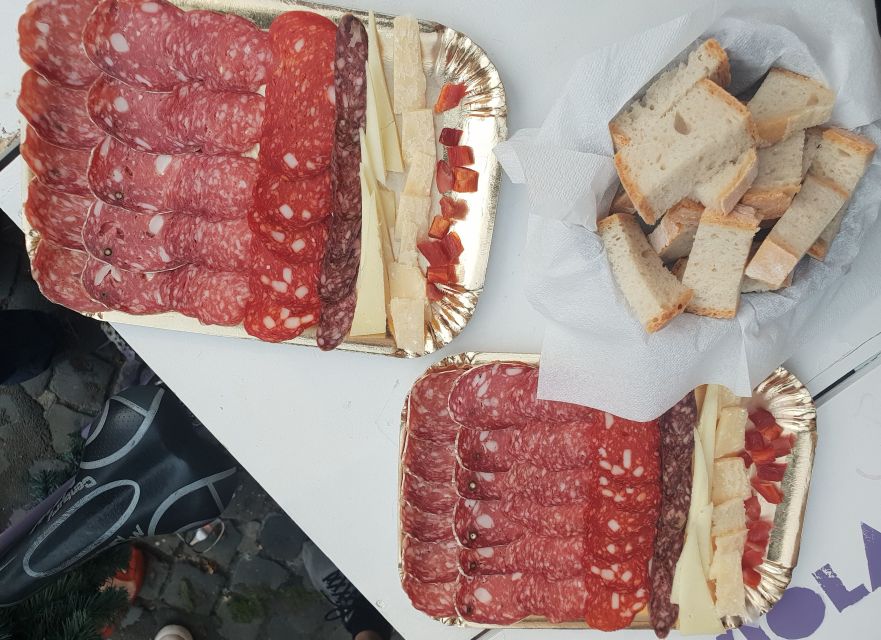
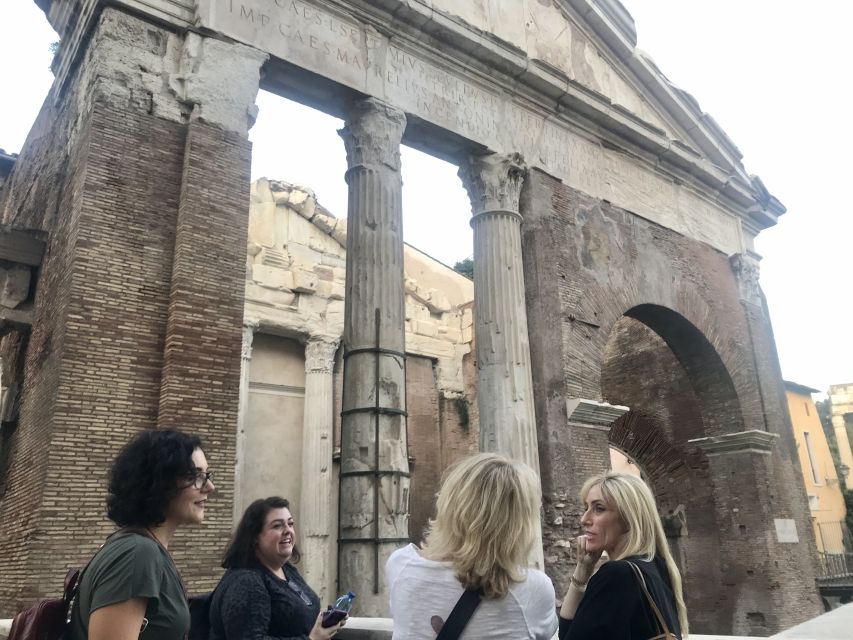
Between food stops, the route passes sites tied to ancient and medieval Rome. One important stop is Pompey Theatre, associated with the death of Julius Caesar.
You will not be sitting through a formal lecture. Instead, the guide folds the story into the walk, pointing out what survives and helping you picture the area in earlier centuries. This is one reason the tour works well for a first evening in Rome. You get historical orientation without spending the entire night indoors or in a museum.
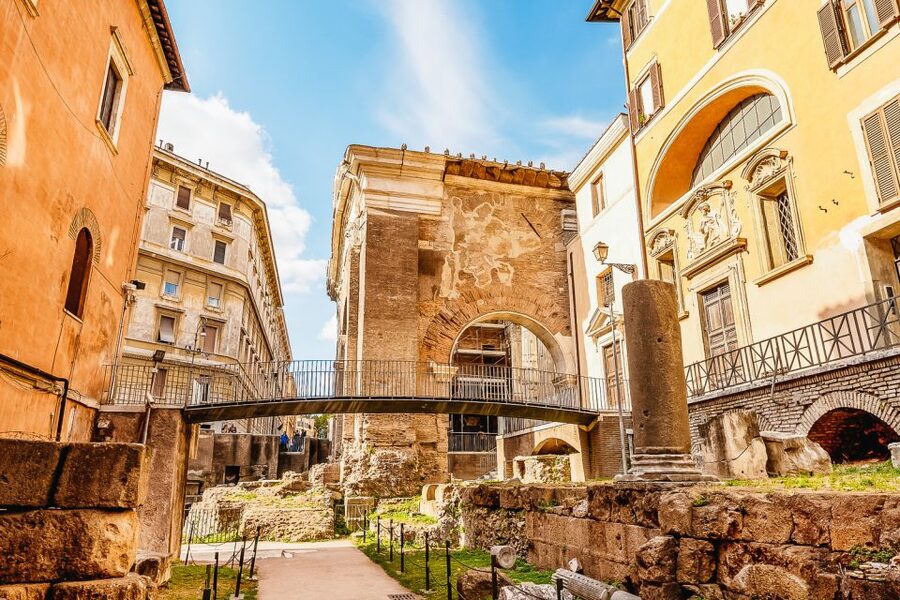
The route also passes the Theatre of Marcellus, the Temple of Apollo, and the Portico of Octavia. These remains are easy to overlook when you are focused on restaurants and busy streets. A good guide helps you notice them, explains their significance, and keeps the pace moving so the history does not interrupt the meal.
The evening setting adds something special. Rome’s old stone, fountains, and statues look different under streetlights than they do in the afternoon. You still need to pay attention to the pavement and your surroundings, but the cooler hours can make a long walk more comfortable, particularly in warmer months.
Piazza Navona and Bernini’s Four Rivers Fountain
Piazza Navona is one of the route’s major visual moments. The square occupies the site of the Stadium of Domitian and later became a city market. Its long shape, grand buildings, fountains, and statues make it one of the clearest examples of Rome’s baroque style.
The focal point is Bernini’s Fountain of the Four Rivers. Your guide gives you context for the fountain and the square, then lets you take in the scene while the tour continues. This is not a dedicated art tour, so you should not expect a long technical discussion of Bernini. The benefit is the combination of a famous landmark, a short historical explanation, and the next taste nearby.
Piazza Navona can be busy, even at night. The group size helps here. With no more than 14 people, it is easier for the guide to keep everyone together and easier for you to hear the explanation. Still, this is a walking tour through public streets, not a private visit. You will share the square with other people.
More Wine Tastings in Rome
- Rome Food Tour: Unlimited Tastings with Fine Wine & Barolo
★ 5.0 · 3,365 reviews - Rome: Food Tour with Unlimited Food and Barolo Wine
★ 4.8 · 1,883 reviews - Rome: E-Bike Night Tour with Food and Wine Tasting
★ 4.9 · 1,131 reviews - Rome: Trastevere Guided Food and Wine Tour with 20+ Tastings
★ 4.9 · 1,022 reviews
Campo de’ Fiori after the market crowds fade
Campo de’ Fiori is another key stop. The square occupies the site of a medieval market and remains one of Rome’s best-known public gathering places.
By evening, the mood differs from the daytime market hours. Restaurants and bars take over much of the activity, and the square becomes a useful place to observe how Rome shifts from market city to dinner city. The tour uses the area as both a food setting and a history lesson.
This part of the walk is especially useful if you plan to return to Campo de’ Fiori on your own. You learn where the square sits within the wider center of Rome and gain a better sense of the surrounding streets. Several tour participants returned to favorite stops later in their trip, which is one of the practical benefits of an evening food route. You are not only fed for one night. You also collect ideas for later meals.
The tour also includes lesser-known sights and local stories that may not appear in a standard guidebook. One past route included a hidden Virgin Mary mural, a small detail that shows how much of Rome is found away from its headline monuments.
The meal grows from snacks into a full dinner
The tour is best understood as a progressive dinner. Early tastings are usually separated by walking and short talks. Later, you reach sit-down courses with a greater variety of pasta and other Roman food.
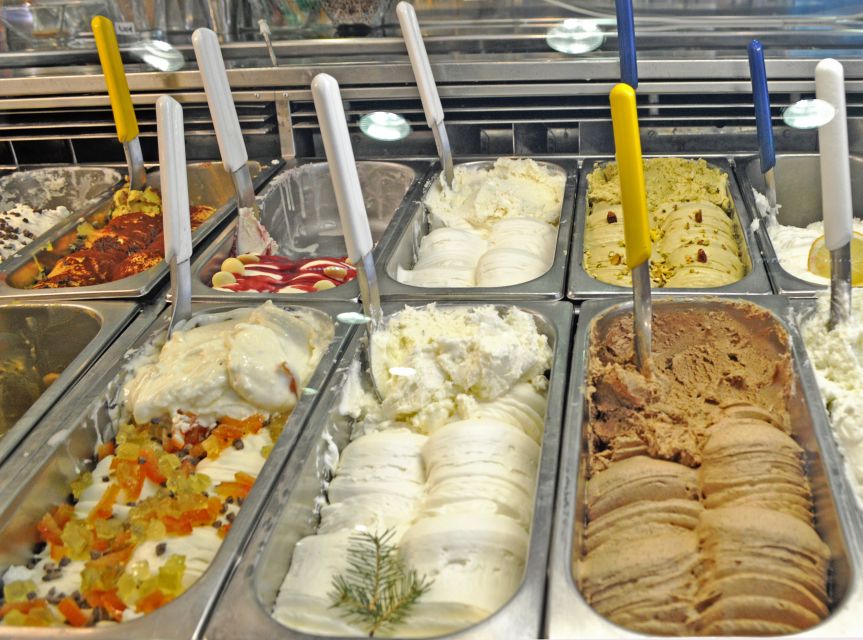
That structure solves a common food-tour problem. You can sample many dishes without being stuck at one table for the entire evening, but you still get a proper meal before dessert. The final stretch may include tiramisu, gelato, espresso, or pastries, depending on the stops arranged for your group.
You should treat the $105 price as the cost of both dinner and a guided Roman history walk. Seven venues, up to 15 samples, alcoholic drinks, and four hours of guiding can make that a fair value, especially if you would otherwise pay for several small meals and drinks during the evening.
The value is strongest for people who want variety. If you already know exactly which Roman restaurant you want to visit, a regular dinner may suit you better. If you want to taste many classic foods and avoid guessing where to go, the tour takes care of the selection and timing.
The food is plentiful enough that several people described being completely full by the end. This is good news for anyone worried about paying for a food tour and still needing dinner afterward. It also means you should pace yourself. A small breakfast or light lunch is wiser than arriving after a heavy meal.
Guides make the difference
The guide is central to the experience. The most praised guides have been Marco, Fabrizia, Fabrizio, Maria, Andrea, Julia, Mattia, Isabel, Georgia, and Greta. Names and assignments can change, but the pattern is clear: the tour depends on a guide who can link food, architecture, Jewish history, and Roman life without turning the evening into a school lesson.
Marco has been praised for his warmth, humor, and ability to answer unusual questions. Fabrizia and Fabrizio received strong praise for their explanations of the Jewish Ghetto and Rome’s wider past. Maria has been appreciated for maintaining a steady pace without rushing people. Julia was noted for excellent English and smooth movement between stops.
The guides also seem to handle practical problems sensibly. One group was delayed by street closures during a bike race and was able to join at a later stop after staying in contact with the guide. On another occasion, heavy rain did not end the tour. The guide continued beneath bridges and umbrellas, sharing stories as the group moved on.
That said, the tour operates rain or shine. Do not book it assuming bad weather will cancel the route. Bring suitable clothing and comfortable walking shoes. The evening includes several hours on foot, and Rome’s historic center is not designed around smooth, accessible paths.
Who should book this Rome food tour?
I would recommend it to first-time visitors who want a strong introduction to central Rome. You see famous places, but the route also gives you smaller details and neighborhood context that are easy to miss when you move only between major monuments.
It suits couples, families with older children, and solo visitors who enjoy eating with a small group. Teenagers have also enjoyed the combination of food, movement, and stories. The group format encourages conversation, so it can be a pleasant way to meet people without committing to a formal group dinner.
Food-focused visitors will get the most from it, but you do not need expert knowledge of Roman cuisine. The guide explains what you are eating and why it matters. You can ask questions about recipes, ingredients, and local habits as you go.
I would be cautious if you have strict dietary restrictions. Vegetarian options are available, but vegan, gluten-free, and dairy-free diets cannot be accommodated. Anyone seeking a fully kosher meal should choose a different experience.
The tour is also not suitable for wheelchair users. Transportation is not included, so you need to reach Piazza Mattei independently and make your own way after the final stop. Check the starting time when booking, since the exact schedule varies by date.
My final take: a strong first-night choice
This is one of the better ways to spend your first evening in Rome if you want food and orientation in one outing. You visit the Jewish Ghetto, Campo de’ Fiori, Piazza Navona, and important ancient remains while working through a generous sequence of Roman dishes.
I like that the experience does not treat food as an afterthought. The meal is substantial, the drinks are included, and the seven-stop format gives you a useful range of tastes. I also like the historical content, especially the attention given to the Jewish Ghetto and the smaller sights along the route.
Book it if you want a social evening, a full dinner, and a guide to help you make sense of Rome’s center. Skip it if you need strict allergen control, want a quiet private meal, or cannot manage several hours of walking. For most visitors who arrive hungry and wear good shoes, the $105 cost is reasonable for the amount of food, drink, and local context packed into four hours.
FAQ
Where does the Rome food tour begin?
Meet your guide at Piazza Mattei, by the Turtle Fountain in the Jewish Ghetto.
How long does the tour last?
The walking food and wine tour lasts four hours.
How many food stops are included?
The route visits seven different tasting venues, including restaurants, delicatessens, and other food-related locations.
How much food will I taste?
The tour includes several food tastings, with up to 15 samples. Past tastings have included pasta, pastries, fried artichokes, Jewish appetizers, tiramisu, gelato, and espresso.
Are drinks included?
Yes. Wine, beer, and soft drinks are included.
Can vegetarians join the tour?
Yes. Vegetarian options are available. The tour does not accommodate vegan, gluten-free, or dairy-free diets.
Is this a kosher food tour?
No. The tour explores the Jewish Ghetto and includes Jewish-Roman food, but it is not a kosher food tour.
Recently added around Rome
- Palatine Hill and Roman Forum Tour with Fast-Track Entrance★ 4.2 · 417 reviews
- Tivoli: Villa D’Este & Villa Adriana Pass & App Audioguide★ 4.4 · 364 reviews
- From Rome: Villa D’Este & Villa Adriana Day Trip with Lunch★ 4.4 · 289 reviews
- Vatican Museums & Sistine Chapel Skip-the-Line Guided Tour★ 4.6 · 254 reviews
- Rome: The Three Tenors at St. Paul’s Church Concert Ticket★ 4.7 · 699 reviews
- Tivoli: Villa D’Este Entry Ticket and App Audio Guide★ 4.3 · 191 reviews
- Rome: Capitoline Museums and Centrale Montemartini Tickets★ 4.4 · 328 reviews
- Rome: St. Peter’s Basilica and Papal Tombs Guided Tour★ 4.6 · 477 reviews
Wine Tours, compared.
Tuscany Day Trip from Florence: Siena, San Gimignano, Pisa and Lunch at a Winery
Read our review →
Pisa, Siena, San Gimignano, and Chianti Experience
Read our review →
Small-Group Wine Tasting Experience in the Tuscan Countryside
Read our review →
Tuscany & Montepulciano Day Trip with Lunch & Wine Tasting
Read our review →
SMALL-GROUP Wine Safaris: Tuscan Wine Tasting Tours from Florence
Read our review →
Winner 2025 Florence Sunset Food & Wine Tour by Eating Europe
Read our review →
Siena, San Gimignano, Pisa & Lunch at Winery
Read our review →Browse the lists this tour appears in