Reviewed · ROME TOURS
Rome: Jewish Ghetto and Trastevere Tour
Rome rewards anyone willing to walk beyond the big sights. This 2.5-hour tour links the Jewish Ghetto and Trastevere, two neighborhoods that reveal a less polished, more human side of the city. I like the route for two reasons: it connects ancient ruins with living communities, and it uses stories rather than a rush of dates to explain what you are seeing.
The tour also includes Tiber Island, the Theatre of Marcellus, Portico d’Ottavia, Piazza Mattei, Santa Maria in Trastevere, and Piazza Trilussa. That is a lot of ground for $35, especially with a guide who can make Rome’s long past understandable. The main consideration is that the synagogue is seen only from outside, and the Jewish focus is balanced with broader Roman history.
Guides such as Ben, Guido, Alethea, Alithia, and Ariel have been praised for clear English, humor, patience, and strong storytelling. The walk is easy to follow, but you will want comfortable shoes, water in warm weather, and a little care on uneven cobblestones.
In This Review
- Key points to know before booking
- Why this short Rome walk works so well
- Starting beside the Theatre of Marcellus
- Portico d’Ottavia and the entrance to the Ghetto
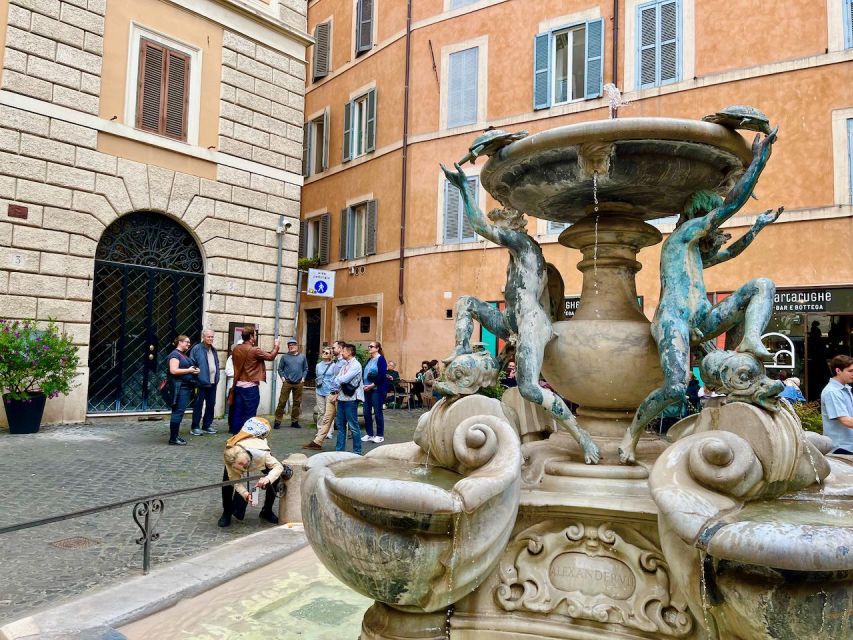
- Piazza Mattei and the stories behind the streets
- Tiber Island gives the tour its natural bridge
- Entering Trastevere through narrow lanes
- Finishing at Piazza Trilussa
- How much history fits into 2.5 hours
- Price, pace, and practical value
- Who will enjoy this Rome neighborhood tour
- Should you book the Jewish Ghetto and Trastevere tour?
- FAQ
- How long does the Jewish Ghetto and Trastevere tour last?
- What language is the tour conducted in?
- Where does the tour begin?
- Where does the tour finish?
- Is the synagogue included?
- Are food and drinks included?
- What should I bring?
Key points to know before booking
- The route covers several eras: Ancient Roman ruins, medieval churches, the Jewish Ghetto, World War II, and modern neighborhood life all appear within one walk.
- The Jewish Ghetto receives substantial attention: Expect roughly 50 minutes in the area, plus the Portico d’Ottavia and Piazza Mattei.
- Tiber Island provides the link: A 15-minute guided visit and a short break help connect the two neighborhoods.
- Trastevere is more than a restaurant stop: The walk includes Santa Maria in Trastevere, narrow lanes, churches, and Piazza Trilussa.
- The guides are the main strength: Ben, Guido, Alethea, Alithia, and Ariel are repeatedly praised for humor, clear explanations, and useful food suggestions.
- The pace suits most walkers: The tour lasts 2.5 hours, runs in English, and is wheelchair accessible, though Rome’s old streets can still be uneven.
Why this short Rome walk works so well
Many Rome tours focus on the Colosseum, Vatican Museums, or Trevi Fountain. Those sights matter, but they can leave you with a picture of Rome built mostly from monuments. This walk adds the human story: where people lived, worshipped, traded, suffered, and built communities over many centuries.
I especially like the way the route moves from the Jewish Ghetto to Tiber Island and then across to Trastevere. The neighborhoods are close enough to visit on foot, but they feel different. The guide helps explain why they belong in one story rather than treating them as unrelated stops.
The storytelling style also matters. Guides have been praised for making difficult subjects clear without turning the walk into a lecture. Ben is noted for balancing facts with humor, while Guido is praised for bringing each stop to life. Alethea and Alithia are also singled out for energy, clear delivery, and useful local suggestions.
The tone is not light all the time. The Jewish Ghetto’s story includes discrimination, hardship, and wartime tragedy. A good guide needs to handle that material with care, and the strongest feedback points to a sensible balance between painful events, resilience, architecture, and ordinary life.
A few more Rome bookings to compare
- Vatican: Museums & Sistine Chapel Entrance Ticket
★ 4.5 · 144,003 reviews - Vatican Museums & Sistine Chapel Tour with Optional Basilica
★ 4.3 · 67,413 reviews - Colosseum, Roman Forum & Palatine Guided Tour
★ 4.7 · 63,148 reviews
Starting beside the Theatre of Marcellus
The meeting point is outside Santa Rita da Cascia in Campitelli, on Via Montanara, beside Antico Caffè del Teatro Marcello. Your guide waits with a sign reading Jewish Ghetto & Trastevere Stroll.
Arrive 10 minutes early. The tour cannot guarantee that it will wait for late arrivals, and this is a walking route where catching up may be difficult. One person who was delayed by a train received help finding the group, but that is not a reason to plan on arriving late.
The first stop is the Theatre of Marcellus, with about 10 minutes of guided explanation. It gives you an immediate sense of Rome’s layered construction. Ancient remains are not separated from modern life here. They form part of the streetscape, with later buildings and changing uses wrapped around them.
This is a useful opening because the guide can establish the main idea of the day: Rome is not one period preserved under glass. It is a city where different centuries sit on top of one another, often in plain sight.
Portico d’Ottavia and the entrance to the Ghetto
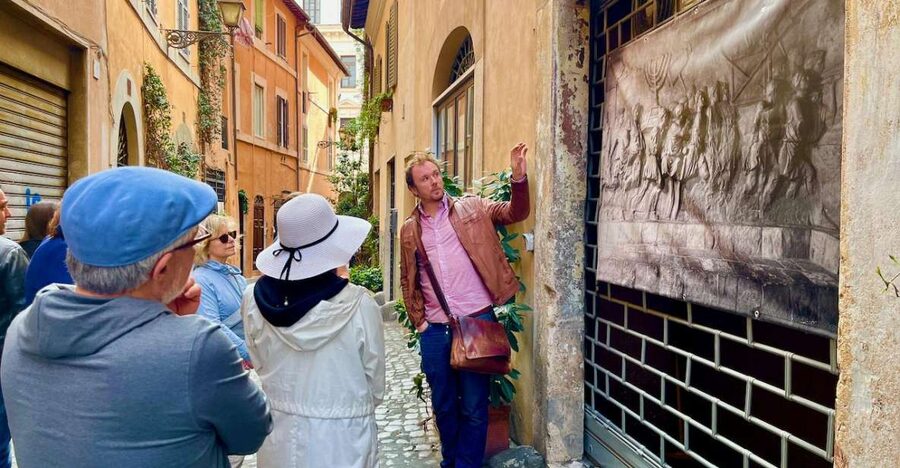
The walk continues to the Portico d’Ottavia, where the guide spends about five minutes. The stop is brief, but it helps frame the Jewish Ghetto both as a place of Roman antiquity and as a neighborhood with its own religious and social identity.
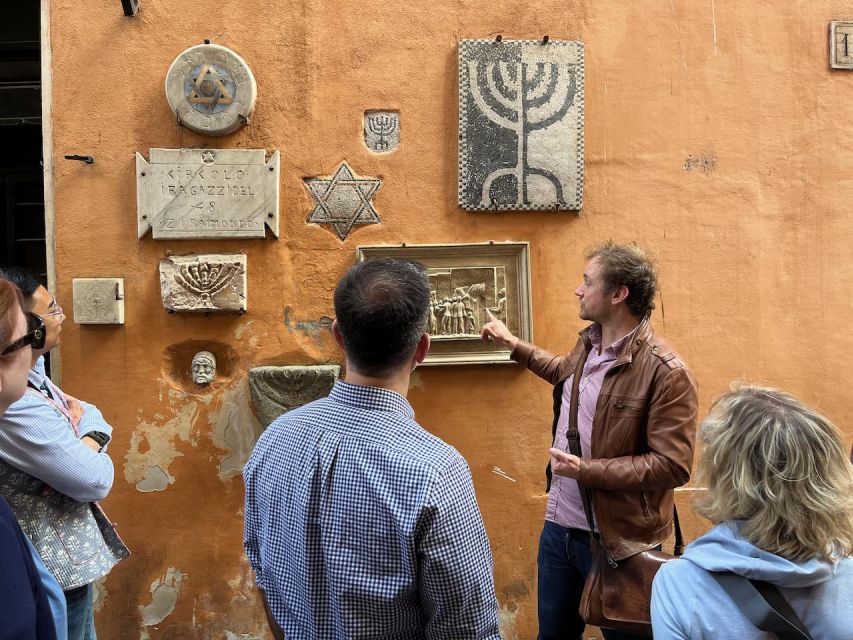
From there, you spend about 30 minutes walking through the Jewish Ghetto. Expect winding streets, cobblestones, old facades, and explanations of how Rome’s Jewish community endured across generations.
The value here is not simply seeing a few attractive lanes. Without context, the Ghetto can look like another picturesque corner of central Rome. With a guide, the streets become evidence of changing rules, community life, survival, and the forces that shaped the area.
The guide also explains why the neighborhood matters to Rome as a whole. This is not a side story placed outside the main narrative. It is tied to the city’s political, religious, social, and wartime past.
Piazza Mattei and the stories behind the streets
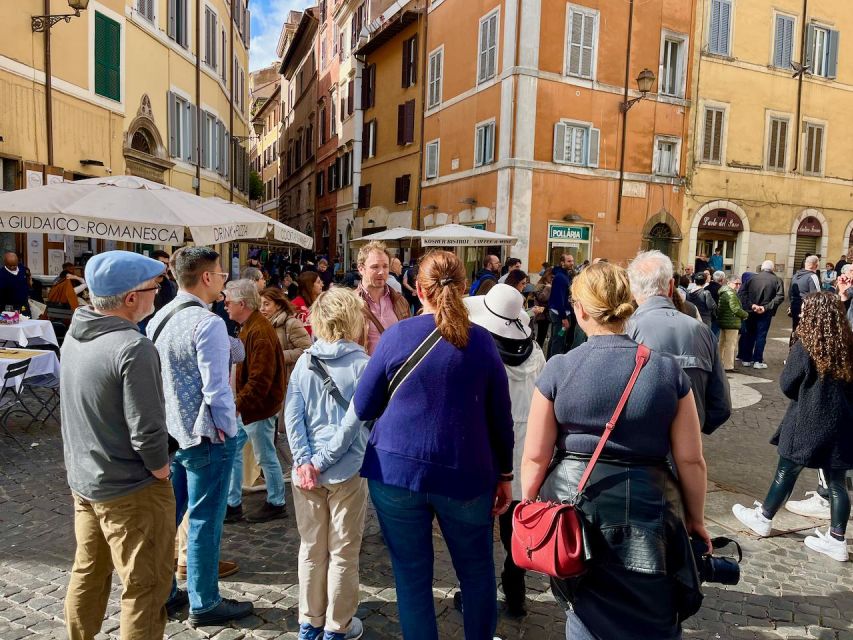
Piazza Mattei receives about 10 minutes of guided attention before the group continues through the Ghetto for another 20 minutes. The square gives you a pause from the narrower lanes and a chance to see how the neighborhood’s architecture and public spaces fit together.
This part of the walk is where a strong storyteller earns the fee. The supplied route cannot tell you what every guide will emphasize, since each guide has a different style, but the experience is designed around anecdotes and local explanation rather than a fixed audio script.
Alethea, Alithia, Ben, Guido, and Ariel have all been praised for answering questions and adjusting their delivery to the group. That matters in a neighborhood where the details can become heavy or confusing. You want someone who can explain the main point, answer a follow-up, and keep the walk moving.
One useful limit to understand: the synagogue is viewed from outside. If you want to enter a synagogue or spend more time on Jewish religious practice, this tour may not go far enough by itself. It does, however, provide a strong introduction to the neighborhood and its place in Rome’s story.
Still Rome, but a slower afternoon:
- Vatican Museums, Sistine Chapel & St Peter’s Basilica Guided Tour
★ 4.5 · 39,149 reviews - Rome: Colosseum, Palatine Hill and Roman Forum Guided Tour
★ 4.8 · 32,814 reviews - Rome: Guided Tour of Colosseum, Roman Forum & Palatine Hill
★ 4.7 · 27,897 reviews - Rome: Colosseum & Forum with Audio Guide App -Optional Arena
★ 4.2 · 24,770 reviews
Tiber Island gives the tour its natural bridge
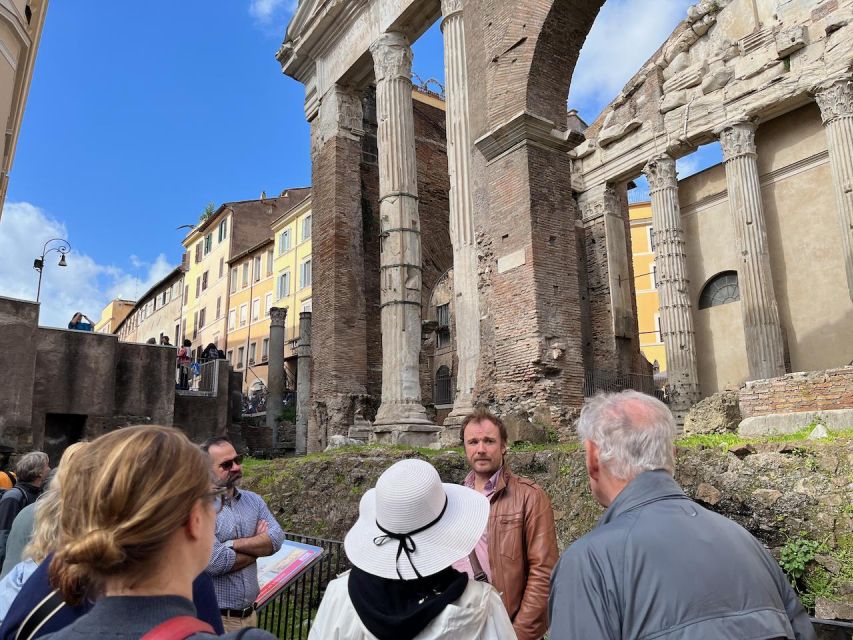
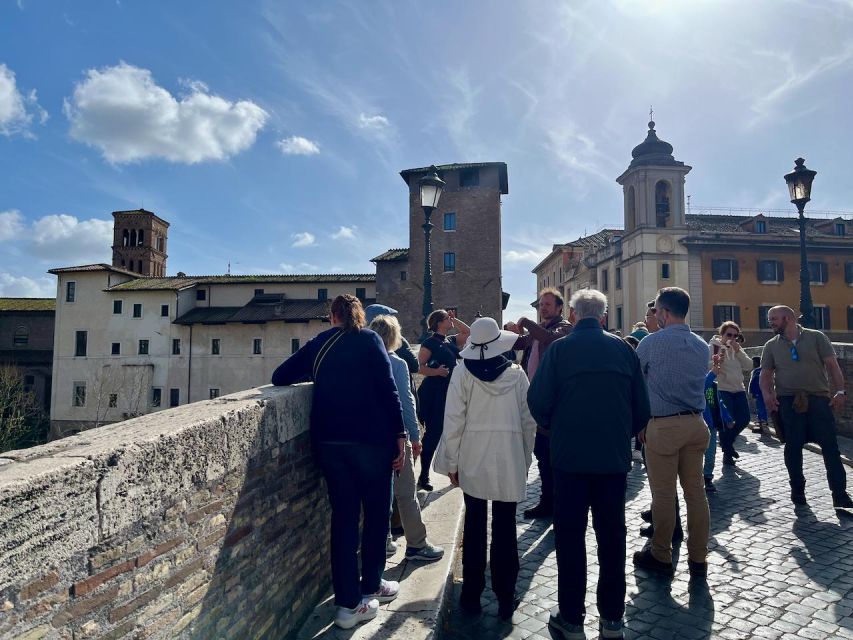
The group then crosses to Tiber Island for about 15 minutes of guided touring, followed by a 10-minute break. This small stop is one of the route’s smartest choices because it creates a natural transition between the Jewish Ghetto and Trastevere.
The island is compact, but the guide explains its importance to Roman society and history. You also get a chance to rest, refill water if needed, and take stock before the second half of the walk.
That break is practical rather than lavish. Food and drinks are not included, and the optional gelateria or cafe stop may be welcome in summer. Bring water, especially during warm months, when Rome’s public fountains can provide refill options.
The island section also helps with pacing. Two and a half hours on old streets can feel long if every minute is spent standing and listening. A short pause keeps the tour from becoming a test of your feet.
Entering Trastevere through narrow lanes
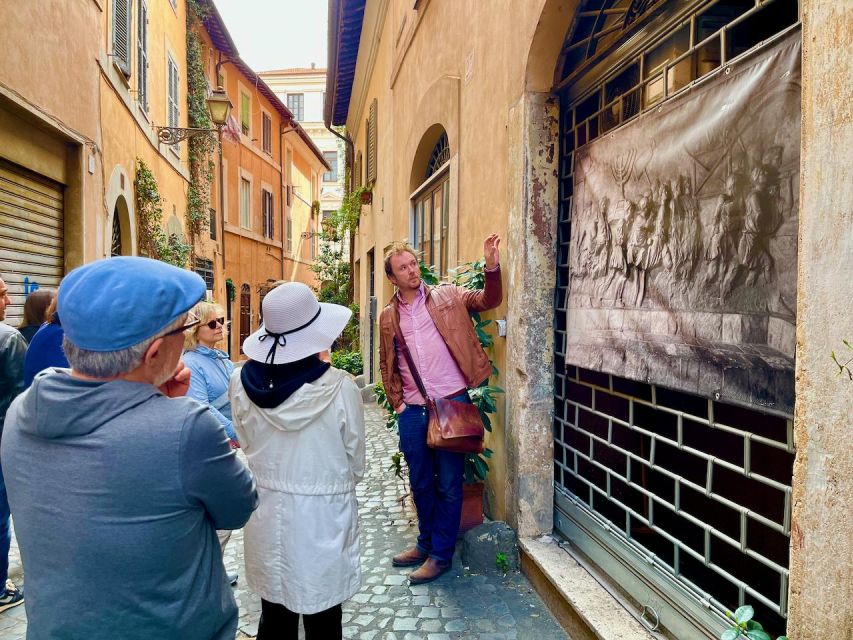
The Trastevere section lasts about 30 minutes at first, followed by another 10 minutes at Santa Maria in Trastevere, then 20 more minutes in the neighborhood. This gives the district more than a quick photo stop.
Trastevere is known for narrow alleys, ivy-covered houses, old churches, and a more rustic feel than the grand avenues near Rome’s famous monuments. The guide points out major sights while explaining how the area fits into the city’s broader story.
I like this part because it prevents Trastevere from being reduced to food and nightlife. The district does have restaurants, bars, and gelato shops, and guides often offer eating suggestions. But the tour also shows why the streets look and feel different, and how churches and older buildings give the area its character.
Santa Maria in Trastevere receives about 10 minutes of guided attention. The church is an important stop because it brings religious art and neighborhood life into the route. You are not simply walking past another Roman facade. The guide gives you a reason to pause and look.
The final 20 minutes in Trastevere allow more room for alleys, buildings, and local details. The pace has been described as leisurely, with the full walk sometimes taking just over two hours. That may appeal to you if you prefer time to listen and look around rather than march from point to point.
Finishing at Piazza Trilussa
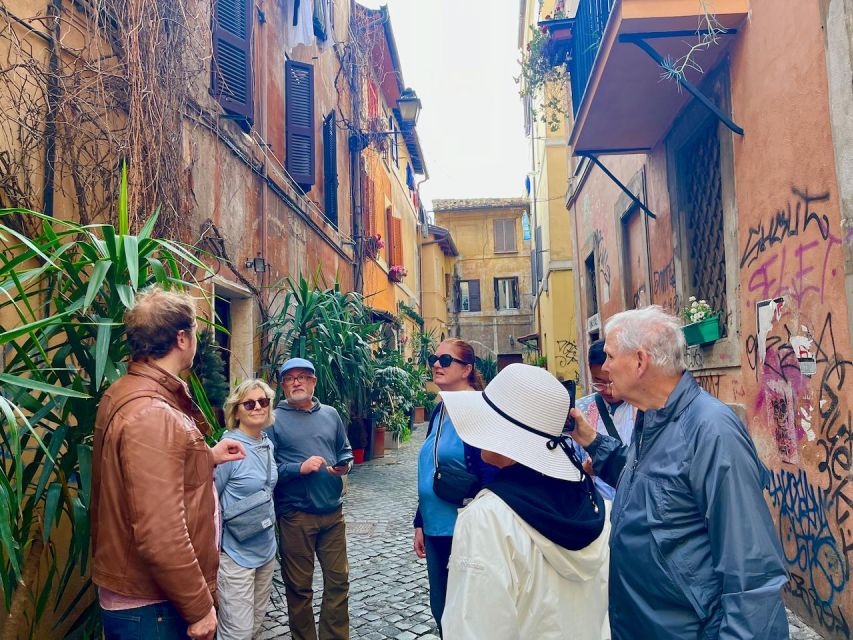
The tour ends at Piazza Trilussa after a final five-minute guided stop. This is a useful place to finish because you are already in Trastevere, near the district’s restaurants, bars, and evening atmosphere.
Several guides have offered food recommendations, and some people have used those suggestions to stay in the neighborhood after the walk. The tour does not include a meal, so treat the end point as a chance to continue exploring on your own rather than as part of a built-in dining experience.
Piazza Trilussa also makes the tour easy to extend. You can remain in Trastevere for dinner, return to the Jewish Ghetto later for a meal, or simply keep walking. The guide may point out places to eat, but the choice and cost are yours.
How much history fits into 2.5 hours
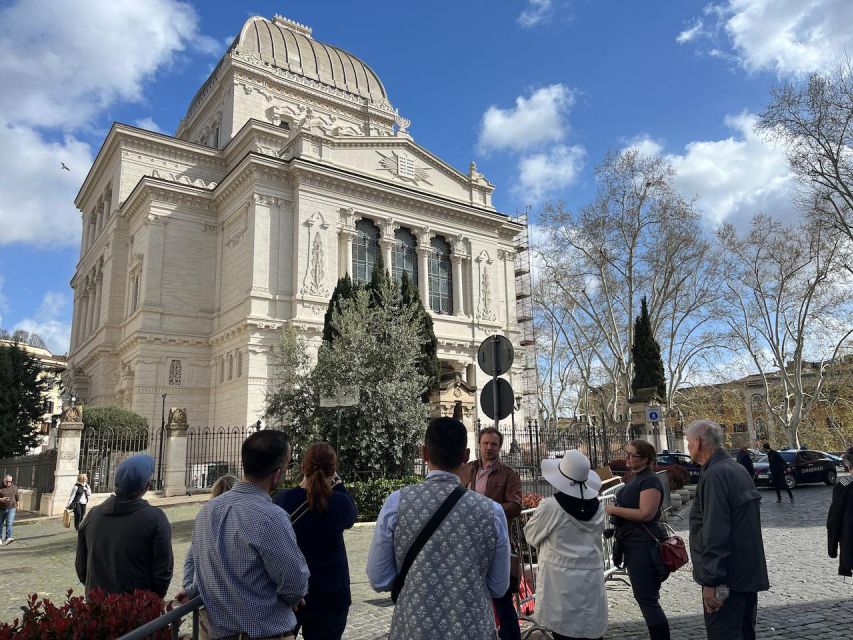
This is a quick tour in terms of Rome’s enormous timeline, but it covers a surprising range. You move from ancient Roman structures to the medieval church world, then into the Jewish community’s long experience in Rome, wartime history, and present-day neighborhood life.
That range is a strength, but it can also be a limitation. If you want a highly specialized study of Jewish life in Rome across every generation, 50 minutes in the Ghetto will feel like an introduction rather than a final word. One participant specifically wished the tour went deeper into Jewish life and spent less time on subjects that seemed less directly connected.
That is a fair point. The route is not only a Jewish history tour. It is a combined neighborhood walk, with the Ghetto as the first major focus and Trastevere as the second. You should book it for connections and context, not for an exhaustive academic treatment of one subject.
The guides seem strongest at turning a large amount of material into memorable stories. Their humor is often praised, but the better comments also note restraint. Ben, in particular, was described as enthusiastic without firing too many facts at once. That is exactly what you need in Rome, where every stone can carry a century of information.
Price, pace, and practical value
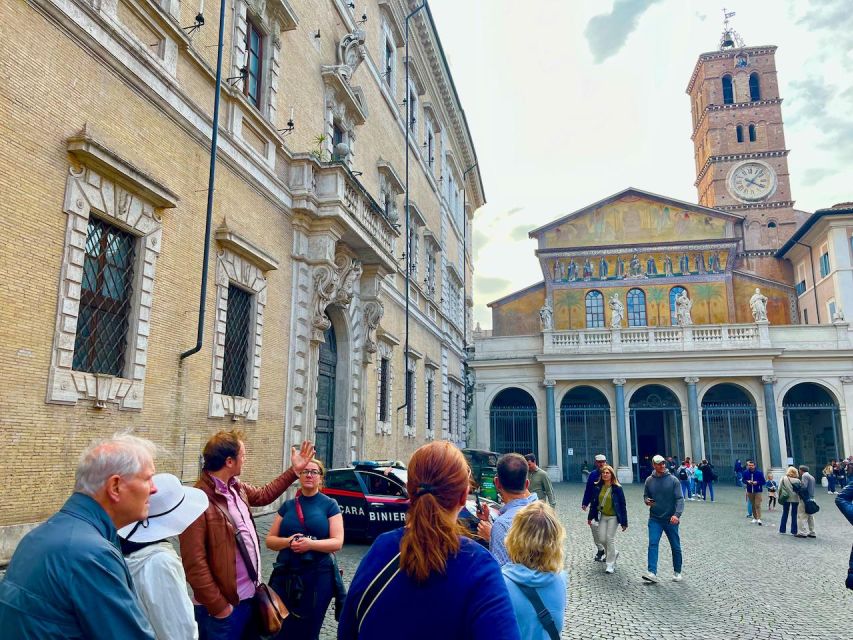
At $35 per person, this is good value if you want a live guide and a clear route through neighborhoods you might otherwise walk past without understanding. The price covers 2.5 hours and an English-speaking storytelling guide. It does not cover food, drinks, or entry to the synagogue.
You are paying for interpretation, not admission tickets. There is no major indoor attraction included, so the value depends on how much you want local context. If you already know the history of the Ghetto and Trastevere well, you may prefer an independent walk. For most first-time visitors, the guide turns a pleasant stroll into something more useful.
The pace should suit people who can walk steadily for two and a half hours. Wear comfortable shoes. Rain does not cancel the tour, so bring suitable protection in wet weather. In summer, carry water and expect the sun and warm streets to affect your energy.
The tour is wheelchair accessible, according to the activity details. Still, the route includes cobblestone streets and historic areas, so anyone with mobility concerns should consider how comfortable they are on old Roman paving.
Free cancellation is available up to 24 hours before the start time, and you can reserve now and pay later. Those options are helpful when your Rome plans are still shifting, but the important practical rule remains simple: arrive early at Santa Rita da Cascia in Campitelli.
Who will enjoy this Rome neighborhood tour
I would recommend this walk to you if you want more than Rome’s headline monuments. It suits history-minded visitors, curious first-time visitors, families with older children, and anyone who likes learning through stories rather than long formal talks.
It is also a good choice early in your stay. The guides provide suggestions for food and places to continue exploring, and the route gives you a useful sense of where to return later. Trastevere is especially easy to revisit after the tour because the walk ends at Piazza Trilussa.
You may want another experience if your main goal is entering the synagogue, studying Jewish religious life in detail, or spending a long time inside historic buildings. The tour is mainly outdoors, and the Jewish Ghetto portion is balanced by ancient Roman and Trastevere history.
The English delivery has been widely praised for being easy to follow. That is important on a subject with unfamiliar names, dates, and difficult events. The strongest guides, including Ben, Guido, Alethea, Alithia, and Ariel, bring energy without losing the thread.
Should you book the Jewish Ghetto and Trastevere tour?
Book it if you want a fairly priced, well-paced introduction to two of Rome’s most layered neighborhoods. The best reason to choose it is the guide’s storytelling: you get ancient ruins, community history, tragedy, churches, architecture, and food tips in one compact walk.
Skip it if you need extensive synagogue access or a specialist-level study of Rome’s Jewish community. For everyone else, this is a thoughtful way to see a side of Rome that can be missed when you spend the whole trip chasing famous monuments. Bring good shoes, arrive early, and leave room for dinner in Trastevere afterward.
FAQ
How long does the Jewish Ghetto and Trastevere tour last?
The tour lasts 2.5 hours, although the walk may take just over two hours depending on the pace and timing.
What language is the tour conducted in?
The tour is conducted in English with a live guide.
Where does the tour begin?
It begins outside Santa Rita da Cascia in Campitelli on Via Montanara, next to Antico Caffè del Teatro Marcello.
Where does the tour finish?
The tour finishes at Piazza Trilussa in Trastevere.
Is the synagogue included?
The synagogue is seen from the outside only. Entrance is not included.
Are food and drinks included?
No. Food and drinks are not included, though an optional stop at a gelateria or cafe may be offered.
What should I bring?
Bring comfortable shoes and suitable weather protection. In summer, bring a water bottle, as Rome’s fountains can be used for refills.
Recently added around Rome
- Palatine Hill and Roman Forum Tour with Fast-Track Entrance★ 4.2 · 417 reviews
- Tivoli: Villa D’Este & Villa Adriana Pass & App Audioguide★ 4.4 · 364 reviews
- From Rome: Villa D’Este & Villa Adriana Day Trip with Lunch★ 4.4 · 289 reviews
- Vatican Museums & Sistine Chapel Skip-the-Line Guided Tour★ 4.6 · 254 reviews
- Rome: The Three Tenors at St. Paul’s Church Concert Ticket★ 4.7 · 699 reviews
- Tivoli: Villa D’Este Entry Ticket and App Audio Guide★ 4.3 · 191 reviews
- Rome: Capitoline Museums and Centrale Montemartini Tickets★ 4.4 · 328 reviews
- Rome: St. Peter’s Basilica and Papal Tombs Guided Tour★ 4.6 · 477 reviews
Rome Tours, compared.
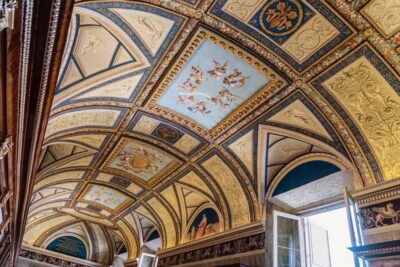
Vatican Museums & Sistine Chapel Tour with Optional Basilica
Read our review →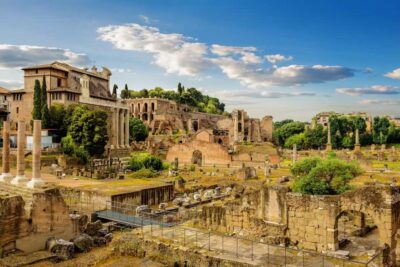
Colosseum, Roman Forum & Palatine Guided Tour
Read our review →
Vatican Museums, Sistine Chapel & St Peter’s Basilica Guided Tour
Read our review →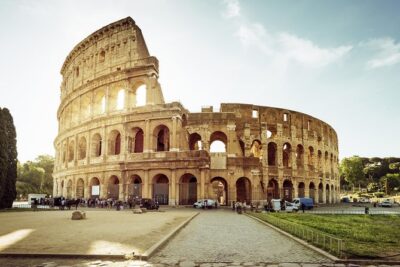
Colosseum, Palatine Hill and Roman Forum Guided Tour
Read our review →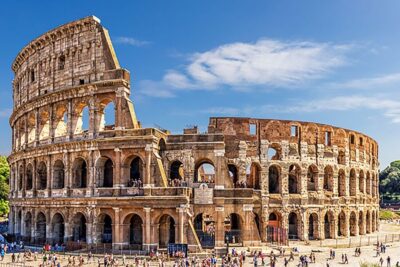
Guided Tour of Colosseum, Roman Forum & Palatine Hill
Read our review →
Colosseum & Forum with Audio Guide App -Optional Arena
Read our review →