Reviewed · ROME TOURS
Rome: Giuseppe Verdi’s “La Traviata” Live Performance
Opera hits differently in a church. This performance of Verdi’s La Traviata brings Violetta’s tragic love story to St. Paul’s Within the Walls, a striking church on Via Nazionale in central Rome. The setting gives the evening a special sense of occasion, while the live orchestra, choir, and soloists keep the focus on Verdi’s music.
I like the intimate atmosphere and the chance to hear strong singers at close range. I also like the price: at about $41 per person, this is an approachable way to try opera in Rome without paying traditional opera-house prices. The main concern is seating. The stage is at floor level, so sight lines can be poor from farther-back pews, and the church may feel hot in warm weather.
In This Review
- Key points to know before booking
- Why La Traviata works so well for a Rome evening
- Entering St. Paul’s Within the Walls Church
- The 8:30 pm performance and three-act story
- The singers, orchestra, and production team
- Seating is the biggest practical issue
- Sound quality and comfort inside the church
- What the $41 ticket is really worth
- Who will enjoy this performance most
- How to make the evening go smoothly
- Should you book La Traviata in Rome?
- FAQ
- Where does La Traviata take place?
- What time does the performance start?
- How long is the opera performance?
- Is the opera performed in English?
- What is included in the ticket?
- Who performs the main roles?
- Is the church wheelchair accessible?
- Are pets allowed?
- Can I cancel the booking?
Key points to know before booking
- A famous opera in a memorable setting: Verdi’s La Traviata is performed inside St. Paul’s Within the Walls Church, just off Via Nazionale.
- A two-hour evening: The performance begins at 8:30 pm and ends around 10:30 pm.
- Close, intimate seating: The small setup places the soloists and orchestra near the audience, but the pews are not raised and views can vary.
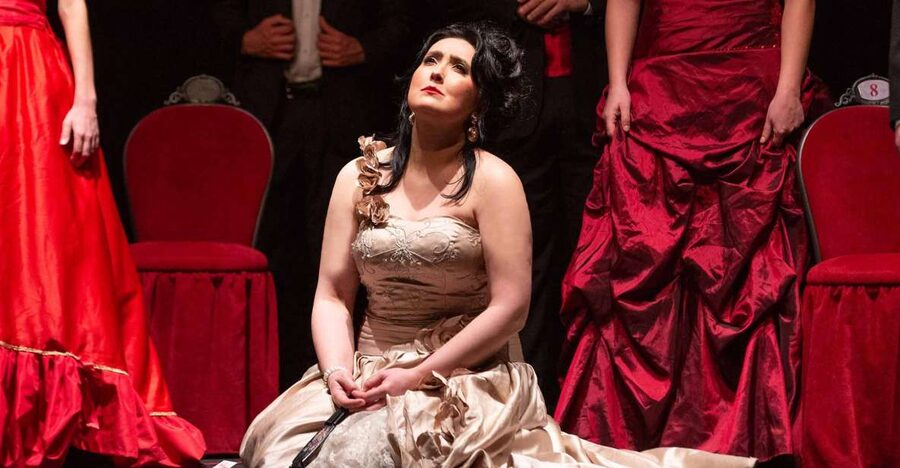
- Excellent vocal and orchestral work: The cast includes soprano Aleksandra Buczek as Violetta, tenor Emil Alekperov as Alfredo, and baritone Cristian Alderete as Giorgio Germont.
- Prepare for the story: The opera is not performed in English, so reading the plot before you arrive will make the drama much easier to follow.
- Good value with a few trade-offs: Tickets are included, but food and drinks are not, and the church seating is basic.
Why La Traviata works so well for a Rome evening
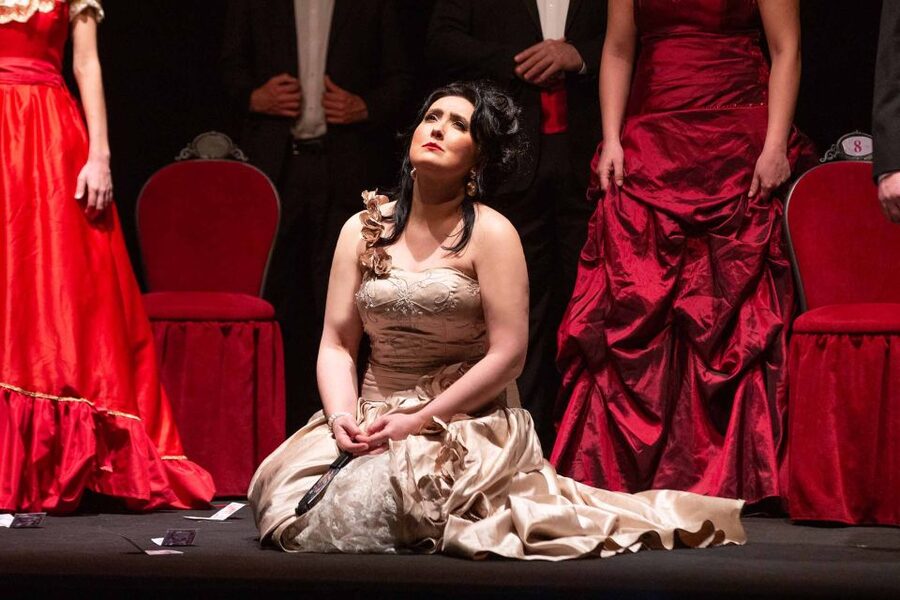
Giuseppe Verdi’s La Traviata is one of the most performed operas in the world for good reason. It has a direct story, memorable melodies, social conflict, romance, betrayal, and a deeply emotional final act. You do not need years of opera experience to understand the central problem.
Violetta Valéry is a celebrated Parisian courtesan who meets Alfredo Germont, a young man who genuinely loves her. They try to build a life together, but Alfredo’s father, Giorgio Germont, asks Violetta to leave Alfredo for the sake of the family’s reputation. The decision causes pain for everyone and leads to the opera’s tragic ending.
That basic plot matters here because the performance does not appear to begin with a full explanation of Verdi or the story. If you arrive without knowing what is happening, the first act can be enjoyable as music but confusing as theater. I strongly suggest reading a short plot summary beforehand. It takes only a few minutes and helps you understand why the characters suddenly change direction.
The opera is sung in its original language rather than English. You should not expect an English-language presentation. The music carries much of the emotion, but knowing the story lets you follow the expressions, gestures, and stage action.
A few more Rome bookings to compare
- Vatican: Museums & Sistine Chapel Entrance Ticket
★ 4.5 · 144,003 reviews - Vatican Museums & Sistine Chapel Tour with Optional Basilica
★ 4.3 · 67,413 reviews - Colosseum, Roman Forum & Palatine Guided Tour
★ 4.7 · 63,148 reviews
Entering St. Paul’s Within the Walls Church
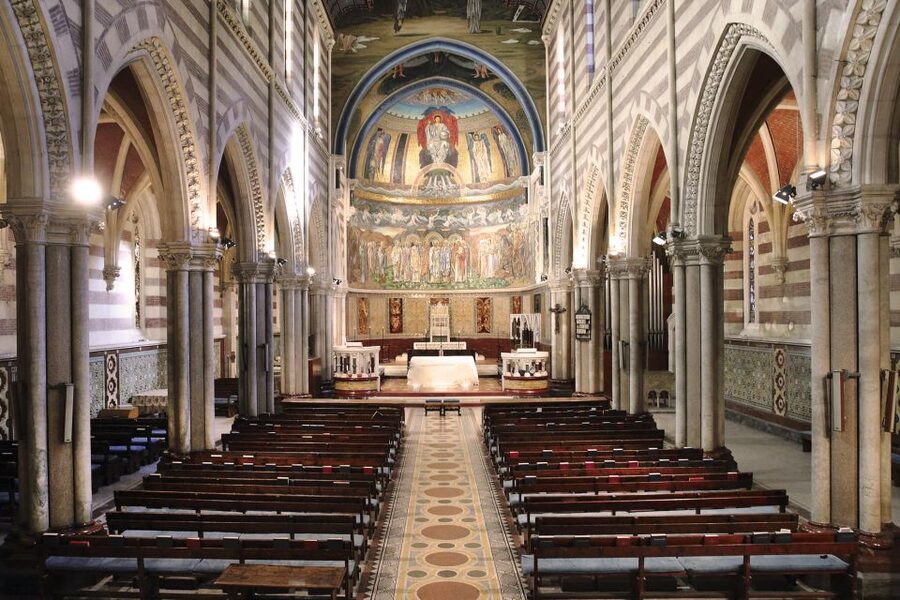
The venue is part of the experience, not simply a room that happens to hold the performance. St. Paul’s Within the Walls is an old church on Via Nazionale, one of the central streets connecting Rome’s historic center with Termini Station and the surrounding neighborhoods.
Inside, you get a very different mood from a formal opera house. There is no grand theater lobby or plush auditorium. Instead, you sit in a historic religious space with high walls, church details, and a quiet atmosphere before the musicians begin. Several people found the setting beautiful and memorable, and I can see why it suits a story about love, sacrifice, and social pressure.
The church also creates some practical limits. Acoustics can be impressive, but they are not designed in the same way as those of a traditional opera house. Sound may vary depending on your position, and the height of the building can make some voices or instruments feel less focused.
Still, the unusual location is a major reason to choose this performance. You are not just checking opera off a list. You are hearing Verdi in a space that gives the evening a distinctly Roman character.
The 8:30 pm performance and three-act story
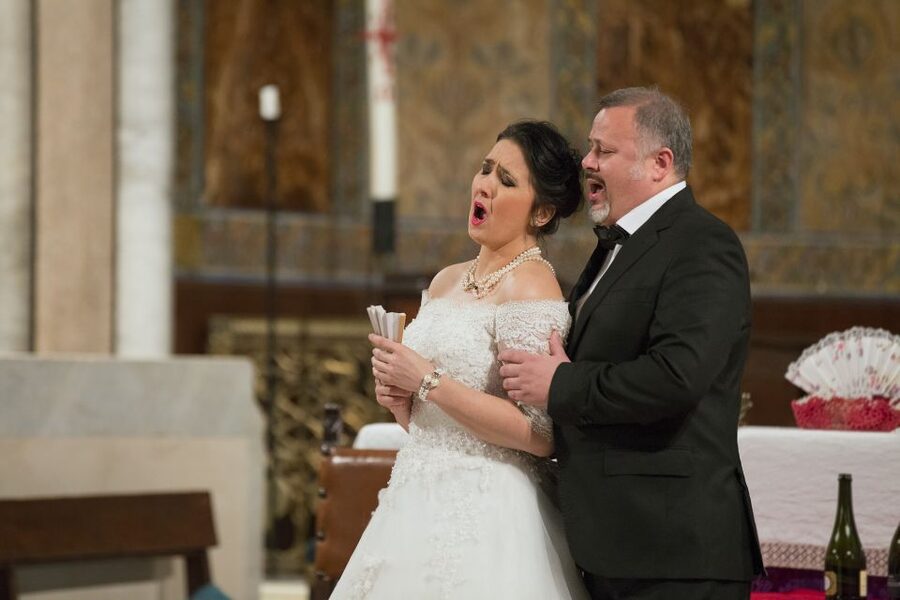
The performance starts at 8:30 pm and runs for about two hours, ending around 10:30 pm. La Traviata is a melodrama in three acts, with music by Giuseppe Verdi and a libretto by Francesco Maria Piave.
The first act introduces Violetta at a social gathering. She is surrounded by wealth and admiration, but Alfredo offers something different: sincere affection. This opening usually gives the audience the famous drinking song, one of opera’s best-known melodies. It is lively, social, and outwardly glamorous, but Violetta’s uncertainty gives the scene an emotional edge.
The second act turns toward private life and conflict. Violetta and Alfredo have chosen one another, but Giorgio Germont argues that their relationship threatens his daughter’s future marriage. His request forces Violetta into a painful decision. This section is where understanding the story becomes especially useful, since the emotional shifts are central to the drama.
The final act is quieter and more tragic. Violetta is ill, isolated, and facing the consequences of the earlier decision. The music becomes more intimate, and the performance depends heavily on the soprano’s ability to show both physical weakness and emotional strength.
The production may be a shortened version of the complete opera, so you should not expect the same scale or length as a major theater production. That is not necessarily a weakness. For a first experience, a compact presentation can be easier to manage during a busy Rome visit. The trade-off is that some dramatic material may be reduced.
The singers, orchestra, and production team
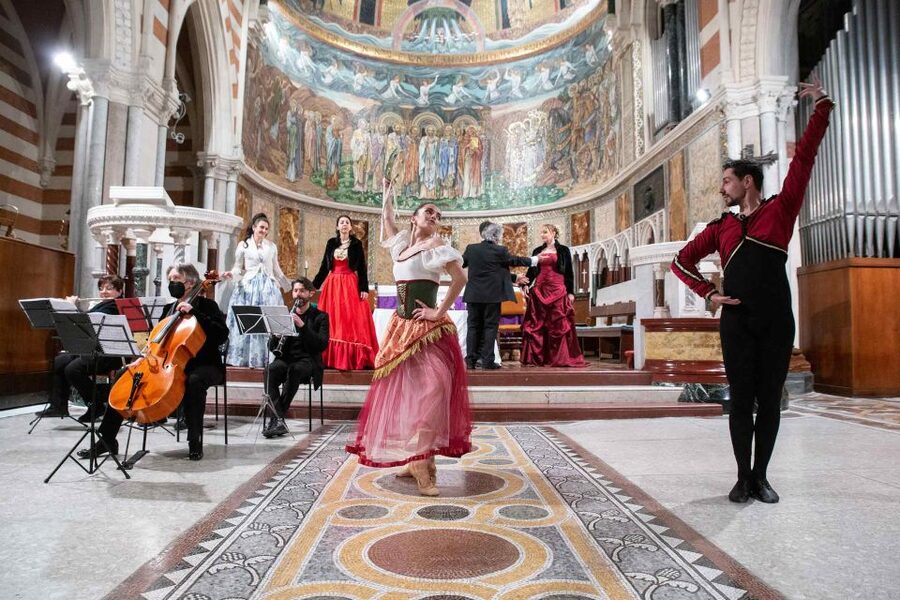
The cast is led by soprano Aleksandra Buczek as Violetta Valéry, tenor Emil Alekperov as Alfredo Germont, and baritone Cristian Alderete as Giorgio Germont. These three roles carry most of the emotional weight, particularly Violetta’s difficult conversations with Alfredo and his father.
The wider cast includes mezzo-soprano Anastasiia Demchenko as Flora Bervoix and Annina, along with singers playing Gastone, Baron Douphol, the Marquis, and the commission agent. A choir represents the servants, noblemen, friends, gypsies, matadors, picadors, and masked partygoers who fill the social world around Violetta.
The Opera e Lirica Orchestra performs under conductor Elvin Dhimitri. The orchestra and conductor have been especially praised for keeping the music engaging and supporting the singers without overpowering them. For me, that balance is crucial in a church setting, where sound can carry in unexpected ways.
Scenes and costumes are credited to Bolero Sartoria, with artistic direction by Giusi Cuccaro. Some performances also include ballet interludes, which can be a pleasant surprise if you are expecting only singing and orchestra. These additions give the production extra movement, though your view of dancers may depend heavily on where you sit.
Still Rome, but a slower afternoon:
- Vatican Museums, Sistine Chapel & St Peter’s Basilica Guided Tour
★ 4.5 · 39,149 reviews - Rome: Colosseum, Palatine Hill and Roman Forum Guided Tour
★ 4.8 · 32,814 reviews - Rome: Guided Tour of Colosseum, Roman Forum & Palatine Hill
★ 4.7 · 27,897 reviews - Rome: Colosseum & Forum with Audio Guide App -Optional Arena
★ 4.2 · 24,770 reviews
Seating is the biggest practical issue
This is where you should set your expectations carefully. The seating is arranged in church pews, with some plastic chairs, rather than theater seats. The benches can feel hard during a two-hour performance, and bringing a small cushion may make the evening more comfortable.
The stage is not raised. That means a tall person seated in front of you can block part of the action, especially if you are shorter. The farther back you sit, the more difficult it may be to see facial expressions, costumes, or ballet movements.
Arrive early if a good view matters to you. The performance begins at 8:30 pm, but arriving only a few minutes beforehand can leave you with fewer seating choices. One audience member who arrived about ten minutes before the start had trouble seeing because of taller people seated ahead. That is an avoidable problem.
Paying for a more expensive ticket may help, but it does not completely change the church layout. The strongest advantage comes from being near the front. If you care more about listening than watching, a less central seat may still work well. If you want to follow the acting closely, choose the best location you can afford and arrive with time to spare.
Sound quality and comfort inside the church
The church acoustics are one of the evening’s strengths, but they can also be unpredictable. From a good position, the high interior can make the singers sound powerful and the orchestra feel close. Several audience members praised the acoustics and described the voices as clear, dynamic, and impressive.
At the same time, some sound may feel distorted from certain parts of the church. This is not an opera house with carefully shaped sound zones. Your experience can change with your seat.
Temperature is another issue. In hot weather, the church can become very warm, with limited ventilation. Fans may not make much difference, and the heat can be uncomfortable for both the audience and performers in formal costumes. If you are attending in summer, dress for a warm indoor space rather than assuming the church will be cool.
The setting remains worth the trade-off for many people, but comfort-conscious visitors should know what they are choosing. This is a beautiful old church, not a modern theater built for climate control and perfect visibility.
What the $41 ticket is really worth
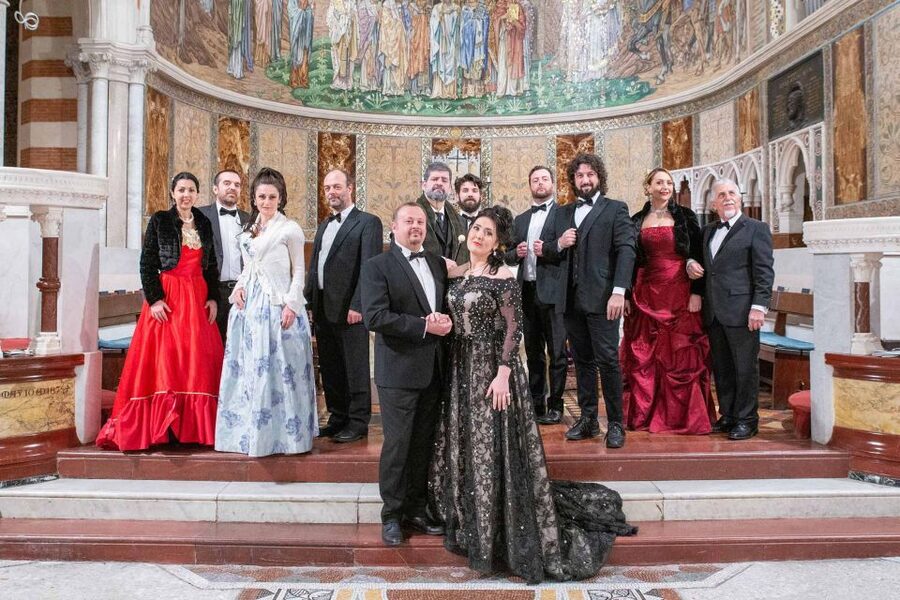
At $41 per person, this performance offers strong value for a visitor who wants a first taste of opera in Rome. You receive admission to a live production with soloists, choir, orchestra, conductor, costumes, and staging. A two-hour cultural evening at that price is reasonable, particularly when compared with the cost of many formal performances.
The value is strongest if you care about atmosphere and music. The church adds character, and the intimate arrangement lets you feel close to the singers and small orchestra. You may hear a soprano or tenor at a distance that would be unusual in a large opera house.
The price does not buy luxury. Food and drinks are not included. Seating is basic, and a shortened production may not satisfy someone seeking a full-scale theatrical version. You are paying for access to the art and setting, not for plush chairs or elaborate stage machinery.
For a couple, family, or solo visitor looking for something different after a day of monuments, the cost is easy to justify. It also works well as a final-night activity, since the evening feels special without taking up an entire day.
Who will enjoy this performance most
I would recommend it to first-time opera audiences, classical music fans, couples, and families with older children or teenagers. One teenage audience member reportedly enjoyed opera for the first time, which says a lot about the approachable story and manageable two-hour length.
You will get the most from it if you:
- Read the plot before arrival.
- Arrive early for a better view.
- Care more about live music and atmosphere than luxury seating.
- Can tolerate a warm church in summer.
- Enjoy hearing opera up close in an unusual venue.
It may be less suitable if you need flawless sight lines, cool indoor temperatures, soft seating, or a complete grand-opera production. It is also not the best pick if you want an English-language performance or need every line translated during the show.
The performance is wheelchair accessible, and pets are not allowed. Cancellation is flexible, with a full refund available if you cancel at least 24 hours in advance. You can also reserve now and pay later, which helps if your Rome schedule is still changing.
How to make the evening go smoothly
The meeting point is simple: make your way to St. Paul’s Within the Walls Church at Via Nazionale 16/A. Tickets are included, but plan your meal separately because food and drinks are not part of the experience.
Give yourself enough time to find the church and settle in. Even if you are not concerned about sitting at the front, early arrival gives you more control over your view and lets you enjoy the building before the music starts.
I would also read a short explanation of Verdi and the plot of La Traviata. You do not need a study session. Just know who Violetta, Alfredo, and Giorgio Germont are, and understand why Giorgio pressures Violetta to leave Alfredo. That preparation can make the difference between hearing beautiful music and following a moving drama.
Should you book La Traviata in Rome?
Book it if you want good-value opera in a memorable church, and you are willing to accept simple seating and variable views. The strongest parts are the vocal performances, orchestra, intimate setting, and emotional power of Verdi’s score.
Think twice if comfort and visibility matter more than atmosphere. In that case, choose the best seating category you can afford, arrive early, and avoid the hottest part of summer if possible.
For most visitors, this is a fine way to spend two hours in Rome. You hear famous music, see a beautiful historic church, and experience opera without committing to a long, expensive theater production. Just prepare for the story, choose your seat carefully, and expect the setting to be charming rather than polished.
FAQ
Where does La Traviata take place?
The performance takes place at St. Paul’s Within the Walls Church, located at Via Nazionale 16/A in Rome.
What time does the performance start?
The performance starts at 8:30 pm and ends at about 10:30 pm.
How long is the opera performance?
The approximate duration is two hours.
Is the opera performed in English?
No. The performance is not in English. Reading the plot of La Traviata before arriving can help you follow the action.
What is included in the ticket?
Admission tickets are included. Food and drinks are not included.
Who performs the main roles?
Aleksandra Buczek performs as Violetta Valéry, Emil Alekperov as Alfredo Germont, and Cristian Alderete as Giorgio Germont. The performance also includes additional soloists, choir, orchestra, and conductor Elvin Dhimitri.
Is the church wheelchair accessible?
Yes, the activity is listed as wheelchair accessible.
Are pets allowed?
No. Pets are not allowed.
Can I cancel the booking?
Yes. You can cancel up to 24 hours in advance for a full refund. The experience also offers a reserve-now, pay-later option.
Recently added around Rome
- Palatine Hill and Roman Forum Tour with Fast-Track Entrance★ 4.2 · 417 reviews
- Tivoli: Villa D’Este & Villa Adriana Pass & App Audioguide★ 4.4 · 364 reviews
- From Rome: Villa D’Este & Villa Adriana Day Trip with Lunch★ 4.4 · 289 reviews
- Vatican Museums & Sistine Chapel Skip-the-Line Guided Tour★ 4.6 · 254 reviews
- Rome: The Three Tenors at St. Paul’s Church Concert Ticket★ 4.7 · 699 reviews
- Tivoli: Villa D’Este Entry Ticket and App Audio Guide★ 4.3 · 191 reviews
- Rome: Capitoline Museums and Centrale Montemartini Tickets★ 4.4 · 328 reviews
- Rome: St. Peter’s Basilica and Papal Tombs Guided Tour★ 4.6 · 477 reviews
Rome Tours, compared.
Vatican Museums & Sistine Chapel Tour with Optional Basilica
Read our review →
Colosseum, Roman Forum & Palatine Guided Tour
Read our review →
Vatican Museums, Sistine Chapel & St Peter’s Basilica Guided Tour
Read our review →
Colosseum, Palatine Hill and Roman Forum Guided Tour
Read our review →
Guided Tour of Colosseum, Roman Forum & Palatine Hill
Read our review →
Colosseum & Forum with Audio Guide App -Optional Arena
Read our review →