
Reviewed · WINE TOURS
Rome: Food & Wine Tour of Campo de Fiori, Ghetto, Trastevere
Come hungry, leave happily full. This food walk connects three of Rome’s most atmospheric neighborhoods with a generous run of tastings, from pizza bianca with mortadella to Roman supplì and gelato. I like the way food opens the door to local customs, neighborhood stories, and practical dining advice. I also like the small group size, capped at 15 people, which gives you a real chance to ask questions.
The main thing to consider is the pace and amount of food. This is a walking tour lasting roughly two to three and a half hours, with several stops along the way. You should not eat a large breakfast beforehand, and you need comfortable shoes. The afternoon option also skips Campo de’ Fiori Market because of opening hours, replacing it with a grocery shop and aperitif.
In This Review
- Quick facts about the Roman food walk
- Why this tour works well on a first day in Rome
- Campo de’ Fiori: market color and Roman shopping habits
- Pizza bianca, mortadella, and the Roman snack break
- The Jewish Ghetto: fried artichokes, supplì, and codfish
- Trastevere: pasta, local shops, and a final gelato
- What the food quantity means for your day
- The guides are a major part of the experience
- Walking conditions, timing, and comfort
- Is $81 a fair price?
- Who should book this Roman food tour?
- My verdict: book it early if food matters to you
- FAQ
- How long does the Rome food and wine tour last?
- Does every tour visit Campo de’ Fiori Market?
- What food is included?
- Is the tour suitable for vegetarians?
- Is the tour suitable for people with allergies or vegans?
- What should I bring to the tour?
Quick facts about the Roman food walk
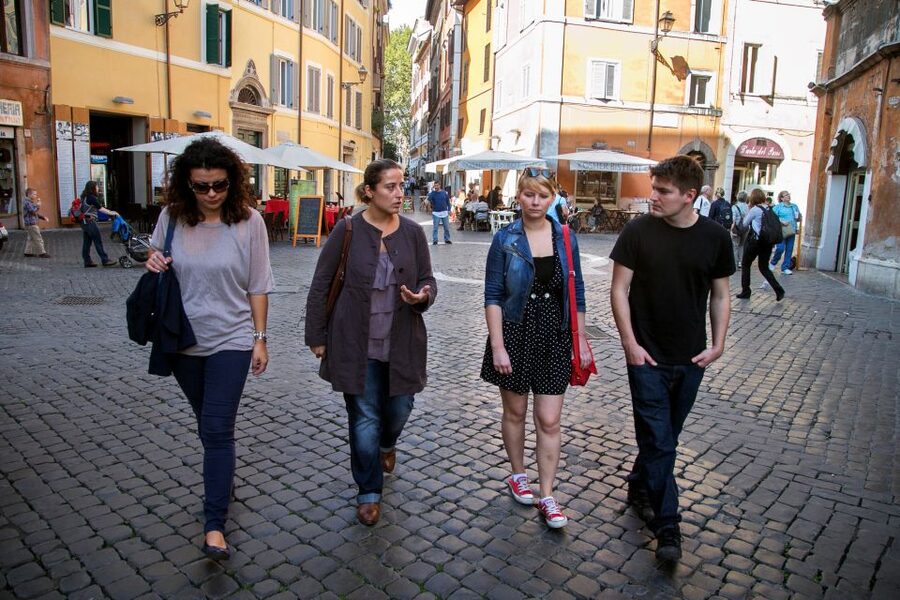
- Three neighborhoods in one outing: Walk through Campo de’ Fiori, the Jewish Ghetto, and Trastevere while sampling food tied to each area.
- A serious amount of tasting: Expect pizza bianca, mortadella, mozzarella, Roman salami, supplì, fried artichoke, codfish, pasta, wine, and gelato.
- Morning and afternoon routes differ: The morning tour includes Campo de’ Fiori Market, while the afternoon tour substitutes a grocery visit and aperitif.
- Small groups make a difference: The standard group has no more than 15 people, with a private option also available.
- Food comes with local context: Guides connect recipes and ingredients with Roman customs, neighborhood life, architecture, and city history.
- Best for flexible eaters: The tour is not suitable for vegans, people with food allergies, or wheelchair users.
Why this tour works well on a first day in Rome
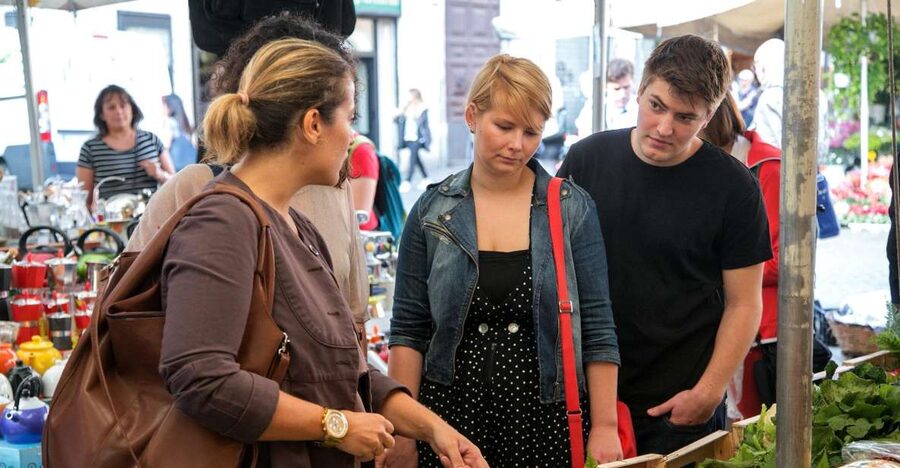
A food tour can be a smart way to start a Rome visit. Instead of spending your first meal guessing at a menu, you learn what Roman food looks like, how certain dishes are served, and which places deserve a return visit.
This route also gives you a useful sense of the city. Campo de’ Fiori, the Jewish Ghetto, and Trastevere feel different from one another, yet they fit naturally into a food-focused walk. You are not simply sitting down for one long meal. You are moving through streets and squares, stopping at bakeries, shops, markets, traditional restaurants, and a gelateria.
The strongest part is the mix of eating and explanation. Guides such as Natasha, Lisa, Mariel, Gloria, Valeria, and Anastasia have been praised for making the tour warm, clear, and easy to follow. Their role matters because some of the tastings are familiar to Romans but may be new to you. A good guide can explain not only what you are eating, but also why it belongs in Roman food culture.
The tour is especially useful for solo visitors. You share food at a series of stops, and the small group setup gives you an easy way to meet other people without committing to a full dinner with strangers.
More Food Tours in Rome
- Rome: Tuscany & Montepulciano Day Trip with Lunch & Wine Tasting
★ 4.5 · 5,232 reviews - Winner 2025 Rome Twilight Trastevere Food Tour by Eating Europe
★ 5.0 · 5,157 reviews - Rome: Trastevere or Jewish Quarter Street Food Tour
★ 4.8 · 3,839 reviews
Campo de’ Fiori: market color and Roman shopping habits
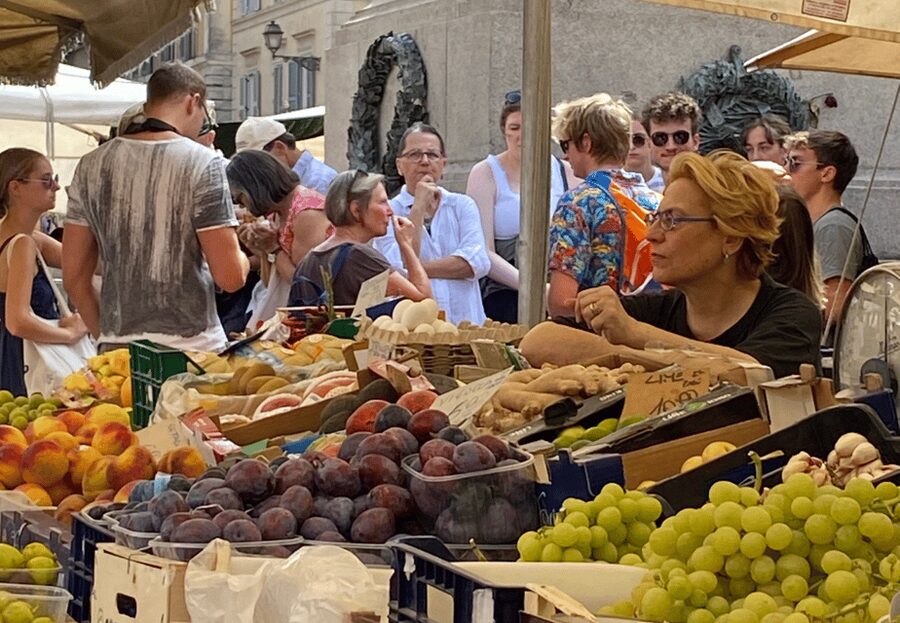
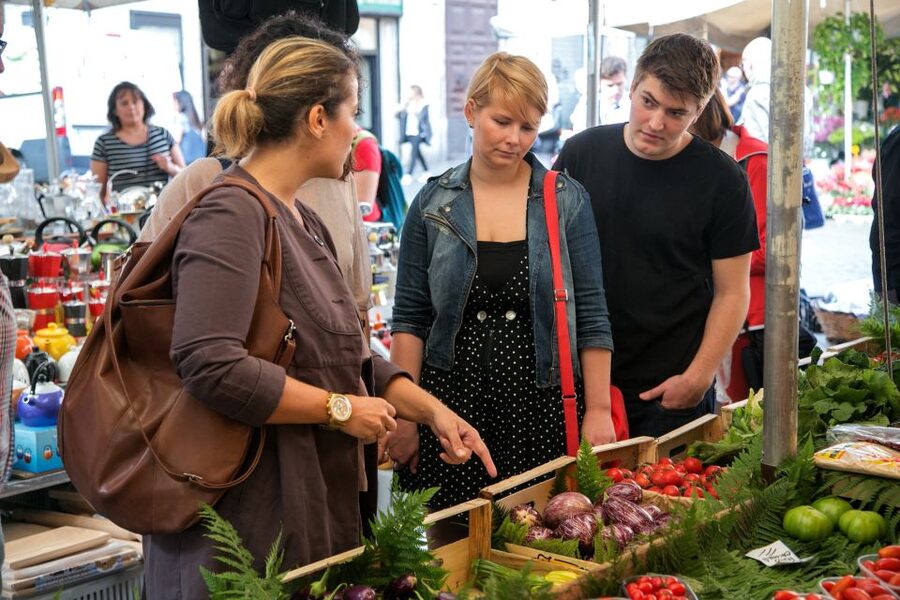
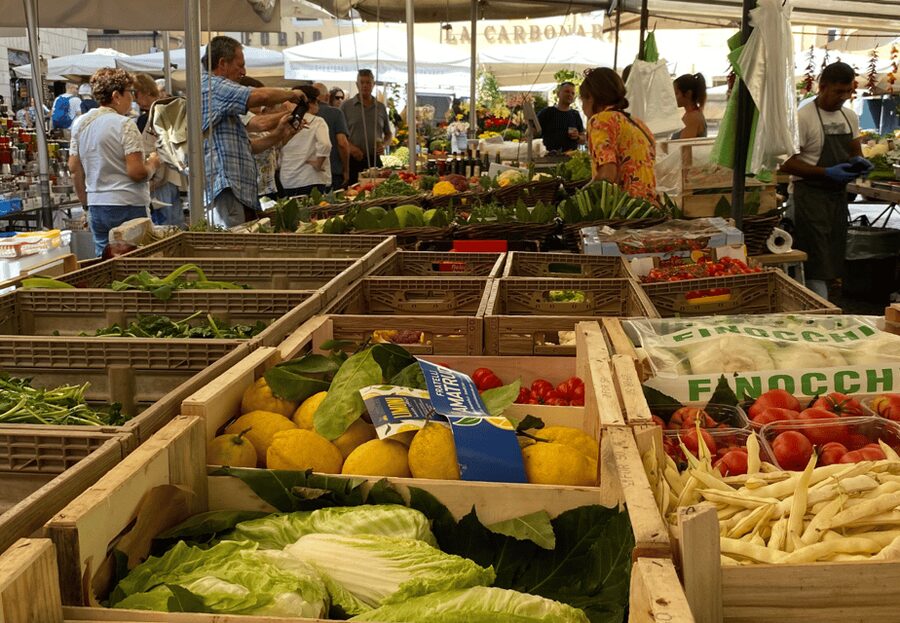
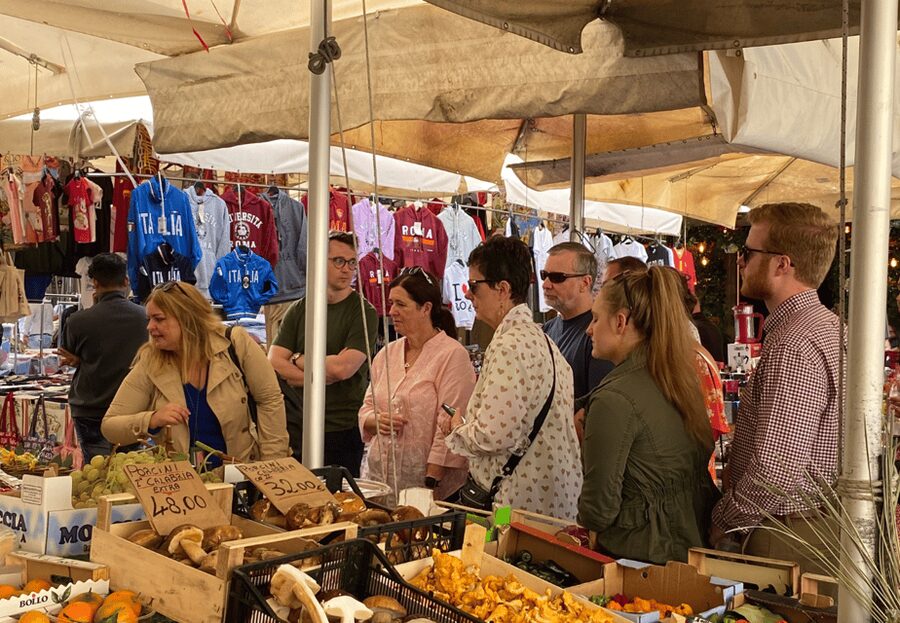
The morning option begins with Campo de’ Fiori Market. The market is one of the visual highlights of the route, with displays of fruits, vegetables, spices, and other food products. It gives you a quick lesson in how ingredients are presented and sold in Rome.
Do not expect a quiet farmers market. Campo de’ Fiori is a central city stop, and its appeal comes from the mix of produce, color, conversation, and history around the square. Your guide can help separate the products aimed at daily cooking from those arranged mainly for browsing.
The market visit is valuable because it sets up the rest of the tour. You begin seeing ingredients before you taste them. The herbs, vegetables, cheeses, and cured meats make more sense when they appear later at a bakery, restaurant, or grocery shop.
A key practical point: the market visit is available only on the morning tour. If seeing Campo de’ Fiori Market is important to you, check the start time carefully before booking. The afternoon tour includes a typical grocery store and aperitif instead. That replacement still fits the food theme, but it is a different experience.
Pizza bianca, mortadella, and the Roman snack break
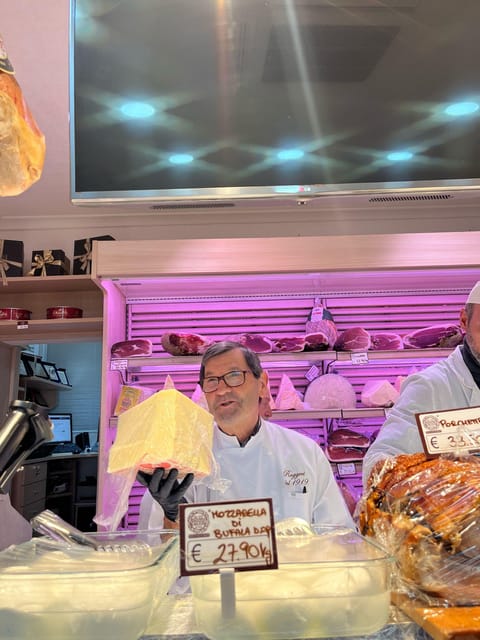
One of the most appealing tastings is pizza bianca with thin slices of mortadella. This is not the cheese-heavy pizza many people picture when they hear the word pizza. Roman pizza bianca is a simple, airy, bread-like specialty, and the mortadella adds salt, spice, and a soft, savory finish.
The pairing is a good example of the tour’s approach. You are tasting a modest local favorite rather than chasing only famous restaurant dishes. Pizza bianca is also practical food for a walking city. It can be eaten as a quick snack, a light breakfast, or a mid-morning bite.
You may also try mozzarella alongside Roman salami. This stop helps you compare texture, freshness, and seasoning across a few basic ingredients. The guide can explain what to look for when buying cheese and cured meat, which is useful if you plan to visit Italian food shops on your own.
This is one reason I would schedule the tour early in your stay. The advice carries over to the rest of your trip. You learn to recognize the kind of bread, cheese, and cured meat that can make a simple Roman meal satisfying.
The Jewish Ghetto: fried artichokes, supplì, and codfish
The Jewish Ghetto is the food walk’s most distinctive neighborhood stop. Its cuisine includes Roman dishes shaped by Jewish culinary traditions, and the tastings give you a chance to try several foods rather than one symbolic bite.
Fried artichoke is a featured tasting. It is particularly seasonal, so the experience may feel different depending on the time of year. One useful tip is to visit during artichoke season if this dish is high on your list, though the tour still offers other Roman specialties outside that period.
You will also try supplì, a Roman fried rice ball with tomato-seasoned rice and melted mozzarella inside. The outside should be browned and crisp, while the center is soft and creamy. It is filling, so pace yourself. After pizza bianca, salami, cheese, and other samples, this small snack adds up quickly.
Fried codfish may also appear at this stop. Together, the artichoke, supplì, and codfish show how Roman cooking makes good use of simple ingredients, hot oil, and strong seasoning. The point is not fine dining. It is direct, satisfying street and neighborhood food.
The Jewish Ghetto also adds a layer of city history that you would miss on a meal-only outing. Guides have been especially praised for explaining the area’s past while keeping the conversation connected to food and daily life. That balance is important. You get context without losing the pleasure of eating.
More Wine Tastings in Rome
- Rome Food Tour: Unlimited Tastings with Fine Wine & Barolo
★ 5.0 · 3,365 reviews - Rome: Food Tour with Unlimited Food and Barolo Wine
★ 4.8 · 1,883 reviews - Rome: E-Bike Night Tour with Food and Wine Tasting
★ 4.9 · 1,131 reviews - Rome: Trastevere Guided Food and Wine Tour with 20+ Tastings
★ 4.9 · 1,022 reviews
Trastevere: pasta, local shops, and a final gelato
The route continues into Trastevere, where the food stops shift toward pasta and dessert. You will visit a traditional restaurant or food business for a pasta tasting, with the guide explaining what separates well-made pasta from the rest.
The exact pasta selection can vary, but the lesson is central to the tour. Texture matters. So does the relationship between pasta shape, sauce, cooking time, and ingredients. This is the kind of information that can improve your choices later, especially if you plan to order several pasta dishes during your stay.
The food is served in stages, rather than as one restaurant meal. That makes it easier to compare different preparations, but it also means you should keep track of what you have eaten. Several people have found the portions generous enough to feel full before the final stop. If you join in the morning, treat the tour as a substantial meal, not a light snack.
Trastevere supplies the sweet finish: gourmet gelato from an artisanal gelateria. A guide may also explain how to judge gelato quality, including the difference between carefully made gelato and brightly displayed products that are less convincing. The cool dessert is welcome in warm weather, though it remains a fitting ending in every season.
The neighborhood itself gives the final part of the walk a relaxed feel, with picturesque lanes and small food businesses. You leave with both a dessert and a short list of places you may want to revisit.
What the food quantity means for your day
This tour is generous. The tasting list includes:
- Pizza bianca with mortadella
- Mozzarella and Roman salami
- Supplì
- Fried artichoke
- Fried codfish
- Pasta
- Regional wine
- Gelato
Not every departure will necessarily feel identical, and the afternoon route differs from the morning route. Still, you should plan for enough food to replace a meal. Several people have specifically advised skipping breakfast before the morning option, and that is sensible.
For an evening departure, eat lightly earlier in the day. The food is not just a series of tiny samples. By the time you reach pasta and gelato, you may be very full.
Extra food and drinks beyond the planned tastings are not included. You may want to carry water, particularly in summer, but save room for the scheduled stops. Sunscreen, a hat, sunglasses, and an umbrella are also sensible because the tour runs in all weather.
The guides are a major part of the experience
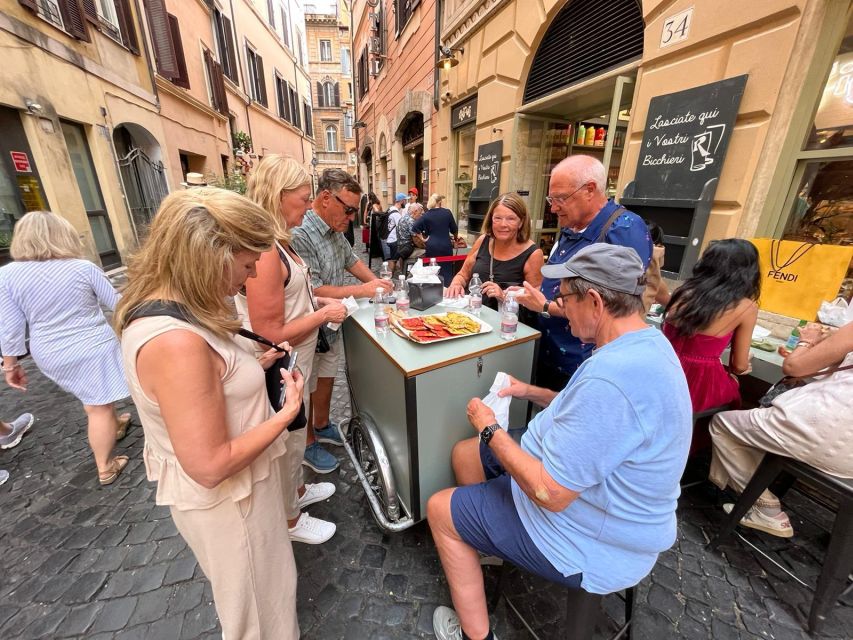
The food is the reason to book, but the guide determines how much you get from it. The strongest praise has gone to guides who combine local food knowledge with humor, history, and a welcoming manner.
Natasha has been singled out for keeping people engaged, explaining recipes, and connecting food with the neighborhoods. Lisa has been described as warm and accommodating, while Mariel has received praise for knowing the restaurants and shops well and making sure everyone was included.
Other named guides, including Luca, Gloria, Valeria, Federica, Chiara, Anastasia, and Benebetta, have also been praised for their friendly approach and clear explanations. Guide assignments can change, so you should not book expecting a particular person unless the provider confirms it.
The small group cap helps here. With no more than 15 people, you can ask about ingredients, ordering habits, recipes, and local customs. The group also tends to chat together as it walks, making the experience a good fit if you enjoy a social tour rather than a private meal.
Walking conditions, timing, and comfort
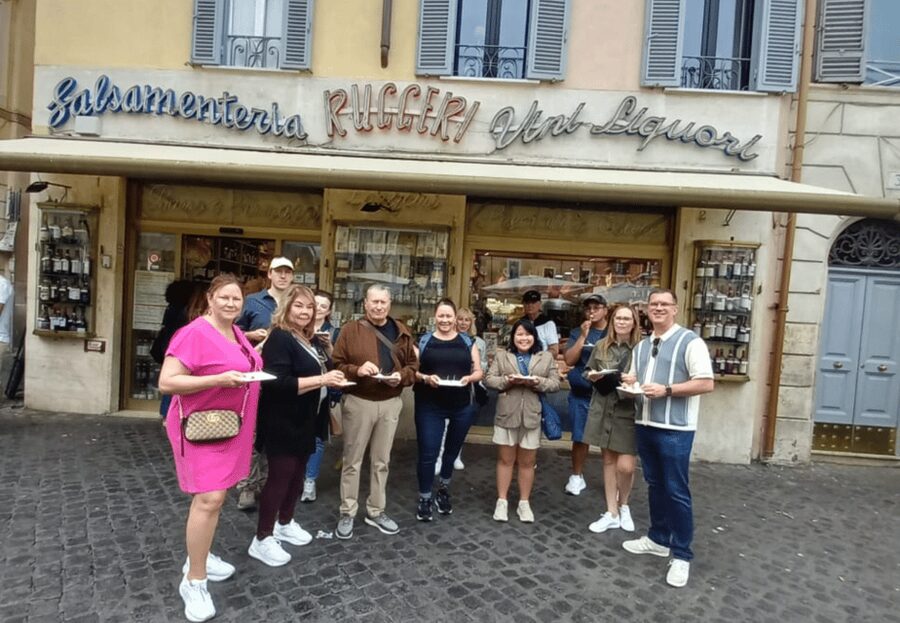
The tour covers a fairly broad part of central Rome on foot. It has been described as easy-going, with bathroom opportunities along the route, but you should still wear comfortable shoes. Rome’s streets can be uneven, and you may spend time standing at food counters or in busy public areas.
The listed duration ranges from two to three and a half hours, with the main description giving three and a half hours. Starting times vary by option, so check the exact departure when you book.
The route operates in all weather. In hot months, the heat can affect your comfort, even though the tastings provide regular reasons to pause. In wet weather, bring an umbrella and dress for walking.
Large bags and luggage are not allowed. That is worth taking seriously if you are arriving directly from a train station or airport. Plan to store your bags before meeting the guide.
The tour is not suitable for wheelchair users, vegans, or people with food allergies. The provider cannot guarantee arrangements for special dietary restrictions. One vegetarian participant was accommodated successfully, but you should contact the provider before booking rather than assume substitutions will be available.
Is $81 a fair price?
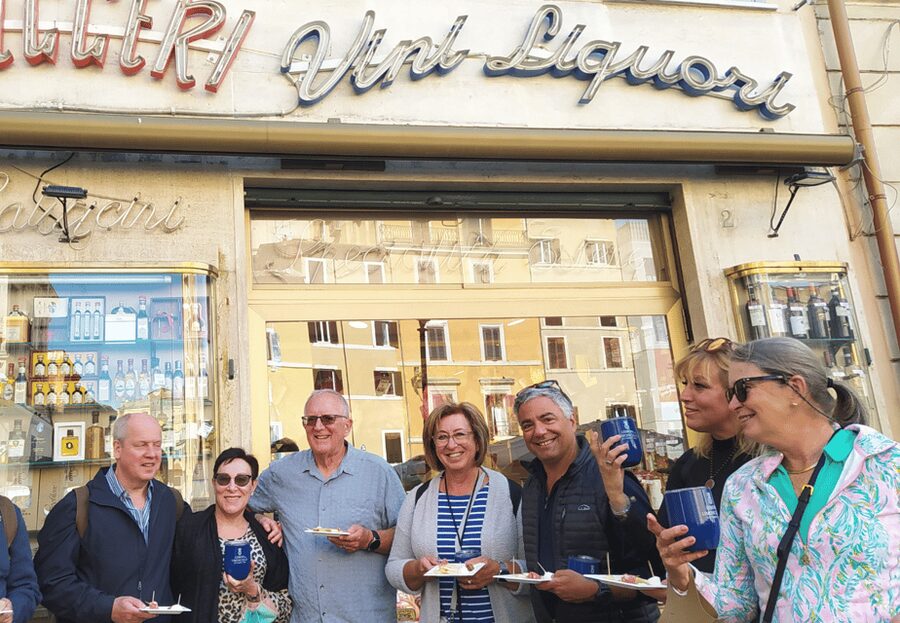
At $81 per person, this is not the cheapest way to eat in Rome. You could buy individual snacks and a plate of pasta for less. The value comes from the number of tastings, the guide, the neighborhood coverage, and the useful advice you gain for the rest of your trip.
Think of it as a guided progressive meal combined with a neighborhood walk. You are paying for access to several food stops without having to research them, order unfamiliar dishes, or worry about choosing a disappointing restaurant.
The price makes the most sense if you are ready to eat enough food to replace a meal. It is less appealing if you prefer a single sit-down dinner, have a restricted diet, or mainly want a market visit and cannot take the morning option.
The private group option may suit families or small groups wanting more control over the pace, but the standard group already offers a personal format because it is limited to 15 people.
Who should book this Roman food tour?
I would recommend it to first-time visitors who want a practical introduction to Roman eating. It is also a good choice for repeat visitors who have already seen the major monuments and want a closer look at daily food culture.
It suits:
- Solo visitors looking for an easy social activity
- Couples who want food and neighborhood history together
- Families with older children who enjoy trying different dishes
- Food-focused visitors who want ordering and shopping tips
- People who prefer several small stops to one formal meal
- Anyone who wants a useful first-day orientation to Rome
I would think twice if you have food allergies, follow a vegan diet, use a wheelchair, or dislike eating on the move. The amount of food can also be a drawback if you want a light morning or evening activity.
My verdict: book it early if food matters to you
This is a strong-value Rome experience because it gives you more than a list of tastings. You learn how pizza bianca differs from ordinary pizza, why supplì matters in Roman cooking, how pasta texture affects a dish, and where the Jewish Ghetto and Trastevere fit into the city’s food culture.
Book the morning option if Campo de’ Fiori Market is a priority. Choose the tour early in your visit so you can return to the shops and restaurants that catch your attention. Bring comfortable shoes, arrive hungry, and leave room for gelato.
If you want an easy, social introduction to Roman food and do not have major dietary or mobility restrictions, I would book this tour.
FAQ
How long does the Rome food and wine tour last?
The activity lasts between two and three and a half hours, depending on the option booked. The main tour description gives a duration of three and a half hours.
Does every tour visit Campo de’ Fiori Market?
No. The morning option includes the market visit. The afternoon tour replaces it with a visit to a typical grocery store and an aperitif because of market opening hours.
What food is included?
Planned tastings include pizza bianca with mortadella, mozzarella with Roman salami, Roman supplì, fried artichoke, fried codfish, pasta, regional wine, and gelato. Additional food is not included.
Is the tour suitable for vegetarians?
A vegetarian participant was accommodated successfully, but the provider cannot guarantee arrangements for special food restrictions. Contact the provider before booking if you need substitutions.
Is the tour suitable for people with allergies or vegans?
No. The activity is listed as unsuitable for people with food allergies and vegans. The provider cannot guarantee accommodations for special food restrictions.
What should I bring to the tour?
Wear comfortable shoes and consider bringing sunglasses, a sun hat, sunscreen, and an umbrella. Large bags and luggage are not allowed.
Recently added around Rome
- Palatine Hill and Roman Forum Tour with Fast-Track Entrance★ 4.2 · 417 reviews
- Tivoli: Villa D’Este & Villa Adriana Pass & App Audioguide★ 4.4 · 364 reviews
- From Rome: Villa D’Este & Villa Adriana Day Trip with Lunch★ 4.4 · 289 reviews
- Vatican Museums & Sistine Chapel Skip-the-Line Guided Tour★ 4.6 · 254 reviews
- Rome: The Three Tenors at St. Paul’s Church Concert Ticket★ 4.7 · 699 reviews
- Tivoli: Villa D’Este Entry Ticket and App Audio Guide★ 4.3 · 191 reviews
- Rome: Capitoline Museums and Centrale Montemartini Tickets★ 4.4 · 328 reviews
- Rome: St. Peter’s Basilica and Papal Tombs Guided Tour★ 4.6 · 477 reviews
Wine Tours, compared.
Tuscany Day Trip from Florence: Siena, San Gimignano, Pisa and Lunch at a Winery
Read our review →
Pisa, Siena, San Gimignano, and Chianti Experience
Read our review →
Small-Group Wine Tasting Experience in the Tuscan Countryside
Read our review →
Tuscany & Montepulciano Day Trip with Lunch & Wine Tasting
Read our review →
SMALL-GROUP Wine Safaris: Tuscan Wine Tasting Tours from Florence
Read our review →
Winner 2025 Florence Sunset Food & Wine Tour by Eating Europe
Read our review →
Siena, San Gimignano, Pisa & Lunch at Winery
Read our review →Browse the lists this tour appears in