Reviewed · ROME TOURS
Rome: Domus Aurea Tour with Virtual Reality Experience
Nero’s palace is hiding under Rome. I like the newly reopened west wing and the chance to see about 30 frescoed halls, but the real treat is the 3D virtual reconstruction that shows how this buried palace may have looked in its imperial prime. The tour also gives you a more balanced picture of Nero than the usual mad-emperor caricature. My main caution is practical: the meeting point can be hard to find, and the introductory talk may feel long before you reach the palace.
I also like that the visit covers both the archaeology and the politics around it. You see where Nero built his private lake, then learn how Vespasian replaced that lake with the Colosseum as a public gesture. Guides such as Alexei, Rosario, Yev, and Linda have been praised for making this complicated story easy to follow.
The Domus Aurea is not a polished monument with broad open rooms and easy paths. It is an active archaeological site, dim, enclosed, and delicate. You need comfortable shoes, a jacket, and patience with a route that may feel less straightforward than Rome’s major outdoor ruins.
In This Review
- Key points to know before you go
- Why the Domus Aurea feels different from Rome’s famous ruins
- Meeting at Domus Aurea, and why timing matters
- Inside the east and west wings
- The Octagonal Room and Roman engineering
- Nero, the fire, and the man behind the myth
- From Nero’s lake to the Colosseum
- How the virtual reality segment works
- Guide quality and group size
- Is the tour worth the added cost?
- Who should book the Domus Aurea VR tour?
- Final recommendation
- FAQ
- How long does the Domus Aurea tour last?
- Is the tour conducted in English?
- Where is the meeting point?
- Is the GetYourGuide voucher the entry ticket?
- What should I bring?
- Is the tour suitable for wheelchair users?
Key points to know before you go
- The west wing is newly open: This tour includes the east wing and the recently reopened west wing, adding more halls to an already large complex.
- The palace is underground: Emperor Trajan built his baths over Nero’s palace, burying it for nearly 1,500 years.
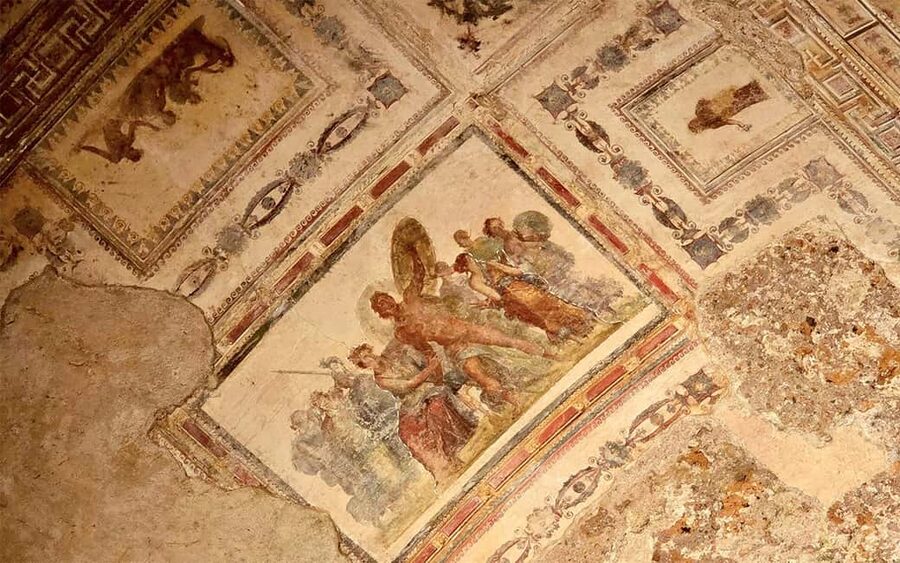
- The frescoes are the star: You will see strange and elegant figures in vaulted rooms, including designs that later influenced Renaissance artists.
- The VR segment changes the visit: The headset and 3D reconstruction help you picture lost porticoes, gardens, fountains, and palace rooms.
- The Colosseum connection is essential: Its site was once Nero’s private lake, and Vespasian’s replacement sent a clear political message.
- The practical setup needs care: Wait outside for the guide holding an OPEN MIND TOURS sign. Your GetYourGuide voucher is not the entry ticket.
Why the Domus Aurea feels different from Rome’s famous ruins
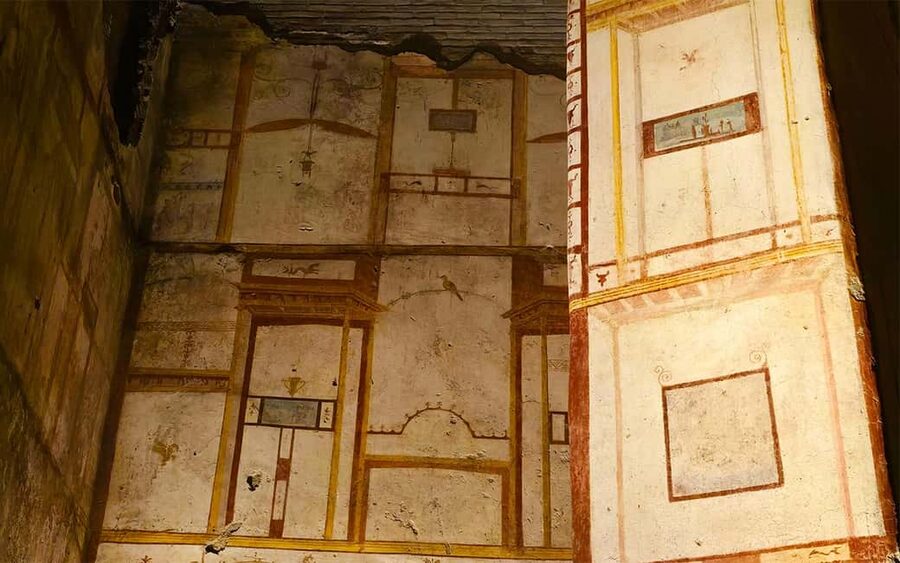
The Domus Aurea does not present itself at first glance as a golden palace. Much of it is buried below the gardens of Oppian Hill, and the rooms you visit are preserved in a shadowy archaeological setting. That contrast is part of the appeal. You are not walking through a fully restored royal residence. You are seeing fragments of an extraordinary project and using your imagination, the guide’s explanations, and the VR sequence to rebuild the rest.
This was Nero’s palace after the great fire of July 64 AD. The complex spread across a large part of central Rome and included halls, gardens, porticoes, fountains, and a private lake. The name Domus Aurea, or Golden House, refers to the lavish decoration and precious materials associated with the project.
The site also carries a difficult question: how much of Rome did Nero take for himself? The answer explains why the palace became such a political embarrassment after his death. Later emperors buried it, built over it, and turned its lake into the Colosseum. In Rome, one ruler’s luxury often becomes another ruler’s public-relations campaign.
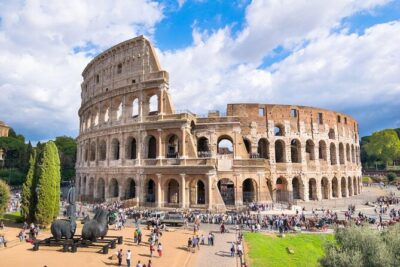
That layered story makes this a strong choice if you have already seen the Colosseum. You will understand the arena differently once you know that it replaced Nero’s private water feature. You can also pair the visit with the Palatine Hill, where Nero extended his imperial residence after the fire.
A few more Rome bookings to compare
- Vatican: Museums & Sistine Chapel Entrance Ticket
★ 4.5 · 144,003 reviews - Vatican Museums & Sistine Chapel Tour with Optional Basilica
★ 4.3 · 67,413 reviews - Colosseum, Roman Forum & Palatine Guided Tour
★ 4.7 · 63,148 reviews
Meeting at Domus Aurea, and why timing matters
The stated duration is two hours, with about 105 minutes spent on the guided visit itself. The tour begins and ends at the Domus Aurea, so you do not need to arrange transport between several sites.
You should arrive early at the coordinates provided with your booking and look for the guide holding an OPEN MIND TOURS sign outside. The meeting arrangement deserves care. The voucher is not the entry ticket because the guide has that ticket. You are expected to meet the guide first, and entry to the Domus Aurea takes place at least 20 minutes after the scheduled guide presentation.
Several people have had trouble finding the entrance, and one visitor needed to call the company to locate the guide. Do not assume that the most obvious gate or address will lead you straight inside. Give yourself extra time, especially if you are coming from another part of Rome.
The outside introduction may cover Nero’s place in Roman history, the foundation of Rome, the Republic, the Empire, and the events surrounding the fire of 64 AD. Alexei has been praised for making this opening lively and helpful. Rosario has also been noted for greeting the group on time and explaining how the palace was constructed.
This pre-tour talk is useful if ancient Roman history is not your strong point. If you already know the period well, it may feel longer than necessary. One person found the outside presentation less useful than the guide inside, while others valued it as a clear starting point. Your best approach is to use it to get your bearings rather than expect the palace tour to begin immediately.
Inside the east and west wings
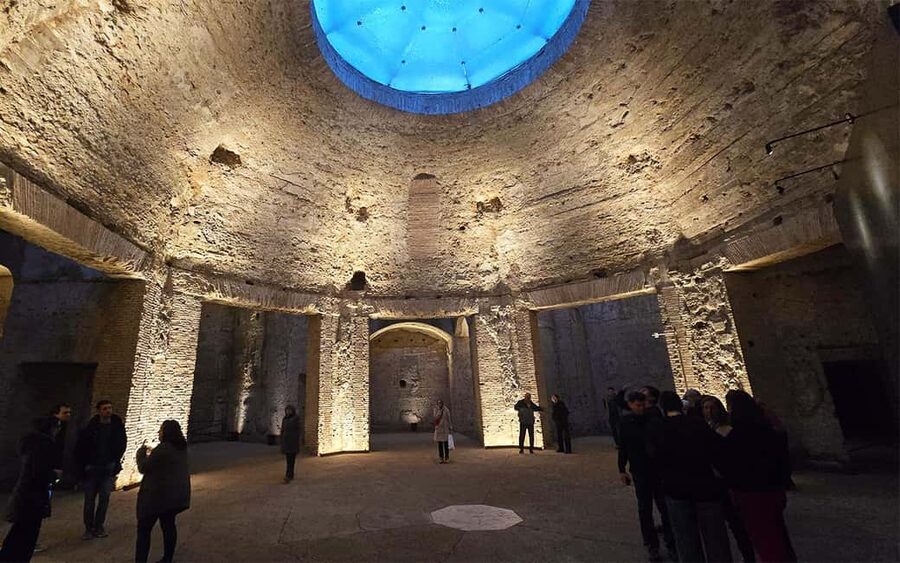
Once inside, the route takes you through vaulted rooms and corridors where the light is low and the atmosphere is cool. That cool temperature is welcome in Rome’s summer heat, but you should bring a jacket because the underground setting can feel chilly.
The tour includes both the east wing and the newly reopened west wing. This is an important reason to choose this version of the visit. The Domus Aurea is far larger than many first-time visitors expect, and the west wing gives you a broader sense of the complex rather than a quick look at a few famous rooms.
You will pass through roughly 30 frescoed halls. Some rooms are large and imposing, while others are defined by narrow passages, high alleys, and the remains of elaborate wall decoration. The frescoes feature unusual figures, decorative borders, and imaginative combinations of human, animal, and plant forms.
The guide helps you read what remains without pretending that every detail is certain. Nero had strong artistic tastes and a sharp intellect, and the decoration reflects both theatrical excess and real artistic sensitivity. The bizarre images do not automatically prove madness. They also show the Roman elite’s interest in Greek art, foreign cultures, mythology, and visual surprise.
Preservation is a serious concern here. The frescoes are delicate, and sections of the palace remain under archaeological care. One visitor felt the site’s protection should come before making access easier or more widespread. That is a fair point. You may find some areas restricted or less visually complete than expected. The reward is not a perfect reconstruction, but the chance to see original Roman decoration in its actual archaeological setting.
The Octagonal Room and Roman engineering
The Octagonal Room is one of the tour’s major architectural moments. Its shape and roof design show the ambition of Nero’s builders, who were experimenting with large interior spaces, complex vaults, and dramatic effects.
There is a long-standing possibility that the room once had a rotating ceiling. The idea is astonishing, though the wording matters: it may have rotated, rather than being a proven feature you can see operating today. Your guide can place this possibility in the wider story of Roman engineering.
This is where the visit becomes more than an art tour. The Domus Aurea reveals how Roman builders handled concrete, vaulting, light, water, and large ceremonial spaces. A visitor with a background in heavy construction found the materials and ancient building systems especially compelling. You do not need technical training to appreciate the achievement. The scale alone makes the point.
The palace was designed to use light in careful ways. Porticoes, fountains, and gardens worked together with the rooms, creating changing views and reflections. Underground, you see the enclosed remains. The VR sequence later helps restore the relationship between indoor halls and outdoor spaces.
The route is not ideal for everyone. The experience is not suitable for wheelchair users or people with mobility impairments. Large bags, luggage, selfie sticks, tripods, professional cameras, drones, weapons, sharp objects, aerosols, sprays, and glass objects are not allowed. Assistance dogs are allowed, but other pets are not.
Still Rome, but a slower afternoon:
- Vatican Museums, Sistine Chapel & St Peter’s Basilica Guided Tour
★ 4.5 · 39,149 reviews - Rome: Colosseum, Palatine Hill and Roman Forum Guided Tour
★ 4.8 · 32,814 reviews - Rome: Guided Tour of Colosseum, Roman Forum & Palatine Hill
★ 4.7 · 27,897 reviews - Rome: Colosseum & Forum with Audio Guide App -Optional Arena
★ 4.2 · 24,770 reviews
Nero, the fire, and the man behind the myth
The tour’s historical argument is clear: the standard Nero story needs more care. Popular culture often presents him as the emperor who watched Rome burn while playing music. The evidence is less simple.
The fire began in July 64 AD and destroyed much of the city, causing thousands of deaths among a population of about one million. Nero was at his seaside villa outside Rome when the fire began, according to the information presented for this experience. He then opened his gardens to people without homes, distributed essential goods, lowered the price of grain, and introduced new building rules.
Those rules included minimum distances between buildings and greater use of stone and brick instead of wood. That does not erase the accusations against Nero. He faced criticism for delays in rescue work and for providing too little money for rebuilding. His response to the disaster included genuine public measures, but it also gave him the chance to seize damaged areas and enlarge his palace.
That mixture of practical action and personal ambition is what makes the story interesting. You are not asked to admire Nero. You are encouraged to see how an emperor could be intelligent, artistically sensitive, politically shrewd, and deeply unpopular at the same time.
The palace became a symbol of excess. Its private lake, gardens, and enormous halls were hard to justify while ordinary Romans were still recovering. Nero’s popularity collapsed, and he took his own life in June 68 AD. The tour uses that ending to connect the palace to the political decisions that followed.
From Nero’s lake to the Colosseum
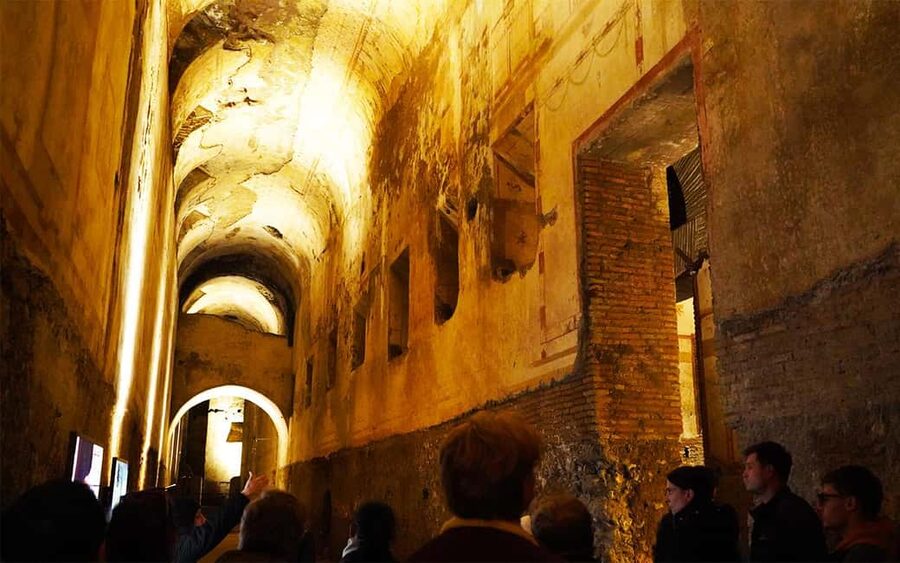
After Nero’s death, Vespasian built the Colosseum where the lake had been. This was practical, popular, and politically clever. A public arena for gladiator games allowed the new emperor to present himself as a ruler who was returning central Rome to the people.
The change also sent a message. Nero’s private pleasure ground became a public entertainment venue. The Colosseum was not only a building project. It helped Vespasian distance himself from Nero and win public support during Rome’s recovery.
About 50 years later, Trajan built a huge bath complex over the Domus Aurea. The palace disappeared from view and remained forgotten for nearly 1,500 years. Renaissance artists rediscovered the rooms in the 1500s, entering the underground spaces and copying the frescoes.
Those discoveries had a major effect on European art. The decorative style became known as grotesque, from the Italian word for underground chambers or caves. The Domus Aurea therefore links imperial Rome with the Renaissance rediscovery of antiquity. You are looking at ancient paintings, but you are also seeing the beginning of a later artistic fascination with Rome.
How the virtual reality segment works
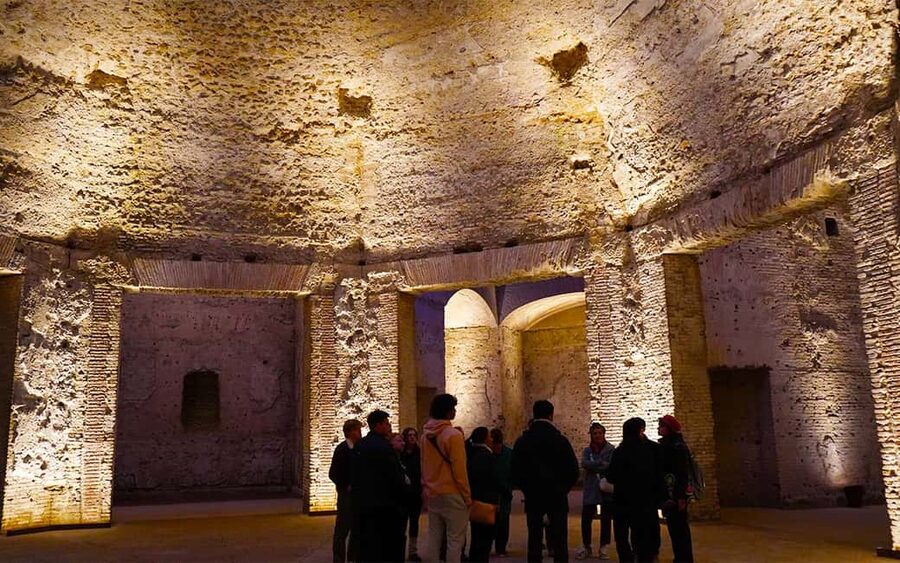
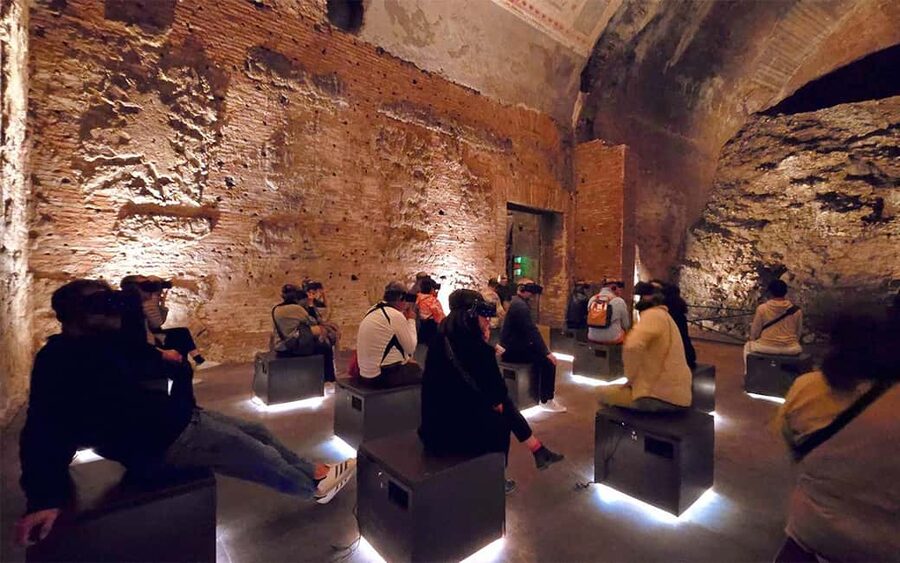
The VR portion is the tour’s clearest practical advantage. It shows a 3D reconstruction of the palace at its height, including interior halls and an exterior portico that was still unfinished when Nero died.
You sit for this part of the experience. That short pause is welcome after moving through the archaeological rooms, and the visual change helps you understand what the bare walls cannot show. Look around in every direction during the sequence. The reconstruction is designed to reward attention beyond the point directly in front of you.
The VR does not replace the physical visit. It works because you have just seen the surviving vaults, wall fragments, and room shapes. When the digital version adds gardens, fountains, porticoes, light, and decoration, you can match the imagined palace to the actual remains.
This was the feature that left the strongest impression on several people, and I understand why. Ancient ruins can be hard to picture, especially when a building has been buried, stripped, altered, and partly excavated. The virtual reconstruction supplies scale and atmosphere without pretending that the original palace is still standing above ground.
It is also useful for families and anyone who finds a standard archaeology talk too abstract. The VR makes the palace legible in a few minutes. The tradeoff is that it remains an interpretation, not a surviving view of Nero’s home. Treat it as a visual aid, not a perfect answer to every question about the building.
Guide quality and group size
The guide can make or break this visit because the rooms do not always provide much written information. You need to hear the explanations, and a large group can make that difficult.
Alexei has been praised for his warmth, punctuality, and broad introduction to Italian and Roman history. Yev has been singled out for his detailed explanations and helpful manner. Linda was praised for explaining a complicated site clearly, while Rosario received strong marks for his opening presentation. Laura, one of the guides inside the Domus Aurea, was appreciated for explaining its discovery and excavation.
The quality is not guaranteed to feel identical every time. Some people found a guide hard to understand or felt that he began speaking before the whole group had gathered. Another person noted that the first guide’s tablet had no battery, so planned images could not be shown.
If you are in a large group, stay close to the guide and move promptly when the group changes rooms. There may not be signs or written panels to fill in what you miss. If hearing every word is important to you, a smaller group would be preferable, though group size is not specified here.
Is the tour worth the added cost?
No price is provided, so I cannot judge it against a precise budget. The sensible value question is what you get beyond basic admission: an English-speaking guide, help with the entry process, historical explanation, access to the east and west wings, and the VR reconstruction.
If you only want to enter the archaeological site at the lowest possible cost, direct booking may be worth comparing. One person specifically felt that booking directly with the Domus Aurea could save money. But a direct visit may not provide the same outside introduction, connected story, or guide support.
I think the added cost makes more sense if Nero, Roman engineering, or the Colosseum’s political story interests you. It is also useful if you have visited Pompeii or the Colosseum and want a more focused look at Roman art, architecture, and imperial power.
The two-hour length fits well into a Rome day. You can schedule it between the Colosseum and another central sight, but do not cut the timing too closely because the meeting procedure begins outside and entry follows the guide’s presentation. Free cancellation is available up to three days in advance for a full refund, which gives you some flexibility when planning.
Who should book the Domus Aurea VR tour?
I would choose this for you if you want an unusual ancient site rather than another open-air monument. It suits adults interested in art, archaeology, Roman politics, and building technology. The VR also gives the tour a strong hook for older children and teenagers who need help picturing a vanished palace.
It is less suitable if you dislike enclosed spaces, need step-free access, want to explore at your own pace, or prefer a site with complete buildings and clear signs. The tour moves as a group, and the archaeological setting requires care.
Wear comfortable shoes and bring a jacket. Leave large bags and prohibited equipment behind. Most of all, arrive early enough to find the guide without turning the first ten minutes into a hilltop treasure hunt.
Final recommendation
I recommend booking this tour if you want context, not just entry. The Domus Aurea is impressive on its own, but the guide connects Nero’s palace to the fire, his downfall, the Colosseum, Trajan’s baths, and the Renaissance artists who rediscovered the buried rooms.
The newly opened west wing and the 3D reconstruction make this especially worthwhile now. Just plan carefully for the meeting point, listen closely in crowded rooms, and remember that the palace survives as a fragile archaeological site, not a restored royal residence.
FAQ
How long does the Domus Aurea tour last?
The full experience lasts two hours. The guided visit inside the Domus Aurea lasts about 105 minutes.
Is the tour conducted in English?
Yes. The live tour guide language is English.
Where is the meeting point?
The meeting point is outside the Domus Aurea at coordinates 41.89113235473633, 12.495589256286621. Look for a guide holding an OPEN MIND TOURS sign.
Is the GetYourGuide voucher the entry ticket?
No. The voucher is not the entry ticket. The guide has the entry ticket, and admission takes place at least 20 minutes after the scheduled guide presentation.
What should I bring?
Bring comfortable shoes and a jacket. The underground site can feel cool.
Is the tour suitable for wheelchair users?
No. The experience is not suitable for wheelchair users or people with mobility impairments.
Recently added around Rome
- Palatine Hill and Roman Forum Tour with Fast-Track Entrance★ 4.2 · 417 reviews
- Tivoli: Villa D’Este & Villa Adriana Pass & App Audioguide★ 4.4 · 364 reviews
- From Rome: Villa D’Este & Villa Adriana Day Trip with Lunch★ 4.4 · 289 reviews
- Vatican Museums & Sistine Chapel Skip-the-Line Guided Tour★ 4.6 · 254 reviews
- Tivoli: Villa D’Este Entry Ticket and App Audio Guide★ 4.3 · 191 reviews
- Rome: The Three Tenors at St. Paul’s Church Concert Ticket★ 4.7 · 699 reviews
- Rome: Capitoline Museums and Centrale Montemartini Tickets★ 4.4 · 328 reviews
- Rome: St. Peter’s Basilica and Papal Tombs Guided Tour★ 4.6 · 477 reviews
Rome Tours, compared.
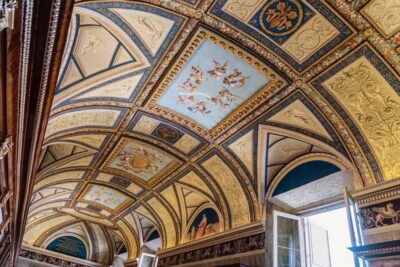
Vatican Museums & Sistine Chapel Tour with Optional Basilica
Read our review →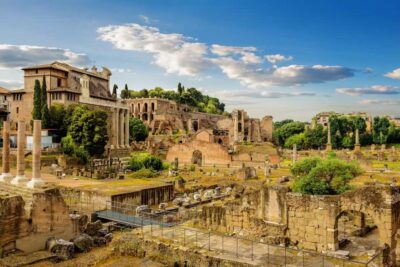
Colosseum, Roman Forum & Palatine Guided Tour
Read our review →
Vatican Museums, Sistine Chapel & St Peter’s Basilica Guided Tour
Read our review →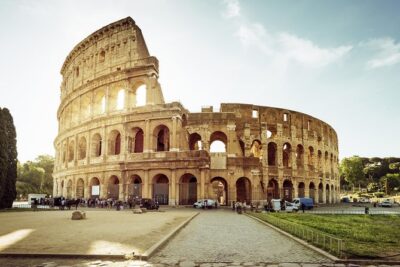
Colosseum, Palatine Hill and Roman Forum Guided Tour
Read our review →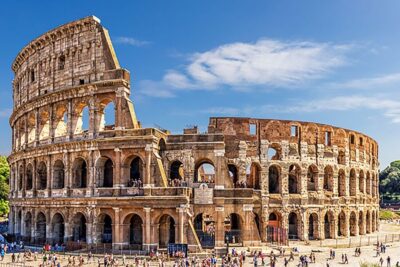
Guided Tour of Colosseum, Roman Forum & Palatine Hill
Read our review →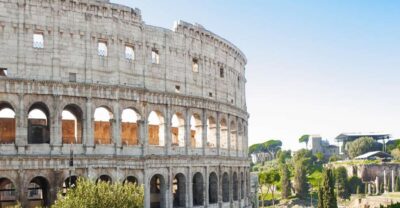
Colosseum & Forum with Audio Guide App -Optional Arena
Read our review →