Reviewed · ROME TOURS
Rome: Crypts and Catacombs Underground Tour with Transfers
Rome keeps its strangest stories underground. This tour links the Capuchin Crypt, ancient Christian catacombs, and Basilica of San Martino ai Monti, giving you a side of the city that busy piazzas and grand museums cannot show. I especially like the comfortable coach transfers and the strong local guides, including guides such as Cat, Chris, Andrea, and Sabina, who have been praised for clear explanations and a good sense of humor. The main drawback is pace: the Capuchin Crypt can feel rushed, and the underground sites involve plenty of walking, stairs, and cool, cramped passages.
I also like the way this experience moves across three very different places. You get the macabre bone decorations of the Capuchins, the solemn burial tunnels of early Christians, and the layered church history of San Martino ai Monti. At about $74.02 per person, it is fair value if you want transport, admission, and guidance bundled together, but less appealing if you prefer lingering alone at each site.
In This Review
- Key details to know before you book
- Meeting at Piazza Barberini
- The Capuchin Crypt and its bone decorations
- The coach ride to Rome’s catacombs
- Inside the early Christian burial tunnels
- San Martino ai Monti and Rome’s layered churches
- How good are the guides?
- Time, group pace, and physical demands
- Is $74.02 a fair price?
- Who should book this underground Rome tour?
- My verdict: book it for context, not just chills
- FAQ
- Where does the tour start?
- Where does the tour end?
- How long does the tour last?
- What does the After Hours option include?
- Is transportation included?
- Is the tour offered in English?
- What should I wear?
- Is the tour suitable for wheelchair users or strollers?
Key details to know before you book
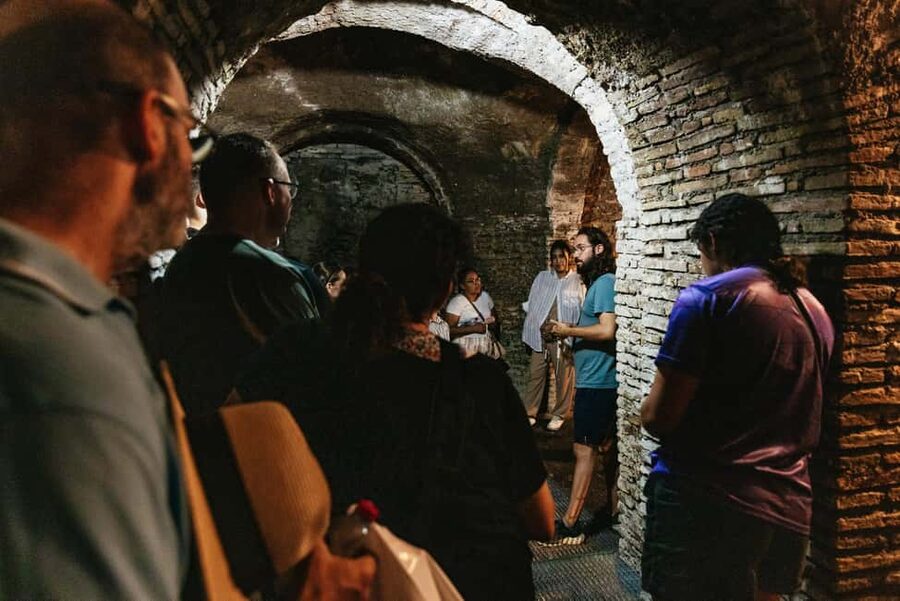
- Nearly 4,000 Capuchin monks’ bones form the eerie decorations inside the famous Bone Chapel.
- Three underground or historic stops are combined in one outing, with the Capuchin Crypt, Roman catacombs, and San Martino ai Monti.
- Air-conditioned coach transfers save you the trouble of arranging transport between central Rome and the catacombs.
- The Capuchin Crypt uses an audio guide, while the catacombs and basilica are visited with a live guide.
- The day tour lasts about 3.5 hours, while the After Hours option lasts about 2.5 hours and leaves out San Martino ai Monti.
- Modest clothing and comfortable shoes are essential, and the sites cannot accommodate wheelchair users, strollers, or people needing mobility assistance.
Meeting at Piazza Barberini
The tour begins in central Piazza Barberini, beside the large Triton Fountain. This is a practical meeting point because Barberini is served by Line A of Rome’s Metro, the red line, and the two listed meeting locations are close together around the piazza.
Give yourself enough time to find the fountain and the guide. Piazza Barberini is a busy city square, and a few minutes spent getting your bearings will make the start less stressful. The tour ends back at the same general meeting point, which makes it easy to continue sightseeing in central Rome afterward.
There is no hotel pickup or drop-off. You need to reach Piazza Barberini on your own, but that is a reasonable trade for beginning in a central location rather than waiting for scattered hotel pickups.
A few more Rome bookings to compare
- Vatican: Museums & Sistine Chapel Entrance Ticket
★ 4.5 · 144,003 reviews - Vatican Museums & Sistine Chapel Tour with Optional Basilica
★ 4.3 · 67,413 reviews - Colosseum, Roman Forum & Palatine Guided Tour
★ 4.7 · 63,148 reviews
The Capuchin Crypt and its bone decorations
The first stop is the Capuchin Crypt, beneath the Church of Santa Maria della Concezione dei Cappuccini. It is the most famous stop on the tour, and also the one most likely to make you pause.
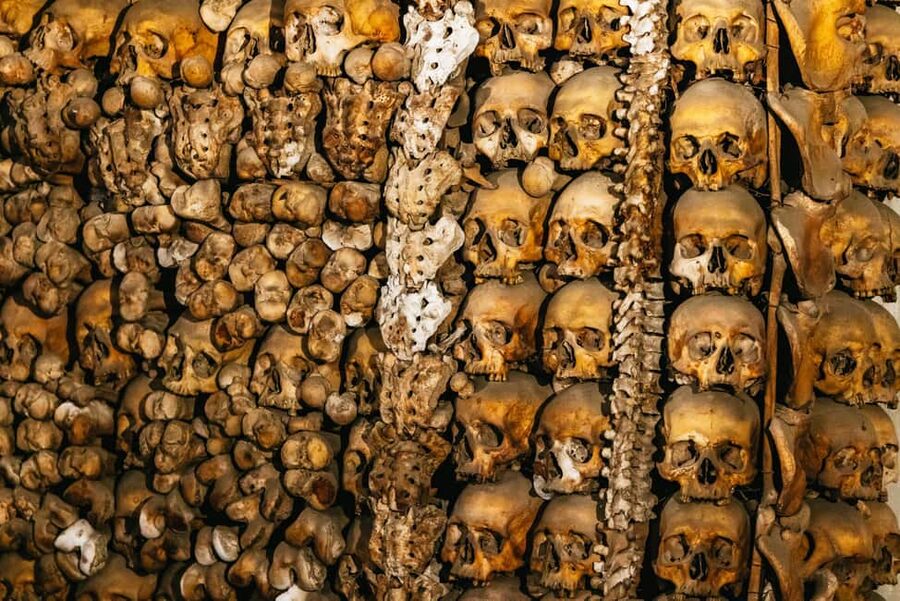
The Capuchin monks used the bones of nearly 4,000 deceased brothers to decorate several small crypt chapels. Bones are arranged into patterns that cover walls, ceilings, and floors. The effect is unsettling, but the site is not meant as a simple horror attraction. The displays reflect the Capuchin view of mortality, humility, and the temporary nature of the body.
That context matters. Without it, the crypt can seem like an elaborate curiosity. With it, the rooms become a direct reminder of the order’s spiritual outlook. You will see the macabre, but also a serious religious message about death and remembrance.
Your visit here is self-guided with an audio guide. The museum section also covers Capuchin history, includes relics connected with the life of St. Francis, and displays a painting by Caravaggio. The Caravaggio is an important reason not to hurry through the museum, especially if you have already come for the famous Roman art collection but want to see something in a quieter setting.
The practical issue is time. The stop lasts about 45 minutes, and that includes both the museum and crypt. Several people have found the visit too rushed to hear every part of the audio guide. If you want the full commentary, move with purpose and avoid spending too long in the first room.
There are restrooms at this stage, so use them before boarding the coach. The later catacomb passages are not the place to discover you should have planned ahead.
Dress respectfully. Shorts, short skirts, sleeveless shirts, and similar clothing are not allowed. Comfortable shoes matter here, but they become even more important in the catacombs.
The coach ride to Rome’s catacombs
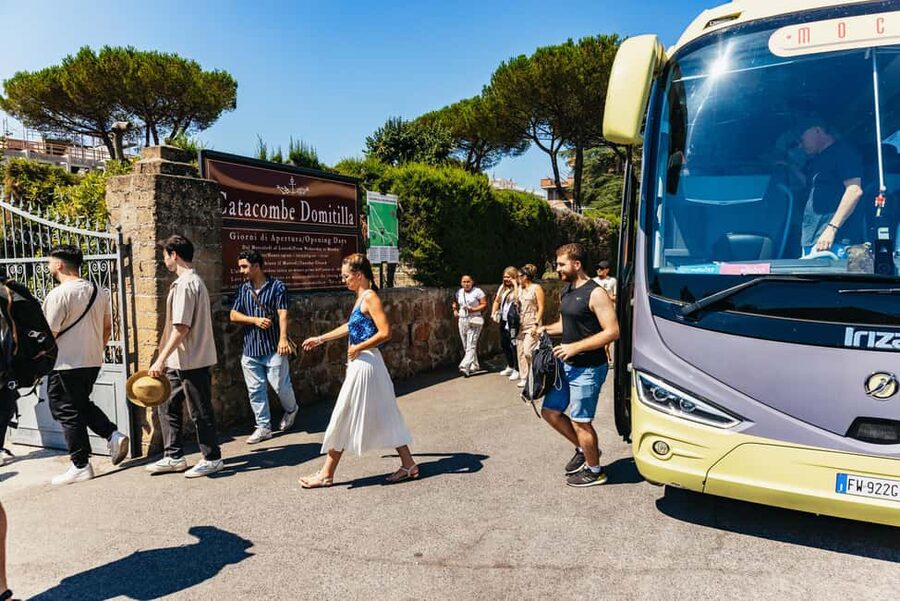
After the Capuchin Crypt, you board an air-conditioned coach for a ride of roughly 30 minutes. This transfer is one of the tour’s practical strengths.
The Roman catacombs are outside the compact historic center, and getting there by public transport can take planning. With the coach, you can listen to the guide’s background about Rome during the transfer rather than worry about routes, tickets, or directions.
The guide may use this time to connect the sites. The Capuchin Crypt concerns a later religious order and its dead, while the catacombs take you back almost 2,000 years to the first Christian communities in Rome. That change in time and setting helps the day feel like a story about Rome’s underground layers, not just a collection of spooky rooms.
The coach is also a welcome break. The overall experience includes substantial walking, and the transfer gives you a chance to sit down before the most physically demanding section.
Inside the early Christian burial tunnels
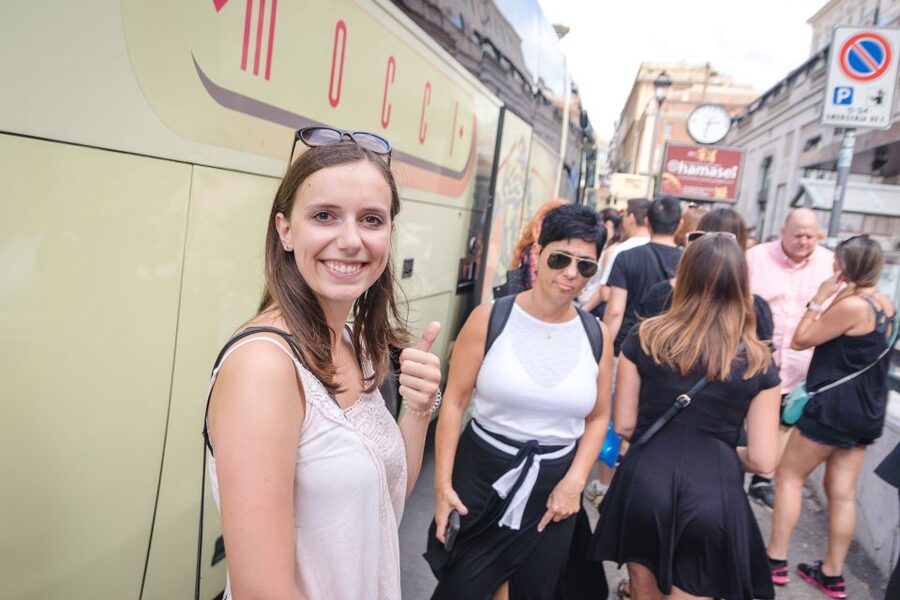
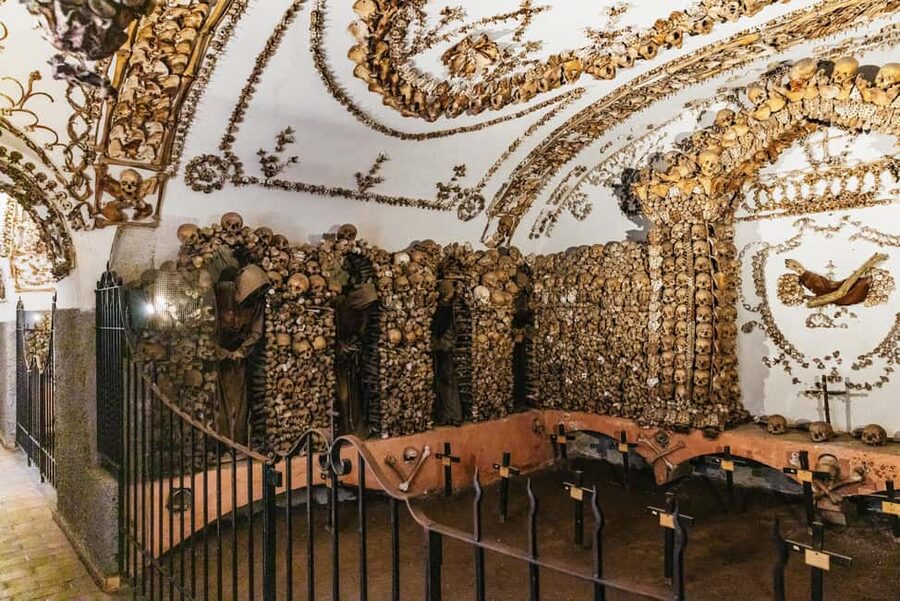
The catacombs are the heart of the experience for me. These underground passages served as burial grounds and places of worship for early Christians, whose faith was forbidden under some Roman rulers. The tunnels were hidden beneath the city and its roads, allowing communities to bury their dead and practice their religion away from public view.
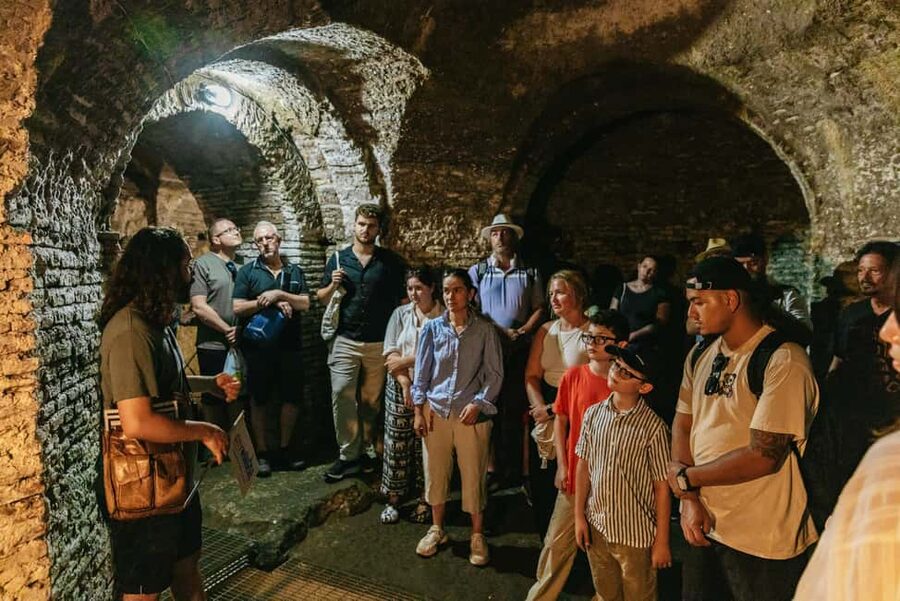
A live guide leads the visit, usually for about 45 minutes. Guides explain the burial customs, the construction of tombs in solid rock, and the role these sites played in early Christian life. The better guides make the narrow corridors easier to understand because the important details are not always obvious when you are looking at bare walls and recessed burial spaces.
The atmosphere is cool, dank, and solemn. One useful bit of advice is to bring a light layer, even in warm weather. The temperature underground can feel noticeably different from Rome above ground.
You should also expect uneven walking, stairs, and passages that may feel tight in places. The spaces are manageable for many people, but this is not a gentle stroll. Tall people may find some parts surprisingly comfortable, yet the repeated up-and-down walking can be tiring.
Photography is not allowed during the catacomb visit. That may disappoint anyone hoping to document the walls, but it also keeps the visit quiet and respectful. You will need to pay attention in the moment rather than rely on photographs later.
The quality of the catacomb guide can shape the whole tour. Some departures have included a nun who lives at the catacombs, adding a personal religious perspective to the visit. Other guides, including Chris, Andrea, Alain, and Cat, have been praised for answering questions, keeping the group engaged, and explaining difficult subjects without making the mood too heavy.
The stories can be sad. Burial sites naturally bring a serious tone, and the experience is not only about eerie atmosphere. If you approach the catacombs as a window into early Christian life, you will get more from the visit than if you expect a ghost tour.
Still Rome, but a slower afternoon:
- Vatican Museums, Sistine Chapel & St Peter’s Basilica Guided Tour
★ 4.5 · 39,149 reviews - Rome: Colosseum, Palatine Hill and Roman Forum Guided Tour
★ 4.8 · 32,814 reviews - Rome: Guided Tour of Colosseum, Roman Forum & Palatine Hill
★ 4.7 · 27,897 reviews - Rome: Colosseum & Forum with Audio Guide App -Optional Arena
★ 4.2 · 24,770 reviews
San Martino ai Monti and Rome’s layered churches
The final stop is Basilica of San Martino ai Monti, one of the least familiar places on the route. The church dates to the fourth century and was built over older Roman foundations.
This stop changes the mood again. After the bones and burial tunnels, you return to a living church with Baroque frescoes, ancient mosaics, and traces of a titulus, an early Christian place of worship. The site shows how Rome repeatedly built new religious spaces over older foundations.
The underground chambers are especially useful for understanding the city’s layered past. You are not simply looking at one church from one period. You are seeing evidence of Roman construction, early Christian worship, and later Catholic decoration in the same place.
The guided visit lasts about 30 minutes. That is enough for an introduction, but not enough for a slow architectural study. Listen closely as the guide points out the older remains, because some details can be easy to miss among the later decoration.
Sunday visits are not guaranteed because liturgical activities may close the church to tour groups. If San Martino ai Monti is important to you, avoid treating the Sunday departure as certain. The first two stops remain the main anchors of the experience, but the final church adds real value when it is open.
The After Hours option does not include San Martino ai Monti. It lasts about 2.5 hours instead of the roughly 3.5-hour daytime tour, so it suits you if you want the crypts and catacombs without the extra church visit. If you are interested in Rome’s changing religious architecture, choose the daytime option.
How good are the guides?
The strongest part of this experience is often the guiding. Names that have received especially warm praise include Cat, Chris, Andrea, Sabina, Francesca, Martina, Inti, Megan, Alain, and Elan. Guides change, of course, but these examples show the sort of approach you can encounter.
The best guides do more than recite dates. Inti has added music and personal anecdotes to the transfers. Sabina has been praised for connecting Roman history and culture while answering questions. Chris has kept a full outing interesting from start to finish, and Andrea has balanced useful information with humor.
That last point matters in a crypt and catacomb tour. The subject can become gloomy, and a warm, lively guide helps without making light of the dead. The strongest commentary gives you religious, archaeological, and social context while leaving room for respectful silence.
The tour may use an English or Spanish-speaking guide, depending on the option selected. The Capuchin Crypt itself is visited with an audio guide, so expect a change in style between the first and second stops.
Time, group pace, and physical demands
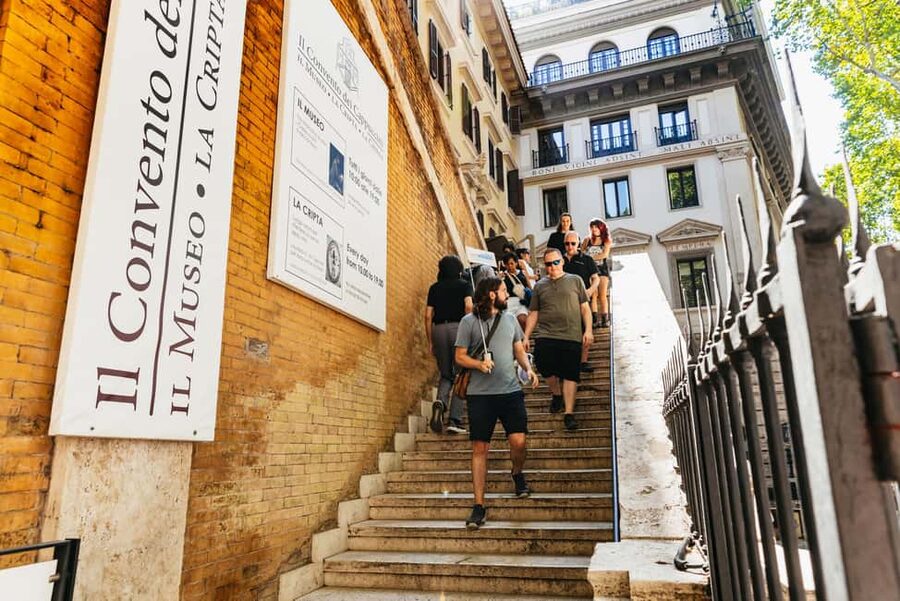
The standard experience lasts between 2.5 and 3.5 hours, depending on the selected departure and format. The advertised daytime route includes approximately 45 minutes at the Capuchin Crypt, 30 minutes of transport, 45 minutes at the catacombs, another 30-minute transfer, and about 30 minutes at San Martino ai Monti.
That schedule is efficient, but not leisurely. You can see three places in one outing, yet you will not have unlimited time in any of them. The Capuchin Crypt is the stop most likely to feel compressed because the audio guide contains more material than the allotted visit allows.
I would not choose this tour if you need frequent rest stops or have difficulty with stairs. Wheelchair users, people with mobility impairments, and anyone needing special assistance cannot be accommodated. Strollers and baby carriages are also not allowed.
Wear shoes with good support. The coach reduces some walking between sites, but it does not remove the walking inside them. The catacombs, in particular, involve uneven floors and repeated changes in level.
Is $74.02 a fair price?
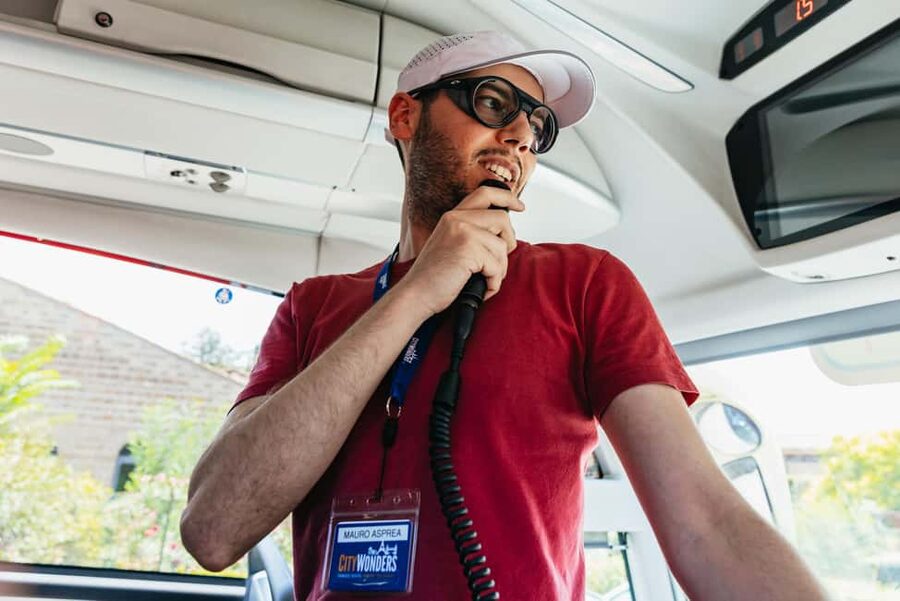
At $74.02 per person, the tour offers solid value if you want a guided introduction rather than arranging the pieces yourself. Your price covers transport by air-conditioned bus, entry to the Capuchin Crypt and Museum, the Capuchin audio guide, admission to the Roman catacombs, and admission to San Martino ai Monti on the daytime option.
The skip-the-line access also matters. Rome’s major sights can consume a morning in queues, and direct entry keeps this outing focused on the sites themselves. You are paying for convenience as well as admission.
The value is weaker if you want long stretches of independent time. The fixed schedule moves you along, and the Capuchin museum in particular deserves more than a quick listen if you are interested in art and religious history.
I consider the standard daytime tour the better buy for most people because it includes San Martino ai Monti. The After Hours option is shorter and may offer a more atmospheric outing, but the basilica is not included. Pick it only if the crypts and catacombs are your clear priority.
Free cancellation up to 24 hours before the activity and the option to reserve now and pay later add flexibility, especially when your Rome schedule is still shifting.
Who should book this underground Rome tour?
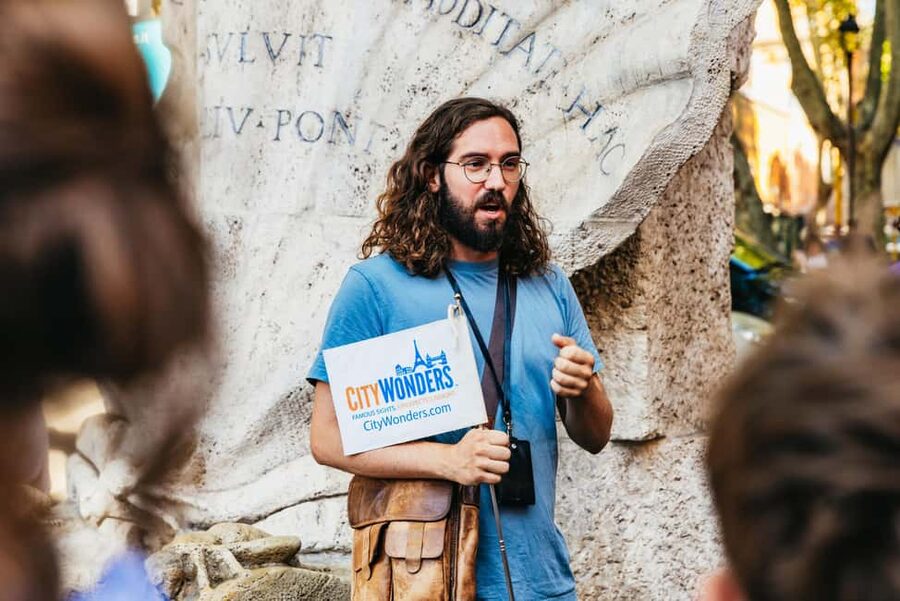
I would recommend it to anyone who has already seen some of Rome’s major monuments and wants a different angle. It also suits you if early Christianity, religious art, archaeology, or the rituals surrounding death interest you.
The tour is a good match for:
- First-time Rome visitors who want an organized route beyond the usual monuments
- People who prefer a guide to explain difficult historical material
- Visitors who want transport to the catacombs without arranging it independently
- Those comfortable with cool underground rooms, stairs, and uneven surfaces
- Art lovers interested in Caravaggio and the Capuchin museum
- Religious visitors who want to see early Christian burial and worship sites
I would skip it if you dislike enclosed spaces, need a slow pace, or want to take photographs throughout the visit. It is also a poor fit for anyone who cannot manage the walking and stairs.
My verdict: book it for context, not just chills
This is a worthwhile Rome experience because it connects three distinct chapters of the city’s past. The Capuchin Crypt supplies the shock, the catacombs provide the emotional and historical weight, and San Martino ai Monti explains how Rome kept building over its own earlier worlds.
Book the daytime tour if you want the fullest route and can handle a busy schedule. Choose After Hours only if a shorter outing focused on the crypts and catacombs suits you better. I would also avoid Sunday if the basilica is a must-see, and I would wear respectful clothing, supportive shoes, and a light layer.
The tour is not perfect. The first stop can feel hurried, and the underground walking is real work. But the transport, direct entry, and consistently strong guiding make the $74.02 price reasonable for a well-organized look beneath Rome’s streets.
FAQ
Where does the tour start?
The tour starts in central Piazza Barberini, near the large Triton Fountain. Piazza Barberini is served by Barberini Metro station on Line A, the red line.
Where does the tour end?
The activity ends back at the meeting point in Piazza Barberini.
How long does the tour last?
The daytime tour lasts approximately 3.5 hours, although the stated duration range is 2.5 to 3.5 hours depending on the selected option and starting time.
What does the After Hours option include?
The After Hours option visits the Capuchin Crypts and Rome’s catacombs. It lasts about 2.5 hours and does not include Basilica of San Martino ai Monti.
Is transportation included?
Yes. Transportation between the sites is provided by air-conditioned coach. Hotel pickup and drop-off are not included.
Is the tour offered in English?
Yes. English and Spanish-speaking guide options are available, depending on the selected option.
What should I wear?
Wear comfortable shoes and modest clothing. Shorts, short skirts, and sleeveless shirts are not allowed at the sites.
Is the tour suitable for wheelchair users or strollers?
No. Wheelchair users, people with mobility impairments, guests needing special assistance, strollers, and baby carriages cannot be accommodated.
Recently added around Rome
- Palatine Hill and Roman Forum Tour with Fast-Track Entrance★ 4.2 · 417 reviews
- Tivoli: Villa D’Este & Villa Adriana Pass & App Audioguide★ 4.4 · 364 reviews
- From Rome: Villa D’Este & Villa Adriana Day Trip with Lunch★ 4.4 · 289 reviews
- Vatican Museums & Sistine Chapel Skip-the-Line Guided Tour★ 4.6 · 254 reviews
- Rome: The Three Tenors at St. Paul’s Church Concert Ticket★ 4.7 · 699 reviews
- Tivoli: Villa D’Este Entry Ticket and App Audio Guide★ 4.3 · 191 reviews
- Rome: Capitoline Museums and Centrale Montemartini Tickets★ 4.4 · 328 reviews
- Rome: St. Peter’s Basilica and Papal Tombs Guided Tour★ 4.6 · 477 reviews
Rome Tours, compared.
Vatican Museums & Sistine Chapel Tour with Optional Basilica
Read our review →
Colosseum, Roman Forum & Palatine Guided Tour
Read our review →
Vatican Museums, Sistine Chapel & St Peter’s Basilica Guided Tour
Read our review →
Colosseum, Palatine Hill and Roman Forum Guided Tour
Read our review →
Guided Tour of Colosseum, Roman Forum & Palatine Hill
Read our review →
Colosseum & Forum with Audio Guide App -Optional Arena
Read our review →