Reviewed · PRIVATE
Rome: Caracalla Baths Express Small-Group or Private Tour
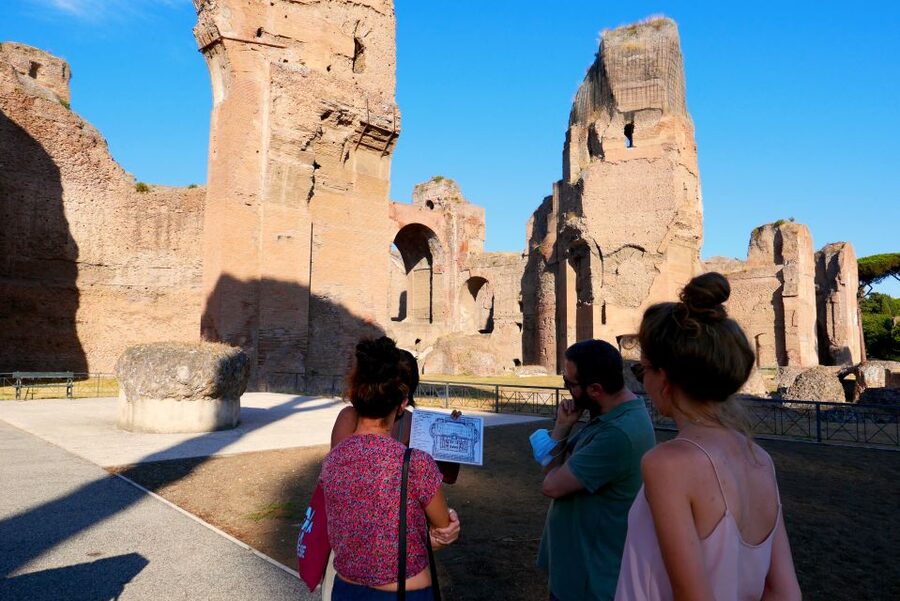
Rome’s grandest spa is hiding in plain sight. The Caracalla Baths offer huge walls, patterned mosaics, and a clear look at how Roman leisure worked. I like the compact one-hour format, and I like that an archaeologist guide turns bare ruins into a readable place. The main drawback is time: one hour can feel tight, especially if the walk from the Circo Massimo meeting point cuts into your visit.
This is also a calm change from Rome’s busiest ancient sights. Past guides such as Mario, Chiara, Sara, Marco, and Francesca have been praised for humor, warmth, and clear explanations. At $70 per person, the tour is not the cheapest hour in Rome, but skip-the-line entry, a small group capped at 10, and a professional guide make it a fair choice for visitors who want the site to make sense quickly.
In This Review
- Key points to know before you book
- Why the Caracalla Baths deserve an hour
- Meeting at Circo Massimo and reaching the site
- Entering the colossal thermal complex
- Following a Roman bathing routine
- The clever heating system beneath your feet
- Why a small group makes a difference
- Is $70 fair for a one-hour tour?
- Who will enjoy this tour most?
- How this visit fits into a Rome day
- Final verdict: book it for clear context, not endless wandering
- FAQ
- Where does the Caracalla Baths tour meet?
- How early should I arrive?
- How long does the tour last?
- What is included in the price?
- Is the tour available in English?
- How many people can join the small group?
- Is the site wheelchair accessible?
- What should I bring, and what is not allowed?
Key points to know before you book
- The baths are much larger than their surviving walls first suggest: You walk through monumental rooms built for exercise, washing, rest, and social life.
- The tour follows a typical third-century day: Your guide explains how Romans moved through the thermal complex and used its many services.
- Ancient heating is a major highlight: You learn how labor-intensive underfloor heating helped control temperatures from room to room.
- A small group keeps questions practical: The maximum is 10 people, with private tours also available.
- The meeting point requires a little planning: Meet outside Circo Massimo Metro, in front of the FAO building, then follow the guide to the baths.
- The visit is short and focused: It works well between major Rome sights, but it is not designed for a long, slow archaeological wander.
Why the Caracalla Baths deserve an hour
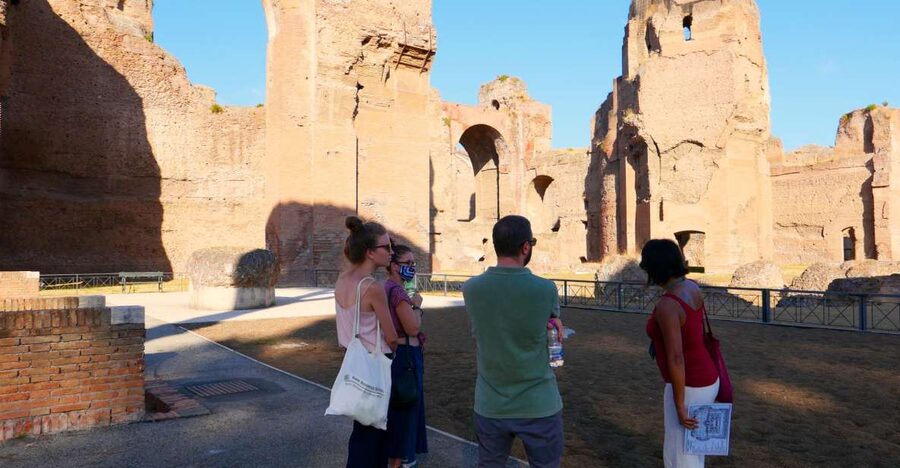
Rome has no shortage of ancient ruins. Some are famous for a single dramatic view, while others reward you only after a guide explains what you are seeing. The Baths of Caracalla belong to the second group.
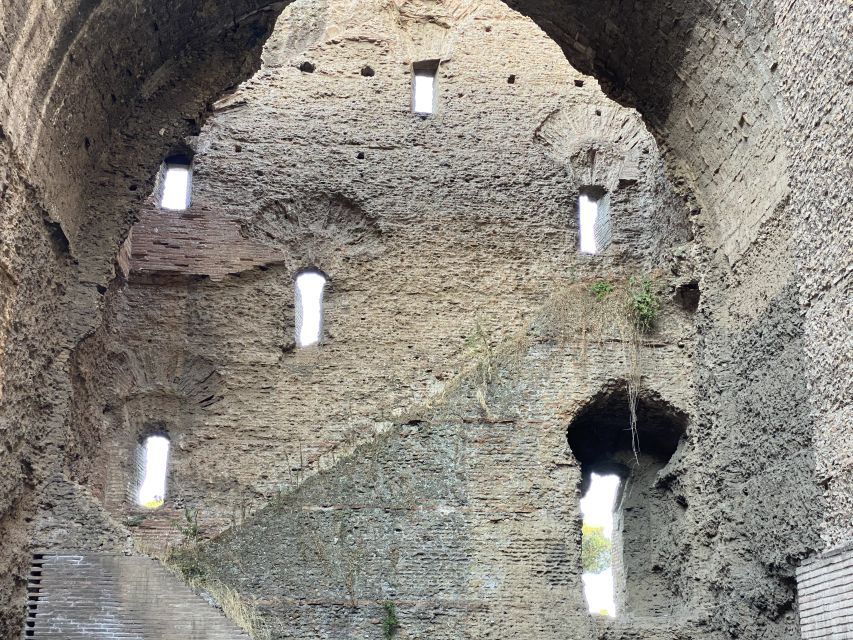
At first, you may see enormous brick walls and open rooms under the Roman sky. Then the scale begins to register. This was not a modest neighborhood bathhouse. It was a vast imperial leisure center where Romans came for bathing, exercise, conversation, and care of the body and mind.
I like this site because it lets you picture ordinary social life within a grand setting. The ruins are not just about emperors or military victories. They are about how people spent an afternoon, moved from room to room, and treated bathing as a major part of daily life.
Your guide helps you read the plan of the complex. You see the monumental rooms, consider their different purposes, and follow the steps of a typical day in the third century AD. That structure matters. Without it, the baths can feel like a maze of walls. With it, the place becomes a working building again.
The site also tends to feel calmer than Rome’s headline attractions. One past visitor described it as peaceful and nearly empty during the visit. That quiet is part of the appeal. You get room to look up, notice the proportions, and let the size of the ruins sink in.
A few more Rome bookings to compare
- Vatican: Museums & Sistine Chapel Entrance Ticket
★ 4.5 · 144,003 reviews - Vatican Museums & Sistine Chapel Tour with Optional Basilica
★ 4.3 · 67,413 reviews - Colosseum, Roman Forum & Palatine Guided Tour
★ 4.7 · 63,148 reviews
Meeting at Circo Massimo and reaching the site
The meeting point is outside the Circo Massimo Metro station, in front of the FAO building. Look for a yellow label marked TOURIKS. You should arrive five minutes before the scheduled start.
This is simple enough, but the location affects the pace. The tour information gives Viale Aventino, 3 as the starting location, and one past participant felt that the walk from the Circo Massimo area took at least 15 minutes. That person also felt the bath visit became rushed.
I would plan for this rather than treat the meeting point as a last-minute detail. If you are coming from another part of Rome, allow time to find the correct Metro exit and the FAO building. Arriving late could be a real problem on a one-hour tour.
The walk itself may help your guide set the scene, but the important point is that your paid time is limited. If the group spends part of the hour getting oriented, you have less time inside the complex. Ask at the start how the hour will be divided so you know what to expect.
Entering the colossal thermal complex
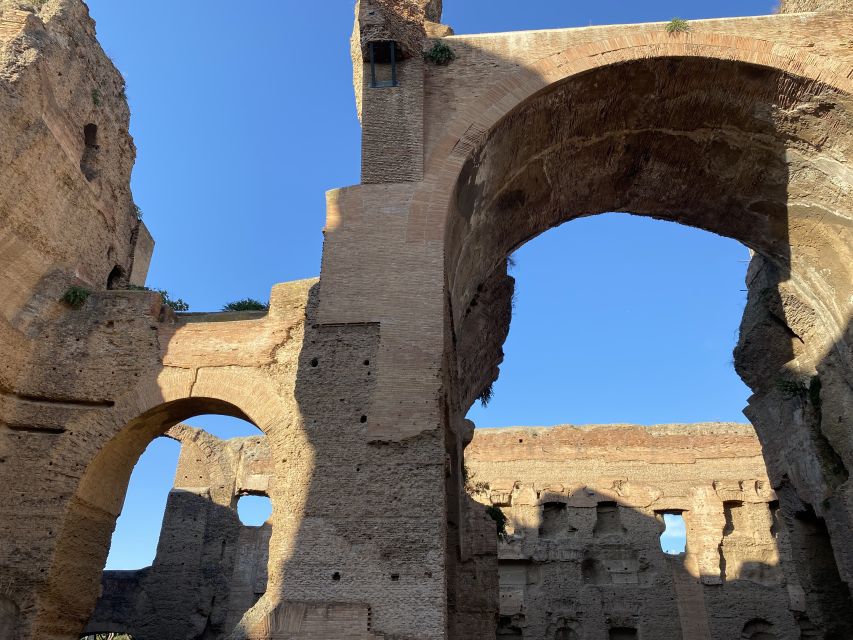
Once inside, the first impression is scale. The surviving walls are immense, and the open spaces give you a strong sense of the engineering effort required to build and maintain the baths.
The guide brings you through the monumental rooms rather than leaving you to guess at their purpose. You learn how the complex worked as a public spa and how Romans used it for more than washing. The experience included physical well-being, social activity, and time spent caring for the mind.
That is one reason I prefer this guided visit to a quick solo look. A sign can tell you a room’s name. A good guide explains how that room fitted into the larger routine.
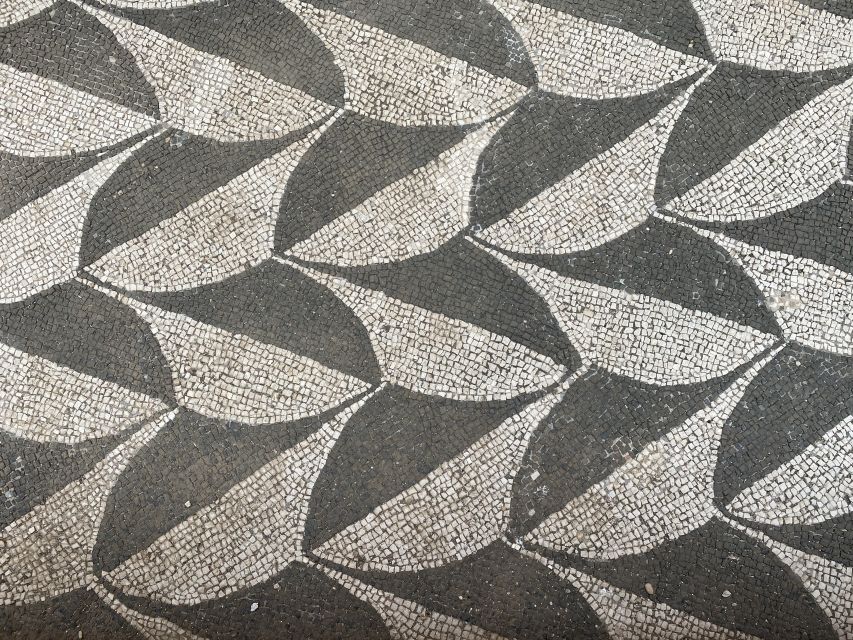
You also get a close look at geometric mosaic designs. These details are easy to miss when you focus only on the great walls. Take a moment to look down as well as up. The contrast between small decorative patterns and giant masonry gives you a better feel for the care that went into the complex.
The tour is described as express but complete. In practical terms, that means your guide aims to cover the full bath complex in a short period, not spend the entire visit on one room. This suits you if you want a clear overview. It may disappoint you if you enjoy lingering over every fragment, mosaic, or architectural feature.
Following a Roman bathing routine
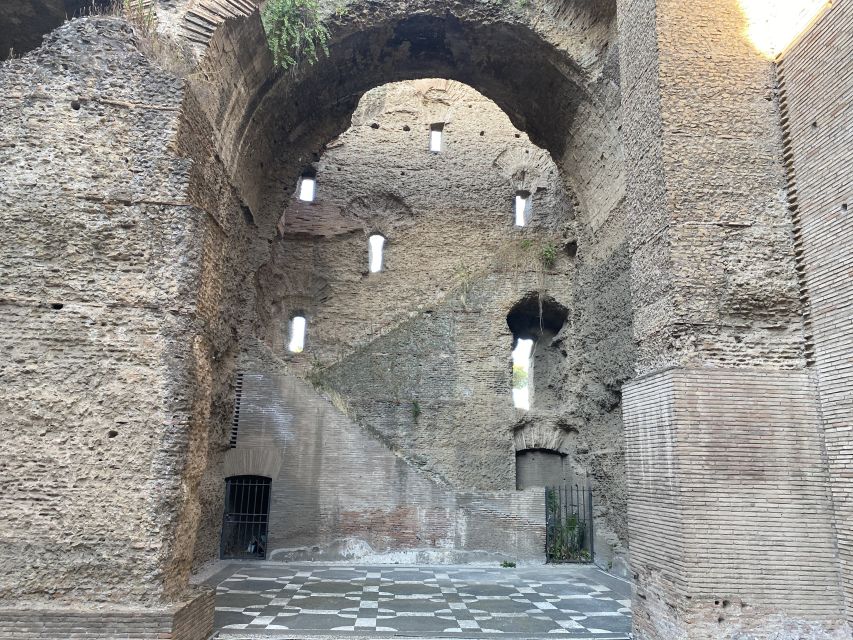
The most useful part of the tour is the story of a typical day at the baths. Rather than receiving disconnected facts, you follow an order of use through the complex.
The exact sequence and room explanations depend on your guide, but the purpose is clear: you begin to understand the baths as a coordinated system. The site offered a range of services linked to personal care and relaxation. It was an ancient version of a large wellness center, though its scale and engineering were distinctly Roman.
I enjoy this kind of interpretation because it puts people back into the ruins. You can imagine the movement from one space to another, the changing temperatures, and the social role of the building. The guide also explains why these facilities mattered to Roman life, rather than presenting them as oversized plumbing.
Several guides have received special praise for making this information lively. Mario was described as funny and passionate, while Sara was praised for high energy. Chiara was noted for sharing interesting facts, and Francesca for creating a comfortable, friendly atmosphere. Guide assignments are not fixed, but those comments suggest that the human side of this tour is one of its strengths.
Still Rome, but a slower afternoon:
- Vatican Museums, Sistine Chapel & St Peter’s Basilica Guided Tour
★ 4.5 · 39,149 reviews - Rome: Colosseum, Palatine Hill and Roman Forum Guided Tour
★ 4.8 · 32,814 reviews - Rome: Guided Tour of Colosseum, Roman Forum & Palatine Hill
★ 4.7 · 27,897 reviews - Rome: Colosseum & Forum with Audio Guide App -Optional Arena
★ 4.2 · 24,770 reviews
The clever heating system beneath your feet
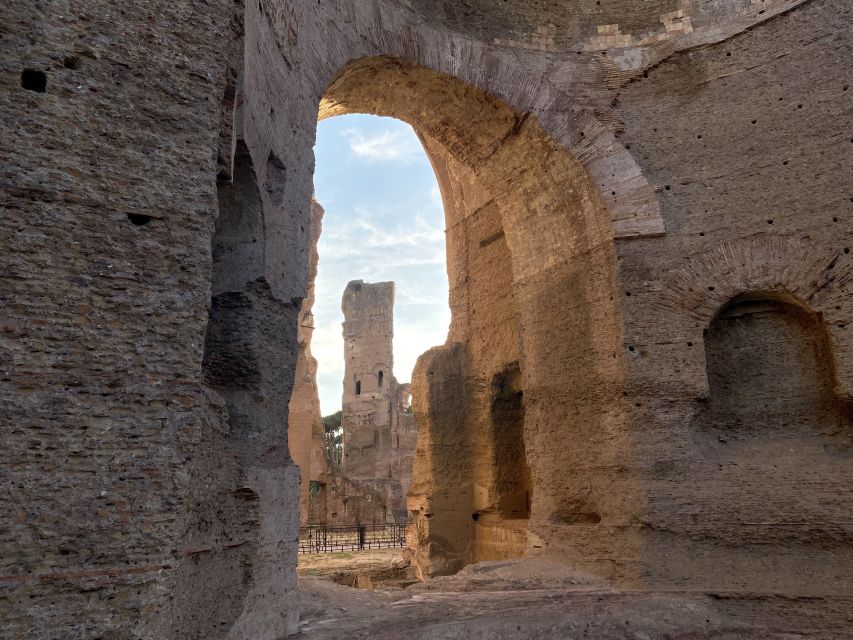
Ancient engineering is a central theme. The underfloor heating system required a great deal of labor, and your guide explains how it helped keep different rooms at their intended temperatures.
This is a valuable detail because the baths were not simply large buildings with pools. They needed fuel, workers, heat management, water systems, and careful planning. The heating system shows how many hidden tasks supported the pleasant experience enjoyed by bath users.
You may not see every working part of the system intact, but the explanation helps you understand the building’s demands. The giant rooms were only the visible part. Beneath them was the infrastructure that made the spa function.
For me, this is where the $70 price begins to make sense. You are paying for access, but also for a guide who can explain the practical mechanics behind the beauty. If you already know Roman construction well, you may need less assistance. If you are looking at the baths for the first time, the heating discussion adds real value.
Why a small group makes a difference
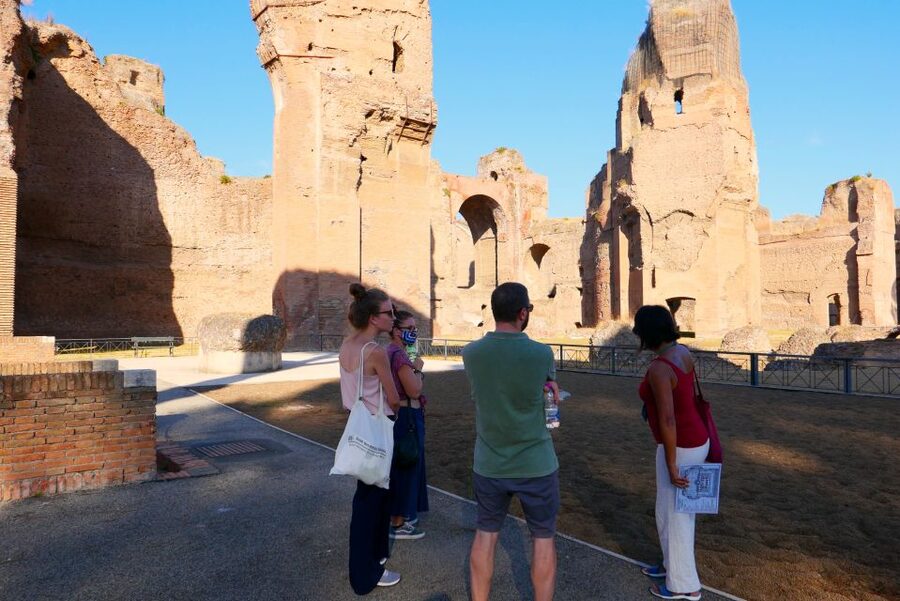
The tour has a maximum of 10 participants, with private and small-group options available. That is a useful size for a site where you need to hear explanations while looking at walls, floors, and room layouts.
The included headsets are sterilized and help you follow the guide clearly. This matters in open ruins, where people can spread out and normal speaking voices may not carry well.
A small group also makes it easier to ask questions. One participant with bad knees praised a guide for walking at a pace that allowed everyone to keep up. That is encouraging if you need a little more time on uneven ground or prefer not to hurry.
Still, the express format limits flexibility. A private tour may give you a better chance to shape the visit around your interests, but the supplied details do not state how much longer or more flexible the private option is. If you want a very slow visit, confirm the format before booking.
The language choice is broad. Live tours are offered in English, Italian, Spanish, French, German, and Portuguese. Choose the language in which you can best follow architectural and technical explanations. The guide’s clarity is especially important here because the site depends on interpretation.
Is $70 fair for a one-hour tour?
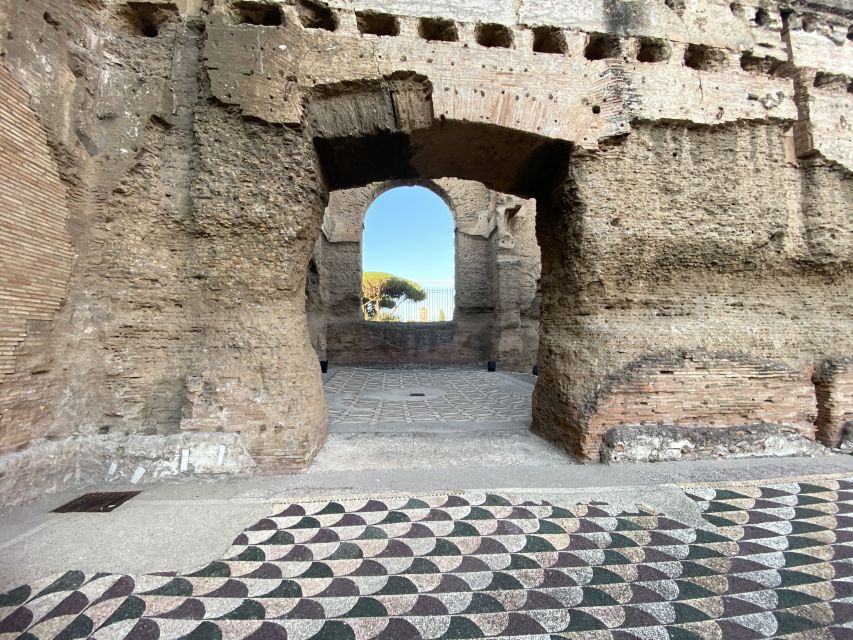
At first glance, $70 for one hour may seem high. Rome offers plenty of free outdoor ruins, and you can visit some places with only a guidebook or audio app.
The value improves if you care about time and structure. Entrance is included, the ticket line is skipped, headsets are provided, and a professional archaeologist guide leads the visit. You also avoid spending your limited sightseeing time trying to work out the complex’s layout.
The price is strongest for three kinds of visitors:
- First-time Rome visitors who want the baths explained without committing to a long archaeological tour.
- History-minded visitors who want more than photographs of giant ruins.
- Busy planners fitting the baths between other sights and needing a clear one-hour schedule.
The price is less attractive if you want to stay for hours, read every display, or explore at your own pace. The one-hour duration is the key tradeoff. You get a concentrated introduction, not an open-ended afternoon.
The free cancellation period also reduces some risk. You can cancel up to 24 hours before the start for a full refund, and you can reserve now and pay later. Those terms are useful when your Rome schedule is still shifting.
Who will enjoy this tour most?
I would recommend it to adults and older children who like history but do not want a lecture-heavy experience. The guides praised for humor and friendly conversation may be especially good for people who find ancient sites hard to picture.
It also suits visitors who have already seen the Colosseum and Roman Forum and want a different side of Roman life. The baths shift attention from politics and monuments to leisure, personal care, building systems, and social habits.
The tour can work for visitors with mobility concerns because it is wheelchair accessible, and one past participant appreciated the guide’s steady pace. You should still consider that ancient ruins may include surfaces that require care, even though the activity is listed as wheelchair accessible.
I would be more cautious if you dislike timed tours. The site is large, and one hour moves quickly. Families with small children may appreciate the short length, but the success of the visit will depend on whether children enjoy looking at ruins and listening to explanations about heating and mosaics.
Large bags and luggage are not allowed. Bring a passport or ID card, and leave bulky items elsewhere. That requirement is easy to overlook when you are moving around Rome with day bags.
How this visit fits into a Rome day
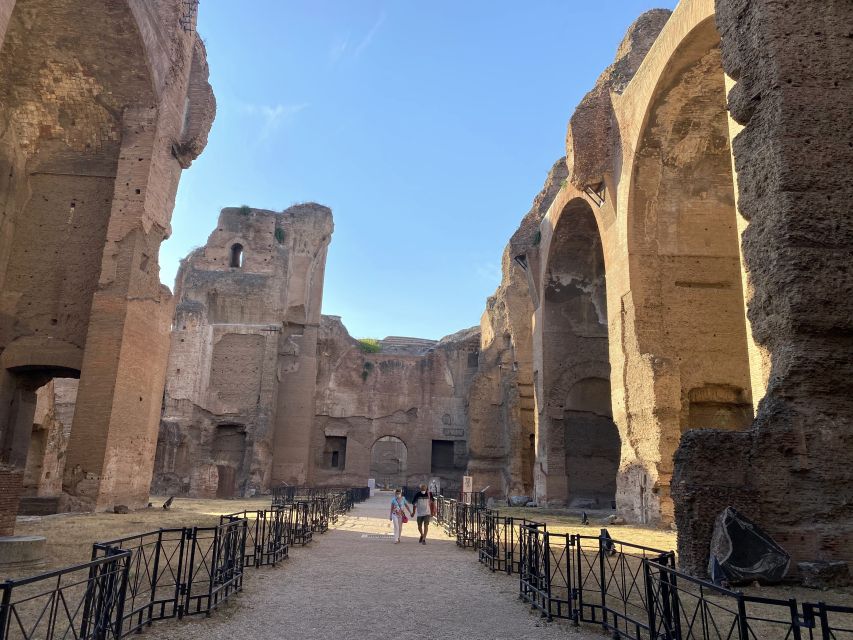
The Caracalla Baths work well as a focused stop rather than a full-day plan. The meeting point near Circo Massimo makes it practical to pair the tour with nearby ancient Rome sightseeing, but you should not assume the bath visit itself will leave much spare time.
Arrive early, find the yellow TOURIKS label, and wear something comfortable for walking. Keep your bag small, carry your identification, and be ready to listen through the headset.
If you want photographs, take them as the group moves, then return your attention to the guide. The best details are not always the largest ones. A mosaic pattern or explanation of the heating system may give you more lasting insight than another wide shot of a brick wall.
The late afternoon can be especially pleasant according to one past participant, who liked seeing the baths in that light. Starting times vary, so check availability when you book. Since the visit is only an hour, the chosen time can shape the mood without changing the basic content.
Final verdict: book it for clear context, not endless wandering
Book this tour if you want the Caracalla Baths to make sense quickly. The monumental ruins, mosaics, bathing routine, and underfloor heating system offer plenty to see, while the archaeologist guide gives the site a human and practical explanation.
I would choose the small-group option for value and the private option if personal questions and pacing matter most. The maximum of 10 keeps the standard tour reasonably intimate, and the strong praise for guides such as Mario, Chiara, Sara, and Francesca is a good sign.
Skip it if your priority is unhurried exploration. One hour is a firm limit, and the walk from the Circo Massimo meeting area may make the schedule feel even tighter. For most visitors, though, this is a smart way to add a quieter, less obvious chapter to ancient Rome.
FAQ
Where does the Caracalla Baths tour meet?
Meet outside the Circo Massimo Metro station, in front of the FAO building. Look for a yellow label marked TOURIKS.
How early should I arrive?
You should arrive five minutes before your scheduled start time.
How long does the tour last?
The guided visit lasts one hour.
What is included in the price?
The price includes entrance to the Caracalla Baths, a professional archaeologist guide, sterilized headsets, and full on-site assistance.
Is the tour available in English?
Yes. Live guiding is available in English, Italian, Spanish, French, German, and Portuguese.
How many people can join the small group?
The tour has a maximum of 10 participants. Private tours are also available.
Is the site wheelchair accessible?
Yes. The activity is listed as wheelchair accessible.
What should I bring, and what is not allowed?
Bring a passport or ID card. Luggage and large bags are not allowed.
Recently added around Rome
- Palatine Hill and Roman Forum Tour with Fast-Track Entrance★ 4.2 · 417 reviews
- Tivoli: Villa D’Este & Villa Adriana Pass & App Audioguide★ 4.4 · 364 reviews
- From Rome: Villa D’Este & Villa Adriana Day Trip with Lunch★ 4.4 · 289 reviews
- Vatican Museums & Sistine Chapel Skip-the-Line Guided Tour★ 4.6 · 254 reviews
- Rome: The Three Tenors at St. Paul’s Church Concert Ticket★ 4.7 · 699 reviews
- Tivoli: Villa D’Este Entry Ticket and App Audio Guide★ 4.3 · 191 reviews
- Rome: Capitoline Museums and Centrale Montemartini Tickets★ 4.4 · 328 reviews
- Rome: St. Peter’s Basilica and Papal Tombs Guided Tour★ 4.6 · 477 reviews
Private, compared.
Como & Bellagio with Private Lake Como Cruise
Read our review →
Murano & Burano Islands Guided Small-Group Tour by Private Boat
Read our review →
Rome by Golf Cart Private Tour: Beyond the Landmarks
Read our review →
Early Morning Vatican, Sistine, St. Peter’s Semi or Private Tour
Read our review →
Private 3 hrs Venice Tour: St Mark’s, Walking tour & Boat tour
Read our review →
Private Gondola Cruise for up to 5 Passengers
Read our review →