
Reviewed · SKIP THE LINE
Rome: Borghese Gallery Skip-the-Line Tickets with Audioguide
Art rewards a slower look.
Rome’s Borghese Gallery packs an astonishing amount of art into a relatively small villa. I like the limited entry timeslots, which keep the rooms from becoming a shoulder-to-shoulder crush, and I like the freedom to move at your own pace with a digital audioguide. Bernini, Caravaggio, Raphael, Titian, Rubens, and Canova are all here, often displayed in rooms as lavish as the works themselves.
The main drawback is price. At about $53 per person, this option can cost much more than buying directly from the gallery. Still, official tickets often sell out well ahead, and this ticket can be a practical way to get inside when a last-minute Rome plan has run into a sold-out museum.
In This Review
- Key points to know before booking
- Why the Borghese Gallery deserves your Rome time
- Meeting the host at Fontana dei Mascheroni
- Inside the villa: a compact route with no wasted rooms
- Bernini’s marble: the collection’s emotional center
- Caravaggio’s dark drama
- Raphael, Titian, Rubens, and Canova
- Using the digital audioguide
- Is $53 good value?
- Bags, comfort, and access
- Who should book this experience?
- FAQ
- How much do the Borghese Gallery tickets cost?
- How long does the experience last?
- Where is the meeting point?
- What languages are available?
- Is a guided tour included?
- Are large bags allowed inside?
- Is access to the Borghese Gardens included?
- Can I cancel the booking?
- Should you book it?
Key points to know before booking
- Timed entry protects the experience: The gallery limits the number of people admitted in each timeslot, making it easier to see the art without a huge crowd.
- Bernini is the star attraction: Apollo and Daphne and other marble groups show movement, emotion, and astonishing technical control.
- Caravaggio gets serious attention: His dramatic use of light and human emotion gives several rooms a darker, more forceful mood.
- The host mainly handles entry: Depending on the option you choose, you may receive tickets and directions rather than a full guided tour.
- The audioguide is useful but not essential: Some people enjoy its background and stories, while others prefer the museum’s own labels and QR codes.
- Small bags only: Large bags go into the free cloakroom, and baby strollers, luggage, and electric wheelchairs are not allowed.
Why the Borghese Gallery deserves your Rome time
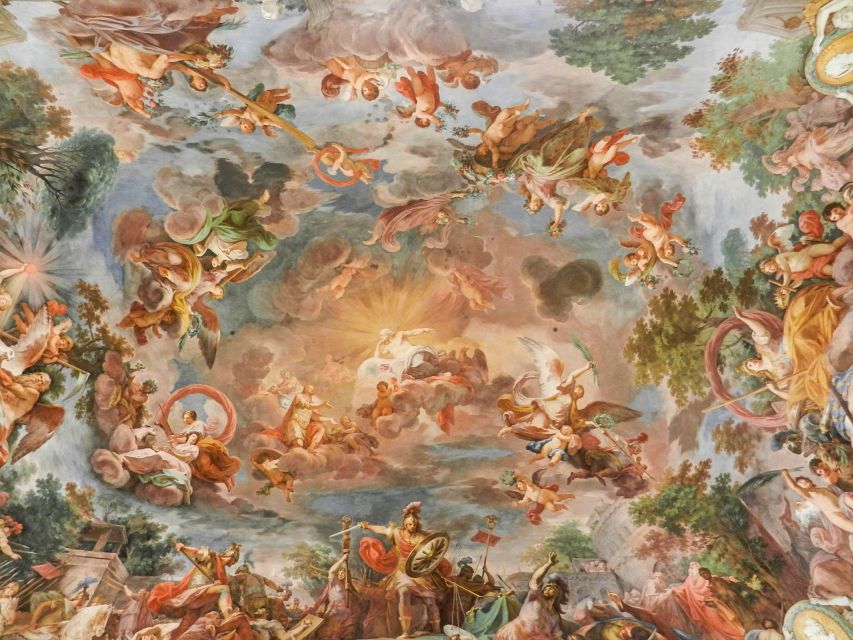
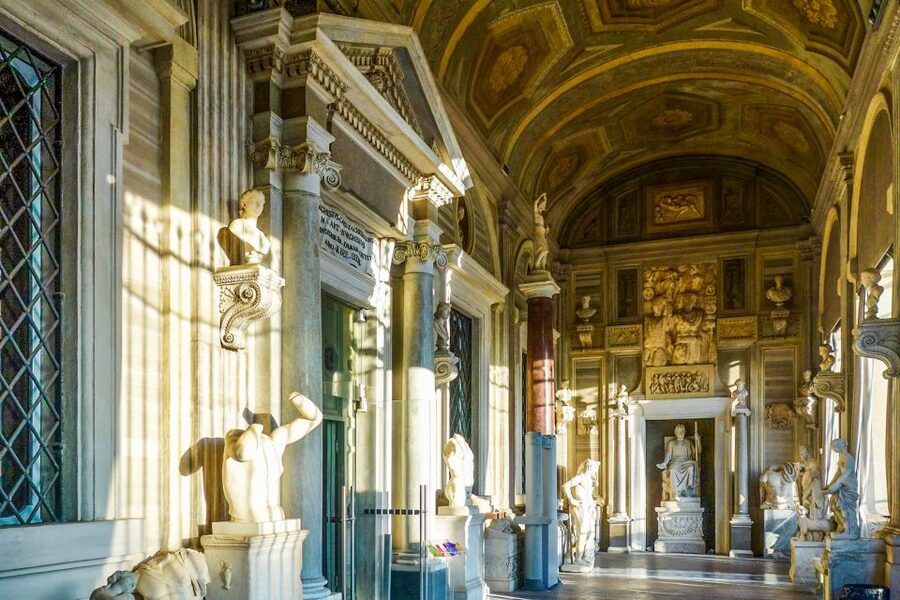
The Borghese Gallery is not simply a room full of famous paintings. It is the former home of Cardinal Scipione Borghese, a powerful collector with a sharp eye and a taste for dramatic art. The building itself helps explain the collection. Marble floors, painted ceilings, sculpture-filled rooms, and richly decorated interiors make the act of looking at art feel theatrical.
That setting matters. At many large museums, a famous sculpture can disappear among hundreds of other objects. Here, the collection is compact enough for you to remember individual rooms and return to works that caught your eye.
The gallery covers ancient Roman, Renaissance, and Baroque art, with later Neoclassical work by Antonio Canova. You can see how artistic ideas changed over time, but the experience does not feel like a formal art-history lesson. You move from one striking room to the next, with a new subject or material demanding your attention.
A visit normally lasts around two hours inside the gallery, though the full activity can take two to four hours depending on your meeting time, entry process, and pace. That makes it a good choice when you want a major museum without giving up half a day to a vast complex.
More Museum Tours in Rome
- Vatican: Museums & Sistine Chapel Entrance Ticket
★ 4.5 · 144,003 reviews - Vatican Museums & Sistine Chapel Tour with Optional Basilica
★ 4.3 · 67,413 reviews - Vatican Museums, Sistine Chapel & St Peter’s Basilica Guided Tour
★ 4.5 · 39,149 reviews
Meeting the host at Fontana dei Mascheroni
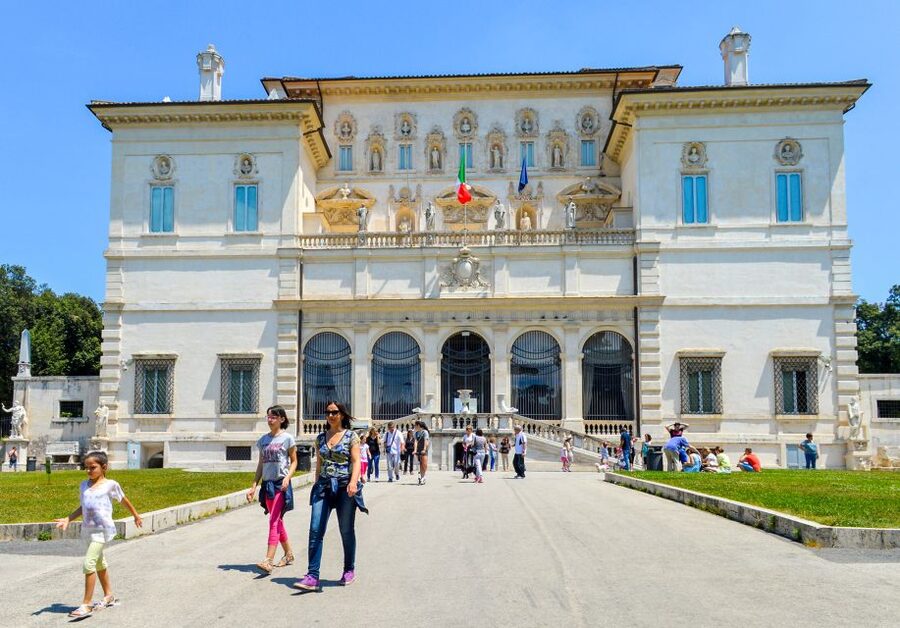
Your meeting point is Fontana dei Mascheroni, a small drinking-water fountain on Viale del Museo Borghese, directly in front of the gallery. Look for the host wearing a purple Crown Tours shirt and holding a matching flag.
This sounds simple, but the approach can be confusing because the fountain may not look like a grand, obvious landmark from the road. Give yourself extra time. One practical detail from the directions is that the host is about 40 meters from the gallery entrance, close to the small fountain rather than at a separate office.
From the Pinciana or Museo Borghese bus stop, walk along Viale dell’Uccelliera for about two minutes. From S. Paolo Del Brasile, follow Viale del Museo Borghese for roughly eight minutes.
The host’s role varies with the booking. In many cases, the person checks you in, hands over the timed tickets, points out the entrance, and helps you get started. Several hosts have been praised for being friendly and useful, including Migo, who has helped explain the Borghese family and key sculptures before entry, and guides such as Victoria, Frederica, Amanda, and Sylvia, who have led fuller tours when that option was selected.
Do not assume that a ticket-only booking includes an art historian. If you choose admission with an audioguide, you are generally free to explore independently. If you want someone to explain the works in person, select the guided-tour option rather than the basic ticket.
Inside the villa: a compact route with no wasted rooms
Once inside, you can walk through the gallery at your own pace. The collection is large enough to feel rewarding, but the villa is not so huge that you lose an hour trying to find the main works.
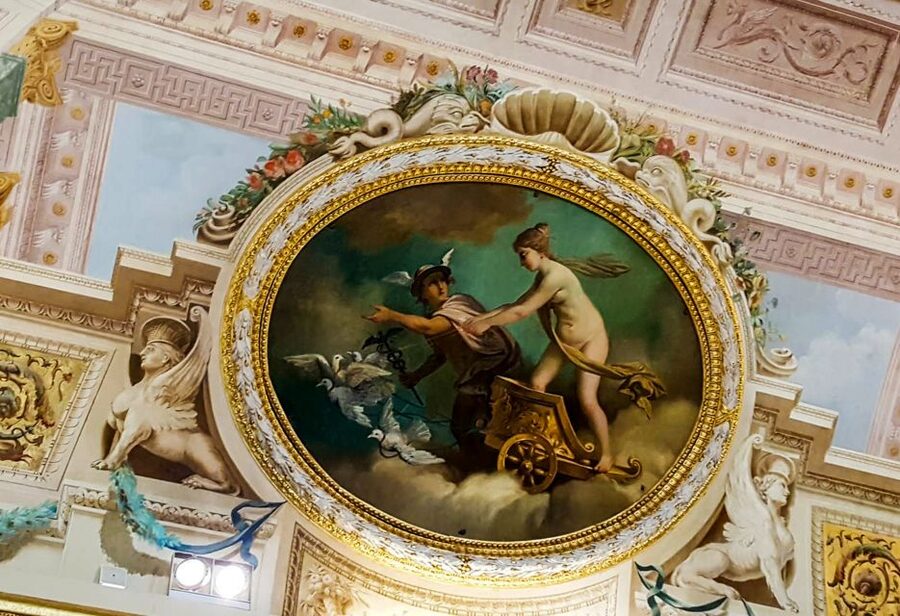
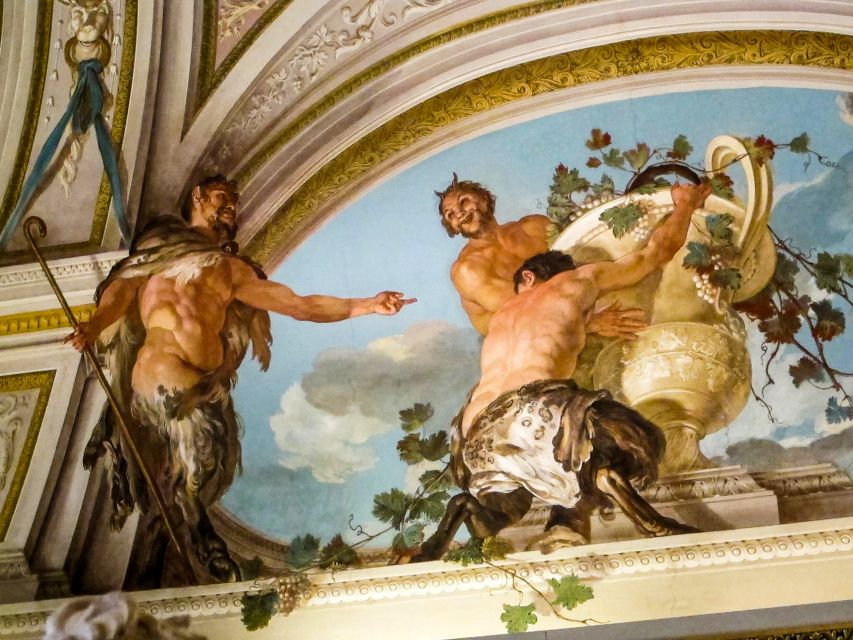
Your first impression may be the decoration. Painted ceilings, ornate finishes, and marble sculpture turn each room into part of the display. The villa was designed to impress, and Cardinal Borghese clearly wanted visitors to understand his wealth and taste before they even studied a painting.
The route brings together sculpture and painting in a way that helps each medium sharpen the other. A cool marble figure may face a dark Caravaggio canvas. A room filled with classical references may lead to a work that feels startlingly physical and modern.
The gallery uses a timed system, and your entry is tied to a specific reservation slot. Inside, tickets are generally limited to a two-hour visit. That is enough time to see the main rooms, but it is not unlimited. I suggest deciding in advance which artists matter most to you so you do not spend too long on the first floor and rush later.
Some past visits have encountered closed rooms or a partly closed second floor. Temporary closures can change the route and the value of a particular visit, so it is wise to allow for that possibility. The collection remains worthwhile, but you should not expect every room to be open every time.
Bernini’s marble: the collection’s emotional center
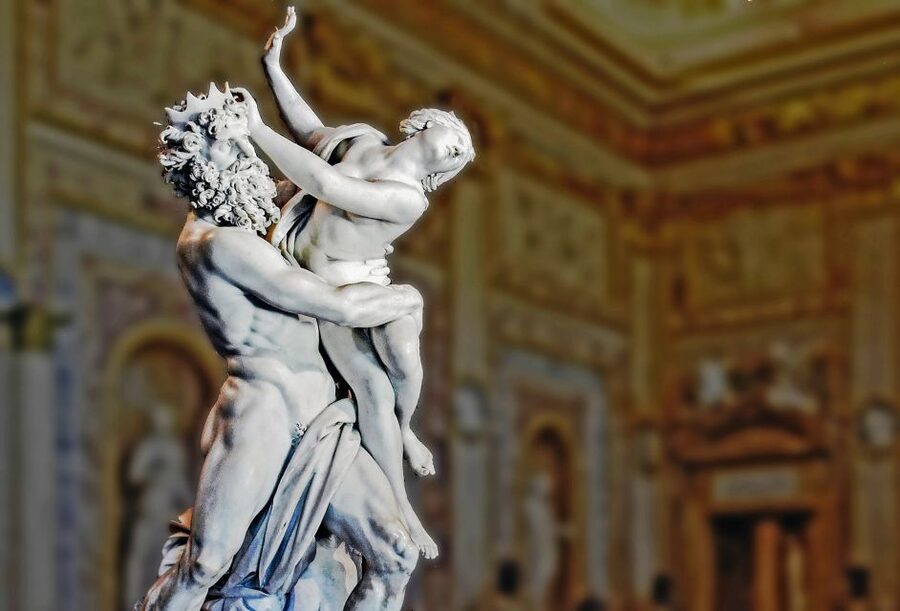
If you remember only one part of the gallery, make it the Bernini sculptures. Apollo and Daphne is the famous highlight, and it deserves the attention it receives.
The sculpture shows the instant Daphne changes into a laurel tree as Apollo reaches for her. Look closely at the fingertips becoming leaves, the flowing hair, and the way the figures seem to twist through space. The marble does not look static. It suggests speed, panic, and transformation.
Bernini’s technical skill is impressive, but the subject is more than a display of carving. The sculpture captures a disturbing moment of pursuit and escape. A good audioguide can help you notice the story, the classical source, and the details that are easy to miss when a crowd gathers around the work.
Other Bernini pieces reinforce the same lesson: Baroque sculpture is meant to be viewed as action. Walk around the works when space allows. From different angles, the relationship between the figures changes, and the folds of fabric seem to shift.
I would give Bernini priority if your time is short. The paintings are important, but the sculptures are what make this gallery feel unlike a standard picture museum.
Still Rome, but a slower afternoon:
- Colosseum, Roman Forum & Palatine Guided Tour
★ 4.7 · 63,148 reviews - Rome: Colosseum, Palatine Hill and Roman Forum Guided Tour
★ 4.8 · 32,814 reviews - Rome: Guided Tour of Colosseum, Roman Forum & Palatine Hill
★ 4.7 · 27,897 reviews - Rome: Colosseum & Forum with Audio Guide App -Optional Arena
★ 4.2 · 24,770 reviews
Caravaggio’s dark drama

Caravaggio’s paintings bring a different energy. His scenes are often built around a hard beam of light, a tense gesture, and faces that feel startlingly human.
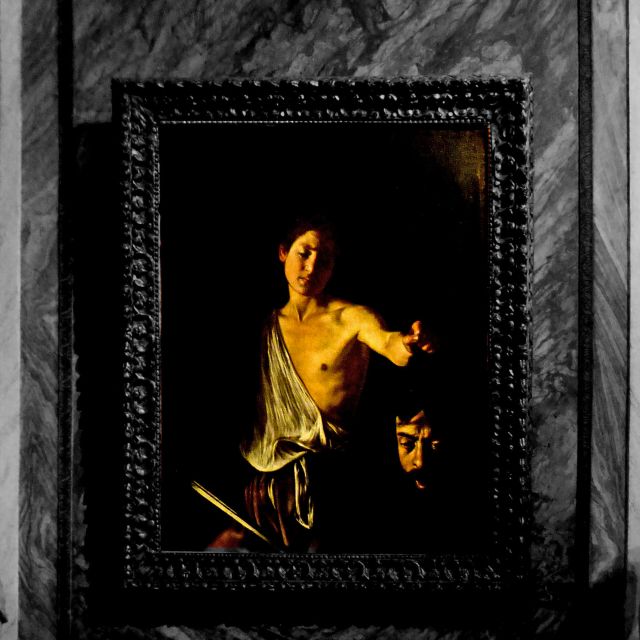
David with the Head of Goliath is one of the key works to seek out. The subject is biblical, but the emotional effect is personal and unsettling. David holds the severed head of Goliath, and the painting creates a charged relationship between the victor, the dead man, and you as the viewer.
Caravaggio’s lighting does much of the storytelling. Bright faces and hands emerge from darkness, while the surrounding space almost disappears. This technique directs your eye and adds pressure to the scene. You do not need much art training to feel the effect.
The gallery’s Caravaggio collection is especially useful for showing his interest in ordinary human presence. His figures are not distant symbols. Their expressions, clothing, and physical weight make the stories feel close to real life.
Use the audioguide here if you enjoy context about technique and symbolism. If you prefer a shorter visit, the gallery’s labels and QR codes may be enough. One point worth knowing is that the digital guide supplied with the booking has received mixed reactions. Some people find it easy to use and full of helpful information. Others find the individual QR codes near many works more useful.
Raphael, Titian, Rubens, and Canova

The gallery is not only a Bernini and Caravaggio stop. Raphael offers a calmer contrast, with balanced compositions and graceful figures. His work is useful for seeing how Renaissance artists combined classical ideals with human feeling.
Titian brings color and richness of surface, while Rubens adds weight, movement, and painterly force. These works help prevent the visit from becoming a single-period tour. You can compare different ideas of beauty, drama, power, and the human body within a short walk.
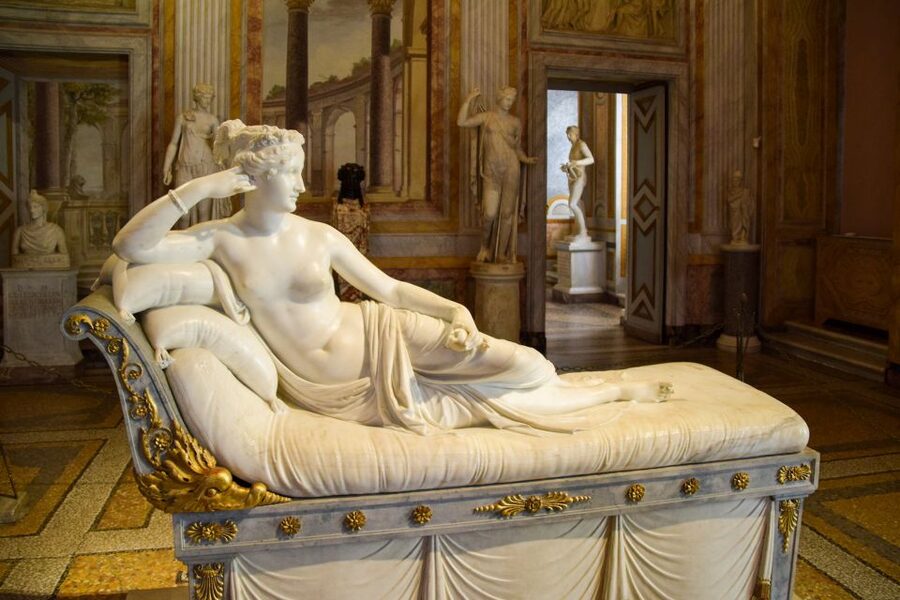
Canova provides another change of mood. His Neoclassical marble has a more polished, controlled elegance than Bernini’s theatrical Baroque work. Seeing both artists in the same villa makes the comparison easy. Bernini pulls you into a story at the moment of crisis. Canova often asks you to admire ideal form and quiet refinement.
Do not rush past the rooms that are not attached to the biggest names. The decoration, lesser-known paintings, and ancient Roman pieces help explain why the villa was created as a complete setting rather than a neutral museum shell.
Using the digital audioguide
The audioguide is delivered digitally, so you should be ready to use your phone. The host may help you download the app or connect to the service. One practical detail is that several people have appreciated help with setup, especially when the whole family needs access.
The guide adds background on the artists, their methods, and the cultural meaning of major works. It can explain how Raphael drew on classical beauty, how Caravaggio shaped scenes with light, and how Canova pursued Neoclassical grace in marble.
You should not expect every audio stop to improve every work. Some explanations may be more useful than others, and the museum’s own QR codes can offer a better match for the piece directly in front of you. If you prefer to read, take a little time with the labels and use the audio only for the artists or sculptures you most want to understand.
A self-guided visit also has a clear advantage: you can skip anything that does not interest you. You can spend ten minutes with Apollo and Daphne, move quickly through a less familiar room, or pause without worrying about keeping up with a group.
Is $53 good value?
The listed price is about $53 per person. That is a high premium compared with buying through the official gallery channel, and one past booking specifically noted that direct tickets could cost about half as much.
The value comes from access and timing rather than from the ticket itself. Borghese Gallery reservations can sell out weeks or even months ahead, and same-day availability may be scarce. If your Rome schedule came together late, paying more may be preferable to missing the collection entirely.
The skip-the-line benefit matters most in busy periods, when ticket queues and sold-out timeslots are a real concern. At opening time or during a quieter period, the advantage may be smaller. One practical benefit remains: the third-party host can have the reservation ready and guide you to the correct entrance.
For a planned trip, check the official ticket price first. For a last-minute visit, compare this $53 option with the value of changing your schedule or losing the chance to see Bernini and Caravaggio in this setting.
Bags, comfort, and access
Wear comfortable shoes. The visit involves walking through several rooms, and you will get more from the collection if you are comfortable enough to pause and look closely.
Only small bags and purses are allowed inside. Larger bags can be placed in the free cloakroom, but do this before you reach the entry queue if possible. Baby strollers, luggage, and electric wheelchairs are not allowed.
This activity is not suitable for people with mobility impairments or wheelchair users. The information also says that access to the Borghese Gardens is not included. You can still enjoy the surrounding Villa Borghese Park as part of your Rome day, but do not treat garden entry as part of this ticket.
Who should book this experience?
I recommend it most strongly for art lovers, first-time Rome visitors with limited museum time, and anyone who has failed to find official tickets. It also suits families and mixed-interest groups because the visit is compact and self-paced.
A guided option may be worth the extra cost if you want stories, artistic explanation, and help keeping children interested. The independent audioguide option is better if you already know what you want to see or dislike being moved through a museum at someone else’s speed.
I would be more cautious if you are watching every euro, have mobility limitations, or expect a full guided tour from a basic admission booking. You should also confirm the exact option, since the listing can include ticket-only, audioguide, small-group, private, or guided choices.
FAQ
How much do the Borghese Gallery tickets cost?
The listed price is $53 per person. This can be more expensive than buying directly from the gallery, but it may help when official tickets are sold out.
How long does the experience last?
The activity lasts about two to four hours, depending on the available start time and how long you spend at the gallery. The gallery visit itself is generally limited to a two-hour timed slot.
Where is the meeting point?
The meeting point is Fontana dei Mascheroni on Viale del Museo Borghese, directly in front of Galleria Borghese. The host wears a purple Crown Tours shirt and holds a purple flag.
What languages are available?
Host assistance is available in English and French. A digital audioguide is included, and a guided tour is available if you select that option.
Is a guided tour included?
Not always. The basic experience can be admission with host assistance and an audioguide. A guided tour is included only when you select the guided-tour option.
Are large bags allowed inside?
No. Only small bags and purses are allowed. A free cloakroom is available for larger bags.
Is access to the Borghese Gardens included?
No. The ticket includes entry to the Borghese Gallery, but access to the gardens is not included.
Can I cancel the booking?
Yes. You can cancel up to 24 hours in advance for a full refund. You can also reserve now and pay later, according to the booking conditions.
Should you book it?
Book this experience if seeing the Borghese Gallery matters more than getting the lowest possible price. The collection is extraordinary, the villa is manageable in size, and the timed entry gives you a real chance to look carefully at Bernini, Caravaggio, Raphael, and Canova.
If you are planning far ahead, check the official ticket channel first. If it is sold out, this $53 option becomes much easier to justify, especially for a fixed Rome itinerary. Choose the audioguide for independence, or pay for the guided option if you want more personal explanation.
My practical advice is simple: arrive early at Fontana dei Mascheroni, look for purple, carry only a small bag, and save your best attention for the Bernini sculptures and Caravaggio paintings. That is where this short museum visit pays off.
Recently added around Rome
- Palatine Hill and Roman Forum Tour with Fast-Track Entrance★ 4.2 · 417 reviews
- Tivoli: Villa D’Este & Villa Adriana Pass & App Audioguide★ 4.4 · 364 reviews
- From Rome: Villa D’Este & Villa Adriana Day Trip with Lunch★ 4.4 · 289 reviews
- Vatican Museums & Sistine Chapel Skip-the-Line Guided Tour★ 4.6 · 254 reviews
- Rome: The Three Tenors at St. Paul’s Church Concert Ticket★ 4.7 · 699 reviews
- Tivoli: Villa D’Este Entry Ticket and App Audio Guide★ 4.3 · 191 reviews
- Rome: Capitoline Museums and Centrale Montemartini Tickets★ 4.4 · 328 reviews
- Rome: St. Peter’s Basilica and Papal Tombs Guided Tour★ 4.6 · 477 reviews
Skip the Line, compared.
Skip-The-Line Uffizi Gallery Timed Entry Ticket
Read our review →
Vatican Museums & Sistine Chapel Skip-the-Line Entry Ticket
Read our review →
Skip-the-Line Group Tour of the Vatican, Sistine Chapel & St. Peter’s Basilica
Read our review →
Michelangelo’s David Skip-the-Line Entry Ticket
Read our review →
Vatican Museums & Sistine Chapel Skip-The-Line Ticket
Read our review →
Vatican, Sistine Chapel & St. Peter’s Skip-the-Line Tour
Read our review →
Skip-the-Line Vatican, Sistine Chapel & St. Peter’s | Small Group
Read our review →
Vatican Museums Sistine Chapel Skip-the-Line Ticket
Read our review →Browse the lists this tour appears in