Reviewed · ROME TOURS
Rome: Big Bus Hop-on, Hop-off Open-Top Sightseeing Tour
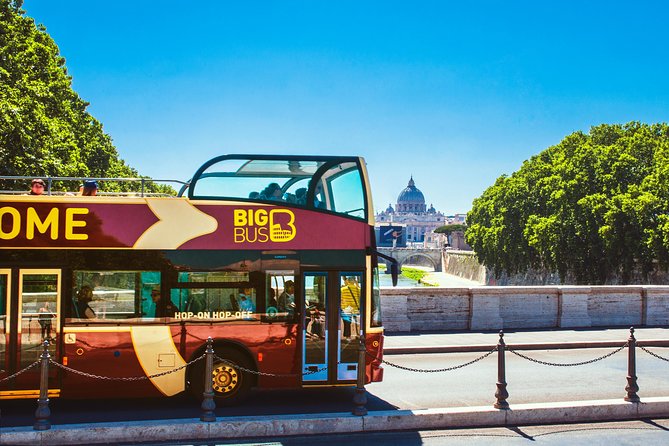
Rome rewards a good first look. The Big Bus Rome tour gives you a broad view of the city from an open-top seat, with stops near the Colosseum, Vatican City, Pantheon, and Trevi Fountain. I like the recorded historical commentary and the freedom to stay on for a full circuit or hop off when a neighborhood catches your eye. I also like that every ticket includes a VOX digital walking tour.
The main catch is distance. Several stops sit a 10 to 20-minute walk from the sights they serve, and the Colosseum stop has sometimes been closed without clear notice. That matters if you have limited mobility or are counting on the bus as a door-to-door shuttle.
In This Review
- Key points before you book
- Why this bus works best on your first day in Rome
- What you hear through the headphones
- Stop 1: Termini Railway Station
- Stop 2: Santa Maria Maggiore
- Stop 3: The Colosseum and Roman Forum area
- Stop 4: Circus Maximus
- Stop 5: Piazza Venezia
- Stop 6: Vatican Museums
- Stop 7: The Spanish Steps
- Stop 8: Piazza Barberini
- Choosing between the 3-hour, 24-hour, 48-hour, and 72-hour tickets
- Price and overall value at $26.43
- Timing, apps, and the small practical snags
- Who should book this Rome bus tour?
- FAQ
- How long does the Rome Big Bus tour take?
- Where can I board the bus?
- Which landmarks are served by the route?
- Are headphones included?
- What languages are available?
- Does the tour include entry to the Colosseum or Vatican Museums?
- Are different ticket durations available?
- Is a night tour included?
- Is Wi-Fi available on board?
- Can I bring luggage on the bus?
- Should you book the Big Bus Rome tour?
Key points before you book
- A useful first circuit: The roughly 1-hour-40-minute loop helps you get your bearings before choosing where to spend your time.
- Seven ticket locations: Stops cover Termini, Santa Maria Maggiore, the Colosseum area, Circus Maximus, Piazza Venezia, the Vatican, the Spanish Steps, and Barberini.
- Audio is part of the ride: Headphones and recorded commentary provide background on Rome’s ancient monuments and modern city life.
- Stops are not always beside the sights: Expect a walk to several landmarks, especially the Trevi Fountain, Vatican Museums, and Colosseum.
- Longer tickets add flexibility: Choose a 3-hour, 24-hour, 48-hour, or 72-hour option, depending on how much bus time you want.
- A seasonal night ride is included with 72 hours: The panoramic night tour operates from spring into autumn, but it is a continuous ride, not a hop-on, hop-off service.
Why this bus works best on your first day in Rome
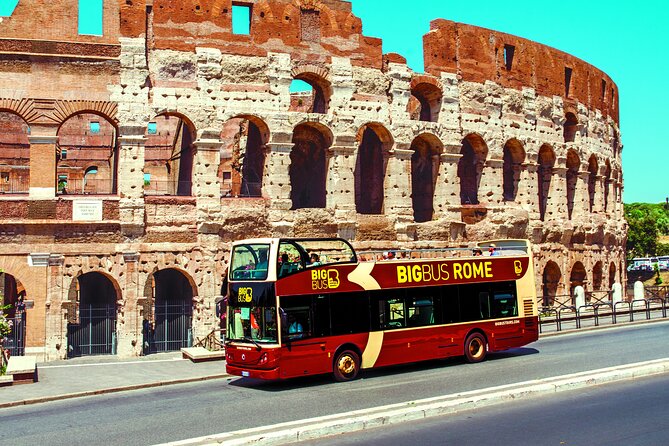
I see this as an orientation tool first and transportation second. Rome’s historic center can feel confusing, with major sights spread across hills, river crossings, ancient ruins, and busy streets. One circuit lets you connect the dots without spending your first morning studying a map.
The bus also gives you a different view of Rome. From the upper deck, you can look over monuments, church domes, broad avenues, and ruined stonework. It is especially useful when you want to take photographs without committing to a long walking route.
The full circuit takes about 1 hour and 40 minutes, although city traffic can make the wait and ride longer. You can stay aboard for the entire loop, then decide which stops deserve your time. That simple plan works well if you have only a half-day or one full day in the city.
I would not treat the bus as a fast way to cross Rome. Traffic can delay service, and the stops are sometimes set away from the actual monuments because of street restrictions and city rules. Think of it as a moving introduction to Rome with the option to add short walks.
A few more Rome bookings to compare
- Vatican: Museums & Sistine Chapel Entrance Ticket
★ 4.5 · 144,003 reviews - Vatican Museums & Sistine Chapel Tour with Optional Basilica
★ 4.3 · 67,413 reviews - Colosseum, Roman Forum & Palatine Guided Tour
★ 4.7 · 63,148 reviews
What you hear through the headphones
Recorded commentary plays through the supplied headphones. The material covers Rome’s ancient past, its major monuments, and its role as a modern Italian capital. It gives you useful context as you pass the Colosseum, Circus Maximus, Piazza Venezia, and other landmarks.
The published details vary on the exact number of languages. The tour information states five languages in one place and nine in another, so check the current language selection before booking if that matters to you. English is offered.
The audio is a helpful feature, but the equipment is not flawless every time. Some headphone sockets have failed, and some riders have found the narration out of step with the view when traffic changes the bus’s position. Before settling into your seat, plug in your headphones and check that the commentary works.
There is also a practical lesson here: the driver is not necessarily your live guide. The history comes mainly through the recorded system, so do not expect a running, personal explanation from the driver throughout the route.
Stop 1: Termini Railway Station
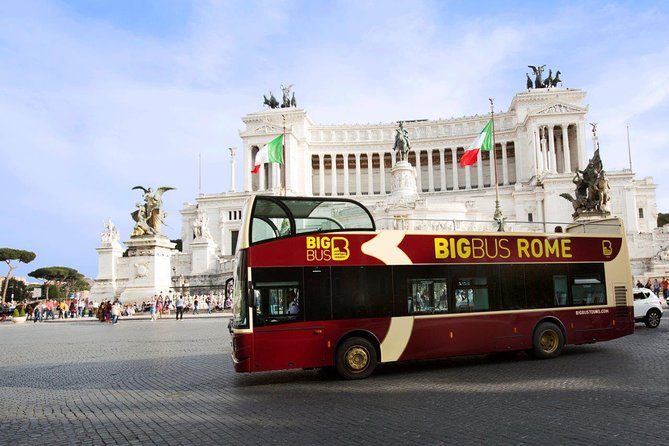
Termini is the main starting point for many people arriving in Rome by train or airport connection. The stop is on Via Giovanni Giolitti, 32, making it a sensible place to begin if you are staying near the station or arriving with a little time before check-in.
This is not a monument stop, but it is useful for orientation. From here, the route carries you toward Santa Maria Maggiore and the ancient center. If you are unsure where to start, I would use Termini for the first full circuit rather than immediately hopping off.
Luggage is not permitted on board for security reasons. That makes the bus unsuitable as a transfer option directly from the station if you have large bags with you.
Stop 2: Santa Maria Maggiore
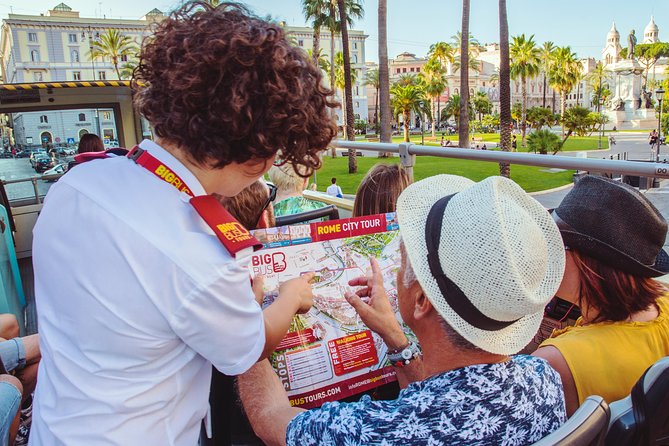
The second stop serves the Papal Basilica of Saint Mary Major at Piazza dell’Esquilino, 14. This grand church is one of Rome’s important basilicas, and it gives you a quieter alternative to the city’s biggest headline sights.
I like this stop for a first visit because it adds a major church to the route without requiring a separate trip across town. The area also helps connect Termini with the Colosseum district.
You can hop off here for the basilica, then continue toward the ancient ruins. Keep in mind that the tour is not an entrance ticket for the church or any other monument. Admission to attractions is not listed as included, so plan separately for sites you want to enter.
Still Rome, but a slower afternoon:
- Vatican Museums, Sistine Chapel & St Peter’s Basilica Guided Tour
★ 4.5 · 39,149 reviews - Rome: Colosseum, Palatine Hill and Roman Forum Guided Tour
★ 4.8 · 32,814 reviews - Rome: Guided Tour of Colosseum, Roman Forum & Palatine Hill
★ 4.7 · 27,897 reviews - Rome: Colosseum & Forum with Audio Guide App -Optional Arena
★ 4.2 · 24,770 reviews
Stop 3: The Colosseum and Roman Forum area

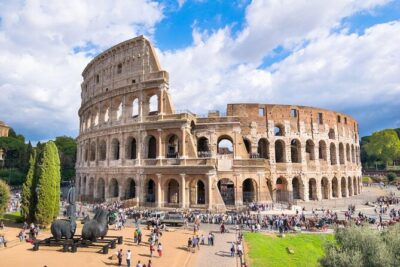
The Colosseum is the stop most people expect to use, and it is also where the route has caused the most practical trouble. The listed location is on Via di San Gregorio, outside the Roman Forum entrance, but the stop has been temporarily closed at times.
When operating normally, this is the natural place to get off for the Colosseum and Roman Forum. You can also explore the ancient center on foot before continuing to Circus Maximus. The recorded commentary adds useful background about gladiators and Rome’s imperial past, which makes the ride more than a simple photo loop.
The important warning is to confirm the stop before you rely on it. A closure may mean walking from another stop, and that walk can be long. One reported diversion required a walk of more than a mile from Circus Maximus, a serious issue for anyone using a wheelchair, leg braces, or simply managing tired legs after a day among ruins.
The bus may also pass the Colosseum without stopping when the stop is closed. Check the operator’s service updates and ask staff or the driver whether all stops are running that day. City events, road works, and marathons can force route changes, and Rome’s streets do not always give much warning.
Stop 4: Circus Maximus
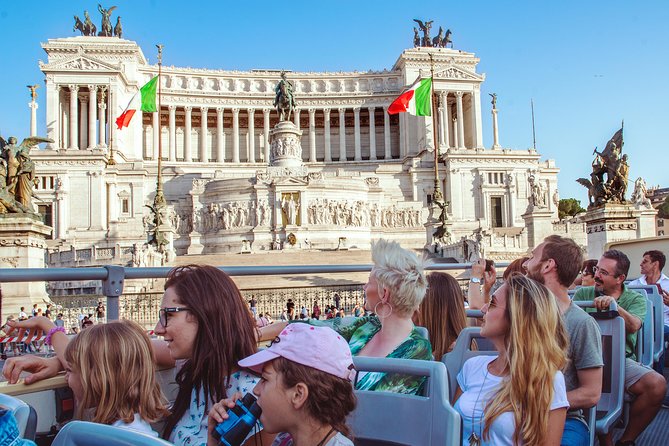
Circus Maximus, at Piazzale Ugo La Malfa, is one of the most memorable views from the route. The huge open valley once hosted chariot races, and its scale is easier to grasp from above than from a crowded street.
I especially like this stop for the contrast. The Colosseum is enclosed and heavily visited, while Circus Maximus feels broad and open. You can hop off to walk along the area or use it as an alternative ancient-site stop when the Colosseum stop is unavailable.
The location can also serve as a backup, but do not assume it is a short stroll from every attraction. If you are using the bus to reduce walking, check the exact stop position before you get off.
Stop 5: Piazza Venezia
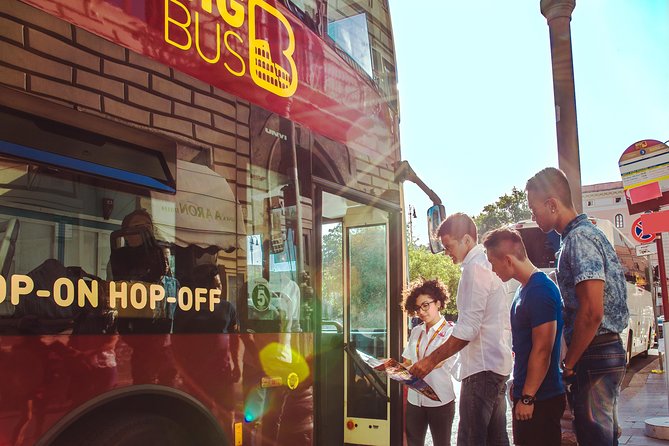
Piazza Venezia, reached at Via di Teatro Marcello, places you near one of Rome’s busiest central viewpoints. The white Vittoriano monument dominates the area, while the streets around it lead toward the Pantheon, Roman Forum, Capitoline Hill, and other central sights.
This is one of the most useful stops for combining the bus with your own walking route. You can leave the bus here and explore in several directions, then return to the route when you are ready.
The stop is not an entrance to every nearby monument. It is a central drop-off point, so use a map and allow time for walking. The city center is compact on paper but slower in real life, especially when crossings, crowds, and photographs are part of your day.
Stop 6: Vatican Museums

The Vatican stop is on Lungotevere Tor di Nona, 7. It serves the Vatican area, but it is not directly beside the Vatican Museums or St. Peter’s Square. Expect a walk, and do not assume the bus will deliver you to the entrance.
That distance is the biggest weakness for anyone booking the tour mainly as a mobility aid. The bus can reduce the amount of city walking, but it does not remove it. You should also allow extra time if you have a timed museum reservation, since traffic and the walk from the stop both affect your schedule.
The reward is a good chance to combine the Vatican with a wider city circuit. You can get off, visit the area independently, and later rejoin the bus instead of arranging another route across Rome.
Stop 7: The Spanish Steps
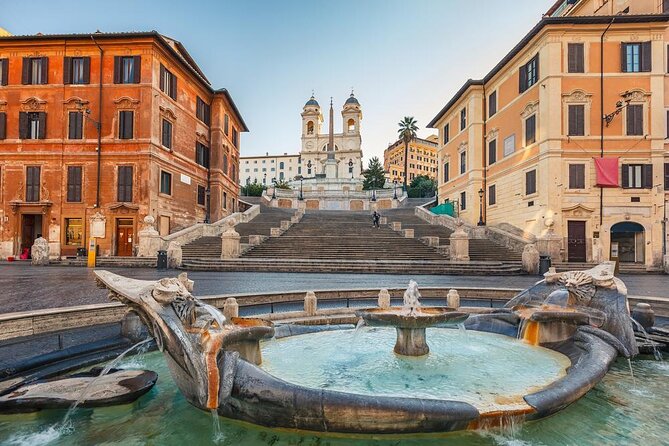
The Spanish Steps stop is listed at Via Ludovisi, 73. It provides access to the Spanish Steps and the elegant streets around Piazza di Spagna, though the stop itself is not right at the base of the stairs.
This is a pleasant place to pause. You can sit on the steps, take in the flow of the city, and stop for a gelato before walking through the nearby shopping streets. The route’s commentary helps place the area in Rome’s wider story, but the real pleasure here is simply slowing down.
Again, check the walk before getting off. A stop name can make a sight sound closer than it is. That is a recurring feature of this route, not a one-off problem.
Stop 8: Piazza Barberini
The Barberini stop is on Via Barberini, 12, near Piazza Barberini and the large Triton Fountain. It is a useful central stop for the area around Via Veneto and for reaching other parts of Rome on foot.
This stop is less obvious than the Colosseum or Vatican, but it can be handy if you are staying near Barberini or want to break up the route between the Spanish Steps and Termini. It also gives you another place to leave the bus when the more famous stops are crowded or temporarily altered.
The route includes eight named locations in the supplied details, although the numbering is presented as stops 1 through 8. Check the current route map before your ride because road closures can alter the practical order or availability.
Choosing between the 3-hour, 24-hour, 48-hour, and 72-hour tickets
The short option is best if you want one circuit plus perhaps one or two stops. It suits a tight schedule and gives you the core views without building your whole visit around the bus.
A 24-hour ticket gives you more breathing room. I would choose it if you want to use the tour as a flexible sightseeing base, getting off at the Colosseum area, Piazza Venezia, and the Vatican while still having the chance to ride again later.
The 48-hour and 72-hour choices make sense only if you expect to use the bus across several days. They give you more chances to work around traffic, closed stops, and long visits at major sights. They are less attractive if you plan to walk most of Rome and only want a quick overview.
The 72-hour option includes a panoramic night tour from roughly April or May through October, depending on the current operating schedule. The supplied details specifically say May to October in one place and April to October in another, so confirm the dates before paying extra for this feature. The night ride is not hop-on, hop-off. You remain on the bus for the panoramic circuit.
Price and overall value at $26.43
At $26.43 per person, the tour can be good value if you use it for orientation, commentary, and several rides. It becomes less valuable if you simply stay aboard for one loop and do not use the digital walking tour.
I would compare the price with your schedule rather than with a normal city bus ticket. You are paying for the open-top view, recorded sightseeing narration, route coverage, Wi-Fi, real-time bus tracking, and the ability to hop on and off during the selected validity period.
The value improves for a first visit, a short stay, or a day when you want to limit the amount of route planning. It drops if the Colosseum stop is closed, if traffic creates long waits, or if you need the bus to stop directly beside each monument.
The included VOX digital walking tour is a useful extra. It gives you something to use after getting off, although the available details do not specify the exact walking routes or the number of tours included.
Timing, apps, and the small practical snags
The real-time tracking app can help you judge when to return to a stop. Use it for bus position and estimated arrival times, but do not depend on it as your only source of information. Its stop list and route information have been difficult to use, and stop closures may not always be obvious.
I would check the operator’s service information before leaving your hotel, especially during a marathon, road works, or major city event. A bus can pass a stop without picking anyone up if that stop is closed.
Wi-Fi is included, but its reliability has been uneven. Treat it as a bonus, not as your only internet connection for maps, tickets, or reservations.
The bus is described as open-top, but upper-deck availability can vary. One ride may not have the open top you expected from the photographs. If the view matters to you, confirm the seating and roof arrangement when you board.
Service animals are allowed, and most people can participate. Still, the walking distances and occasional stop changes make this a limited solution for reduced mobility. Staff have been helpful to passengers using wheelchairs, but the route itself remains dependent on where the bus can legally stop.
Who should book this Rome bus tour?
I would recommend it to a first-time visitor who wants a clear overview before tackling Rome’s major sights on foot. It is also a sensible choice for a short stay, families who need flexible breaks, and anyone who enjoys seeing a city from above.
It suits you particularly well if you plan to ride one full circuit, listen to the commentary, and then choose two or three stops for further exploration. That approach avoids the frustration of trying to use it as a precise taxi.
I would be cautious if you have serious walking limitations, a strict museum appointment, or only one short window in which every minute matters. The stops can be far from the sights, and traffic can stretch the timetable.
Free cancellation is available when you cancel at least 24 hours before the experience start time. Changes or cancellations made later are not accepted for a refund.
FAQ
How long does the Rome Big Bus tour take?
A full circuit takes approximately 1 hour and 40 minutes, although traffic and route conditions can affect the actual time.
Where can I board the bus?
You can board at any of the listed stops, including Termini Railway Station, Santa Maria Maggiore, the Colosseum area, Circus Maximus, Piazza Venezia, the Vatican, the Spanish Steps, and Piazza Barberini.
Which landmarks are served by the route?
The route serves areas near the Colosseum, Roman Forum, Circus Maximus, Vatican City, Vatican Museums, Spanish Steps, Trevi Fountain, Pantheon, Piazza Venezia, and Santa Maria Maggiore.
Are headphones included?
Yes. Headphones are provided for the recorded audio commentary.
What languages are available?
English is offered. The supplied tour details describe the recorded commentary as available in five languages in one section and nine languages in another, so check the current selection before booking.
Does the tour include entry to the Colosseum or Vatican Museums?
No. The bus ticket covers the sightseeing tour, but admission to attractions is not included in the stated inclusions.
Are different ticket durations available?
Yes. Options include 3-hour, 24-hour, 48-hour, and 72-hour tickets, depending on the selection available at booking.
Is a night tour included?
A panoramic night tour is included with the 72-hour ticket during the seasonal operating period, listed as April to October in one detail and May to October in another. It is not hop-on, hop-off.
Is Wi-Fi available on board?
Yes. Free Wi-Fi is listed as an onboard inclusion, although its reliability can vary.
Can I bring luggage on the bus?
No. Luggage is not permitted on board for security reasons.
Should you book the Big Bus Rome tour?
Book it if you want an easy first look at Rome, useful recorded history, and the freedom to choose your stops. I would start with a full circuit, confirm the Colosseum stop is operating, and use the app plus the operator’s service updates before planning your day.
Do not book it expecting a direct shuttle to every monument. The route is best for orientation and broad city views, not for eliminating all walking. Used that way, the $26.43 price can be fair, especially on a first Rome visit or a short stay.
Recently added around Rome
- Palatine Hill and Roman Forum Tour with Fast-Track Entrance★ 4.2 · 417 reviews
- Tivoli: Villa D’Este & Villa Adriana Pass & App Audioguide★ 4.4 · 364 reviews
- From Rome: Villa D’Este & Villa Adriana Day Trip with Lunch★ 4.4 · 289 reviews
- Vatican Museums & Sistine Chapel Skip-the-Line Guided Tour★ 4.6 · 254 reviews
- Rome: The Three Tenors at St. Paul’s Church Concert Ticket★ 4.7 · 699 reviews
- Tivoli: Villa D’Este Entry Ticket and App Audio Guide★ 4.3 · 191 reviews
- Rome: Capitoline Museums and Centrale Montemartini Tickets★ 4.4 · 328 reviews
- Rome: St. Peter’s Basilica and Papal Tombs Guided Tour★ 4.6 · 477 reviews
Rome Tours, compared.
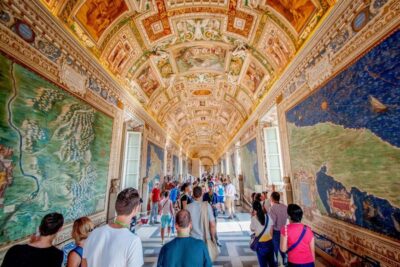
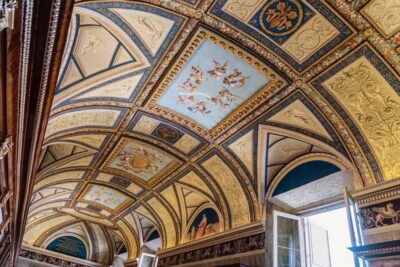
Vatican Museums & Sistine Chapel Tour with Optional Basilica
Read our review →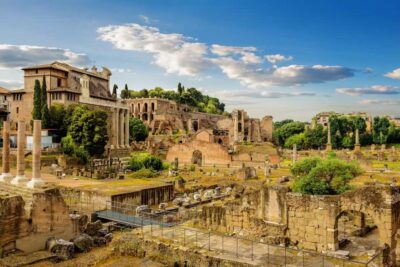
Colosseum, Roman Forum & Palatine Guided Tour
Read our review →
Vatican Museums, Sistine Chapel & St Peter’s Basilica Guided Tour
Read our review →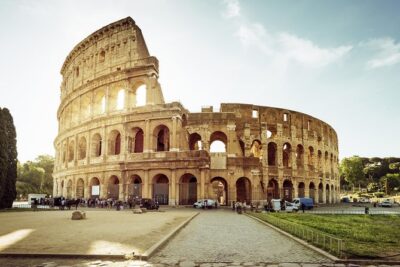
Colosseum, Palatine Hill and Roman Forum Guided Tour
Read our review →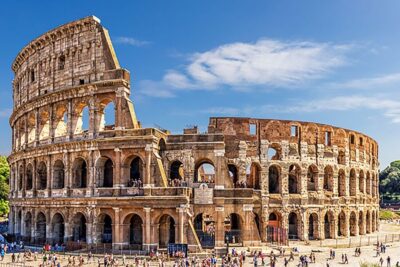
Guided Tour of Colosseum, Roman Forum & Palatine Hill
Read our review →
Colosseum & Forum with Audio Guide App -Optional Arena
Read our review →