Reviewed · ROME TOURS
Rome: Appian Way, Aqueducts, and Catacombs Tour
Rome’s oldest roads lead somewhere unexpected. This 195-minute outing takes you beyond the Colosseum and Vatican to the Appian Way, Cecilia Metella’s grand tomb, the towering aqueducts, and a catacomb visited near closing time. I like the comfortable air-conditioned transport and the way the tour links Roman roads, water engineering, and early Christian burial customs into one clear story.
I also like the change of pace. After the crowds and stone streets of central Rome, you get open space, fresh air, and a quieter side of Lazio. The main caution is that the Appian Way is not always a peaceful ancient lane: one section remains an active, bumpy road, and you need to walk at a moderate pace.
In This Review
- Key points to know before booking
- Why this tour makes a good break from central Rome
- Meeting at Piramide and getting beyond the city center
- Walking the ancient Appian Way
- Cecilia Metella and the Roman habit of making a statement
- The aqueduct park gives Rome room to breathe
- Entering the San Sebastiano or Domitilla catacombs
- The guides can shape the whole afternoon
- Is $64 a fair price?
- Who should book this Rome outing?
- Should you book the Appian Way and catacombs tour?
- FAQ
- How long does the tour last?
- Where does the tour meet?
- Which catacomb will the tour visit?
- What should I wear?
- Can I take photos inside the catacombs?
- Is the tour suitable for wheelchair users or people with claustrophobia?
Key points to know before booking
- The aqueduct park is often the highlight: You get time to walk beneath the huge arches and see how close this countryside feels to Rome.
- Catacomb access comes late in the day: San Sebastiano or Domitilla is visited as the last group of the day, helping keep the underground tour calmer.
- The Appian Way is more practical than polished: Ancient paving stones survive, but modern traffic still uses parts of the road.
- Your guide matters here: Guides such as Federico, Antonella, Silvia, Chiara, Paris, and Sylvie have been praised for lively explanations and careful attention to questions.
- The van saves your legs: Air-conditioned transport connects the scattered sites, though the road can be rough.
- Dress for the catacombs: Long trousers and covered shoulders are required, and photography is not allowed inside.
Why this tour makes a good break from central Rome
Rome can wear you down in the best possible way. After several hours around the Pantheon, Trevi Fountain, or Colosseum, the Appian Way offers a very different setting. You trade dense streets for ancient stones, open fields, monumental ruins, and the remains of Roman infrastructure.
The route also gives you three different ways to think about the ancient city. The Appian Way shows how Rome moved armies and goods. Cecilia Metella’s mausoleum shows how elite families displayed power after death. The aqueducts reveal the practical engineering that allowed a huge city to function.
The final stop shifts the mood again. The catacombs are cool, dim, and narrow. They introduce early Christian burial customs and the less visible side of Roman life. I find that combination more satisfying than a tour that simply strings together several famous ruins.
At $64 per person, the price is reasonable for a nearly three-and-a-quarter-hour tour that includes private air-conditioned transport, admission to one catacomb, and guiding at multiple sites. You are paying for transport as much as entry. The places are spread out, and arranging them independently would mean working out several connections beyond the city center.
Still, this is not a bargain if you want long, detailed visits at every stop. The scheduled time is divided among four main sights, with about 25 minutes on the Appian Way, 25 minutes at Cecilia Metella, 45 minutes at the aqueduct park, and 80 minutes for the catacomb section. The aqueduct stop may leave you wishing for more time, especially if photography and wide views are important to you.
A few more Rome bookings to compare
- Vatican: Museums & Sistine Chapel Entrance Ticket
★ 4.5 · 144,003 reviews - Vatican Museums & Sistine Chapel Tour with Optional Basilica
★ 4.3 · 67,413 reviews - Colosseum, Roman Forum & Palatine Guided Tour
★ 4.7 · 63,148 reviews
Meeting at Piramide and getting beyond the city center
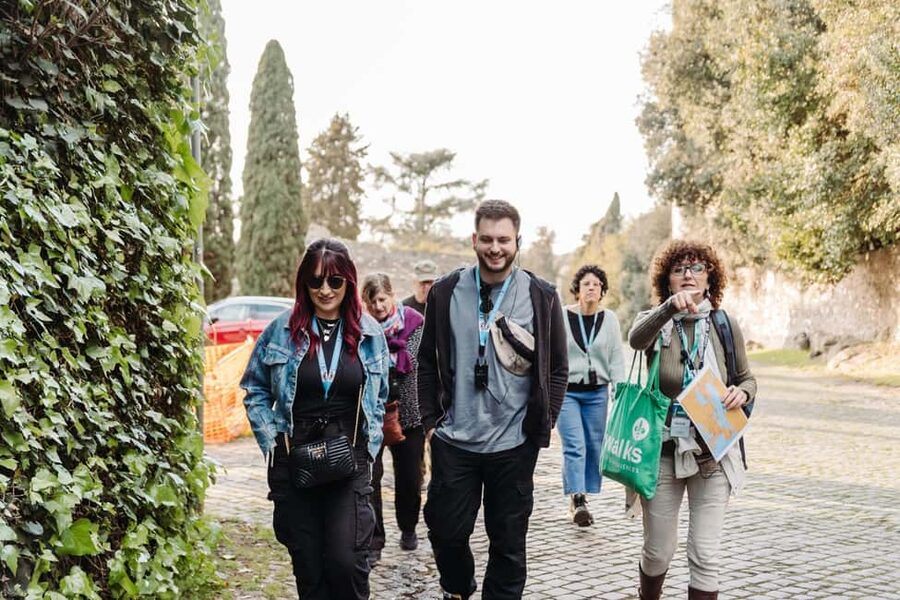
The tour begins in front of Piramide metro station, across from Piazzale Ostiense. Arrive 15 minutes early and look for the guide holding a green Walks sign. This detail matters because Piramide is a busy area, and the correct meeting point is the metro station itself.
If you use a taxi app, enter Piramide metro station rather than relying on a broader Piazzale Ostiense address. One person was dropped about ten minutes away after copying the address into a taxi app, so give yourself a little extra time and confirm the exact location before setting off.
From Piramide, the private vehicle carries you between the sites. The air conditioning is a major help in summer, especially on days when temperatures reach 36 degrees Celsius. It also means you are not spending the day trying to piece together public transport to places outside the historic center.
Group size can vary because private and small-group options are available. One group had 18 people but still found the outing reasonably intimate. Your exact vehicle and group may differ, but the basic advantage remains the same: you walk at the monuments, not along long stretches of city pavement between them.
Expect some jolts on the road. The Appian Way and surrounding routes are not always smooth, and one person specifically warned about the bumpy ride. The driver is an important part of the experience, particularly when traffic, roadworks, or demonstrations affect the route.
Walking the ancient Appian Way
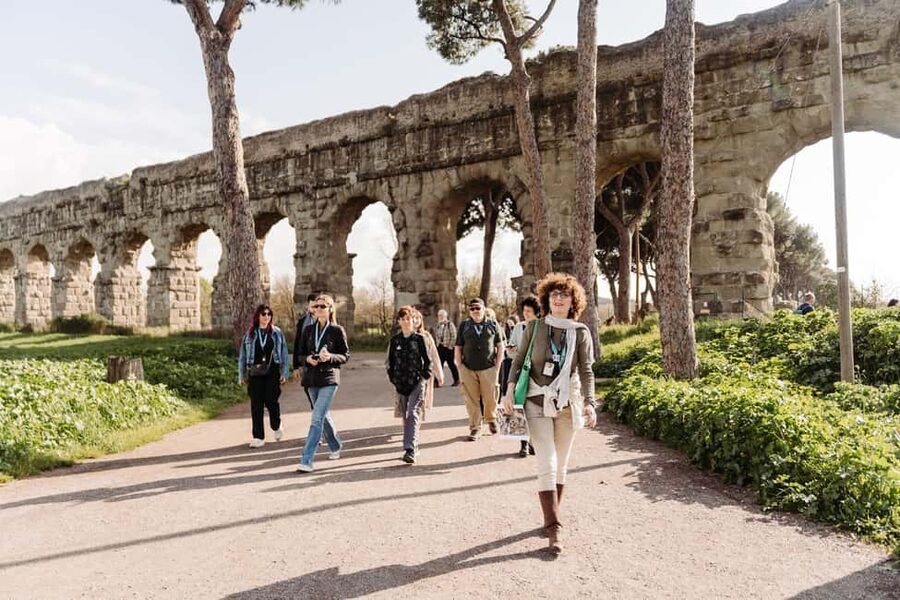
The Appian Way is one of Rome’s oldest roads, and the pleasure here comes from standing on the original route rather than simply viewing it from a coach window. Ancient paving stones give the stop a physical quality. You can picture legions, merchants, and ordinary people using the road as Rome expanded across Italy and beyond.
The scheduled visit lasts around 25 minutes. That is enough for a guided explanation, a walk, and photographs from outside, but it is not a long rural hike. This suits you if you want a taste of the road without committing half a day to walking.
There is an important reality check. The Appian Way is not an untouched pedestrian trail throughout the visit. Parts remain active roads, and modern traffic can interrupt the ancient atmosphere. If you expect a completely silent avenue of ruins, you may find this stop less romantic than imagined.
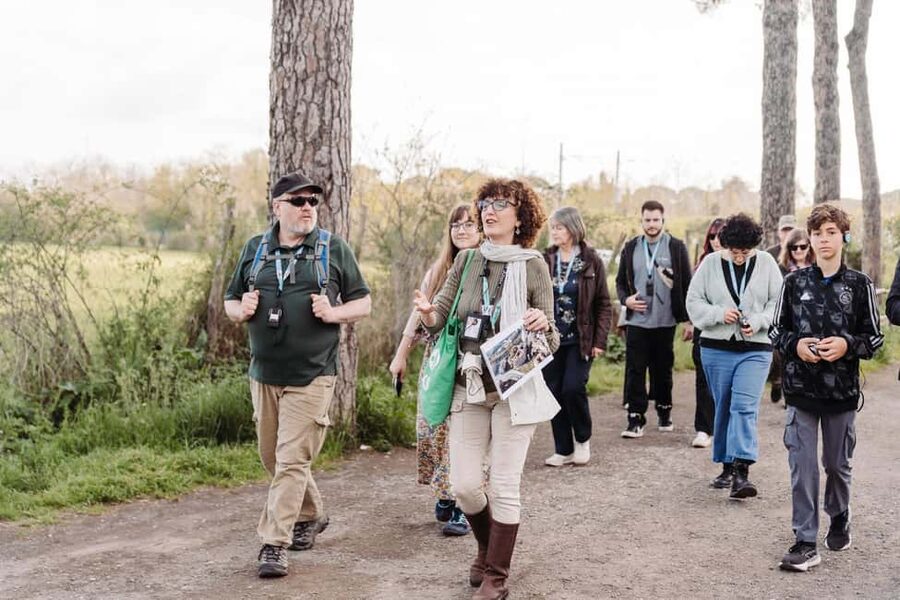
I would treat it as an introduction rather than the tour’s main event. The paving stones and roadside remains help you understand Roman movement, but the experience depends heavily on your guide connecting the fragments. Several guides have been praised for explaining nearby landmarks and the road’s importance, which is especially useful when the surviving ruins are not always self-explanatory.
Wear shoes with a firm sole. Uneven stones are part of the point, but they can be tiring or awkward in flimsy footwear. The walking is generally described as manageable rather than strenuous, though you should be comfortable moving at a moderate pace.
Cecilia Metella and the Roman habit of making a statement
The next stop brings you to the Mausoleum of Cecilia Metella, a large circular tomb dating from the first century BCE. Its size and position make the message easy to read: this was not a modest family marker. It was a public declaration of status and power.
The stop lasts about 25 minutes, usually enough for a guided visit, a look at the exterior, and photographs. The monument is valuable because it gives the Appian Way a human story. Roads carried armies and supplies, but they also passed the burial monuments of families eager to be remembered.
Your guide can help explain who Cecilia Metella was and why the tomb endured. Without that context, a large round ruin can become just another ancient stone building. With it, you begin to see the Appian Way as a carefully staged route lined with reminders of Rome’s wealthy and influential families.
Do not expect a long interior exploration or a museum-style visit here. This is a compact stop in a wider route. Its strength is the setting and the connection between road, tomb, and social power.
Still Rome, but a slower afternoon:
- Vatican Museums, Sistine Chapel & St Peter’s Basilica Guided Tour
★ 4.5 · 39,149 reviews - Rome: Colosseum, Palatine Hill and Roman Forum Guided Tour
★ 4.8 · 32,814 reviews - Rome: Guided Tour of Colosseum, Roman Forum & Palatine Hill
★ 4.7 · 27,897 reviews - Rome: Colosseum & Forum with Audio Guide App -Optional Arena
★ 4.2 · 24,770 reviews
The aqueduct park gives Rome room to breathe
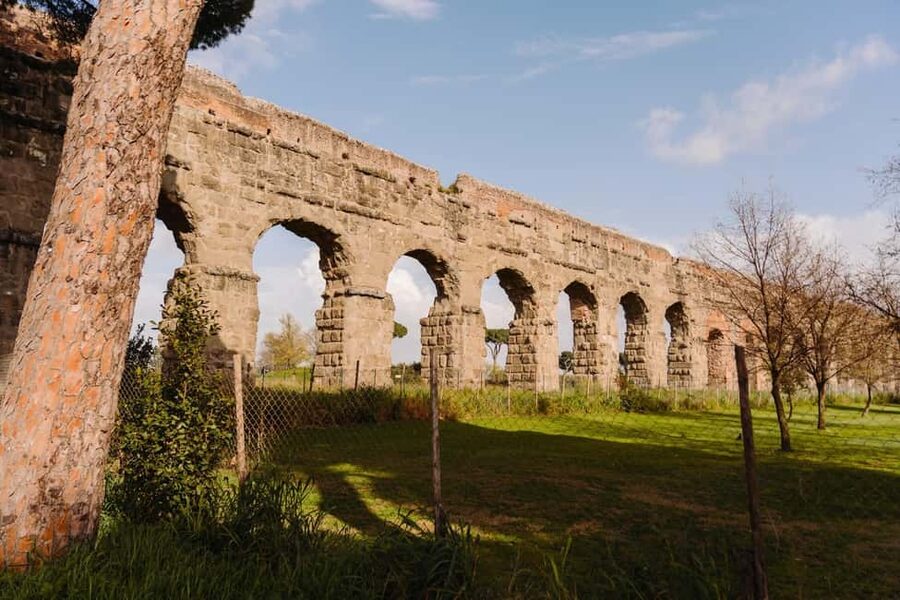
The 45-minute visit to Parco degli Acquedotti is the most open part of the tour. Here you stand beneath the remains of Rome’s aqueducts, enormous stone structures that once carried fresh water toward the city.
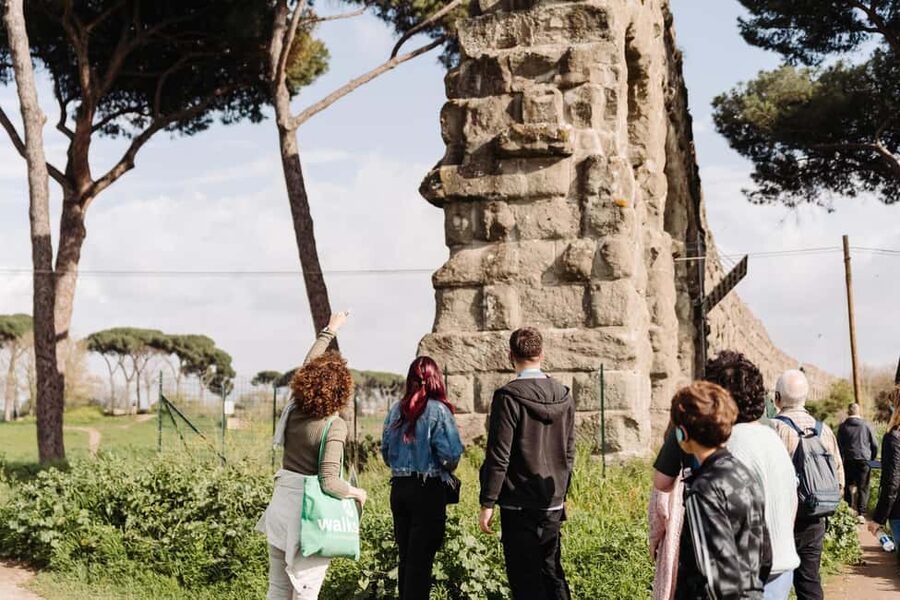
The scale is the first thing you notice. The arches stretch across a park-like setting, and the contrast is striking: an engineering project built for an ancient metropolis now rises above open ground. You get space to walk, take exterior photographs, and listen without the tight crowds found around Rome’s central monuments.
This is also where the tour’s wider theme becomes clearest. The Appian Way explains movement. The mausoleum explains memory and status. The aqueducts explain daily life. Rome’s power depended not only on soldiers and emperors, but also on reliable water brought over long distances.
I would give this stop your full attention. Several people found the aqueducts the best part of the outing, and one wished there had been more time there. If you care about Roman engineering, wide views, or simply a break from packed streets, this park may be the moment that justifies the tour by itself.
The downside is exposure. You are outside for much of this section, with little relief from strong sun on a hot day. Bring water, wear a hat, and consider booking in the cooler part of the year if you dislike heat. Guides have made a point of finding shade and adjusting the pace on very hot days, but weather still shapes the experience.
Entering the San Sebastiano or Domitilla catacombs
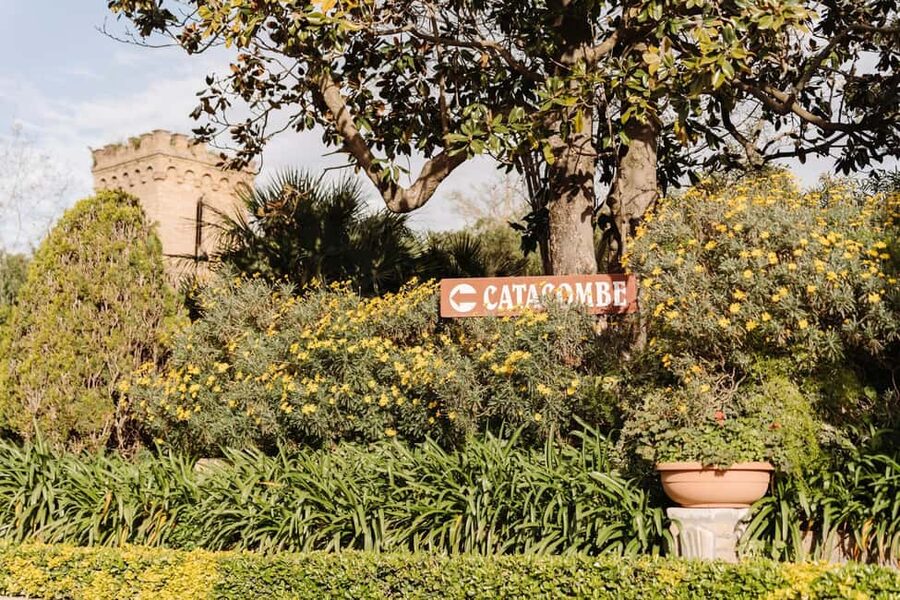
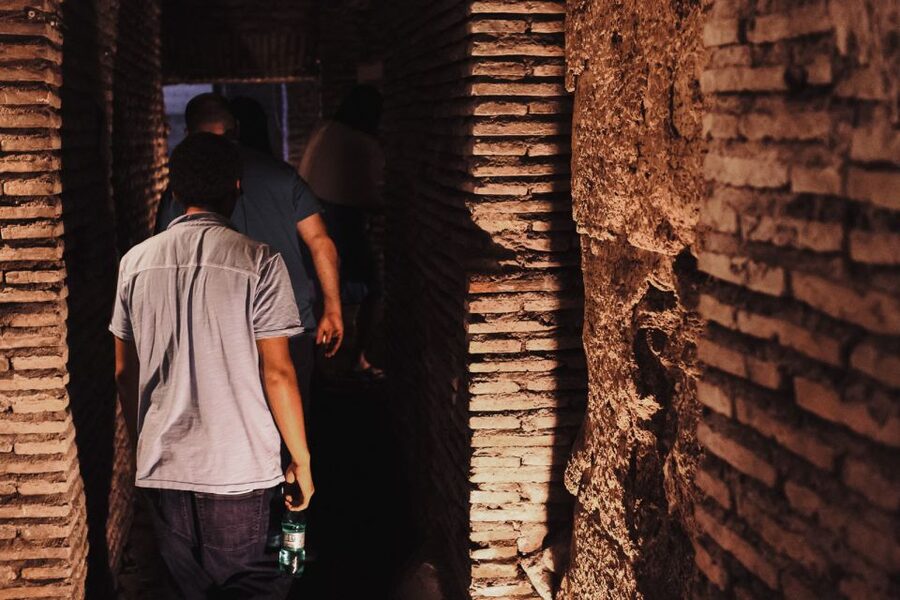
The final main stop is the catacomb visit, scheduled near closing time. Depending on the day, you visit the Catacombs of Saint Sebastian or the Catacombs of Domitilla. The exact site is not guaranteed, so choose this tour for the underground experience rather than for one specific catacomb.
This timing is a real advantage. You enter as the last visitors of the day, so the underground passages can feel quieter and less hurried than they might during a busy afternoon. The air is cooler after the outdoor stops, which is welcome in summer.
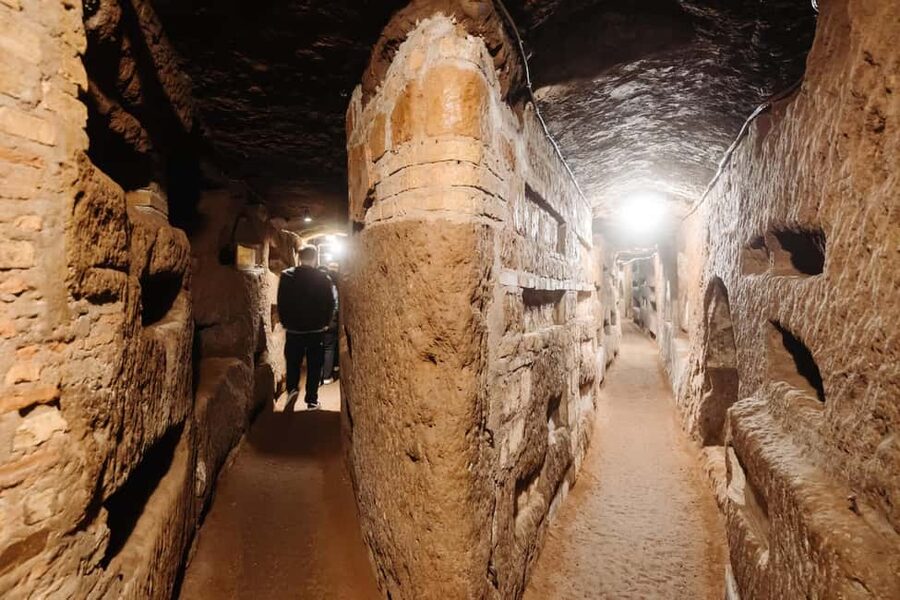
Inside, expect narrow underground passages, ancient burial places, and early Christian material. The atmosphere is subdued and at times eerie, but the focus is historical and religious rather than theatrical. A separate catacomb guide leads this portion, which is useful because the underground site requires a different kind of explanation from the outdoor ruins.
Photography is not allowed inside. That can disappoint you if you want a visual record, but it also keeps the visit respectful and helps maintain the religious character of the place. A gift shop may be closed when you leave, especially at this late hour, so do not count on buying a book afterward.
A useful expectation: these are not the Paris catacombs. You should not book this experience expecting walls of exposed bones. The focus is on burial tunnels, Christian history, and the setting beneath Rome. That distinction prevents a common misunderstanding.
The catacombs are not suitable for people with claustrophobia. The passages are tight, and the visit includes walking underground. You also need to cover your shoulders and knees, regardless of gender. Long trousers and a long-sleeved shirt are the safest choice, though you can bring a scarf or another covering for the visit.
Strollers, wheelchairs, and people with mobility impairments cannot be accommodated. The whole outing includes walking over uneven surfaces, so you should be able to keep a moderate pace without difficulty.
The guides can shape the whole afternoon
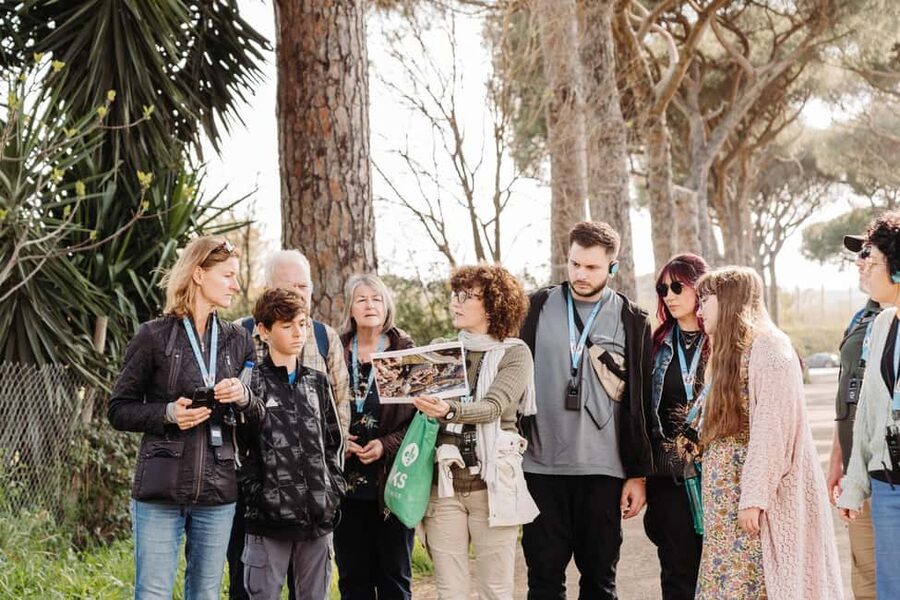
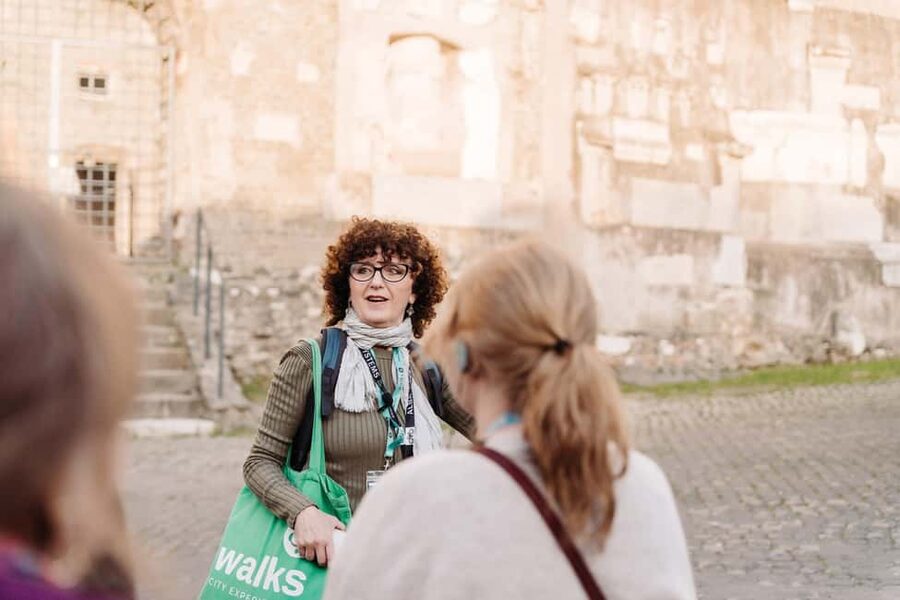
This tour relies on explanation. The ruins are impressive, but a good guide turns scattered stones into a connected story.
Federico has repeatedly been praised for his command of early Roman history, his humor, and his ability to answer questions. Antonella has been described as warm, playful, and highly informed, with particular care for guests on very hot days. Silvia, Chiara, Paris, Sylvie, Annamaria, and other guides have also been praised for energy, clear English, and personal attention.
That range of names tells you something useful: the company has several strong guides, but you may not receive the same person on every departure. Do not book solely because you hope for one particular guide. Instead, expect the quality of the experience to depend partly on who is assigned that day.
The guide also helps make the transport time useful. On the way to the sites, you might hear about Rome’s surrounding landmarks and the reason the Appian route mattered. This is better than treating the van as dead time.
One nice feature is the handoff to a specialist at the catacombs. The change of guide can refresh your attention just when the subject changes from roads and water systems to burial customs and early Christianity.
Is $64 a fair price?
For $64, you receive nearly 195 minutes on the road and at the sites, air-conditioned private transport, an English-speaking guide, and entry to San Sebastiano or Domitilla. That is fair value if you want to visit all three areas without arranging transport yourself.
The cost also buys comfort. The Appian Way, aqueduct park, and catacombs do not sit together in a tidy central-Rome cluster. A vehicle saves you from long transfers and leaves more energy for the walking portions.
The price is less attractive if you mainly want the catacombs. The underground visit lasts about 80 minutes, but that time includes the church and guided walking connected with the site. If you are fascinated by the aqueducts, the value improves because you get a meaningful outdoor stop rather than a quick roadside photo.
Free cancellation up to 24 hours before departure and the option to reserve now and pay later make it easier to fit into a changing Rome schedule. Starting times vary, so check the available departure when booking. Hotel pickup and drop-off are not included.
Who should book this Rome outing?
I would recommend it for you if you have already seen the major central monuments and want a quieter side of Rome. It suits anyone interested in Roman engineering, ancient roads, burial customs, and early Christianity.
It also works well as a change of rhythm. You get fresh air and open space before entering the cool catacombs, and the walking is spread across several stops rather than concentrated in one long march.
You should think twice if you dislike uneven ground, cannot walk at a moderate pace, or feel uneasy in narrow underground passages. It is also not the right choice if you want extensive free time at each site or guaranteed access to a particular catacomb.
Should you book the Appian Way and catacombs tour?
Book it if you want Rome’s infrastructure and quieter outskirts, not just its headline monuments. The aqueduct park is likely to be your favorite stop, while the closing-time catacomb visit gives the afternoon a memorable final act.
Go with realistic expectations about the Appian Way. Modern traffic and rough roads are part of the setting, and the tour offers a compact introduction rather than a long country walk.
For $64, the combination of transport, guiding, and catacomb admission makes sense. Wear long trousers, cover your shoulders, bring water, and meet at the Piramide metro station itself. If those details suit you, this is a smart way to spend an afternoon away from central Rome.
FAQ
How long does the tour last?
The tour lasts 195 minutes, or about three hours and 15 minutes.
Where does the tour meet?
It meets in front of Piramide metro station, across from Piazzale Ostiense. Arrive 15 minutes before departure and look for the guide holding a green Walks sign.
Which catacomb will the tour visit?
The tour visits either the Catacombs of San Sebastiano or the Catacombs of Domitilla, depending on the day.
What should I wear?
Wear long trousers and a long-sleeved shirt. Your shoulders and knees must be covered inside the catacombs.
Can I take photos inside the catacombs?
No. Photography inside the catacombs is not allowed.
Is the tour suitable for wheelchair users or people with claustrophobia?
No. The tour is not suitable for wheelchair users or people with mobility impairments. The narrow catacomb passages may also be uncomfortable for anyone with claustrophobia.
Recently added around Rome
- Palatine Hill and Roman Forum Tour with Fast-Track Entrance★ 4.2 · 417 reviews
- Tivoli: Villa D’Este & Villa Adriana Pass & App Audioguide★ 4.4 · 364 reviews
- From Rome: Villa D’Este & Villa Adriana Day Trip with Lunch★ 4.4 · 289 reviews
- Vatican Museums & Sistine Chapel Skip-the-Line Guided Tour★ 4.6 · 254 reviews
- Rome: The Three Tenors at St. Paul’s Church Concert Ticket★ 4.7 · 699 reviews
- Tivoli: Villa D’Este Entry Ticket and App Audio Guide★ 4.3 · 191 reviews
- Rome: Capitoline Museums and Centrale Montemartini Tickets★ 4.4 · 328 reviews
- Rome: St. Peter’s Basilica and Papal Tombs Guided Tour★ 4.6 · 477 reviews
Rome Tours, compared.


Vatican Museums & Sistine Chapel Tour with Optional Basilica
Read our review →
Colosseum, Roman Forum & Palatine Guided Tour
Read our review →
Vatican Museums, Sistine Chapel & St Peter’s Basilica Guided Tour
Read our review →
Colosseum, Palatine Hill and Roman Forum Guided Tour
Read our review →
Guided Tour of Colosseum, Roman Forum & Palatine Hill
Read our review →
Colosseum & Forum with Audio Guide App -Optional Arena
Read our review →