Reviewed · ROME TOURS
Roman Gladiator School: Learn How to Become a Gladiator
Rome’s best history lesson comes with a wooden sword. At the Gladiator School of Rome, you put on a tunic, belt, leather gloves, and a training sword before learning basic ancient fighting moves. I especially like the blend of hands-on history and playful combat, plus the way instructors turn the final arena match into a shared family event. The main drawback is location: the school sits outside the old city walls, and finding the entrance can take patience.
This two-hour activity works best for families with active children, but adults can have a good time too, especially if they join the tournament. I also like the included museum visit, where you can see gladiator equipment and try on parts of the gear. Bring comfortable clothes, sturdy shoes, and mosquito repellent, since the outdoor training area can have insects.
The school limits each session to 15 people, which gives the instructor room to help with sword and shield work. Lessons are offered in English at several times during the day, and the $108.16 price includes the class, costume, weapons, museum admission, a drink, and a certificate. The value is strongest when you treat it as both a short history lesson and an active family attraction, not simply a sword-fighting class.
In This Review
- Key points to know before booking
- What the Gladiator School actually offers
- Getting to the school on the Appian Way
- Beginning inside the Gladiator School museum
- Putting on the tunic, belt, gloves, and rudis
- Warm-ups, combat skills, and the arena match
- Why families praise the instructors
- Is the $108.16 price good value?
- Who should book, and who should skip it?
- Booking, cancellation, and practical details
- Should you book the Roman Gladiator School?
- FAQ
- Where does the Gladiator School activity take place?
- How long does the gladiator class last?
- What is included in the price?
- What is the minimum age?
- Can family members watch without joining?
- Can I cancel for a full refund?
Key points to know before booking
- You train near the Appian Way: The school is outside Rome’s historic center, close to the ancient Appian Way rather than beside the Colosseum itself.
- You wear Roman-style gear: A tunic, belt, leather gloves, and a wooden training sword called a rudis are supplied for the class.
- The museum comes first: You see weapons, helmets, armor, and other objects before heading outdoors to practice.
- The class ends in an arena: You learn basic offense and defense, then take part in mock fights and an optional tournament.
- Children get the most from it: The activity has a minimum age of 6 and is especially well suited to families with school-age children and teenagers.
- Plan your journey carefully: The site can be tricky to find, buses are not frequent, and a taxi may cost more than you expect.
What the Gladiator School actually offers

This is not a tour of the Colosseum. It is a separate two-hour activity at the Gladiator School of Rome, operated by Scuola Gladiatori Roma near the Appian Way. The instructors belong to the Historic Group of Rome, a group devoted to presenting ancient Roman life and gladiator combat through demonstrations and reenactment.
That distinction matters. If you want quiet archaeological interpretation, this is not the right pick. If you want your children to handle replica equipment, learn a few fighting movements, and act out a Roman arena scene, it offers something the major ruins cannot.
The class is taught in English and has a maximum of 15 participants. That is a useful group size for an activity involving costumes, wooden weapons, and mock combat. You are not simply watching a performer from a seat. You are expected to move, practice, and take part.
The tone is light and theatrical. Instructors use humor, encourage hesitant participants, and guide the group through the activity at a pace suitable for families. Several particularly praised instructors include Mirkos, Patricio, Ivan, and Flama. Their teaching style varies, but the strongest part of the experience is consistently the mix of historical explanation and good-natured fun.
A few more Rome bookings to compare
- Vatican: Museums & Sistine Chapel Entrance Ticket
★ 4.5 · 144,003 reviews - Vatican Museums & Sistine Chapel Tour with Optional Basilica
★ 4.3 · 67,413 reviews - Colosseum, Roman Forum & Palatine Guided Tour
★ 4.7 · 63,148 reviews
Getting to the school on the Appian Way
The meeting point is Via Appia Antica, 18, 00179 Rome. It is near public transportation, but it is not a quick stroll from the Colosseum. The school lies outside the old Roman walls, and one family estimated the walk from the Colosseum at about 45 minutes.
Bus 118 runs along the Via Appia and is one option for reaching the area. Service may not be frequent, so allow extra time. A taxi is simpler, but taxi costs can be high, particularly if you are traveling with a larger family.
The entrance can be confusing. The school is at the end of a long driveway, and the map location may not make that clear. Give yourself plenty of time. Arriving late to a timed class is a poor way to begin your gladiator career.
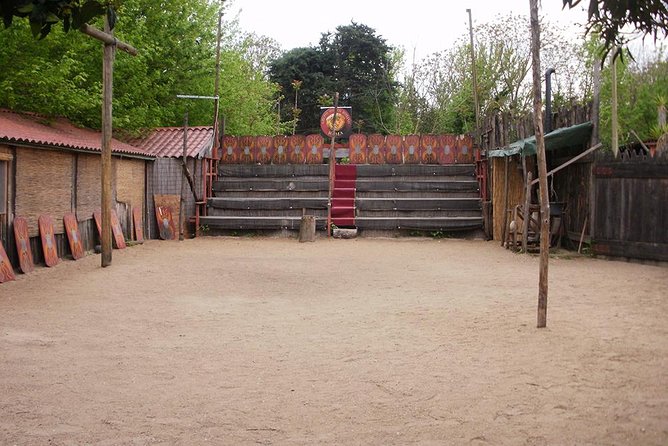
The setting also affects what you pack. You will spend part of the activity outdoors, and several people have dealt with mosquitoes. Mosquito repellent is a practical must, especially during warmer months. Wear comfortable shoes and clothes that allow you to move freely. You do not need to bring a costume or training weapon, since both are provided for the session.
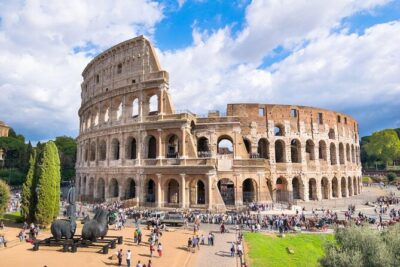
A smart plan is to pair the school with other Appian Way sights rather than rush back and forth across Rome. If you visit the Colosseum first, the school gives your children a physical way to connect with the people and equipment they have just seen in ancient Roman displays.
Beginning inside the Gladiator School museum
The experience starts with the museum, which provides useful context before the training begins. The collection includes gladiator weapons, helmets, armor, shields, Roman soldier clothing, and other artifacts or replicas connected with Roman military life.
The guide explains what the equipment was used for and how gladiators differed from ordinary Roman soldiers. In some sessions, participants can handle weapons or try on armor. That makes the opening lesson more engaging than a simple talk, particularly for children who might lose interest during a traditional museum visit.
This portion is not enormous, and the amount of time spent inside may vary with the group. One early-morning class had only two adults, allowing the instructor to give them extra attention, but even then the participants wished they had more time to see the museum. If the objects interest you, ask questions early and make the most of this section.
I like the museum because it gives the activity substance. Without it, the class could feel like costume play with wooden swords. With it, the clothing, shields, and combat movements have a historical frame.
The explanation is also helpful before you put on the gear. You learn that the gladiator image is more than a helmet and sword. Different weapons, armor styles, and fighting methods shaped how a fighter moved in the arena. The school simplifies the subject for a short class, but it gives you enough background to make the training feel connected to Roman life.
Putting on the tunic, belt, gloves, and rudis

After the museum, you get ready for class. The school supplies a traditional-style belt, tunic, leather gloves, and a rudis, the wooden training sword used during the lesson.
The costume is part of the fun, but it also serves a practical purpose. Once the children are dressed and holding the sword, the class has their full attention. Parents can take photographs, and friends and family may watch from a viewing platform even if they are not participating.
The equipment is for training, not actual fighting. Still, the group uses it actively, so listen carefully to the instructor’s rules. The class includes sword work and shield techniques, and the final mock battle can become energetic. One account describes young children becoming upset when the physical fighting felt too rough. That is a useful warning: stay close to your child’s comfort level and remind everyone that control matters more than force.
The experience has a minimum age of 6. Most children in that range can participate, but age alone does not tell you whether the activity will suit your child. A confident 7-year-old who enjoys active play may love it. A child who dislikes physical competition may prefer to watch from the platform.
Still Rome, but a slower afternoon:
- Vatican Museums, Sistine Chapel & St Peter’s Basilica Guided Tour
★ 4.5 · 39,149 reviews - Rome: Colosseum, Palatine Hill and Roman Forum Guided Tour
★ 4.8 · 32,814 reviews - Rome: Guided Tour of Colosseum, Roman Forum & Palatine Hill
★ 4.7 · 27,897 reviews - Rome: Colosseum & Forum with Audio Guide App -Optional Arena
★ 4.2 · 24,770 reviews
Warm-ups, combat skills, and the arena match
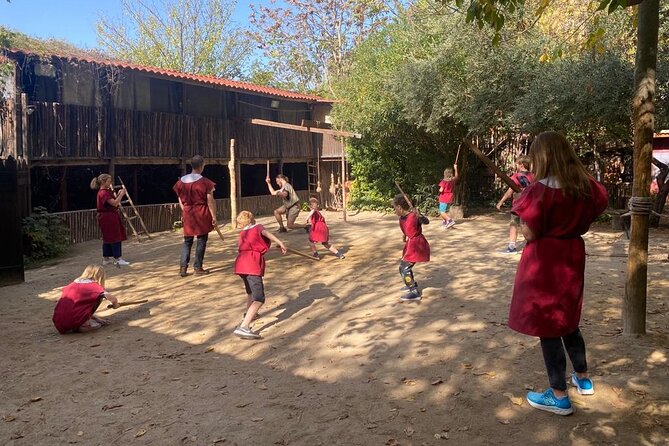
The outdoor portion begins with warm-ups and agility exercises. You may also take part in a mental training game designed to get the group into a gladiator mindset. These exercises keep the lesson from becoming a lecture and help younger participants use some energy before the mock fighting starts.
Next comes instruction in basic offense and defense. You practice how to hold the sword, move with a shield, and respond to another fighter. The instructor demonstrates the movements, then lets you repeat them. Since the class is small, there is a fair chance of receiving corrections and encouragement rather than simply copying from the back of a large crowd.
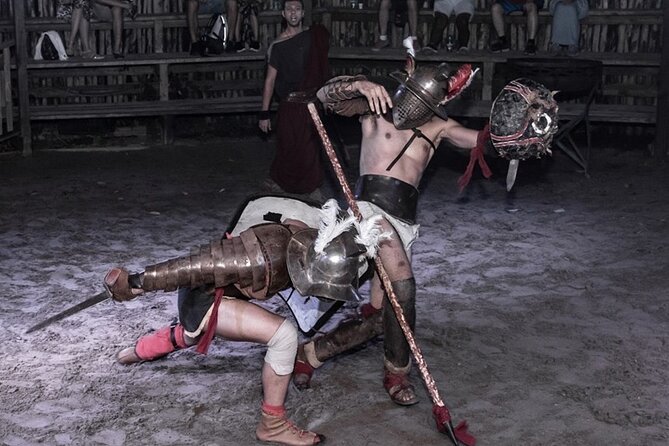
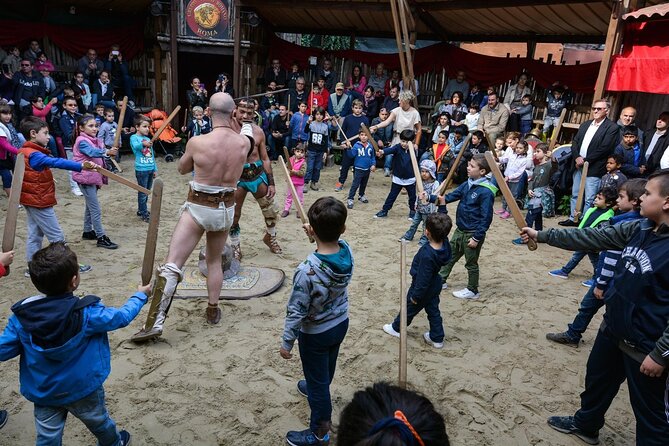
The final arena battle is the payoff. Participants face one another in friendly matches, with the instructor directing the action. Some sessions include an optional tournament, complete with a prize for the winner. Even people who have no interest in competition can enjoy the spectacle, since the class is designed to keep the tone playful rather than serious.
The arena portion has become the favorite part for many families because it turns the earlier lessons into a story. Children dress as gladiators, learn a few techniques, then enter the arena for a final test. Adults often enjoy watching the chaos, and they can join in rather than stand on the sidelines.
You should not expect polished stage combat or a full historical reenactment lasting all afternoon. This is a short, guided introduction. The charm comes from participation, not technical perfection.
Why families praise the instructors
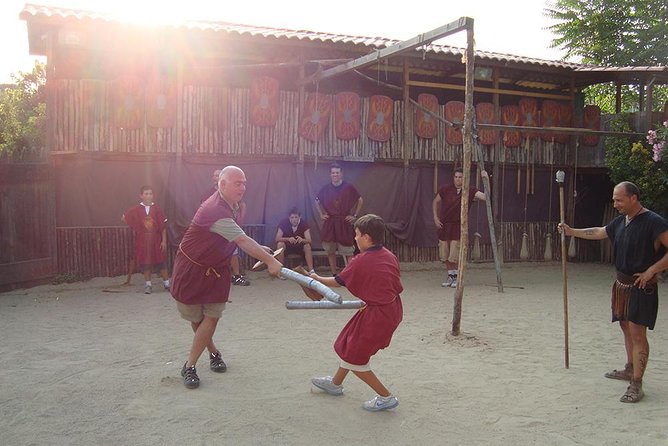
The instructors are the heart of the experience. Strong teaching makes the difference between an entertaining history lesson and a confusing session with toy weapons.
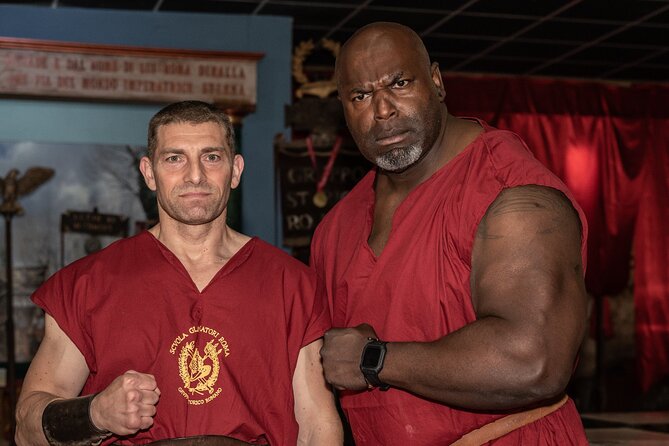
The best guides combine historical explanation with humor. Patricio has been praised for working well with two families and keeping the subject interesting. Ivan has been singled out for his ability to engage both children and adults. Mirkos received warm praise for giving close attention to a small winter group, while Flama mixed Roman military history with active training and comic moments.
That variety suggests an important point: you are booking the school’s format and staff rather than one guaranteed individual guide. The teaching style may differ from session to session. Still, the repeated strengths are clear: warmth, energy, and an ability to make Roman history understandable without turning the class into a school assignment.
The staff has also been praised for welcoming mixed groups from different countries. That matters in Rome, where family members may have different comfort levels with English. The lessons are built around demonstration and movement, so you do not need advanced language skills to follow the basic action.
Is the $108.16 price good value?
At $108.16 per person, this is not a cheap children’s diversion. The price includes approximately two hours of instruction, museum admission, the costume, training weapons, and a drink. Everyone who completes the lesson also receives a certificate.
The value depends on how you use it. If one adult pays only to watch, the cost can feel high, since friends and family may observe from the viewing platform without taking part. If parents and children all join the lesson, the activity becomes a shared experience rather than a drop-off class.
You are also paying for a specialized setting, a small group capped at 15, and instructors trained in Roman reenactment. That is more substantial than buying a souvenir gladiator helmet or attending a short photo opportunity.
One practical note: the advertised inclusions specify a drink, but at least one participant did not receive one. Food is not included, and the nearby area has few real meal options. Eat before you arrive, particularly if you are booking a morning or midday class.
Group discounts may improve the price for larger parties. It is worth checking the available rate when booking, especially if you are traveling with extended family or another family.
Who should book, and who should skip it?
This is an excellent match for families with children from around 6 through the teenage years. It gives active children a reason to care about Roman clothing, weapons, and military life. It also works well after a Colosseum visit, when the arena setting and gladiator theme are already fresh.
Adults can enjoy it too, especially if they participate fully. Two adults on a quiet early-morning session had a particularly personal class, and adults who embrace the silliness can make the tournament entertaining rather than awkward.
History fans should book with the right expectations. The museum and instructor explanations offer real educational value, but this is not a specialist seminar. You get a lively introduction, followed by practice and play.
I would think twice if you dislike physical activity, do not want to wear a costume, or prefer a central Rome location. I would also be cautious with very young children or children who are sensitive to rough play. The school lists 6 as the minimum age, and the activity can feel intense to some younger participants even though the weapons are for training.
The outdoor setting may be uncomfortable in hot weather or during mosquito season. Bring repellent and water, and avoid treating this as a quick stop between tightly timed attractions.
Booking, cancellation, and practical details
Confirmation is provided when you book, and you can choose among lesson times offered throughout the day. The activity ends back at the meeting point, with no hotel pickup or drop-off.
Free cancellation is available until 24 hours before the scheduled start time. Cancel at least 24 hours ahead for a full refund. Changes or cancellations made less than 24 hours before the start are not accepted for a refund, and cut-off times follow Rome’s local time.
The class is offered in English. Most people can participate, but you should be comfortable with standing, moving, warm-ups, and controlled mock combat. If a family member does not want to take part, the viewing platform provides an alternative.
Should you book the Roman Gladiator School?
Book it if you want Rome to feel active, funny, and memorable for your family. The museum gives the experience historical weight, the instructors make the material approachable, and the arena match supplies the story children will retell later.
The biggest trade-offs are the out-of-the-way location, the price, mosquitoes, and the possibility that the fighting may feel too physical for some younger children. Plan the route carefully, bring repellent, eat beforehand, and set clear expectations about gentle play.
For families who have already visited the Colosseum, this is a clever follow-up. For adults, it is best enjoyed with a willingness to look a little ridiculous. If that sounds like your kind of Roman adventure, the certificate and final battle make this a strong addition to your itinerary.
FAQ
Where does the Gladiator School activity take place?
The meeting point is Via Appia Antica, 18, 00179 Roma RM, Italy, near the historic Appian Way and outside Rome’s old city walls.
How long does the gladiator class last?
The class lasts approximately two hours, including the museum visit, costume and equipment use, training, and arena activities.
What is included in the price?
The price includes the two-hour Roman gladiator class, instruction from members of the Historic Group of Rome, gladiator clothing, training weapons, museum admission, a drink, and a certificate of accomplishment.
What is the minimum age?
The minimum age is 6 years old. Most people can participate, but the activity includes warm-ups, movement, and controlled mock fighting.
Can family members watch without joining?
Yes. Friends and family can watch the class from the viewing platform.
Can I cancel for a full refund?
Yes. You must cancel at least 24 hours before the experience start time for a full refund. Cancellations or changes made less than 24 hours before the start are not accepted for a refund.
Recently added around Rome
- Palatine Hill and Roman Forum Tour with Fast-Track Entrance★ 4.2 · 417 reviews
- Tivoli: Villa D’Este & Villa Adriana Pass & App Audioguide★ 4.4 · 364 reviews
- From Rome: Villa D’Este & Villa Adriana Day Trip with Lunch★ 4.4 · 289 reviews
- Vatican Museums & Sistine Chapel Skip-the-Line Guided Tour★ 4.6 · 254 reviews
- Rome: The Three Tenors at St. Paul’s Church Concert Ticket★ 4.7 · 699 reviews
- Tivoli: Villa D’Este Entry Ticket and App Audio Guide★ 4.3 · 191 reviews
- Rome: Capitoline Museums and Centrale Montemartini Tickets★ 4.4 · 328 reviews
- Rome: St. Peter’s Basilica and Papal Tombs Guided Tour★ 4.6 · 477 reviews
Rome Tours, compared.


Vatican Museums & Sistine Chapel Tour with Optional Basilica
Read our review →
Colosseum, Roman Forum & Palatine Guided Tour
Read our review →
Vatican Museums, Sistine Chapel & St Peter’s Basilica Guided Tour
Read our review →
Colosseum, Palatine Hill and Roman Forum Guided Tour
Read our review →
Guided Tour of Colosseum, Roman Forum & Palatine Hill
Read our review →
Colosseum & Forum with Audio Guide App -Optional Arena
Read our review →