
Reviewed · COLOSSEUM & ROMAN FORUM TOURS
Palatine Hill and Roman Forum Tour with Fast-Track Entrance
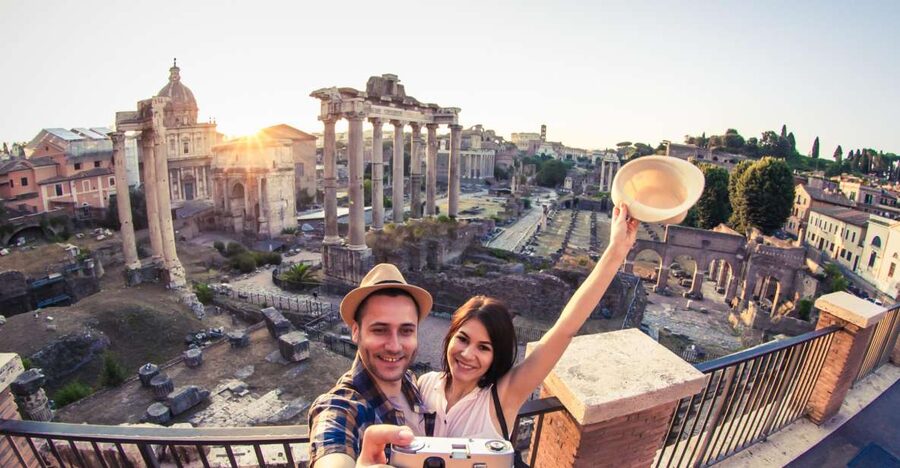
Rome’s oldest stories begin under your feet. This two-hour tour brings Palatine Hill and the Roman Forum into focus with a live guide, fast-track entry, and a clear route through some of Rome’s most important ruins. I like the panoramic view over the Forum and Circus Maximus, and I like how the guides turn broken columns and stone foundations into stories about power, ritual, and daily life.
I also appreciate the headsets used with groups of more than eight people. Guides such as Simona, Anton, Antonio, Katia, Giorgio, and Andy have been praised for making the past easy to follow, often with humor and vivid storytelling. The main drawback is the walking: Palatine Hill includes steps and uneven ground, and the tour is not suitable for wheelchair users or people with mobility, back, or certain medical problems.
In This Review
- Key details before you book
- Why Palatine Hill is the right place to begin
- The view across Circus Maximus and the Forum
- The Roman Forum’s temples, arches, and public buildings
- Walking the Sacred Way
- What the guide adds to a difficult archaeological site
- Is $293.41 per person good value?
- Timing, meeting point, and what to carry
- Who will enjoy this two-hour tour most?
- Should you book Palatine Hill and the Roman Forum Tour?
- FAQ
- How long does the tour last?
- Where does the tour meet?
- Where does the tour finish?
- Is the Colosseum included?
- What languages are available?
- Is fast-track entry guaranteed to mean no waiting?
- Do I need to bring identification?
- What should I wear and bring?
- Is the tour suitable for wheelchair users?
Key details before you book
- Palatine Hill begins with Rome’s founding legends: Hear the story of Romulus and Remus and see the hill linked to Rome’s earliest settlement, dated here to the 9th century BC.
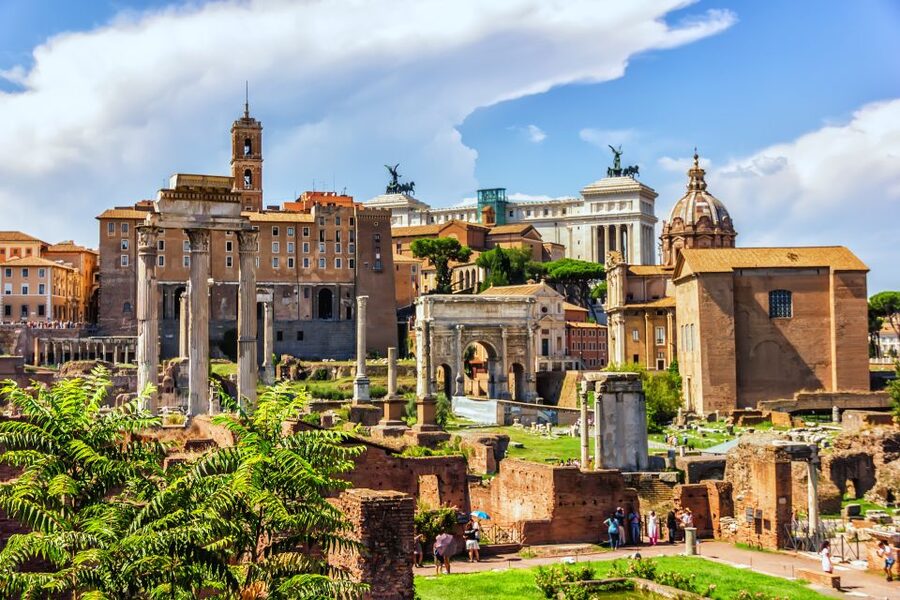
- The Forum route covers major political and religious sites: Expect the Temple of Julius Caesar, Arch of Titus, House of the Vestal Virgins, Senate House, Basilica of Maxentius, and the Sacred Way.
- Fast-track entry saves time, but not all waiting: You use a separate entrance, yet security checks and metal detectors can still create a line.
- The view is one of the tour’s best rewards: From Palatine Hill, you can look across the Roman Forum and toward Circus Maximus.
- Two hours gives you structure, not total freedom: The guide keeps the group moving, so plan extra time if you want to explore the archaeological area afterward.
- Bring identification and wear sensible shoes: Your full name and date of birth are checked against your booking, and a passport or ID card is required at the entrance.
Why Palatine Hill is the right place to begin
The tour starts near Oppio Caffe on Via delle Terme di Tito, at the corner of Via Nicola Salvi. The guide holds a sign with your name, so take a moment to find the exact meeting point before the start time. The streets around the Colosseum and Forum can be confusing, and one useful feature of this operation is the ability to contact a real person if you have trouble finding the group.
From the meeting point, you head to the Roman Forum entrance and then explore Palatine Hill. The order gives the tour a natural shape. First comes the elevated ground associated with Rome’s earliest stories. Then you descend into the political center where the city conducted public business, religious ceremonies, trials, speeches, and triumphs.
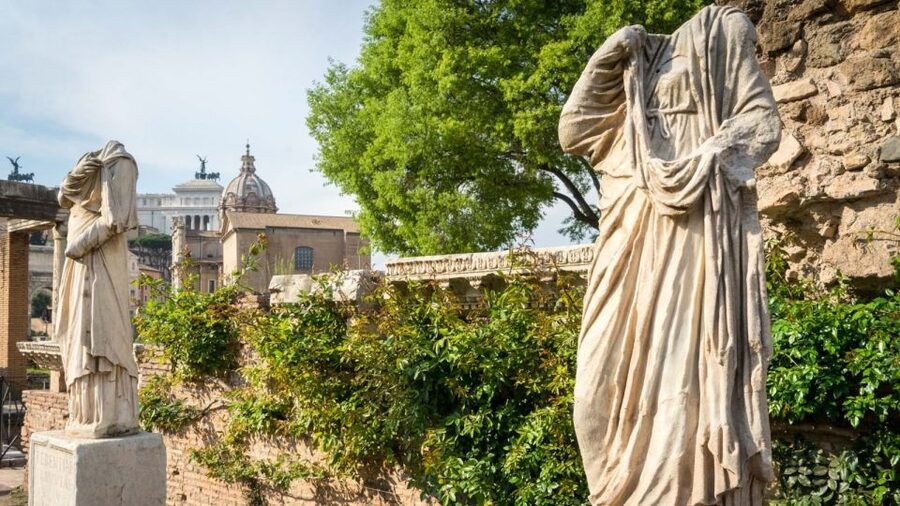
Palatine Hill is not a tidy museum. It is a broad archaeological area with grassy spaces, fragments of walls, scattered foundations, and large stretches where you must picture the missing buildings. That can be difficult on your own. A good guide helps you understand what once occupied the site and why this particular hill mattered.
The hill is associated with an older settlement from the 9th century BC. It is also tied to the legend of Romulus and Remus, the brothers said to have been raised by a wolf before fighting for control. The story is part myth, part political identity, and a useful way to begin thinking about how Romans explained their own origins.
You should not expect every detail to be visible in the stones. Much of the original city is gone, and several sections require imagination. This is where the guide matters most. Anton, for example, was praised for creating a dramatic explanation that held the attention of a nine-year-old, while another guide used photographs to show what the ruins may once have looked like.
More Colosseum and Roman Forum tickets:
- Colosseum, Roman Forum & Palatine Guided Tour
★ 4.7 · 63,148 reviews - Rome: Colosseum, Palatine Hill and Roman Forum Guided Tour
★ 4.8 · 32,814 reviews - Rome: Guided Tour of Colosseum, Roman Forum & Palatine Hill
★ 4.7 · 27,897 reviews
The view across Circus Maximus and the Forum
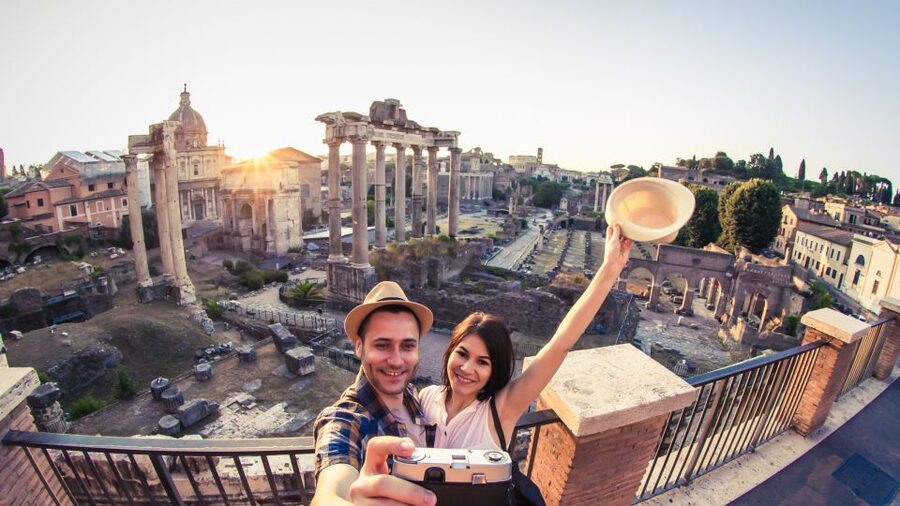
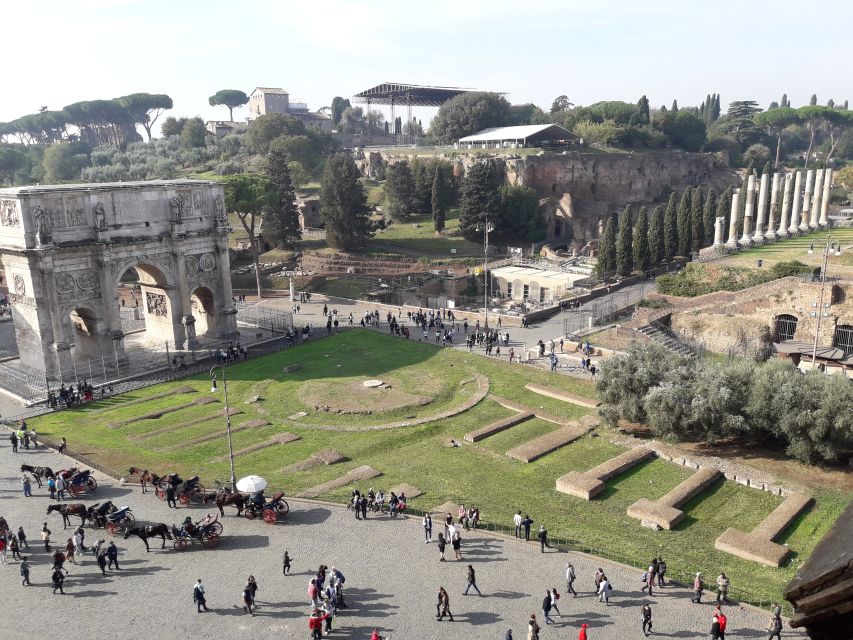
The climb up Palatine Hill involves a moderate amount of walking and some steps. Once you reach the higher ground, you get one of the clearest broad views in this part of Rome. The ancient ruins spread below, with Circus Maximus visible from the hill and the Forum occupying the valley.
I would bring a camera, but I would also pause before taking pictures. The view helps you understand the physical relationship between Rome’s major public spaces. From above, the Forum is easier to read as a connected center rather than as a pile of separate ruins.
The view is also a practical reason to start here. You see the Forum from above before walking through it, which gives you a mental map. Later, when you stand beside a temple or basilica, you have a better sense of where it sits in relation to the rest of ancient Rome.
The climb and heat can make this section tiring, especially in warm weather. Wear comfortable shoes and carry only what you need. Large bags, backpacks, luggage, and suitcases are not allowed, and there is no cloakroom for items that you bring but cannot take inside.
The Roman Forum’s temples, arches, and public buildings
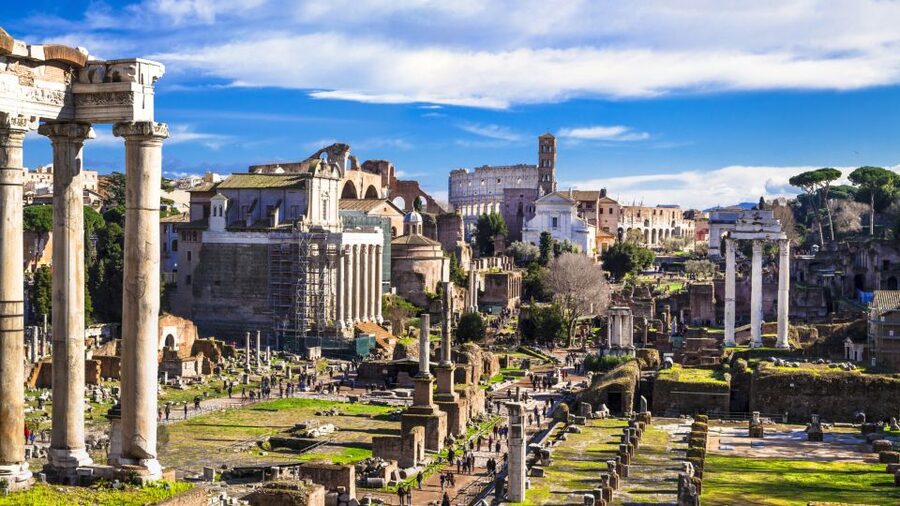
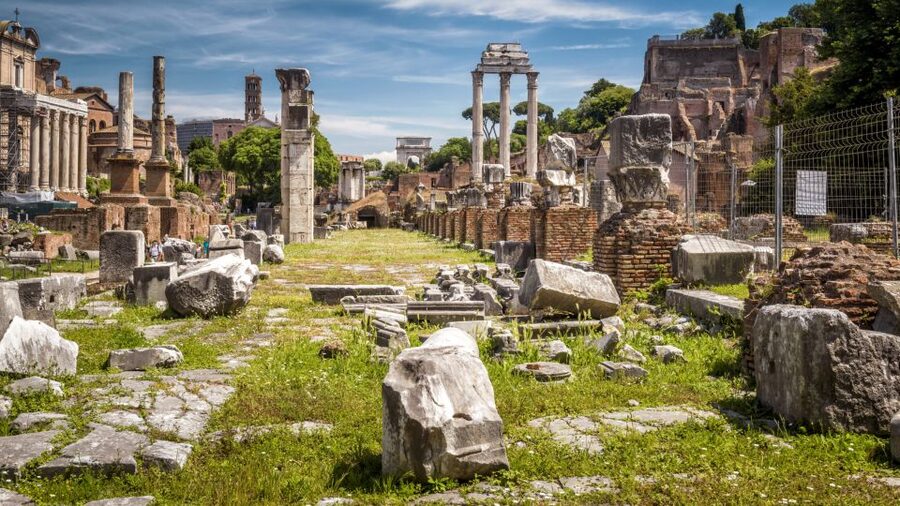
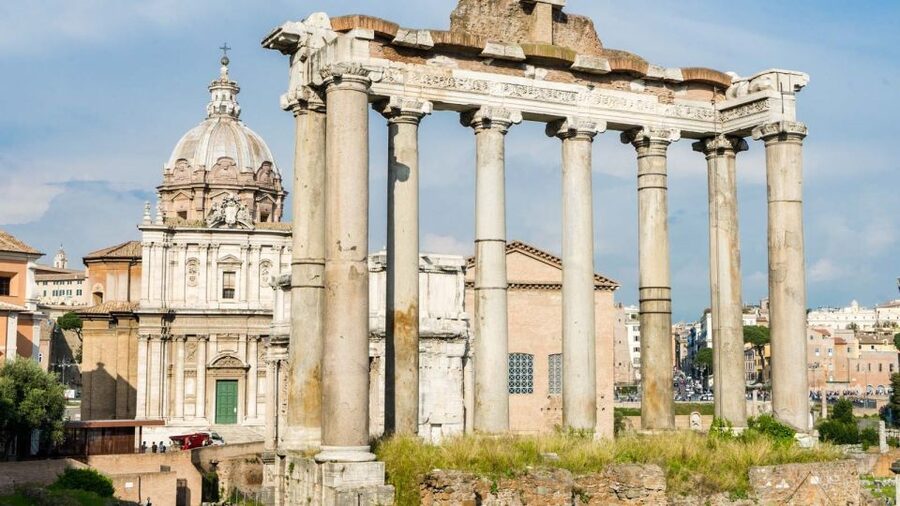
After Palatine Hill, the tour moves into the Roman Forum. This is the section many people imagine when they picture ancient Rome: columns, arches, foundations, fragments of temples, and the long route once used for public ceremonies.
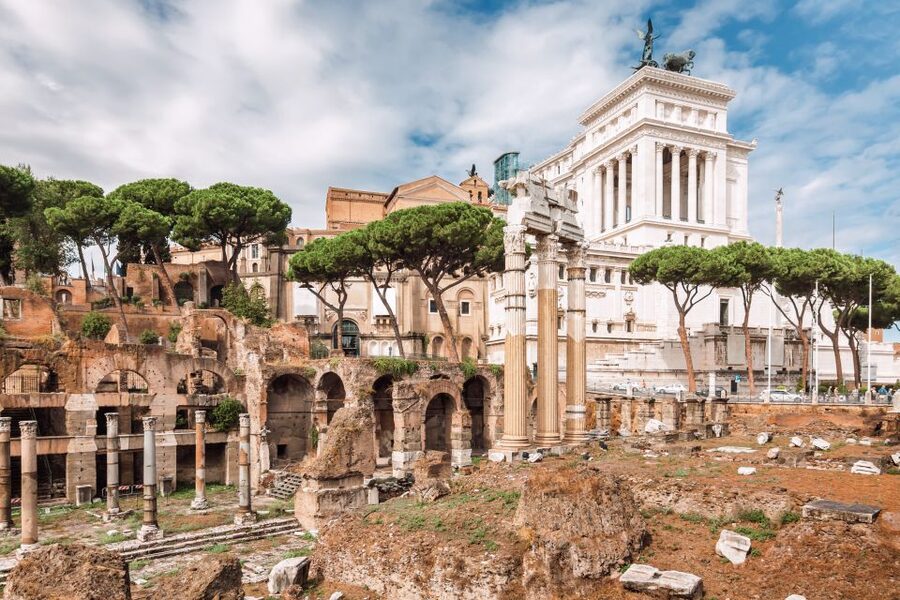
The guide points out the Temple of Julius Caesar, built at the site where Caesar was cremated. It is a small but important stop because it connects the physical ruins with the political upheaval that changed Rome from republic to empire.
The Arch of Titus gives the route a different mood. Its triumphal purpose recalls military victory and imperial power. Look at it as part of Rome’s habit of turning conquest into public spectacle. The arch is not simply a piece of decoration. It helped tell Rome’s official story to anyone walking through the Forum.
The House of the Vestal Virgins introduces the religious life of the city. The Vestals served a major public cult, and their residence shows that the Forum was not only a place for politicians and soldiers. Sacred duties, public trust, and social status all met here.
The Senate House brings you back to government. This is where the Forum’s political character becomes clear. Ancient Rome’s public life was not hidden behind modern office doors. Speeches, votes, legal disputes, religious ceremonies, and public announcements took place in highly visible spaces.
The Basilica of Maxentius is a strong reminder of Roman engineering. Its surviving remains are large enough to suggest the scale of the original structure, even though the roof and much of the building have disappeared. Several guides have used the ruins to explain Roman construction and the technical skill needed to create such spaces.
Walking the Sacred Way
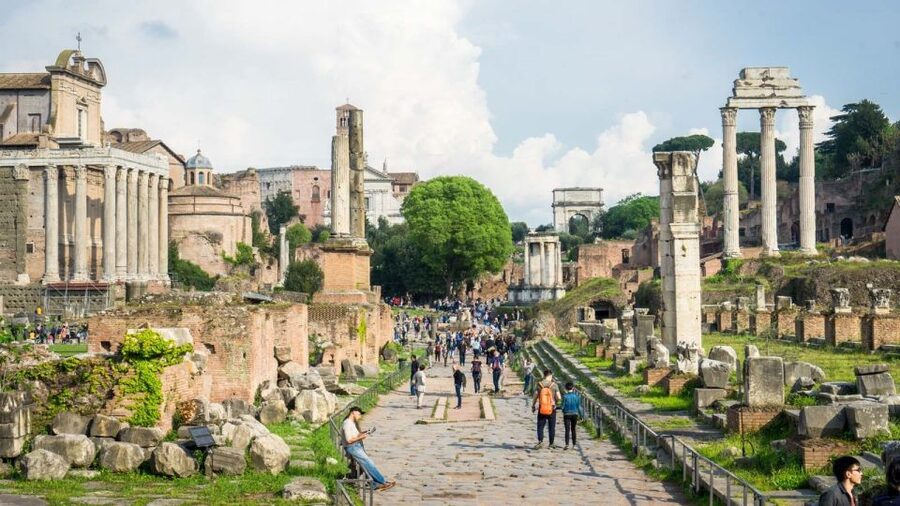
The Sacred Way, or Via Sacra, is one of the most memorable parts of the route. This was the Forum’s main ceremonial road, used by religious processions and triumphal parades. The tour connects it with the return of Caesar’s centurions after military campaigns and conquests.
Walking along the route gives you a more physical sense of ancient Rome than viewing a monument from a distance. You follow the same general corridor through the center of the Forum, passing the remains of buildings that once framed public life.
Still, the road does not look like a fully restored ancient avenue. Expect uneven surfaces and incomplete ruins. You may find yourself trying to separate the original road from later layers and repairs. The guide’s explanation helps, but you should allow yourself time to simply look.
The headsets are especially useful here. The Forum can be noisy, and the group may spread out around the ruins. With audio equipment, you can look at the site while still following the explanation instead of standing shoulder to shoulder around the guide.
A few more Rome bookings to compare
- Vatican: Museums & Sistine Chapel Entrance Ticket
★ 4.5 · 144,003 reviews - Vatican Museums & Sistine Chapel Tour with Optional Basilica
★ 4.3 · 67,413 reviews - Vatican Museums, Sistine Chapel & St Peter’s Basilica Guided Tour
★ 4.5 · 39,149 reviews - Rome: Colosseum & Forum with Audio Guide App -Optional Arena
★ 4.2 · 24,770 reviews
What the guide adds to a difficult archaeological site
A self-guided walk can show you impressive stones. It may not explain why those stones mattered. This tour earns its price mainly through interpretation rather than access alone.
The strongest guides make the history understandable without flattening it. Simona was praised for explaining the people who lived on Palatine Hill and those who used the Forum, while also discussing the design and materials of the buildings. Giorgio was praised for using engaging stories that made the climb and heat easier to forget. Other guides, including Andy and Samuele, were described as attentive, entertaining, and careful to check that everyone could hear.
That range of guide styles matters. Your experience will depend partly on the individual leading the group. The available languages are Portuguese, English, Italian, Spanish, German, and French, so check that your preferred language is available when you choose a time.
The group option is limited to 20 people, according to the tour details. That is large enough to offer some group energy but small enough for a guide to keep people together. Private guide service is also available if you select the private option. If you want to ask many questions or need a slower pace, private service may offer better value than a standard group outing.
A few practical touches make a difference. Guides have stopped for restrooms, water bottles, and photographs, and Andy made special adjustments for a person with limited mobility. That does not make the tour suitable for all mobility needs, but it suggests that the guide may try to help within the limits of the archaeological site.
Is $293.41 per person good value?
At $293.41 per person, this is an expensive way to see the Forum and Palatine Hill. The price needs careful thought, especially because the tour lasts two hours and does not include food, drinks, hotel pickup, hotel drop-off, or the Colosseum.
The value is strongest if you care about guided interpretation, want a planned route, and are visiting Rome for the first time. A skilled guide can help you understand a huge and confusing archaeological area in a short period. The fast-track entrance also has value on a busy day, although it does not remove security checks or guarantee that you will walk straight inside.
The price is harder to justify if you mainly want entry and time to wander. The tour does not include the Colosseum, so you must arrange that separately if it is on your Rome list. Also, the activity ends back at the meeting point, not at the end of a full-day sightseeing route.
One advantage is flexibility. You can reserve now and pay later, and cancellation is allowed up to 24 hours before the activity for a full refund. That is useful if your Rome plans are still shifting.
Timing, meeting point, and what to carry
Plan to arrive with enough time to locate Oppio Caffe on Via delle Terme di Tito. The meeting point is near major ancient sites, but the surrounding streets and entrances can be confusing. One past participant was told to arrive much earlier than necessary, so do not assume that an extremely early arrival is required unless your confirmation says so. Arrive punctually and allow time to find the guide without rushing.
Bring a passport or valid ID card. Everyone entering must provide a valid document, and the full name and date of birth on the booking must match the identification presented. A mismatch can prevent entry.
Comfortable shoes are essential. The route includes walking, steps, uneven archaeological ground, and outdoor exposure. Small bags are permitted, but large bags and backpacks are not. Leave behind selfie sticks, glass objects, sprays, aerosols, walking frames, sharp objects, alcohol, and drugs. Baby strollers are also not allowed.
Security includes metal detectors. Fast-track means access through a separate entrance, not a promise that security will take no time. Increased security can still produce short lines.
Who will enjoy this two-hour tour most?
I would recommend it to first-time Rome visitors who want ancient sites explained rather than simply photographed. It also suits families with older children, especially when the guide uses stories, drama, and images to make the ruins easier to imagine.
History fans will get the most from the stops at the Temple of Julius Caesar, Senate House, House of the Vestal Virgins, and Basilica of Maxentius. The tour also works well for anyone who finds archaeological sites hard to read without context.
You should think twice if you have back problems, a pre-existing medical condition that makes walking difficult, or a mobility impairment. The activity is not suitable for wheelchair users. Strollers and walking frames are not allowed, and there is no cloakroom for bulky items.
The two-hour length is both a strength and a limitation. It is manageable in a busy Rome schedule, but it may feel short once the guide has covered Palatine Hill, the Forum, and the major monuments. If you want to stay longer, plan independent time after the guided portion, provided site access rules and opening hours allow it.
Should you book Palatine Hill and the Roman Forum Tour?
Book this tour if you want the ancient center of Rome to make sense, not just look impressive. The views from Palatine Hill, the Sacred Way, and the Forum’s major ruins are excellent, but the strongest reason to go is the guide’s ability to explain what happened in spaces that now survive mostly as fragments.
I would be more cautious at this price if you are comfortable exploring independently or if you mainly want the Colosseum. The Colosseum is not included, and fast-track access does not remove every wait.
For most first-time visitors who value stories, structure, and an expert voice in the ruins, the tour is a solid choice. Wear good shoes, carry identification, bring a small bag, and leave enough time afterward to look around on your own.
FAQ
How long does the tour last?
The tour lasts two hours. Starting times vary, so check availability when booking.
Where does the tour meet?
The meeting point is in front of Oppio Caffe on Via delle Terme di Tito, at the corner of Via Nicola Salvi. The guide holds a signboard with your name.
Where does the tour finish?
The activity ends back at the meeting point.
Is the Colosseum included?
No. The tour includes fast-track access to Palatine Hill and the Roman Forum, but not the Colosseum.
What languages are available?
Live guiding is available in Portuguese, English, Italian, Spanish, German, and French.
Is fast-track entry guaranteed to mean no waiting?
No. You enter through a separate fast-track entrance, but security checks, metal detectors, and increased security measures can still create lines.
Do I need to bring identification?
Yes. Each person must bring a valid passport or ID card. Your name and date of birth must match the booking information.
What should I wear and bring?
Wear comfortable shoes and bring your passport or ID card. Large bags, backpacks, luggage, and suitcases are not permitted, and small bags are allowed but there is no cloakroom.
Is the tour suitable for wheelchair users?
No. The activity is not suitable for wheelchair users, people with mobility impairments, people with back problems, or people with certain pre-existing medical conditions.
Recently added around Rome
- Tivoli: Villa D’Este & Villa Adriana Pass & App Audioguide★ 4.4 · 364 reviews
- From Rome: Villa D’Este & Villa Adriana Day Trip with Lunch★ 4.4 · 289 reviews
- Vatican Museums & Sistine Chapel Skip-the-Line Guided Tour★ 4.6 · 254 reviews
- Rome: The Three Tenors at St. Paul’s Church Concert Ticket★ 4.7 · 699 reviews
- Tivoli: Villa D’Este Entry Ticket and App Audio Guide★ 4.3 · 191 reviews
- Rome: Capitoline Museums and Centrale Montemartini Tickets★ 4.4 · 328 reviews
- Rome: St. Peter’s Basilica and Papal Tombs Guided Tour★ 4.6 · 477 reviews
- St. Peter’s Dome Climb, Basilica and Vatacombs Tour★ 4.7 · 230 reviews
Colosseum & Roman Forum Tours, compared.
Colosseum, Roman Forum & Palatine Guided Tour
Read our review →
Colosseum, Palatine Hill and Roman Forum Guided Tour
Read our review →
Guided Tour of Colosseum, Roman Forum & Palatine Hill
Read our review →
Colosseum & Forum with Audio Guide App -Optional Arena
Read our review →
Colosseum, Roman Forum and Palatine Hill Guided Tour
Read our review →
Colosseum, Forum & Palatine Hill Tour & Optional Arena
Read our review →
Colosseum, Roman Forum, Palatine with Multimedia Video
Read our review →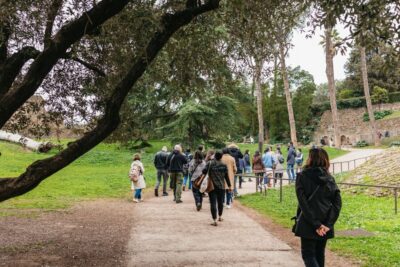
Colosseum, Palatine Hill & Roman Forum Guided Tour
Read our review →Browse the lists this tour appears in