
Reviewed · MUSEUMS
Museum of Senses Milan admission ticket
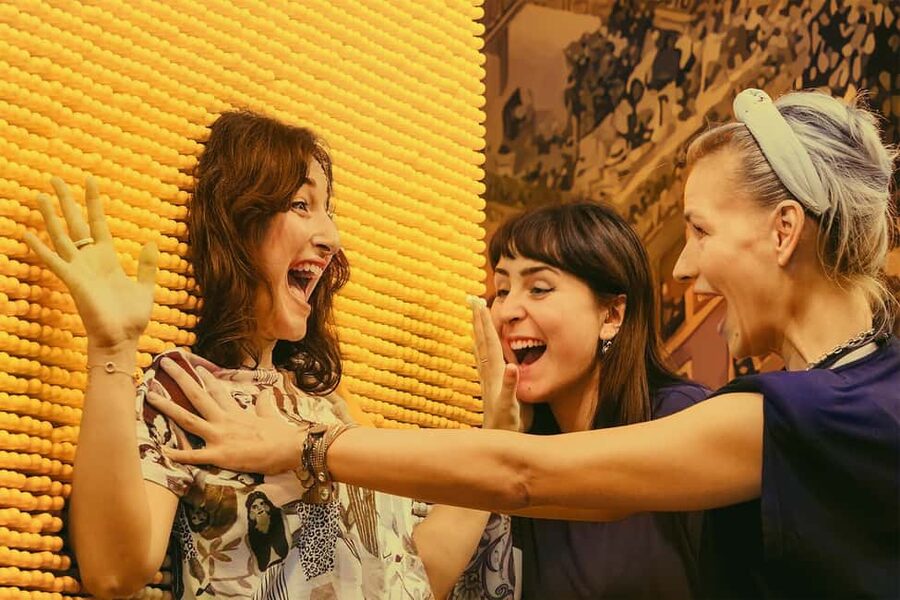
Your senses get a workout here. Milan’s Museum of Senses turns sight, hearing, smell, touch, taste, and balance into a playful indoor adventure. I like the hands-on format and the fact that it works for both adults and children. The main drawback is time: some visitors finish in about 30 minutes, which can make the $18 ticket feel steep.
I also like the small practical touches, especially the included Senses Kit with special socks and a Taste Box. The staff can explain the installations, and the museum is wheelchair accessible. Still, this is not a full-day attraction. It is best treated as a short, unusual break in your Milan plans rather than a major museum visit.
In This Review
- Key points to know before you go
- What the Museum of Senses Milan is really like
- Start with sight, where certainty gets shaky
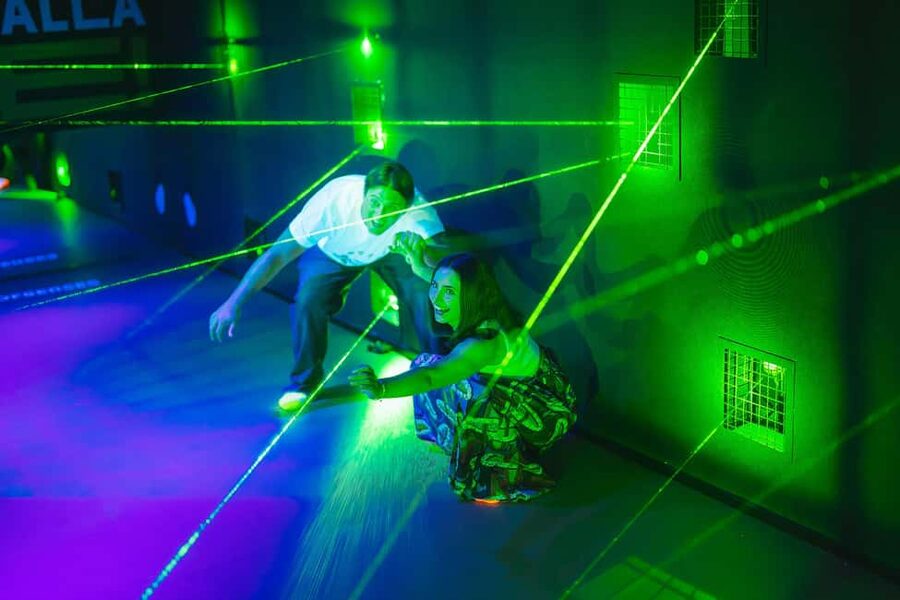
- Hearing turns the visit into an active test
- Smell brings a less predictable challenge
- Touch begins with the included Senses Kit
- Taste comes with a Taste Box
- Balance adds a physical finish
- Staff help give the exhibits a point
- How long should you allow?
- Is the $18 ticket good value?
- Who will enjoy it most?
- Practical details worth knowing
- My verdict: book it for play, not a long museum visit
- FAQ
- How much does admission to the Museum of Senses Milan cost?
- How long is the ticket valid?
- How long does a visit usually take?
- What senses are covered?
- Are the special socks included?
- Is anything included for the taste area?
- Is the museum suitable for children?
- Is the museum wheelchair accessible?
- Can I cancel my booking?
- Are animals allowed inside?
Key points to know before you go

- Six senses in one visit: The museum covers sight, hearing, smell, touch, taste, and balance rather than focusing on optical illusions alone.
- Special socks are included: The socks let you feel the tactile floors and form part of the Senses Kit, valued at €5.
- The Taste Box adds a hands-on element: You receive it for the taste area, although the food-related section may feel less clear than the others.
- Plan for a short visit: One direct account describes spending no more than 30 minutes inside, so consider the ticket price carefully.
- Good for mixed ages: Activities are designed for adults and children, with staff available to offer explanations.
- Flexible booking: You can cancel up to 24 hours ahead for a full refund, and reserve now while paying later.
What the Museum of Senses Milan is really like

The Museum of Senses is built around a simple idea: your senses shape how you understand the world, often without you noticing. Instead of placing objects behind glass, the museum asks you to touch, listen, smell, taste, balance, and look at things in unfamiliar ways.
That makes this a different sort of stop from Milan’s art museums. You are not here for paintings, sculpture, or a long historical story. You are here to test your reactions and see how quickly your brain tries to make sense of unusual sensations.
I see the museum as part science activity, part photo stop, and part family outing. It is designed to be fun first, but it also gives you a reason to think about how the senses work together. The tone is playful and surprising rather than formal.
The museum is suitable for adults and children. That matters if your group has different interests. A child can focus on the action, while an adult may enjoy the strange mismatch between what the eyes report and what the body feels.
More Museum Tours in Milan
- Milan: Science and Technology Leonardo da Vinci Museum Entry
★ 4.5 · 7,169 reviews - Official San Siro Stadium and Museum Guided Tour
★ 4.4 · 3,573 reviews - Milan: Leonardo3 The World of Leonardo Museum Entry Ticket
★ 4.4 · 3,241 reviews
Start with sight, where certainty gets shaky
The sight area is likely to be the first place where the museum’s approach becomes clear. The exhibits are designed to challenge your normal visual assumptions and encourage you to look at familiar ideas from a different angle.
I like this kind of beginning because it gets you involved immediately. You are not standing quietly while someone explains a display. You are encouraged to examine it, react to it, and compare your first impression with what you understand after interacting with it.
The best way to approach the sight installations is with patience. Look carefully before rushing to the next attraction, then try the activity as instructed. Some of the value comes from noticing how quickly your eyes make a guess and how easily that guess can be wrong.
This is also where the museum’s photo spaces may be most useful. Dedicated spots let you take unusual pictures, so keep your phone ready if you want a visual record of the visit. The photo opportunities are part of the appeal, but they should not be the only reason you buy a ticket.
Hearing turns the visit into an active test

The hearing section changes the pace. Sound is easy to ignore in daily life because it is always around you. Here, it becomes something you are asked to notice and interpret.
You may find that the hearing activities work best when you take turns with the people in your group. Listen carefully, follow the instructions, and compare what you think you heard with what someone else noticed. That simple process can make the area more social than a standard museum display.
I appreciate that the museum does not limit itself to visual tricks. Many attractions built around the senses become collections of optical effects. Including hearing gives the visit a wider purpose and helps explain why the museum presents six separate senses.
The tradeoff is that a short visit can make it tempting to move too quickly. If you only glance at each installation, the hearing area may feel like a sequence of small novelties. Give each activity enough attention to understand what it is asking you to notice.
Smell brings a less predictable challenge

Smell is one of the harder senses to turn into a simple public activity, which makes this section interesting. The museum gives you a chance to pay attention to scents and to consider how personal your response can be.
Unlike sight, smell does not always produce the same clear answer for everyone. You might recognize something at once, while another person needs more time or reaches a different conclusion. That difference adds a nice social element to the visit.
I would not approach this as a test you need to pass. The point is to notice your own reaction and see how smell connects with memory and expectation. The museum’s staff can provide explanations and extra information if you want more context.
Specific scent installations are not listed, so I would avoid arriving with a fixed idea of what you will encounter. Treat the area as an exploratory section rather than a carefully scripted exhibit with a known result.
Still Milan, but a slower afternoon:
- Milan: Cathedral and Duomo’s Terraces Entrance Ticket
★ 4.6 · 61,054 reviews - Milan: Da Vinci’s Last Supper Guided Tour
★ 4.7 · 10,143 reviews - Milan: City Sightseeing Hop-On Hop-Off Bus with Audio Guide
★ 4.0 · 6,256 reviews - Milan Cathedral: Duomo Terraces Ticket (No Church Access)
★ 4.6 · 6,111 reviews
Touch begins with the included Senses Kit
Touch is one of the clearest reasons to pay attention to what comes with the ticket. The museum provides special socks designed to help you feel the surfaces of its tactile floors. They are included in the Senses Kit, which is described as having a €5 value.
That detail is more important than it first sounds. If you had to keep your shoes on, the touch section would lose much of its purpose. The socks make it possible to focus on what your feet feel as you move across the designated surfaces.
You should follow the museum’s instructions carefully in this area. The tactile experience is meant to be playful, but the museum also places safety notes and warnings beside particular installations. Read those notices instead of assuming every activity works the same way.
The touch section may appeal to children, but adults should not skip it. Many grown-ups move through museums on autopilot, looking without handling anything. Here, touch is the main point, and the change in habit helps make the visit feel different from ordinary sightseeing.
Taste comes with a Taste Box
The taste area includes a Taste Box as part of the ticket. This is a useful inclusion because it gives you something specific to engage with rather than leaving taste as an idea discussed on a wall panel.
At the same time, this is the section I would approach with modest expectations. One account found the sweets confusing and did not fully understand the idea behind them. That does not mean the activity will fail for you, but the food element may not be as immediately clear as the touch or sight activities.
Take a moment to read any instructions before trying the items. Taste is strongly affected by expectation, and the museum appears to be interested in that connection. The point may be less about enjoying a snack and more about noticing how your mouth and brain interpret it.
The Taste Box also adds some value to the ticket because it is a concrete extra, not just a promise of an activity. Still, it should not decide your purchase on its own. The museum works best when you see the Taste Box as one small part of the six-sense format.
Balance adds a physical finish

Balance completes the museum’s sensory route with a more bodily challenge. Sight and hearing ask you to observe, while balance makes you aware of how your body adjusts and responds.
I like the inclusion of balance because it broadens the definition of the senses. The museum is not limited to what you take in through your eyes, ears, nose, skin, and mouth. It also asks you to notice how your body positions itself and reacts to change.
Follow the marked instructions and safety warnings. The museum states that some installations may not suit every category of visitor, so do not treat each attraction as suitable for everyone. If you have concerns, ask the staff for guidance before trying an activity.
The balance section can be a good point for a group to slow down. Watch how other people approach the activity, then take your own turn. That makes the visit feel more like shared play than a quick walk from one display to the next.
Staff help give the exhibits a point

Staff are available to explain the installations and provide additional information. That service matters because sensory attractions can sometimes leave you wondering what you were meant to notice.
If an activity seems puzzling, ask instead of moving on. A short explanation may turn a confusing installation into a useful lesson about perception. This is particularly helpful for children, who may enjoy the action but miss the reason behind it.
The museum’s educational side is present, but it is not presented as a classroom lesson. You learn by doing. For parents, that can be a welcome format because the child does not have to stand still and absorb a long explanation.
I would still keep your expectations realistic. Staff assistance can clarify an activity, but it cannot make a short route longer. If you want to spend more time, give yourself permission to repeat activities and ask questions rather than trying to finish every area quickly.
How long should you allow?

The official validity is flexible, from one to 365 days, with available starting times shown when you book. That gives you room to fit the museum around a busy Milan schedule.
The bigger issue is the time spent inside. One direct account describes a visit lasting no more than 30 minutes and calls the attraction not interactive enough for the price. I would use that as a practical warning, not a fixed rule. Your visit could take longer if you read the instructions, ask staff questions, repeat activities, and take photos.
Still, you should not plan this as a two-hour museum. The information provided does not promise a long route, and the short-visit concern is the clearest weakness attached to the experience.
For that reason, I would place it between other Milan activities. It could work before lunch, during a rainy afternoon, or as a change of pace after a more traditional museum. I would not cross the city solely for a long day here unless your group is especially interested in sensory play.
Is the $18 ticket good value?
At $18 per person, the price is reasonable only if you value the format. The ticket includes access to all areas, the six sensory themes, staff help, photo spaces, special socks, and the Taste Box. The included Senses Kit helps soften the cost, particularly because the socks are described as a €5 value.
The concern is duration. If you finish in 30 minutes, the ticket becomes expensive by the minute compared with a large Milan museum where you can spend several hours. I would not judge the price solely by the number of exhibits, though. A short experience can still be worthwhile if it gives your group something active and memorable to do.
My advice is to buy this for the type of activity it is, not for the amount of time it fills. Families may find the price easier to justify because the museum offers a shared activity suitable for different ages. Adults looking for a quick, unusual stop may also be happy with it.
If your priority is maximum sightseeing value, you may feel disappointed. The overall rating of 3.9 out of 5 suggests a generally positive but not flawless experience, and the short length is the main point to consider.
Who will enjoy it most?
I would recommend the museum most strongly to:
- Families looking for hands-on activities
- Adults who enjoy optical and sensory puzzles
- Groups that like taking playful photos
- People who want a short indoor break
- Visitors interested in how the senses affect perception
It may be less suitable for someone seeking a traditional museum with a large collection, detailed historical displays, or a long guided route. It may also be a poor fit if you dislike touching shared surfaces, tasting items, or taking part in physical activities.
The museum says it is suitable for everyone, but some installations are not appropriate for every visitor. Read the instructions and warnings inside, and ask staff if you are uncertain about an activity.
Practical details worth knowing
The ticket is wheelchair accessible, which makes the attraction easier to consider for visitors with mobility needs. The supplied information does not describe every installation in detail, so you should still check with staff about any particular activity that concerns you.
Animals are not allowed inside. Plan accordingly before you arrive, since the policy is stated clearly.
Booking is fairly flexible. You can reserve now and pay later, which helps if your Milan schedule is still changing. You can also cancel up to 24 hours in advance for a full refund.
The attraction is operated by Museum of Senses Milano. Since starting times depend on availability, check the schedule before building the rest of your day around the visit.
My verdict: book it for play, not a long museum visit
I would book the Museum of Senses Milan if you want a short, active outing that gets your whole group involved. The special socks, Taste Box, staff support, and six-part format give the visit more substance than a simple photo attraction.
I would hesitate if you expect several hours of entertainment for $18. The reported 30-minute visit is a real value concern, and the taste section may not make immediate sense to everyone.
The best approach is to schedule it as a compact stop and take your time with each activity. If you enjoy trying things rather than simply looking at them, this unusual museum can be a cheerful addition to Milan. If you prefer depth, history, and a large collection, spend your museum budget elsewhere.
FAQ
How much does admission to the Museum of Senses Milan cost?
Admission is listed at $18 per person.
How long is the ticket valid?
The ticket can be valid for between 1 and 365 days, depending on the booking option and available starting times.
How long does a visit usually take?
The supplied information does not set a fixed visit length. One direct account describes spending about 30 minutes inside, so you should plan for a relatively short visit.
What senses are covered?
The museum includes areas dedicated to sight, hearing, smell, touch, taste, and balance.
Are the special socks included?
Yes. Special socks for the tactile floors are included in the Senses Kit, described as having a €5 value.
Is anything included for the taste area?
Yes. A Taste Box is included with the ticket for the taste area.
Is the museum suitable for children?
Yes. The activities are described as suitable for adults and children, with educational and playful elements.
Is the museum wheelchair accessible?
Yes. The activity is listed as wheelchair accessible.
Can I cancel my booking?
Yes. You can cancel up to 24 hours in advance for a full refund.
Are animals allowed inside?
No. Animals are not allowed in the museum.
Recently added around Milan
- Milan: City Highlights Walking Tour with The Last Supper★ 4.9 · 195 reviews
- Milan: The Milan Pass City Card★ 4.0 · 655 reviews
- Milan: Skip-the-Line Guided Walk and “The Last Supper”★ 4.5 · 606 reviews
- Milan: Duomo & Rooftop Tour with Optional Hop-On Hop-Off Bus★ 4.5 · 262 reviews
- Milan: Duomo and The Last Supper Skip-the-Line Guided Tour
- Milan: Leonardo’s Last Supper and Michelangelo’s Pietà Tour★ 4.6 · 559 reviews
- Milan: Sforza Castle and Michelangelo’s Pietà Rondanini Tour★ 4.7 · 1,119 reviews
- Milan: San Sepolcro Crypt Skip-the-Line Entry Ticket★ 4.2 · 512 reviews
Museums, compared.


Vatican Museums & Sistine Chapel Tour with Optional Basilica
Read our review →
Vatican Museums, Sistine Chapel & St Peter’s Basilica Guided Tour
Read our review →
Skip-The-Line Uffizi Gallery Timed Entry Ticket
Read our review →
Vatican Museums, Sistine Chapel & Basilica Tour
Read our review →
Vatican Museums & Sistine Chapel Skip-the-Line Entry Ticket
Read our review →Vatican Museums, Sistine Chapel & Basilica Tour
Read our review →
Vatican Museums & Sistine Chapel Guided Tour
Read our review →Browse the lists this tour appears in