
Reviewed · MUSEUMS
Milan: Pinacoteca Ambrosiana & da Vinci Codex Exhibition
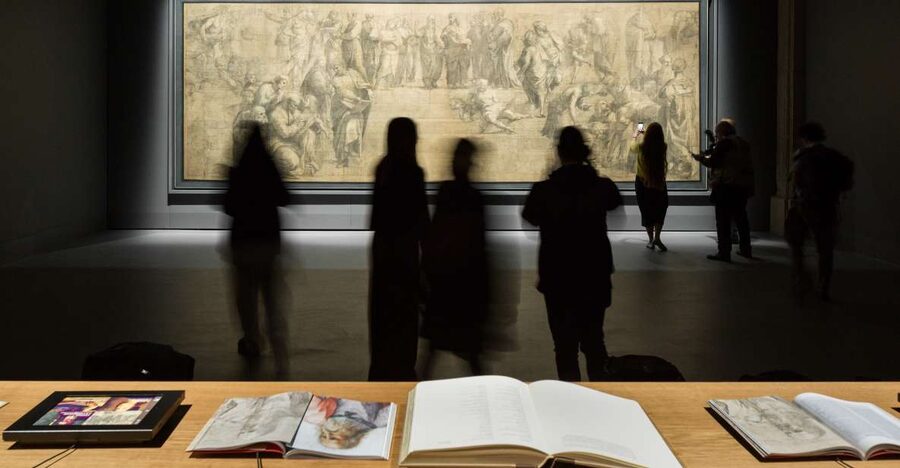
Leonardo’s notebooks are only the beginning. At Milan’s Pinacoteca Ambrosiana, you get original drawings from the Codex Atlanticus, major Renaissance paintings, sculpture, historic objects, and a striking library setting for $21. I especially like the chance to see Leonardo’s working mind on paper and Raphael’s large cartoon for the School of Athens, a piece many visitors find more memorable than expected.
I also like the museum’s calm pace and manageable size. You can see a great deal without committing to an all-day art marathon, though the lighting around some labels can make reading difficult, and the route is not always obvious. Plan on roughly two to three hours if you want to take your time.
In This Review
- Key points before you go
- Finding the Ambrosiana near Milan’s Duomo
- Why the building matters as much as the pictures
- The Codex Atlanticus and Leonardo’s working mind
- Raphael’s School of Athens cartoon
- Botticelli, Caravaggio, Titian, and the wider collection
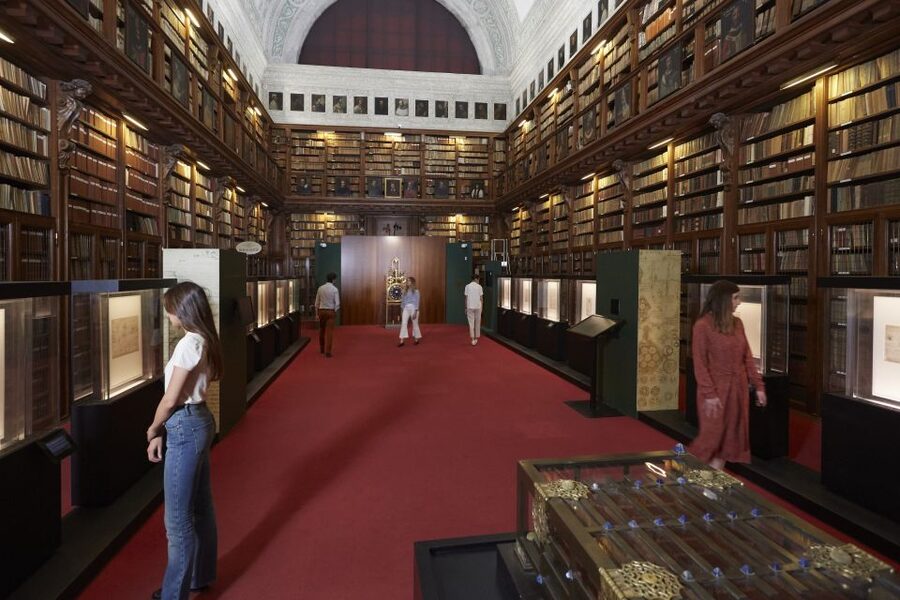
- The Federiciana Room and the library atmosphere
- How long to allow, and how to pace your visit
- Is the €4 audio guide worth it?
- Price, value, and small practical drawbacks
- Who should visit the Pinacoteca Ambrosiana?
- Should you book it?
- FAQ
- Where is the Pinacoteca Ambrosiana?
- What metro stations are closest?
- Which tram lines serve the museum?
- What does the admission ticket include?
- Is the audio guide included?
- Can I listen to the audio guide after visiting?
- How long should I spend at the museum?
- Is there a personal tour guide?
- Is the crypt included in the ticket?
- Can I cancel the booking?
Key points before you go
- Original Leonardo drawings: The Codex Atlanticus display presents original drawings from the world’s largest collection of Leonardo da Vinci’s drawings.
- Raphael’s School of Athens cartoon: This large preparatory work is a major highlight, with a film explaining how it was made and transferred to a wall.
- More than a picture gallery: The collection also includes sculpture, pottery, architecture, books, and centuries-old objects.
- Central Milan location: The museum is at Piazza Pio XI 2, close to Duomo and Cordusio metro stations.
- Audio guide option: A guide is available in six languages for €4, and the app can be used after your visit.
- Good value for art lovers: Admission is $21, with the Ambrosiana collections and Leonardo exhibition included.
Finding the Ambrosiana near Milan’s Duomo
The Pinacoteca Ambrosiana is at Piazza Pio XI 2, in the center of Milan. From the Duomo area, you are close enough to walk, while the nearest metro options are Cordusio on the red line or Duomo on the red and yellow lines.
Trams 12, 14, and 16 stop at Orefici Cantù. Trams 2 and 3 stop at Duomo. This central position makes the museum easy to pair with Milan’s cathedral, Galleria Vittorio Emanuele II, or a walk through the old city center.
The entrance places you inside the historic Ambrosiana complex rather than in a modern museum block. That matters. The building is part of the experience, with grand rooms, old architectural details, and the sense that art and books belong together here.
You receive a map at the entrance. Study it before setting off. The route can feel confusing, and it is possible to miss rooms if you simply follow the first obvious corridor. One visitor was even directed toward the wrong end while trying to locate the Codex display, so asking staff for the precise room is sensible.
More Museum Tours in Milan
- Milan: Science and Technology Leonardo da Vinci Museum Entry
★ 4.5 · 7,169 reviews - Official San Siro Stadium and Museum Guided Tour
★ 4.4 · 3,573 reviews - Milan: Leonardo3 The World of Leonardo Museum Entry Ticket
★ 4.4 · 3,241 reviews
Why the building matters as much as the pictures
The Ambrosiana is not only a painting collection. It is tied to a historic library, and several rooms show why Milan has long been a center for art, scholarship, engineering, and religious study.
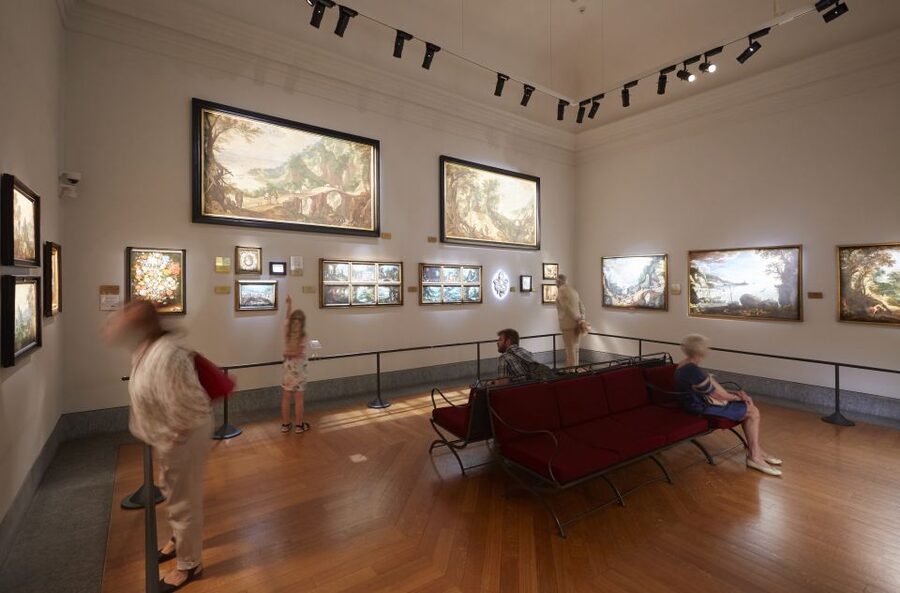
The library setting gives the museum a different mood from the larger Pinacoteca di Brera. Brera can feel like a grand procession of famous paintings. The Ambrosiana is more varied and intimate. You move among pictures, books, sculpture, pottery, architecture, and old objects, with the building providing a third visual layer.
That mix is one reason I would not rush straight to Leonardo. Allow a little time for the rooms around the main highlights. You might find the collection easier to appreciate once you understand that it is not trying to be a single-school painting museum.
The rooms are generally quiet and well organized. Several people have found the museum a welcome break from Milan’s summer heat because it is cool and air-conditioned. Seating is also available in parts of the museum, useful if you want to look carefully rather than march from label to label.
Lighting is a mixed point. The paintings themselves can be displayed beautifully, but some written information is hard to read because the text areas are dim. If you use the audio guide, you will depend less on the labels.
The Codex Atlanticus and Leonardo’s working mind
The Leonardo section is the main reason many people buy this ticket. The Codex Atlanticus contains original drawings by Leonardo da Vinci, and the Ambrosiana holds the world’s largest collection of his original drawings.
These are not simply polished works intended for public display. They are working pages, showing ideas in motion. You see Leonardo thinking through engineering, architecture, machines, geometry, and practical problems. The appeal is not only artistic beauty. It is the direct contact with a restless mind testing possibilities on paper.
The material covers more than 40 years of research and gives a broad look at Leonardo’s thoughts and feelings. That phrase can sound grand, but the drawings make the point plainly. A sketch can show a mechanical idea, a study of form, or a problem being worked out before the final answer exists.
The display is particularly useful if you have seen Leonardo mainly through finished paintings. Here, you meet the designer, engineer, observer, and experimenter. You can look at the marks and plans as evidence of how he worked.
The final section about da Vinci is especially strong. Give it time instead of treating it as a quick add-on after the paintings. Several visitors who expected a fairly short exhibition found the Leonardo material to be the most satisfying part.
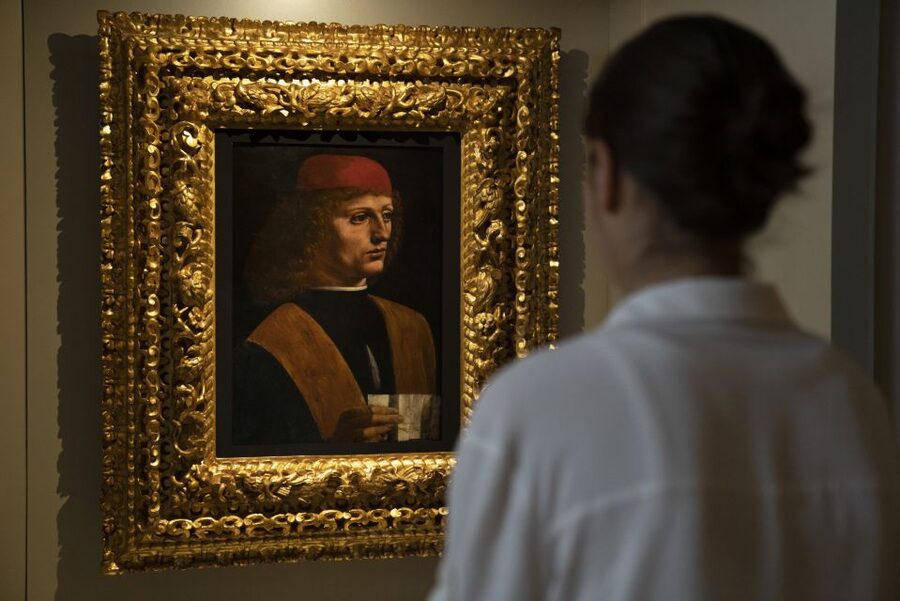
There is also a Leonardo painting in the wider collection, according to one particularly pleased visitor. The supplied information does not identify the work, so do not arrive expecting a specific famous title. The real strength of the Leonardo presentation is the Codex material itself.
Raphael’s School of Athens cartoon
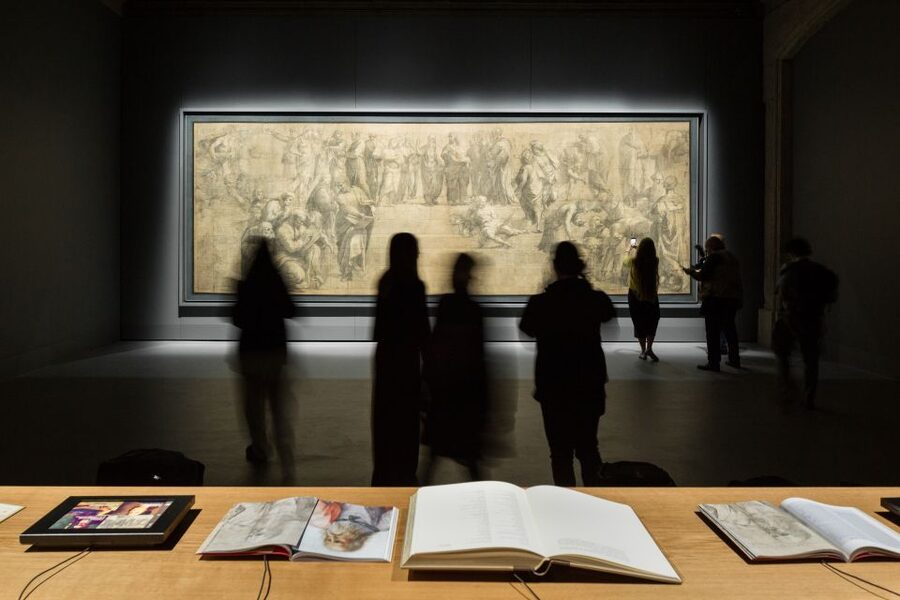
Raphael’s cartoon for the School of Athens is another major reason to visit. In art terms, a cartoon is a full-scale preparatory drawing used to plan a finished work. This is not a small preliminary sketch. It is a powerful, large-scale work that lets you study Raphael’s planning before the final wall painting existed.
The Ambrosiana presents a film explaining how the cartoon was made and how the design was transferred onto the wall. That extra explanation adds real value. You are not just looking at a large drawing. You are seeing the working method behind one of the most famous achievements of Renaissance art.
The film also explains who the figures are. That helps turn a crowded philosophical scene into a readable composition. You can study the arrangement, gestures, and relationships with a better idea of what Raphael intended.
I would place this stop high on your list even if Leonardo is your main target. Some visitors arrive for the Codex and leave talking most about Raphael. The scale alone makes it different from the smaller drawings elsewhere in the museum.
Still Milan, but a slower afternoon:
- Milan: Cathedral and Duomo’s Terraces Entrance Ticket
★ 4.6 · 61,054 reviews - Milan: Da Vinci’s Last Supper Guided Tour
★ 4.7 · 10,143 reviews - Milan: City Sightseeing Hop-On Hop-Off Bus with Audio Guide
★ 4.0 · 6,256 reviews - Milan Cathedral: Duomo Terraces Ticket (No Church Access)
★ 4.6 · 6,111 reviews
Botticelli, Caravaggio, Titian, and the wider collection
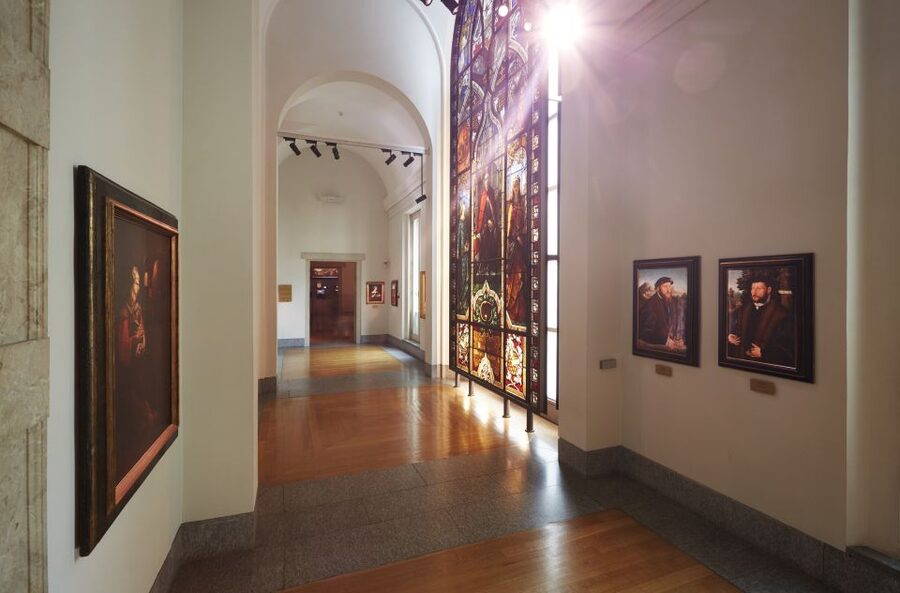
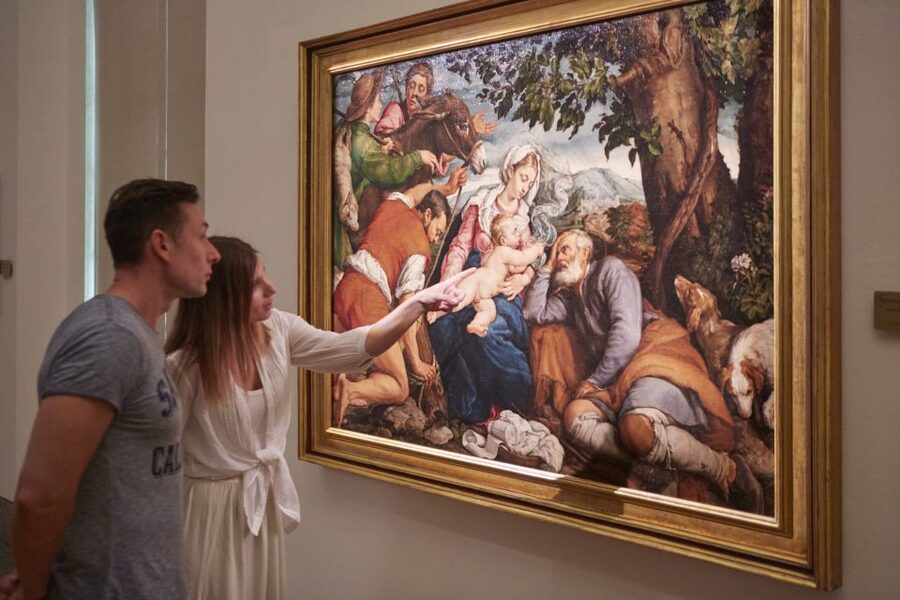
The Ambrosiana includes works associated with Botticelli, Raphael, Titian, and Caravaggio. The variety gives you a useful overview of Italian art rather than a single-artist exhibit.
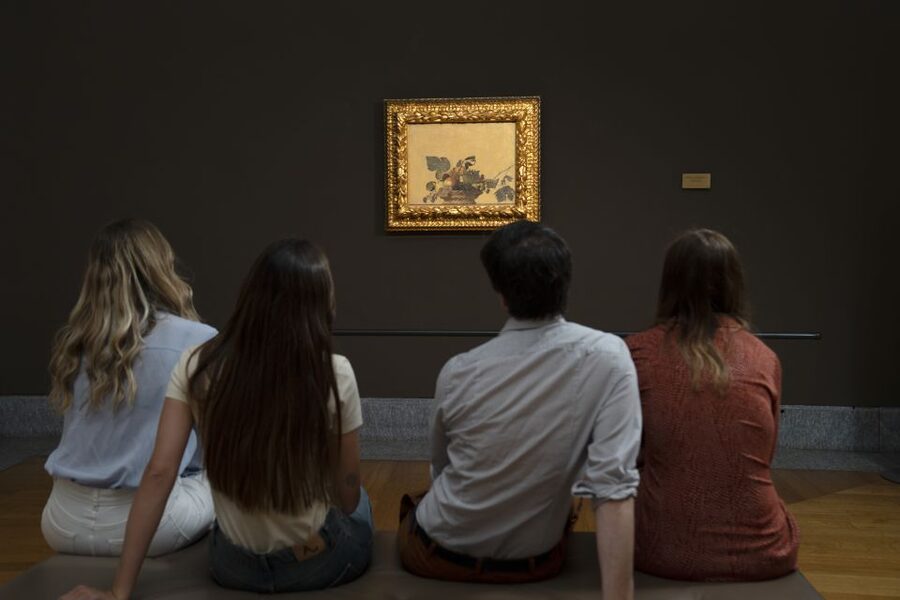
Caravaggio’s still lifes are especially worth seeking out. Still life can sound modest beside monumental religious paintings, but Caravaggio’s treatment of ordinary objects shows his control of light, surface, and drama. Look closely at how much attention the objects receive and how little is needed to make them compelling.
Botticelli and Titian add different artistic voices to the collection. You may not see an enormous number of works by each master, so this is not a replacement for a major dedicated gallery. It is a compact opportunity to compare different approaches within one visit.
The museum also includes sculpture and other objects. One especially useful feature is the way the collection avoids becoming visually exhausting. You can concentrate on individual works instead of losing them in a huge parade of rooms.
The Ambrosiana is smaller than Brera, and that is both a limitation and a strength. If you want hundreds of paintings and a long sequence of galleries, Brera may suit you better. If you want a focused visit with several exceptional works, the Ambrosiana offers better control over your time.
The Federiciana Room and the library atmosphere
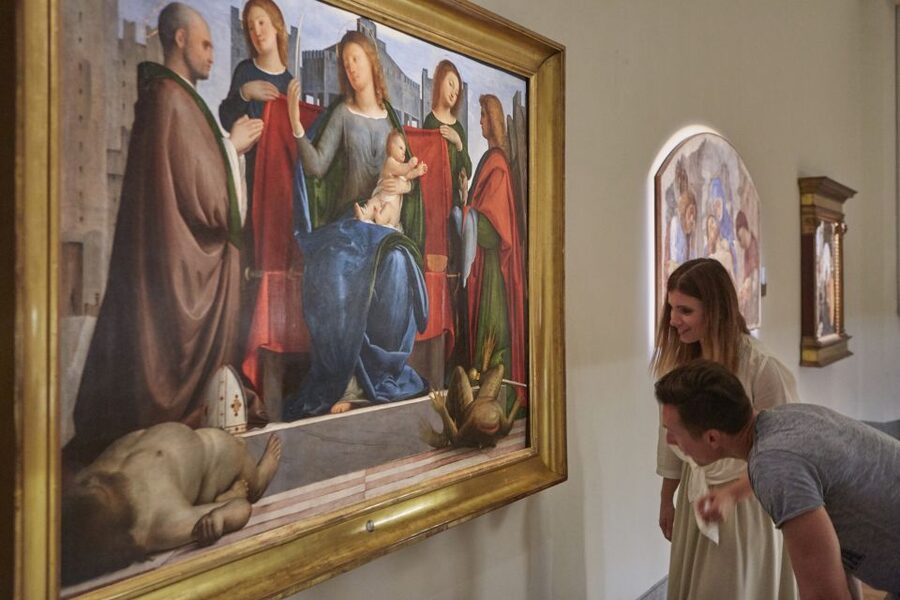
The Federiciana Room in the Ambrosiana Library adds context to the people and period behind the collections. This is where the museum feels most like a meeting place between art and scholarship.
The library is not just a backdrop for Leonardo’s notebooks. It helps explain why these drawings survived and why an institution devoted to books would also preserve paintings, objects, and scientific material. You gain a clearer sense of the collector’s purpose and the effort required to protect ideas across centuries.
The historic library is frequently one of the most memorable rooms. Its appearance gives the visit a strong sense of place, and it is easy to understand why people spend time simply looking at the room itself.
Pay attention to the route. The library spaces can be easy to miss if you follow only the most direct path through the picture galleries. The entrance map is your friend here.
How long to allow, and how to pace your visit
The ticket is valid for one day, and most people should allow two to three hours for a satisfying visit. You can see the essential works faster, but that approach leaves little room for the Codex displays, the film about Raphael, and the library rooms.
A practical order would be:
- Pick up the map and identify the Codex Atlanticus area.
- Walk through the principal Ambrosiana collection before settling into the Leonardo displays.
- Spend proper time with Raphael’s School of Athens cartoon.
- Return to the Leonardo section for the longer explanatory material.
- Finish with the library rooms and any sections you may have skipped.
You do not have to follow that order exactly. If Leonardo is your priority, go there first. This can be wise during a busy period, since it ensures you have enough attention for the material you came to see.
The museum is suited to independent exploration. You can stop when something catches your eye, sit for a while, and move on without keeping pace with a group. The standard admission does not include a personal guide, and one booking interface has caused confusion by suggesting a tour guide when the product is really an entry ticket.
Is the €4 audio guide worth it?
For most visitors, yes. The audio guide costs €4 and is available in six languages through GetYourGuide or at the ticket office. It adds background to the artists and helps explain works that may otherwise seem difficult to place.
One useful feature is that you can download the app and listen after the visit. That lets you revisit information later instead of trying to remember every name and date while standing in a dark gallery.
Choose the correct visit length when setting it up. The default mode may be designed for a one-hour visit and cover only a small number of paintings. If you expect to stay longer, switch to the several-hours setting. Otherwise, you may assume the guide is incomplete when it is really using a shorter route.
The guide has one drawback: it can feel cumbersome to operate. Still, it is particularly helpful for Raphael’s cartoon, the Leonardo drawings, and paintings with limited or poorly lit written labels.
If you prefer to read at your own speed, the museum is well labeled in many areas. You can certainly visit without the extra charge, especially if you have limited time.
Price, value, and small practical drawbacks
At $21 per person, this is a solid-value museum ticket for central Milan. Admission covers both the Ambrosiana collections and the Leonardo exhibition, so you are paying for more than a single temporary display.
The value improves if you are interested in drawing, art technique, books, or Renaissance science. The Codex alone gives the visit a clear purpose, while Raphael, Caravaggio, Botticelli, Titian, and the library prevent it from feeling like a one-topic stop.
The price is less compelling if you only want a vast collection of famous paintings. Brera may be the better choice for that purpose. The Ambrosiana rewards curiosity about how artists worked and how institutions preserved their material.
A separate charge may apply for the crypt. Check the current arrangement at the entrance if that space interests you. The crypt is described by one visitor as a very old church area with ancient marble flooring, but it is not part of the listed admission inclusion, so do not assume it comes with the $21 ticket.
Families with a baby buggy should also ask about the route before entering. Some areas may require the buggy to remain at the entrance, which can affect how comfortably you see every section.
The museum offers free cancellation up to 24 hours before the visit and a reserve-now, pay-later option. Those terms are useful if your Milan schedule is still shifting, but the bigger practical point is to choose a time when you can spare at least two hours.
Who should visit the Pinacoteca Ambrosiana?
I would recommend this experience to:
- Anyone fascinated by Leonardo’s drawings, machines, or working process.
- Art lovers who want Raphael, Caravaggio, Botticelli, and Titian in one central museum.
- Visitors who prefer a quiet, moderate-sized collection to a huge gallery.
- People interested in historic libraries, books, and the relationship between art and scholarship.
- Anyone looking for an indoor Milan activity during hot weather.
- Independent visitors who like to set their own pace.
I would be more cautious if your only goal is a large, traditional painting collection. The Ambrosiana has famous names, but it is the combination of art, drawings, library rooms, and objects that makes it worthwhile.
Should you book it?
Yes, if you want to see Leonardo’s original Codex Atlanticus drawings and Raphael’s School of Athens cartoon in the same visit. The $21 admission is fair, the central location is convenient, and two to three hours gives you a substantial cultural stop without swallowing your whole day.
Buy the €4 audio guide if you want the story behind the works, and set it to the longer visit mode. Take the entrance map seriously, allow time for the Federiciana Room, and ask clearly where the Codex display begins.
Skip it only if your Milan schedule is extremely tight or you want a much larger painting museum. For most art-focused visits, the Ambrosiana earns its place beside the Duomo, not because it is enormous, but because it gives you direct contact with Leonardo’s ideas in progress.
FAQ
Where is the Pinacoteca Ambrosiana?
It is at Piazza Pio XI 2 in Milan, near the Duomo and Cordusio areas.
What metro stations are closest?
The nearest listed metro stops are Cordusio on the red line and Duomo on the red and yellow lines.
Which tram lines serve the museum?
Tram lines 12, 14, and 16 stop at Orefici Cantù. Tram lines 2 and 3 stop at Duomo.
What does the admission ticket include?
The ticket includes entry to the Ambrosiana collections and the exhibition of Leonardo da Vinci’s original drawings from the Codex Atlanticus.
Is the audio guide included?
No. The audio guide costs €4 and is available in six languages through GetYourGuide or at the ticket office.
Can I listen to the audio guide after visiting?
Yes. The app can be downloaded to your device and used after the visit.
How long should I spend at the museum?
Allow about two to three hours for a relaxed visit. You can see the main areas in less time, but a longer visit allows time for the Codex, Raphael’s cartoon, and the library rooms.
Is there a personal tour guide?
The listed activity provides exhibition admission rather than a personal guided tour. The audio guide is an optional extra.
Is the crypt included in the ticket?
The supplied ticket information does not include the crypt. A separate charge may apply, so check at the museum if you want to visit it.
Can I cancel the booking?
You can cancel up to 24 hours in advance for a full refund. A reserve-now, pay-later option is also available.
Recently added around Milan
- Milan: City Highlights Walking Tour with The Last Supper★ 4.9 · 195 reviews
- Milan: The Milan Pass City Card★ 4.0 · 655 reviews
- Milan: Skip-the-Line Guided Walk and “The Last Supper”★ 4.5 · 606 reviews
- Milan: Duomo & Rooftop Tour with Optional Hop-On Hop-Off Bus★ 4.5 · 262 reviews
- Milan: Duomo and The Last Supper Skip-the-Line Guided Tour
- Milan: Leonardo’s Last Supper and Michelangelo’s Pietà Tour★ 4.6 · 559 reviews
- Milan: Sforza Castle and Michelangelo’s Pietà Rondanini Tour★ 4.7 · 1,119 reviews
- Milan: San Sepolcro Crypt Skip-the-Line Entry Ticket★ 4.2 · 512 reviews
Museums, compared.
Vatican Museums & Sistine Chapel Tour with Optional Basilica
Read our review →
Vatican Museums, Sistine Chapel & St Peter’s Basilica Guided Tour
Read our review →
Skip-The-Line Uffizi Gallery Timed Entry Ticket
Read our review →
Vatican Museums, Sistine Chapel & Basilica Tour
Read our review →
Vatican Museums & Sistine Chapel Skip-the-Line Entry Ticket
Read our review →Vatican Museums, Sistine Chapel & Basilica Tour
Read our review →
Vatican Museums & Sistine Chapel Guided Tour
Read our review →Browse the lists this tour appears in