
Reviewed · MUSEUMS
Milan: Entrance Ticket to La Scala Theatre Museum
Opera history comes alive here. Milan’s La Scala Theatre Museum gives you a close look at Italy’s most famous opera house, from its elegant auditorium to costumes, instruments, portraits, and stage designs tied to more than 200 years of performances. I especially like the chance to see inside the theatre itself and the museum’s strong collection of musical objects and visual material. The main catch is that your view of the auditorium can change depending on rehearsals, lighting, and theatre activity that day.
The museum sits just steps from Milan’s Cathedral and the Galleria Vittorio Emanuele II, so it fits neatly into a central Milan walk. At about $17 per person, it offers solid value if you care about opera, theatre, music, or grand interiors. Just do not assume the visit guarantees a full, unobstructed look at every part of the auditorium.
In This Review
- Key points to know before visiting
- Entering La Scala beside Milan’s Duomo
- The auditorium is the ticket’s biggest reward
- Costumes, instruments, and the working life of opera
- Verdi, Rossini, Callas, and Pavarotti
- The seven-language audio guide
- How long should you allow?
- Is the $17 price good value?
- Rehearsals can change the experience
- Practical details that affect your visit
- Who should book La Scala Theatre Museum?
- Should you book this La Scala visit?
- FAQ
- Where is the La Scala Theatre Museum?
- What does the ticket include?
- Can I see the La Scala auditorium?
- How can I check the theatre visibility before visiting?
- Is the audio guide included?
- How long is the ticket valid?
- Can I skip the ticket line?
- Are large bags allowed?
- Is the museum wheelchair accessible?
- Can I cancel the booking?
Key points to know before visiting
- The auditorium is the main attraction: Seeing La Scala’s elegant interior is often the most memorable part of the visit.
- Museum displays cover much more than opera costumes: You’ll find instruments, set designs, posters, portraits, busts, and video material.
- The view can depend on theatre activity: Rehearsals may limit access to the main area, though you may still see the auditorium from higher seats or another viewing point.
- The audio guide is app-based: You can download it at the museum in one of seven languages.
- The location is ideal for a sightseeing day: La Scala is near the Duomo and Galleria Vittorio Emanuele II.
- Pack light: Large bags and backpacks must go into the cloakroom, while the theatre and museum are wheelchair and stroller accessible.
Entering La Scala beside Milan’s Duomo
La Scala is easy to add to a first visit to Milan. The theatre and museum are in the city center, only a short walk from the Duomo and the Galleria Vittorio Emanuele II. You can pair the visit with those landmarks without arranging separate transport or giving up a full morning.
The building carries a particular kind of Milanese elegance. It is not simply a museum filled with old objects. You are entering a working theatre with a long connection to opera, ballet, musicians, singers, conductors, designers, and audiences. That gives the visit a stronger sense of place than a standard collection of framed displays.
Your ticket is valid for one day, with starting times shown when you check availability. It also includes skip-the-ticket-line entry, which matters in a busy central part of Milan. Still, follow the directions at the entrance carefully. One of the less clear parts of the experience can be knowing exactly where to go for the skip-line process, so it is worth having your booking ready and asking staff directly if the entry arrangement is not obvious.
More Museum Tours in Milan
- Milan: Science and Technology Leonardo da Vinci Museum Entry
★ 4.5 · 7,169 reviews - Official San Siro Stadium and Museum Guided Tour
★ 4.4 · 3,573 reviews - Milan: Leonardo3 The World of Leonardo Museum Entry Ticket
★ 4.4 · 3,241 reviews
The auditorium is the ticket’s biggest reward
I would plan this visit around the chance to see the theatre auditorium. The museum is interesting on its own, but the interior of La Scala is what gives the ticket its strongest emotional punch.
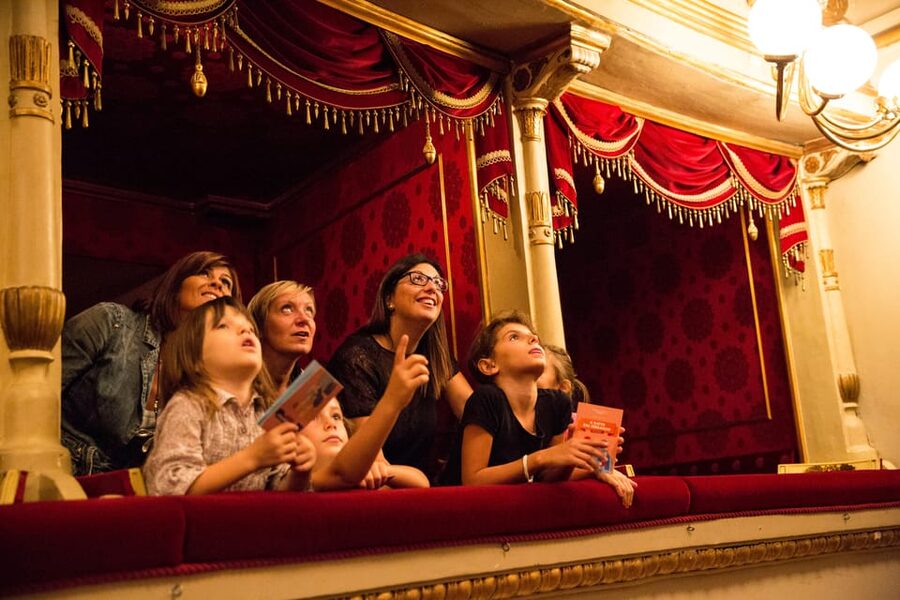
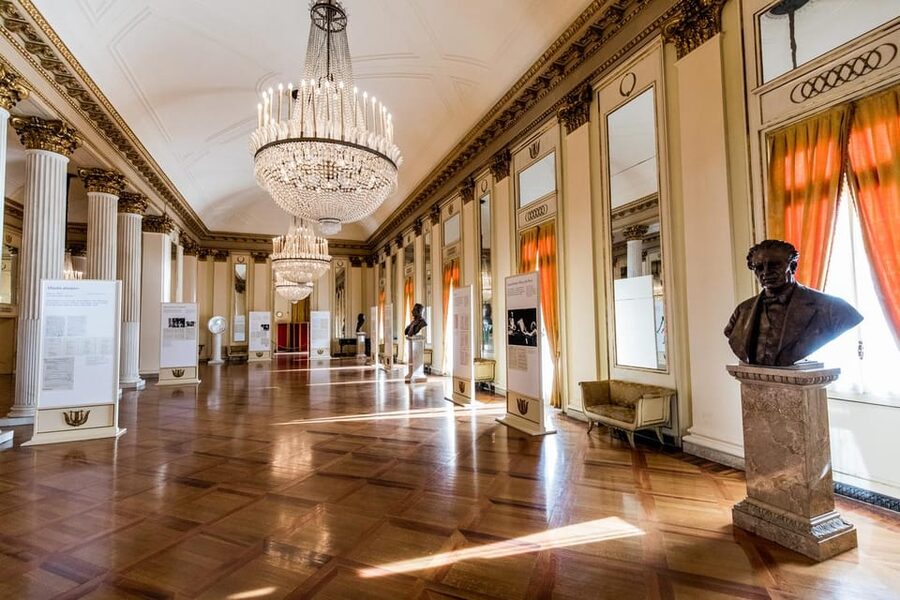
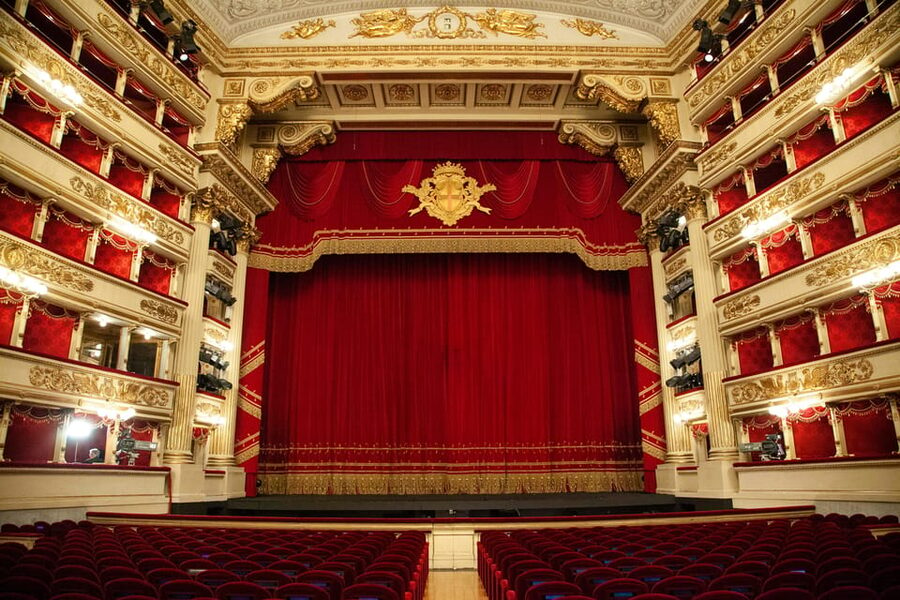
The auditorium has the polished, formal look you expect from one of Italy’s leading opera houses. You may see ornate details, rows of private boxes, and the carefully arranged seating area where major performances have taken place. Even if you know little about opera, the space helps explain why La Scala has such a powerful place in Milan’s cultural life.
The exact view is not guaranteed to be identical every day. Theatre rehearsals, stage work, and lighting conditions can affect what you can see. On some visits, you may be able to look into the auditorium from a box or balcony area. At other times, access to the main section may be restricted, leaving you with a view from higher seats or another part of the museum.
This is why I recommend checking the theatre visibility page before you go. The museum provides a page showing whether the theatre lights are on, and that small check can make a real difference. If seeing the interior is your top reason for buying the ticket, choose a day and time with the clearest visibility.
A rehearsal can be a bonus, too. Some visitors have been able to watch ballet or opera rehearsals, adding a glimpse of the theatre at work. You should treat this as a possibility, not a promise. Rehearsal activity can also reduce access to parts of the auditorium.
Costumes, instruments, and the working life of opera
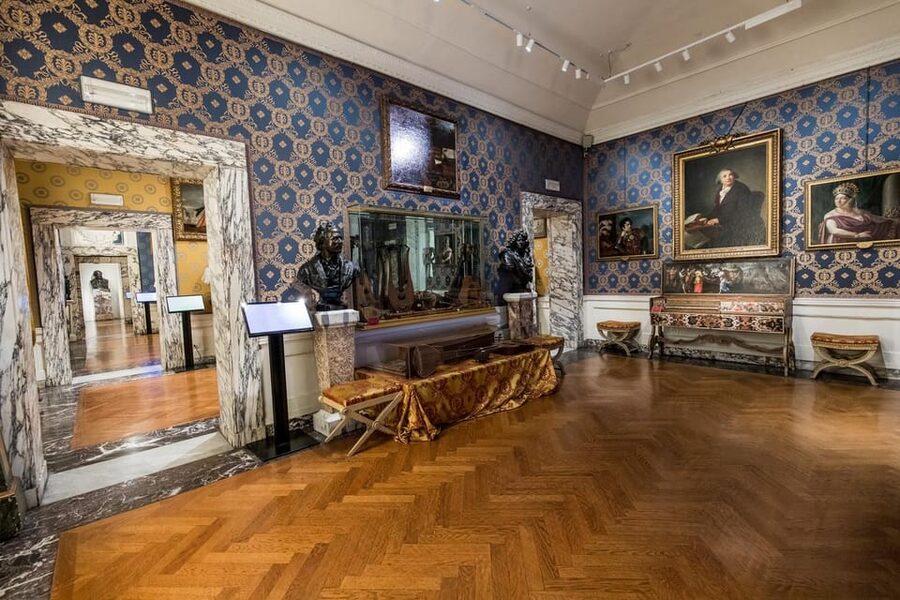
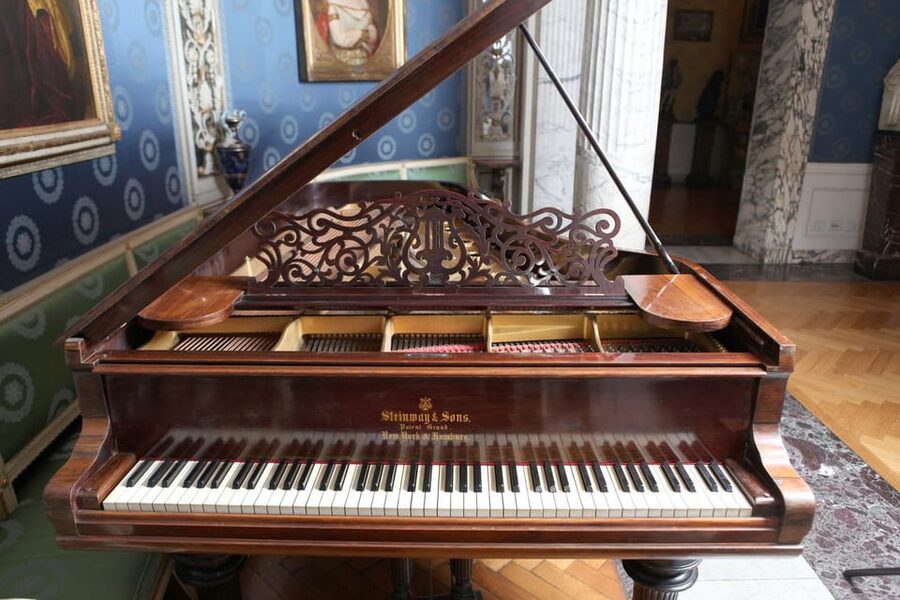
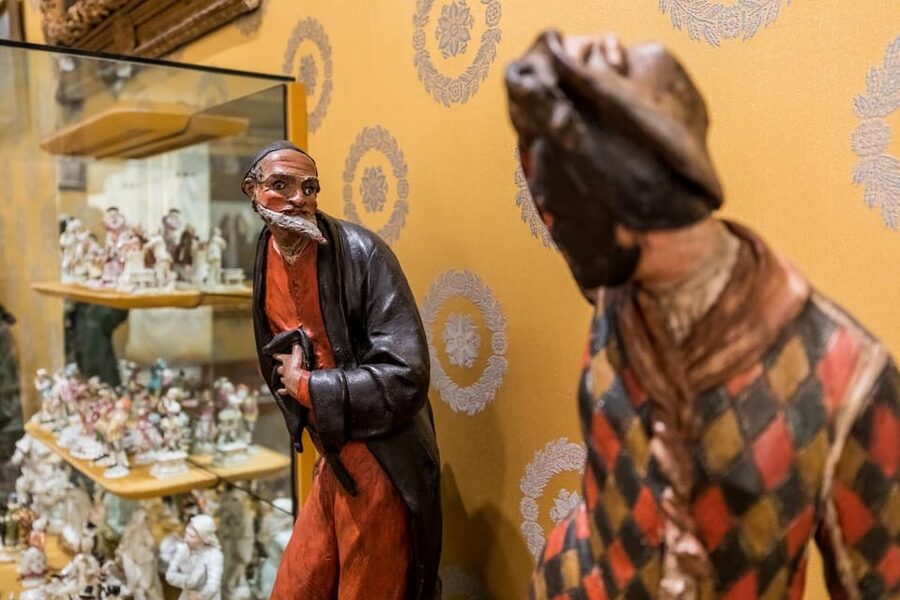
After the auditorium, the museum displays explain how productions are built and remembered. Costumes show the visual side of opera and ballet, while set designs reveal the work behind the curtain. Musical instruments connect the theatre to the performers who made its productions possible.
I like this combination because it keeps the visit from becoming a simple parade of famous names. You see the objects that support a performance: clothing, scenery, printed material, instruments, and images. Together, they help you understand that opera is a large team effort, not just a singer standing under a spotlight.
The displays also include posters from past performances. These are useful historical markers, showing how productions were presented and remembered across different periods. Even if you do not recognize every title or performer, the posters give you a visual record of changing styles and major moments at the theatre.
Video material adds another helpful layer. If you visit Milan when no opera is being performed, the videos can give you a better feel for what a performance inside La Scala might be like. They cannot replace sitting through an opera, but they make the museum more approachable for visitors who have not attended one before.
Verdi, Rossini, Callas, and Pavarotti
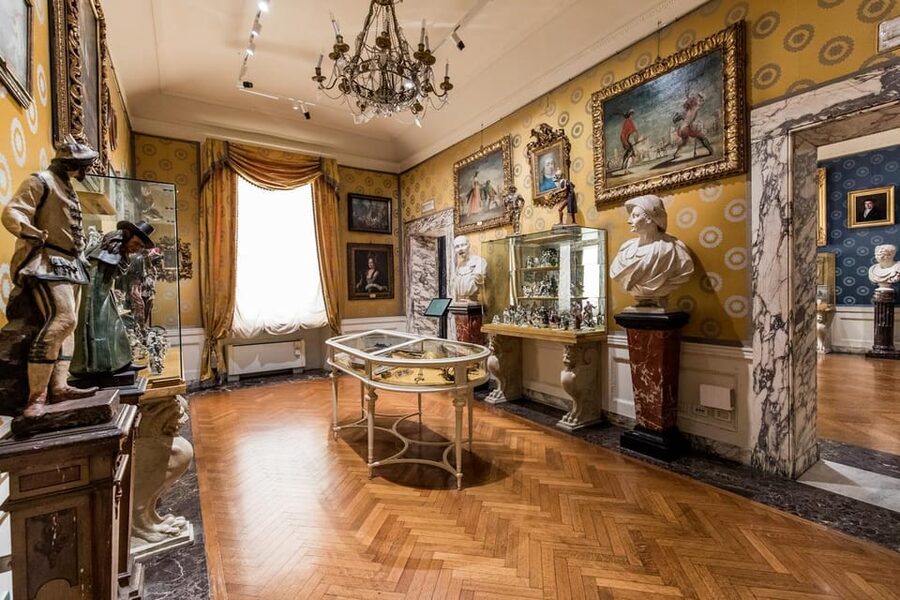
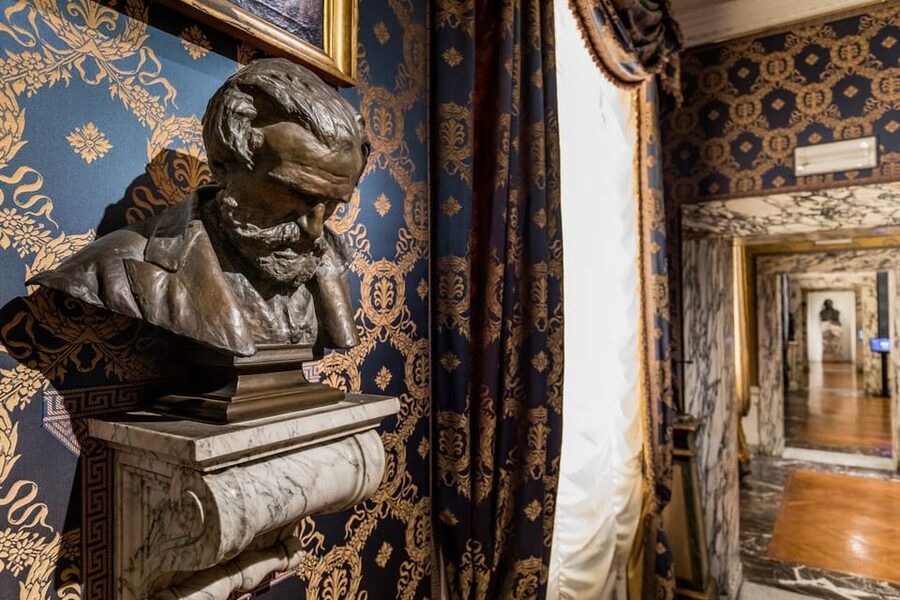
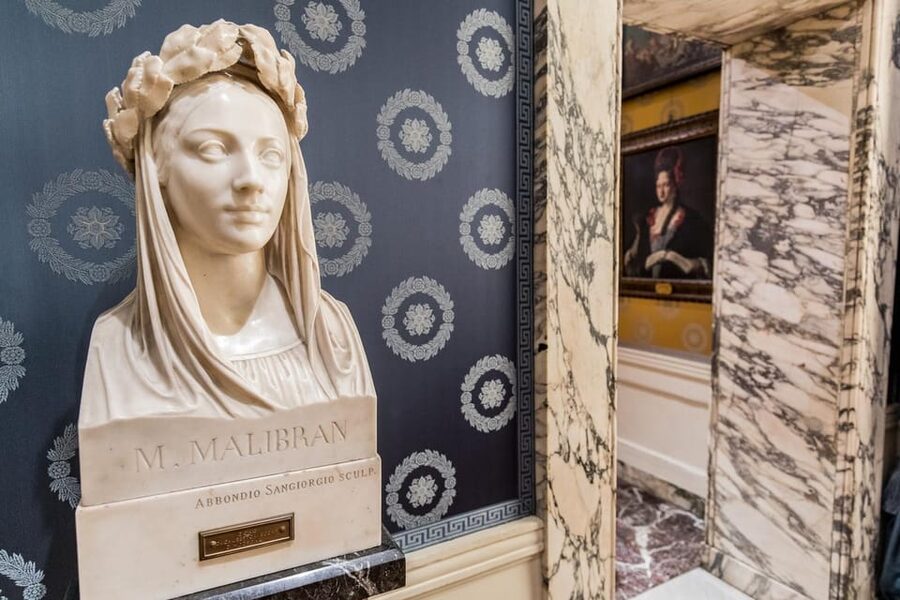
La Scala’s story is closely tied to some of the most famous names in opera. The museum introduces you to musicians and singers connected with the theatre, including Giuseppe Verdi, Gioachino Rossini, Luciano Pavarotti, and Maria Callas.
Portraits and busts give these figures a physical presence in the museum. They are not just names in a guidebook. You see the faces of performers and composers whose careers helped shape the theatre’s reputation.
The museum is particularly useful if you want a little context before attending an opera elsewhere. You can learn about the early years of La Scala, the productions that made it famous, and the performers who left a mark on its stage. The information helps you recognize the cultural weight of the building without requiring you to be an opera specialist.
I would not expect a full lecture-style explanation of every exhibit. The experience is built around looking, reading, and using the audio app. If you want the background in a more guided format, listen carefully to the available commentary and allow enough time for the portrait and performance sections.
Still Milan, but a slower afternoon:
- Milan: Cathedral and Duomo’s Terraces Entrance Ticket
★ 4.6 · 61,054 reviews - Milan: Da Vinci’s Last Supper Guided Tour
★ 4.7 · 10,143 reviews - Milan: City Sightseeing Hop-On Hop-Off Bus with Audio Guide
★ 4.0 · 6,256 reviews - Milan Cathedral: Duomo Terraces Ticket (No Church Access)
★ 4.6 · 6,111 reviews
The seven-language audio guide
The included audio guide is available through an app that you download at the museum. It comes in seven languages, making the displays easier to follow for a wide range of visitors.
The app is useful because objects in a theatre museum can otherwise feel disconnected. A costume, instrument, or portrait becomes more meaningful when you know which production or person it relates to. I would download or activate the guide early in your visit so you can use it as you move through the rooms.
The experience is still visually rewarding without listening to every track. You can choose the subjects that interest you most, then keep moving. Opera fans may want to spend more time with the performers and productions, while first-time visitors might focus on the auditorium, costumes, and videos.
If you are visiting with children or with someone who is not keen on opera, the visual displays and theatre interior should provide the easiest entry point. You do not need a detailed knowledge of music to appreciate the building or the objects.
How long should you allow?
The ticket is valid for one day, but the information provided does not set a fixed visit length. Your timing will depend on how carefully you use the audio guide, how long you spend with the displays, and how much access you have to the auditorium.
I would allow enough time to avoid rushing through the museum, especially if you want to listen to commentary and examine the posters, instruments, costumes, and portraits. The museum can be a fairly quick central-Milan stop for a casual visitor, but music lovers will find reasons to linger.
The ticket works particularly well in a flexible day plan. Visit the Duomo, walk through the Galleria, then come to La Scala while you are already in the neighborhood. Because the ticket is valid for one day, you can organize the timing around your wider Milan schedule, subject to the available starting times.
Is the $17 price good value?
At about $17, the ticket is reasonably priced for access to both a famous theatre interior and a specialist museum. You are not paying only to look at a collection in a side room. The price includes entry to the museum exhibits and the chance to see into one of the world’s best-known opera houses.
The value is strongest for:
- Opera and ballet fans
- Visitors interested in music history
- Anyone who enjoys historic interiors
- First-time visitors building a cultural itinerary in central Milan
- People who cannot attend a full performance but still want to see La Scala
The value is less certain if you expect a full backstage tour or guaranteed access to the entire auditorium. This is a museum ticket, not an opera ticket, and the viewing conditions can vary with rehearsals and theatre operations.
For me, the price works because the visit combines several experiences in one: a landmark interior, performance memorabilia, music history, and a central location. The skip-the-line feature also saves some uncertainty at a popular attraction, although you should still confirm the entry instructions at the door.
Rehearsals can change the experience
A rehearsal is one of the more interesting possibilities here. Watching ballet or opera work being prepared can make the theatre feel active rather than frozen in the past. You may see staff and performers using the space for its real purpose, which can be more memorable than an empty auditorium.
At the same time, rehearsal activity can restrict your view. You might not be allowed into the main auditorium area and may need to look from higher seats or another permitted location. That is not necessarily a bad visit, but it can be disappointing if you expected a clear look at every detail.
The best approach is to treat the theatre view as dependent on the day. Check the lighting and visibility information before visiting, and keep your expectations flexible. If the auditorium is fully visible, consider that a bonus. If a rehearsal is underway, enjoy the unusual chance to see the theatre in operation while spending more time with the museum exhibits.
Practical details that affect your visit
Large luggage and backpacks are not allowed inside the museum areas and must be left in the cloakroom. I would arrive with a small day bag rather than rolling in with airport luggage. This is especially important if La Scala is one stop between train travel and hotel check-in.
The theatre and museum are wheelchair accessible, and strollers are also permitted. That makes the site easier to include in a family or accessible Milan itinerary. Since theatre access can vary with activity, it is still sensible to ask staff about the available route when you arrive.
The audio guide is downloaded at the museum, so bring a phone that can handle the app. The supplied information does not specify whether headphones are provided, so bringing your own is a sensible precaution if you prefer private listening.
The experience includes free cancellation up to 24 hours before the visit for a full refund. You can also reserve now and pay later, which is useful if your Milan schedule is still changing. These policies do not change the visit itself, but they make it easier to fit the museum into a busy city break.
Who should book La Scala Theatre Museum?
I would recommend it most strongly to anyone who enjoys opera, classical music, historic theatres, or Milan’s cultural landmarks. It is also a good choice for people who want to see La Scala but do not have the time, budget, or interest for a complete opera performance.
First-time opera visitors should find the museum helpful because it supplies visual context. You can see the performers, objects, and production elements before deciding if a future performance is for you.
Families may appreciate the short, central nature of the visit, especially if children are interested in costumes or unusual buildings. The audio guide and videos can help, though the appeal will depend on your child’s interest in music and theatre.
I would be more cautious if your only goal is a guaranteed, close view of the auditorium. Check the visibility information first, and remember that rehearsals or other theatre activity may change the route.
Should you book this La Scala visit?
Book it if you want an affordable look at Milan’s opera tradition, a beautiful theatre interior, and a museum with costumes, instruments, set designs, posters, and portraits. The location near the Duomo makes it easy to fit into a sightseeing day, and the seven-language audio app gives the exhibits useful context.
I would make the booking after checking the theatre visibility page. That one step helps you choose a visit when the auditorium lights and viewing conditions are most favorable. If you understand that access can vary, the $17 ticket offers a thoughtful and culturally worthwhile stop in central Milan.
FAQ
Where is the La Scala Theatre Museum?
The museum is in central Milan, just steps from the Cathedral and the Galleria Vittorio Emanuele II.
What does the ticket include?
The ticket includes entrance to the La Scala Theatre Museum, access to the museum exhibits, and an app audio guide available in seven languages.
Can I see the La Scala auditorium?
The visit includes a view into the theatre, but the exact access and visibility can vary. Rehearsals, theatre activity, and lighting may limit your view of the main auditorium area.
How can I check the theatre visibility before visiting?
You can check the theatre visibility information on the La Scala Museum website before your visit. This shows whether the theatre lights are on for better visibility.
Is the audio guide included?
Yes. An app audio guide is included and can be downloaded at the museum. It is available in seven languages.
How long is the ticket valid?
The ticket is valid for one day. You should check availability for the available starting times.
Can I skip the ticket line?
Yes. The activity includes skip-the-ticket-line entry, though you should follow the staff instructions at the entrance because the exact process may not be immediately clear.
Are large bags allowed?
No. Luggage and large bags are not allowed in the museum areas. Large bags and backpacks must be checked in the cloakroom.
Is the museum wheelchair accessible?
Yes. The theatre and museum are wheelchair accessible. Strollers are also permitted.
Can I cancel the booking?
Yes. You can cancel up to 24 hours in advance for a full refund. A reserve-now, pay-later option is also available.
Recently added around Milan
- Milan: City Highlights Walking Tour with The Last Supper★ 4.9 · 195 reviews
- Milan: The Milan Pass City Card★ 4.0 · 655 reviews
- Milan: Skip-the-Line Guided Walk and “The Last Supper”★ 4.5 · 606 reviews
- Milan: Duomo & Rooftop Tour with Optional Hop-On Hop-Off Bus★ 4.5 · 262 reviews
- Milan: Duomo and The Last Supper Skip-the-Line Guided Tour
- Milan: Leonardo’s Last Supper and Michelangelo’s Pietà Tour★ 4.6 · 559 reviews
- Milan: Sforza Castle and Michelangelo’s Pietà Rondanini Tour★ 4.7 · 1,119 reviews
- Milan: San Sepolcro Crypt Skip-the-Line Entry Ticket★ 4.2 · 512 reviews
Museums, compared.
Vatican Museums & Sistine Chapel Tour with Optional Basilica
Read our review →
Vatican Museums, Sistine Chapel & St Peter’s Basilica Guided Tour
Read our review →
Skip-The-Line Uffizi Gallery Timed Entry Ticket
Read our review →
Vatican Museums, Sistine Chapel & Basilica Tour
Read our review →
Vatican Museums & Sistine Chapel Skip-the-Line Entry Ticket
Read our review →Vatican Museums, Sistine Chapel & Basilica Tour
Read our review →
Vatican Museums & Sistine Chapel Guided Tour
Read our review →Browse the lists this tour appears in