Reviewed · ROME TOURS
Jewish Ghetto and Trastevere Tour Rome
Rome’s quieter stories matter. This low-cost walk links the Jewish Ghetto, Campo de’ Fiori, Piazza Farnese, Tiber Island, and Trastevere in about 90 minutes to two hours. I like the way it shows you parts of central Rome that can slip past a first-time visitor, and I especially value the focus on the city’s Jewish community, including the area around the Great Synagogue.
The guides are the main strength. Names praised in the feedback include Axel, Caitlin, Fabiana, Lulu, Yousef, Camilla, and Etienne, with repeated compliments for warm storytelling and clear explanations. The main caution is that this is a pay-what-you-wish style tour with a booking fee, tips are not included, and the Trastevere portion can feel brief compared with the Jewish Ghetto.
In This Review
- Key points to know before you book
- Why this Rome walk is worth your time
- Starting at Palazzo Venezia
- The Jewish Ghetto, Rome’s central focus
- Campo de’ Fiori in just 10 minutes
- Piazza Farnese and the route between neighborhoods
- Crossing toward Tiber Island
- Piazza Santa Maria in Trastevere
- What the best guides add
- Price, tips, and the pay-what-you-wish model
- Timing, group size, and practical comfort
- Who should book this walk?
- Should you book the Jewish Ghetto and Trastevere Tour?
- FAQ
- How long does the Jewish Ghetto and Trastevere Tour last?
- Where does the tour start?
- Where does the tour end?
- Is the tour offered in English?
- What is included in the tour?
- How large can the group be?
- Can I cancel for a full refund?
Key points to know before you book
- The Jewish Ghetto receives the most attention: Expect roughly 40 minutes here, with stories about Rome’s Jewish community, persecution, and wartime deportations.
- The route ends in Trastevere: You finish at Piazza Santa Maria in Trastevere, a useful spot for dinner or further exploring.
- It is a very inexpensive introduction: The listed price is $4.62 per person, but tips are separate and the booking arrangement should be read carefully.
- The walk is manageable: It lasts about 1 hour 30 minutes to 2 hours and is described as easy going, though you will be on your feet throughout.
- Guide quality can shape the experience: Strong guides such as Axel, Caitlin, Fabiana, Lulu, and Yousef have been praised for history, humor, and helpful Rome tips.
- It runs in most conditions: Morning, afternoon, and early evening departures are offered, and the walk operates in all weather.
Why this Rome walk is worth your time

Rome gives you famous sights by the handful. The Colosseum, Pantheon, and Trevi Fountain rightly claim attention, but the city becomes more understandable when you walk through neighborhoods shaped by faith, trade, migration, and hardship.
That is the appeal here. You are not simply ticking off monuments. You are moving through three central areas and hearing how Jewish Rome, the old market district, and Trastevere fit into the city’s story.
I would call this a good orientation walk for a first visit, especially if you have already seen the major ancient sights or want a quieter change of pace. It also suits a budget-conscious schedule because the basic charge is unusually low for a guided experience.
The strongest historical focus is the Jewish Ghetto. The route gives less time to Trastevere, so you should book it for the Jewish Ghetto first and treat the final neighborhood walk as an added bonus.
A few more Rome bookings to compare
- Vatican: Museums & Sistine Chapel Entrance Ticket
★ 4.5 · 144,003 reviews - Vatican Museums & Sistine Chapel Tour with Optional Basilica
★ 4.3 · 67,413 reviews - Colosseum, Roman Forum & Palatine Guided Tour
★ 4.7 · 63,148 reviews
Starting at Palazzo Venezia
The meeting point is in front of Palazzo Venezia at Piazza di San Marco, 48. This is a central location near public transportation, but Rome’s large squares and busy streets can make a first meeting point confusing. Give yourself a little extra time to locate the guide.
Once the group gathers, the guide provides the setting for the walk. The tour has a maximum of 30 people, though some departures may feel smaller. A smaller group helps when the guide is telling stories in a noisy street, while a full group may require you to stay close and listen carefully.
The experience is offered in English, with several start times during the day. Morning departures can fit neatly before a museum visit. Afternoon times work well after the ancient center. An early evening start can place you in Trastevere around dinner time, though the exact end time depends on the pace of the group.
The Jewish Ghetto, Rome’s central focus
The first major stop is the Antico Quartiere Ebraico, or old Jewish quarter. About 40 minutes are set aside here, which tells you where the tour’s attention lies.
This is the part I would prioritize. The guide explains the Jewish population’s long connection to Rome and uses streets, buildings, and landmarks to give the area a human scale. The walk also covers the darker period of Nazi occupation and the removal of Roman Jews to concentration camps.
That subject is handled as a serious part of the route, not as a quick footnote. One especially meaningful strength is the attention to small details about the Nazi invasion and its effect on Jewish families in Rome. You should expect difficult material, but it gives the neighborhood importance beyond its attractive streets and restaurants.
The tour stops near one of Europe’s largest synagogues. Admission to the walking tour stops is free, but entry to the synagogue or Jewish Museum is not listed as part of the experience. If those places are open and you want to go inside, plan a separate visit.
I also like the way this section can work for different backgrounds. You do not need prior study to follow it, though knowing a little about Jewish Roman history may help you place the stories in context. The guide’s ability to answer questions matters here. Yousef, Axel, Lulu, and other guides have been praised for making the subject clear and personal without losing the wider Roman setting.
One limitation is that the tour does not appear to include a formal museum visit. If you want artifacts, detailed exhibits, or a longer look at the synagogue, add the Jewish Museum on your own time.
Campo de’ Fiori in just 10 minutes
The walk continues to Campo de’ Fiori, one of Rome’s best-known market squares. The scheduled stop is short, about 10 minutes, so think of it as a quick orientation rather than a market tour.
The square is associated with food stalls and daily street life. Depending on the time and day, you might find the market active, but the supplied information does not promise a specific market setup. The guide points out the area and its place in central Rome, then keeps the group moving.
That brief pause is useful if you are seeing Campo de’ Fiori for the first time. You can return later for a slower look, a snack, or a meal. I would not book this walk specifically for market shopping, because the tour is designed around history and neighborhood connections, not food tasting.
Food and drinks are not included. That is easy to overlook when a route includes a famous market square, so bring your own budget for anything you want to eat or drink along the way.
Still Rome, but a slower afternoon:
- Vatican Museums, Sistine Chapel & St Peter’s Basilica Guided Tour
★ 4.5 · 39,149 reviews - Rome: Colosseum, Palatine Hill and Roman Forum Guided Tour
★ 4.8 · 32,814 reviews - Rome: Guided Tour of Colosseum, Roman Forum & Palatine Hill
★ 4.7 · 27,897 reviews - Rome: Colosseum & Forum with Audio Guide App -Optional Arena
★ 4.2 · 24,770 reviews
Piazza Farnese and the route between neighborhoods
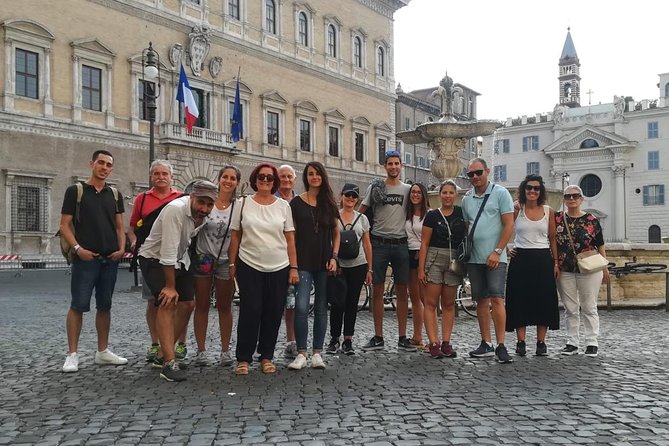
Piazza Farnese receives about 10 minutes. It is a compact stop that helps connect the Jewish Ghetto to the streets leading toward the river and Trastevere.
The value here comes from the guide’s commentary. A guide who simply names the square and moves on will make this feel like a pause in the pavement. A guide such as Caitlin, Fabiana, or Camilla, praised for adding stories and useful context, can make a short stop more worthwhile.
Do not expect a long architectural lecture at every location. The walk is short, and much of its value depends on how each guide uses the available time. One piece of useful criticism is that some walks provide good information at the stops but little commentary while the group is walking between them.
That means you should stay near the guide and listen closely at each pause. There are no headsets, so the experience is more personal but less easy to follow in traffic or a large group.
Crossing toward Tiber Island
From the historic center, the route heads toward the Tiber and crosses one of Rome’s oldest bridges to Tiber Island. The bridge is not listed as a separate timed stop, but it forms an important link in the walk.
This transition gives the tour a pleasant change of setting. You leave the market squares and dense central streets, cross the river, and approach Trastevere. It is a good example of why a walking route can teach more than a list of isolated sights: you see how Rome’s neighborhoods connect on foot.
The information provided does not specify the bridge’s name, so do not expect a detailed bridge-focused visit. Its role is mainly to move the group from one district to the next while giving you a river crossing and a sense of Rome’s old street plan.
The route is described as easy going, and one guide adapted the pace for a person with mobility limits. Still, this is an urban walking tour, not a seated sightseeing trip. Wear supportive shoes, and dress for the forecast. The walk operates in all weather.
Piazza Santa Maria in Trastevere
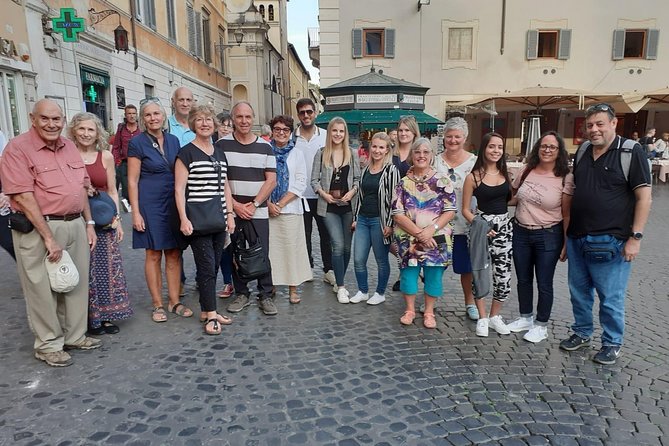
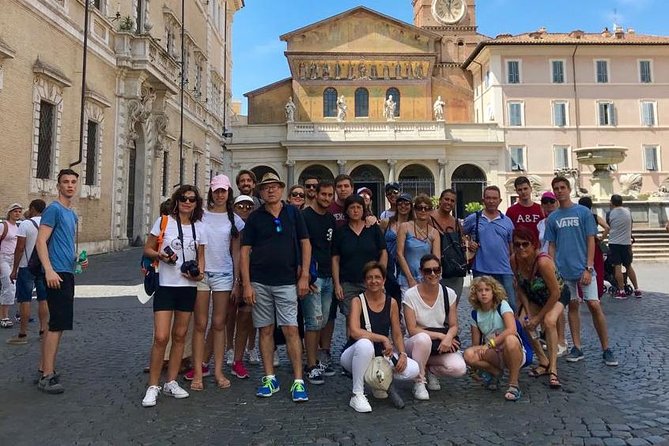
The formal end point is Piazza di Santa Maria in Trastevere, in front of the church. About 10 minutes are assigned to the piazza, followed by roughly 20 minutes in the wider Trastevere neighborhood.
Santa Maria in Trastevere is a practical ending because you are left in an area with plenty of options for continuing your evening. The tour does not include food, drinks, or a restaurant booking, but one guide, Lulu, was praised for offering a useful restaurant suggestion.
The square also makes a clear finish line. You are not dropped at an obscure side street or sent back to the starting point. If you want to explore Trastevere afterward, you can do so without needing another transfer.
Still, set your expectations correctly. Several comments indicate that the Jewish Ghetto receives more detailed treatment than Trastevere. One person expected more from Trastevere based on the tour title, while another felt there was little need to go there at the end.
I see both sides. Trastevere is a worthwhile finish, but if you want a full neighborhood tour with many church interiors, food stops, or local-life commentary, this walk may feel too short. Think of Trastevere as the final chapter, not half of the book.
What the best guides add
Guide quality appears to be the biggest variable. The most warmly praised guides combine clear history with an approachable manner.
Axel is noted for answering questions, sharing practical tips for the rest of a Rome visit, and bringing positive energy. Caitlin is praised for being friendly, kind, and well informed, while Fabiana is remembered as a strong storyteller who held attention throughout the walk.
Yousef received particularly strong praise for explaining both Rome itself and the story of its Jewish community. Lulu is noted for detailed explanations and useful dining advice. Camilla is praised for history, fun facts, good timing, and a comfortable pace.
Etienne adapted the speed for a participant with mobility limits. That does not guarantee a customized pace on every departure, but it suggests that it is worth speaking up early if you need the group to slow down.
The guide roster can change. You should book this for the route and subject, not for a guarantee of one particular person unless the provider confirms that guide.
Price, tips, and the pay-what-you-wish model
The listed price is $4.62 per person, making this one of the cheapest guided walks in central Rome. At that rate, the value is strong if you want a short orientation and a human explanation of places you could otherwise pass without understanding.
There is an important catch. The guide is included, but tips are not. The experience operates in the free tour, or pay-what-you-wish, tradition, and one unhappy booking described paying a separate reservation or processing fee while learning that the guide relies on tips.
Read the payment details carefully before confirming. The low listed price does not necessarily represent the full amount your group will spend, and you should budget a tip if the guide provides a good walk.
This model can work well for you if you prefer flexibility and want to reward the guide directly. It may frustrate you if you expect the booking price to be the complete cost or if you prefer a fixed-price tour with all guide compensation settled in advance.
Timing, group size, and practical comfort
The stated duration is approximately 1 hour 30 minutes to two hours. That makes the walk easy to fit into a busy Rome plan, but the shorter length also explains why each stop receives limited time.
The group can reach 30 people. No headsets are provided, so a full group may be harder to hear, especially when the guide is speaking beside traffic or in a crowded square. Stay close, and do not hesitate to ask the guide to repeat a point.
Morning, afternoon, and early evening departures give you useful choice. The tour is offered in English and uses mobile tickets. Confirmation arrives when you book, and the meeting point is near public transportation.
Service animals are allowed, and most people can participate. The pace can be adapted in some cases, but the tour remains a walking activity with changing streets, bridges, and public squares.
The chat function is not instant. If you need help finding the group or have an urgent question, call or send a WhatsApp message instead. This is a small but important point, especially because one booking failed when the guest could not find the group and did not receive a timely response.
Free cancellation is available up to 24 hours before the start time for a full refund. Cancellations or changes inside 24 hours are not refunded, and a minimum number of participants is required. If that minimum is not met, you are offered another date or experience, or a full refund.
Who should book this walk?
I would recommend it most strongly to first-time Rome visitors who want a quick introduction beyond the major monuments. It also suits you if you have already visited the Colosseum and Vatican area and want more neighborhood history.
It is a particularly good fit for:
- Budget-conscious visitors who want a guided walk for very little upfront cost
- People interested in Jewish history and the experience of Rome’s Jewish community
- Visitors who enjoy stories more than formal museum exhibits
- Anyone looking for a route that ends near restaurants and evening activity
- Families or mixed-age groups that prefer a shorter walk
I would be more cautious if you want extensive Trastevere coverage, a museum or synagogue entry, food tastings, or a small group guaranteed on every departure. You may also prefer a private tour if hearing the guide in a group of up to 30 is a concern.
Should you book the Jewish Ghetto and Trastevere Tour?
Yes, if you want an inexpensive, thoughtful introduction to an important side of Rome. The Jewish Ghetto is the clear reason to book, and the strongest guides turn the neighborhood’s streets into a serious lesson about community, faith, persecution, and survival.
Go in knowing what you are buying. This is a short walking tour, not a full-day historical program. Trastevere is a useful ending, but the Jewish Ghetto gets the fuller treatment. Check the booking fee, plan to tip, wear good shoes, and arrive early at Palazzo Venezia.
If those terms suit you, the price is hard to beat. You get a compact route, several central neighborhoods, and the chance to see Rome with more meaning than a map alone can provide.
FAQ
How long does the Jewish Ghetto and Trastevere Tour last?
The tour lasts approximately 1 hour 30 minutes to 2 hours.
Where does the tour start?
It starts at Palazzo Venezia, Piazza di San Marco, 48, in Rome.
Where does the tour end?
The walk ends at Piazza Santa Maria in Trastevere, in front of the church.
Is the tour offered in English?
Yes. The tour is offered in English.
What is included in the tour?
A local, professional guide is included. Food, drinks, and tips are not included.
How large can the group be?
The maximum group size is 30 people.
Can I cancel for a full refund?
Yes. You can cancel at least 24 hours before the start time for a full refund. Cancellations or changes made less than 24 hours in advance are not refunded.
Recently added around Rome
- Palatine Hill and Roman Forum Tour with Fast-Track Entrance★ 4.2 · 417 reviews
- Tivoli: Villa D’Este & Villa Adriana Pass & App Audioguide★ 4.4 · 364 reviews
- From Rome: Villa D’Este & Villa Adriana Day Trip with Lunch★ 4.4 · 289 reviews
- Vatican Museums & Sistine Chapel Skip-the-Line Guided Tour★ 4.6 · 254 reviews
- Rome: The Three Tenors at St. Paul’s Church Concert Ticket★ 4.7 · 699 reviews
- Tivoli: Villa D’Este Entry Ticket and App Audio Guide★ 4.3 · 191 reviews
- Rome: Capitoline Museums and Centrale Montemartini Tickets★ 4.4 · 328 reviews
- Rome: St. Peter’s Basilica and Papal Tombs Guided Tour★ 4.6 · 477 reviews
Rome Tours, compared.
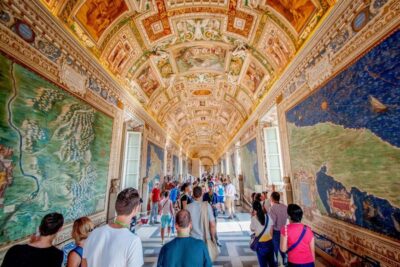
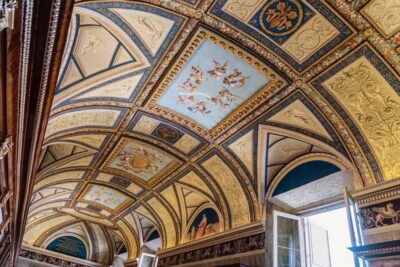
Vatican Museums & Sistine Chapel Tour with Optional Basilica
Read our review →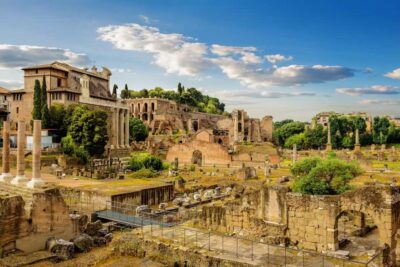
Colosseum, Roman Forum & Palatine Guided Tour
Read our review →
Vatican Museums, Sistine Chapel & St Peter’s Basilica Guided Tour
Read our review →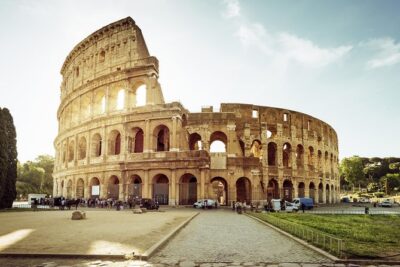
Colosseum, Palatine Hill and Roman Forum Guided Tour
Read our review →
Guided Tour of Colosseum, Roman Forum & Palatine Hill
Read our review →
Colosseum & Forum with Audio Guide App -Optional Arena
Read our review →