
Reviewed · 3-HOUR EXPERIENCES
Jewish Ghetto and Synagogues with Jewish Roman Guide 3 Hours
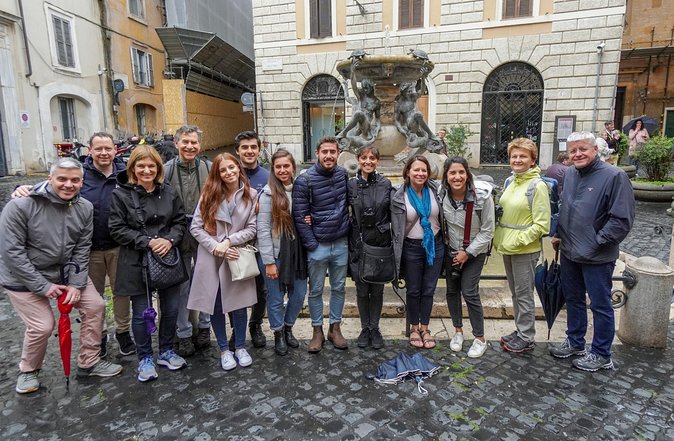
Rome tells its Jewish story in stone. This three-hour walk connects the Jewish Museum, two synagogues, and the old ghetto with the personal stories of Roman Jews. I especially like the chance to hear from a Roman Jewish guide and the small-group limit of 17 people. The main drawback is that the €12 museum admission is extra, and the three-hour schedule may feel long because the ghetto itself is compact.
I also like the tour’s human side. Guides such as Michaela, Daphna, Dafna, Micaela, Daniela, Yael, and Michelle have been praised for making difficult subjects clear, warm, and often funny. Still, meeting instructions deserve care, and the tour requires at least six participants before it is confirmed.
In This Review
- Key points to know before booking
- Why Rome’s Jewish quarter deserves three hours
- Starting at the Great Synagogue
- Inside the Jewish Museum and Spanish Synagogue
- Walking the former ghetto for 1 hour and 15 minutes
- The human stories behind Roman Jewish history
- What the $193.49 price really buys you
- Who will get the most from this walk
- Practical tips for a smoother visit
- Should you book the Jewish Ghetto and Synagogues tour?
- FAQ
- How long is the Jewish Ghetto and Synagogues tour?
- What does the tour include?
- Is the Jewish Museum ticket included?
- Where does the tour start and finish?
- How many people can join the tour?
- Can I cancel for a full refund?
Key points to know before booking

- Two synagogues are included: You visit Rome’s Great Synagogue and Spanish Synagogue, along with the Jewish Museum.
- A Roman Jewish perspective: Guides connect the neighborhood’s past with present-day Jewish life and family stories.
- The old ghetto is compact: Much of the value comes from the guide’s explanation, not from a long list of surviving buildings.
- Personal stories add weight: The walk may include accounts connected to World War II, Nazi persecution, and local families.
- Budget an extra €12: Museum and synagogue admission is not included in the listed $193.49 price.
- Small but not private: The group can include up to 17 people, and at least six are needed for the tour to operate.
Why Rome’s Jewish quarter deserves three hours

Rome’s Jewish community reaches back 22 centuries, making it one of the oldest Jewish communities outside Israel. That long span is what gives this tour its purpose. You are not simply looking at a neighborhood and checking off a synagogue. You are following a community through ancient Rome, the long period of segregation in the ghetto, the shocks of World War II, and Jewish life in Rome today.
The former ghetto existed for 330 years. The area is small enough to cross on foot without much effort, but its meaning is not simple. Narrow streets and old buildings reveal only part of the story. A guide helps you understand where Jews were confined, how the neighborhood changed, and why Jewish families still live there.
I would not book this as a general sightseeing walk if you only want pretty streets and quick photographs. I would book it because the guide supplies the context that the buildings cannot provide on their own. Several guides have been praised for using family memories, current events, and local knowledge to give the area a human voice.
The tour also suits people who are not Jewish. One participant specifically noted that the material remained useful even when some religious customs were unfamiliar. The subject is Jewish, but the larger lesson concerns Rome, power, prejudice, survival, and the way a minority community maintains its identity inside a predominantly Christian city.
A few more Rome bookings to compare
- Vatican: Museums & Sistine Chapel Entrance Ticket
★ 4.5 · 144,003 reviews - Vatican Museums & Sistine Chapel Tour with Optional Basilica
★ 4.3 · 67,413 reviews - Colosseum, Roman Forum & Palatine Guided Tour
★ 4.7 · 63,148 reviews
Starting at the Great Synagogue
The meeting point is the Great Synagogue, at Lungotevere de’ Cenci. This is a practical starting place because the synagogue and Jewish Museum form the central anchor of the visit. The activity ends back at the same meeting point, so you do not need to arrange a second pickup location.
The first portion lasts about 1 hour and 15 minutes. You visit the Jewish Museum and two synagogues: the Great Synagogue and the Spanish Synagogue. The Jewish Roma guides are authorized to take visitors privately inside these sites, which is an important part of the experience. You are not limited to viewing the neighborhood from the pavement.
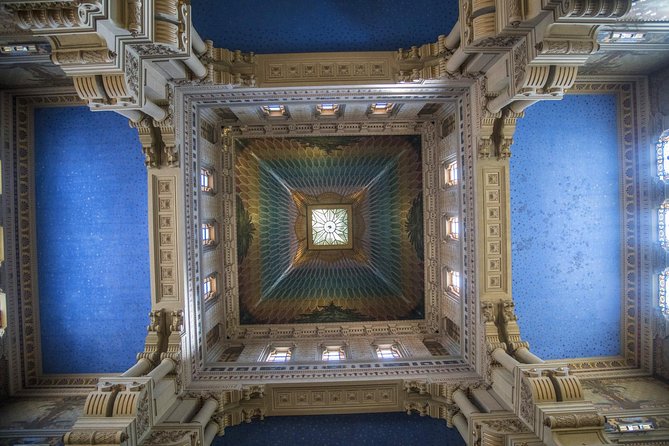
The Great Synagogue is repeatedly singled out as beautiful. Its interior gives the tour a strong visual center, while the museum supplies objects and historical material that help explain how Jewish life developed in Rome. The Spanish Synagogue adds another layer, allowing you to compare two houses of worship rather than seeing only one.
The admission arrangement needs careful attention. The price is listed as $193.49 per person, but the €12 Jewish Museum ticket is not included. The information also lists the entrance fee as €12 per person, so confirm at booking exactly how the synagogue and museum admission will be collected. I would budget the extra €12 rather than treat the advertised price as the final cost.
A good guide matters especially here. Michaela has been praised for her energy, humor, and personal connection to Roman Jewish life. Daphna and Dafna have also been described as clear storytellers who handle a difficult subject in a way suitable for different ages. The guide’s role is not merely to point out religious objects. It is to explain what they mean and how they fit into the community’s story.
Inside the Jewish Museum and Spanish Synagogue
The museum visit gives you a more focused look at Jewish Roman culture. The collection includes historical objects and relics, and the museum has been described as a highlight by people who wanted more than a street-level introduction.
I like this part because it slows the tour down. The ghetto walk is about place, movement, and memory. The museum gives you something to study. You can connect the physical neighborhood to the practices, objects, and traditions that helped Jewish Romans maintain their identity over many centuries.
The Spanish Synagogue is also important because it broadens the visit beyond the most famous building. The tour description promises both the Spanish and Great synagogues, but one person expected to see more synagogues in the area. That is a fair caution: this is a tour of two synagogues, not a full survey of every Jewish religious building in Rome.
Hearing devices have been useful for some participants, especially when the group is moving through busy streets or standing at a distance from the guide. They can help you follow the explanation without crowding around the guide. If you have trouble hearing in groups, this feature may add real value.
Walking the former ghetto for 1 hour and 15 minutes
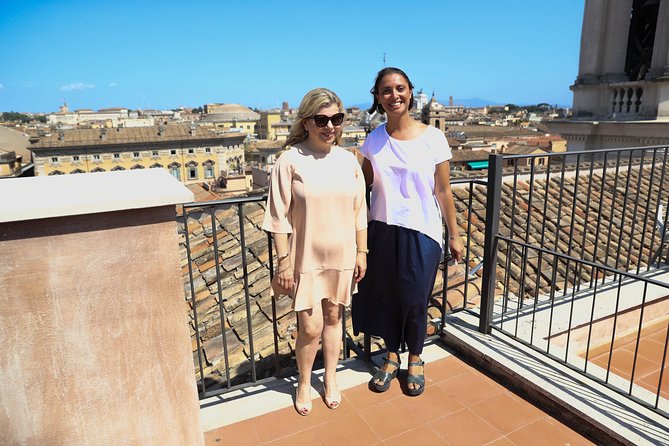
After the museum and synagogues, the group walks through the Antico Quartiere Ebraico, the former Jewish quarter. This section lasts about 1 hour and 15 minutes and has no separate admission fee.
The route focuses on the narrow streets where Jewish residents were segregated for 330 years. You will see the area where the community was confined and where Jewish residents still live today. That contrast is central to the tour: the ghetto is not presented as a frozen historical set, but as a living neighborhood shaped by change.
You should set your expectations correctly. The quarter is compact, and there may not be enough physical remains to fill three hours without explanation. One participant felt the tour could have been closer to two hours for that reason. I see the point. If you prefer a brisk architectural walk, the pace may seem slow.
But if you want to understand what happened in the streets, the time is useful. The guide can explain how segregation affected daily life, how the neighborhood changed, and how the Jewish community relates to Rome today. This is one of those tours where the story does more work than the scenery.
The most memorable moments may come from local encounters. The tour can include conversations with neighborhood residents and stories connected to World War II. One especially moving account involved an older survivor who happened to pass by during the walk. Another participant met a local author who described his family’s suffering and childhood during the war.
Those moments cannot be promised on every departure, so I would not book solely expecting to meet a survivor or author. Still, the possibility shows how strongly the tour is connected to the neighborhood rather than built only around prepared commentary.
Still Rome, but a slower afternoon:
- Vatican Museums, Sistine Chapel & St Peter’s Basilica Guided Tour
★ 4.5 · 39,149 reviews - Rome: Colosseum, Palatine Hill and Roman Forum Guided Tour
★ 4.8 · 32,814 reviews - Rome: Guided Tour of Colosseum, Roman Forum & Palatine Hill
★ 4.7 · 27,897 reviews - Rome: Colosseum & Forum with Audio Guide App -Optional Arena
★ 4.2 · 24,770 reviews
The human stories behind Roman Jewish history
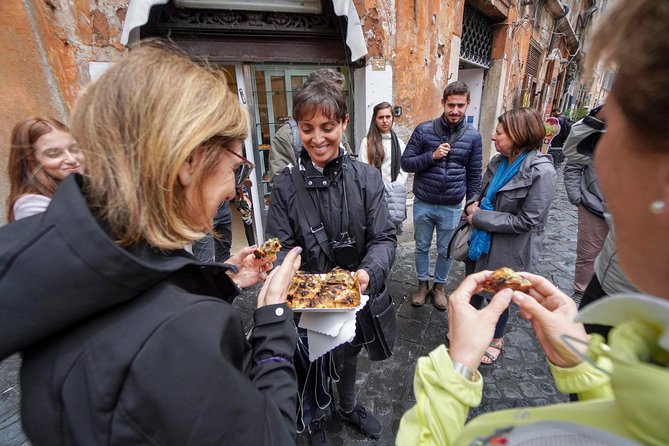
The guides receive the strongest praise for their personality and personal connection. Michaela is described as warm, funny, and deeply connected to local life. One particularly personal afternoon continued after the formal tour, when the guide helped the group find a kosher lunch at Renato al Ghetto and was greeted by local families while collecting her children from school.
That kind of local connection is unusual and valuable, but it should be understood as a guide-specific possibility, not a guaranteed part of the schedule. The official tour lasts about three hours and ends at the meeting point. Any extra meal or conversation would be outside the stated program.
The emotional side of the tour is also real. Jewish Roman history includes forced segregation, wartime deportations, family loss, and the Holocaust. Several guides have shared family stories involving relatives who died at Auschwitz. The subject can be painful, and the tour is not a light stroll through an old quarter.
At the same time, the guides seem to balance seriousness with humor and everyday detail. Micaela, for example, has been praised for bringing geography, culture, current events, and family memories into one clear account. That mix helps keep the tour from becoming a string of dates and tragedies.
I would recommend preparing younger children or sensitive family members for the subject matter. The material can be presented for different ages, but some stories are necessarily hard. For adults and older children who want an honest account of Rome’s Jewish past, this emotional weight is part of the value.
What the $193.49 price really buys you

At $193.49 per person, this is not a bargain walking tour. You are paying for a specialized three-hour experience, an authorized guide, access to the museum and two synagogues, and a focused subject that is difficult to understand from a guidebook alone.
The price makes more sense for people who place a high value on interpretation and local perspective. If you already plan to visit the Jewish Museum independently, know the neighborhood well, and mainly want to walk the streets, you may find it expensive. You will also need to add the €12 admission charge.
For a first visit to Rome, I would compare this cost with the value of your overall schedule. The ghetto sits near other central sights, so the tour can fit into a day devoted to central Rome. But three hours is a serious time commitment, and the subject deserves your attention. I would not squeeze it between two rushed appointments.
The group size is capped at 17, which is better than a large coach group but not the same as a private walk. At least six people must join for the booking to be accepted. Confirmation arrives within 48 hours, subject to availability, so leave some flexibility in your itinerary.
The tour is offered in English and uses a mobile ticket. It is near public transportation, and most people can participate. Service animals are allowed. The meeting point is listed at the Great Synagogue, and because communication at the meeting point has been a concern for at least one person, I would arrive early and double-check the exact instructions before setting out.
Who will get the most from this walk
I think this tour is best for:
- People with Jewish family or cultural connections who want to understand Roman Jewish life.
- Anyone interested in the Holocaust and World War II history of Rome.
- Visitors who prefer local voices and personal stories over a standard sightseeing script.
- Families with older children who can engage with serious historical material.
- First-time visitors who want to see Rome from a perspective beyond ancient monuments and Christian churches.
- People who want museum access and synagogue interiors combined with a neighborhood walk.
It may be less suitable if you want a fast-paced tour, a broad overview of Rome, or a private experience with only your own party. The neighborhood is small, and the value depends heavily on listening to the guide.
The tour is also a good choice for Christian visitors and other people who do not know much about Jewish customs. The explanations are designed to make the subject accessible rather than assuming prior knowledge. You should come with curiosity, not a religious background.
Practical tips for a smoother visit
Plan to spend three hours at the site, plus a little extra time if your group pauses for questions. The tour begins and ends at the Great Synagogue, so avoid scheduling an attraction across town immediately afterward.
Bring the extra €12 for admission, and verify the exact ticket arrangement in your confirmation. The advertised price does not cover the Jewish Museum entrance.
Arrive early at Lungotevere de’ Cenci. The old ghetto’s streets are easy to reach by public transportation, but delays can happen. One guide kept in contact with a late arrival during a taxi strike, yet you should not rely on that kind of flexibility.
The tour operates only when the minimum of six participants is reached. Keep an eye on your confirmation within 48 hours, especially if your Rome schedule is tight. Free cancellation is available until 24 hours before the start time, while later cancellations and changes are not accepted.
Should you book the Jewish Ghetto and Synagogues tour?
I would book it if you want a serious, personal account of Jewish Rome rather than a quick look at an old neighborhood. The combination of the Great Synagogue, Spanish Synagogue, Jewish Museum, and former ghetto gives the tour a clear structure, while guides such as Michaela, Daphna, Dafna, and Micaela bring warmth and family memory to the subject.
I would hesitate only if $193.49 feels high for a three-hour group walk, or if you prefer a shorter route with more buildings and less interpretation. The ghetto is compact, and the museum ticket costs extra.
For the right person, this can be one of Rome’s most memorable experiences. It changes the way you see the streets after you leave, which is a strong reason to make room for it.
FAQ
How long is the Jewish Ghetto and Synagogues tour?
The tour lasts approximately three hours. About 1 hour and 15 minutes is devoted to the Jewish Museum and the Great and Spanish Synagogues, followed by about 1 hour and 15 minutes walking through the former ghetto.
What does the tour include?
It includes a guide, an introduction to 22 centuries of Jewish life in Rome, visits to the Jewish Museum, the Great Synagogue and the Spanish Synagogue, and a walk through the former Jewish quarter.
Is the Jewish Museum ticket included?
No. The Jewish Museum ticket costs €12 per person and is not included in the listed tour price. The entrance fee is also listed as €12 per person, so confirm the exact payment details when booking.
Where does the tour start and finish?
The tour starts at Tempio Maggiore, Lungotevere de’ Cenci, 00186 Rome. It ends back at the meeting point.
How many people can join the tour?
The tour accepts a maximum of 17 people. It requires at least six participants before the booking can be confirmed.
Can I cancel for a full refund?
Yes. You can cancel at least 24 hours before the experience starts for a full refund. Cancellations or changes made less than 24 hours before the start time are not accepted, and a refund is not provided.
Recently added around Rome
- Rome: Pantheon, Trevi Fountain & Roman Squares Guided Tour★ 4.7 · 386 reviews
- Vatican: Pope Francis Tomb and Papal Basilicas Tour★ 4.7 · 340 reviews
- Vatican: St. Peter’s Basilica with Audio Guide and Options★ 3.4 · 269 reviews
- Rome: Vatican Museums & Sistine Chapel Ticket + Tour Options★ 4.7 · 344 reviews
- Rome: Vatican Museums Skip-the-line Entry Ticket and Tour★ 4.2 · 400 reviews
- Vatican: Museums, Raphael & Sistine Chapel + Basilica Option★ 4.7 · 350 reviews
- Vatican Museums & Sistine Chapel Guided Tour★ 4.3 · 832 reviews
- Vatican Museums & Sistine Chapel Entry Ticket★ 4.4 · 245 reviews
3-Hour Experiences, compared.
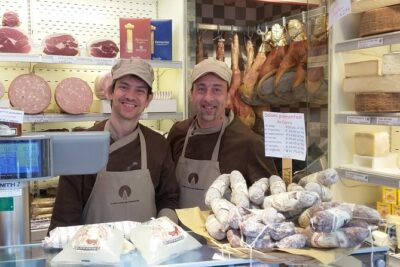
Eat Like a Local: Venice 3-Hour Small-Group Food Tasting Tour
Read our review →
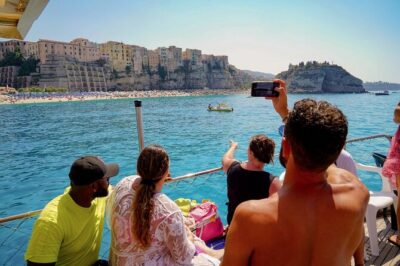
Tour of the Costa degli Dei by boat, 3 hours with aperitif included
Read our review →
Pompeii Private Tour with an Archaeologist and Skip The Line – 3 hours
Read our review →
3 Hour Group Tour by Boat to the Caves of Santa Maria di Leuca
Read our review →
Full Private 3h Excursion to the Sassi di Matera
Read our review →
Tour 3h and half visit of all the caves, bathroom stop and aperitif
Read our review →
3h Private City Walking Tour with Optional Cathedral
Read our review →Browse the lists this tour appears in