
Reviewed · FOOD & DRINK
Jewish Ghetto and Campo Dè Fiori By Night Food, Wine and Sightseeing Tour
Rome tastes better after sunset. This four-hour walking tour combines the Jewish Ghetto’s ancient ruins and synagogue with pizza, pasta, cured meats, wine, beer, tiramisu, espresso, and gelato. I like the smart route through several central neighborhoods, and I like that guides such as Maria, Andrea, Fabrizia, and Marco bring both food and local stories to the table.
The main drawback is that the title promises a strong Jewish Ghetto focus, while much of the evening takes place beyond the quarter. You will see important sites there, but this is first and foremost a food tour with history woven between the stops, not a full synagogue or Jewish heritage visit.
In This Review
- Key details to know before booking
- Starting at Piazza Mattei with an aperitivo mood
- The Jewish Ghetto: artichokes beside Roman ruins
- Campo de’ Fiori and the first proper meal
- Teatro di Pompeo and Roman pasta
- Piazza Navona after dark
- Sant’Eustachio coffee and locally made gelato
- Largo di Torre Argentina and the Caesar story
- What the $107.68 price really buys
- Food restrictions, walking, and other practical details
- Who should book this Roman evening?
- Should you book the Jewish Ghetto and Campo de’ Fiori night tour?
- FAQ
- Where does the tour begin?
- Where does the tour end?
- How long does the tour last?
- Is the interior of the Jewish Synagogue included?
- What food and drinks are included?
- Can vegetarians join the tour?
- Can the tour accommodate vegan, gluten-free, or dairy-free diets?
Key details to know before booking
- Seven food stops can add up to a full Roman meal: Expect more than ten tastings, including Jewish-Roman artichoke, pizza, pasta, cured meat, cheese, tiramisu, coffee, and gelato.
- The route begins at Piazza Mattei at 5:45 pm: Meet by the Turtles Fountain, then finish at Largo di Torre Argentina.
- The Jewish Ghetto is only part of the route: You also visit Campo de’ Fiori, the ruins of Teatro di Pompeo, Piazza Navona, Sant’Eustachio, and the site linked to Julius Caesar’s death.
- Small groups help the evening run smoothly: The maximum group size is 15, useful when food arrives at several busy Roman stops.
- Dietary limits matter: Vegetarian dishes are available if requested in advance, but vegan, gluten-free, and dairy-free diets cannot be accommodated.
- The $107.68 price covers food, drinks, and the guide: With wine, beer, soft drinks, and a complete meal included, the cost can be fair for a first evening in Rome.
Starting at Piazza Mattei with an aperitivo mood
The tour begins in Piazza Mattei, a compact square centered on the famous Turtles Fountain. This is a pleasant meeting point because it is easy to recognize, and the evening light gives the fountain and surrounding buildings a fitting introduction to old Rome.
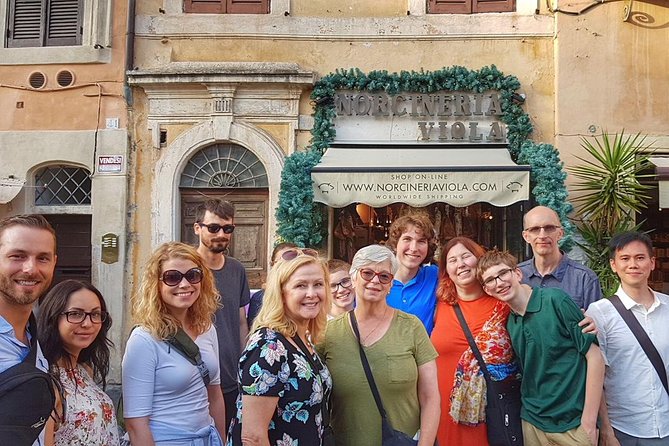
Your guide gathers the group once everyone arrives, then explains the plan before setting off. The group can include up to 15 people, which is small enough for questions and conversation but large enough to create the social feel that makes a food tour enjoyable.
The start time, 5:45 pm, works well for a Rome evening. You get a little sightseeing before the meal gathers pace, then continue through the city as the streets grow darker. Wear smart casual clothes and comfortable shoes. The route involves a moderate amount of walking, and it is not a good choice if walking is difficult for you.
More Food Tours in Rome
- Rome: Tuscany & Montepulciano Day Trip with Lunch & Wine Tasting
★ 4.5 · 5,232 reviews - Winner 2025 Rome Twilight Trastevere Food Tour by Eating Europe
★ 5.0 · 5,157 reviews - Rome: Trastevere or Jewish Quarter Street Food Tour
★ 4.8 · 3,839 reviews
The Jewish Ghetto: artichokes beside Roman ruins
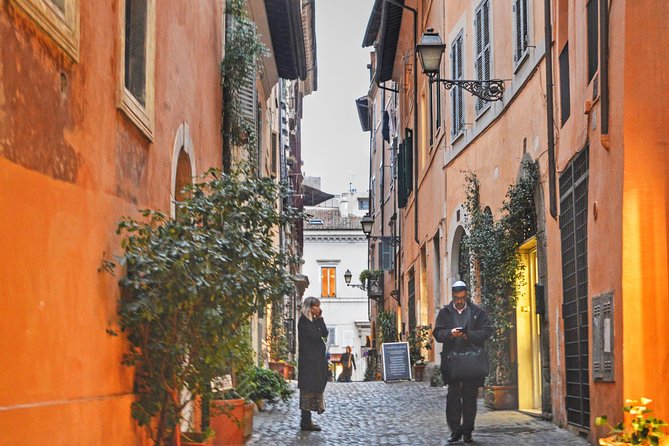
The first substantial section explores Rome’s former Jewish quarter. Your guide explains how this area changed over the centuries, then points out the Great Synagogue, ancient Roman remains, the Portico di Ottavia, and the Teatro Marcello.
The setting is unusual even by Roman standards. Imperial ruins, later buildings, Jewish traditions, and modern restaurants share a fairly compact area. You are not simply moving between restaurants. You are learning how different layers of the city sit on top of one another.
The first tasting is usually the famous carciofo alla giudìa, a Jewish-Roman fried artichoke. It is one of the most distinctive foods connected with this part of Rome, so this is a useful introduction to the local cuisine rather than a generic Italian snack.
Keep your expectations clear, however. The tour does not include a visit inside the synagogue. You can admire the building from outside, but anyone wanting a fuller religious or cultural visit should arrange that separately. One guide may spend more time on the Ghetto than another, and the overall route gives more attention to food than to detailed Jewish history.
That balance is important. I would book this for a tasty introduction to the quarter, not as your only Jewish Rome experience.
Campo de’ Fiori and the first proper meal
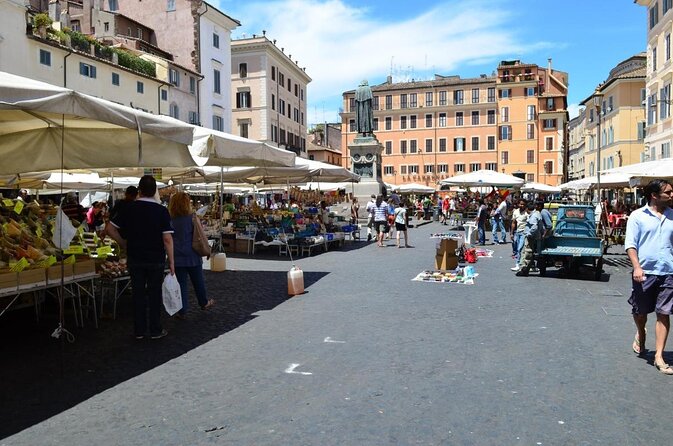
From the Ghetto, you walk toward the Parione district and Campo de’ Fiori. The route connects food with some of Rome’s more sobering stories. The square was once associated with public executions, and the statue of philosopher Giordano Bruno recalls the darker side of the city’s past.
The tour does not avoid those difficult subjects. That is a strength. Rome is not only fountains, fountains, and more fountains. A good guide can explain how power, religion, punishment, and public life shaped the city, and several guides, including Maria and Andrea, are praised for mixing history with an easy, friendly manner.
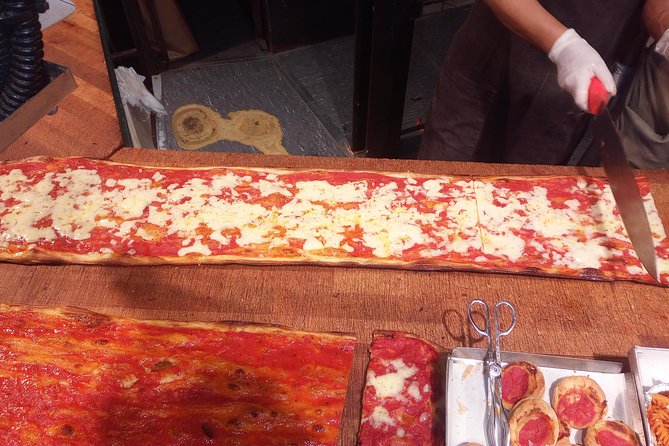
Food now takes center stage. At a well-known Roman bakery, you receive pizza Margherita with a light beer. The guide explains the difference between Roman and Neapolitan pizza, a useful lesson when menus across Italy use the word pizza for very different styles.
Roman pizza is generally associated with a thinner, crisper base, while Neapolitan pizza is known for a softer, more pliable crust. The precise preparation can vary, but the point is practical: you leave knowing what to look for when ordering pizza elsewhere during your stay.
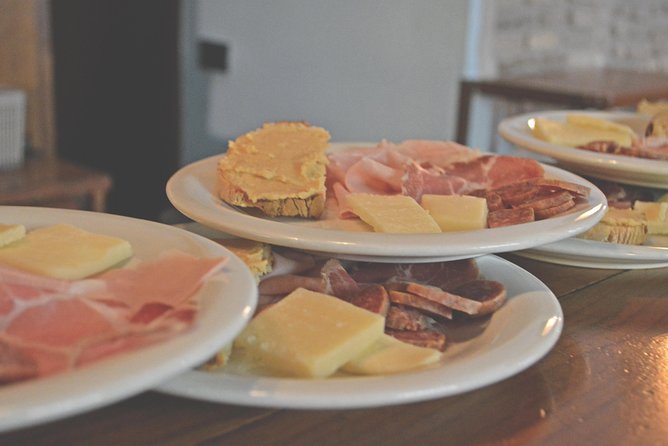
Next comes a selection of cured meats and cheeses with Italian wine. This is a generous transition from snack to meal, and it gives you a chance to compare salty, savory flavors with the wine. The portions are designed to build gradually. You may begin with small tastes, but by the middle of the evening you are likely eating dinner.
Teatro di Pompeo and Roman pasta
One of the more interesting moments comes when the guide shows you where the remains of Teatro di Pompeo are concealed among modern streets. You do not enter a grand theater complex. Instead, you learn how much ancient Rome remains below or behind the city you see today.
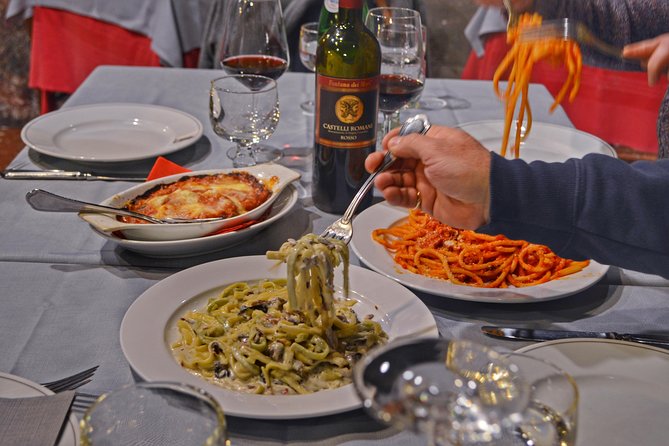
The meal continues near these ruins with traditional Roman pasta and wine. This is a strong part of the route because it turns a historical stop into a proper sit-down food experience. Several accounts describe trying multiple pasta dishes, so you should not plan a second dinner afterward.
Roman pasta is central to the identity of the city, and this stop gives you a chance to sample classic preparations rather than simply hearing about them. The exact dishes can change because food suppliers and restaurants are not always available. The company has occasionally contacted customers before the tour when a supplier was unavailable and offered a different date, so flexibility can help.
A Friday evening can also affect the meal plan because some Jewish restaurants close for Shabbat. That does not mean the tour stops running, but the food selection may shift. If sampling specifically Jewish-Roman restaurant dishes is your top priority, ask about the evening’s planned stops before booking.
A few more Rome bookings to compare
- Vatican: Museums & Sistine Chapel Entrance Ticket
★ 4.5 · 144,003 reviews - Vatican Museums & Sistine Chapel Tour with Optional Basilica
★ 4.3 · 67,413 reviews - Colosseum, Roman Forum & Palatine Guided Tour
★ 4.7 · 63,148 reviews - Vatican Museums, Sistine Chapel & St Peter’s Basilica Guided Tour
★ 4.5 · 39,149 reviews
Piazza Navona after dark
After the savory courses, the route heads to Piazza Navona for dessert. Before reaching the square, you stop at a popular tiramisu shop and choose from different flavors.
This is a clever point in the evening. Tiramisu gives you a sweet pause before the final coffee and gelato, and the variety makes the stop easier for a mixed group. If you have already eaten a substantial amount, this is where pacing becomes useful. Take smaller portions when you can, because the tour is not finished yet.
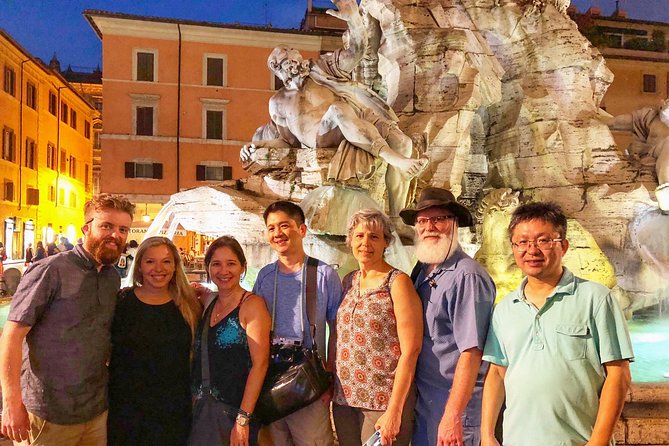
Piazza Navona provides the evening’s most theatrical sightseeing setting. The square’s Baroque buildings and sculptures are linked to major seventeenth-century artists Bernini and Borromini. Your guide also explains how the area was used in earlier times, adding context to the fountains and grand facades.
The advantage of visiting at night is atmosphere. The square becomes a backdrop for a stroll rather than a checklist stop. The disadvantage is that conversation can be harder if the area is crowded, so stay close to your guide and expect some pauses while the group regathers.
Sant’Eustachio coffee and locally made gelato
The next stop is near the Basilica di Sant’Eustachio, where you learn about the square and visit the long-established Sant’Eustachio coffee shop. The café has been open since 1938, and its coffee carries the same name as the surrounding area.
An espresso here is small but powerful, the sort of final course that helps you keep walking after a meal of pasta and dessert. If you do not normally drink coffee, this is still a useful taste of Roman café culture. The stop is brief, so do not expect a long coffee break.
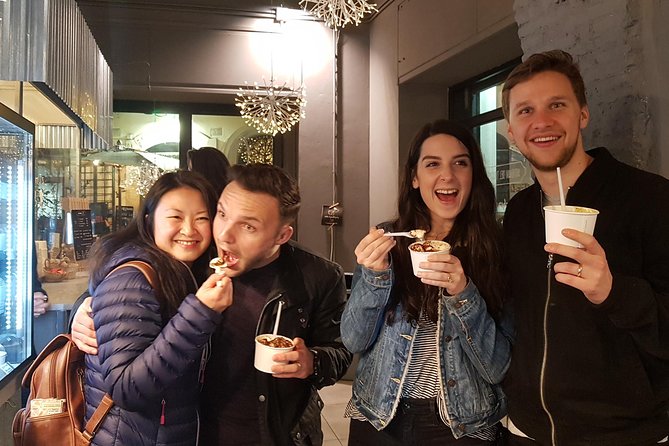
The final food is gelato made on site with organic products. This is a fitting finish because gelato is one of the easiest Roman treats to judge for yourself during the rest of your trip. Pay attention to texture and flavor, then use that standard when you visit other gelaterias.
The itinerary information places gelato at the final stop and again near Largo di Torre Argentina, so the exact order can vary. The operator also notes that places may change. Think of the listed stops as the planned route rather than a promise that every dish will appear in precisely the same location.
Largo di Torre Argentina and the Caesar story
The tour ends at Largo di Torre Argentina, a large archaeological area surrounded by modern Rome. The ruins are associated with the spot where Julius Caesar was killed, according to historians.
The site has its own strange atmosphere. The excavated temples sit below street level, and the contrast between traffic, city buildings, and ancient stone makes the stop memorable. Your guide may also share the local legend that Caesar’s ghost still wanders among the ruins. Rome enjoys a good ghost story, especially when ancient politics are involved.
Ending here is practical. Largo di Torre Argentina is central, and you can continue on foot or use public transportation afterward. Your hotel transfer is not included, so arrange your own taxi or bus if you are staying farther away.
What the $107.68 price really buys
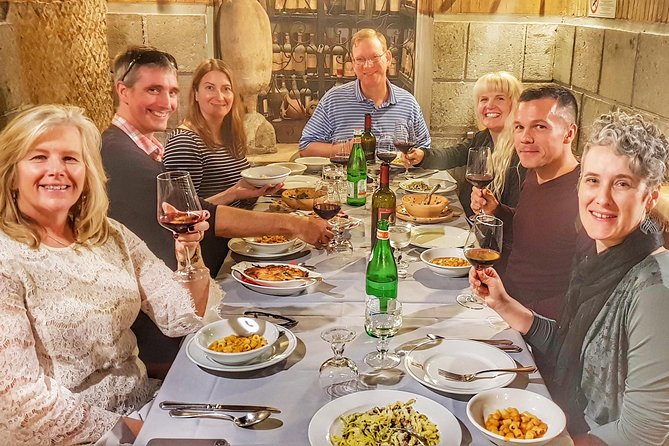
At $107.68 per person, this is not a cheap snack crawl. It can still offer fair value because the price includes the walking tour, local guide, more than ten food tastings, wine, beer, and soft drinks.
The biggest value is the variety. You are not eating the same item at several venues. The evening moves through appetizers, Roman street food, pizza, cured meat, cheese, pasta, tiramisu, espresso, and gelato. That range helps you learn what you actually like before spending more money on restaurants during the rest of your visit.
The second value is time. Organizing these stops yourself would require restaurant research, reservations, ordering in several places, and finding the historical sites between meals. The guide handles the movement and explains what is in front of you.
Still, you are paying for convenience and guidance, not luxury dining. The exact stops can change, and busy restaurants or supplier schedules may affect the menu. If you are a serious food expert seeking rare ingredients or a long meal at one outstanding restaurant, this may feel too structured. If you are visiting Rome for the first time and want a full introduction in one evening, the price is easier to justify.
Food restrictions, walking, and other practical details
Vegetarian options are available, but you must advise the operator in advance through the special requirements field. Vegan, gluten-free, and dairy-free diets cannot be accommodated, and the tour is not suitable for anyone with severe allergies to nuts or dried fruit.
The tour runs in rain or shine. Rome’s old streets can be uneven, and the moderate walking continues for about four hours, so good shoes matter more than dressy footwear. Service animals are allowed, and the meeting point is near public transportation.
Free cancellation is available up to 24 hours before the 5:45 pm start time. Cancellations inside that window are not refunded, and changes made within 24 hours are not accepted. The tour also requires a minimum number of participants, so a cancellation by the operator may lead to another date, another experience, or a full refund.
Guides make a noticeable difference. Maria receives repeated praise for her warm manner, food knowledge, organization, and historical storytelling. Andrea is also described as patient and well informed, while Fabrizia is remembered for her personal care and willingness to help with the journey home. Marco is praised for keeping the group comfortable and explaining the dishes.
That does not guarantee a particular guide on your date, but it does suggest a consistent guiding style: friendly, social, and willing to answer questions.
Who should book this Roman evening?
I would choose this tour if you want three things at once: a substantial dinner, a walk through central Rome, and an introduction to local history. It suits first-time visitors especially well, and booking it early in your stay can help you decide which foods and neighborhoods deserve a return visit.
It also works for couples, families with older children, and solo visitors who enjoy meeting a small group over shared plates. The social side is part of the pleasure. Several accounts describe lively groups, and the food is served in stages, giving you time to talk rather than simply rush from one bite to the next.
I would skip it if you want a detailed Jewish heritage tour, a synagogue interior visit, or a route devoted almost entirely to the Ghetto. I would also skip it if dietary restrictions make the menu unsuitable or if four hours of walking sounds tiring.
Should you book the Jewish Ghetto and Campo de’ Fiori night tour?
Book it if you want a generous, social evening that combines classic Roman food with the city’s ancient and Baroque sights. The strongest features are the broad food selection, the capable guides, the small group size, and the easy central route.
Just set the right expectation. This is a food-led sightseeing walk, not a specialist history seminar. You will see the Jewish Ghetto, but you will also spend substantial time around Campo de’ Fiori, Piazza Navona, Sant’Eustachio, and Largo di Torre Argentina.
For most first visits, I think it is a very good way to get your bearings fast. Come hungry, wear comfortable shoes, request a vegetarian menu early if needed, and leave room for the final gelato.
FAQ
Where does the tour begin?
The tour begins at Piazza Mattei in Rome, in front of the Turtles Fountain. The scheduled start time is 5:45 pm.
Where does the tour end?
The tour ends at Largo di Torre Argentina, in central Rome.
How long does the tour last?
The experience lasts approximately four hours.
Is the interior of the Jewish Synagogue included?
No. The tour includes views of the synagogue and information about the Jewish Ghetto, but admission to the synagogue interior is not included.
What food and drinks are included?
The tour includes more than ten tastings, such as Jewish-Roman artichoke, pizza Margherita, cured meats, cheese, traditional pasta, tiramisu, espresso, and gelato. Wine, beer, and soft drinks are also included.
Can vegetarians join the tour?
Yes. Vegetarian options can be provided if you advise the operator in advance when booking.
Can the tour accommodate vegan, gluten-free, or dairy-free diets?
No. The tour cannot accommodate vegan, gluten-free, or dairy-free diets. It is also not suitable for anyone with severe allergies to nuts or dried fruit.
Recently added around Rome
- Rome: Pantheon, Trevi Fountain & Roman Squares Guided Tour★ 4.7 · 386 reviews
- Vatican: Pope Francis Tomb and Papal Basilicas Tour★ 4.7 · 340 reviews
- Vatican: St. Peter’s Basilica with Audio Guide and Options★ 3.4 · 269 reviews
- Rome: Vatican Museums Skip-the-line Entry Ticket and Tour★ 4.2 · 400 reviews
- Rome: Vatican Museums & Sistine Chapel Ticket + Tour Options★ 4.7 · 344 reviews
- Vatican: Museums, Raphael & Sistine Chapel + Basilica Option★ 4.7 · 350 reviews
- Vatican Museums & Sistine Chapel Guided Tour★ 4.3 · 832 reviews
- Vatican Museums & Sistine Chapel Entry Ticket★ 4.4 · 245 reviews
Food & Drink, compared.
Small-Group Wine Tasting Experience in the Tuscan Countryside
Read our review →
Tuscany & Montepulciano Day Trip with Lunch & Wine Tasting
Read our review →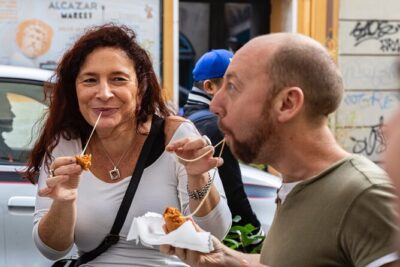
Winner 2025 Rome Twilight Trastevere Food Tour by Eating Europe
Read our review →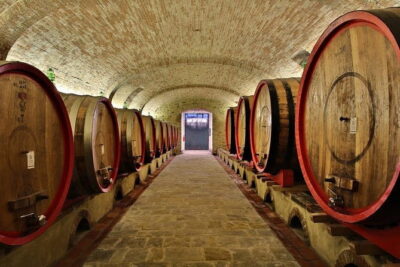
SMALL-GROUP Wine Safaris: Tuscan Wine Tasting Tours from Florence
Read our review →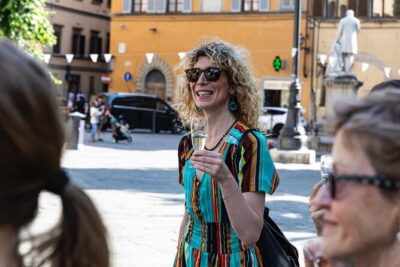
Winner 2025 Florence Sunset Food & Wine Tour by Eating Europe
Read our review →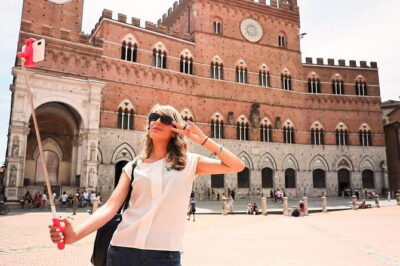
San Gimignano, Siena, Monteriggioni, Chianti Day Trip with Lunch & Wine Tasting
Read our review →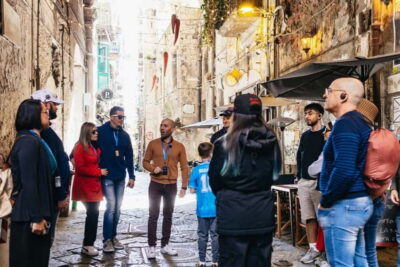
Browse the lists this tour appears in