
Reviewed · HALF-DAY
Hadrian’s Villa and Villa d’Este Half-Day Trip from Rome
Two very different villas, one easy escape. This four-hour trip takes you from Rome to Tivoli for ancient ruins, Renaissance fountains, and a welcome change from city streets. I like the efficient pairing of Hadrian’s Villa and Villa d’Este, and I like having an expert guide explain what can otherwise feel like a large pile of stones or an overly grand palace. The main drawback is the pace: you get only about an hour at each site, and both require plenty of walking.
The tour costs about $118.81 per person and includes admission, a local guide, and transport by air-conditioned coach. That is fair value if you want both UNESCO-listed sites without arranging buses, tickets, and directions yourself. It is less appealing if you prefer lingering quietly, taking your own photographs, or exploring Tivoli town at a slow pace.
In This Review
- Key points to know before booking
- Leaving Rome for the hills of Tivoli
- Hadrian’s Villa: a palace complex on a huge scale
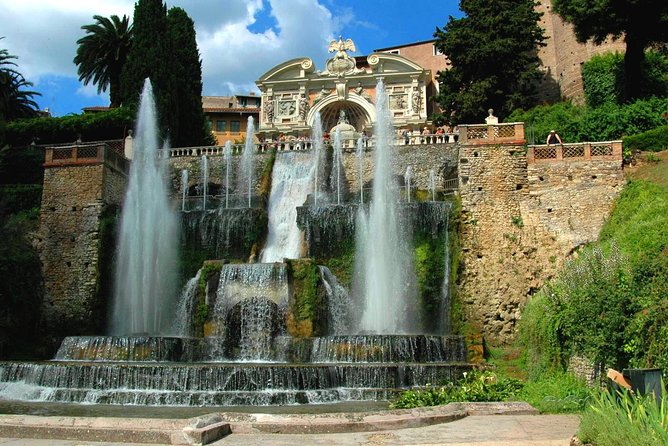
- Villa d’Este: fountains, gardens, and Renaissance ambition
- Why the two villas work well together
- Walking, weather, and what to bring
- Guides, group size, and the pace of the day
- Is $118.81 a fair price?
- Who should book this Tivoli trip?
- The final call
- FAQ
- How long does the Hadrian’s Villa and Villa d’Este trip last?
- Where does the tour start?
- Are admission tickets included?
- Is transport included?
- Is this tour offered in one language?
- Can I cancel for a full refund?
Key points to know before booking
- Hadrian’s Villa is an enormous archaeological site: Expect temples, theaters, thermal baths, palaces, and broad open paths rather than one preserved building.
- Villa d’Este supplies the visual payoff: Its gardens and fountains offer a dramatic contrast to Hadrian’s weathered ruins.
- The trip lasts about four hours: Travel time is included, leaving roughly one hour at each villa.
- Guides make a real difference: Guides such as Luigi, David, Max, and Pina have been praised for clear explanations, warmth, humor, and good organization.
- You will walk on both stops: A moderate level of fitness is requested, and summer heat can make the outdoor sections harder.
- The group is capped at 30 people: The coach is air-conditioned, which matters during Rome’s hot months.
Leaving Rome for the hills of Tivoli
The meeting point is Green Line Tours at Via Giovanni Amendola 32, near Termini Station. The tour information also describes an option for pickup from a central Rome hotel, but pickup and drop-off are not listed among the included services, so confirm your exact arrangement before setting out.
Once aboard the air-conditioned coach, you get a short ride out of central Rome and into the hills around Tivoli. Your guide provides background on the area as you look through the window at the Roman countryside. This transfer is one of the practical reasons to choose the organized trip. Public transport to both villas takes more planning, and a taxi can quickly cost more than the tour.
The tour is multilingual, so the guide may speak to a mixed group. That can mean less time in each language, though the best guides keep the explanation focused. Luigi, David, and Max received especially warm praise for combining facts with humor and personal attention. One particularly positive account described an early 9 a.m. visit with very few people at the villa, a useful reminder that start time can affect the atmosphere.
The tour lasts about four hours from start to finish. That makes it easy to fit into a Rome itinerary, but it is not a full exploration of Tivoli. You see the two principal villas rather than spending much time in the town itself.
A few more Rome bookings to compare
- Vatican: Museums & Sistine Chapel Entrance Ticket
★ 4.5 · 144,003 reviews - Vatican Museums & Sistine Chapel Tour with Optional Basilica
★ 4.3 · 67,413 reviews - Colosseum, Roman Forum & Palatine Guided Tour
★ 4.7 · 63,148 reviews
Hadrian’s Villa: a palace complex on a huge scale
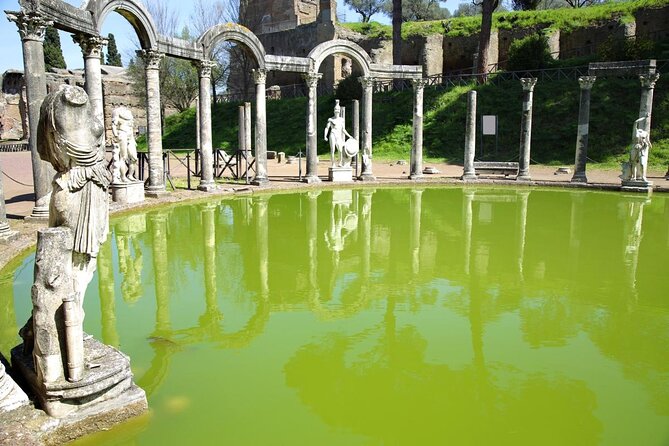
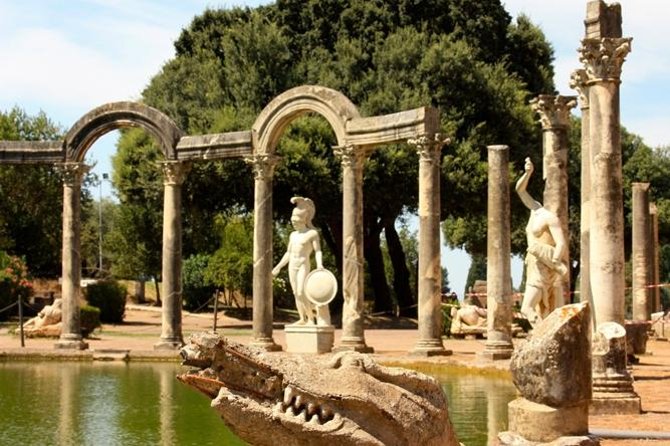
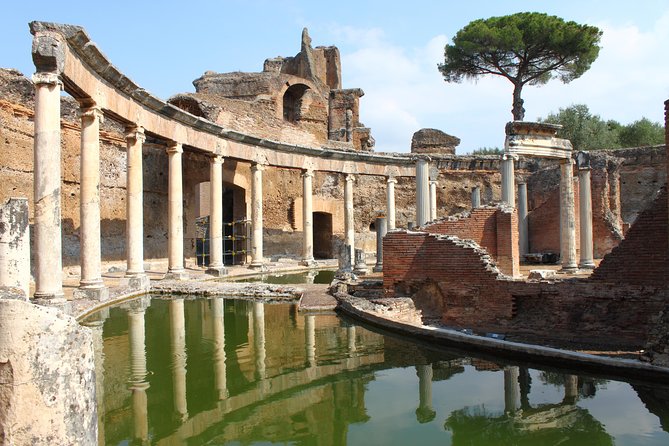
The first major stop is Hadrian’s Villa, or Villa Adriana, the former retreat of Emperor Hadrian. Built in the second century AD, it was far more than a private country house. The site spread across a vast area and included palaces, temples, theaters, libraries, thermal baths, pools, and service buildings.
That scale is the key to understanding the place. You are not walking through a single intact villa with rooms laid out for easy viewing. You are crossing the remains of an imperial complex that functioned almost like a small town. The ruins give you a sense of power and excess, but they ask you to use your imagination.
Your guide helps connect the fragments. Hadrian traveled widely, and the design of the complex reflected places and monuments he had seen during his reign. As you move among the remains, you learn how the emperor’s daily life, ceremonial spaces, leisure, and bathing culture fitted together.
The site includes the remains of thermal baths and theaters, along with temples and palace areas. These details matter because they show how much activity took place here. Hadrian’s Villa was not simply a quiet retreat. It was a working imperial residence designed to support court life on a grand scale.
You should allow for uneven surfaces, open paths, and a fair amount of walking. The area is expansive, and the short schedule means your guide will lead you toward the most important sections rather than covering every corner. At roughly one hour, the visit gives you a useful introduction, but not enough time for a slow archaeological study.
This stop divides opinion for a simple reason. If you enjoy ancient ruins and can picture missing walls, columns, and roofs, Hadrian’s Villa can be fascinating. If you need complete buildings and lots of surviving decoration, you may find it underwhelming. A guide is particularly valuable here because the site does not always explain itself at a glance.
I would pay close attention to the guide’s stories rather than trying to photograph every stone. The experience works best when you look at the layout as a whole and imagine how the complex operated 1,800 years ago.
Villa d’Este: fountains, gardens, and Renaissance ambition
After Hadrian’s Villa, the coach makes the short journey to Villa d’Este in Tivoli. This sixteenth-century palace was built around 1550 for Cardinal Ippolito II d’Este, who also governed Tivoli. It was an ambitious project, and its construction forced local residents to move to make room for the palace.
The mood changes completely from the first stop. Hadrian’s Villa is broad, ancient, and fragmentary. Villa d’Este is shaped by water, formal gardens, terraces, architecture, and carefully arranged views. The gardens are the star of the visit.
You walk through the palace and grounds with the guide, learning about the cardinal and the lavish life connected with the property. Then the route leads into the gardens, where fountains and water features provide the main spectacle. The design uses the slope of the site to create movement and sound, with water flowing through a series of channels and fountains.
The fountains linked with Gian Lorenzo Bernini are a major draw. Even if you are not an art specialist, the gardens are easy to appreciate. This is a place where the setting does much of the work: stone, greenery, water, and terraces combine into a memorable visual experience.
Many people prefer Villa d’Este to Hadrian’s Villa because it offers more immediate beauty. I understand that reaction. You do not need as much historical imagination to enjoy a fountain framed by gardens. The site is also a strong choice for photographs, especially if water features and formal garden design appeal to you.
There is one important caveat. Parts of the gardens may occasionally be closed for filming or other site activity. One visitor found that movie production blocked access to sections of Villa d’Este, which reduced the value of the stop. This is not something the tour can always control, but it is worth accepting as a possible risk when booking a timed visit.
You have some time to wander independently after the guided explanations. Use it to slow down, revisit a fountain, or find a quieter view. With only about an hour, you will need to keep an eye on the meeting time.
Why the two villas work well together
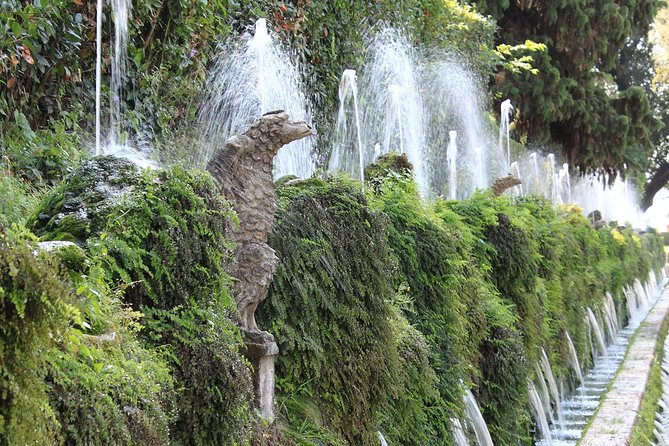
The strongest idea behind this excursion is the contrast. Hadrian’s Villa shows Roman imperial power through scale, engineering, and architecture. Villa d’Este shows Renaissance power through design, water, gardens, and display.
Seeing both in one morning or afternoon gives you a clearer sense of how wealthy rulers used country residences. Hadrian built a vast retreat that echoed places from across the Roman world. Cardinal Ippolito d’Este created a palace and garden complex meant to impress visitors and reinforce his status in Tivoli.
The pairing also keeps the outing varied. The first site is about ruins and ancient life. The second is about fountains and garden art. If you visited two archaeological sites back to back, the experience could feel repetitive. Here, the change in mood comes at exactly the right time.
The trade-off is that neither visit is leisurely. You get a guided overview, some free time, and the convenience of transport, but not the freedom to follow every path. If you want a full day at Hadrian’s Villa alone, this is not the right format.
Still Rome, but a slower afternoon:
- Vatican Museums, Sistine Chapel & St Peter’s Basilica Guided Tour
★ 4.5 · 39,149 reviews - Rome: Colosseum, Palatine Hill and Roman Forum Guided Tour
★ 4.8 · 32,814 reviews - Rome: Guided Tour of Colosseum, Roman Forum & Palatine Hill
★ 4.7 · 27,897 reviews - Rome: Colosseum & Forum with Audio Guide App -Optional Arena
★ 4.2 · 24,770 reviews
Walking, weather, and what to bring
A moderate level of physical fitness is recommended. You will walk at both villas, and the grounds are not presented as a seated sightseeing experience. Hadrian’s Villa covers a wide area, while Villa d’Este includes gardens and paths with changing levels.
Wear comfortable walking shoes. The advice is basic, but it matters more here than on a coach tour that mostly visits indoor sights. Bring water, especially in summer, since the tour does not include food or drinks.
An air-conditioned coach is a major comfort during hot Roman weather. One account specifically praised the cool bus during a very warm summer visit. At the same time, air conditioning does not remove the heat once you are walking through the open grounds.
Rain does not automatically ruin the outing. One person found the tour worthwhile even in light rain, helped by an engaging host. Still, the activity requires good weather, and poor conditions can lead to a change of date or a full refund.
The tour is not designed around extended meal breaks. Eat beforehand or plan food for after the return to Rome. The schedule is compact, and stopping for a long lunch would cut into the villa visits.
Guides, group size, and the pace of the day

The guide is central to the value of this experience. Hadrian’s Villa needs interpretation, and Villa d’Este gains depth when someone explains the cardinal, the site’s political setting, and the design of the fountains.
The strongest guide names connected with this departure include Luigi, David, and Max. Luigi was praised for his facts, friendliness, and humor. David was described as attentive and able to add useful information beyond the basic route. Max helped make a final holiday outing feel peaceful and memorable. These comments point to a tour style that depends heavily on the individual guide, but they also suggest a consistent effort to make the history approachable.
The group maximum is 30 people. That is large enough to keep the price below a private tour, but small enough to remain manageable at meeting points and during explanations. The included transport description refers to a coach with capacity up to 50, so the vehicle may have more seats than the actual group limit.
Because the tour is multilingual, expect a broad international group and explanations in more than one language. If you want a highly specialized lecture in English only, a private or language-specific tour may suit you better. If you want a friendly overview with transport handled for you, the format is practical.
Is $118.81 a fair price?
At $118.81 per person, this is not the cheapest way to reach Tivoli. But the price includes round-trip coach transport, admission to both villas, and a guide. When you add the value of avoiding separate transport arrangements and ticket lines, the cost becomes easier to justify.
The real question is how much structure you want. You are paying for a short, organized introduction rather than maximum time at either site. The tour is good value for a first visit to Tivoli, especially if you have limited time in Rome and want to see both UNESCO-listed places in one outing.
It is weaker value for someone who already knows the sites or wants to explore at a slow pace. You could prefer an independent visit if you are happy to organize transport and spend longer at Villa d’Este, which many people find more rewarding visually.
The overall rating is 3.7 from 808 ratings, which suggests a generally worthwhile but not flawless experience. The recurring strengths are the guides, the beautiful gardens, the air-conditioned coach, and the chance to leave Rome for a calmer setting. The recurring concerns are the brisk schedule, walking, and the possibility that part of Villa d’Este could be closed during a filming project.
Who should book this Tivoli trip?
I would recommend it to a first-time Rome visitor who wants to see more than the city center without giving up a full day. It also suits anyone who prefers a guide at archaeological sites, where context makes a major difference.
History fans should enjoy Hadrian’s Villa, provided they are comfortable with ruins and a large open site. Garden lovers may find Villa d’Este the main reason to book. The two stops together are especially good for couples, families with older children, and anyone looking for a quieter break from Rome’s crowds.
I would hesitate if you have limited mobility, dislike walking, or want a slow photographic visit. The physical demands are not extreme, but the tour does not promise a relaxed pace or long rests. I would also think twice if Villa d’Este is your only priority, since a dedicated visit could give you more time in the gardens.
For cancellation, you can receive a full refund if you cancel at least 24 hours before the start time. Changes or cancellations inside that window are not accepted for a refund. The tour also requires a minimum number of participants, so an underbooked departure can be replaced or refunded.
The final call
Book this half-day trip if you want an efficient, well-explained introduction to Tivoli and value the ease of an air-conditioned coach. The contrast between Hadrian’s immense Roman complex and Villa d’Este’s water-filled Renaissance gardens makes the outing more interesting than either stop alone.
Skip it in favor of a private or independent visit if you need more time, more quiet, or a slower route. For most visitors with one free half-day in Rome, though, this is a sensible way to reach two remarkable sites without wrestling with the logistics yourself.
FAQ
How long does the Hadrian’s Villa and Villa d’Este trip last?
The experience lasts approximately four hours, including travel time between Rome and Tivoli and the return journey.
Where does the tour start?
The listed meeting point is Green Line Tours at Via Giovanni Amendola 32, 00185 Rome, near Termini Station.
Are admission tickets included?
Yes. Admission to both Hadrian’s Villa and Villa d’Este is included.
Is transport included?
Yes. The tour includes transport by air-conditioned coach. The activity ends back at the meeting point, with drop-off options also listed for Via Veneto, Piazza Barberini, Piazza Venezia, or Piazza della Repubblica.
Is this tour offered in one language?
No. The tour is multilingual.
Can I cancel for a full refund?
Yes, if you cancel at least 24 hours before the experience start time. Cancellations or changes made less than 24 hours before the start are not accepted for a refund.
Recently added around Rome
- Rome: Pantheon, Trevi Fountain & Roman Squares Guided Tour★ 4.7 · 386 reviews
- Vatican: Pope Francis Tomb and Papal Basilicas Tour★ 4.7 · 340 reviews
- Vatican: St. Peter’s Basilica with Audio Guide and Options★ 3.4 · 269 reviews
- Rome: Vatican Museums Skip-the-line Entry Ticket and Tour★ 4.2 · 400 reviews
- Rome: Vatican Museums & Sistine Chapel Ticket + Tour Options★ 4.7 · 344 reviews
- Vatican: Museums, Raphael & Sistine Chapel + Basilica Option★ 4.7 · 350 reviews
- Vatican Museums & Sistine Chapel Guided Tour★ 4.3 · 832 reviews
- Vatican Museums & Sistine Chapel Entry Ticket★ 4.4 · 245 reviews
Half-Day, compared.
Murano, Burano and Torcello Half-Day Sightseeing Tour
Read our review →
Milan’s Must See: Half-Day Tour of Last Supper, Duomo & La Scala
Read our review →
From Naples or Sorrento: Pompei Half-Day Tour
Read our review →
Murano and Burano Half-Day Island Tour by Boat
Read our review →
Half-Day Pisa Tour and Optional Leaning Tower
Read our review →
Browse the lists this tour appears in