
Reviewed · FOOD & DRINK
From Carrara: Marble Quarries Jeep Tour with Lardo Tasting
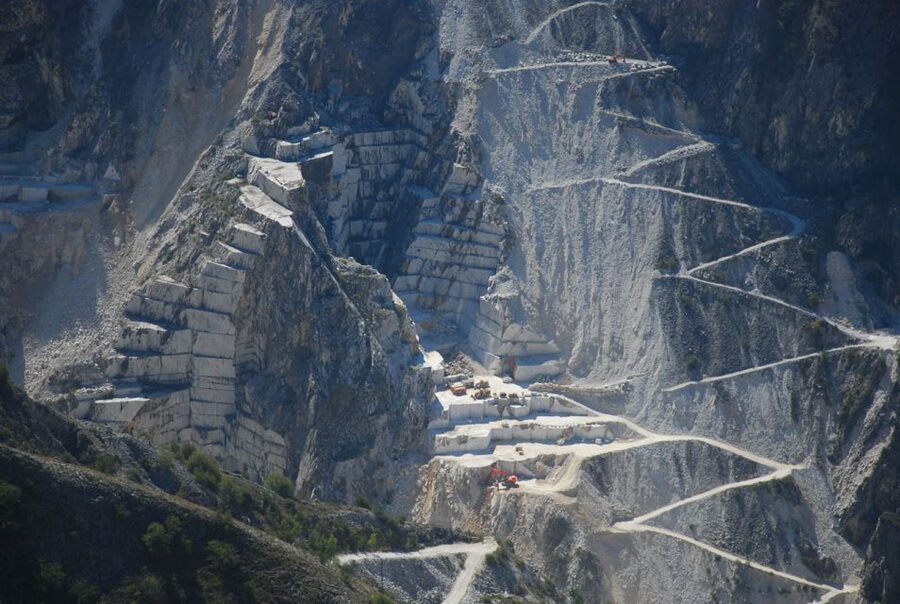
Carrara’s mountains are made of art. This three-hour jeep tour takes you high above Carrara to the marble quarries linked with Michelangelo, then adds a tasting of Lardo di Colonnata, the salty specialty once central to quarry workers’ meals. I like the mix of grand views and working-industry stories, and I like that the route includes both outdoor quarry sites and an interior marble cave. The main drawback is that the back seats can make it harder to hear the guide, especially when more than one language is being used.
The tour also earns points for its small size, with no more than eight participants. Guides such as Luca, Lucca, Beatrice, Giorgio, Lavinia, and Manuella have been praised for clear explanations, friendly service, and confident driving on the steep mountain roads. Bring comfortable clothes, and leave room in your bag for a piece of lardo or a marble souvenir.
In This Review
- Key points to know before you go
- Why Carrara marble is worth your time
- Meeting the jeep in Carrara
- Climbing to the marble quarries
- Going inside the mountain
- The Michelangelo connection, explained on site
- Lardo di Colonnata and the quarry workers’ table
- Guide quality and group size
- Is the three-hour format good value?
- Who should book this Carrara tour?
- Final verdict: book it for the mountain, stay for the lardo
- FAQ
- How long does the Carrara marble quarry tour last?
- Where is the meeting point?
- What time does the tour start?
- Which languages are available?
- How many people are in each group?
- How high do you travel into the quarries?
- Is the lardo tasting included in the tour?
- What should I bring?
Key points to know before you go
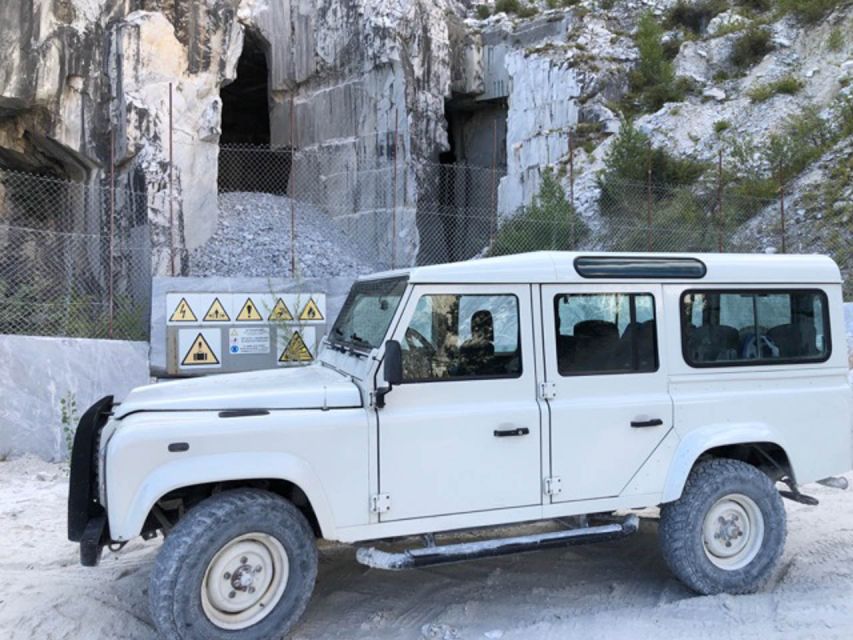
- Indoor and outdoor quarry stops: See the stark white marble walls from the mountain roads and enter a working-style quarry space.
- Michelangelo connection: Learn why Carrara marble became tied to some of the most famous sculpture in Western art.
- Jeep ride to 1,000 meters: The off-road vehicle makes it possible to reach high quarry areas with wide views over the Carrara region.
- Lardo di Colonnata tasting: Sample the local cured pork product and take some home if you like the flavor.
- Small groups of eight: A compact group gives you a better chance to ask questions and follow the guide’s explanations.
- Two daily start times: Meet at 9:30 a.m. or 2:30 p.m. in Piazza Vittorio Veneto, in front of the stadium.
Why Carrara marble is worth your time
If your Italian trip has been full of churches, painted ceilings, and polished city centers, Carrara offers a useful change of pace. Here, the subject is not just art on display. You see the mountain that supplied the raw material.
Carrara marble has shaped art and culture for centuries. The tour explains how Michelangelo selected stone from this area for his sculptures, giving the quarry visit a strong connection to the David and Pietà tradition without turning the experience into a museum lecture. You are looking at the source itself, not a finished statue behind glass.
The scale is what makes the visit memorable. At quarry height, the mountain is cut into enormous white faces, terraces, roads, and chambers. From a distance, the marble can look almost snowy. Up close, you see the marks of extraction and the practical work required to remove stone from a mountain.
I especially like that the tour explains change over time. Carrara’s marble was extracted in the Roman era, while modern quarrying uses different tools and methods. That comparison helps you understand the site as an active workplace rather than a frozen relic from Michelangelo’s time.
Other ways to spend a day in Italy:
- Vatican: Museums & Sistine Chapel Entrance Ticket
★ 4.5 · 144,003 reviews - Vatican Museums & Sistine Chapel Tour with Optional Basilica
★ 4.3 · 67,413 reviews - Colosseum, Roman Forum & Palatine Guided Tour
★ 4.7 · 63,148 reviews
Meeting the jeep in Carrara
The meeting point is Piazza Vittorio Veneto, in front of Carrara’s stadium. The published coordinates are 44.06465148925781, 10.074934005737305. You can choose a morning departure at 9:30 or an afternoon departure at 2:30, with the tour lasting about three hours.
The timing matters. A three-hour format gives you enough time to reach the quarries, hear the main explanations, see the interior, and stop for the tasting without using an entire day. It works well as a focused visit from Carrara, and some guides have also helped with pickups at the train station. A few have returned participants to a cruise port, but treat that as an extra favor rather than a guaranteed part of the tour.
The vehicle is a stylish off-road jeep, not a standard sightseeing bus. That makes the ride part of the attraction. The road climbs toward quarry areas as high as 1,000 meters above sea level, and the ascent gives you a sense of how remote and steep the working sites can be.
This is also where the driving skill matters. Luca, Lucca, and other guides have received strong praise for handling the climb while keeping the ride enjoyable. You should still expect a mountain-road experience, not a smooth city transfer. The vehicle may jolt, and seating position can affect how well you hear.
Climbing to the marble quarries
As the jeep climbs, the tour shifts from town to mountain. Your guide explains the quarry system, the marble itself, and the ways workers have reached and cut the stone over time.
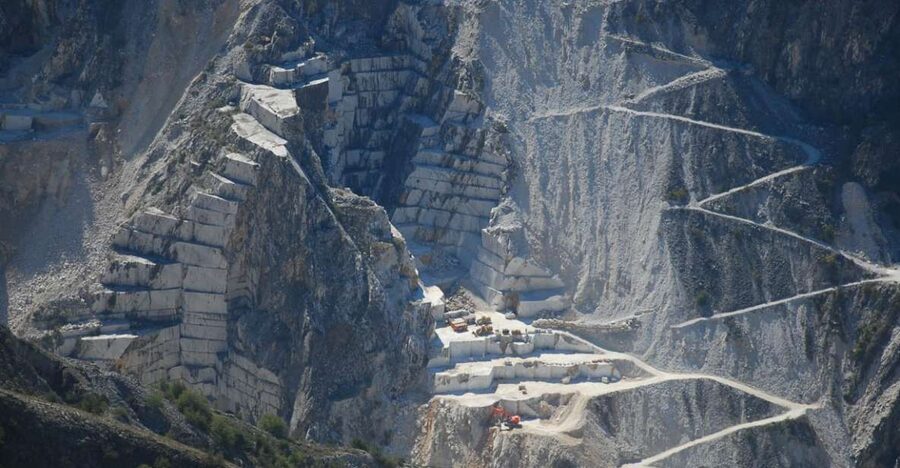
The views are one of the best parts of the trip. From the upper sites, you can look across the Carrara quarry zone and see how much of the mountain has been shaped by extraction. Several people have wished for more photo stops, so keep your camera ready. The schedule includes scenic pauses, but this is not a photography tour with unlimited time at every viewpoint.
The outdoor quarries show the largest scale. White cuts run across the mountain, and the exposed stone makes it clear why Carrara marble is called white gold. The phrase is a little grand, but the visual effect earns it. You are seeing a valuable material still being taken from the earth, not simply viewing old ruins.
A short stop may also show marble being cut with a diamond saw. This is a useful detail because it connects the polished slabs and carved objects sold in shops with the noisy, exact work of quarry production. You may also have time to browse souvenirs, including small marble pieces.
Going inside the mountain
The interior quarry is the strongest part of the route for many people. Outdoor views show the scale of the operation, but entering the mountain lets you see the stone from within.
The inside stop is not presented as a dark, narrow passage that leaves you trapped. One participant specifically found it not claustrophobic, and the experience is described as safe. Still, you are entering a working quarry environment, so comfortable clothes make sense. The supplied guidance asks you to wear comfortable clothing, and that is better advice than dressing for a formal museum.
Inside, the walls make the marble feel less like a product and more like the mountain’s basic structure. You can see how extraction creates huge spaces and how modern quarry work differs from ancient methods. When activity is operating, you might see cutting work fairly close up. During a holiday shutdown, the interior can still be visited, but active work may not be taking place.
That seasonal detail is worth keeping in mind. A visit around the New Year period may offer the interior and the explanations but not the same level of visible quarry activity. The quarry itself remains impressive, yet expectations should match the calendar.
Still Italy, but a slower afternoon:
- Milan: Cathedral and Duomo’s Terraces Entrance Ticket
★ 4.6 · 61,054 reviews - Venice: Doge’s Palace Reserved Entry Ticket
★ 4.6 · 42,716 reviews - Vatican Museums, Sistine Chapel & St Peter’s Basilica Guided Tour
★ 4.5 · 39,149 reviews - Rome: Colosseum, Palatine Hill and Roman Forum Guided Tour
★ 4.8 · 32,814 reviews
The Michelangelo connection, explained on site
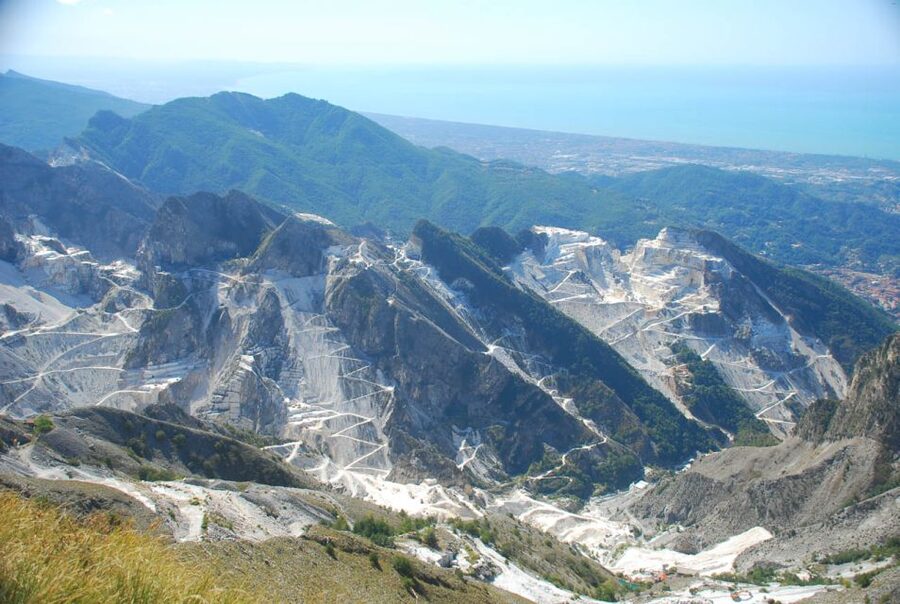
The Michelangelo story gives the tour a clear artistic hook, but the better part is learning how the quarry shaped more than one sculptor’s career.
Your guide explains how artists chose marble for its color, grain, and suitability for carving. The connection becomes more meaningful when you are standing near the source and seeing the sheer amount of material available. Michelangelo did not simply order a generic block from a catalog. He came to a region famous for stone with particular qualities.
For anyone who sculpts or has a serious interest in art, this visit can feel especially personal. One sculptor described it as a dream experience, and that makes sense. You get a physical link between the mountain and the finished works that are usually discussed only in galleries and textbooks.
You do not need to be an art specialist to enjoy this part. The guide’s job is to connect the quarry to Roman extraction, Michelangelo, modern production, and local life. Luca and Lucca are often singled out for giving detailed answers, while Beatrice has been praised for being warm, clear, and entertaining. The range of guide styles may vary, but the strongest part of the operation is the human explanation.
Lardo di Colonnata and the quarry workers’ table
After the mountain portion, the tour visits a lard factory for a tasting of Lardo di Colonnata. This is not a random food stop added to fill time. Lardo was an important source of energy for the quarry workers, whose labor was demanding and physical.
The tasting adds local context in a simple way. You have just seen the place where quarry workers spent their days, and now you sample something associated with their traditional diet. The lardo is cured pork fat, usually enjoyed in thin slices, with a rich, salty taste. It will not appeal to everyone, but it is a genuine Carrara-area specialty rather than a standard tourist snack.
You also get enough time to enjoy the tasting, order a drink, and browse for souvenirs. Several people have found the lardo worth taking home, especially because it is relatively inexpensive. If you prefer food-focused tours, this stop may feel brief. The main subject is still the marble, and the tasting works best as a local finish rather than a full culinary lesson.
The pairing of marble and lardo is what makes the experience feel rooted in Colonnata’s working culture. One product comes from the mountain, the other from the workers who made their living there. You leave with a better sense of the area than you would get from a quarry viewpoint alone.
Guide quality and group size
The tour limits each group to eight participants. That is a real advantage in a vehicle and at quarry stops, where a large crowd could make explanations harder to follow.
The best guides make the difference. Luca and Lucca receive repeated praise for clear teaching, humor, professionalism, and safe driving. Beatrice and Giorgio have also been praised for making the experience friendly and easy to follow. Lavinia is described as enthusiastic and able to answer questions, while Manuella has been praised for making the quarry visit informative and helpful with transport afterward.
Names and guide assignments can change, so do not book based on a promise that one specific person will lead your departure. The consistent pattern is more useful: the guides are expected to explain the mining story, answer questions, and manage the mountain drive.
There is one communication issue to consider. The tour is offered in English, Italian, and French. If the guide switches between languages for different participants, some explanations may be shortened or missed. One person found the translation helpful but still felt left out when extra information was given in Italian. If you are in the back seats, sound can also be less clear.
For the best experience, sit where you can hear the guide and ask for clarification if a translation moves too quickly. The small group makes that easier.
Is the three-hour format good value?
No price is provided here, so I cannot judge the exact cost against similar tours. I can judge what the format gives you: off-road transport, a guide, high quarry viewpoints, an interior quarry stop, historical context, and a lardo tasting in three hours.
That is strong value if you want a concentrated introduction to Carrara without arranging a car or trying to locate the quarry roads yourself. The jeep gets you to places that would be awkward to reach by ordinary transport, and the guide gives meaning to what you see.
The value is lower if you want a long, slow photography outing, an extended food tour, or a full technical tour of quarry machinery. The schedule is compact, and the lardo tasting is only one part of the visit. You are paying for access, transport, interpretation, and the unusual combination of indoor and outdoor quarry views.
The free cancellation policy allows cancellation up to 24 hours before the tour for a full refund. You can also reserve now and pay later, which helps if your Tuscany plans are still shifting. Those terms add practical value, especially when you are building a trip around train connections or a cruise schedule.
Who should book this Carrara tour?
I would recommend it to anyone curious about how art begins as raw material. It is a strong choice for Michelangelo fans, sculptors, photographers, and people who want a break from the usual Italian circuit of churches and piazzas.
It also suits families and small groups who prefer an active outing with a clear structure. The jeep ride adds fun, while the guide’s explanations keep the visit from becoming a simple scenic drive. People who dislike enclosed spaces may be reassured that the interior quarry has been found comfortable rather than claustrophobic, though you should still decide based on your own comfort.
You may want to skip it if you dislike uneven mountain drives, cured pork, or tours that combine several languages. The back seats can be hard for hearing, and you may wish there were more time for photos. Those are manageable limits, but they are worth knowing before you book.
Final verdict: book it for the mountain, stay for the lardo
I would book this tour if Carrara is within reach of your Tuscany plans. The best reason is not simply that the quarries are famous. It is that the jeep gets you into the working mountain, where you can see the marble from outside and inside, understand how extraction changed from Roman times to today, and connect the stone to Michelangelo’s art.
The lardo tasting adds a local human touch, while the small group and strong guides make the three-hour schedule feel useful rather than rushed. Pick a seat where you can hear, wear comfortable clothes, and allow a little time for souvenirs. For an unusual, practical look at the material behind Italy’s great sculpture, this is one of Carrara’s better outings.
FAQ
How long does the Carrara marble quarry tour last?
The tour lasts three hours.
Where is the meeting point?
Meet the guide at Piazza Vittorio Veneto in Carrara, in front of the stadium. The coordinates are 44.06465148925781, 10.074934005737305.
What time does the tour start?
There are two listed starting times: 9:30 a.m. and 2:30 p.m. Check availability for the exact departure offered on your date.
Which languages are available?
The tour is offered in English, Italian, and French.
How many people are in each group?
The tour is limited to eight participants.
How high do you travel into the quarries?
The jeep takes you to quarry areas as high as 1,000 meters above sea level.
Is the lardo tasting included in the tour?
Yes. The experience includes a visit to a lard factory and a tasting of Lardo di Colonnata.
What should I bring?
Wear comfortable clothes. That is especially useful for the off-road ride and the quarry visit.
Recently added around Italy
- Florence Uffizi Gallery monolingual Small Group Tour★ 4.0 · 621 reviews
- Florence Private Walking tour with Skip-the-line to Accademia★ 4.5 · 236 reviews
- Uffizi Gallery Entrance Ticket with Priority Access★ 3.5 · 1,029 reviews
- Florence Skip-the-Line Duomo Tour with Guide & Brunelleschi Dome★ 5.0 · 1,176 reviews
- Skip-the-Line Accademia Guided Visit: David Secrets and Beyond★ 4.0 · 525 reviews
- Priority Entrance : Florence Accademia Gallery Timely Tickets★ 4.0 · 603 reviews
- Skip the line : David Guided Experience★ 4.5 · 1,076 reviews
- Private Tour in Siena, San Gimignano and Chianti Day Trip from Florence★ 5.0 · 405 reviews
Food & Drink, compared.
Small-Group Wine Tasting Experience in the Tuscan Countryside
Read our review →
Tuscany & Montepulciano Day Trip with Lunch & Wine Tasting
Read our review →
Winner 2025 Rome Twilight Trastevere Food Tour by Eating Europe
Read our review →
SMALL-GROUP Wine Safaris: Tuscan Wine Tasting Tours from Florence
Read our review →
Winner 2025 Florence Sunset Food & Wine Tour by Eating Europe
Read our review →
San Gimignano, Siena, Monteriggioni, Chianti Day Trip with Lunch & Wine Tasting
Read our review →
Browse the lists this tour appears in