
Reviewed · WALKING TOURS
Florence: Renaissance and Medici Tales Guided Walking Tour
Florence tells its best stories on foot. This two-hour tour links the Medici family, Renaissance artists, and famous landmarks into one clear route. I like the strong storytelling, especially the way guides such as Chiara, Michele, Glenda, and Angela make political history feel human. I also like the practical advice on food, drinks, shopping, and sightseeing. The main thing to consider is that this is an outdoor tour, with much of the commentary given at the exteriors of major buildings.
The route is an excellent first look at central Florence, from San Lorenzo to the Uffizi Gallery. The pace is generally comfortable, and guides have been praised for keeping teenagers and adults interested alike. Just remember that the low advertised price reflects a free-tour model, so you should plan to leave a meaningful tip if the guide gives you a good experience.
In This Review
- Key points to know before you go
- Why this Florence walk works so well
- Meeting beside San Lorenzo Church
- San Lorenzo and Palazzo Medici Riccardi
- The Duomo, Giotto’s Bell Tower, and Brunelleschi’s Dome
- Dante’s house and the city’s literary side
- Palazzo Vecchio and Piazza della Signoria
- Ponte Vecchio and the final walk toward the Uffizi
- The guide makes the difference
- Price, tipping, and what you really receive
- Who should book this walk?
- Should you book the Florence Renaissance and Medici Tales walk?
- FAQ
- How long does the Florence walking tour last?
- Where does the tour meet?
- Where does the tour finish?
- Which languages are available?
- Is the tour wheelchair accessible?
- Does the tour include entry to the Duomo or Uffizi Gallery?
- Does the tour operate in bad weather?
- What should I bring?
- Can I cancel the booking?
Key points to know before you go
- The Medici story drives the tour: You follow the family’s influence through San Lorenzo, Palazzo Medici Riccardi, Palazzo Vecchio, and other central sights.
- The route covers Florence’s essential center: Stops include the Duomo, Giotto’s Bell Tower, Brunelleschi’s Dome, Dante’s house, Ponte Vecchio, and the Uffizi area.
- Storytelling is the main attraction: Guides including Chiara, Michele, Glenda, Fabio, Angela, and Ricardo have been praised for humor, warmth, and clear explanations.
- It is best as an opening-day tour: You get an overview of the city and useful ideas for places to eat, drink, shop, and visit afterward.
- Expect an outside-focused walk: The tour explains major buildings and symbols but does not list interior admissions or museum entry.
- Comfort matters: Wear good shoes, bring water and a camera, and dress for the weather because the walk operates rain or shine.
Why this Florence walk works so well
Florence can feel like a history book dropped into a small city center. Every few steps bring another church, palace, statue, or painted façade. Without context, it is easy to admire the scenery while missing the rivalries and ambitions that shaped it.
This tour gives you that context. Instead of treating the Duomo, Medici palaces, and civic buildings as separate photo stops, it connects them through the story of Florence’s rise as a center of banking, politics, art, and learning.
The Medici family provides the central thread. Their power was not limited to one palace. It touched churches, public buildings, artists, political decisions, and the city’s long-term cultural identity. You hear about several generations of the family and the way their choices changed Florence.
The Renaissance is also explained in practical terms. You learn about the people behind the art and architecture, including Brunelleschi, Michelangelo, and Dante. This makes the city easier to read after the tour. A dome is no longer just a remarkable roof, and a palace is no longer simply an old stone building.
More Walking Tours in Florence
- Florence: Guided Walking Tour
★ 4.5 · 3,334 reviews - Skip the line: Uffizi and Accademia Small Group Walking Tour
★ 4.5 · 3,135 reviews - Florence: Guided Walking Tour
★ 4.6 · 1,602 reviews
Meeting beside San Lorenzo Church
The starting point is Florence Free Tour-Tale, beside the stairs leading to the main entrance of the Basilica of San Lorenzo. Look for the green umbrella.
This is a useful place to begin because San Lorenzo brings several layers of Florence together. The basilica has a Romanesque and Renaissance appearance, and it is closely tied to the Medici family. Your guide uses the setting to introduce both the city’s religious life and the family’s role as patrons and power brokers.
The meeting point is central, but Florence’s streets can be confusing, especially near the market and church complex. Give yourself enough time to locate the green umbrella rather than arriving at the last minute.
The walk lasts about two hours, although the route information also gives an estimated duration of 2.25 hours. Allow a little flexibility. Guides may pause for questions, photographs, or a longer explanation at an important site.
San Lorenzo and Palazzo Medici Riccardi
San Lorenzo is more than a convenient starting place. Its connection to the Medici family helps explain how wealthy families used religious foundations to show influence and secure their place in Florentine society.
From there, the tour continues to Palazzo Medici Riccardi. This is one of the clearest places to understand the Medici approach to power. The family did not rule Florence like kings at first. Their influence grew through banking, alliances, patronage, and careful control of civic life.
At the palace, listen for the way architecture sends a political message. The building’s size, position, and formal character tell you that this was a residence for a family with money and authority. Your guide also discusses different generations of the Medici and how their impact changed over time.
This stop is especially useful if you know little about the family. The names can become confusing quickly, so a good guide’s story matters. Michele has been praised for making the Medici connections easy to remember, while Chiara and Glenda have also received strong marks for clear, engaging explanations.
The Duomo, Giotto’s Bell Tower, and Brunelleschi’s Dome
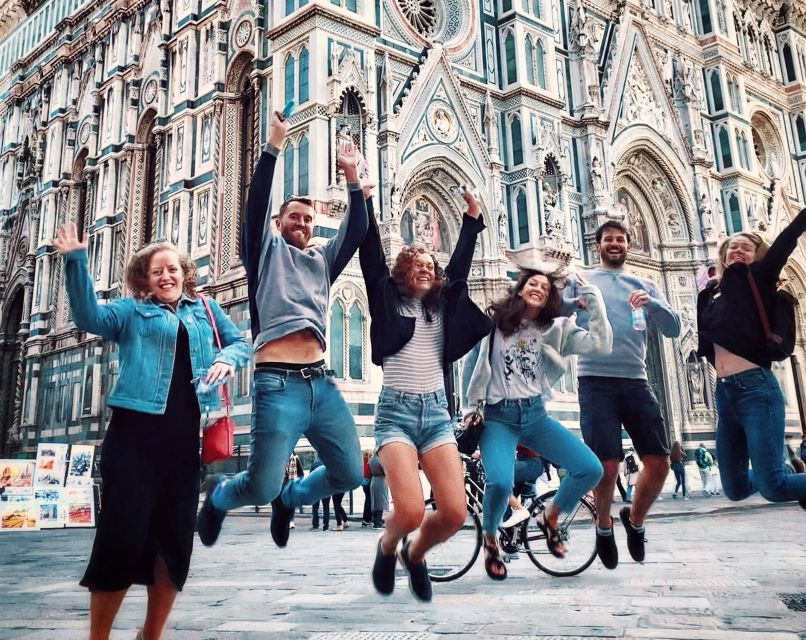
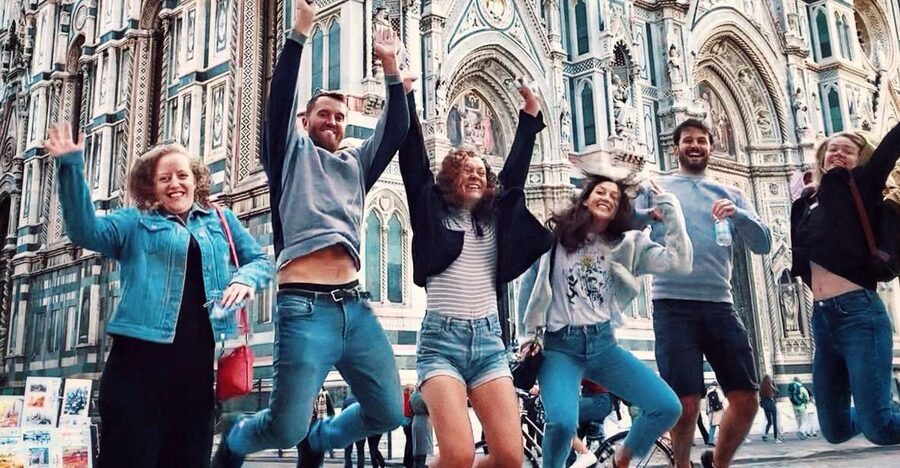
The Florence Duomo complex is likely the visual high point of the walk. You see the Cathedral of Santa Maria del Fiore, Giotto’s Bell Tower, and Brunelleschi’s Dome together, then learn what makes each part important.
The tour focuses on the outside of the complex. That means you can study the scale, decoration, and relationship between the buildings without spending time inside. It also means you should not expect cathedral entry, dome climbing, or a reserved visit to the monuments.
Brunelleschi’s Dome receives special attention. The guide explains the story behind this famous structure and why it mattered to Florence. The dome is not simply an attractive feature on the skyline. It represents a major moment in architecture and the confidence of a city determined to prove its importance.
You also learn to look for symbols. Florence’s public art and buildings use religious, political, and family imagery. Once your guide points out how to read those signs, you may notice details you would have walked past.
This part of the tour can be crowded and noisy. One guide, Chiara, used a microphone and earpieces, which helped the group follow the explanation in narrow, busy streets. The equipment may vary by guide and group, so stay close and keep an eye on the green umbrella or guide marker when moving between stops.
Still Florence, but a slower afternoon:
- Florence: Skip-The-Line Uffizi Gallery Timed Entry Ticket
★ 4.5 · 27,832 reviews - Tuscany Day Trip from Florence: Siena, San Gimignano, Pisa and Lunch at a Winery
★ 5.0 · 21,634 reviews - Florence: Timed Entrance Ticket to Michelangelo’s David
★ 4.6 · 16,983 reviews - Florence: Michelangelo’s David Skip-the-Line Entry Ticket
★ 4.5 · 12,764 reviews
Dante’s house and the city’s literary side
The route then shifts from grand architecture to the story of Dante. The House of Dante stop introduces one of Florence’s most important literary figures and adds another layer to the city’s identity.
Dante helps show that Florence’s influence was not limited to painting, sculpture, and buildings. The city also shaped Italian language and literature. His connection to Florence gives the route a more personal scale after the large civic and religious monuments.
The stop is described as a guided visit from the outside, not as an included museum entry. Think of it as a short historical pause within the wider walk. The value comes from hearing how Dante fits into Florence’s political and cultural story.
The tour’s treatment of Dante also helps break up the Medici material. You are not listening to one long account of a single dynasty. Instead, the walk moves through the people and forces that made Florence important over several centuries.
Palazzo Vecchio and Piazza della Signoria
Palazzo Vecchio and Piazza della Signoria bring you into the heart of Florence’s public power. This is where the city’s political history becomes easier to picture.
Palazzo Vecchio served as a major center of government, and the square around it is filled with reminders of civic authority, artistic competition, and public display. Your guide explains the meaning of the buildings and symbols you encounter rather than asking you to simply photograph them.
This is also a good setting for stories about the relationship between art and politics. Florence’s rulers and civic leaders used public spaces to express strength, loyalty, identity, and control. The square makes those ideas visible.
The route includes the Loggia dei Lanzi, an open-sided sculpture gallery beside Piazza della Signoria. It is a particularly useful stop because the sculptures are in a public setting and can be seen without a museum ticket. Your guide can provide the political and artistic background that a quick walk through the square would miss.
Expect people, street activity, and limited space here. The guide may need to position the group carefully so everyone can hear. The upside is that you are seeing the city’s main civic stage in the same area where many of Florence’s most famous public images are concentrated.
Ponte Vecchio and the final walk toward the Uffizi
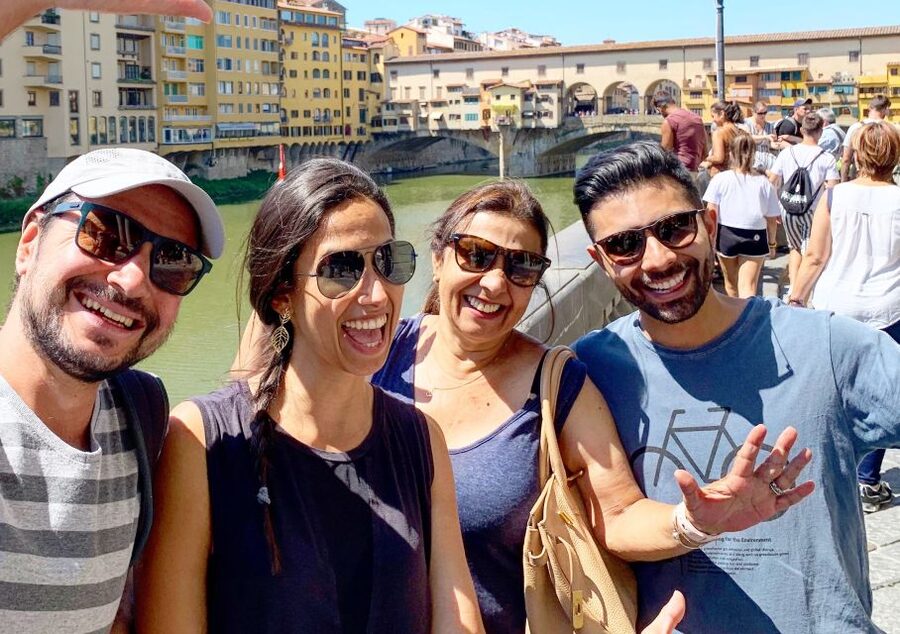
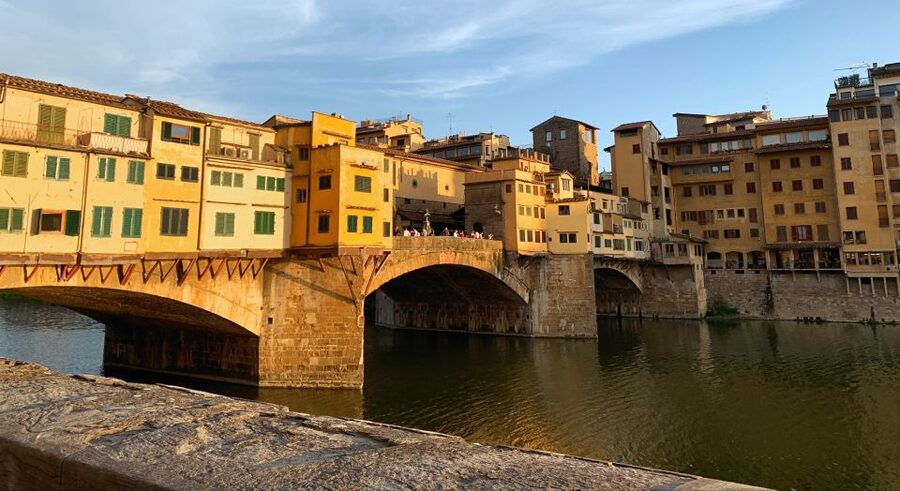
Ponte Vecchio gives the tour a change of scenery. After churches, palaces, and government buildings, you reach Florence’s famous bridge over the Arno.
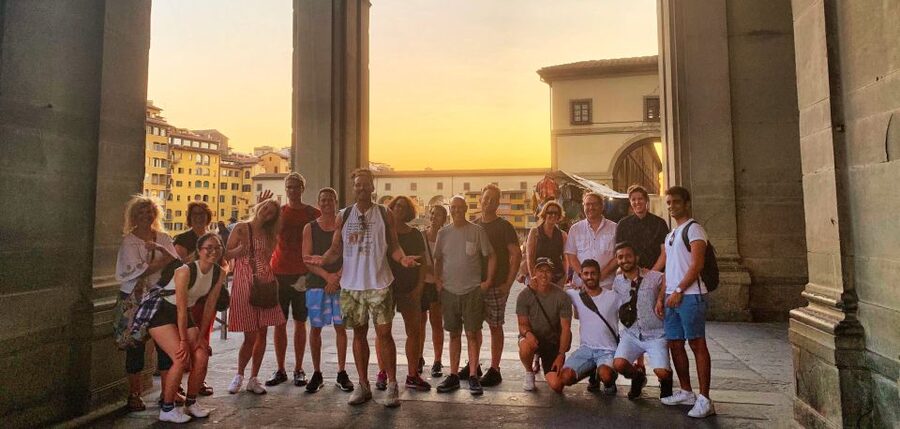
The guide uses the bridge and its surroundings to continue the story of Medici influence and the city’s changing character. You also get a better sense of how Florence’s central districts fit together on foot.
Ponte Vecchio is often crowded, and the bridge can be hard to cross as a group. Keep your belongings secure and listen for instructions. It is a place for a quick look and a few photographs rather than a quiet pause.
The tour ends outside the Uffizi Gallery. This is a practical finish because you can continue with the museum if you already have an admission plan, or use the location as a starting point for more exploring. Uffizi entry is not listed as part of the walking tour, so you should arrange that separately if you want to go inside.
The guide makes the difference
The route is strong, but the guide determines how much you take away. The high score of 4.8 from 1,549 ratings reflects consistent praise for the guiding team.
Chiara is repeatedly described as engaging, patient, and full of useful local advice. Michele receives praise for humor, passion, and memorable storytelling. Glenda is described as detailed and professional, while Angela is especially good at putting Medici history into a wider cultural setting.
Other guides named in the feedback include Fabio, Ricardo, Antonio, Autumn, Gabriella, Manuel, Gabriel, and Ricardo. The exact guide is not guaranteed, but the repeated pattern is encouraging: clear English, strong subject knowledge, warmth, and an ability to answer questions.
You can book in English or Spanish. The guide may adapt the talk for different ages and interests. One particularly useful sign is that teenagers were said to enjoy the tour, which suggests the stories are not delivered as a dry list of dates.
Still, expectations should be realistic. A two-hour walk cannot explain every artist, church, and political conflict in Florence. The tour gives you a well-made framework. You will need museum visits, church interiors, or a more specialized tour for detailed art history.
Price, tipping, and what you really receive
The advertised price is $2.36 per person, which makes this one of the cheapest ways to get a structured introduction to Florence. The activity follows a free-tour model, and one booking record refers to a payment of 4.90 euros before tipping.
That low entry price is useful for budget planning, but it can create confusion. A free tour is not the same as a tour with no expected payment. You should budget for a significant tip if the guide spends two hours giving a lively, well-prepared presentation. Bring cash, since one participant specifically advised doing so.
The value is strongest when you take the tour early in your stay. You get a city orientation, historical background, and practical suggestions for food, shopping, drinks, and other sights. Those recommendations can help you avoid wasting later time in Florence.
The tour does not include museum tickets, food, drinks, transport, or entry to the cathedral complex. Its value is in interpretation and orientation, not in bundled admissions.
Who should book this walk?
I would choose this tour for a first day in Florence, especially if you want the main landmarks explained before visiting museums on your own.
It suits:
- First-time visitors who want a clear map of central Florence
- Families with older children or teenagers
- History fans interested in the Medici family
- People who prefer stories and context over a rapid list of monuments
- Budget-minded visitors who are comfortable with a tip-based format
- Anyone wanting local suggestions for meals, drinks, shopping, and sightseeing
It may be less suitable if you need a fully private tour, want extensive time inside monuments, or dislike walking outdoors in poor weather. The tour operates rain or shine, so weather can affect your comfort.
Wear comfortable shoes. Bring water, a camera, and clothing suited to the forecast. Florence’s historic center has narrow streets and busy public squares, so staying with the group is important.
Should you book the Florence Renaissance and Medici Tales walk?
Yes, if you want an affordable and engaging introduction to Florence before tackling its museums. The best reason to book is not simply the number of sights. It is the way the tour connects them.
You will see San Lorenzo, Palazzo Medici Riccardi, the Duomo complex, Dante’s house, Palazzo Vecchio, Piazza della Signoria, the Loggia dei Lanzi, Ponte Vecchio, and the Uffizi area. More importantly, you will understand how family power, artistic ambition, religion, literature, and civic pride shaped the city.
Book it near the start of your visit, wear good shoes, and plan for a tip. If you want a detailed interior tour of the Duomo or Uffizi, add those separately. For a short outdoor introduction led by enthusiastic guides such as Chiara, Michele, Glenda, or Angela, this offers very good value.
FAQ
How long does the Florence walking tour last?
The activity is described as lasting two hours. The route information gives an estimated duration of 2.25 hours, so allow a little extra time.
Where does the tour meet?
Meet at Florence Free Tour-Tale, in front of the stairs leading to the main entrance of San Lorenzo Church. Look for the green umbrella.
Where does the tour finish?
The tour ends outside the Uffizi Gallery.
Which languages are available?
The live guide is available in English and Spanish.
Is the tour wheelchair accessible?
Yes, the activity is listed as wheelchair accessible.
Does the tour include entry to the Duomo or Uffizi Gallery?
The included services are the walking tour and guide. Entry to the Duomo complex and Uffizi Gallery is not listed as included.
Does the tour operate in bad weather?
Yes. The tour takes place rain or shine, so bring weather-appropriate clothing.
What should I bring?
Bring comfortable shoes, water, a camera, and clothing suited to the weather.
Can I cancel the booking?
You can cancel up to 24 hours in advance for a full refund. The reserve-now, pay-later option lets you book without paying immediately.
Recently added around Florence
- Florence Uffizi Gallery monolingual Small Group Tour★ 4.0 · 621 reviews
- Florence Private Walking tour with Skip-the-line to Accademia★ 4.5 · 236 reviews
- Uffizi Gallery Entrance Ticket with Priority Access★ 3.5 · 1,029 reviews
- Florence Skip-the-Line Duomo Tour with Guide & Brunelleschi Dome★ 5.0 · 1,176 reviews
- Skip-the-Line Accademia Guided Visit: David Secrets and Beyond★ 4.0 · 525 reviews
- Priority Entrance : Florence Accademia Gallery Timely Tickets★ 4.0 · 603 reviews
- Skip the line : David Guided Experience★ 4.5 · 1,076 reviews
- Private Tour in Siena, San Gimignano and Chianti Day Trip from Florence★ 5.0 · 405 reviews
Walking Tours, compared.
Guided Walking Tour & Last Supper Visit with Ticket
Read our review →

Rialto Bridge & Offbeat Unusual Venice Walking Tour
Read our review →
Private 3 hrs Venice Tour: St Mark’s, Walking tour & Boat tour
Read our review →
Skip the line: Uffizi and Accademia Small Group Walking Tour
Read our review →Browse the lists this tour appears in