
Reviewed · WALKING TOURS
Florence: Private Walking Tour of Florence’s Hidden Gems
Florence rewards slow looking. This private two-hour walk links the city’s great squares, palaces, bridges, and churches while a guide explains how art, money, politics, and family power shaped them. I especially like the private format, which gives you room to ask questions, and the broad route from Santa Croce to the Duomo and across the Arno. The main catch is that the monuments are viewed from outside, so you will need separate tickets for interiors.
I also like that this works as a first-day orientation. Guides such as Giacomo, Claudia, Manuela, Marco, and Christina have been praised for making Florence’s complicated past easy to follow, often adding practical tips about food, leather, and places to revisit. The route covers a lot in two hours, though the pace can feel slow at times, and street noise may make an audio device harder to hear.
In This Review
- Key points to know before you book
- Why this Florence walk works best early in your stay
- Starting near Florence’s old civic heart
- Santa Croce and the people behind the monuments
- Piazza della Signoria, Palazzo Vecchio, and Neptune
- Ponte Vecchio and the crossing into the Oltrarno
- Pitti Palace and Piazza Pitti
- Ponte Santa Trinita and Via Tornabuoni
- Strozzi Palace and the turn toward Repubblica Square
- Finishing beneath the Florence Duomo
- What the guide can add to the experience
- Pace, walking effort, and practical limits
- Value for a private Florence orientation
- Who should book this walk?
- Should you book it?
- FAQ
- How long does the Florence walking tour last?
- Is the tour private?
- Which languages are available?
- Does the tour include entry to the monuments?
- Where does the tour meet?
- What should I wear for a cathedral visit?
Key points to know before you book
- Private two-hour route: You get a guide focused on your group rather than a large crowd.
- Florence from both sides of the Arno: The walk crosses Ponte Vecchio and reaches Pitti Palace before returning through the central district.
- Exterior sightseeing only: You see the major buildings and hear their stories, but entry to the Uffizi, Santa Croce, Pitti Palace, and other sites is not included.
- Strong first-day choice: The route helps you understand where Florence’s main museums, churches, palaces, and squares fit together.
- English and Italian guides: The tour is offered in both languages, with past guide feedback especially praising clear English and lively storytelling.
- Comfortable shoes matter: This is a city walk through historic streets, not a seated sightseeing outing.
Why this Florence walk works best early in your stay
Florence’s historic center is compact, but it can feel like a maze on your first morning. One square opens into another, a palace looks like a museum, and a church may contain centuries of political drama behind a modest facade.
This tour gives you a useful map in your head. You move through the main center, cross the Arno, see the Oltrarno side, and return through some of the city’s most fashionable streets. I like this approach because it connects sights that you might otherwise visit as isolated stops.
The guide’s role matters more here than on a simple photo walk. You are not just pointed toward the Duomo or told that the Medici were important. The best guides explain how Florence’s artists, bankers, rulers, churches, and public spaces fit together.
The private setup is particularly useful for families and curious first-time visitors. You can ask why a building matters, which museum deserves your limited time, or where to return for a closer look. One guide, Claudia, was praised for keeping two children aged 10 and 7 involved, while other guides adjusted well to small groups and answered many questions.
More Walking Tours in Florence
- Florence: Guided Walking Tour
★ 4.5 · 3,334 reviews - Skip the line: Uffizi and Accademia Small Group Walking Tour
★ 4.5 · 3,135 reviews - Florence: Guided Walking Tour
★ 4.6 · 1,602 reviews
Starting near Florence’s old civic heart
The stated meeting point is Door 8 at Accord Tours, with coordinates provided for the location. The tour information also refers to Piazza San Firenze and another possible starting point near Piazza di Madonna degli Aldobrandini, so check the exact meeting instructions attached to your booking before setting out.
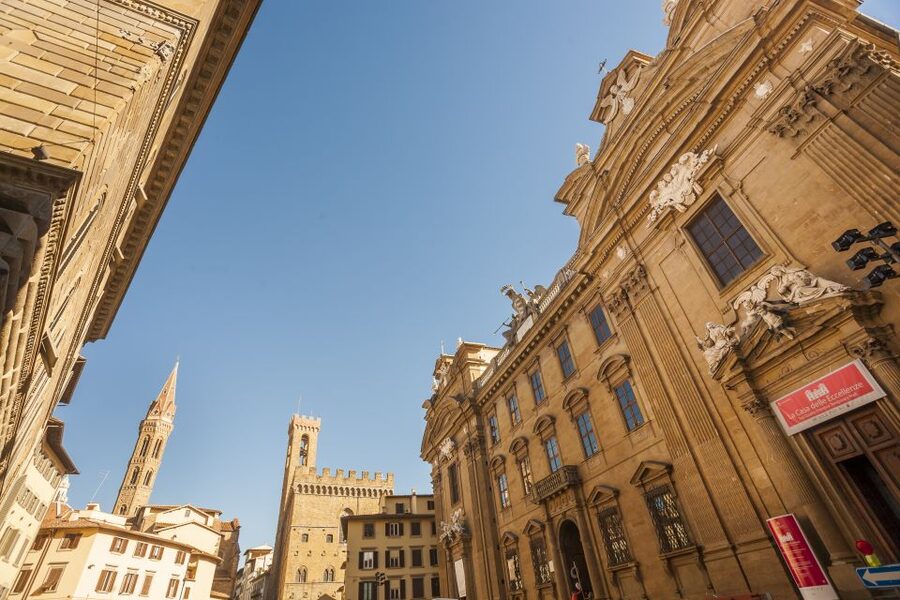
Piazza San Firenze is a sensible place to begin because it places you near the Bargello and the former Florentine tribunal. The Bargello is one of the city’s key sculpture museums, housed in a severe medieval building. Even from outside, you get an early reminder that Florence was not only a city of painters and domes. It was also a city of government, law, guilds, and powerful families.
The alternate starting area near the Medici Chapel puts you close to another major Medici landmark. Since the route can change with the meeting point, the order of the stops may not match the sequence described here. That is not a problem, but it is worth knowing if you have built your day around a particular finish.
Santa Croce and the people behind the monuments
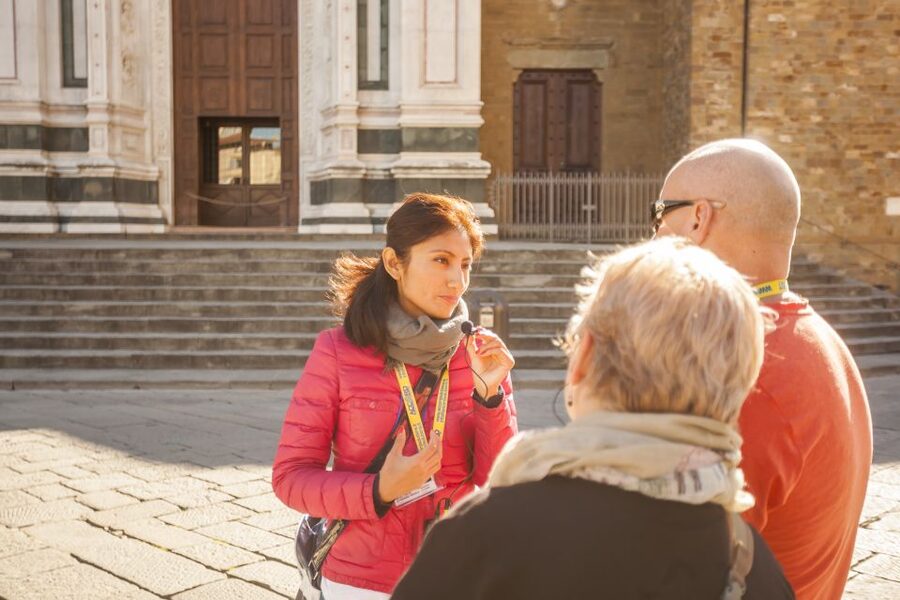
The walk heads toward the Church of Santa Croce, one of Florence’s most important religious and artistic sites. It is also associated with the tombs of major Italian figures, making it a useful stop for understanding how churches served as places of worship, art, memory, and civic pride.
Your guide discusses the exterior and the people connected with the church. You do not enter as part of this experience, so consider the stop an introduction rather than a substitute for an interior visit.
I find this kind of explanation valuable because Santa Croce can be easy to treat as another pretty facade. A good guide gives you a reason to return and tells you what to look for if you later buy admission. The tour’s strongest guide comments often praise this ability to connect architecture with artists, rulers, and the changing fortunes of Florence.
Piazza della Signoria, Palazzo Vecchio, and Neptune
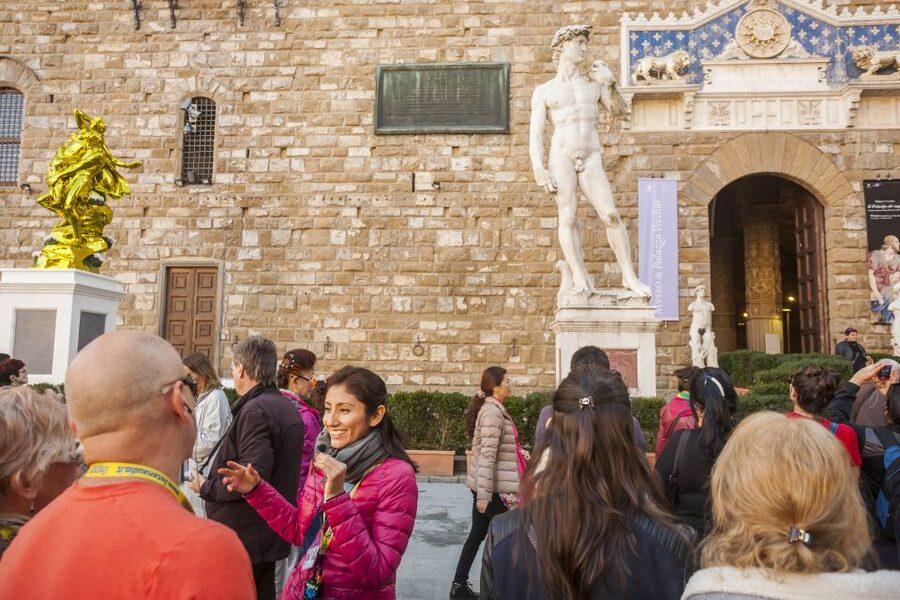
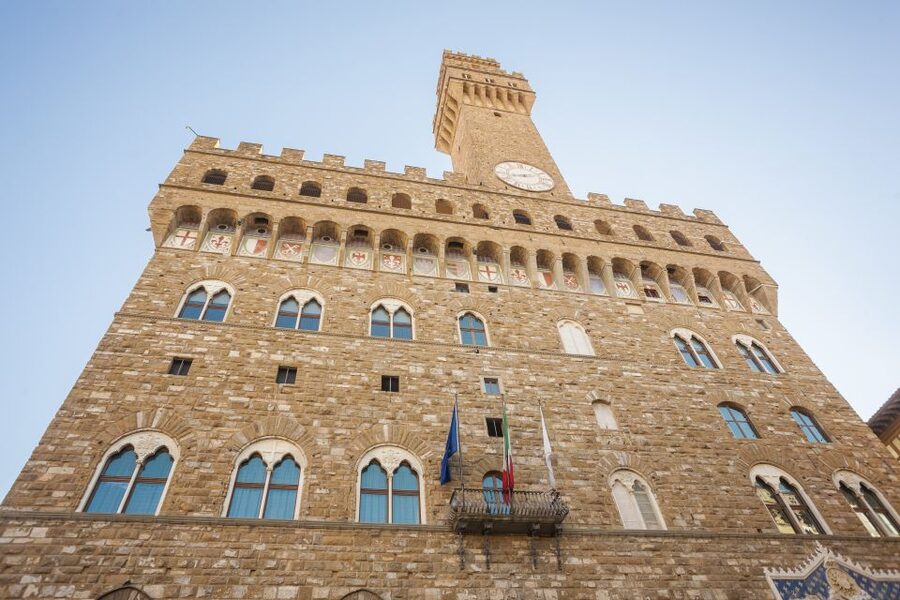
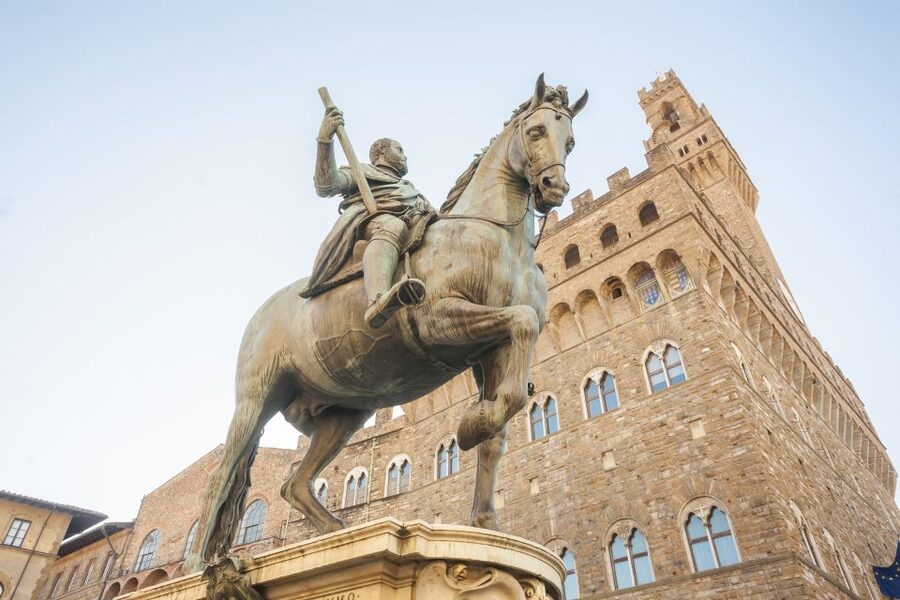
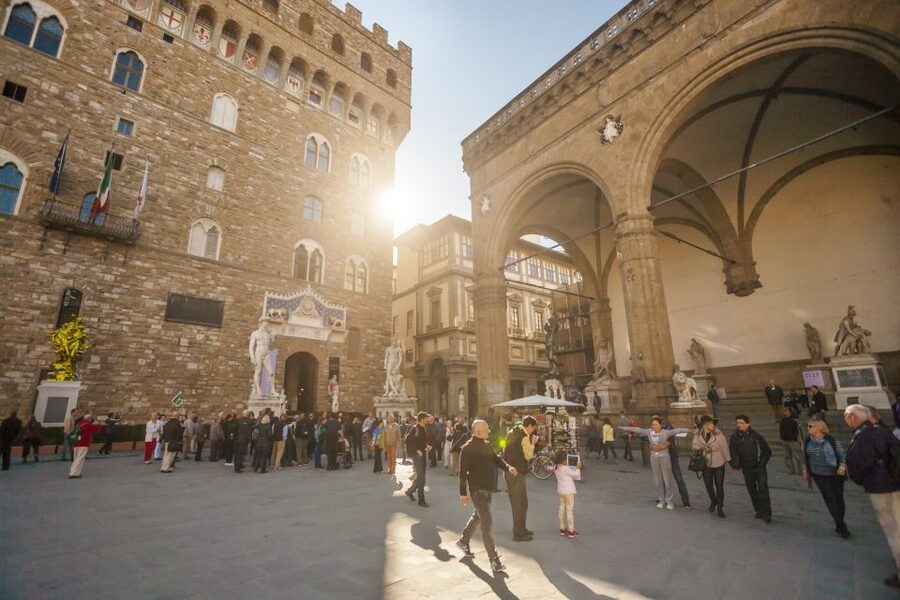
From Santa Croce, the route continues to Piazza della Signoria. This is one of Florence’s great outdoor rooms, framed by Palazzo Vecchio, the Uffizi complex, statues, and the Loggia dei Lanzi.
Palazzo Vecchio was the center of Florentine political power. Its fortress-like exterior makes more sense once you understand that the city was shaped by rival factions, wealthy families, and a civic government that needed to project authority. Your guide explains the building from outside, then points out how the square worked as a public stage.
The Neptune Fountain provides a short photo stop. It is easy to snap a picture and move on, but the guide can give the sculpture a place in Florence’s public art story. The fountain is not just decoration. It reflects the city’s habit of using grand images to express power and ambition.
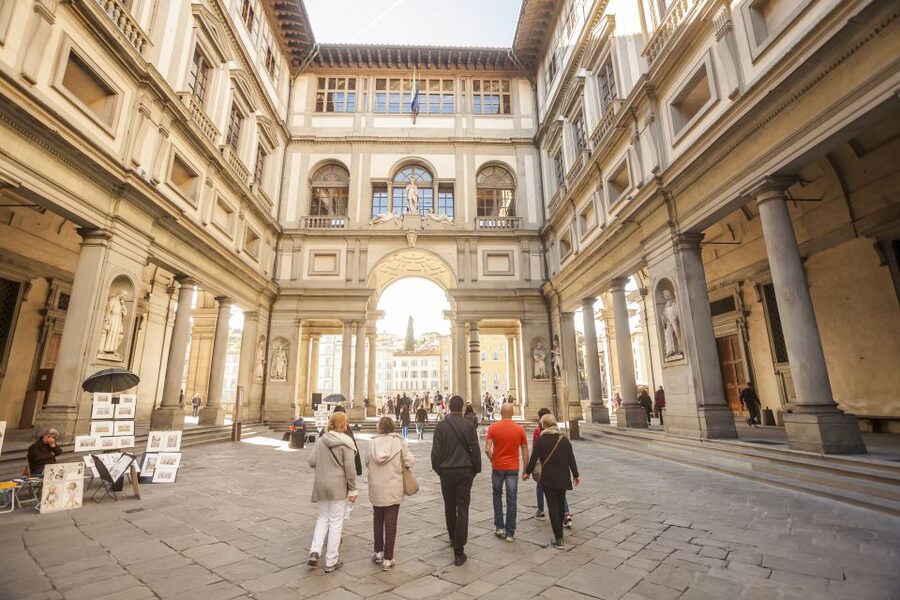
The nearby Uffizi is also viewed externally. That distinction is important. If you want Botticelli, Leonardo, Michelangelo, or Caravaggio inside the gallery, you need a separate Uffizi ticket or tour. This walk helps you understand the building and its setting, but it does not provide gallery entry.
Still Florence, but a slower afternoon:
- Florence: Skip-The-Line Uffizi Gallery Timed Entry Ticket
★ 4.5 · 27,832 reviews - Tuscany Day Trip from Florence: Siena, San Gimignano, Pisa and Lunch at a Winery
★ 5.0 · 21,634 reviews - Florence: Timed Entrance Ticket to Michelangelo’s David
★ 4.6 · 16,983 reviews - Florence: Michelangelo’s David Skip-the-Line Entry Ticket
★ 4.5 · 12,764 reviews
Ponte Vecchio and the crossing into the Oltrarno
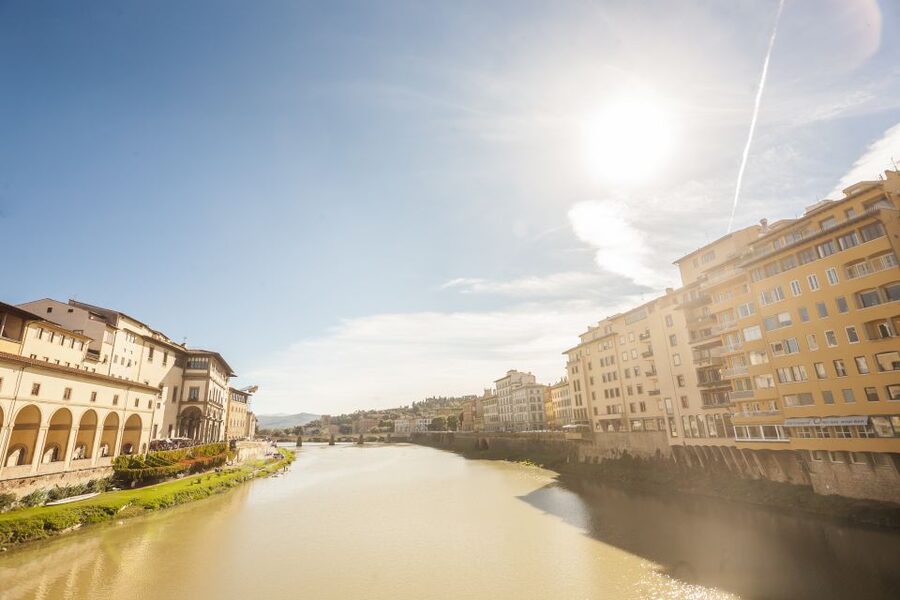
Ponte Vecchio is the route’s most memorable change of scene. The medieval stone bridge crosses the Arno and is lined with gold jewelry shops, so you get both a historic crossing and a busy commercial street.
The bridge is narrow and can be crowded. Stay close to your guide and expect to pause rather than stride straight across. The view along the river is one of the reasons this crossing works well on foot, but the shopfronts and passing crowds can compete for your attention.
This is also where the tour shows you that Florence is more than the area around the Duomo. Crossing into the Oltrarno gives the walk a wider sweep. You see how the river divides the city without truly separating its history.
Pitti Palace and Piazza Pitti
On the far side of the river, the group reaches Pitti Palace, the former Medici residence. Its huge stone facade gives you a different picture of Medici power from the more civic Palazzo Vecchio.
Pitti Palace is viewed from outside, with the guide explaining its role and connection to Florence’s ruling family. The scale is the point. This is not a small townhouse or private retreat. It communicates wealth and authority before you know any details.
Piazza Pitti offers a little more room to take in the palace facade. The stop is brief, so do not expect a full palace visit or a detailed account of every museum inside. If the Medici story catches your interest, ask your guide which palace or museum deserves more of your time later.
The route then turns back toward the river along Via Maggio. The street is part of the historic Oltrarno district and helps connect the grand palace with the ordinary rhythm of city streets. The tour does not promise an extended artisan workshop visit, but this side of the river adds useful variety to a central Florence overview.
Ponte Santa Trinita and Via Tornabuoni
The return crossing uses Ponte Santa Trinita, giving you a different view of the Arno and Ponte Vecchio. This is a smart route choice. You cross one famous bridge and return by another, rather than retracing every step.
From there, you reach Via Tornabuoni, Florence’s high-fashion street. Designer boutiques line the route, creating a sharp contrast with the medieval bridge and Renaissance palaces you have just seen.
That contrast is part of the city’s appeal. Florence is not a preserved museum set apart from modern life. Historic buildings house current businesses, and ancient streets still serve daily needs. The guide can help you read the street as more than a shopping stop, especially when explaining how old palaces have been adapted for modern use.
The walk is not a fashion shopping tour. You pass the boutiques and learn about the street, but purchases are up to you. One guide was also praised for giving practical advice about quality leather goods, which may be useful if shopping is part of your Florence plans.
Strozzi Palace and the turn toward Repubblica Square
Strozzi Palace is one of the clearest examples of Renaissance architecture along the route. Its balanced facade and heavy stonework show how elite Florentine families used buildings to express status.
This is a good place to ask your guide how to spot Renaissance design. You may hear about proportion, symmetry, and the careful control of the facade. In a city full of famous artworks, learning to read the buildings themselves adds another layer to your sightseeing.
The route continues toward Piazza della Repubblica. The square feels more open and formal than the tight medieval lanes nearby. It is a useful place to pause and understand how Florence’s center changed over time.
The square is also a practical orientation point. From here, you are close to the Duomo, major shopping streets, cafes, and several museums. The tour gives you a sense of how these areas connect, which can save time during the rest of your stay.
Finishing beneath the Florence Duomo
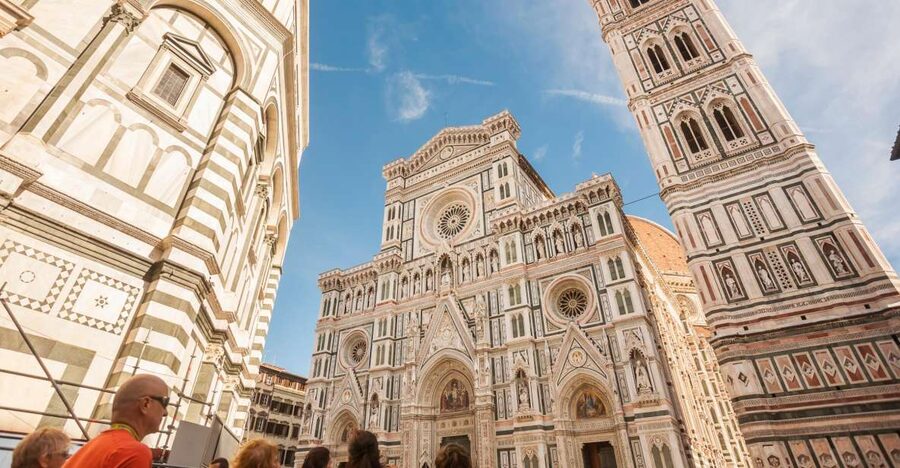
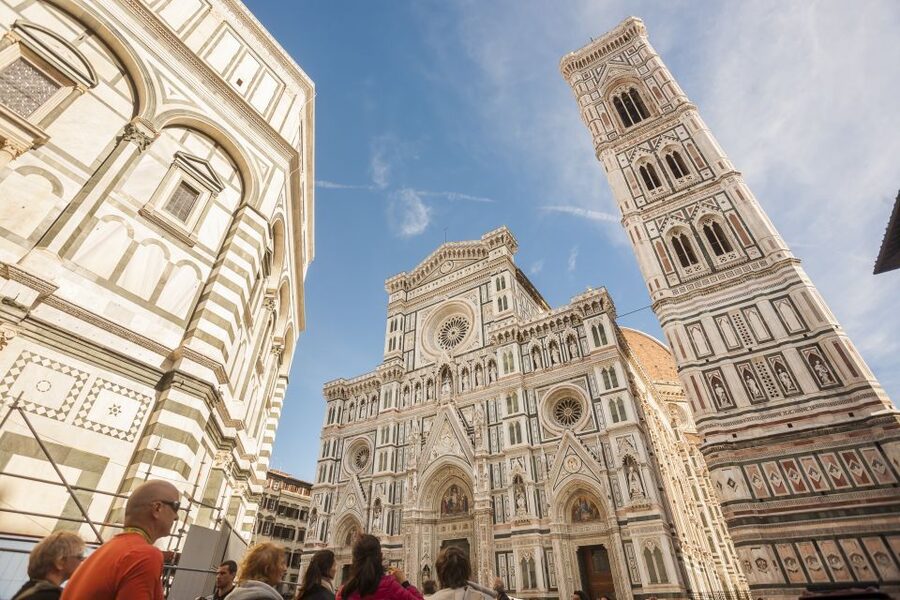
The final major stop is the Florence Cathedral complex. The cathedral facade and dome are the visual climax of the walk, even though the tour does not include entry.
Your guide discusses the complex from outside, including the cathedral’s place in Florence’s artistic and civic identity. The immense dome is hard to understand from photographs alone, and seeing it at street level gives you a proper sense of scale.
If you want to enter the cathedral, climb Giotto’s Bell Tower, visit the Baptistery, or see the cathedral museum, you need separate arrangements. The clothing rule is clear: shorts and sleeveless tops are not permitted inside the cathedral. Even if you only plan to view it from the square during this walk, dress with a later visit in mind.
The ending is well chosen. You finish near one of Florence’s easiest landmarks for further exploring. You can stop for lunch, return for a museum visit, or use the guide’s recommendations to shape the rest of your day.
What the guide can add to the experience
The guide is the main reason to choose this tour over walking the route alone. Florence’s buildings are impressive without commentary, but the city becomes easier to understand when someone explains the Medici family, the artists they supported, and the political meaning of public spaces.
Several named guides received especially warm praise for this personal style. Giacomo was described as engaging and clear when explaining Florence’s complicated past. Claudia was appreciated for speaking excellent English and including children in the conversation. Manuela was praised for her energy, useful facts, and answers to questions about both history and present-day Florence.
Other guides, including Marco, Christina, Ilaria, Natalia, Silvia, Isabella, and Rosanna, were praised for giving first-time visitors a practical overview. This suggests that the operator has provided a range of capable guides over time, but your exact experience will depend on who leads your departure.
A small gelato stop or recommendation may be included at the end, depending on the guide and arrangement. Some guide experiences ended with gelato, cappuccino, or pastries, and the gelato was praised as a good local choice rather than a tourist trap. One more recent experience involved vouchers that were no longer accepted, so treat any included food perk as a bonus, not a reason to book.
Pace, walking effort, and practical limits
The walk lasts two hours and uses Florence’s historic streets, bridges, and squares. Comfortable shoes are essential. You should expect steady movement, standing while the guide speaks, and some crowded sections around Ponte Vecchio, Piazza della Signoria, and the Duomo.
The information presents a mixed picture on accessibility. The activity is marked wheelchair accessible, yet it is also listed as unsuitable for people with mobility impairments. Historic Florence can involve uneven paving, tight streets, crowds, and bridge approaches, so ask the provider for a current route assessment if anyone in your group has mobility concerns.
The route covers a lot for its length. You see Santa Croce, the Bargello, the Uffizi exterior, Piazza della Signoria, Palazzo Vecchio, Neptune’s Fountain, Ponte Vecchio, Pitti Palace, Via Tornabuoni, Strozzi Palace, Repubblica Square, and the Duomo area.
That breadth is both its strength and its limit. You get a strong city introduction, but no single site receives the attention of a dedicated museum tour. If you prefer long stops and detailed art analysis, choose a focused Uffizi, Duomo, or David experience instead.
One four-star experience found the pace too slow at times and had trouble hearing the guide because the audio equipment picked up street noise. This is a fair caution. A private tour should let you ask for a pause or a clearer position when needed, but busy streets can still affect the sound.
Value for a private Florence orientation
The price is not provided here, so I cannot judge the exact cost against the market. The value comes from the private format, the central route, and the chance to ask for advice that applies to your own plans.
For a couple or small family, a private guide can be worthwhile if you want a flexible conversation rather than a fixed script. It is especially useful on your first day, when you are still learning the city’s layout and deciding which interiors deserve your money and time.
The value is weaker if you expect admission to the major monuments. The Uffizi, cathedral, Santa Croce, Bargello, and Pitti Palace are part of the sightseeing route, but their interiors are not included. Budget separately for the sites you want to enter.
The tour also offers free cancellation up to 24 hours before departure and a reserve-now, pay-later option. Those policies help if your Florence schedule is still shifting, but the real decision is whether you want a broad guided walk or a single-site visit with more time indoors.
Who should book this walk?
I would choose this tour for a first visit, a short stay, or a family that wants history explained without spending half a day inside one museum. It also suits you if you like to ask questions and want restaurant, shopping, and follow-up sightseeing advice from a local guide.
It is less suitable if your main goal is art viewing inside the museums. You will see the Uffizi and major churches from outside, so pair this walk with separate entry tickets if those interiors matter to you.
I would also think twice if anyone in your group struggles with uneven streets or long periods on foot. Ask about the exact route before booking, especially because the starting point can change.
Should you book it?
Book this private Florence walk if you want to get your bearings fast while learning why the city’s famous buildings matter. The combination of Santa Croce, the political center, Ponte Vecchio, Pitti Palace, Via Tornabuoni, and the Duomo gives you a well-shaped introduction rather than a single landmark lesson.
Do not book it expecting museum admission or a slow, exhaustive art tour. For most first-time visitors, I see it as a useful opening chapter. Take the walk early, note the places you want to revisit, and use the remaining days for the interiors that captured your interest.
FAQ
How long does the Florence walking tour last?
The tour lasts two hours.
Is the tour private?
Yes. It is offered for a private group.
Which languages are available?
The live guide is available in English and Italian.
Does the tour include entry to the monuments?
No. The monuments are visited from the outside only.
Where does the tour meet?
The meeting point is listed as Door 8 at Accord Tours, with coordinates of 43.774654388427734, 11.252745628356934. The exact starting point may vary, so check your booking details.
What should I wear for a cathedral visit?
If you plan to enter the cathedral, do not wear shorts or a sleeveless top. Comfortable shoes are recommended for the walking route.
Recently added around Florence
- Florence Private Walking tour with Skip-the-line to Accademia★ 4.5 · 236 reviews
- Florence Uffizi Gallery monolingual Small Group Tour★ 4.0 · 621 reviews
- Uffizi Gallery Entrance Ticket with Priority Access★ 3.5 · 1,029 reviews
- Florence Skip-the-Line Duomo Tour with Guide & Brunelleschi Dome★ 5.0 · 1,176 reviews
- Skip-the-Line Accademia Guided Visit: David Secrets and Beyond★ 4.0 · 525 reviews
- Priority Entrance : Florence Accademia Gallery Timely Tickets★ 4.0 · 603 reviews
- Skip the line : David Guided Experience★ 4.5 · 1,076 reviews
- Private Tour in Siena, San Gimignano and Chianti Day Trip from Florence★ 5.0 · 405 reviews
Walking Tours, compared.
Guided Walking Tour & Last Supper Visit with Ticket
Read our review →
Rialto Bridge & Offbeat Unusual Venice Walking Tour
Read our review →
Private 3 hrs Venice Tour: St Mark’s, Walking tour & Boat tour
Read our review →
Skip the line: Uffizi and Accademia Small Group Walking Tour
Read our review →Browse the lists this tour appears in