
Reviewed · UFFIZI & ACCADEMIA GALLERY TOURS
Florence in a Day: Michelangelo’s David, Uffizi and Guided City Walking Tour
Florence rewards a well-planned day. This tour brings together Michelangelo’s David, the Uffizi Gallery, and a guided walk past Florence’s best-known sights, making it a useful choice when you have limited time. I especially like the timed museum entry, which cuts through two famously slow ticket lines, and the way a strong guide can connect art, politics, and daily life across the city.
I also like the tour’s clear route from the Accademia to the Duomo, Piazza della Signoria, Ponte Vecchio, and the Uffizi. The main drawback is its pace and focus: five hours is ambitious, and the experience spends much more time on art and art history than on entering the Duomo or exploring Florence’s markets.
In This Review
- Key Points to Know Before You Book
- What This Florence Tour Is Really Designed To Do
- Meeting at the Duomo and Starting at the Accademia
- The Duomo and Baptistery: Great Stories, Outside Views
- Piazza della Signoria and the Original Home of David
- Ponte Vecchio and the Porcellino
- Entering the Uffizi With a Clear Plan
- Breaks, Lunch, and the Real Meaning of Five Hours
- Guide Quality and Group Size
- Who Will Get the Most From This Tour
- Is Florence in a Day Worth $134.23?
- My Booking Advice
- FAQ
- How long does the Florence in a Day tour last?
- What museums are included?
- Is admission to the Duomo included?
- Does the tour enter the Baptistery?
- Is lunch included?
- Where does the tour begin?
- Where does the tour end?
- How many people can join the group?
- What documents are required for the Uffizi?
Key Points to Know Before You Book
- David comes first: You spend about 75 minutes at the Accademia, with timed entry to Michelangelo’s most famous sculpture.
- The Uffizi gets 90 minutes: Your guide focuses on selected Renaissance paintings rather than attempting every room.
- The city walk stays outside: You see the Duomo, Baptistery, Piazza della Signoria, Ponte Vecchio, and Mercato del Porcellino without admission to those sites.
- Five hours means steady walking: Sturdy shoes matter, and the day can feel tiring near the end.
- The guide makes the difference: Guides such as Stefano, Elena, Greta, Daniela, Angelo, Jade, Stephanie, and Chiara have earned especially warm praise for clear explanations and good pacing.
- The group can reach 15 people: That is manageable, but it may feel less intimate than a truly small-group outing.
What This Florence Tour Is Really Designed To Do
The title suggests a full day, but the scheduled experience lasts about five hours. That makes it a concentrated half-day tour, not an all-day program with lunch, inside visits to every major monument, and free time at each stop.
The design is easy to understand. You begin with Michelangelo at the Accademia, walk through the historic center with a guide, and finish with selected masterpieces at the Uffizi. This gives you a useful framework for Florence: sculpture first, then architecture and public spaces, then painting.
I see the tour as an orientation with serious museum content. You will not simply be shown the famous buildings and sent on your way. A good guide explains why Florence became the center of the Renaissance, how powerful families used art, and how artists responded to one another.
That focus works best if you want context. If you mainly want time to wander, photograph buildings, shop, or sit in a piazza, the schedule may feel too directed.
The advertised price is $134.23 per person. That is not a bargain in the simple sense, but it includes timed entry to both the Accademia and Uffizi, an expert local guide, and headsets when needed. The Uffizi admission alone is listed as €29, and the time saved at both museums can be substantial even outside the busiest summer weeks.
Still, price matters. You are paying for access and interpretation, not lunch, transportation, or a private car. The private option costs more, but it may suit people who want to ask many questions or shape the museum visits around a particular interest.
More Walking Tours in Florence
- Florence: Guided Walking Tour
★ 4.5 · 3,334 reviews - Skip the line: Uffizi and Accademia Small Group Walking Tour
★ 4.5 · 3,135 reviews - Florence: Guided Walking Tour
★ 4.6 · 1,602 reviews
Meeting at the Duomo and Starting at the Accademia
The meeting point is Piazza di San Giovanni, 6, near the Duomo. Check the exact departure time carefully because the 8:30 a.m., 9:45 a.m., and 1:30 p.m. departures do not follow identical break schedules.
The Accademia is the first major stop, and that is a smart choice. Beginning with David gives the tour a strong center of gravity before the streets and museum rooms compete for your attention.
You receive timed entry, so you avoid the standard ticket line. You still pass through normal security and museum procedures, but the reserved admission is the part that saves time. At the Accademia, you spend about one hour and fifteen minutes.
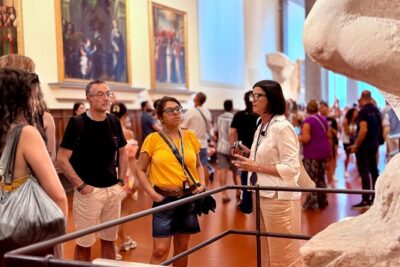
Michelangelo’s David can be familiar from photographs, yet the real sculpture has a different effect. Its scale, posture, and detail are difficult to grasp on a screen. The guide’s role is to help you notice more than the famous face and hands.
You may also learn about other Michelangelo works in the gallery, including pieces that are easy to ignore when everyone is moving toward David. This is one of the tour’s best features. The guide can turn a quick stop into a lesson in how Michelangelo shaped marble and how unfinished works reveal the artist’s process.
The quality of this part depends heavily on the guide. Stefano was praised for strong art history explanations, while Elena, Eleni, Greta, and Nebo received particularly warm comments for their command of the artworks and Florence’s past. Nebo’s own background as an artist added another layer for some groups.
If you are not especially interested in art, tell the guide early. A good guide can adjust the level of detail, but this is not a casual photo stop. Some guests enjoyed long explanations of individual works, while others felt the guide spent too much time on one painting or sculpture.
The Duomo and Baptistery: Great Stories, Outside Views
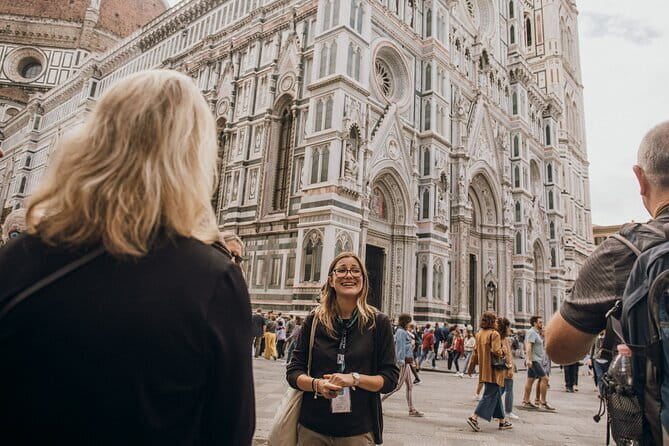
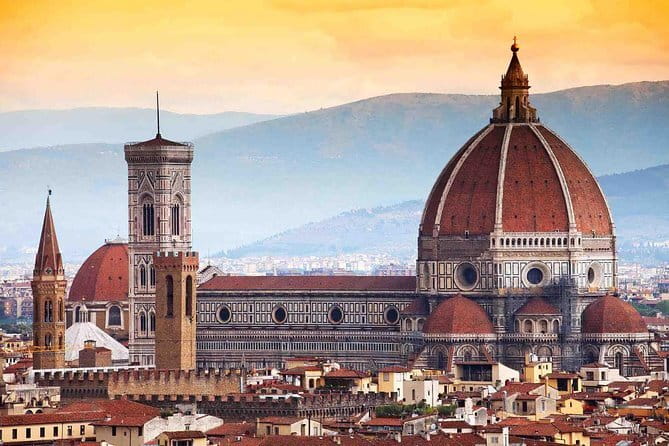
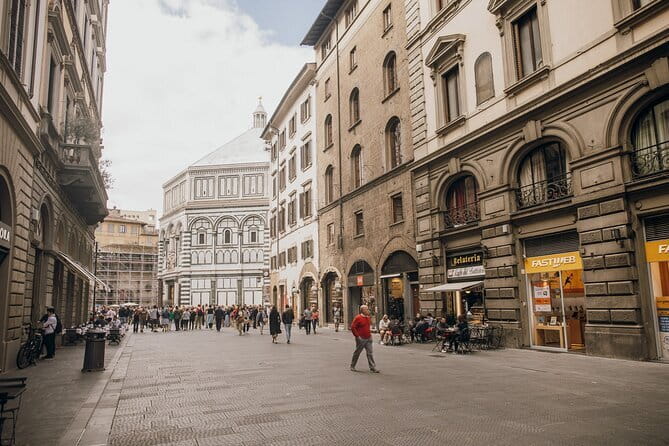
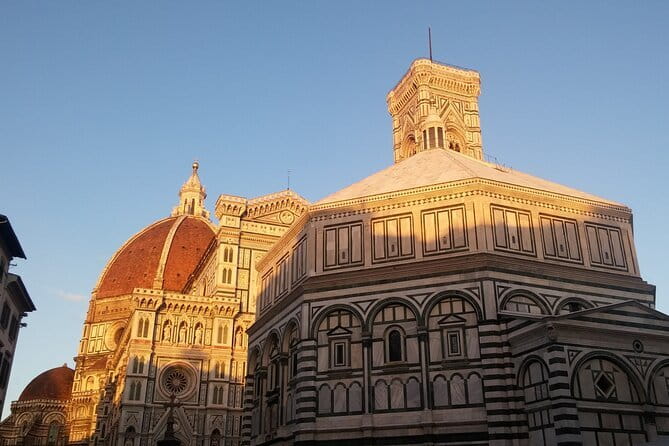
From the Accademia, the experience becomes a walking tour through central Florence. The Duomo is an important stop, but you view the cathedral and its enormous dome from outside.
That distinction is important. You do not enter the cathedral, climb the dome, visit Giotto’s bell tower, or tour the crypt as part of this experience. The guide instead explains how Filippo Brunelleschi solved the engineering challenge of building the dome, a project that once seemed close to failure and later became one of the great building achievements of its age.
For a first look at Florence, this outside explanation has real value. You get the basic story without spending hours in another queue. But if stepping inside the Duomo is one of your main goals, plan a separate visit.
The Baptistery is also an exterior stop lasting about 15 minutes. Your guide points out the bronze doors associated with the name Gates of Paradise, a tribute to their beauty traditionally linked to Michelangelo.
This is a quick introduction rather than a detailed visit. You will have time to see the doors and understand their place in Florentine art, but not to study every panel at length.
The city walk involves more than sightseeing from one famous building to another. The guide can show how Florence’s public spaces were shaped by religion, banking, family power, and civic pride. That connection is one reason the tour works well for first-time visitors.
Piazza della Signoria and the Original Home of David

Piazza della Signoria is an open-air art display and one of the most rewarding outdoor stops. This is where David was originally intended to stand, though the sculpture eventually became a symbol of Florence’s political independence in front of the Palazzo Vecchio.
The square helps you understand the difference between seeing David in a museum and understanding its public role. Michelangelo’s sculpture was not created only as a beautiful object. It carried a message about strength, vigilance, and the identity of the Florentine republic.
Your guide may also point out other sculptures around the square. Since this part of the tour lasts about 15 minutes, expect a brisk explanation rather than a complete art tour.
I like this stop because it gives the museum visits a civic setting. Florence’s Renaissance art was tied to power and money. The same families who commissioned chapels and paintings also shaped streets, palaces, and public monuments.
The strongest guides make those links easy to follow. Angelo was praised for explaining the connection between politics and art, while Stephanie was noted for using humor, personal details, and stories to keep the history moving.
More Uffizi and Accademia tickets:
- Florence: Skip-The-Line Uffizi Gallery Timed Entry Ticket
★ 4.5 · 27,832 reviews - Florence: Uffizi Priority Ticket & Masterpieces Audio App
★ 4.2 · 6,402 reviews - Florence Accademia Gallery Tour with Entrance Ticket Included
★ 4.5 · 6,148 reviews - Florence: Skip-the-Line Uffizi Small Group Tour
★ 4.6 · 5,926 reviews
Ponte Vecchio and the Porcellino

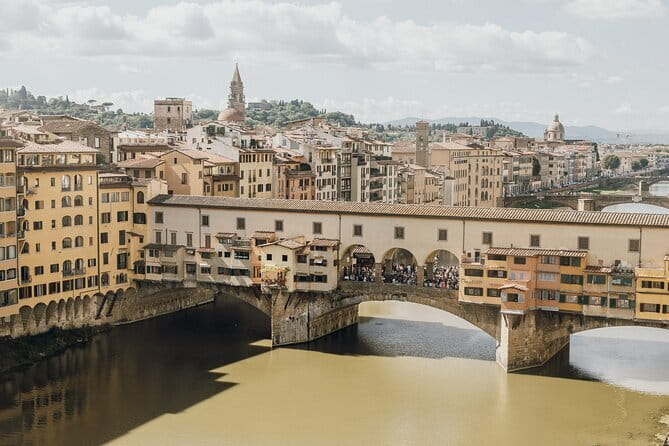
The walk continues toward Ponte Vecchio, Florence’s famous medieval bridge over the Arno. You do not receive a separate inside attraction or boat ride here. Instead, you experience the bridge as part of the city route and hear about its place in Florence’s visual identity.
Allow yourself a moment to look beyond the shop fronts and toward the river. Ponte Vecchio is a busy passage, but the view gives you a welcome change after the concentration of the Accademia.
The next short stop is Mercato del Porcellino, where you encounter Il Porcellino, the bronze pig whose snout is linked with good luck. It is a small, playful detail in a day otherwise filled with grand churches, powerful families, and major artworks.
These outdoor stops also break up the museum time. The day is not five straight hours in galleries. You move through different settings, with short pauses for architecture, stories, and city views.
There is a practical catch. The walk can include steps, uneven surfaces, and a moderate pace. One person described the outing as easy paced overall but still advised sturdy shoes. That is sound advice, especially if you are combining this tour with a long day of sightseeing.
Entering the Uffizi With a Clear Plan
The Uffizi is the final major stop and receives about 90 minutes. Timed admission is especially useful here because the gallery can be extremely busy. You enter with your group and headset when needed, then follow the guide through selected rooms.
Do not expect to cover the entire museum. The Uffizi is too large for that in one and a half hours, especially when the guide stops to explain major works. The purpose is to see key Renaissance paintings and learn how painting changed over time.
One particularly effective teaching approach is comparing Madonna paintings from different periods. You can see shifts in space, expression, color, and the relationship between figures. That kind of side-by-side explanation helps even if you do not normally spend much time in art museums.
The best part of a guided Uffizi visit is selection. You do not need to waste your limited time deciding which room to enter first. A skilled guide can lead you to major works and explain why they matter.
The trade-off is that you may leave parts of the museum unseen. One visitor felt the guide focused too long on a small number of works and did not enter enough rooms. That criticism is fair. If you want to roam freely through the Uffizi, a guided highlights visit may feel restrictive.
At the end, you may be allowed to stay longer and explore independently. This is a valuable bonus, but confirm the day’s arrangements with your guide. The official endpoint can vary, with the tour ending at the Uffizi or Accademia depending on the day.
Breaks, Lunch, and the Real Meaning of Five Hours
Breaks vary by departure. The 9:45 a.m. departure includes a one-hour lunch break or free time. The 8:30 a.m. and 1:30 p.m. departures include a 30-minute coffee break.
This changes how you should judge the length. A five-hour booking may include a meaningful pause, so the active guiding time can be shorter. One schedule was described as running from 9:45 a.m. to 2:15 p.m., with about an hour and a half of breaks. That guest felt the tour offered only about four hours of actual touring and considered the price too high.
I would not call the breaks a flaw by themselves. Florence is easier to enjoy when you can sit, use a restroom, or eat something. The issue is expectation. If you want five continuous hours of sightseeing, this is not that.
Guides have also helped with lunch planning. Fredericka recommended a restaurant where one guest had an excellent risotto, and other guides offered meal suggestions during breaks and after the tour. Those tips can be useful, though lunch is not included.
The break schedule may also make this tour workable for a family or mixed-age group, provided everyone can walk at a moderate pace. Strollers are not accepted, and the operator asks guests who use wheelchairs or have mobility limitations to contact the guest experience team when booking so proper arrangements can be made.
Guide Quality and Group Size
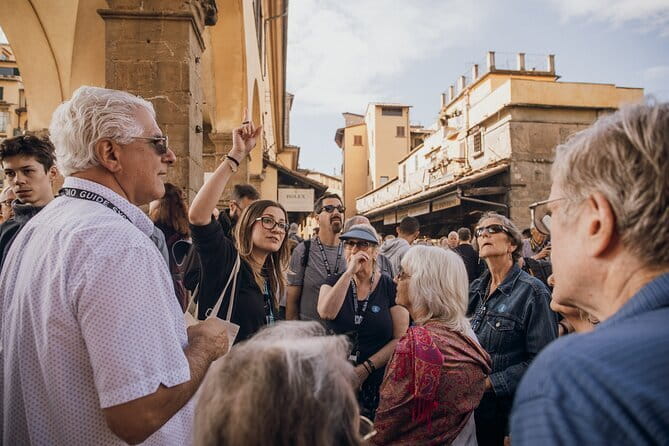
The guide is the main reason to book this experience instead of buying museum tickets alone. The most praised guides combine art knowledge with storytelling, humor, local recommendations, and an ability to answer questions.
Stefano, Elena, Greta, Daniela, Jade, Angelo, Chiara, Stephanie, Ishmael, Eleni, Nebo, and Christiano were all singled out for qualities such as strong explanations, local insight, warmth, and good pacing. That range suggests a solid guide team, though no operator can guarantee a particular person unless the booking specifically says so.
The strongest feedback described guides who made Florence easier to understand rather than simply listing dates and names. Jade’s passion for her city, Nebo’s artistic background, and Stephanie’s use of humor are good examples of the personal touch that can make a long walking tour feel lively.
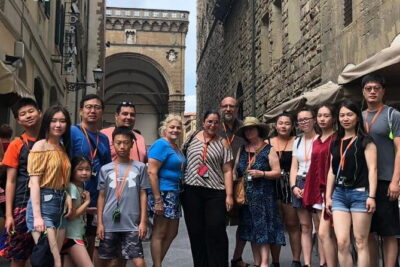
Group size is capped at 15 people. That is smaller than a large coach excursion, and headsets help you hear in crowded streets and galleries. Still, a group of 15 can stretch the meaning of small group, especially in narrow museum rooms.
The private option solves much of that problem. It is the better choice if you want to set the pace, spend longer with a favorite artist, or ask detailed questions without holding up a larger group.
Who Will Get the Most From This Tour
I would choose this tour if you have one day in Florence, a short city stay, or a strong desire to see David and the Uffizi without managing two complicated museum entries yourself.
It also suits you if Renaissance art is new to you. The guide supplies the framework that turns famous names into a connected story. You will come away with a better sense of why Florence mattered and how art, religion, wealth, and public power worked together.
This is a good fit for:
- First-time visitors who want a clear introduction
- People with limited time in Florence
- Art and history fans
- Visitors who dislike waiting in museum lines
- Cruise passengers or day visitors who need a structured schedule
- Anyone who values a guide’s restaurant and city advice
I would hesitate if you prefer quiet, independent museum visits. I would also think twice if your top priorities are entering the Duomo, visiting the central market, or spending relaxed time at Ponte Vecchio. Those experiences are not included in the way some people may expect from the title.
Is Florence in a Day Worth $134.23?
For me, the value comes from the combination of timed entry and interpretation. Paying for two museum admissions separately may not seem difficult, but finding suitable times, navigating entry procedures, and choosing the right artworks can take time you may not have.
The price feels more reasonable when you treat the tour as an organized art and city orientation. It feels less reasonable if you expect a full-day program, included lunch, hotel pickup, inside visits to the Duomo, or a complete tour of the Uffizi.
The 4.7 rating from 1,048 reviews and the 94 percent recommendation rate point to a strong overall experience, but the lower scores explain the limits. The common concerns are not about the importance of the sights. They concern the ambitious schedule, long walking day, art-heavy commentary, group size, and the fact that some major places are viewed from outside.
Weather and city events can also affect the day. A marathon once caused blocked streets, heavy crowds, and an early departure that led to the Uffizi being missed. That sort of disruption is unusual, but it shows why this tour works best when your schedule has some flexibility.
My Booking Advice
Book it if you want Florence’s essential art and history explained in one organized half-day. Choose an early departure if you want more time afterward for the Duomo interior, the central market, or a slow walk beside the Arno.
Wear sturdy shoes, bring the passport or ID that matches the full name supplied at booking, and do not assume the title means every famous site receives an inside visit. The Uffizi requires a valid matching identity document, and all participant names must be entered correctly.
I would choose the private option for art specialists, families with very different interests, or anyone who dislikes a group pace. For most first-time visitors with limited time, the regular tour offers a practical way to meet David, see major Renaissance paintings, and get your bearings in Florence without spending half the day in ticket lines.
FAQ
How long does the Florence in a Day tour last?
The tour lasts approximately five hours, though the exact duration and schedule can vary by departure time.
What museums are included?
Timed entry is included for the Galleria dell’Accademia and the Uffizi Gallery.
Is admission to the Duomo included?
No. The Duomo is viewed from outside, with the guide explaining the story of Brunelleschi’s dome.
Does the tour enter the Baptistery?
The Baptistery is an outside stop. You see its famous bronze doors, but admission is not included.
Is lunch included?
No. Lunch is not included. The 9:45 a.m. departure includes a one-hour lunch break or free time, while the 8:30 a.m. and 1:30 p.m. departures include a 30-minute coffee break.
Where does the tour begin?
The meeting point is Piazza di San Giovanni, 6, in Florence.
Where does the tour end?
The tour ends at the Uffizi Gallery or the Accademia Gallery, depending on the day.
How many people can join the group?
The maximum group size is 15 people. A private option is also available.
What documents are required for the Uffizi?
Each person must present a valid passport or identity document matching the full name supplied at booking. Failure to provide complete matching names may result in denied entry.
Recently added around Florence
- Florence: Santa Maria del Fiore Duomo Tour★ 4.2 · 447 reviews
- From Florence: Tuscan Countryside Vespa Tour with Tastings★ 4.9 · 701 reviews
- Florence: Orcia Valley, Montalcino, Pienza with Lunch & Wine★ 4.7 · 225 reviews
- From Florence: Val D’Orcia Tour with Wine Tasting★ 4.6 · 1,106 reviews
- Florence: Skip-the-Line Uffizi Gallery Small Group Tour★ 4.1 · 364 reviews
- Florence: Uffizi Gallery Tickets with Optional Audio Guide★ 4.1 · 503 reviews
- Florence: Pizza Dinner and Opera Arias Concert★ 4.3 · 238 reviews
- Tuscany by Vespa Full-Day Tour to Chianti Wine Region★ 4.7 · 475 reviews
Uffizi & Accademia Gallery Tours, compared.
Skip-The-Line Uffizi Gallery Timed Entry Ticket
Read our review →
Uffizi Priority Ticket & Masterpieces Audio App
Read our review →
Florence Accademia Gallery Tour with Entrance Ticket Included
Read our review →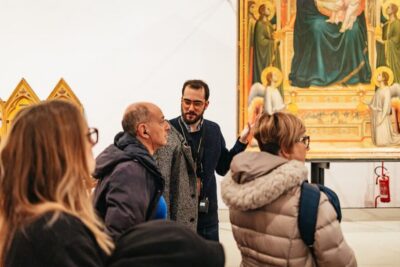
Skip the line: Uffizi and Accademia Small Group Walking Tour
Read our review →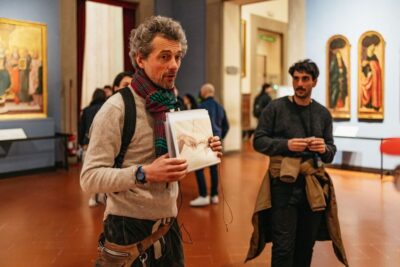

Accademia Gallery Guided Tour with Entry Ticket
Read our review →Browse the lists this tour appears in