
Reviewed · UFFIZI & ACCADEMIA GALLERY TOURS
Florence: Accademia Gallery David Entry & Audio Guide App
David is only the beginning. This timed Accademia ticket gets you past the ticket-office line and into Florence’s most famous sculpture museum, where Michelangelo’s masterpiece shares space with unfinished statues, Renaissance paintings, Medici instruments, and 19th-century plaster models. I like the helpful meeting staff and the freedom to explore at my own pace. The main catch is that skip-the-line does not always mean walk straight inside, especially when the gallery is crowded.
I also like the low-key format. You exchange your voucher for a physical ticket, then tour on your own with the POP Guide app rather than following a group. But you need to arrive prepared: download the app before meeting the host, bring your own headphones, and expect the audio guide to be less reliable than a live guide.
In This Review
- Key points to know before you book
- What the $38 price really buys you
- Finding the host at Via Ricasoli 115
- Timed entry and the limits of skip-the-line access
- Michelangelo’s David in the main hall
- Gipsoteca plaster models from 19th-century Florence
- Medici instruments and three Stradivarius treasures
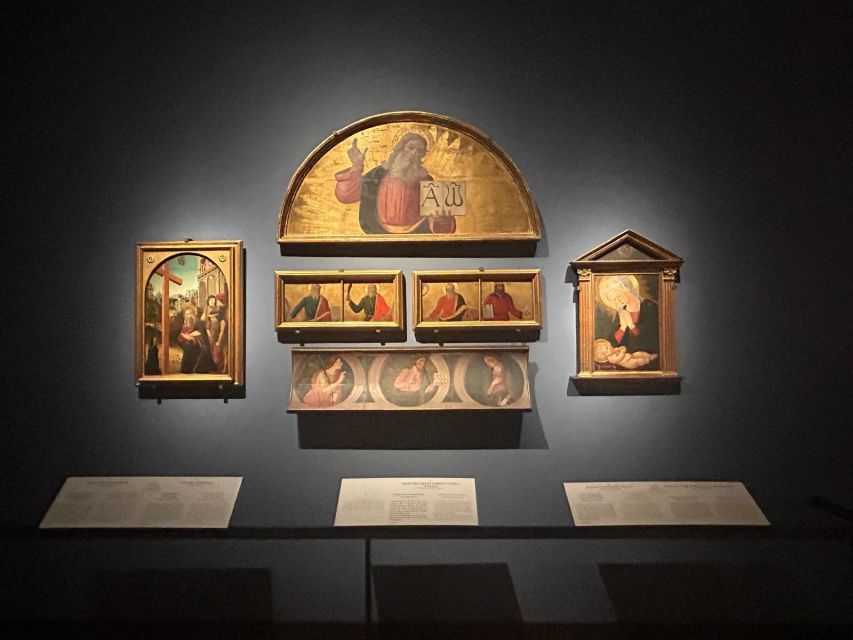
- Medieval and Renaissance paintings
- The upper floor and magnificent altarpieces
- Making the POP Guide app work
- Accessibility and practical comfort
- Who should book this Accademia experience?
- Should you book it?
- FAQ
- Where is the meeting point?
- What does the ticket include?
- Is a live guide included?
- What do I need for the audio guide?
- Can I enter without waiting?
- What can I see besides David?
- Is the Accademia accessible by wheelchair?
- What identification do children need for a discounted ticket?
Key points to know before you book
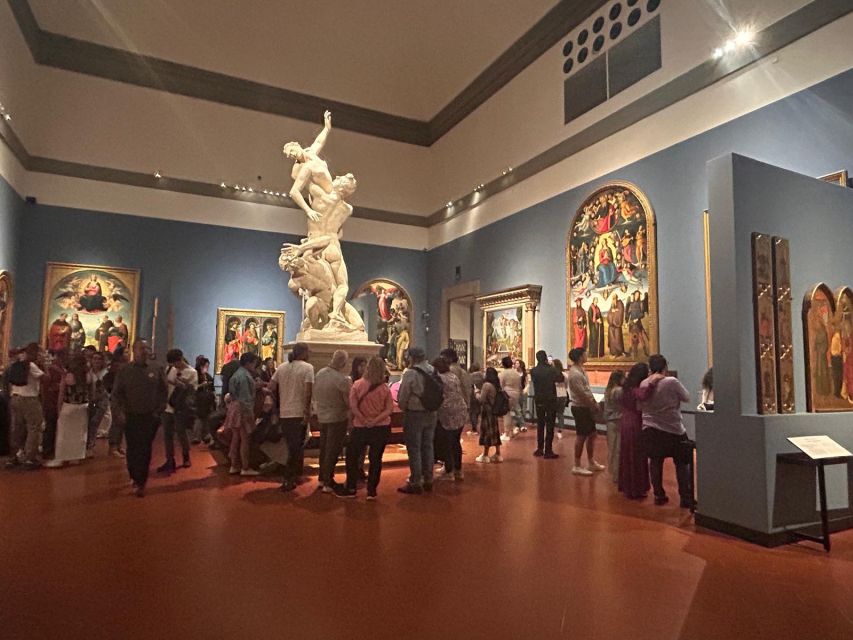
- David is the main event: Michelangelo’s 17-foot marble sculpture is displayed in the main hall, along with several unfinished works.
- The ticket saves real time: Without advance entry, the ticket line can stretch for hours, although reserved-ticket visitors may still wait outside.
- The audio guide is flexible: You can move at your own speed, but the app needs a charged phone, internet access, and your own headphones.
- The museum offers more than sculpture: Look for Medieval and Renaissance paintings, altarpieces, plaster models, and three Stradivarius instruments.
- The meeting point is easy to identify: Find the Carrefour Express at Via Ricasoli 115, marked with a red number, and look for a white flag reading ENJOY ROME.
- The experience suits independent visitors: You get admission assistance, not a licensed art historian leading you through the galleries.
What the $38 price really buys you
The price is $38 per person. That is not the cheapest way to see the Accademia, but you are paying for more than the museum admission itself. The useful part is the timed reservation and the help at the entrance, where the ticket system can be confusing.
The value depends on your priorities. If you are visiting Florence during a busy period, saving yourself from the general ticket queue can be worth the extra cost. Several people found the ordinary entrance line long enough to make advance booking essential. One person described the queue as potentially lasting hours without a reserved ticket.
Still, keep your expectations in check. This is not a magic pass through every line. You may wait with other timed-entry visitors, and security rules can delay admission when the museum reaches its visitor limit. A 30-minute wait has occurred even with a reserved ticket, and the outside line can be hot and tiring in summer.
I would consider the fee fair for a first visit when your schedule is tight. If you are already comfortable buying museum tickets online and do not need an audio guide or a host, you may prefer arranging admission yourself. For many visitors, though, the cost buys peace of mind in a city where Florence’s major museums fill quickly.
Children aged 6 to 17 may qualify for a discounted ticket, but they must show photo identification with their birth date. Without it, the full adult fare applies. That small detail can create an avoidable problem at the entrance.
More Museum Tours in Florence
- Florence: Skip-The-Line Uffizi Gallery Timed Entry Ticket
★ 4.5 · 27,832 reviews - Florence: Leonardo Interactive Museum Entry Ticket
★ 4.5 · 11,763 reviews - Florence Accademia Gallery Tour with Entrance Ticket Included
★ 4.5 · 6,148 reviews
Finding the host at Via Ricasoli 115
Your visit begins outside the museum, not at the gallery door. Meet the host in front of the Carrefour Express supermarket at Via Ricasoli 115, identified by a red number. Look for a staff member holding a white flag marked ENJOY ROME.
This meeting point is close to the Accademia, but do not treat it as a place to arrive at the last second. The best plan is to arrive early, find the supermarket, and then locate the staff member before your timed entry. Several visitors found the staff on time and appreciated the directions.
The handoff is simple: show your GetYourGuide voucher and exchange it for a physical museum ticket. The host then directs you toward the proper entrance and helps you join the correct line. In some cases, the host follows the group until entry, which can be reassuring when the entrance area becomes confusing.
The process is not always calm. The sidewalks around major Florence museums can feel crowded, and the separate lines are not instantly obvious. A few minutes spent finding the right person is much better than arriving at the door with only a phone voucher and no idea where to go.
English-speaking assistance is provided. The host is not your museum guide, so do not expect a lecture about Michelangelo before you enter. The job is practical: ticket exchange, directions, and help getting through the entrance.
Timed entry and the limits of skip-the-line access
The reserved time matters. The Accademia controls the number of people inside, so arriving at the right time helps the museum manage its crowds. If the building is full, your entry may be postponed slightly even with a booking.
This is the part that causes the most confusion. Skip-the-line generally means you avoid the ticket-purchase queue, not that you ignore security checks or walk directly into the galleries. You can still wait outside with other reserved-ticket holders.
Arriving early is smart, especially for a morning appointment. One visitor with a 9:00 a.m. time met the host at 8:55 and entered at about 9:06. That is a good example of how the system can work when everyone is in place.
Weather can also affect the wait. If rain or other conditions delay entry, the staff may provide updates, but you should still allow extra time. The outdoor wait may be uncomfortable in hot weather, so bring water and wear comfortable shoes.
Large bags and luggage are not allowed. Pets are also prohibited. Keep what you carry small, and avoid bringing anything you cannot take into the museum.
Michelangelo’s David in the main hall
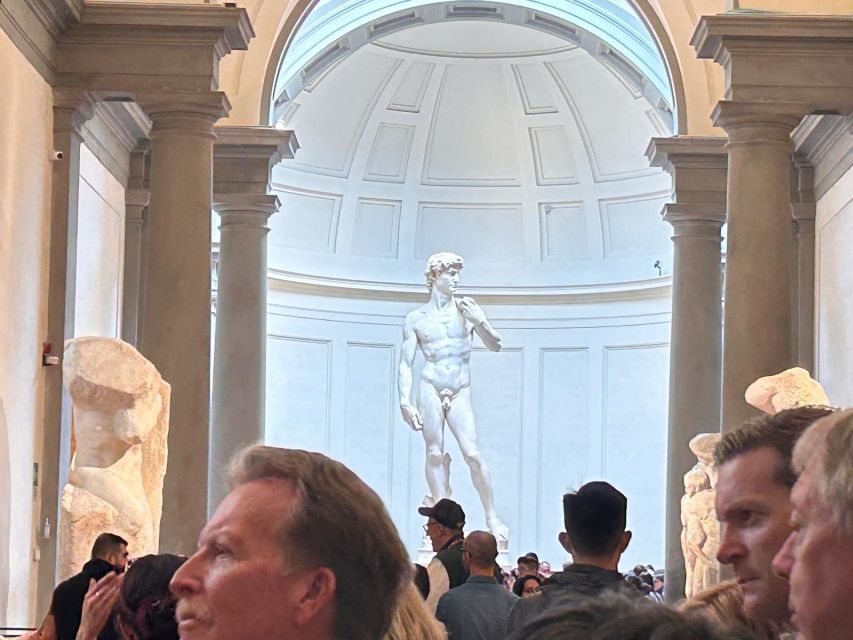
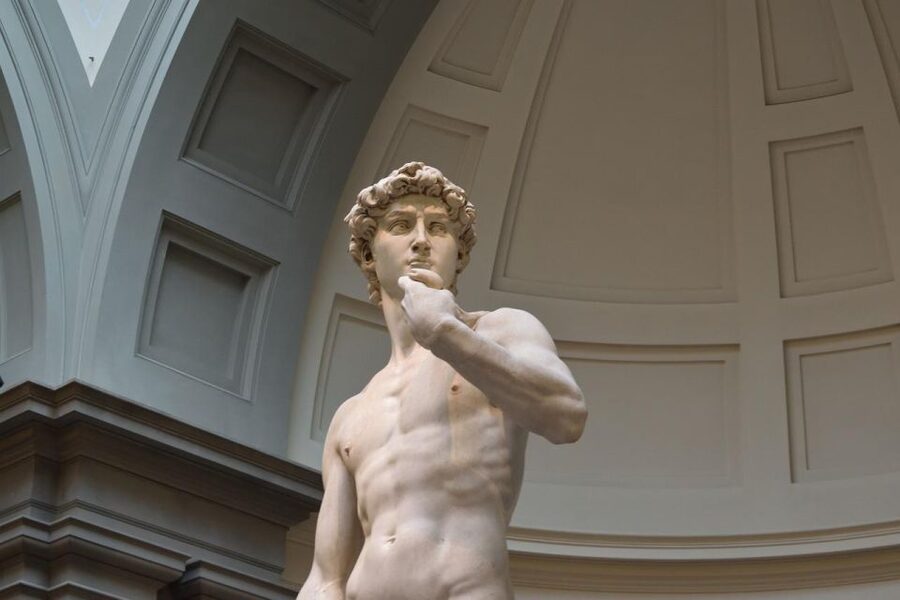
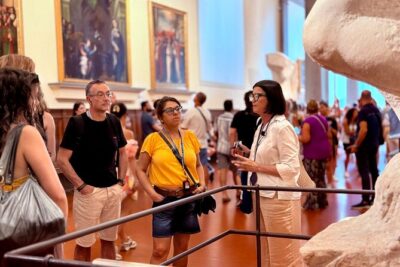
You come to the Accademia for David, and the first sight does not disappoint. Michelangelo’s marble figure is displayed in the main hall, where you can walk around it and study the details from different angles.
The sculpture shows David before his fight with Goliath, not after the victory. His alert expression and tense posture create the sense of a decision about to be made. The scale matters. Photographs flatten the work, while the gallery lets you see the balance of the body, the carefully carved hands, and the way Michelangelo handled the marble.
I recommend giving yourself time before reaching for your phone. Look at the figure from the front, then walk slowly around it. Notice how the pose changes as your viewpoint shifts. The sculpture was designed to be seen in the round, and that is one reason the gallery setting matters.
The main hall also contains some of Michelangelo’s unfinished works, commonly called the Prisoners. Their partly carved bodies appear to push out from the marble blocks. They offer a useful look at the artist’s process, showing how a figure can emerge from stone while some surfaces remain rough.
The contrast between the finished David and the unfinished sculptures is one of the strongest parts of the visit. You see both the polished result and the physical labor behind the image. The room can become crowded, so patience helps. Even if you have only a short museum visit, make room for these works rather than seeing David and leaving immediately.
More Uffizi and Accademia tickets:
- Florence: Uffizi Priority Ticket & Masterpieces Audio App
★ 4.2 · 6,402 reviews - Florence: Skip-the-Line Uffizi Small Group Tour
★ 4.6 · 5,926 reviews - Uffizi Gallery Small Group Tour with Guide
★ 4.5 · 4,923 reviews - Skip the line: Uffizi and Accademia Small Group Walking Tour
★ 4.5 · 3,135 reviews
Gipsoteca plaster models from 19th-century Florence
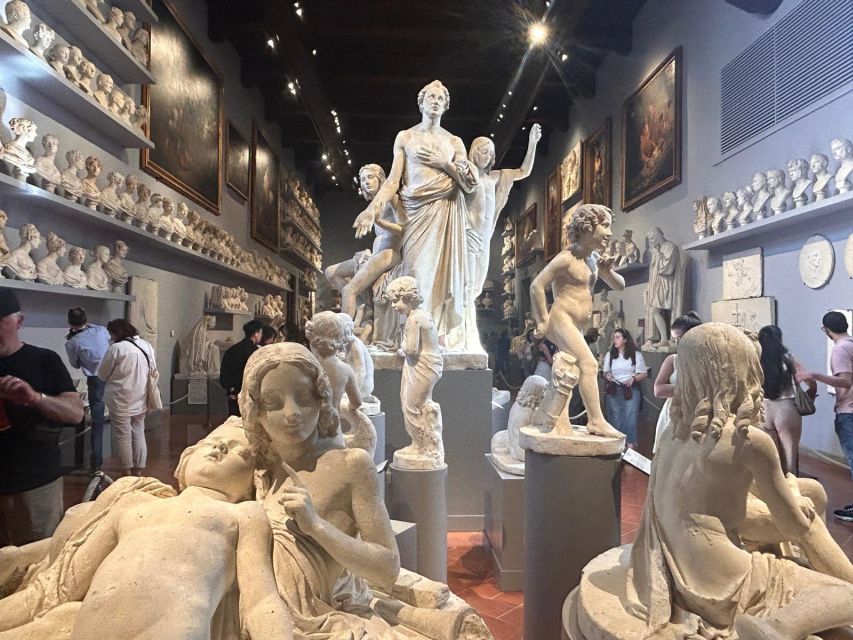
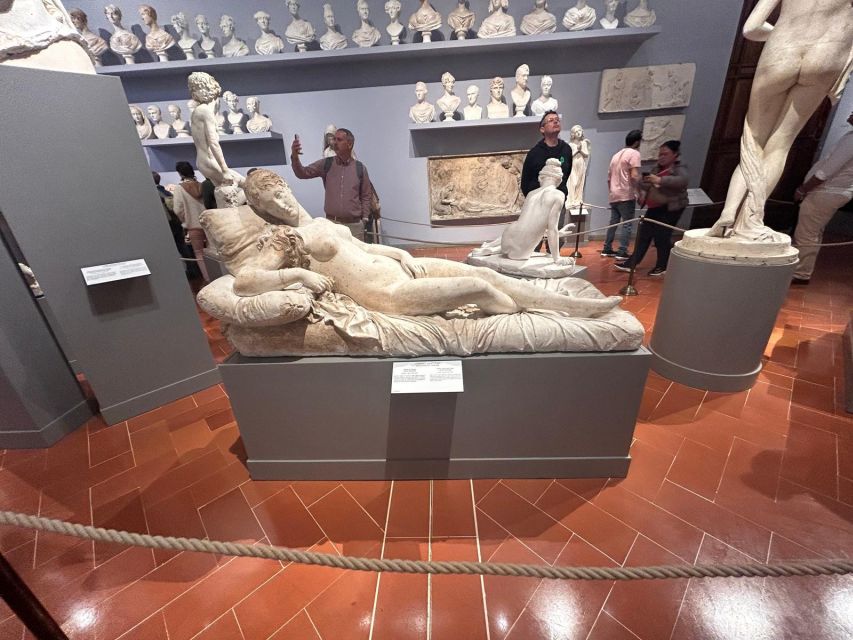
The Gipsoteca provides a change of pace after the famous sculpture hall. Here you find original plaster models made by 19th-century Florentine sculptors.
Plaster models are not as instantly famous as David, but they explain how sculptors planned and developed their work. They also show a different period and artistic concern from the Medieval and Renaissance pieces elsewhere in the museum.
I like this room for the sense of the working studio it can provide. The models are preparatory objects, not just finished public monuments. If you are mainly visiting for Michelangelo, you might move through quickly. If you enjoy technique and sculpture, give the room more time.
This is also a useful reminder that the Accademia is not simply a one-sculpture display. Its collection covers several periods and artistic forms, with works that help place Michelangelo within a longer Florentine tradition.
Medici instruments and three Stradivarius treasures
The musical instrument collection brings another unexpected layer to the visit. It includes original instruments from the Medici collection, including three made by Stradivarius.
For art lovers, these objects connect the museum to Florence’s court culture and the Medici family’s support of music and the arts. They also break up the visual rhythm of sculpture and painting. A violin is not just a decorative object here. It reflects the level of craftsmanship and collecting associated with the Medici court.
The instrument section may not be the reason you booked this experience, but it is worth finding. If you are visiting with someone who is less interested in paintings, these objects can add variety to the museum route.
Medieval and Renaissance paintings
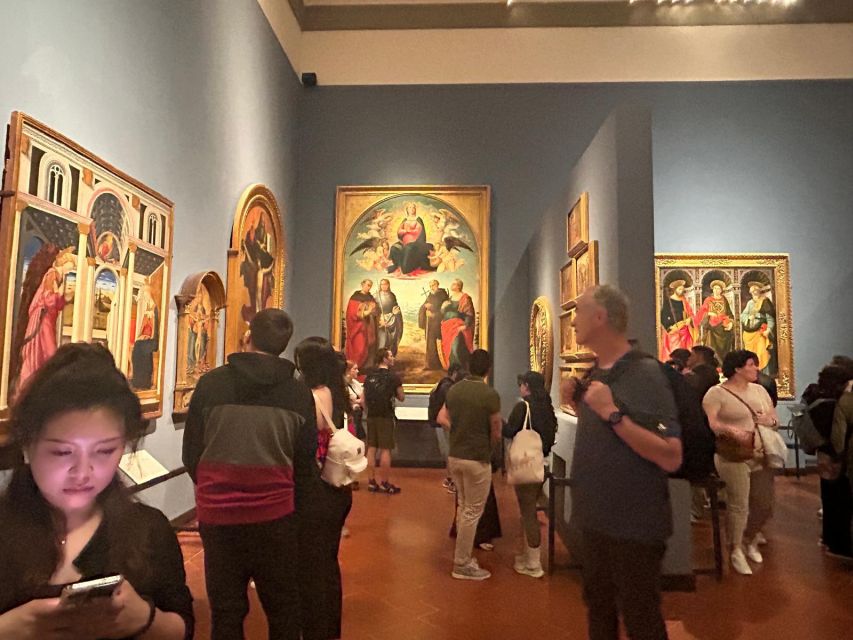
After the sculpture rooms, continue to the painting galleries. Here you can see works by Medieval and Renaissance artists, including Giotto and Botticelli.
The paintings help explain how Florentine art changed over time. Medieval works often follow formal religious conventions, while later Renaissance painters pay closer attention to human expression, space, and the natural world. You do not need to know every artist to notice that shift.
Giotto is especially important for understanding the move toward more solid, expressive figures. Botticelli offers a different kind of appeal, with graceful lines and elegant figures. The museum’s painting collection gives you a chance to see these artists within a wider sequence rather than as isolated names in a guidebook.
The POP Guide app can help you identify works and follow some of the stories behind them. The experience is self-directed, so you can pause at paintings that catch your eye and skip pieces that do not hold your attention.
That freedom is a real advantage. A live guide can add more context, but a fixed group pace may not suit everyone. With the app, I can spend ten minutes with one painting or move on after a quick look.
The drawback is that a phone guide does not always function like a museum handset. You may need to look at your screen to choose a stop, and the app map may not match the gallery layout perfectly. One visitor found the map confusing, while another found the video clear and easy to understand.
The upper floor and magnificent altarpieces
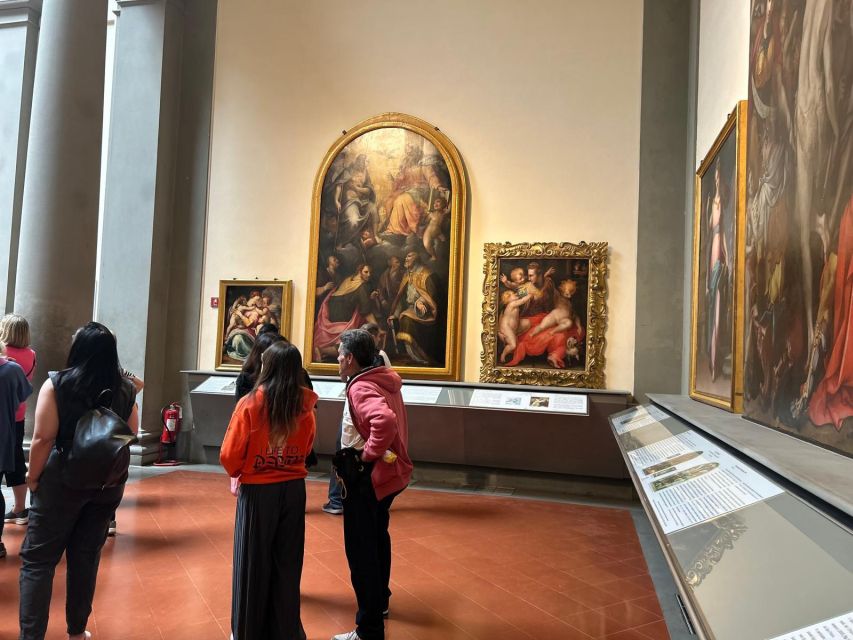
Before finishing, head to the top floor for the altarpieces. These large religious paintings are among the museum’s most imposing works, with several panels arranged as formal church furnishings.
Their scale and detail reward a slower look. Study the small figures, decorative borders, and layered scenes. Altarpieces can seem crowded at first, but the longer you look, the more individual details begin to appear.
This section also gives the museum a stronger sense of progression. You begin with Michelangelo’s monumental marble, move through sculpture and instruments, then finish among paintings and altarpieces from earlier artistic periods.
The route is not huge, but there is enough to see beyond David to fill a meaningful visit. You should expect walking and standing throughout the museum. Bring water for the wait outside, especially in warm weather, and wear shoes that will not bother you by the end.
Making the POP Guide app work
The audio guide is included, but it requires preparation. Download the POP GUIDE app from the App Store or Google Play before you reach the meeting point. Staff provide the login details when you meet them.
Bring a charged smartphone, internet access, and your own headphones. Headphones are not included. Downloading the app at the entrance can be stressful, particularly if your phone connection is weak. One visitor had no data connection and could not download the guide, while another found the app did not work offline as expected.
The safest approach is to install the app before leaving your hotel and check that it opens. Do not assume that receiving login credentials is the same as having the content ready to play.
The audio guide works best for independent visitors who want background information without being tied to a group. You can listen when you want, pause when the gallery gets crowded, and continue at your own pace.
A live licensed guide would likely provide more detail about the museum, the paintings, and the development of different art styles. If your main goal is understanding the stories behind the collection, a guided tour may be the better choice. If you prefer quiet exploration and flexibility, the app is a reasonable extra.
Accessibility and practical comfort
The experience is wheelchair accessible. Still, the visit includes walking through several gallery areas and waiting outside before entry, so comfort and timing matter.
Do not bring luggage or large bags. The rules also prohibit pets. For families, children aged 6 to 17 need photo identification showing their birth date to receive the discounted fare.
The meeting staff speak English. The audio guide language provided here is English, so this option is best for visitors comfortable listening to art commentary in English.
Free cancellation is available up to 24 hours before the scheduled visit, and you can reserve now and pay later. Those policies are useful when your Florence plans may change, but the main practical advantage remains the reserved admission.
Who should book this Accademia experience?
I would choose this option if David is a top priority and you want help dealing with Florence’s ticket system. It is particularly useful for a first visit, a short stay, or a busy travel date when losing hours in a queue would disrupt the rest of your day.
It also suits independent visitors. You receive assistance getting inside, then explore without a guide setting the pace. That makes it a good fit if one person wants to linger over Botticelli while another prefers to move quickly through the paintings.
I would think twice if you want a full art lesson from a professional guide. The POP Guide app can add useful context, but it is not the same as asking questions and hearing a person explain how the collection fits together.
Should you book it?
Book this experience if you want a practical way into the Accademia and care most about seeing David without gambling on a same-day ticket. The staff are generally easy to find and helpful, and the reserved entry can save a great deal of time.
Just prepare properly. Download the POP Guide app in advance, bring headphones, carry a charged phone, arrive early, and expect that security or crowd limits may still create a wait. For the strongest art education, choose a live guided tour instead. For flexible admission and a self-paced visit, this is a useful Florence booking at a reasonable price.
FAQ
Where is the meeting point?
Meet the host in front of the Carrefour Express supermarket at Via Ricasoli 115, identified by a red number. Look for a staff member holding a white flag marked ENJOY ROME.
What does the ticket include?
The package includes an Accademia Gallery entrance ticket and access to the POP Guide audio guide app.
Is a live guide included?
No. A host or greeter helps with the ticket exchange and entry, but a live museum guide is not included.
What do I need for the audio guide?
Bring a charged smartphone, internet access, and your own headphones. You should download the POP GUIDE app before arriving at the meeting point. Staff provide login credentials there.
Can I enter without waiting?
The reserved ticket lets you skip the ticket-office line through a separate entrance, but security checks and visitor limits can still cause a wait. Entry may be postponed when the museum is crowded.
What can I see besides David?
You can see Michelangelo’s unfinished works, 19th-century plaster models in the Gipsoteca, Medici musical instruments including three Stradivarius instruments, Medieval and Renaissance paintings, works connected with artists such as Giotto and Botticelli, and upper-floor altarpieces.
Is the Accademia accessible by wheelchair?
Yes, the experience is listed as wheelchair accessible.
What identification do children need for a discounted ticket?
Visitors aged 6 to 17 need valid photo identification showing their birth date. Without it, they may need to purchase a full adult ticket.
Recently added around Florence
- Florence Private Walking tour with Skip-the-line to Accademia★ 4.5 · 236 reviews
- Florence Uffizi Gallery monolingual Small Group Tour★ 4.0 · 621 reviews
- Uffizi Gallery Entrance Ticket with Priority Access★ 3.5 · 1,029 reviews
- Florence Skip-the-Line Duomo Tour with Guide & Brunelleschi Dome★ 5.0 · 1,176 reviews
- Skip-the-Line Accademia Guided Visit: David Secrets and Beyond★ 4.0 · 525 reviews
- Priority Entrance : Florence Accademia Gallery Timely Tickets★ 4.0 · 603 reviews
- Skip the line : David Guided Experience★ 4.5 · 1,076 reviews
- Private Tour in Siena, San Gimignano and Chianti Day Trip from Florence★ 5.0 · 405 reviews
Uffizi & Accademia Gallery Tours, compared.
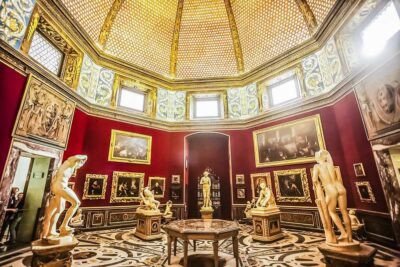
Skip-The-Line Uffizi Gallery Timed Entry Ticket
Read our review →
Uffizi Priority Ticket & Masterpieces Audio App
Read our review →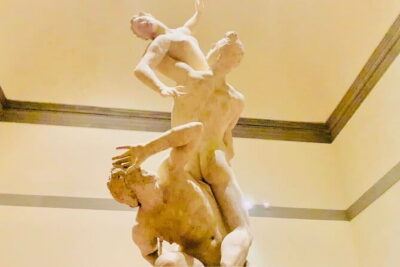
Florence Accademia Gallery Tour with Entrance Ticket Included
Read our review →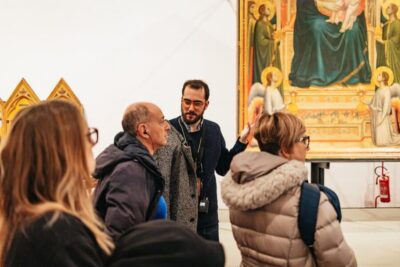
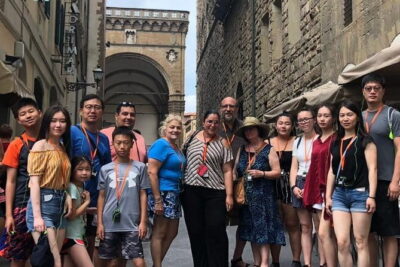
Skip the line: Uffizi and Accademia Small Group Walking Tour
Read our review →

Accademia Gallery Guided Tour with Entry Ticket
Read our review →Browse the lists this tour appears in