
Reviewed · MUSEUMS
Da Vinci Museum: Discover a World of Genius in the Heart of Rome
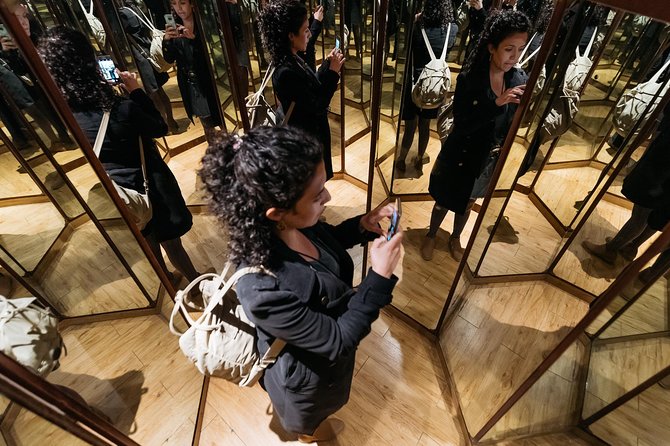
Genius fits underground. Rome’s Museo Leonardo da Vinci turns Leonardo’s ideas into hands-on machines, art studies, anatomy displays, and short films inside Basilica Santa Maria del Popolo. I like the working models that let you test the logic behind his inventions, and I like the easy location, just a short walk from the Spanish Steps, Villa Borghese, and Piazza del Popolo. The main catch is size: you may finish in 30 minutes, though a careful visit with the audio guide can take close to two hours.
I also like the museum for families, especially older children who enjoy both art and science. The displays give you something to touch and try, rather than asking you to admire only glass cases. Still, the museum has no restroom, and some exhibits can feel scattered or smaller than expected.
In This Review
- Key points to know before you go
- What the Museo Leonardo da Vinci actually offers
- Entering through Santa Maria del Popolo
- Machines built from Leonardo’s notebooks
- Art, anatomy, and the mind behind the machines
- How long should you spend inside?
- Is the $14.38 ticket good value?
- The practical details that can make or break the visit
- Best times and nearby plans
- Who will enjoy this museum most?
- Should you book the Museo Leonardo da Vinci?
- FAQ
- Where is the Museo Leonardo da Vinci located?
- How much does admission cost?
- How long does the museum visit take?
- Is the audio guide included?
- Is the museum offered in English?
- Are Leonardo’s original paintings displayed there?
- Is the museum suitable for children?
- Are there restrooms at the museum?
- Can I cancel the booking?
Key points to know before you go
- Leonardo’s inventions become hands-on machines: You can manipulate several life-size or medium-scale reconstructions based on his codices.
- The location saves sightseeing time: The museum sits inside Basilica Santa Maria del Popolo, close to Piazza del Popolo, the Spanish Steps, and Villa Borghese.
- Plan for 30 minutes to two hours: A quick visit is possible, but the audio guide, films, and interactive stations reward a slower pace.
- The €14.38 admission is fair for a short stop: The price works best when you combine the museum with nearby sights.
- The €3 audio guide adds useful context: It explains Leonardo’s paintings, machines, anatomy studies, and major projects.
- Bring water and use a restroom first: The museum can feel warm, and there are no toilet facilities inside or nearby.
What the Museo Leonardo da Vinci actually offers
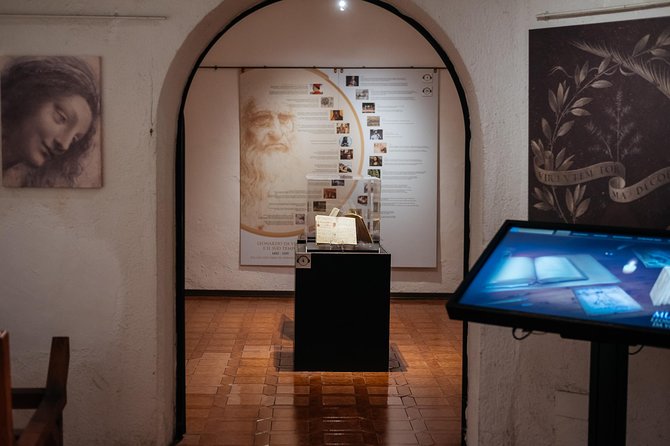
This is not a museum of Leonardo’s original paintings. It is an educational exhibition built around reproductions, reconstructions, diagrams, films, and interactive displays.
That distinction matters. If you expect to see an original Mona Lisa or Last Supper, you will be disappointed. If you want to understand how Leonardo thought, you will get much more from the visit. The exhibition takes sketches from his notebooks and turns them into objects you can inspect and, in some cases, operate.
The displays cover Leonardo in several roles: artist, engineer, inventor, scientist, anatomist, and architect. That range is the point. His work was not divided into the neat subjects we use today. A study of water could lead to a machine. An observation of the human body could inform art. A military design could reveal the same habit of careful measurement found in his paintings.
The museum also includes studies of famous works such as The Last Supper and the Vitruvian Man. Multimedia presentations explain the stories behind those works and the unfinished Sforza equestrian sculpture. A display case may also include a small number of genuine notebook pages, though most objects you see are reproductions or modern reconstructions.
More Museum Tours in Rome
- Vatican: Museums & Sistine Chapel Entrance Ticket
★ 4.5 · 144,003 reviews - Vatican Museums & Sistine Chapel Tour with Optional Basilica
★ 4.3 · 67,413 reviews - Vatican Museums, Sistine Chapel & St Peter’s Basilica Guided Tour
★ 4.5 · 39,149 reviews
Entering through Santa Maria del Popolo
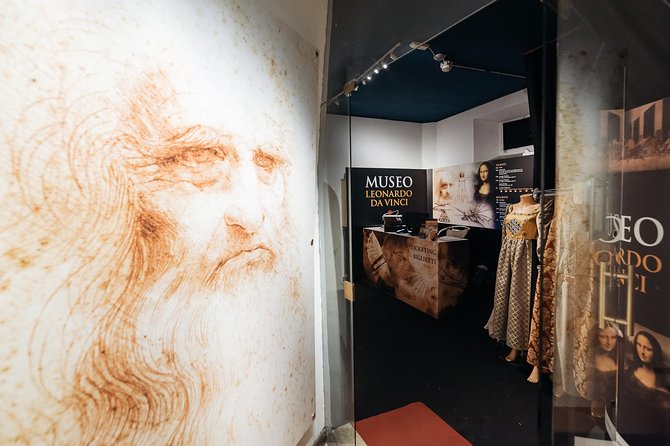
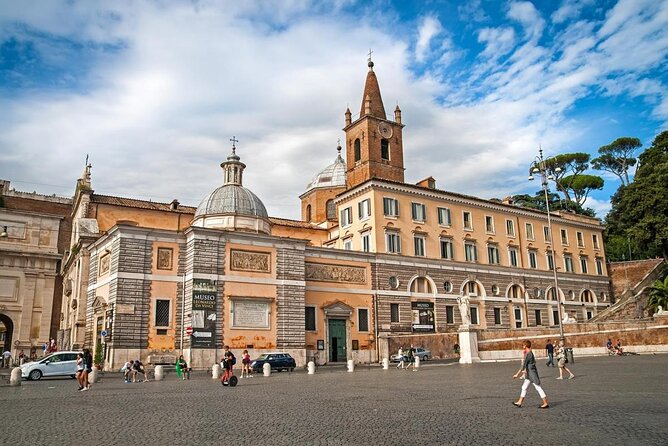
The setting gives this visit a useful Roman twist. You do not enter a large modern museum complex. The exhibition is located inside the Basilica Santa Maria del Popolo, at the edge of Piazza del Popolo.
The basilica itself is an important stop in Rome, so the museum can fit neatly into a walking route. You can visit the church and museum in the same general area, then cross toward the broad piazza. Villa Borghese is nearby, and the Spanish Steps are about a five-minute walk away.
That location makes the ticket more valuable than it would be for an isolated small museum. I would not cross Rome just for this exhibition if your schedule is tight. But if you are already near Piazza del Popolo, it is an easy addition, especially on a rainy afternoon or during a break between major sights.
One practical warning: a past visit found the church partly covered for renovation. Conditions can change, so do not assume every part of the basilica will be open or look exactly as expected.
Machines built from Leonardo’s notebooks
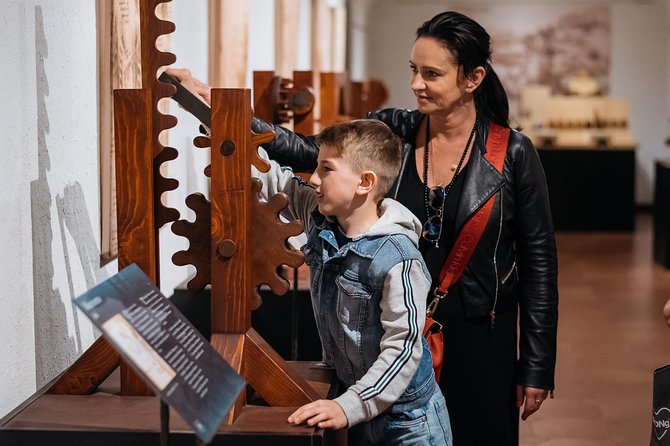
The machines are the main reason to come. Italian artisans have built models based on Leonardo’s drawings, giving you a clearer idea of how his plans might work than a page of mirrored writing ever could.
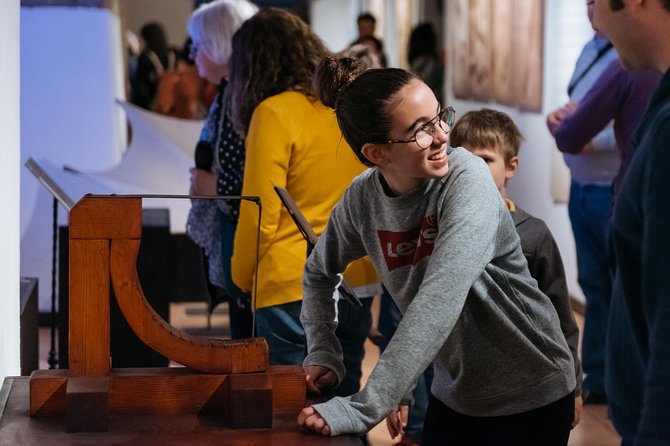
You may see designs connected with flight, gears, pulleys, military engineering, water, and construction. The scale varies, and not every model is a full-size working machine. Still, several stations let you turn, pull, or handle parts to see the basic principle.
This is where the museum works best. Leonardo’s drawings can look abstract, but a physical model makes the idea plain. You can see how force moves through a mechanism or how a simple device could solve a practical problem. The displays do not prove that Leonardo built every invention himself. They show what his drawings suggest.
Some machines are more fun than others. A few feel like classroom demonstrations, while others offer a real sense of discovery. The hands-on sections are especially useful for children, but adults who enjoy engineering or design will find plenty to think about too.
The military material may surprise you. Leonardo is often presented mainly as a painter and gentle observer of nature, yet his notebooks also contain plans for weapons, defenses, and battlefield machines. The museum gives those ideas space, adding a less familiar side of his career.
Art, anatomy, and the mind behind the machines
The exhibition is not only about inventions. Its art and anatomy sections explain why Leonardo’s work still feels so modern.
The anatomical studies show how closely he examined the human body. His drawings of muscles, bones, and organs were based on intense observation and research. The museum helps you connect those studies to his paintings, where the human figure looks convincing because Leonardo cared about what lay beneath the skin.
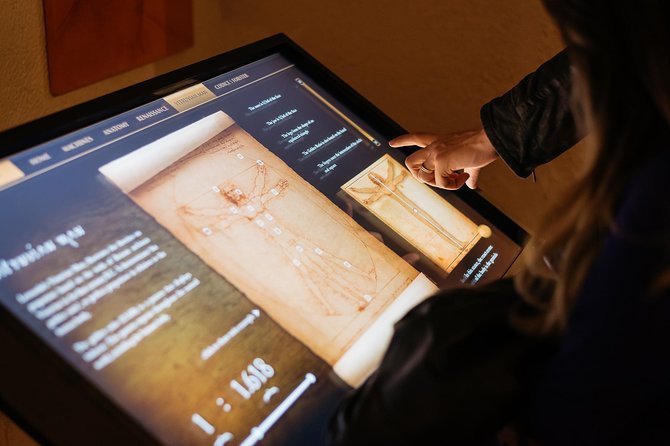
The Vitruvian Man section is one of the stronger stops. An interactive screen allows you to explore Leonardo’s paintings, drawings, and inventions before looking at the related displays. This gives you a bit of structure, which is helpful because the exhibition layout can otherwise feel random.
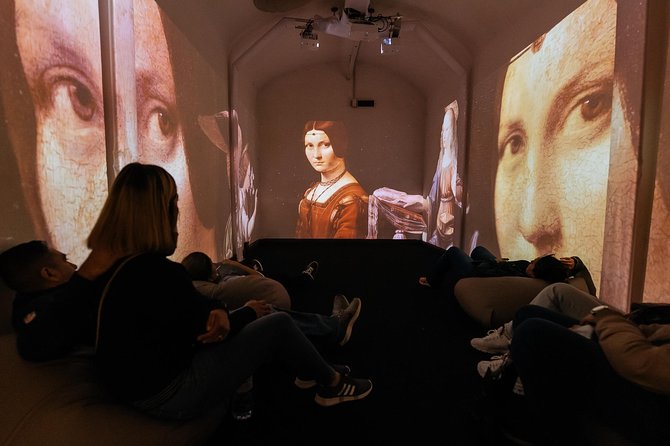
The Last Supper material focuses on the work’s story and method rather than presenting the original painting. Short documentaries and animations add background without requiring you to read every panel. They are a good pause between the more mechanical exhibits.
I would allow extra time here if art interests you. A fast visitor can treat the museum as a collection of machines. A slower visitor will see how Leonardo’s art, anatomy, and engineering fed the same curious mind.
Still Rome, but a slower afternoon:
- Colosseum, Roman Forum & Palatine Guided Tour
★ 4.7 · 63,148 reviews - Rome: Colosseum, Palatine Hill and Roman Forum Guided Tour
★ 4.8 · 32,814 reviews - Rome: Guided Tour of Colosseum, Roman Forum & Palatine Hill
★ 4.7 · 27,897 reviews - Rome: Colosseum & Forum with Audio Guide App -Optional Arena
★ 4.2 · 24,770 reviews
How long should you spend inside?
The advertised visit takes about one to two hours, but your timing will depend on how you use the displays.
You can move through in around 30 minutes if you read little and skip the audio guide. That may be enough for a quick look, but it will make the museum feel small and thin. If you stop at the machines, watch the films, and listen to the explanations, one hour is a more sensible minimum.
Two hours is possible for someone who enjoys the subject and takes time with the interactive material. Families may need longer because children will want to try each hands-on station. The museum is not huge, so you will not need half a day.
The audio guide costs about €3 per person and is available to buy separately. I think it improves the visit, particularly if Leonardo is new to you. It adds context to the machines and gives more detail about the paintings, drawings, and major projects.
There is one minor annoyance: the audio system may require you to hold the handset near your ear. That can become tiring, especially when you are also trying to operate a model. English descriptions are available on the exhibits, so confident readers may not need the guide.
Is the $14.38 ticket good value?
At $14.38 per person, the admission is a reasonable price for a short, central Rome stop. It is not a bargain if you judge the museum by floor space alone. It becomes better value when you combine it with the basilica, Piazza del Popolo, Villa Borghese, and the Spanish Steps.
Pre-booking can save time and gives you an admission ticket before arrival. In practice, the entrance may not have a long queue, and some visitors have simply walked in and bought tickets. So do not choose this ticket only because you expect a major skip-the-line advantage.
The real value is convenience. You know the admission is covered, and you can fit the museum into your day without a long commitment. The price also works well for families who want an educational stop that does not demand the time or cost of a large museum.
The optional audio guide adds about €3. If you are interested in Leonardo’s thought process, I would include it. If you prefer to read and experiment on your own, the printed explanations may be enough.
There is also an optional virtual reality flight. It is not part of the included admission, and only one station may be available, which can create a line. I would treat it as an extra, not a reason to book the museum.
The practical details that can make or break the visit
The museum is offered in English, making it suitable for English-speaking visitors without a private guide. Confirmation is provided when you book, and service animals are allowed.
You should use a restroom before entering. The museum has no toilet facilities, and one account also found no convenient restroom nearby. This matters more with young children or anyone who needs frequent breaks.
The interior can feel warm, so carry water. That simple tip is worth taking seriously, since a small underground exhibition can become uncomfortable when you are moving slowly through crowded or enclosed areas.
The layout is not always perfectly logical. The audio guide may not match the order of the exhibits, and the displays can seem arranged in a loose sequence. I suggest looking around before you begin listening, then choosing the sections that interest you most.
Directions can also cause confusion, especially if you rely only on a third-party map pin. Check that you are heading to the museum inside Santa Maria del Popolo, not another Leonardo-themed address in Rome.
The booking page lists a maximum of one person for the activity, which appears to describe the booking setup rather than a normal group visit. Families and couples have visited together, so confirm the ticket details if you are booking for more than one person.
Free cancellation is available up to 24 hours before the scheduled start time. Inside that window, the payment is not refunded and changes are not accepted.
Best times and nearby plans
A quieter visit is most likely later in the day, with one recommendation pointing to evening as a pleasant time to go. That also lets you enjoy Piazza del Popolo afterward, when the square is a natural place for a walk, shops, and restaurants.
Because the museum takes 30 minutes to two hours, it fits well between larger Roman attractions. You can visit the Spanish Steps, walk toward Piazza del Popolo, and use the museum as a short educational stop. Villa Borghese offers another nearby option if you want open space after the enclosed exhibition.
The museum also works on a rainy day. It gives you shelter and a focused activity without the scale of the Vatican Museums or the crowds found at Rome’s biggest landmarks.
I would not place it ahead of Rome’s essential sights if you have only one day. But if you have a spare hour, an interest in science or art, or children who need something they can touch, the location makes the decision easier.
Who will enjoy this museum most?
I would recommend it most strongly to:
- Families with older children interested in machines, science, or art
- Adults who want a clearer look at Leonardo’s inventions
- Visitors already sightseeing around Piazza del Popolo
- Anyone seeking a quieter stop after a busy guided tour
- People who enjoy short museums with hands-on displays
You may want to skip it if you have very little time in Rome or if you want original Renaissance masterpieces. The museum is educational, not a substitute for the major art collections elsewhere in the city.
It also may not suit children who need a large play area. The interactive displays are useful, but the museum is small, and the lack of a restroom makes family planning important.
Should you book the Museo Leonardo da Vinci?
Book it if you want to see Leonardo’s ideas made physical. The best parts are the working models, the anatomy studies, the Vitruvian Man material, and the chance to learn at your own pace. The exhibition can spark real curiosity, especially when you turn a model and suddenly understand the drawing behind it.
Do not book it expecting original artworks, a grand museum building, or several hours of entertainment. The collection is compact, the layout can feel uneven, and the audio guide is an extra cost.
For $14.38, I see it as a good-value add-on to a Piazza del Popolo walk rather than a must-see destination on its own. Add the €3 audio guide if you want more explanation, bring water, use a restroom first, and allow about an hour for a satisfying visit. That is the right scale for this small but thoughtful look at Leonardo’s extraordinary range.
FAQ
Where is the Museo Leonardo da Vinci located?
It is inside the Basilica Santa Maria del Popolo in Piazza del Popolo, Rome. It is about a five-minute walk from the Spanish Steps and Villa Borghese.
How much does admission cost?
The listed price is $14.38 per person. The admission ticket is included with the booking.
How long does the museum visit take?
The visit is estimated at one to two hours. Some people complete it in about 30 minutes, while visitors who use the audio guide and explore the interactive exhibits can stay longer.
Is the audio guide included?
No. The audio guide is available for about €3 per person. English descriptions are also available on the exhibits.
Is the museum offered in English?
Yes. The experience is offered in English.
Are Leonardo’s original paintings displayed there?
No original artwork is included as part of the main exhibition. The museum presents reproductions, studies, reconstructions, and multimedia material about Leonardo’s work.
Is the museum suitable for children?
Yes. The museum is suitable for families, and several exhibits are designed to be touched or operated. Older children with an interest in art or science may enjoy it most.
Are there restrooms at the museum?
No. There are no restroom facilities in or around the museum, so plan ahead.
Can I cancel the booking?
Yes. You can cancel for a full refund up to 24 hours before the scheduled start time. Cancellations or changes made less than 24 hours before the start time are not accepted and are not refunded.
Recently added around Rome
- Rome: Pantheon, Trevi Fountain & Roman Squares Guided Tour★ 4.7 · 386 reviews
- Vatican: St. Peter’s Basilica with Audio Guide and Options★ 3.4 · 269 reviews
- Vatican: Pope Francis Tomb and Papal Basilicas Tour★ 4.7 · 340 reviews
- Rome: Vatican Museums Skip-the-line Entry Ticket and Tour★ 4.2 · 400 reviews
- Rome: Vatican Museums & Sistine Chapel Ticket + Tour Options★ 4.7 · 344 reviews
- Vatican: Museums, Raphael & Sistine Chapel + Basilica Option★ 4.7 · 350 reviews
- Vatican Museums & Sistine Chapel Guided Tour★ 4.3 · 832 reviews
- Vatican Museums & Sistine Chapel Entry Ticket★ 4.4 · 245 reviews
Museums, compared.
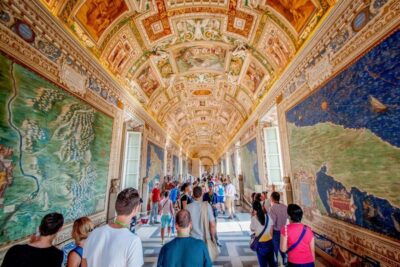
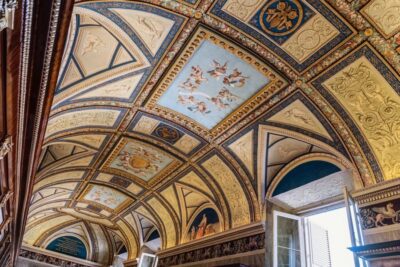
Vatican Museums & Sistine Chapel Tour with Optional Basilica
Read our review →
Vatican Museums, Sistine Chapel & St Peter’s Basilica Guided Tour
Read our review →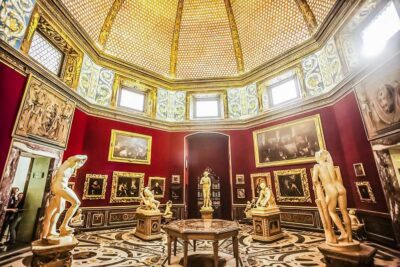
Skip-The-Line Uffizi Gallery Timed Entry Ticket
Read our review →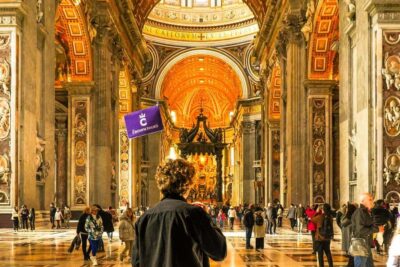
Vatican Museums, Sistine Chapel & Basilica Tour
Read our review →
Vatican Museums & Sistine Chapel Skip-the-Line Entry Ticket
Read our review →Vatican Museums, Sistine Chapel & Basilica Tour
Read our review →
Vatican Museums & Sistine Chapel Guided Tour
Read our review →Browse the lists this tour appears in