
Reviewed · COOKING CLASSES
Catania: Pistachio Ravioli, Pasta Home Cooking Class w/ Wine
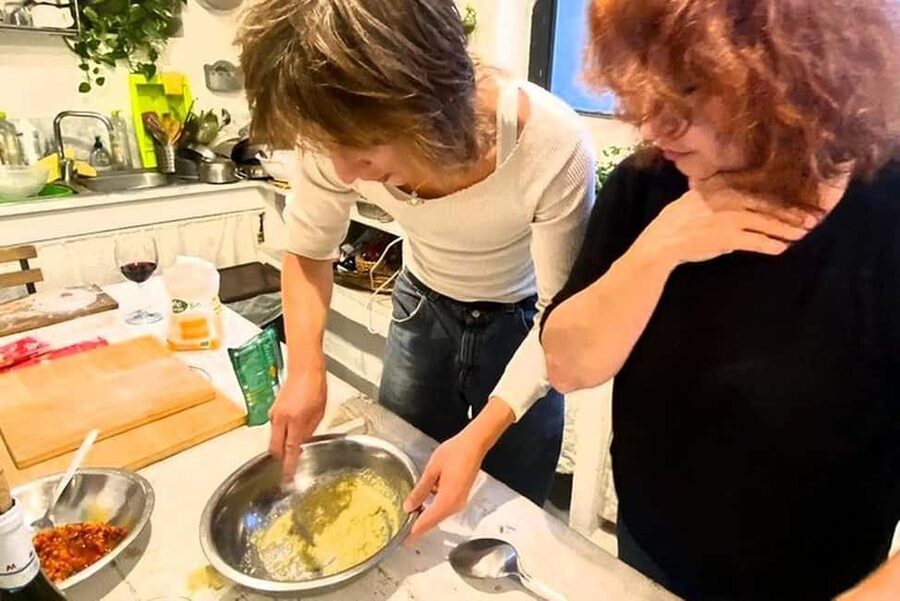
Pasta tastes better when you make it. This three-hour Catania cooking class brings you into Angela’s home to prepare pistachio-filled ravioli, a Sicilian specialty tied to the famous Bronte pistachio. I especially like the hands-on format, since you mix dough, prepare the filling, and shape the ravioli yourself rather than simply watching a chef work. I also like the warm, social setting, with wine, a three-course dinner, and plenty of laughter around the kitchen table.
The main point to consider is communication. The class is offered in English and Italian, but Angela speaks limited English at times, so Google Translate or help from her son Victor may be part of the evening. The meeting point can also be a little hard to spot: you ring the bell at Vignolo, and one participant wished there were a clearer sign.
In This Review
- Key points at a glance
- What the Catania cooking class is really like
- Meeting Angela and getting settled
- Making the pasta dough by hand
- The pistachio filling and ravioli shaping
- Bruschetta, wine, and the three-course meal
- Why the home setting matters
- How much value do you get for $100?
- Timing, group size, and practical points
- Who will enjoy this most?
- Should you book the pistachio ravioli class?
- FAQ
- How long does the pistachio ravioli cooking class last?
- How much does the cooking class cost?
- What food is included?
- Are wine, water, and coffee included?
- How many people can join the class?
- What languages are spoken?
- Is the activity wheelchair accessible?
Key points at a glance
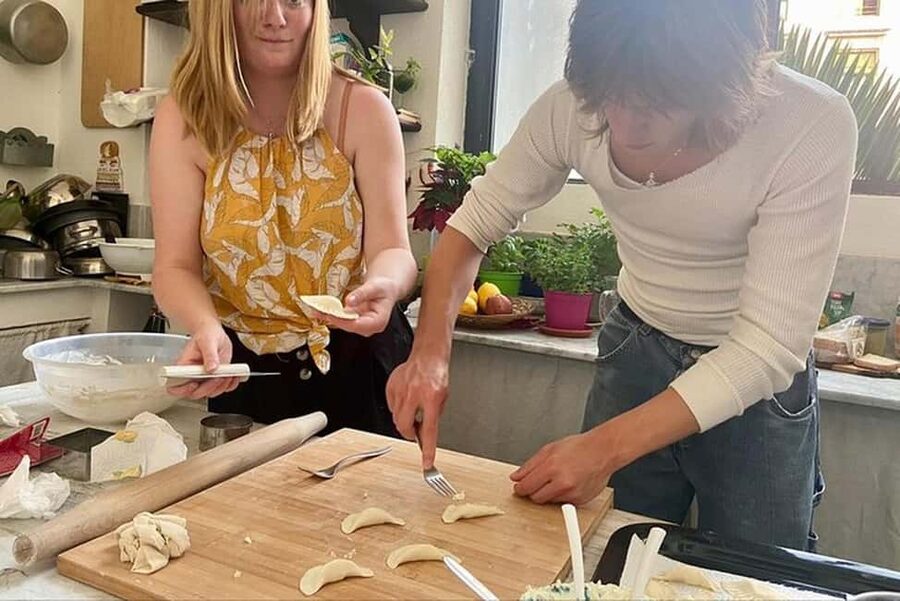
- Pistachio ravioli from scratch: Make the dough, creamy filling, and ravioli shapes by hand.
- Angela’s apartment kitchen: Cook in a real Sicilian home rather than a commercial cooking school.
- Bronte pistachio focus: Learn about Sicily’s prized green ingredient and its place in local cooking.
- Three-course meal with wine: Enjoy bruschetta, your ravioli, dessert, Sicilian wine, water, and coffee.
- Small group of up to eight: A compact class gives you room to practice and ask for help.
- Allow extra time: The advertised three hours can stretch closer to four, especially during a relaxed evening.
What the Catania cooking class is really like
This is not a polished demonstration with everyone sitting quietly behind a counter. You enter a private apartment, gather in the kitchen, and take part in the work. That matters because pasta-making is a tactile skill. You need to feel the dough, see how thin it should be, and learn how much filling is enough before sealing the ravioli.
The setting is part of the appeal. A few people initially felt unsure about cooking in an apartment instead of a formal kitchen, but the home proved clean, bright, and comfortable. Angela welcomes you into her own space, and that gives the class a personal quality that a large school often cannot match.
The group is limited to eight people. That is large enough to create an easy social evening, but small enough for Angela to watch your technique. The class attracts couples, families, solo participants, and people with different levels of cooking skill. You do not need to arrive as an accomplished pasta maker. Angela is patient, but she also corrects mistakes, which is exactly what you need if you want to reproduce the dish later.
More Cooking Classes in Catania:
- Florence: Pasta Cooking Class with Unlimited Wine
★ 4.9 · 10,285 reviews - 3 in 1 Cooking Class near Navona: Fettuccine, Ravioli & Tiramisu
★ 5.0 · 7,376 reviews - Florence Pizza or Pasta Class with Gelato Making at a Tuscan Farm
★ 5.0 · 6,801 reviews
Meeting Angela and getting settled
You meet at the provided address and ring the bell at Vignolo. The instructions are simple, but the entrance may not be immediately obvious. I would arrive with the address open on your phone and allow a few extra minutes to confirm that you are at the right building.
Once inside, the mood changes quickly from uncertainty to welcome. Angela is the heart of the experience. She is warm, funny, animated, and direct. Several people praised her humor and her ability to make strangers feel at home almost at once. Her son Victor may help with translation, although the class can also work with Google Translate when needed.
The language issue is worth understanding before you book. The activity is conducted in English and Italian, but the amount of English Angela speaks can vary. You should be comfortable learning partly through demonstration, gestures, translation apps, and watching closely. That is not a major problem for a practical recipe, but it can make detailed explanations slower.
For many people, the language mix becomes part of the fun. Cooking gives you a shared task, and you can understand a surprising amount by seeing the process. Still, if you want a fully fluent, lecture-style class in English, this may not be the best fit.
Making the pasta dough by hand
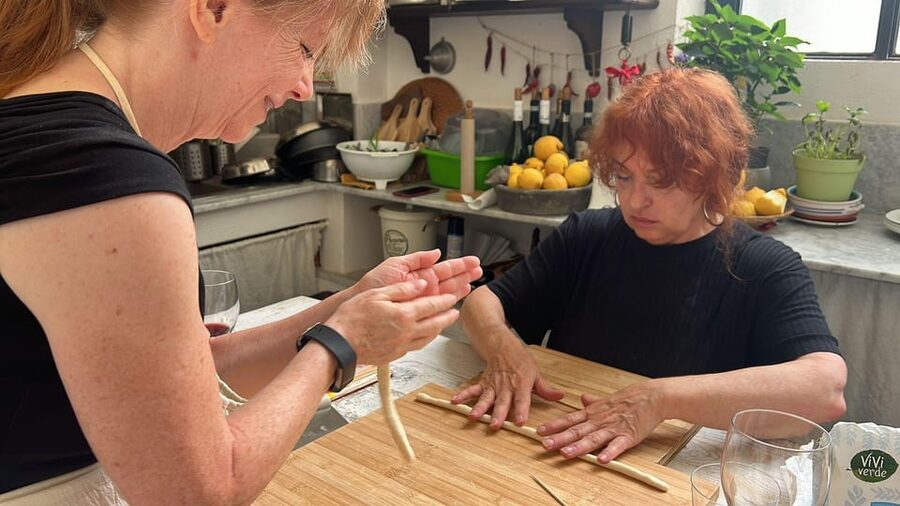
The class begins with fresh pasta dough. Angela guides you through the traditional Sicilian method and explains the basic techniques rather than rushing straight to the finished plate. You will work with the dough, learn how it should feel, and prepare it for rolling and shaping.
This is where the class earns its value. At $100 per person, you are not paying only for a recipe. You are paying for instruction, ingredients, a home-cooked meal, wine, and a personal introduction to Sicilian food traditions. The useful part is learning the small corrections that are hard to pick up from a cookbook.
The dough needs time to rest. That pause is not wasted. It creates a natural break in the lesson and lets you sit down with the first course while Angela prepares the next steps. One class participant noted that the activity ran about four hours instead of three, so do not schedule a tight evening appointment immediately afterward.
The pace is relaxed rather than rushed. Angela lets everyone take part, and she encourages you to try the techniques yourself. If your pasta shapes are uneven, that is normal. Homemade ravioli is not a factory product, and a little irregularity is part of the charm.
The pistachio filling and ravioli shaping
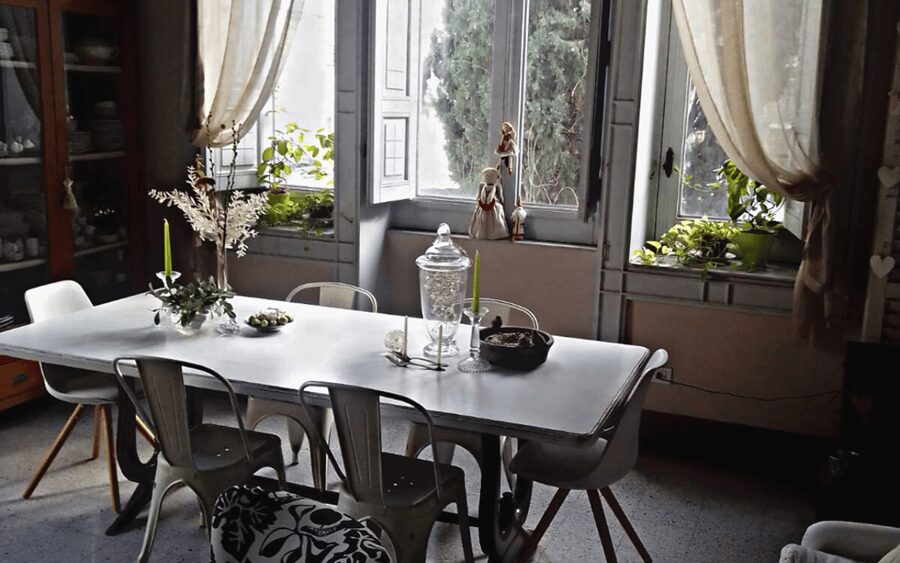
The star ingredient is pistachio, Sicily’s famous green gold. The class connects the dish with the Bronte pistachio, grown near Mount Etna and prized for its flavor and color. You learn how the filling is prepared and how to handle it so the ravioli closes properly.
Shaping ravioli looks easy until you try to seal each piece without trapping too much air or allowing filling to escape. Angela gives step-by-step help and pays close attention to technique. That personal correction is one of the strongest reasons to choose a small class instead of a large group lesson.
You will cut, fill, fold, and seal the pasta. Everyone gets a chance to help, rather than watching one person do all the work. The finished ravioli is then cooked and served as the main course.
The flavor combination is distinctly Sicilian. Pistachio brings a creamy, nutty taste, and the ravioli is served with a light white sauce according to one description. The result is not heavy or overly complicated. It lets the filling and fresh pasta do most of the work.
Several people described the ravioli as among the best pasta they ate in Sicily. That praise makes sense for two reasons: the dish is made fresh during the class, and you have learned enough about the process to appreciate the work behind each piece.
A few more Catania bookings to compare
- Catania: Mount Etna Morning or Sunset Day Trip with Tasting
★ 4.8 · 4,028 reviews - Mount Etna: Guided Volcano Summit Hiking Tour with Cable Car
★ 4.7 · 3,784 reviews - Catania: Sunset Jeep Tour of Mount Etna and Lava Flow Caves
★ 4.8 · 2,113 reviews - Mount Etna: Trek to 3000m with cable car and jeep
★ 4.7 · 1,978 reviews
Bruschetta, wine, and the three-course meal
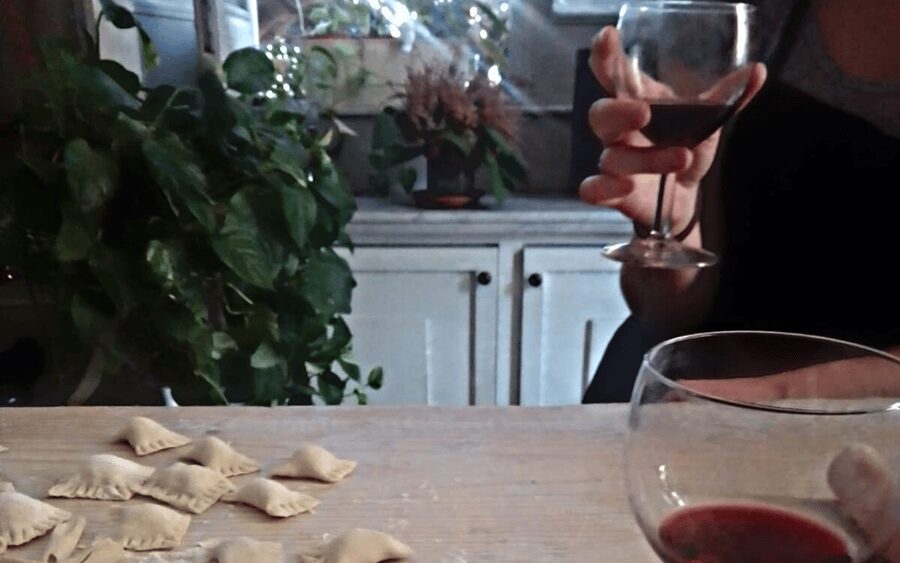
While the dough rests, Angela serves a gourmet bruschetta. The topping combines cheese, pear, walnuts, and chestnut honey, creating a sweet and savory starter with plenty of texture. It is an unusual combination if you are expecting tomato bruschetta, but that is part of the fun.
The pear and cheese pairing received especially strong praise. It is a small course, yet it gives you a taste of Angela’s creative cooking style and shows that Sicilian food is not limited to familiar pasta and seafood dishes.
The ravioli follows as the main course. You sit down to eat the food you helped prepare, usually with local Sicilian wine. Water is included, and coffee is also part of the meal. The wine pairing adds to the evening without turning it into a formal tasting. You are there to eat, talk, and enjoy the result.
Dessert completes the meal. Tiramisu appears in some versions of the class, while other descriptions mention ricotta with strawberries. The exact dessert may vary, but it is included as part of the three-course dinner. The meal is generous enough to feel like a full evening rather than a short lesson with a token sample at the end.
Why the home setting matters
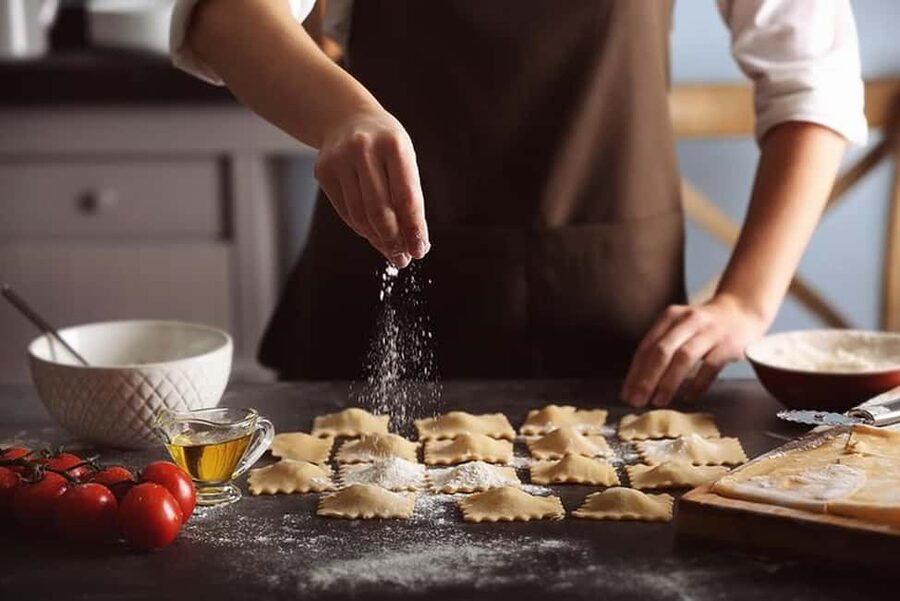
The apartment is not just a backdrop. It changes the tone of the activity. You are not moving through a commercial kitchen with a professional staff. You are sitting at Angela’s table, sharing food in the place where she lives and cooks.
That can feel more personal and more authentic, but it also means you should expect a less standardized experience. The class may run long, translation may be informal, and the dessert or exact flow can vary. If you need strict timing and a highly controlled format, those qualities may bother you.
I see the home environment as a good trade for most people. The strongest part of this experience is the welcome. Angela and Victor have made people feel comfortable, and the shared meal helps the group become friendly quickly. Couples often arrive together but end up chatting with other participants around the table.
The evening also gives you a small window into ordinary Sicilian hospitality. You are not merely visiting a restaurant. You are being received into someone’s home, helping prepare food, and sitting down together afterward. That is a different kind of cultural experience, and it is likely to be the most memorable part for many people.
How much value do you get for $100?
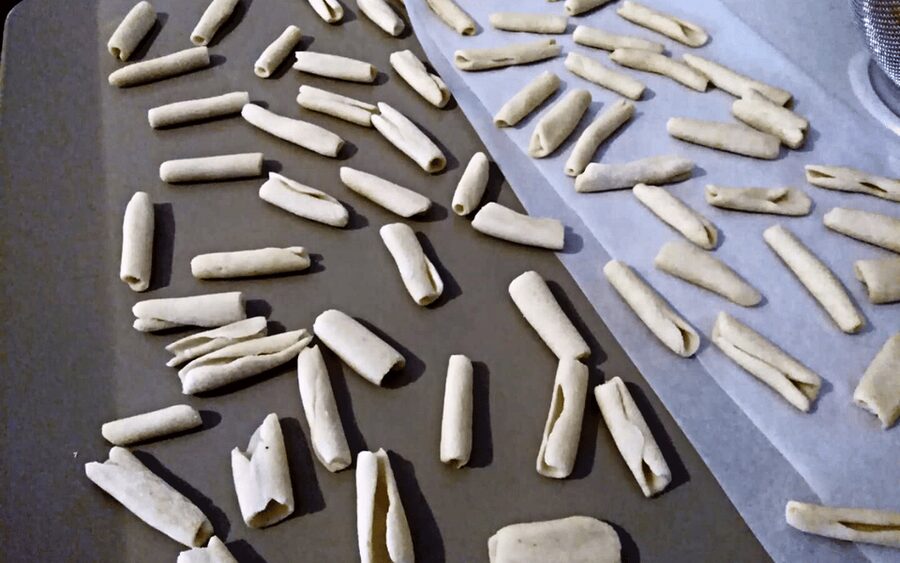
At $100 per person, this is not the cheapest way to eat pasta in Catania. You could find a restaurant meal for less, especially if you choose a casual trattoria. But a restaurant cannot give you the same combination of instruction, participation, food, wine, and personal contact.
The price includes:
- A hands-on cooking class
- A three-course dinner
- Pistachio ravioli made during the lesson
- Bruschetta with cheese, pear, walnuts, and chestnut honey
- Dessert
- Sicilian wine
- Water and coffee
I consider the price fair if you value experiences over simple sightseeing. You are getting roughly an evening’s activity, not just a plate of pasta. The small group also improves the value because Angela has time to help you directly.
The class is an especially good choice for a couple, a family, or anyone who wants a memorable meal with a practical skill attached. It is less useful for someone who dislikes group activities or has no interest in cooking. You will spend much of the time handling dough, shaping pasta, and waiting for stages of the recipe.
Timing, group size, and practical points
The stated duration is three hours, with starting times depending on availability. Plan on the possibility of four hours. This is particularly important if you are booking an evening theater performance, a train, or another timed activity.
The maximum group size is eight. A group of seven has been described, with couples and a solo participant working around the kitchen table. That arrangement gives the class a friendly feel without turning it into a crowd.
The activity is not suitable for wheelchair users. The meeting point involves ringing a bell at the provided address, so keep the arrival instructions handy. A clear sign may not be present.
Cancellation is flexible: you can cancel up to 24 hours before the activity for a full refund. You can also reserve now and pay later, which helps if your Catania plans are still taking shape.
Who will enjoy this most?
I would choose this class if you want more than a checklist attraction. It suits people who like food, conversation, and learning by doing. You will get the most from it if you are willing to make mistakes, laugh at your pasta shapes, and accept a little improvisation.
It also works well for families, based on the many comments about children and relatives enjoying the hands-on format. Couples can treat it as an evening activity, while solo participants have a natural way to meet people.
The class may be less suitable if you need full wheelchair access, strict English instruction, or a precise three-hour finish. It is also not ideal if your main goal is to eat without participating. Angela expects you to get involved.
Should you book the pistachio ravioli class?
Book it if you want an intimate food experience with a strong human touch. Angela’s humor, patience, and careful corrections receive the most consistent praise, and the combination of pistachio ravioli, unusual bruschetta, wine, and dessert makes the evening feel substantial.
Go in prepared for a home setting, possible translation by phone, and a schedule that may stretch. Bring your appetite, keep the meeting address ready, and do not worry about making perfect ravioli on your first attempt. If you want to take the recipe home, bring a note-taking app or ask for the instructions during the class, since a recipe card may not be provided.
For food lovers spending an evening in Catania, this is a strong pick. You leave with a full meal, new pasta skills, and a better sense of Sicilian hospitality. That is a good return on $100.
FAQ
How long does the pistachio ravioli cooking class last?
The stated duration is three hours. The class can run longer, with one account putting the total time at about four hours, so allow extra time afterward.
How much does the cooking class cost?
The price is $100 per person.
What food is included?
The experience includes a three-course dinner. The meal features pistachio ravioli, bruschetta with cheese, pear, walnuts, and chestnut honey, plus dessert. Tiramisu and ricotta with strawberries are both described as possible desserts.
Are wine, water, and coffee included?
Yes. Sicilian wine, water, and coffee are included with the meal.
How many people can join the class?
The class is limited to eight participants.
What languages are spoken?
The activity is offered in English and Italian. Angela may speak limited English at times, and translation apps or help from her son Victor may be used.
Is the activity wheelchair accessible?
No. The experience is not suitable for wheelchair users.
Recently added around Catania
- Tour Etna & Wine Tasting★ 5.0 · 317 reviews
- Syracuse, Ortigia and Noto walking tour from Catania★ 5.0 · 273 reviews
- The Godfather Movie Tour★ 5.0 · 275 reviews
- Etna, Wine and Alcantara Tour – From Taormina★ 5.0 · 464 reviews
- Etna and Alcantara Gorges Excursion★ 4.5 · 256 reviews
- The Original Catania Street Food and Market Tour by Streaty★ 5.0 · 345 reviews
- Mt Etna and Wine tasting tour from Catania★ 5.0 · 282 reviews
- Etna Tour in 4×4★ 5.0 · 583 reviews
Cooking Classes, compared.
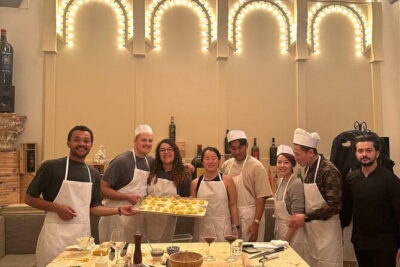

3 in 1 Cooking Class near Navona: Fettuccine, Ravioli & Tiramisu
Read our review →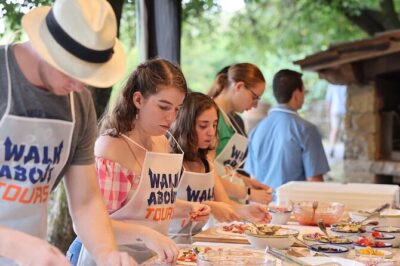
Florence Pizza or Pasta Class with Gelato Making at a Tuscan Farm
Read our review →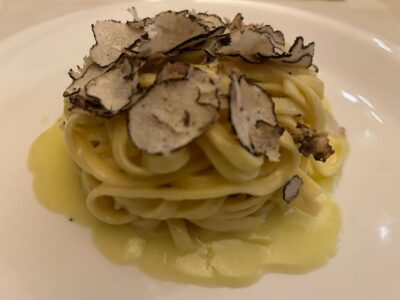
Pasta & Tiramisu Cooking Class with Unlimited Wine
Read our review →
Pizza-Making Workshop with Drink and Appetizer
Read our review →
Pasta & Tiramisu Class with Fine Wine by the Vatican
Read our review →
Cooking Class and Lunch at a Tuscan Farmhouse with Local Market Tour from Florence
Read our review →Browse the lists this tour appears in