
Reviewed · SKIP THE LINE
Castel Sant’Angelo Skip-the-Line Entry & Optional Audioguide
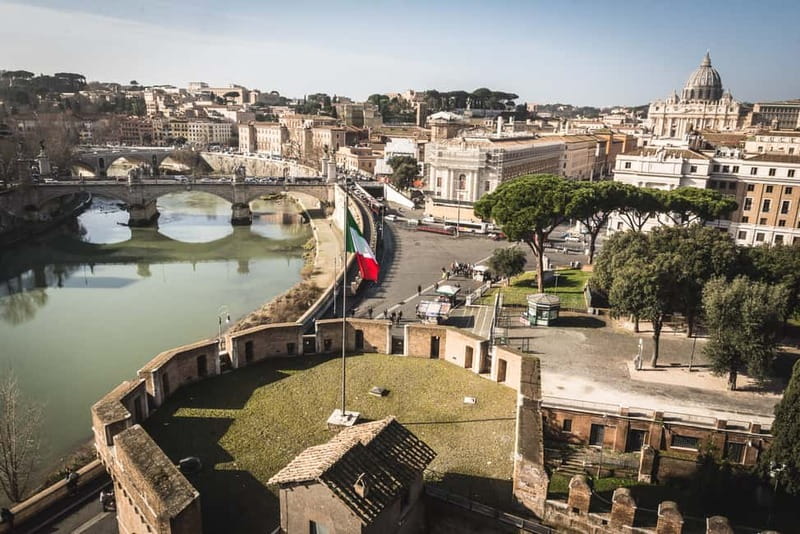
Rome keeps its best view upstairs. Castel Sant’Angelo gives you ancient Roman, medieval, and papal history in one compact visit, ending with a superb look across Rome, the Tiber, Vatican City, and Ponte Sant’Angelo. I like the simple skip-the-line format and the freedom to explore at your own pace with an optional audio guide. The main drawback is that this is not a guided tour, and reaching the terrace means climbing stairs.
At about $15 per person, this is a sensible pick if you want an important Roman sight without committing half a day to a formal tour. I especially like the five-floor route, which turns a former mausoleum into a clear story of changing power. Just bring a charged phone, headphones, and patience for the ticket instructions, since staff assistance at the entrance is not guaranteed.
In This Review
- Castel Sant’Angelo at a glance
- Why Castel Sant’Angelo is worth your Rome time
- Getting inside with the skip-the-line ticket
- The first chapter: an ancient Roman mausoleum
- Five floors of fortifications, cells, and papal rooms
- Art and frescoes inside the fortress
- The chamber of ashes and the castle’s darker side
- The terrace: Rome spread out below
- How much time should you allow?
- Is the optional audio guide worth paying for?
- Price, practical value, and small frustrations
- Who should book this Castel Sant’Angelo visit?
- Should you book it?
- FAQ
- How much does the Castel Sant’Angelo ticket cost?
- How long is the ticket valid?
- Is this a guided tour?
- Which languages are available for the audio guide?
- What do I need to bring?
- Where do I enter?
- When will I receive my ticket?
- Can I bring luggage or a large bag?
- Is the castle accessible to wheelchair users?
Castel Sant’Angelo at a glance
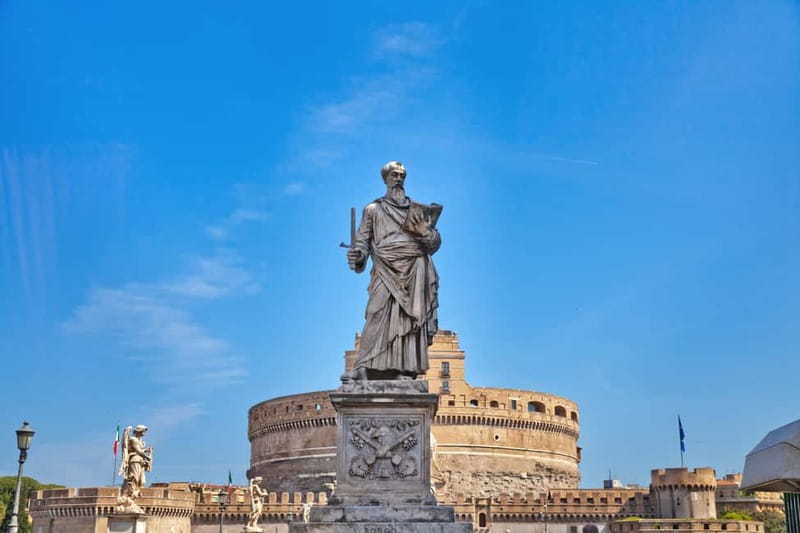
- Roman tomb turned fortress: Follow the building’s transformation from monumental burial place to medieval stronghold and papal residence.
- Terrace views reward the climb: See Rome, Vatican City, the Tiber River, and the Bridge of Angels from above.
- Skip the ticket-office queue: Go to the main entrance with your emailed ticket and identification.
- Optional audio guide: Choose English, French, Italian, Chinese, German, or Spanish if you want extra historical context.
- Five floors to explore: The route includes a spiral ramp, cells, papal rooms, frescoes, and a chamber of ashes.
- Allow for stairs: This visit is not suitable for wheelchair users or people with mobility impairments.
Why Castel Sant’Angelo is worth your Rome time
Castel Sant’Angelo is easy to overlook beside Rome’s headline sights. That would be a mistake. Its appeal is not one single room or monument, but the way the building changes as you move through it.
You begin with an ancient Roman mausoleum. Then the route carries you into the castle’s military years, its role in defense, and its later use as a papal residence. The building feels like a historical cross-section of Rome, with each level adding another layer.
I like this kind of visit because you do not need to be an expert to follow the story. The walls themselves explain the change. A tomb becomes a fortress. A fortress becomes a place of refuge and power. Art, military architecture, religious history, and city views all meet under one roof.
The ticket is also less demanding than a full guided tour. You can pause where you want, move quickly through less interesting areas, or spend extra time with the Renaissance and Baroque paintings. That flexibility is useful if you are fitting the castle between the Vatican, Piazza Navona, or an evening walk along the Tiber.
A few more Rome bookings to compare
- Vatican: Museums & Sistine Chapel Entrance Ticket
★ 4.5 · 144,003 reviews - Vatican Museums & Sistine Chapel Tour with Optional Basilica
★ 4.3 · 67,413 reviews - Colosseum, Roman Forum & Palatine Guided Tour
★ 4.7 · 63,148 reviews
Getting inside with the skip-the-line ticket
The practical benefit here is straightforward: you avoid the ticket-office line and go directly to the attraction’s main entrance. Show the emailed ticket and a valid passport or identification document before entering.
Your ticket is sent to the email used during booking, within 24 hours before the activity. Check your inbox before leaving for the castle, and make sure the name on the booking matches the participant’s passport or identification. This matters because the attraction requires complete names for every person in the booking.
The ticket information has to be handled carefully. The activity is listed as valid for one day, but tickets are also valid only for the selected date and time slot. One booking experience may offer some flexibility during the day, but you should not assume that every ticket works this way. Follow the date and time printed on your confirmation.
Late arrival or a no-show is not refunded. I would aim to arrive early rather than cut things close, especially if you are coming from another part of central Rome.
There is no included guided tour and no guaranteed staff assistance at the entrance. Some ticket holders have received help from a representative outside, including assistance with the audio app, but treat that as a bonus rather than part of the service. You need to be ready to show your ticket and manage the entry process yourself.
The first chapter: an ancient Roman mausoleum
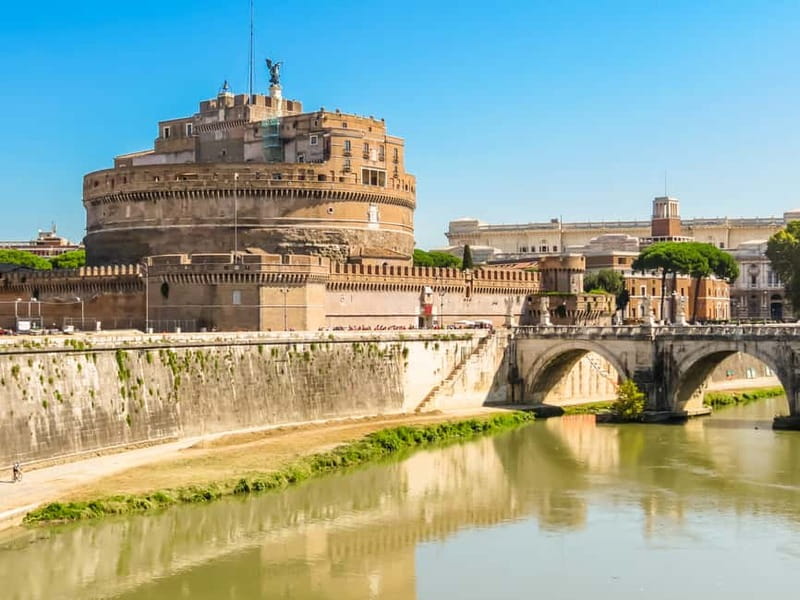
The visit begins with the building’s original purpose as a monumental tomb. This starting point gives the castle its unusual shape and helps you understand why it feels different from a normal medieval fortress.
The mausoleum was built to house the remains of an important Roman emperor and members of his family. The supplied visit description focuses on the chamber of ashes and the remains of notable Roman figures, so this is one of the places where the building’s earliest identity comes through most clearly.
As you walk farther inside, notice the contrast between the solid structure and the later decorative rooms. The ancient core was built for permanence. Later occupants altered it for defense, ceremony, and comfort.
The route uses a spiral ramp as it moves through the castle. This is more than a way to get from floor to floor. It gives the visit a sense of physical progress, from the heavy Roman structure toward the decorated papal interiors and open rooftop.
Five floors of fortifications, cells, and papal rooms
The castle’s middle sections tell the story of survival and reinvention. During the medieval period, it served as a fortress and defensive post, including a role connected to protection against barbarian invasions.
You will see cells and military spaces alongside rooms used as a papal residence. That pairing is what makes Castel Sant’Angelo so interesting. It was not only a place for weapons and defense. It also became a place where popes lived, worked, and sought protection.
The papal rooms bring a different mood. Renaissance and Baroque artworks, frescoes, and decorated chambers replace the stark feel of the lower structure. Look for the contrast between the practical castle and the more polished rooms above.
If you choose the digital audio guide, you can listen as you go. The available languages are English, French, Italian, Chinese, German, and Spanish. The audio option is best for visitors who want a little context but do not want to stay with a group or follow a fixed speaking schedule.
You need to download the app before the visit. Bring headphones, a charged smartphone, and internet access. Do not wait until you are standing at the entrance with a low battery and no connection. The audio guide is optional, but the phone and ticket are not.
Still Rome, but a slower afternoon:
- Vatican Museums, Sistine Chapel & St Peter’s Basilica Guided Tour
★ 4.5 · 39,149 reviews - Rome: Colosseum, Palatine Hill and Roman Forum Guided Tour
★ 4.8 · 32,814 reviews - Rome: Guided Tour of Colosseum, Roman Forum & Palatine Hill
★ 4.7 · 27,897 reviews - Rome: Colosseum & Forum with Audio Guide App -Optional Arena
★ 4.2 · 24,770 reviews
Art and frescoes inside the fortress

Castel Sant’Angelo is not an art museum in the same sense as the Vatican Museums. Its art is valuable because of where it appears and what it says about the building’s later use.
Renaissance and Baroque paintings, frescoes, and statues appear among the fortress spaces and papal apartments. The result is a visit that changes tone several times. You might move from a defensive passage to a decorated room, then into another section that recalls the castle’s Roman beginnings.
Some frescoes are preserved remarkably well according to the activity description. Take time to look at them rather than treating the interior as a route to the roof. The building’s strongest feature is the combination of art and architecture.
The audio guide can help here, particularly if you want to know why a room matters or how it fits into the castle’s development. Without it, the visit still works as a self-guided walk, but you will rely more on signs and your own attention.
The chamber of ashes and the castle’s darker side
The chamber of ashes connects the present-day museum to the original tomb. It is a useful reminder that Castel Sant’Angelo was not first designed as a palace or a military post. Its earliest role was tied to death, memory, and imperial display.
This part of the visit may appeal most to history-minded visitors. The setting is not simply a scenic castle with attractive rooms. It also preserves the remains and burial associations of important Roman figures.
I would not rush through this area. The later papal rooms and terrace are more visually immediate, but the chamber of ashes explains the foundation of the entire building. Without it, the castle’s transformation would be harder to appreciate.
The terrace: Rome spread out below
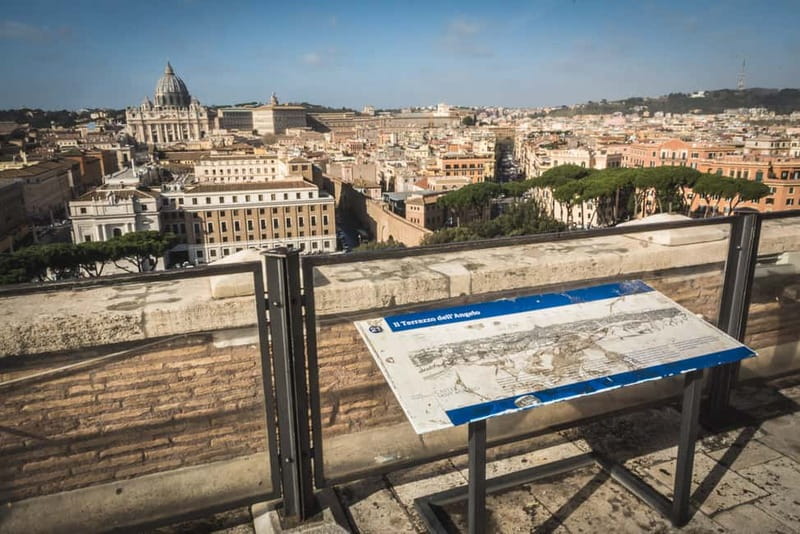
The rooftop terrace is the clear payoff. You need to climb a series of stairs, and the route is not suitable for people with mobility impairments or wheelchair users. Wear comfortable shoes and carry water, especially if you are visiting in warm weather.
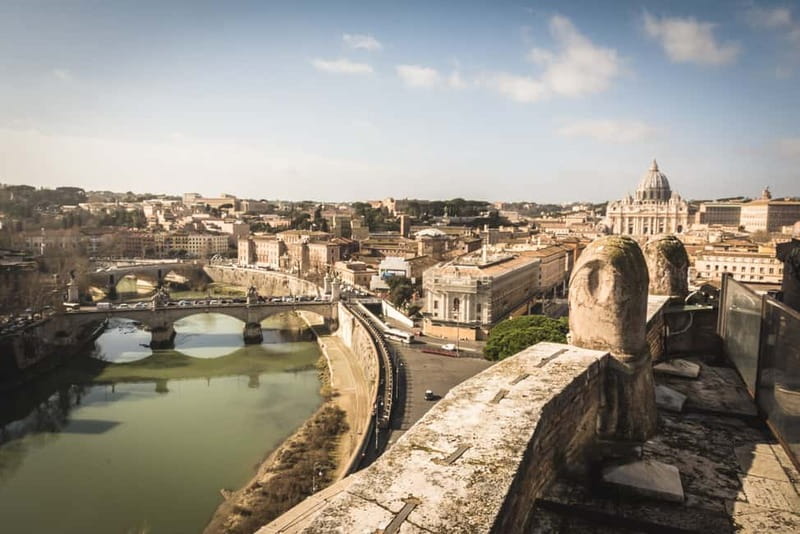
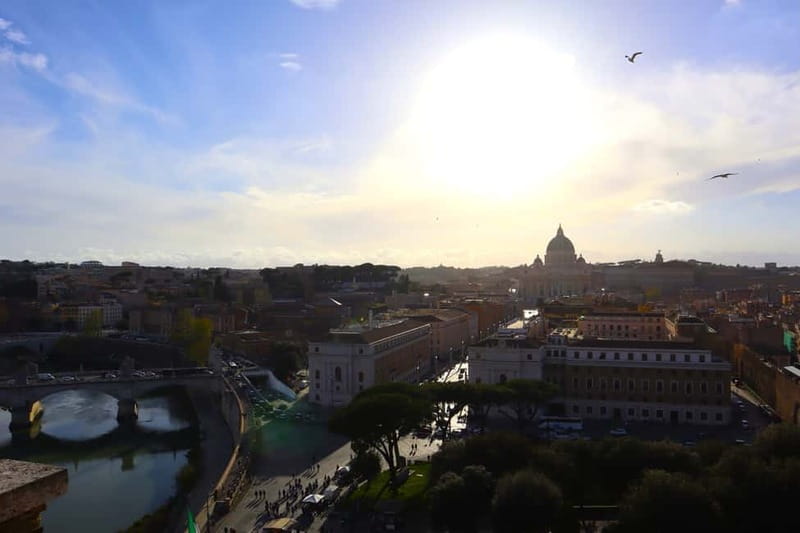
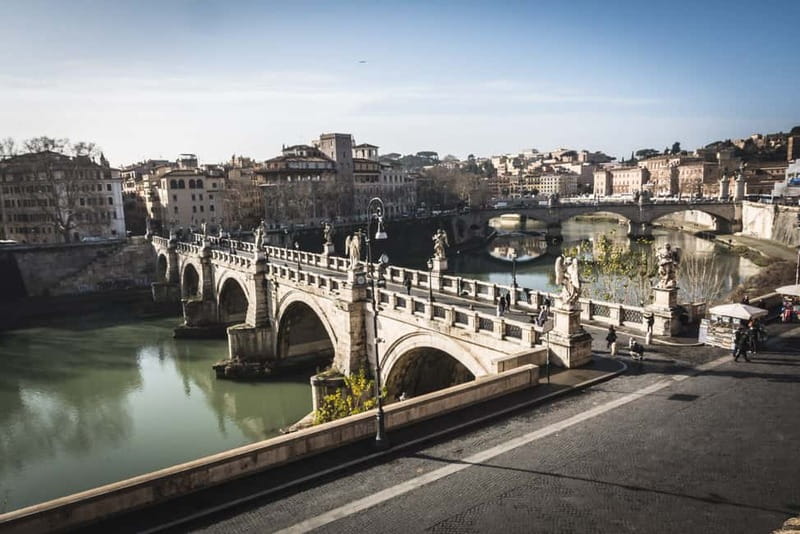
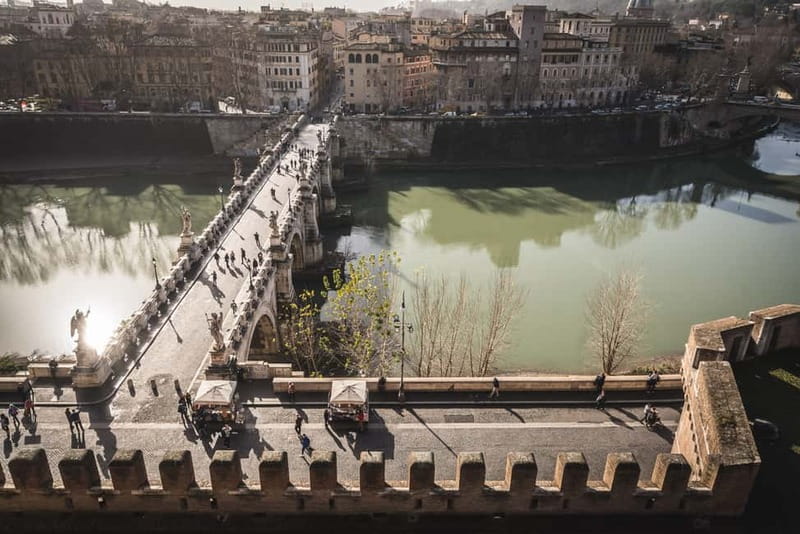
From the top, you can look across the city and spot Vatican City, the Tiber River, and the famous Bridge of Angels. The view gives you a useful sense of Rome’s layout because the castle sits beside the river and close to the Vatican area.
The terrace is also a fine place to pause after the indoor rooms. A café or bar at the top provides an opportunity to sit with a drink, and a 30-minute break there can turn the rooftop into more than a quick photo stop. Check current opening arrangements on the day, since food and drink services can change.
The views are especially valuable because they connect the castle to the city around it. You are not just looking at Rome from a high platform. You can see the river route, the bridge leading toward the castle, and the Vatican area that helped make this building so important.
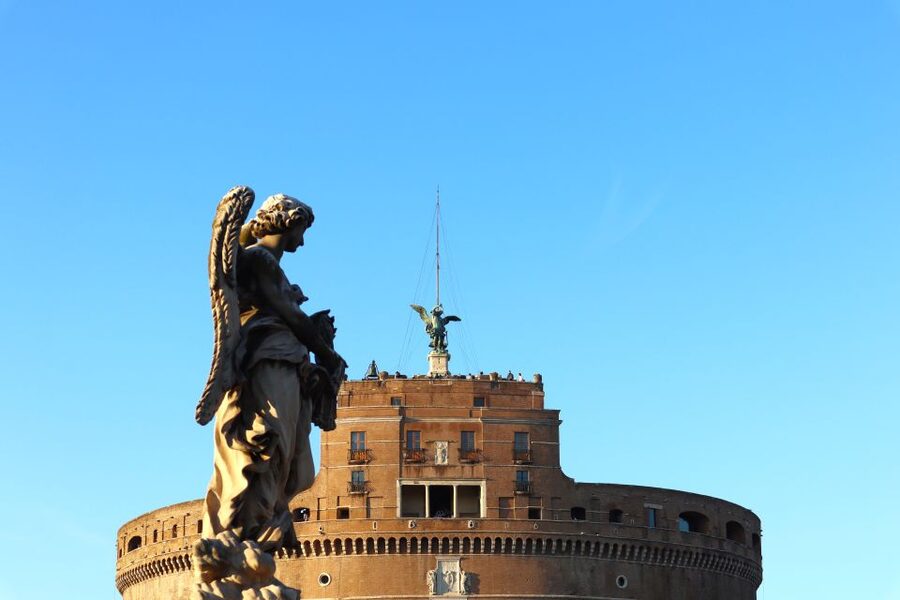
Give yourself time for photographs, but do not forget to look back at the castle itself. From the terrace, the building’s heavy walls and central position make better sense than they do from the street.
How much time should you allow?
The ticket is valid for one day, but the visit itself is usually manageable in about an hour if you follow the suggested route and keep moving. That makes it a useful addition to a crowded Rome schedule.
I would allow more time if you plan to use the audio guide, study the frescoes, visit every room, or stop at the café. The five floors and stairs also make the visit feel longer than a simple museum walk.
A later time slot may work well if you prefer thinner crowds. One ticket holder found that the castle became calmer later in the day. This is not a guarantee, but it is a sensible tactic when your schedule allows it.
The castle also works well as a short visit between larger attractions. If you have already spent hours at the Vatican Museums, an hour at Castel Sant’Angelo can provide a change of pace. You get history, architecture, and an open-air view without signing up for another long group experience.
Is the optional audio guide worth paying for?
The audio guide is worth considering if you want historical explanations without a live guide. You can stop and start at your own pace, which works well for couples, families, and small groups with different interests.
It is less useful if you prefer to read signs, wander freely, or keep your phone put away. Remember that the audio guide is digital, so you must download the app before arrival and bring your own headphones.
The guide is available in six languages: English, French, Italian, Chinese, German, and Spanish. It does not turn the ticket into a guided tour, and staff assistance is not included. Think of it as an optional layer of information, not a personal escort.
Price, practical value, and small frustrations
At $15 per person, this ticket offers good value for a major Roman monument with a terrace view and several floors of exhibits. The biggest saving is time. Skipping the ticket-office queue matters in Rome, where an apparently short stop can become a frustrating wait.
The price is most worthwhile when the castle is busy or when you have a tight schedule. If you visit during a quiet period, the line-saving feature may matter less, but the admission still gives you access to the full museum route.
The main frustration is the lack of guaranteed help at the entrance. You need to find the correct main entrance, have your email ready, carry identification, and manage the app yourself if you selected the audio guide. Clear directions and an early arrival reduce the risk.
Large bags and luggage are not allowed, and weapons or sharp objects are prohibited. Travel light. Comfortable shoes are important because of the walking and stairs, while water is a smart addition.
Free cancellation is available up to 24 hours before the activity for a full refund. You can also reserve now and pay later, which helps if your Rome plans are still shifting. Once you miss the assigned time or fail to attend, you should not expect a refund.
Who should book this Castel Sant’Angelo visit?
I would recommend it to first-time Rome visitors who want a manageable historic stop with excellent city views. It is also a strong choice for anyone interested in ancient Roman buildings, military architecture, papal history, Renaissance art, or the settings seen in historical video games.
Independent sightseers will appreciate the self-guided format. You can move at your own pace, skip the audio, or spend extra time in the rooms that interest you most.
It is less suitable if you need step-free access, use a wheelchair, or dislike stairs. It is also not the right choice if you want a live guide explaining every room. In that case, look for a clearly advertised guided tour instead.
Families can make good use of the castle if children enjoy forts, secretive passages, rooftop views, and stories of changing rulers. The audio guide may help older children stay interested, but everyone should be prepared for plenty of walking.
Should you book it?
Book this if you want to see an unusual side of Rome without spending a full morning on a formal tour. The combination of ancient tomb, fortress, papal residence, artwork, and terrace makes the castle unusually varied, while the skip-the-line ticket keeps the visit efficient.
I would choose the audio guide if you enjoy context and already have headphones. I would skip it if you prefer a quick independent visit.
The final decision comes down to stairs and logistics. If you can manage the climb, travel with a small bag, arrive on time, and keep your ticket and identification ready, Castel Sant’Angelo offers a lot for $15. The rooftop view alone is memorable, but the building’s changing purpose is what makes the visit worthwhile.
FAQ
How much does the Castel Sant’Angelo ticket cost?
The listed price is $15 per person.
How long is the ticket valid?
The activity is valid for one day, but tickets are valid only for the selected date and time slot. Check your confirmation carefully.
Is this a guided tour?
No. A guided tour is not included. You explore the castle independently, with an optional digital audio guide.
Which languages are available for the audio guide?
The audio guide is available in English, French, Italian, Chinese, German, and Spanish.
What do I need to bring?
Bring comfortable shoes, a charged smartphone, headphones, and internet access. You must also present a valid passport or identification document.
Where do I enter?
Go directly to the attraction’s main entrance at the address provided for Castel Sant’Angelo. Show your emailed ticket and valid identification.
When will I receive my ticket?
The entry ticket is delivered to the email used during booking within 24 hours before the activity.
Can I bring luggage or a large bag?
No. Luggage and large bags are not allowed. Weapons and sharp objects are also prohibited.
Is the castle accessible to wheelchair users?
No. The activity is not suitable for wheelchair users or people with mobility impairments, and you must climb stairs to reach the panoramic terrace.
Recently added around Rome
- Palatine Hill and Roman Forum Tour with Fast-Track Entrance★ 4.2 · 417 reviews
- Tivoli: Villa D’Este & Villa Adriana Pass & App Audioguide★ 4.4 · 364 reviews
- From Rome: Villa D’Este & Villa Adriana Day Trip with Lunch★ 4.4 · 289 reviews
- Vatican Museums & Sistine Chapel Skip-the-Line Guided Tour★ 4.6 · 254 reviews
- Rome: The Three Tenors at St. Paul’s Church Concert Ticket★ 4.7 · 699 reviews
- Tivoli: Villa D’Este Entry Ticket and App Audio Guide★ 4.3 · 191 reviews
- Rome: Capitoline Museums and Centrale Montemartini Tickets★ 4.4 · 328 reviews
- Rome: St. Peter’s Basilica and Papal Tombs Guided Tour★ 4.6 · 477 reviews
Skip the Line, compared.
Skip-The-Line Uffizi Gallery Timed Entry Ticket
Read our review →
Vatican Museums & Sistine Chapel Skip-the-Line Entry Ticket
Read our review →
Skip-the-Line Group Tour of the Vatican, Sistine Chapel & St. Peter’s Basilica
Read our review →
Michelangelo’s David Skip-the-Line Entry Ticket
Read our review →
Vatican Museums & Sistine Chapel Skip-The-Line Ticket
Read our review →
Vatican, Sistine Chapel & St. Peter’s Skip-the-Line Tour
Read our review →
Skip-the-Line Vatican, Sistine Chapel & St. Peter’s | Small Group
Read our review →
Vatican Museums Sistine Chapel Skip-the-Line Ticket
Read our review →Browse the lists this tour appears in