
Reviewed · SKIP THE LINE
Borghese Gallery Guided Tour with Skip-the-Line Entry
Some museums reward a careful plan. The Borghese Gallery is one of them. This two-hour guided visit takes you through a compact collection packed with Bernini sculptures, Caravaggio paintings, classical art, and lavish rooms, while skip-the-line entry helps you avoid wasting precious Rome time outside.
I especially like the small group of no more than 15 people and the use of headsets when needed. The guides, including Martina, Francesca, Stephanie, Lorenzo, and Serena, are repeatedly praised for making the art clear, lively, and personal. The main drawback is strict timing: late arrivals cannot be accommodated, and the tour can sometimes run longer than planned, which may be tiring if you need frequent breaks.
At $91.95 per person, this is not a cheap museum ticket. Still, the price includes admission, a guide, and queue-free group entry into one of Rome’s most tightly controlled museums. If you want to understand what you are seeing rather than simply walk past famous marble, the cost can make good sense.
In This Review
- What makes this Borghese visit worth considering
- Why the Borghese Gallery needs a guided visit
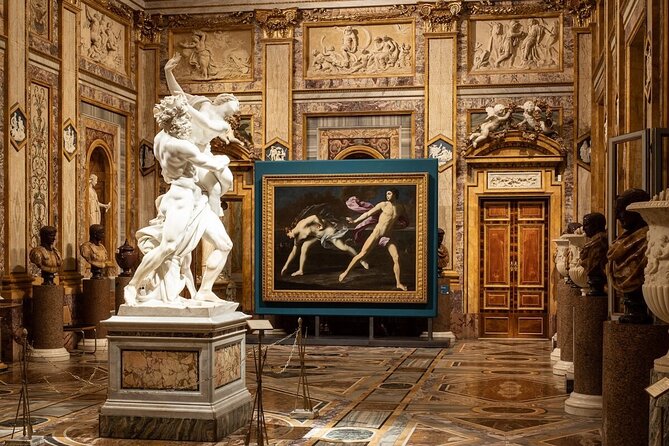
- Apollo and Daphne: Bernini turns marble into motion
- Pauline Bonaparte as Venus Victorious: portrait, power, and scandal
- The two busts of Scipione Borghese reveal a living face
- Truth Unveiled by Time: an unfinished idea with a story
- Bernini’s David: the split second before the throw
- The gallery experience beyond the five featured works
- Is $91.95 good value?
- Meeting point, timing, and the late-arrival rule
- Who should book this tour?
- Should you book the Borghese Gallery guided tour?
- FAQ
- How long does the Borghese Gallery guided tour last?
- How much does the tour cost?
- Is admission to the Borghese Gallery included?
- Is skip-the-line entry included?
- How many people can join the tour?
- What language is the tour offered in?
- Are headsets provided?
- Where does the tour begin and end?
- What happens if I arrive late?
- Can I cancel for a refund?
What makes this Borghese visit worth considering
- Bernini’s Apollo and Daphne gets a proper 20-minute look: You can see the marble transformation scene up close, including the moment Daphne’s fingers become leaves.
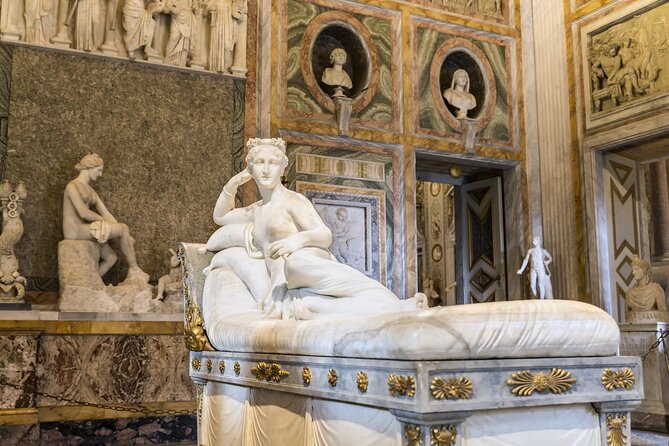
- Pauline Bonaparte appears as Venus Victorious: Canova’s polished neo-Classical portrait is one of the gallery’s most famous works, and its unusual commission adds a memorable human story.
- The group stays small: With a maximum of 15 people, the guide can generally speak to the room rather than shout across it.
- Headsets help with the acoustics: You can follow the commentary more easily while looking around the galleries.
- The route focuses on major works: Bernini’s David, the two busts of Cardinal Scipione Borghese, and Truth Unveiled by Time are all included.
- Arrive early, not barely on time: The group must enter together, and late arrivals may lose both the tour and the payment.
Why the Borghese Gallery needs a guided visit
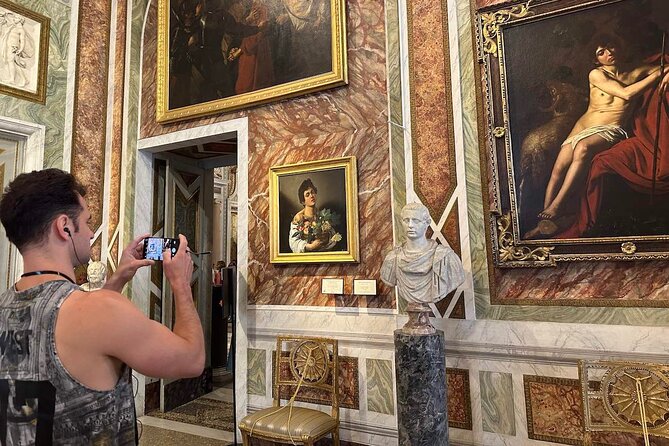
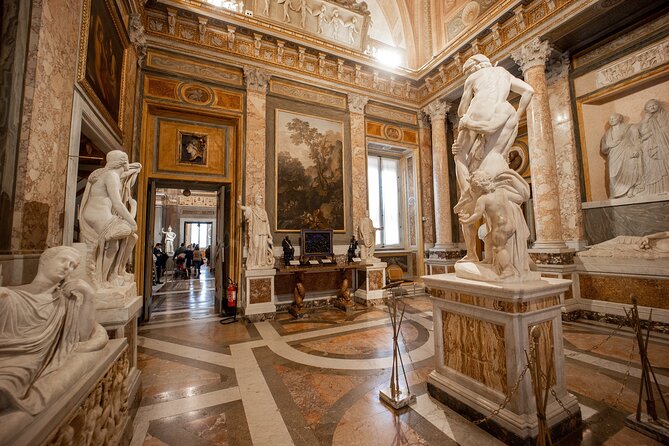
The Borghese Gallery is not a vast museum where you need three days and a map. It is manageable in size, with about 20 rooms, but it is dense with important art. The danger is not getting lost. The danger is walking through quickly and missing why the works matter.
A guide gives you a route and a visual education at the same time. You learn to look at the twist of a torso, the direction of a gaze, the fall of fabric, and the way a sculptor suggests motion in stone. That is especially useful with Bernini, whose works can seem instantly beautiful but become far more startling once you understand the story and technique behind them.
The commentary is delivered in English. Past guests have singled out the guides’ clear speech, humor, enthusiasm, and ability to explain symbolism without making the tour feel like a classroom lecture. Martina receives especially warm praise for setting up each artwork before explaining its meaning. Stephanie is remembered for her dramatic delivery and for bringing artists and their creative choices to life.
The group size matters here. Fifteen people is not the same as a private tour, but it is far more manageable than a large procession. Headsets are available if needed, an important detail in rooms where marble, hard floors, and several conversations can make quiet commentary difficult to follow.
More Museum Tours in Rome
- Vatican: Museums & Sistine Chapel Entrance Ticket
★ 4.5 · 144,003 reviews - Vatican Museums & Sistine Chapel Tour with Optional Basilica
★ 4.3 · 67,413 reviews - Vatican Museums, Sistine Chapel & St Peter’s Basilica Guided Tour
★ 4.5 · 39,149 reviews
Apollo and Daphne: Bernini turns marble into motion
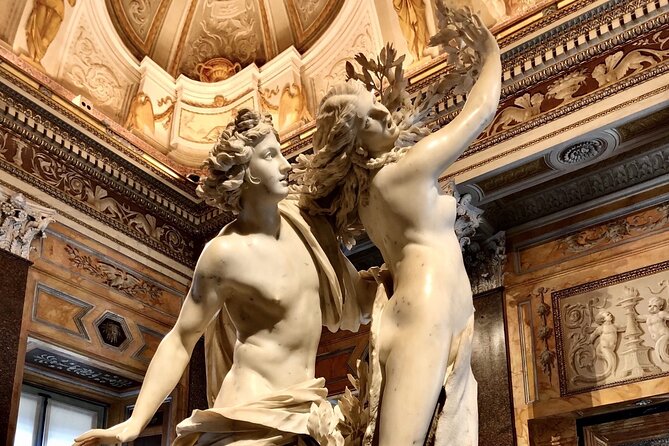
The first featured stop is Gian Lorenzo Bernini’s Apollo and Daphne, completed between 1622 and 1625. It shows the climax of the story from Ovid’s Metamorphoses, as Daphne escapes Apollo by changing into a laurel tree.
This is an ideal opening work because it immediately explains why Bernini matters. The figures are life-size, yet the sculpture feels caught in a split second. Apollo reaches forward as Daphne’s body changes. Her fingers stretch into branches, her hair becomes foliage, and roots begin to anchor her feet.
You should look closely at the details rather than only taking in the overall silhouette. The guide can help direct your attention to the places where human flesh gives way to bark and leaves. Bernini’s subject is not simply two mythological figures. It is transformation, pursuit, panic, and escape compressed into one piece of stone.
The twenty-minute focus is useful. You have enough time to understand the tale and examine the carving, though not enough time to linger indefinitely. That is the rhythm of this tour: substantial attention to landmark works, followed by movement to the next room.
Pauline Bonaparte as Venus Victorious: portrait, power, and scandal
Antonio Canova’s Pauline Bonaparte as Venus Victorious offers a sharp change of mood and style. Unlike Bernini’s dramatic Baroque movement, Canova’s neo-Classical figure is controlled, polished, and deliberately composed.
Pauline Bonaparte, Napoleon’s sister, is shown as Venus, the goddess of love. The sculpture was commissioned by her husband, Camillo Borghese, and made in Rome between 1805 and 1808. It later moved to Turin and Genoa before reaching the Borghese Gallery around 1838.
The work is famous partly because it is both a portrait and an idealized mythological figure. Pauline is not merely presented as herself. She is dressed in the visual language of ancient mythology, reclining with calm confidence. The semi-nude pose also gives the sculpture an edge of social provocation, especially when you remember that this was a portrait of a living woman from a powerful family.
A guide helps you compare Canova with Bernini. Bernini makes marble appear active and unstable. Canova makes it appear soft, cool, and perfectly finished. Seeing both within the same museum gives you a quick lesson in changing taste, from Baroque drama to neo-Classical restraint.
The two busts of Scipione Borghese reveal a living face
The gallery holds two marble busts of Cardinal Scipione Borghese, both made by Bernini in 1632. At first glance, two nearly related portraits may seem like a minor stop. They are not.
The paired busts show Bernini’s interest in expression and personality. A portrait bust can become stiff and ceremonial, but these works feel alert. The cardinal’s face and posture suggest a person caught in thought or conversation rather than a formal mask made for a tomb.
The presence of two versions also gives your guide a chance to explain how artists worked and how small changes affect the impression of a face. Look for the liveliness in the expression and the sense that the subject could turn toward you.
This stop is shorter, about 15 minutes, so you should listen first and then use the remaining moments to compare the pair. It is a good example of why a guided route helps. Without context, you might appreciate the carving but miss the point of placing both busts together.
Still Rome, but a slower afternoon:
- Colosseum, Roman Forum & Palatine Guided Tour
★ 4.7 · 63,148 reviews - Rome: Colosseum, Palatine Hill and Roman Forum Guided Tour
★ 4.8 · 32,814 reviews - Rome: Guided Tour of Colosseum, Roman Forum & Palatine Hill
★ 4.7 · 27,897 reviews - Rome: Colosseum & Forum with Audio Guide App -Optional Arena
★ 4.2 · 24,770 reviews
Truth Unveiled by Time: an unfinished idea with a story
Bernini’s Truth Unveiled by Time was made between 1646 and 1652. The sculpture presents Truth as a nude young woman being revealed by Time above her.
The concept is more complicated than the finished image may suggest. Bernini intended the figure of Time to play an important role, but that part was never completed in the simple form originally planned. The later development of the work and the addition associated with Time give the piece an unusual connection between artistic intention and final form.
This is a particularly good stop for a guide because the sculpture is not only about beauty. It also raises questions about allegory, unfinished work, and how an artist communicates an idea when the complete plan changes.
Fifteen minutes is enough for a focused explanation. Do not expect a long period of silent study here. The guide’s interpretation gives the work a clear place in Bernini’s career and in the gallery’s wider collection.
Bernini’s David: the split second before the throw
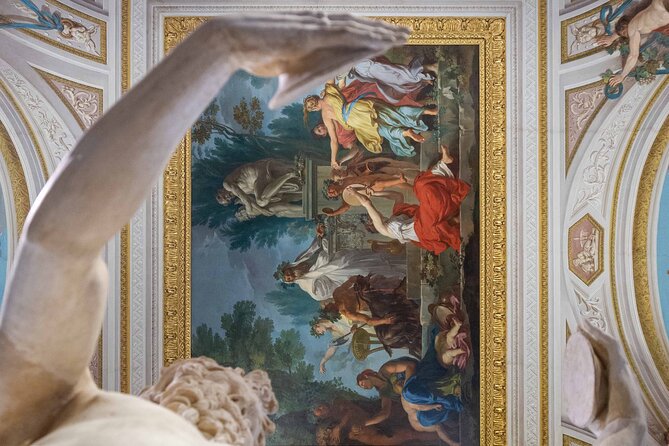
Bernini’s David is one of the tour’s major highlights. It was commissioned by Cardinal Scipione Borghese and completed in just seven months, from 1623 to 1624.
Many earlier depictions of David show him after the victory or before the action begins. Bernini chooses the most tense moment: David is about to throw the stone that will bring down Goliath. His body twists, his face tightens, and his limbs pull in opposite directions as he gathers force.
The sculpture asks you to move around it. From one angle, David’s action is easy to read. From another, you see the strain in the torso and the concentration in the face. The work seems to extend beyond its own base, as if the unseen Goliath is standing in the same room.
This is where the guide’s commentary earns its keep. You can notice that David is moving, but an art-focused explanation helps you understand how the movement is built. The statue is not a quiet biblical hero. It is a body at the limit of effort.
The planned 20-minute stop allows time to grasp the story and examine the pose. You may want to spend longer, especially if sculpture interests you, but the tour has other rooms to cover.
The gallery experience beyond the five featured works
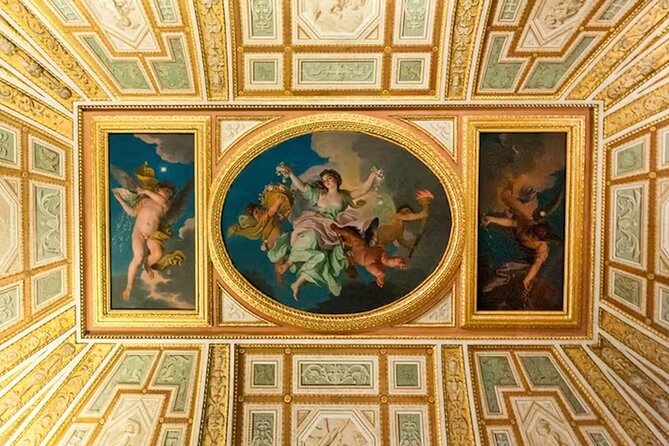
The five scheduled works form the backbone of the visit, but the Borghese Gallery contains much more. The tour is designed to make sure you do not miss the main pieces among its 20 rooms, rather than give every artwork equal attention.
That is a sensible choice for a first visit. The museum’s collection can easily overwhelm you. A guide points out the essential works and gives you a framework for understanding different artists and styles. Several guests describe the route as well paced, with enough information to make the art meaningful without turning every stop into a long lecture.
You should know the tradeoff. A guided tour prioritizes explanation over free wandering. One person specifically wished for more time to study works that were not discussed. I think that is the clearest limitation of a two-hour group visit.
If you want both guidance and quiet looking, plan to treat the tour as your introduction. Afterward, if museum rules and your admission arrangement allow it, use extra time for your own viewing. The gallery’s manageable size makes that approach appealing, though this specific activity ends back at the meeting point and the supplied details do not promise an additional self-guided period.
Some rooms may be closed because of refurbishment. During the Jubilee period, restoration work and altered access routes may also affect the visit. Check the provider’s messages before leaving for the museum so you are not surprised by a changed route.
Is $91.95 good value?
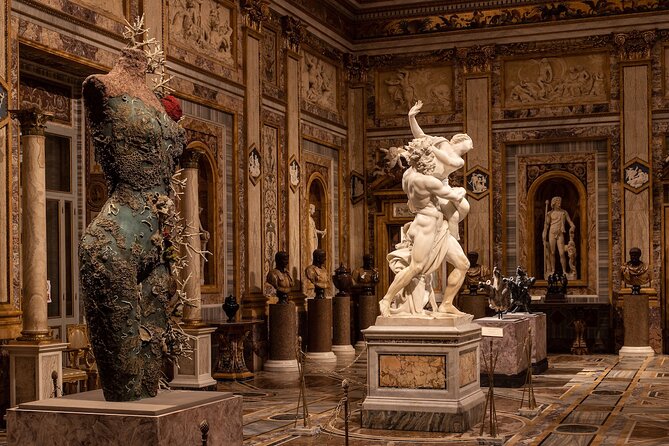
At $91.95, you are paying far more than a bare museum admission. The value rests on three things: the included entrance fee, the skip-the-line arrangement, and the quality of the guide.
Borghese Gallery entry is tightly controlled, so saving time outside matters more here than it might at a less regulated museum. You are not simply buying a ticket and joining a general queue. You are paying for a scheduled small-group visit that enters together with a guide.
I would call the price fair for a first visit if you care about art and want expert interpretation. It is less attractive if you mainly want to wander alone, already know the collection well, or are watching every euro.
The positive feedback is unusually consistent about the guides. Martina is praised for her education, warmth, humor, and ability to explain each room. Francesca is described as pleasant and well informed. Lorenzo is remembered for making the tour fun for a mother and daughter. Other strong comments name Stephanie, Serena, and several guides whose names were less certain, all for energy and clear English.
There is one important caution. The tour is advertised at about two hours, but passionate guides may run over. One visit lasted more than three hours after the group agreed to continue, while another ran beyond two hours and became tiring because of the amount of standing. If you have a firm reservation immediately afterward, leave a buffer.
Meeting point, timing, and the late-arrival rule
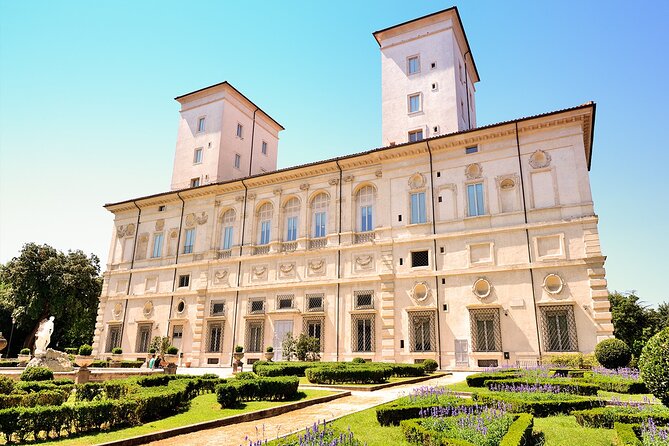
The meeting point is Piazzale Scipione Borghese 5, in Rome. The location is near public transportation, and most people can take part, but private transportation is not included.
Arrive at least 15 minutes early. I would allow even more time if you are crossing Rome or relying on traffic. The provider’s late-arrival rule is strict because the group’s tickets are issued for the group and everyone must enter together with the guide.
This is not the kind of attraction where you can casually catch up inside. A late arrival may mean missing the entire experience without a refund. One unhappy customer had warned the provider about traffic but still could not join after arriving too late. The policy may feel harsh, but the practical lesson is simple: reach the meeting point early.
Your mobile ticket is included, and the tour is offered in English. The activity ends where it starts, so you can arrange lunch, a walk through Villa Borghese, or another Rome activity from that point.
Who should book this tour?
I would recommend it most strongly to:
- First-time visitors to the Borghese Gallery
- People who want Bernini and Canova explained in plain English
- Anyone with limited time in Rome
- Visitors who prefer a small group to a large museum procession
- Art lovers who want context, symbolism, and technique
- People comfortable standing and following a fixed route for about two hours
I would be more cautious if you need a quiet, unhurried museum visit. The guide may spend extra time on a fascinating work, and the schedule can stretch. You also need to be punctual and prepared for possible room closures.
The tour is a particularly good match for couples, families with older children, and anyone who feels uncertain about how to approach Baroque sculpture. It gives you enough background to see why the gallery is special without requiring an art-history degree.
Should you book the Borghese Gallery guided tour?
Yes, if you want the museum’s major works to make sense rather than simply look impressive. The small group, skip-the-line entry, English commentary, and strong record of engaging guides make this a practical choice for a first Borghese visit.
Book it only if you can arrive early and accept a structured pace. At $91.95, the tour is an investment, but the Borghese Gallery is one of the few Rome museums where skilled guidance can genuinely change what you see. If Bernini’s David and Apollo and Daphne are high on your list, I would pay for the help.
FAQ
How long does the Borghese Gallery guided tour last?
The tour lasts approximately two hours. Some visits may run longer when the guide spends extra time explaining the art.
How much does the tour cost?
The listed price is $91.95 per person.
Is admission to the Borghese Gallery included?
Yes. Entrance fees are included in the tour price.
Is skip-the-line entry included?
Yes. The experience includes skip-the-line entry as part of the guided visit.
How many people can join the tour?
The tour has a maximum of 15 travelers.
What language is the tour offered in?
The tour is offered in English.
Are headsets provided?
Headsets are available if needed so you can hear the guide more clearly.
Where does the tour begin and end?
The tour begins at Piazzale Scipione Borghese 5, 00197 Rome, and ends back at the meeting point.
What happens if I arrive late?
Late arrivals cannot be accommodated or refunded. You should arrive at least 15 minutes before the scheduled departure because the group enters together.
Can I cancel for a refund?
You can cancel at least 24 hours before the start time for a full refund. Cancellations or changes made less than 24 hours before the start time are not refunded or accepted.
Recently added around Rome
- Rome: Pantheon, Trevi Fountain & Roman Squares Guided Tour★ 4.7 · 386 reviews
- Vatican: Pope Francis Tomb and Papal Basilicas Tour★ 4.7 · 340 reviews
- Vatican: St. Peter’s Basilica with Audio Guide and Options★ 3.4 · 269 reviews
- Rome: Vatican Museums Skip-the-line Entry Ticket and Tour★ 4.2 · 400 reviews
- Rome: Vatican Museums & Sistine Chapel Ticket + Tour Options★ 4.7 · 344 reviews
- Vatican Museums & Sistine Chapel Guided Tour★ 4.3 · 832 reviews
- Vatican Museums & Sistine Chapel Entry Ticket★ 4.4 · 245 reviews
- Vatican: Museums, Raphael & Sistine Chapel + Basilica Option★ 4.7 · 350 reviews
Skip the Line, compared.
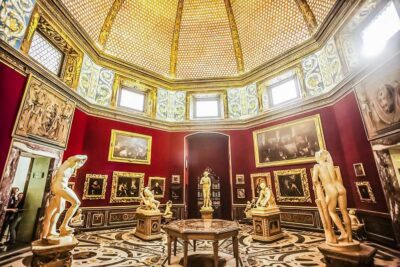
Skip-The-Line Uffizi Gallery Timed Entry Ticket
Read our review →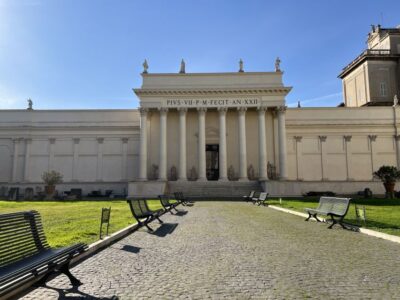
Vatican Museums & Sistine Chapel Skip-the-Line Entry Ticket
Read our review →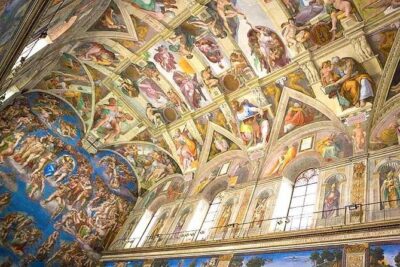
Skip-the-Line Group Tour of the Vatican, Sistine Chapel & St. Peter’s Basilica
Read our review →
Michelangelo’s David Skip-the-Line Entry Ticket
Read our review →
Vatican Museums & Sistine Chapel Skip-The-Line Ticket
Read our review →
Vatican, Sistine Chapel & St. Peter’s Skip-the-Line Tour
Read our review →
Skip-the-Line Vatican, Sistine Chapel & St. Peter’s | Small Group
Read our review →
Vatican Museums Sistine Chapel Skip-the-Line Ticket
Read our review →Browse the lists this tour appears in