
Reviewed · STREET FOOD TOURS
Venice: Street Food Tour with a Local Guide and Tastings
Venice tastes better away from the postcard stops. This 2.5-hour walking tour pairs Rialto Market, small Venetian bars, and local specialties with the sort of city stories that help Venice make sense. I like the generous range of food, from cicchetti and gelato to fish-based dishes, and I like that the route leads through everyday neighborhoods rather than keeping you near only the main sights. The main drawback is dietary: vegetarian choices are supported, but vegan, dairy-free, and gluten-free diets cannot be accommodated.
At $57 per person, this is a good-value introduction to Venetian food if you arrive hungry. Guides such as Tone, Ana, Denis, Vanessa, and Michaela have earned praise for mixing clear local history with humor and practical restaurant advice. Drinks cost extra, and the fish market is closed on Sunday, Monday, Italian holidays, and during afternoon tours.
In This Review
- Key points to know before booking
- Meeting in Campo San Bartolomeo
- Rialto Bridge and the market’s daily rhythm
- Cicchetti and the bàcaro tradition
- Campo San Polo and Basilica dei Frari
- Campo San Bartolomeo and quieter city corners
- Gelato, buranelli, and the sweet finish
- Campo Santa Margherita and Dorsoduro
- How much food do you really get?
- Is $57 good value in Venice?
- Who should book this food walk?
- Should you book the Venice Street Food Tour?
- FAQ
- How long does the Venice street food tour last?
- How much does the tour cost?
- What food is included?
- Are drinks included?
- Can the tour accommodate dietary restrictions?
- Is the tour suitable for wheelchair users?
Key points to know before booking
- Five food stops can amount to a full meal: Expect several substantial tastings, not just tiny samples.
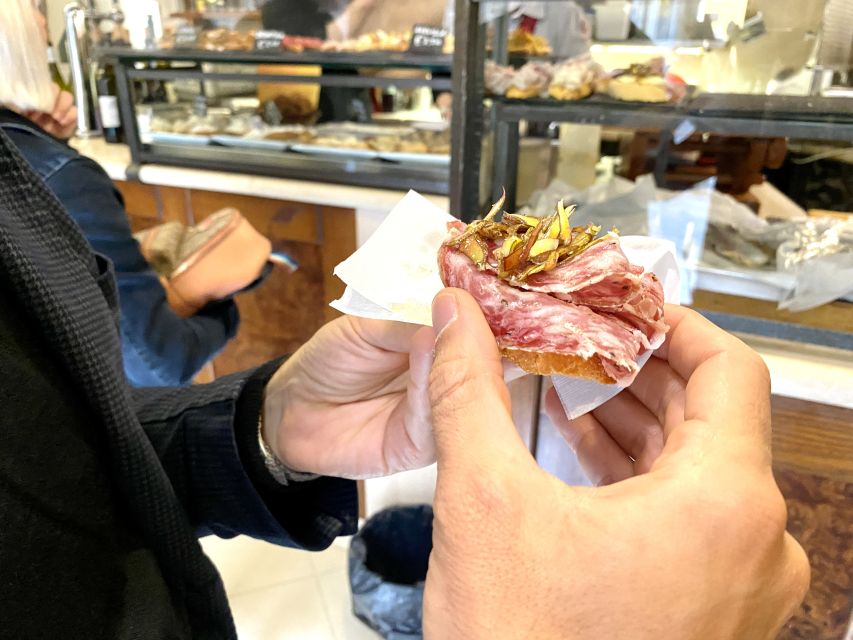
- Cicchetti are the star of the tour: These small savory plates are Venice’s answer to tapas and are served in cozy bàcari, the city’s traditional bars.
- Rialto Market adds daily life: Morning tours can include the fish market, while afternoon tours see the produce stalls but miss the fish section.
- The route links food with major sights: You pass Campo San Polo, Basilica dei Frari, Campo San Bartolomeo, and Campo Santa Margherita.
- Guides make a big difference: Tone, Ana, Denis, Vanessa, and Michaela are especially praised for clear English, local insight, and good humor.
- Bring proper walking shoes: Venice means bridges, stone paving, and a steady amount of walking. The tour is not suitable for wheelchair users.
Meeting in Campo San Bartolomeo
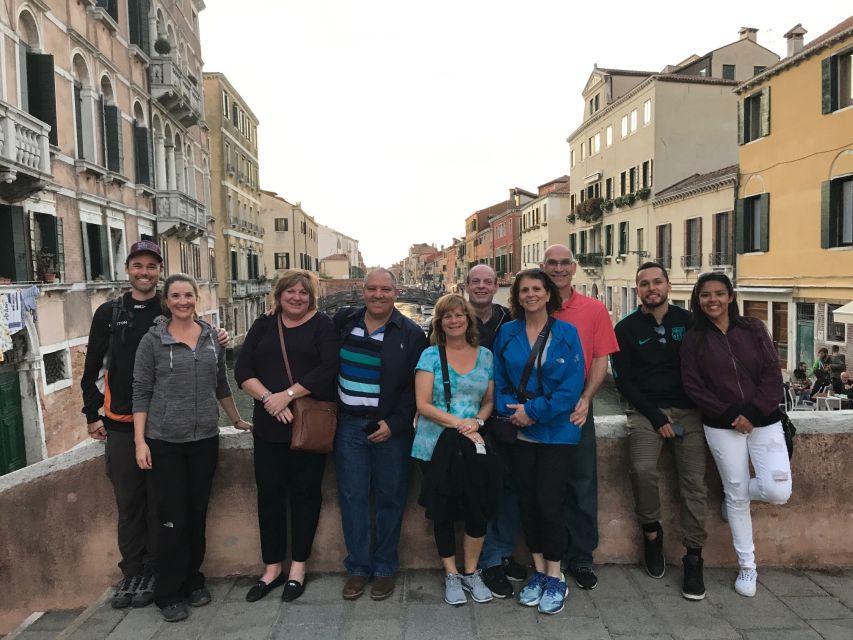
The meeting point is Campo San Bartolomeo, beside the statue, where the guide holds a Food Tour sign. This is in the San Marco district, close to the Rialto Bridge and easy to recognize once you reach the square.
The tour begins in one of Venice’s central areas, then quickly moves into streets and squares where the food story feels more local. That opening location works well for a first day in Venice because you can connect the route with the Rialto Bridge, San Marco, and the Grand Canal afterward.
The guide leads in English. Several guides have received strong praise for speaking clearly and adjusting their pace for different language levels. That matters in Venice, where food names, local customs, and historical details can otherwise blur together.
The group size is not specified, so you should not book expecting a private tour. Still, smaller groups may sometimes occur. One booking became a private experience when another party cancelled, but that should be treated as good fortune rather than a standard feature.
More Food Tours in Venice
- Eat Like a Local: Venice 3-Hour Small-Group Food Tasting Tour
★ 5.0 · 3,137 reviews - Venice Like a Local: Food, Wine & Spritz Tour with Traghetto Ride
★ 5.0 · 1,858 reviews - Venice Bacaro Food Tour: Eat and Drink like a Venetian
★ 5.0 · 1,137 reviews
Rialto Bridge and the market’s daily rhythm
Crossing the Rialto Bridge gives the tour an immediate sense of place. The bridge is one of Venice’s classic sights, but the food route uses it as a practical link to the market rather than as a photo stop alone.
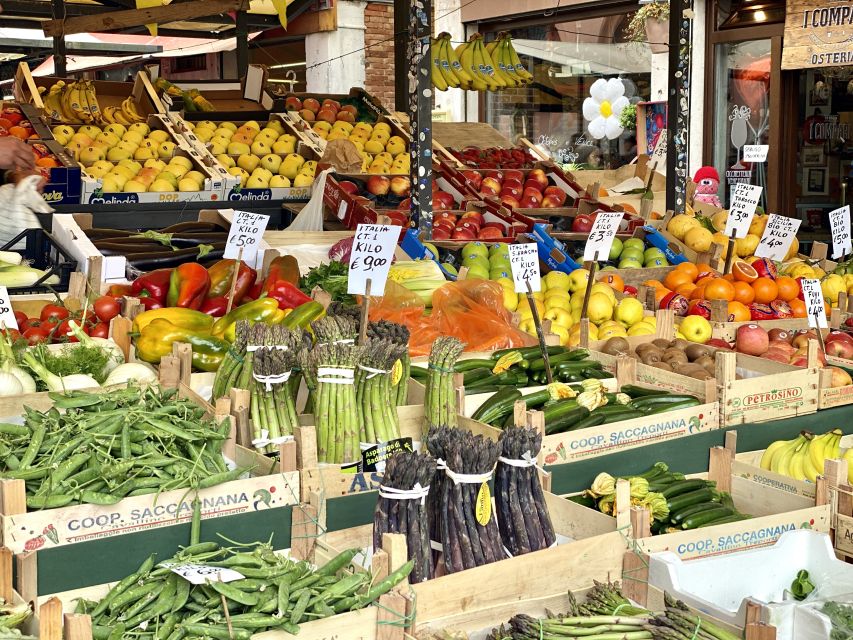
At the Rialto Market, you can see fruit and vegetable stalls arranged in bright colors and watch locals shop for fresh ingredients. The guide explains how the market fits into Venetian life, which gives you something more useful than a quick list of produce names.
The fish market is the key timing issue. It is closed during afternoon tours, as well as on Sundays, Mondays, and Italian holidays. If seeing the fish stalls matters to you, choose a morning departure and check the calendar before booking.
The market can also be one of the more crowded parts of the walk. Stay close to the guide and keep your belongings secure. You will be walking through an active shopping area, not a staged food display.
The market visit is valuable because it sets up the tastings that follow. You see ingredients in their everyday setting, then encounter some of them in prepared dishes. That connection helps explain why Venetian food leans so heavily on seafood, preserved flavors, vegetables, and small portions meant for sharing or grazing.
Cicchetti and the bàcaro tradition
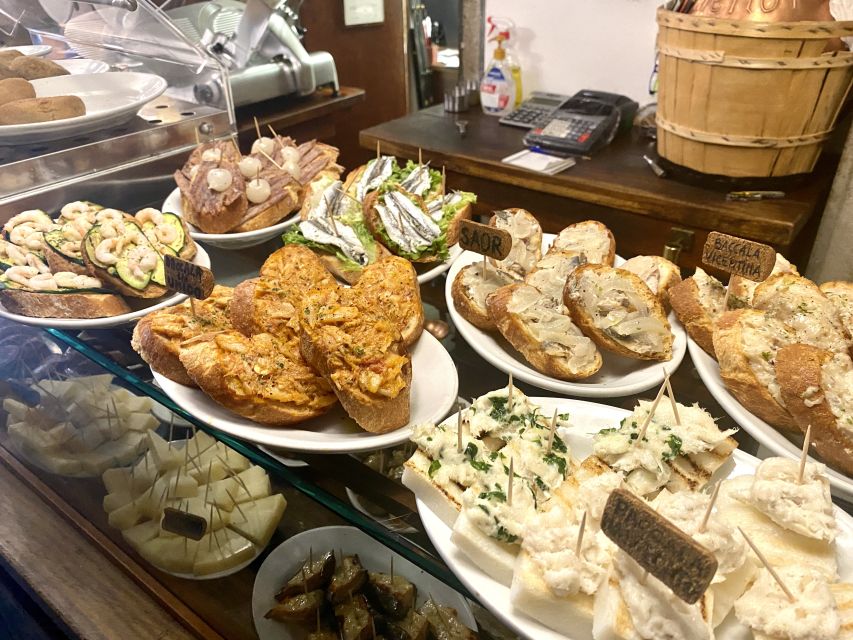
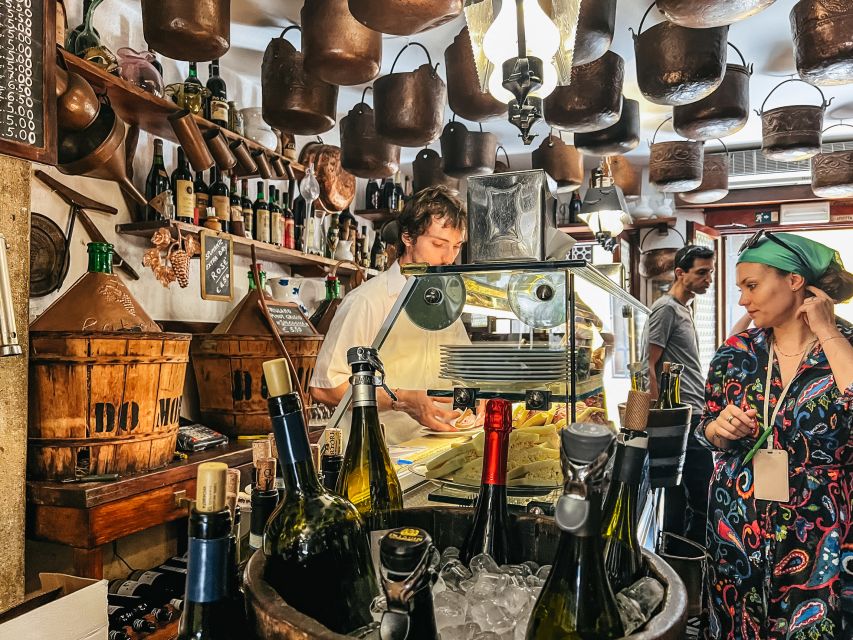
The tour’s food identity centers on cicchetti. These are small Venetian snacks served in bàcari, informal local bars where people stop for a bite and a drink.
Cicchetti are not simply miniature restaurant plates. They are part of a social habit. You might eat standing up, at a counter, or at a small table, then continue through the neighborhood to another stop. The format makes it easy to sample several flavors without committing to one large meal.
The exact dishes can vary, but the tour is designed to introduce typical Venetian specialties rather than generic Italian food. Possible tastings mentioned in the experience include codfish paste, cuttlefish in ink, octopus, anchovies, sardines, regional specialties, and other traditional street foods.
That range is a strength for adventurous eaters. It also means some flavors may be stronger than you expect. Fish-based dishes can be salty, briny, or distinctly fishy, and cuttlefish in ink is not the safest choice for someone who wants only mild food.
You are not forced to eat every item. Guides explain the dishes and offer alternatives at stops when available. That makes the tour friendlier for cautious eaters, while people who want unusual local food can ask to try the more daring choices.
Several stops may include optional wine or a spritz. Drinks are not part of the $57 price, but individual drinks have been described as reasonably priced, often around €2.50 to €3.50. Bring some extra money if pairing a drink with each tasting appeals to you.
Campo San Polo and Basilica dei Frari
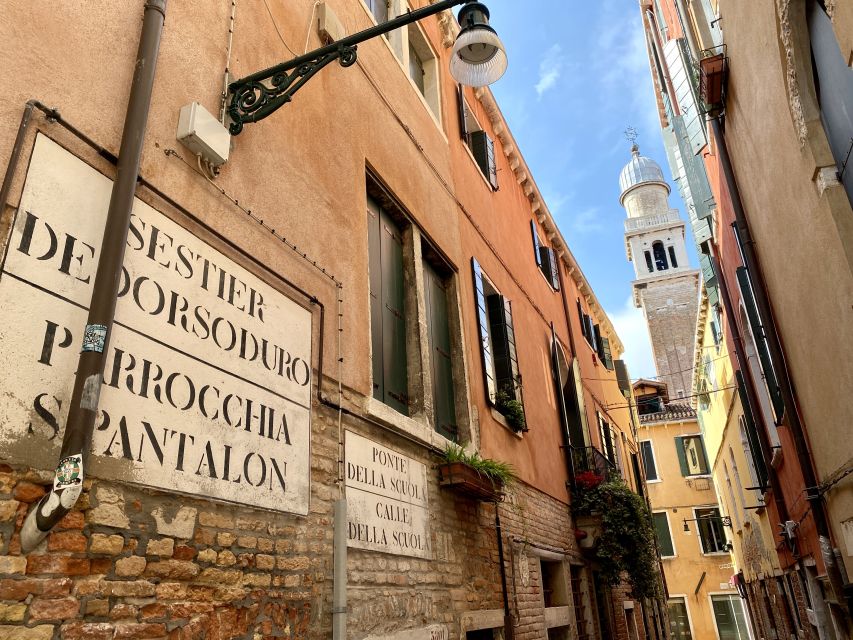
The route continues toward Campo San Polo, one of Venice’s larger squares, and includes entry to Basilica dei Frari. This gives the tour a useful change of pace.
After the market and food stops, the basilica provides a quiet interior and a reminder that Venice’s story is not only about canals, merchants, and seafood. The building is one of the city’s important religious sights, and seeing it during a food walk helps connect local eating habits with the neighborhoods where Venetian life developed.
The basilica visit is also a practical benefit for first-time visitors. You are not spending the entire 2.5 hours moving from bar to bar. The route includes a meaningful cultural stop, so the experience works as a compact introduction to both Venice’s food and its central districts.
Keep in mind that this is still a walking tour, not a full guided visit devoted to the church. The guide’s attention is shared between the monument, the streets, and the food. If you want detailed art commentary or a long basilica visit, you would need a separate cultural tour.
More Street Food Tours in Venice:
- Naples: Street Food Walking Tour with Local Guide
★ 4.8 · 4,256 reviews - Rome: Trastevere or Jewish Quarter Street Food Tour
★ 4.8 · 3,839 reviews - Florence: Cinque Terre Park Day Trip with Optional Street Food
★ 4.5 · 3,593 reviews - Rome: Trastevere & Campo de Fiori Street Food Walking Tour
★ 4.9 · 2,768 reviews
Campo San Bartolomeo and quieter city corners
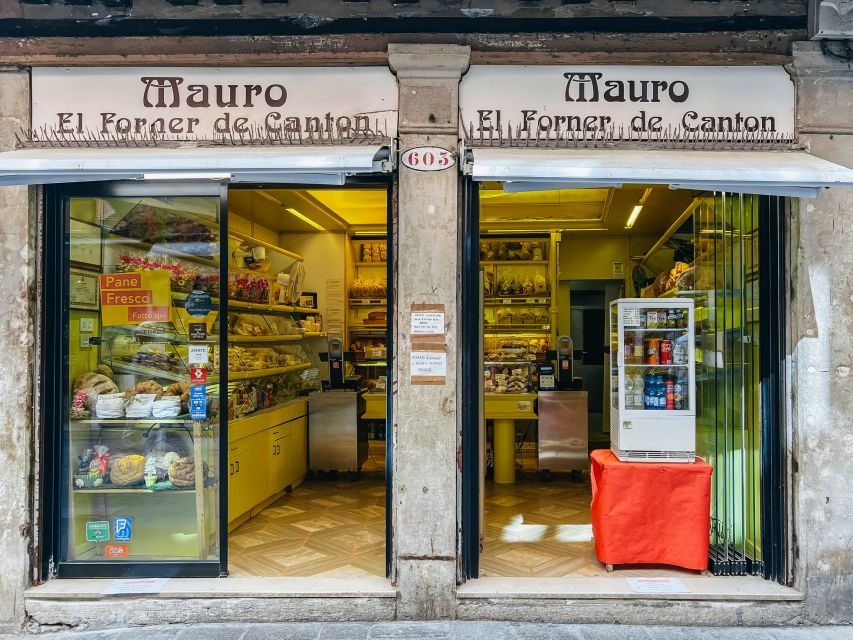
Campo San Bartolomeo is part of the route and also serves as the meeting area beside the statue. The square is a useful point for seeing how Venice works as a public living room, with people gathering, passing through, and meeting friends.
One benefit of a food tour is the way it changes your sense of distance. Venice can seem like a maze when you walk alone. With a guide, the spaces between major sights become part of the experience rather than time spent searching for the next bridge.
The route also reaches smaller pockets away from the busiest tourist streets. You may find eateries that are easy to miss on your own, especially if you are staying near San Marco and have been following the main lanes.
The strongest guides add value here by explaining what you are seeing without turning every pause into a lecture. Tone is praised for giving interesting historical details without dull filler, while Ana is often described as friendly, funny, and good at explaining Venetian culture. Denis is praised for energy and practical help, and Michaela brings a personal connection as someone who grew up in Venice.
Because guide quality can vary from one departure to another, you should think of the published route as the dependable part and the personality as an extra benefit. The repeated praise for several guides is encouraging, but no tour can promise a particular guide unless the operator confirms one.
Gelato, buranelli, and the sweet finish
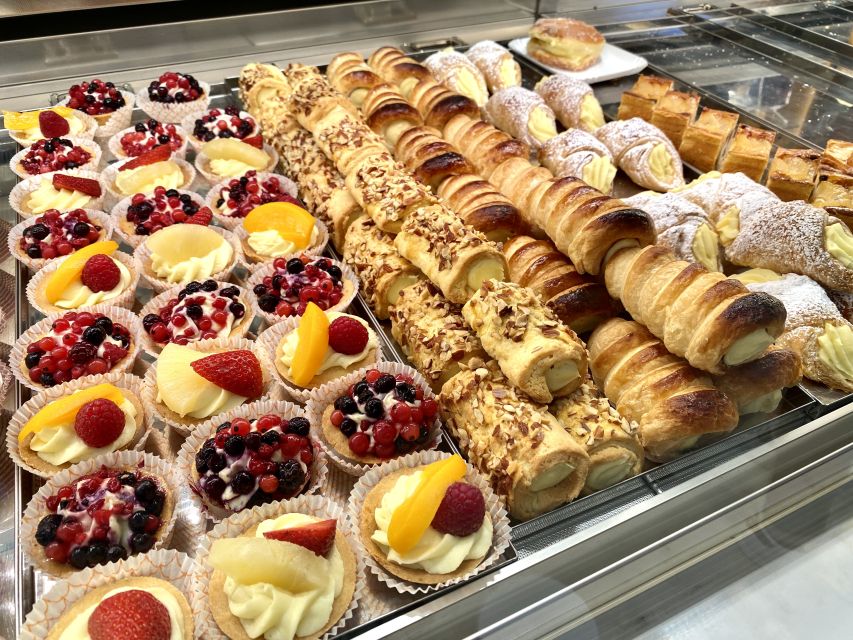
Savory food gets most of the attention, but the tour also includes sweet stops. You may taste buranelli biscuits, traditional ring-shaped cookies associated with the Venetian lagoon island of Burano, and artisanal gelato.
The gelato is a smart part of the itinerary. After seafood, bread-based snacks, and savory cicchetti, a cold dessert gives the tasting sequence a clean finish. Several people enjoyed the final gelato enough to return later, which is useful information if you like to collect dependable food addresses during a trip.
The tour may also include a seasonal or regional sweet. One recent experience ended with a Carnivale treat at Majer, a Venetian food shop and café. Seasonal items can change, so you should not expect that exact pastry on every date.
Buranelli are also a nice reminder that Venetian food is broader than seafood. The biscuit gives you a simple local flavor to compare with the more complex savory dishes. If you prefer sweets to fish, this part of the tour may be your most comfortable stop.
Campo Santa Margherita and Dorsoduro
The tour ends at Campo Santa Margherita in Dorsoduro, near the university. This is a useful finishing point because it places you in a district with local restaurants, cafés, and farmers’ markets.
You are not returned to San Marco, so plan your evening from Dorsoduro. That is not a problem, but it affects how you schedule the tour. You can continue eating nearby, explore the surrounding streets, or use the end point as a base for another part of Venice.
Ending in Campo Santa Margherita also gives the tour a sense of completion. You begin around San Marco and Rialto, cross through market and historic areas, then finish in a district with a different feel. The route is not just a sequence of tastings. It is a compact walk across several Venetian neighborhoods.
If you have a dinner reservation elsewhere, leave enough time to get there. Venice distances look short on a map, but bridges and winding lanes make the walk slower than a straight city block.
How much food do you really get?
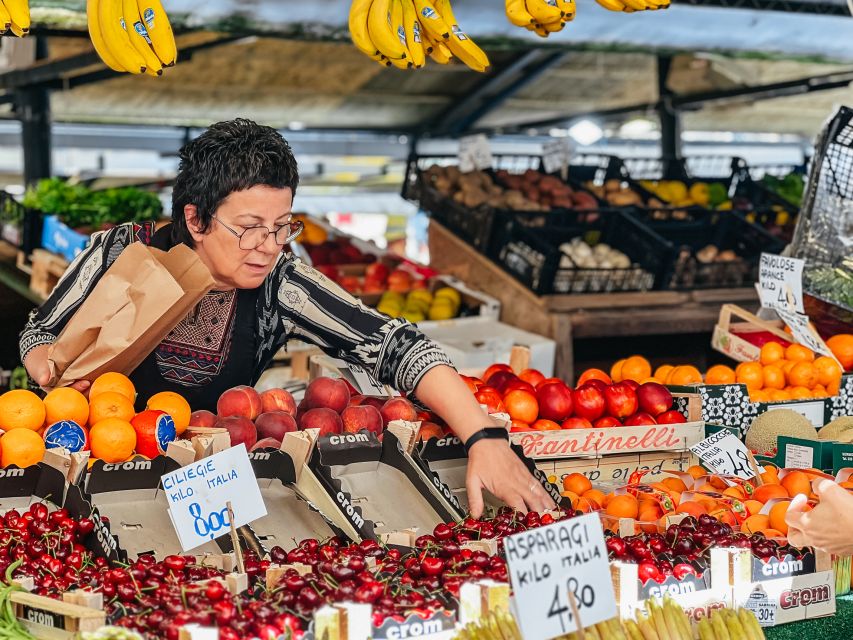
Come hungry. The experience includes several tastings, and the route generally visits five eateries with around seven food samples, depending on the departure and available dishes.
The portions are small plates or individual items, but they are not merely token bites. Some people describe the food as enough for a full meal, especially when the stops are taken together. If you have a small appetite, the pacing helps because you walk between tastings and are not asked to eat everything at once.
There is also flexibility at some stops. You can choose an alternative if a particular ingredient does not appeal to you, though you should tell the activity provider about dietary needs when booking.
Vegetarians are supported, and several tastings can be adapted for different palates. The limits are important: vegan, dairy-free, and gluten-free diets cannot be accommodated. Severe allergies should be discussed before booking, and you should not assume that a substitution will be possible at every stop.
Drinks are extra. Wine and spritz may be available at selected eateries, with prices reported around €2.50 to €3.50. You can skip them, but a local drink can add to the bàcaro experience if your budget allows.
Is $57 good value in Venice?
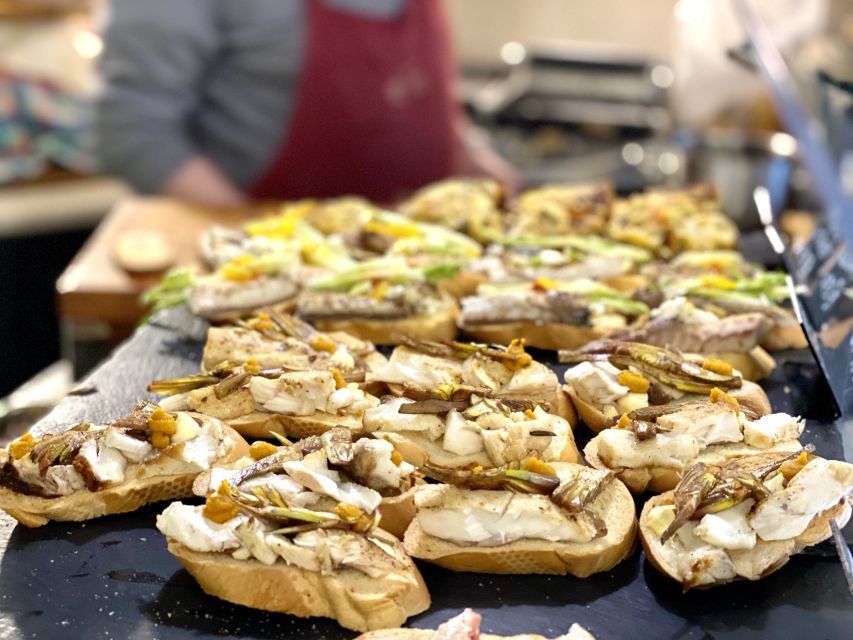
At $57, the tour costs more than buying a single cicchetto or gelato on your own. That comparison misses much of what you are paying for.
The price includes a local English-speaking guide, several food tastings, a walking route through central Venice, market interpretation, and help choosing foods you might not recognize. You are also paying for access to places that are difficult to find when you have only a short stay.
The value is strongest during a first visit. A good guide can help you understand the difference between food that is genuinely Venetian and dishes that simply use an Italian label. You also finish with ideas for where to eat later, which can save you from guessing at expensive restaurants near the main sights.
It is less compelling if you already know Venice’s bàcari well or dislike seafood and unfamiliar flavors. The tour is built around variety, so a very selective eater may not get the full benefit even with alternative choices.
Free cancellation up to 24 hours before the start and reserve-now, pay-later booking make it easier to fit into a changing schedule. Those policies do not change the food limitations, so check the dietary rules first.
Who should book this food walk?
I would recommend it to first-time visitors who want a quick orientation and a meal-sized introduction to Venetian cuisine. It also suits people who enjoy walking, trying foods they would not order alone, and learning the local customs behind a dish.
It is a strong pick for couples, families with older children, and solo visitors who like meeting a small group while eating. The guides are repeatedly praised for humor, clear English, and willingness to answer questions, which helps keep the experience relaxed.
Food-focused visitors will get the most from it, especially if you want codfish paste, cuttlefish, octopus, anchovies, sardines, and other traditional flavors. You can ask for adventurous options, and the guide can explain what you are about to eat.
I would skip it if you need a fully vegan, dairy-free, or gluten-free menu. I would also avoid booking on a Sunday, Monday, or Italian holiday if the Rialto fish market is a priority. For wheelchair users, the tour is not suitable.
Wear comfortable shoes and leave room in your schedule afterward. You may finish full, carrying a list of places to revisit, and still want to explore Dorsoduro.
Should you book the Venice Street Food Tour?
Book it if you want Venice explained through food rather than only through monuments. The combination of Rialto Market, cicchetti, five local eateries, Basilica dei Frari, gelato, and Dorsoduro gives you a lot in 2.5 hours.
The biggest strengths are the generous tastings, the chance to try food beyond pizza and pasta, and guides who bring history and local habits into the walk. Tone, Ana, Denis, Vanessa, and Michaela are all praised for making the route informative without making it stiff.
Choose a morning tour for the best market experience, and bring extra euros for optional drinks. If those details suit you, $57 is a fair price for a filling introduction to Venice that can improve the rest of your stay.
FAQ
How long does the Venice street food tour last?
The tour lasts 2.5 hours.
How much does the tour cost?
The listed price is $57 per person.
What food is included?
The tour includes several tastings, including cicchetti, regional specialties, buranelli biscuits, traditional street food, artisanal gelato, and other Venetian dishes.
Are drinks included?
No. Drinks are not included, although wine and spritz may be available to purchase at selected stops.
Can the tour accommodate dietary restrictions?
Vegetarian options are available when requested during booking. Vegan, dairy-free, and gluten-free diets cannot be accommodated.
Is the tour suitable for wheelchair users?
No. The tour is not suitable for wheelchair users.
Recently added around Venice
- Venice: St. Mark’s Basilica Tour with Doge’s Palace Option★ 4.2 · 178 reviews
- Venice: Lords of the Night Prison’s Palace Cells & Tortures★ 4.0 · 1,067 reviews
- St Mark’s Basilica and Doge’s Palace Priority Entry Ticket★ 4.2 · 885 reviews
- Venice: Hard Rock Cafe with Set Menu for Lunch or Dinner★ 4.4 · 1,102 reviews
- Venice: Doge’s Palace and St. Mark’s Basilica Guided Tour★ 4.6 · 458 reviews
- Venice: Walking tour, Doge Palace, & St. Mark’s Basilica★ 4.5 · 884 reviews
- Punta Sabbioni: Murano, Burano & Torcello Guided Boat Tour★ 4.3 · 236 reviews
- Murano: Glass Blowing Demonstration with Optional Drinks★ 4.5 · 294 reviews
Street Food Tours, compared.
Trastevere or Jewish Quarter Street Food Tour
Read our review →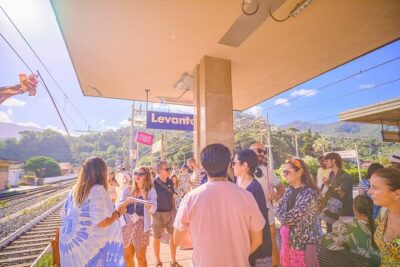
Cinque Terre Park Day Trip with Optional Street Food
Read our review →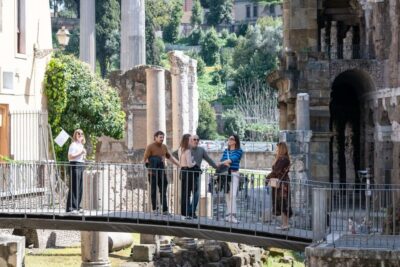
Trastevere & Campo de Fiori Street Food Walking Tour
Read our review →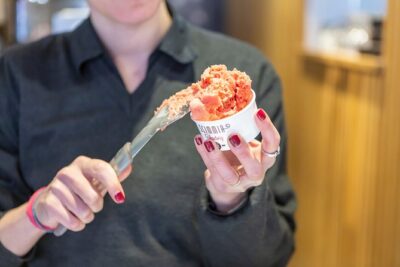
Authentic Naples Street Food Tour With Local Expert Guide
Read our review →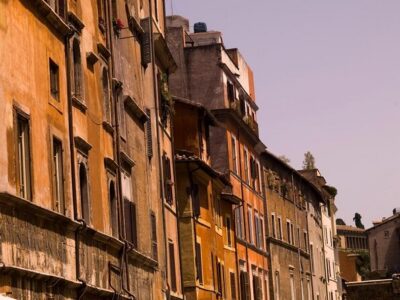
Palermo Original Street Food Walking Tour by Streaty
Read our review →
Cinque Terre Day Trip with Optional Street Food
Read our review →Browse the lists this tour appears in