
Reviewed · CRUISES & BOAT TOURS
Venice: Grand Canal Boat Tour
Venice looks different from the water. This one-hour motorboat tour gives you a fast, useful look at the Grand Canal, from the Rialto Bridge to La Madonna della Salute, with an English-speaking guide explaining the palazzos and churches along the way. I like the excellent city orientation and the chance to see Venice without walking every crowded quay. The main drawback is that boats can feel snug when the group is full, and dirty windows may limit seated views.
I also like the mix of old and new: ancient Rialto shares the route with the glass Della Costituzione Bridge near Calatrava. At $53 per person, the tour costs more than a public vaporetto ride, but you get a guided route, a smaller motorboat, and a close look at many landmarks in one hour.
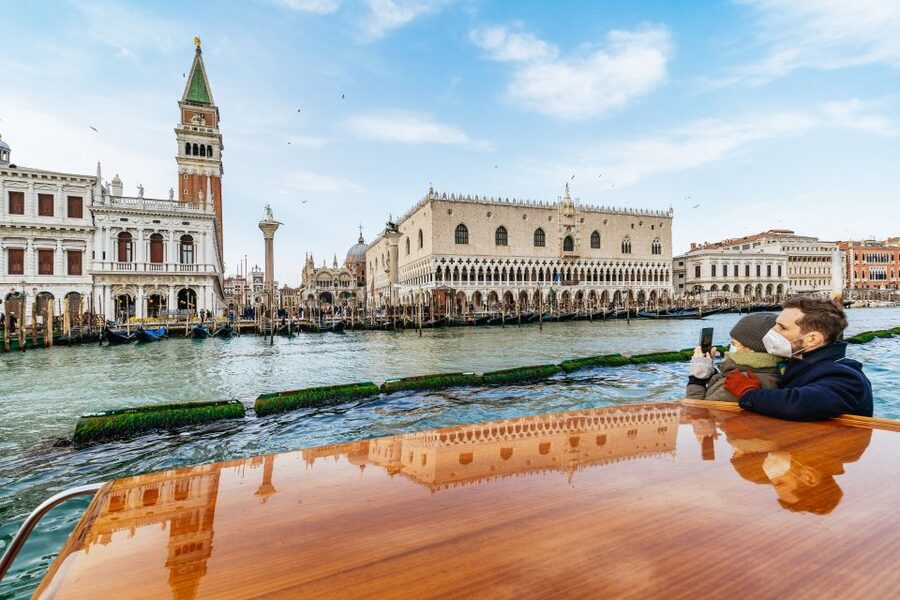
The boarding point is easy to reach once you know where to look. From St. Mark’s Square, leave the square behind and look to the right for the Alilaguna ticket office, directly opposite the Royal Gardens and at the far end of the souvenir stalls.
In This Review
- Key points at a glance
- Why a Grand Canal boat ride helps you understand Venice
- Finding the Alilaguna ticket office near St. Mark’s Square
- Starting on the waterways and reaching the Grand Canal
- Rialto Bridge and the oldest part of the route
- Palazzos, institutions, and the Hotel Gritti
- Ca’ Vendramin Caliergi and Fondaco dei Tedeschi
- Della Costituzione, the modern glass bridge
- La Madonna della Salute and the final views
- Boat comfort, group size, and photography
- Is $53 good value for one hour?
- Who should book this Venice boat tour?
- Should you book the Grand Canal motorboat tour?
- FAQ
- How long is the Venice Grand Canal boat tour?
- How much does the tour cost?
- Where do I meet the boat?
- What language is the tour conducted in?
- Are food and drinks included?
- Can wheelchair users join the tour?
Key points at a glance
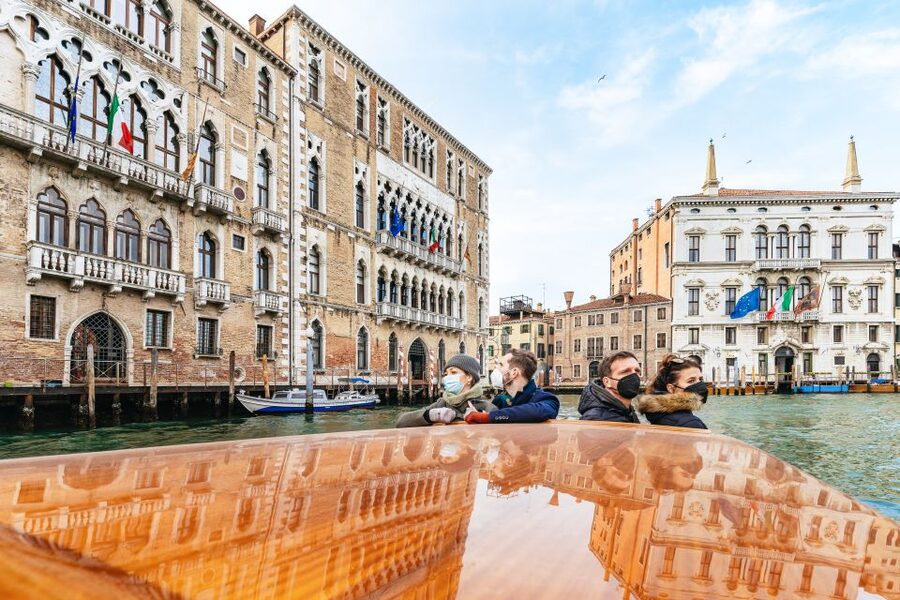
- The tour covers major landmarks quickly: You pass Rialto, Ca’ Grande, Ca’ Balbi, Hotel Gritti, Ca’ Pisani Moretta, Ca’ Vendramin Caliergi, Fondaco dei Tedeschi, and La Madonna della Salute.
- It is an orientation ride as much as a sightseeing trip: The water gives you a clear sense of how Venice’s districts and grand buildings fit together.
- The guide makes the difference: English commentary explains the buildings, institutions, churches, and canals as you pass them. Guides named Massimo and Leo received especially warm praise for their friendly delivery and love of Venice.
- Boat comfort can vary: Some departures have plenty of room, while a full boat with 11 adults may feel tight. Seating and outside viewing may also depend on the boat and weather.
- The modern bridge adds contrast: Della Costituzione, a glass bridge near Calatrava, gives the route a contemporary counterpoint to Venice’s older stone bridges.
- The best time may be late afternoon: An evening departure can bring softer light and, if conditions cooperate, a sunset over the water.
Why a Grand Canal boat ride helps you understand Venice
Venice is easy to admire and surprisingly hard to picture as a whole. On foot, you turn through narrow lanes, cross small bridges, and often lose sight of the water that shaped the city. From a motorboat, you get a broad view of the main waterway and the grand façades lining it.
I especially like this as an early activity in a Venice visit. You see buildings you can later seek out on foot, and the guide gives you useful clues about the city’s layout. One hour is enough to get your bearings without taking half a day from museums, churches, or wandering.
The Grand Canal is not just a scenic strip. It is Venice’s main urban artery, lined with former patrician homes, public institutions, religious buildings, hotels, museums, art collections, and university sites. The water-level view lets you appreciate why these buildings were designed with impressive façades facing the canal.
You should think of this as a panoramic introduction, not a detailed architectural tour. The boat keeps moving, so you will hear a useful explanation, take photographs, and then pass the next building before you can study every detail.
More Boat Tours in Venice
- Boat Trip: Glimpse of Murano, Torcello & Burano Islands
★ 4.3 · 15,699 reviews - Venice: Burano, Torcello & Murano Boat Tour w/Glassblowing
★ 4.4 · 10,245 reviews - Venice: Murano and Burano Boat Tour with Glass Factory Visit
★ 4.2 · 9,527 reviews
Finding the Alilaguna ticket office near St. Mark’s Square
The meeting point is at the Alilaguna ticket office in front of the Royal Gardens, near St. Mark’s Square. This sounds simple, but the square has plenty of stalls and foot traffic, so allow enough time to identify the office rather than arriving at the last minute.
Leave St. Mark’s Square behind. On the right, look for the Alilaguna office directly in front of the Royal Gardens entrance, at the far end of the line of souvenir stalls. The precise directions matter because the meeting point is not inside the square itself.
The hostess handles the initial welcome and boarding arrangements. The tour includes the motorboat, cruise, and hostess, but not food or drinks, so bring anything you want before boarding.
The tour is offered in English, with a live guide. You should check the departure time when booking because availability changes. Cancellation is allowed up to 24 hours before departure for a full refund, and the reserve-now, pay-later option can help if your Venice schedule is still shifting.
Starting on the waterways and reaching the Grand Canal
The exact opening movement may vary, but one reported route began along the Giudecca Canal before continuing to the full length of the Grand Canal. That wider start gives you a little more of Venice’s water setting before the boat reaches the dense line of palazzos.
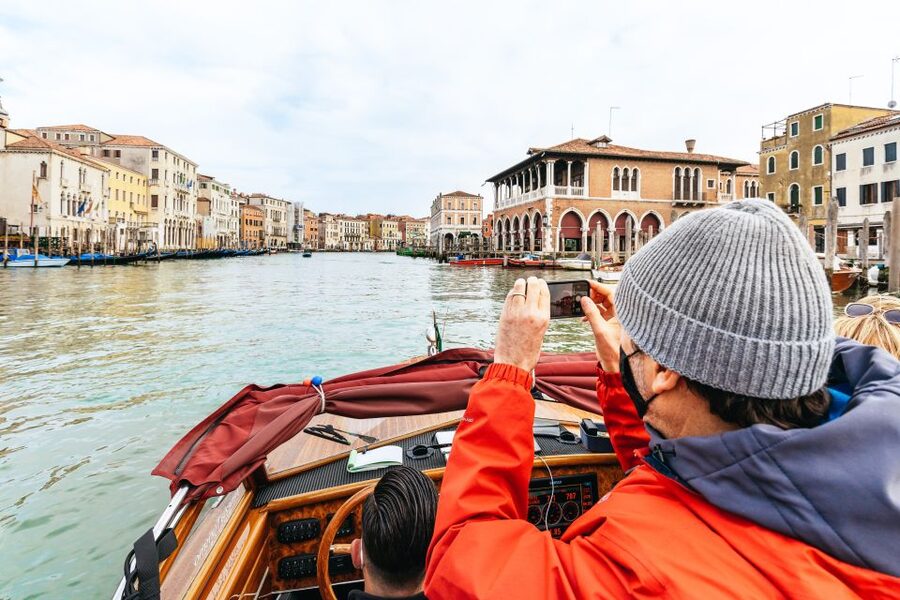
Once you enter the Grand Canal, the ride becomes a moving catalogue of Venetian architecture. The boat passes close enough for you to see the different shapes of the façades, their balconies, arched windows, entrances, and layers of weathered color.
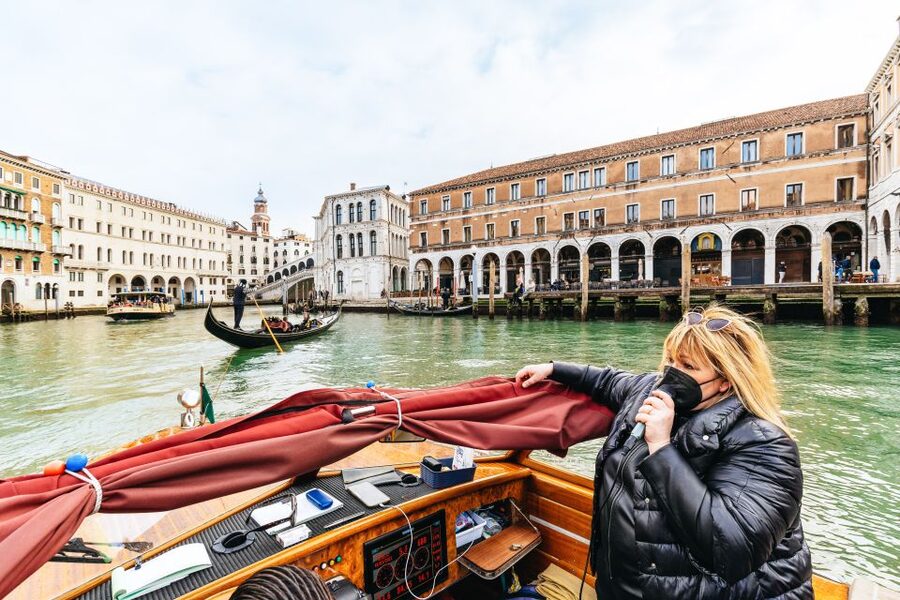
This is where the guide earns the ticket price. A public boat can take you along the same waterway, but you would not necessarily know which building is Ca’ Balbi, where a major institution is located, or why a particular palace matters. The guide’s commentary turns a pretty ride into a readable one.
Guides have been praised for clear English, humor, warmth, and strong knowledge of the buildings. Massimo and Leo were singled out by name in past experiences, but guides can change. The useful point is that the quality of the narration appears central to the experience, not an afterthought.
Rialto Bridge and the oldest part of the route
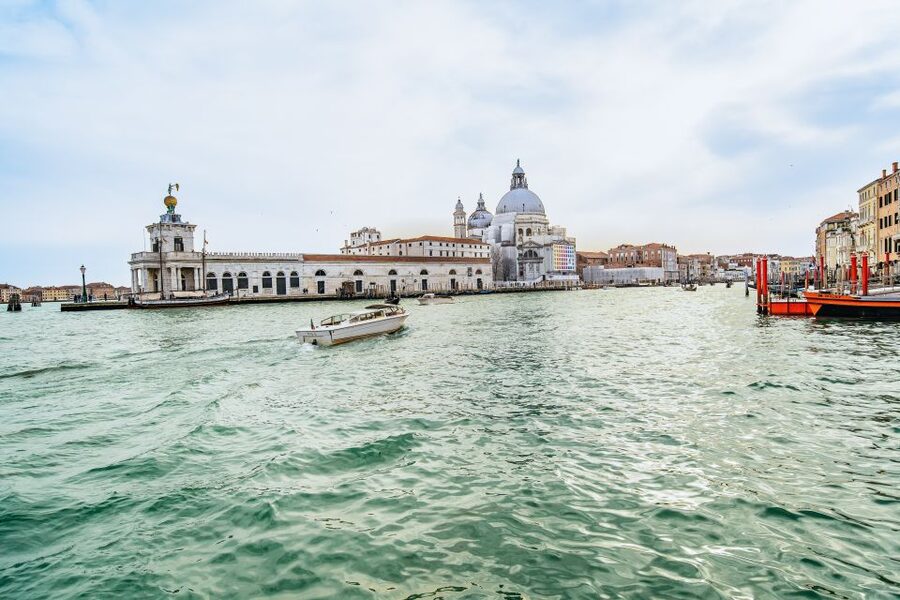
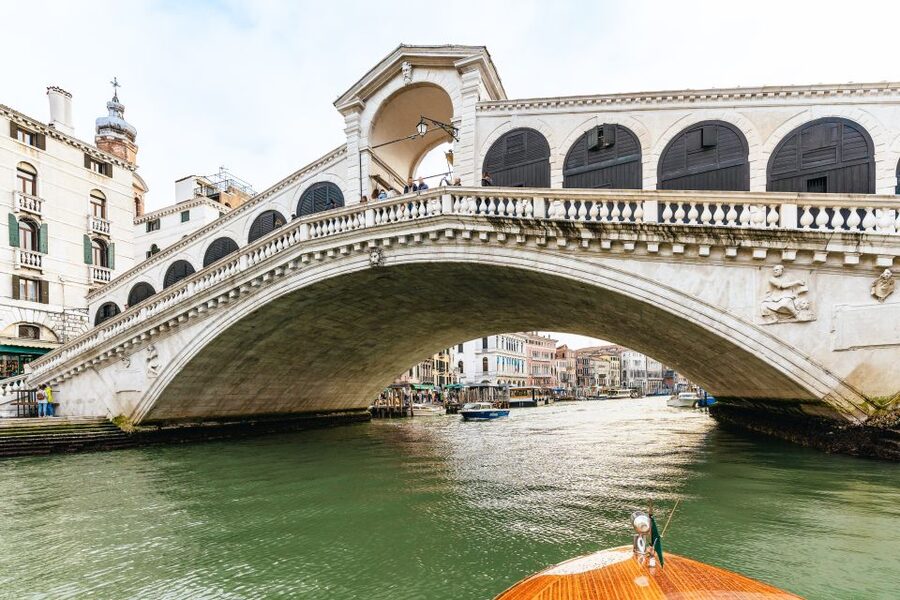
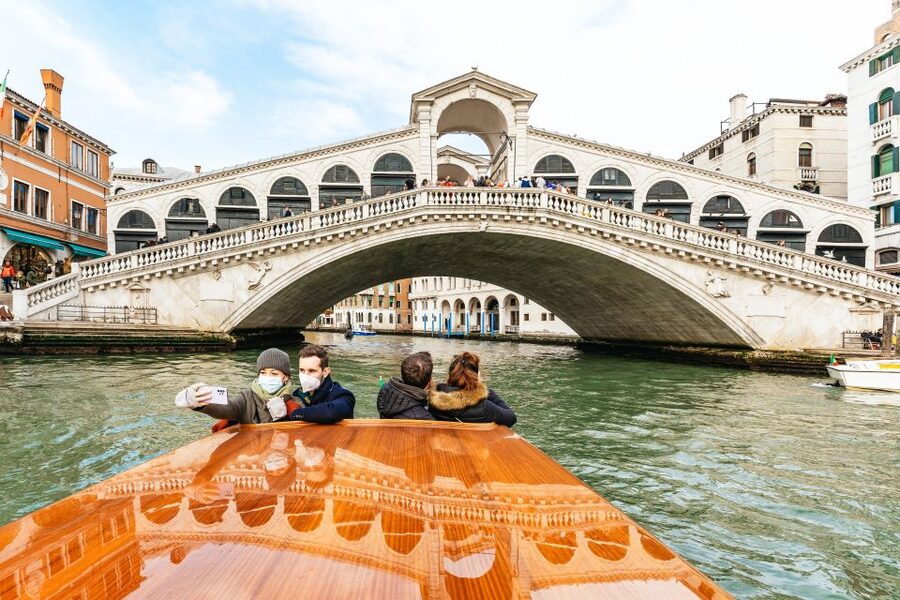
The Rialto Bridge is the star of the Grand Canal. It is the oldest and most famous bridge on the route, and seeing it from below gives you a view that walking across it cannot provide.
From the boat, you can study the bridge as part of the waterway rather than as a crowded crossing. The approach is often just as interesting as the bridge itself, with boats, buildings, and the canal narrowing around this famous point.
Have your camera ready, but do not spend the entire passage looking through a screen. The boat keeps moving, and the best view may last only a few seconds. If you want a photograph of the bridge without people blocking the structure, the water-level angle is a strong reason to take this tour.
The Rialto section can also feel busy on the water. Boats share the canal, and weather may make the ride choppy. One past departure encountered rough water during storms, though the driver handled it well. If you are sensitive to motion, a calm-weather departure should be more comfortable than a stormy one.
Still Venice, but a slower afternoon:
- Venice: Doge’s Palace Reserved Entry Ticket
★ 4.6 · 42,716 reviews - Venice: Grand Canal Gondola Ride with App Commentary
★ 4.1 · 18,908 reviews - Venice: Grand Canal by Gondola with Live Commentary
★ 4.1 · 13,681 reviews - Venice: La Fenice Opera House Entry Ticket with Audio Guide
★ 4.6 · 11,742 reviews
Palazzos, institutions, and the Hotel Gritti
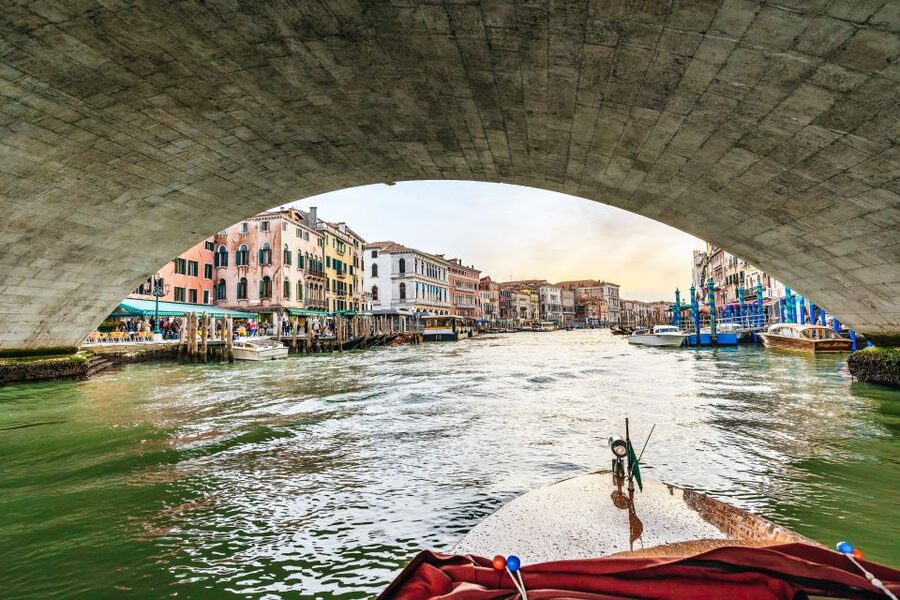
After Rialto, the guide points out a long sequence of Venetian patrician houses and traditional palazzos. These were not simply grand private residences in the modern sense. Many now contain museums, art collections, university departments, hotels, and government-related offices.
Ca’ Grande and Ca’ Balbi are among the major buildings identified along the canal. Hearing their names as you pass helps you connect Venice’s architectural beauty with its civic and cultural life. You are not just looking at façades. You are seeing former homes and official buildings that still give the waterway much of its character.
The luxurious Hotel Gritti is another notable sight. From the boat, it becomes part of the continuous waterfront rather than a building you visit from the street. The guide’s explanation is useful because the canal-side façade is best understood as one piece of the city’s long relationship with wealth, trade, and hospitality.
Ca’ Pisani Moretta adds another elegant palace to the route. It is associated with social gatherings and Venetian soirees, giving you a sense of how these grand homes were used. You will not tour the interiors on this excursion, but the exterior commentary helps you picture the events once held behind those walls.
Ca’ Vendramin Caliergi and Fondaco dei Tedeschi
The boat also passes Ca’ Vendramin Caliergi, known for its casino. This section gives the tour a different tone. Instead of seeing only churches and historic residences, you encounter a building connected with entertainment and modern public life.
Fondaco dei Tedeschi brings an international note to the waterfront. Its name reflects Venice’s historic links with foreign merchant communities, and its presence reminds you that the city was shaped by visitors, traders, and cultural exchange.
These stops are valuable because they prevent the tour from becoming a simple parade of beautiful façades. The guide places the buildings within Venice’s changing social and economic life, even though the explanations must remain fairly brief during a one-hour ride.
The boat’s pace is part of the charm and part of the limitation. You cover a lot of water in little time, but you will not have long to take notes or ask about every building. If you want detailed information about one palace, write down its name and return later on foot.
Della Costituzione, the modern glass bridge
Near the end or beginning of the route, depending on the direction, you see the Della Costituzione Bridge near Calatrava. Its glass-and-modern design looks startling beside Venice’s older stone bridges and ornate buildings.
This contrast is one of the tour’s best visual moments. Rialto represents Venice’s older bridge tradition, while Della Costituzione shows the city accommodating modern design and contemporary movement. Seeing both from the water makes the difference especially clear.
The modern bridge is also a useful orientation point near the entry area of Venice. The guide can help you connect the canal route with the parts of the city you may reach by train or on foot, though the tour itself is not a walking transfer.
La Madonna della Salute and the final views
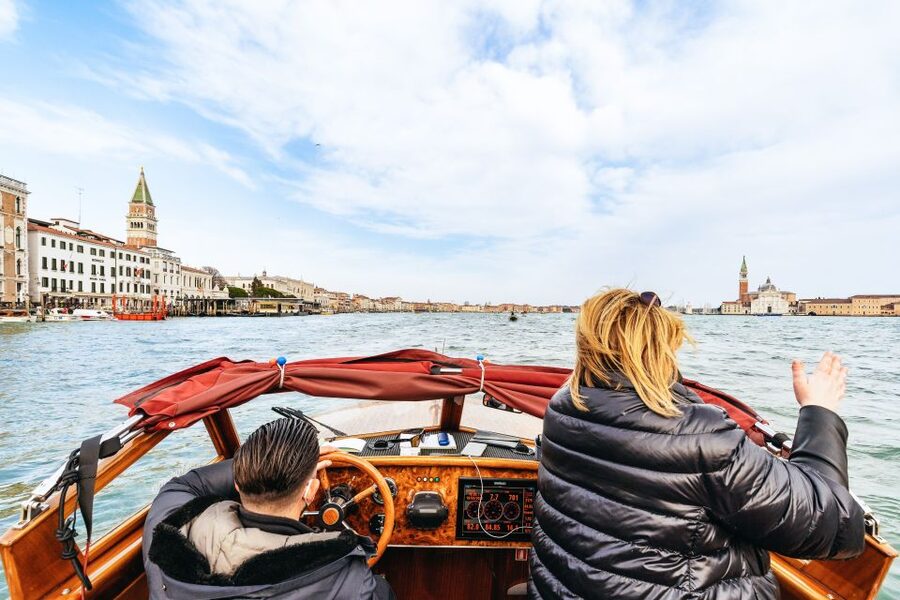
La Madonna della Salute is the route’s grand religious finish. The church is one of Venice’s most recognizable buildings, and its large dome gives the waterfront a strong focal point.
From the boat, you see the church in relation to the water and surrounding buildings. That setting is important. Venice’s churches were not placed in isolation from the canals. Their domes, steps, and façades were meant to be seen by people arriving across the water.
The final part of the trip can be especially appealing late in the day. A past evening ride caught the sun setting during the second half, which made the views more atmospheric. Sunset is never guaranteed, but a late afternoon slot may give you softer light than midday.
At the end, the boat returns to the starting area rather than turning the experience into a longer walking tour. This is convenient if you want to continue near St. Mark’s Square, though one older departure included a short walking section that is not part of every current trip.
Boat comfort, group size, and photography
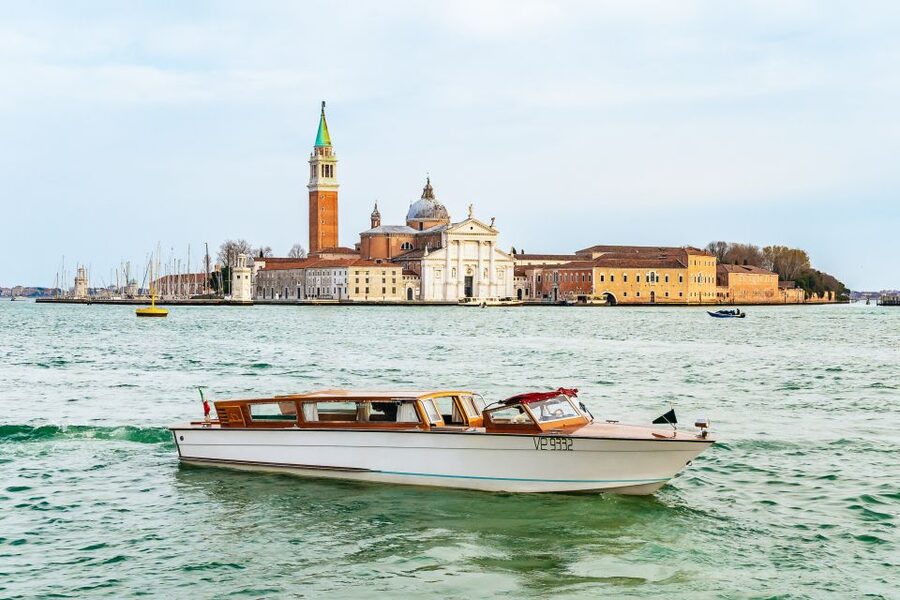
The motorboat is smaller and more personal than a large public water bus. That makes it easier to hear the guide and gives you a closer view of the canal walls. Past boats have carried very small groups, including six or eight people, while another departure had 11 adults and felt cramped.
You may be able to sit inside or outside, depending on the boat. Outside positions are best for photographs and fresh air, while inside seats offer more shelter if the weather turns cool or wet. The tradeoff is that windows may be marked or dirty, and standing outside can make it harder to hear the guide.
A practical approach is to alternate positions if the boat is full. Several people have done this successfully, taking turns in the back or outside areas. Do not assume everyone will have a completely unobstructed view for the whole hour.
Wear a warm layer in cooler months. February riders have found hats and gloves useful, and even a sunny day can feel cooler on moving water. In rough weather, the canal may be rocky, so anyone prone to motion sickness should plan accordingly.
The boat has been described as clean, spacious, and comfortable on some departures, but conditions are not identical every time. Your experience depends partly on the assigned boat, group size, and weather.
Is $53 good value for one hour?
At $53 per person, this is not the cheapest way to travel through Venice. A public water bus costs less, and it can also give you a water-level view of the Grand Canal. You would give up the live narration and the focused sightseeing route, however.
The more useful comparison is with a short gondola ride. A gondola offers atmosphere, tradition, and a slower glide through smaller waterways. This motorboat tour covers more of the Grand Canal and more major buildings in the same general time frame, which is why I would choose it for orientation and architecture.
The tour also avoids the time cost of arranging a long list of separate sights. In one hour, you see bridges, palazzos, churches, hotels, institutions, and the waterfront from a single seat. If you have only a short stay, that efficiency matters.
The value is strongest when you listen to the guide. If you treat it as a silent boat transfer, $53 may feel high. If you want the landmarks identified and explained in clear English, the price becomes easier to justify.
Who should book this Venice boat tour?
I would recommend it to first-time visitors who want to understand Venice quickly. Families may like the simple format, since the ride is short and the water views keep children interested. It also suits anyone who prefers sightseeing from a seat rather than crossing bridges all afternoon.
The tour works well for photographers, especially at a late afternoon departure. You get repeated chances to photograph façades, bridges, domes, and boat traffic from an angle that walking rarely provides.
It is less suitable if you want a quiet, romantic gondola experience. A motorboat is faster and more practical, but it does not offer the same traditional mood. It may also disappoint you if you expect plenty of time at each sight or a guaranteed tiny group.
Wheelchair users should note that the tour is not suitable for them. You should also keep the Vogalonga in mind, since the tour does not operate on that event date, which usually falls in May but does not have a fixed date. It also does not run on December 25, December 26, or New Year’s Day.
Should you book the Grand Canal motorboat tour?
Book this tour if you want a well-explained overview of Venice from the water and prefer coverage to ceremony. The strongest features are the English guide, the wide range of landmarks, and the chance to see both Rialto and the modern Della Costituzione Bridge in one short ride.
I would book it early in your stay, then return to the buildings that catch your attention. Choose a late afternoon time if available for gentler light, and arrive at the Alilaguna office with enough time to find it.
Skip it if your priority is an intimate gondola ride, complete quiet, or guaranteed space to stand and photograph. For most first visits, though, the tour offers a useful, enjoyable introduction to Venice for $53, provided you accept the possibility of a snug boat and a fast-moving view.
FAQ
How long is the Venice Grand Canal boat tour?
The cruise lasts one hour.
How much does the tour cost?
The listed price is $53 per person.
Where do I meet the boat?
Meet at the Alilaguna ticket office in front of the Royal Gardens, near St. Mark’s Square. From the square, look to the right, past the souvenir stalls, at the far end of the row.
What language is the tour conducted in?
The live tour guide speaks English.
Are food and drinks included?
No. Food and drinks are not included in the tour.
Can wheelchair users join the tour?
No. The experience is not suitable for wheelchair users.
Recently added around Venice
- Venice Walking Tour and Gondola Ride Combo★ 4.4 · 266 reviews
- Venice: Walking Tour and Shared Gondola Ride★ 4.1 · 466 reviews
- Venice: Private Tour with a Local Guide★ 4.6 · 718 reviews
- Venice: Walking Guided Tour of the City Must-See Sites★ 4.7 · 1,095 reviews
- Venice: The Footsteps of Commissario Brunetti Walking Tour★ 4.9 · 445 reviews
- Venice: Vivaldi Four Seasons Concert at Vivaldi Church★ 4.8 · 287 reviews
- Venice: The Three Tenors Concert Ticket★ 4.8 · 1,183 reviews
- Venice: Lagoon Catamaran Cruise with Music and Drinks★ 4.7 · 419 reviews
Cruises & Boat Tours, compared.
Boat Trip: Glimpse of Murano, Torcello & Burano Islands
Read our review →
Burano, Torcello & Murano Boat Tour w/Glassblowing
Read our review →
Como & Bellagio with Private Lake Como Cruise
Read our review →
Murano and Burano Boat Tour with Glass Factory Visit
Read our review →
Murano & Burano Islands Guided Small-Group Tour by Private Boat
Read our review →
Murano & Burano Panoramic Boat Tour w/ Glassblowing
Read our review →
Browse the lists this tour appears in