
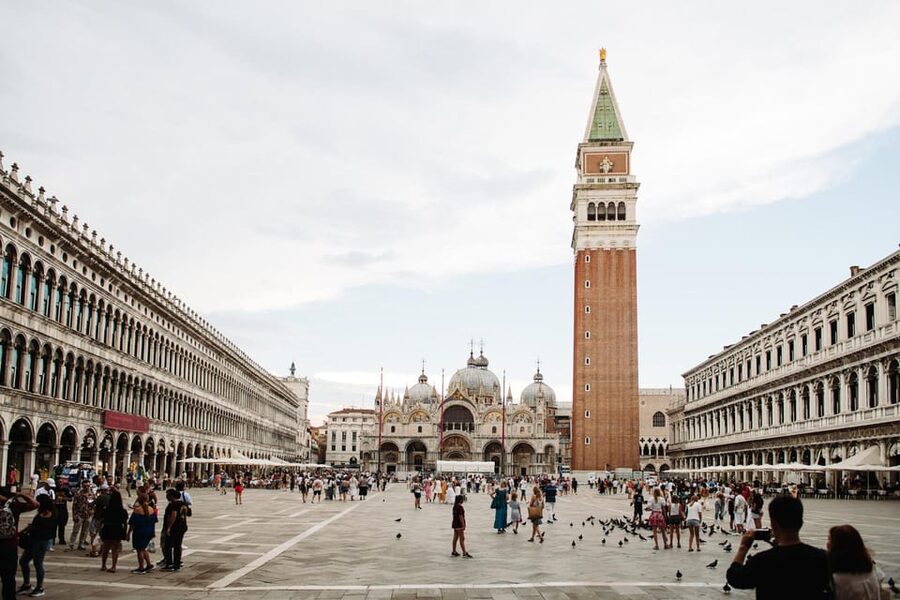
Reviewed · DOGE'S PALACE & ST MARK'S TOURS
Venice: After-Hours St. Mark’s & Doge’s Palace VIP Tour
Venice reveals itself after sunset. This 3.5-hour evening tour gives you rare, quiet access to Doge’s Palace and St. Mark’s Basilica, with a live English-speaking guide to explain the art, politics, and strange stories behind both landmarks. I especially like the near-empty rooms and the dramatic moment when the Basilica’s lights come on over its gold mosaics.
I also like the small-group feel, clear audio equipment, and guides such as Roberta, Elena, Nico, and Giulia, who bring local stories and humor to the walk. The main drawback is the price, $157.47 per person, plus a possible break of up to 1.5 hours between the palace and basilica visits.
In This Review
- Key points to know before booking
- Why an evening visit changes St. Mark’s Square
- Doge’s Palace: power in polished marble
- The Great Council Hall and its unusual paintings
- Prisons, armory, and the real Bridge of Sighs
- The break between the palace and Basilica
- St. Mark’s Basilica after closing
- The Pala d’Oro and the crypt
- The guides make or break the experience
- Is $157.47 a fair price?
- Who should book this evening tour?
- Final verdict: book it for the quiet
- FAQ
- How long does the tour last?
- Where does the tour begin?
- Where does the tour finish?
- Is the tour offered in English?
- What clothing is required for St. Mark’s Basilica?
- Is the tour suitable for wheelchair users or strollers?
Key points to know before booking
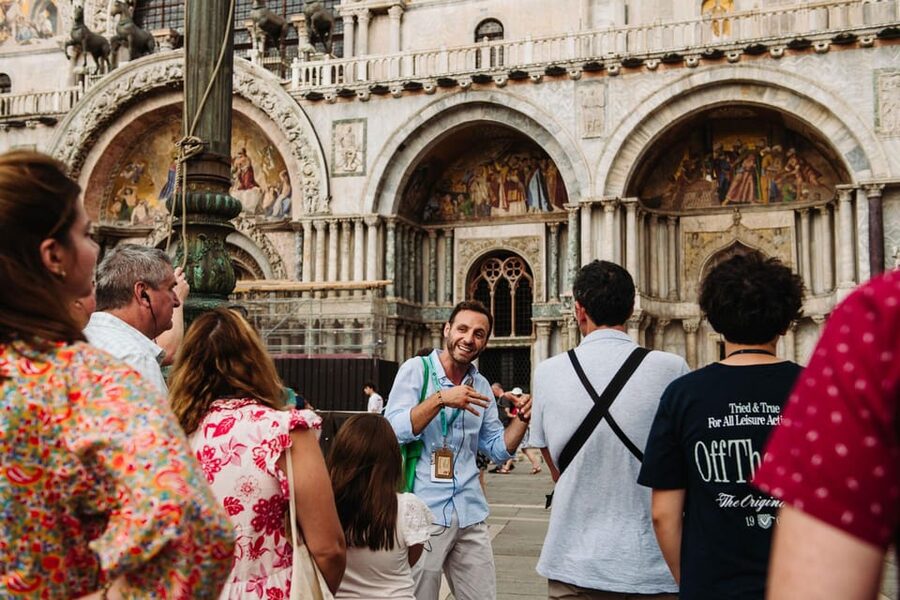
- The Basilica is visited after closing, when the crowds have gone and the interior can be seen in a much calmer setting.
- Doge’s Palace feels almost private in the evening, especially in the Great Council Hall and along the prison route.
- The Pala d’Oro altarpiece is a major highlight, with its gold surface and colored gemstones easier to appreciate without a daytime crush.
- The Bridge of Sighs is crossed from inside, giving you the less romantic, more practical story behind its name.
- The guides make the difference, with praised leaders including Roberta, Elena, Nico, Susan, Pamela, Ione, Laura, and Mosè.
- Dress and walking requirements matter: wear long pants, cover your shoulders, and expect stairs and a steady walking pace.
Why an evening visit changes St. Mark’s Square
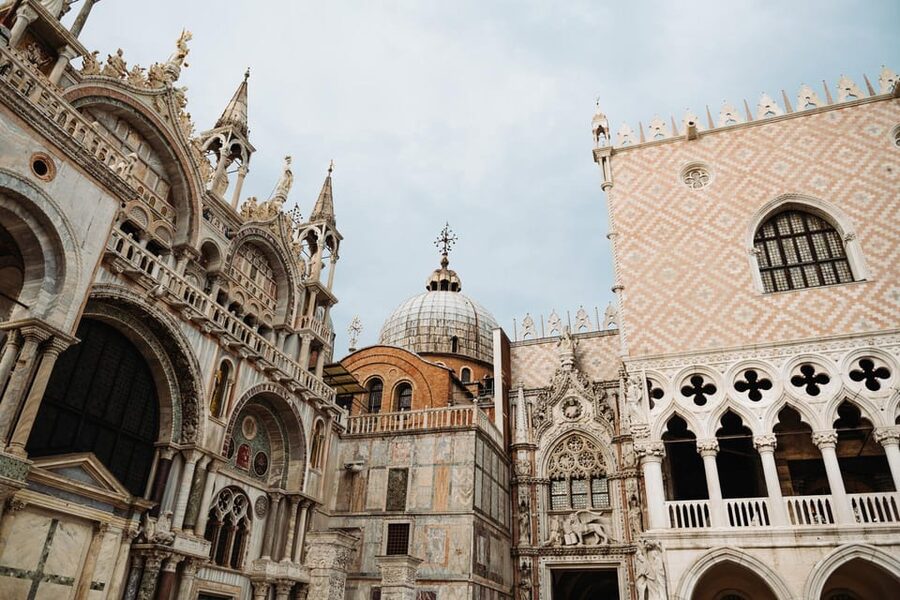
During the day, St. Mark’s Square can feel like a public crossroads rather than a place for quiet attention. Tour groups gather, church visitors shuffle through, and the palace rooms fill quickly. An evening visit changes the mood at once.
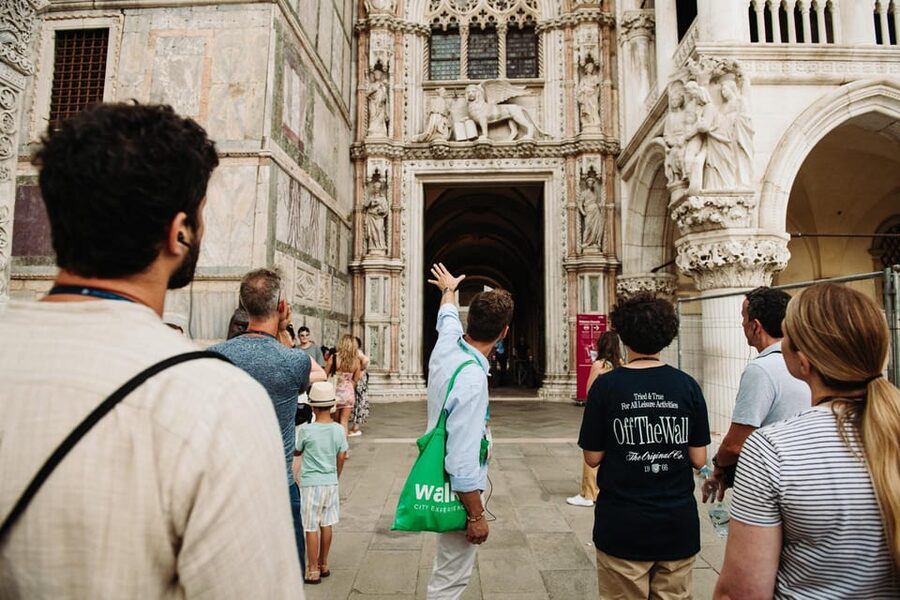
You meet at the Correr Museum in Piazza San Marco, under the portico just outside the museum entrance. The guide holds a green Walks sign, and you should arrive 15 minutes early. The tour finishes back in the square, so you will not need to arrange transport between the main sites.
The timing is the real selling point. You are not simply buying admission. You are paying for a more controlled visit to two of Venice’s most important buildings, along with someone who can explain what you are seeing. That matters here because the art and architecture can otherwise blur into a long series of grand rooms and glittering surfaces.
This is not a private tour in the strict sense. Groups can reach around 20 to 25 people, and several groups from the same operator may be inside the Basilica. Still, that is a much easier number to manage than the daytime masses. Headsets are provided, so you should be able to hear the guide even when the group spreads through a large room.
More Doge Palace and St Mark tickets:
- Venice: Doge’s Palace Reserved Entry Ticket
★ 4.6 · 42,716 reviews - Doge’s Palace & St. Mark’s Basilica with Terrace Access Tour
★ 4.7 · 10,697 reviews - Venice: Doge’s Palace, St Mark’s Basilica, and Pala d’Oro
★ 4.4 · 6,235 reviews
Doge’s Palace: power in polished marble
The tour begins inside Doge’s Palace, the former seat of Venetian government. This was not just a grand home for one ruler. It was the working center of the Venetian Republic, where elected officials, judges, councils, and diplomats shaped the city’s fortunes.
The first rooms show the contrast between Venice’s political system and the palace’s lavish appearance. The doge was powerful, but he was not an absolute king. He was elected through a complicated process designed to prevent any one family from taking full control. Your guide explains how the election worked and what the doge could and could not do.
That political background makes the palace easier to understand. Without it, you may see handsome rooms and painted ceilings but miss the tension behind them. Venice wanted to display wealth and authority while also insisting that its government was carefully balanced.
The Great Council Hall and its unusual paintings
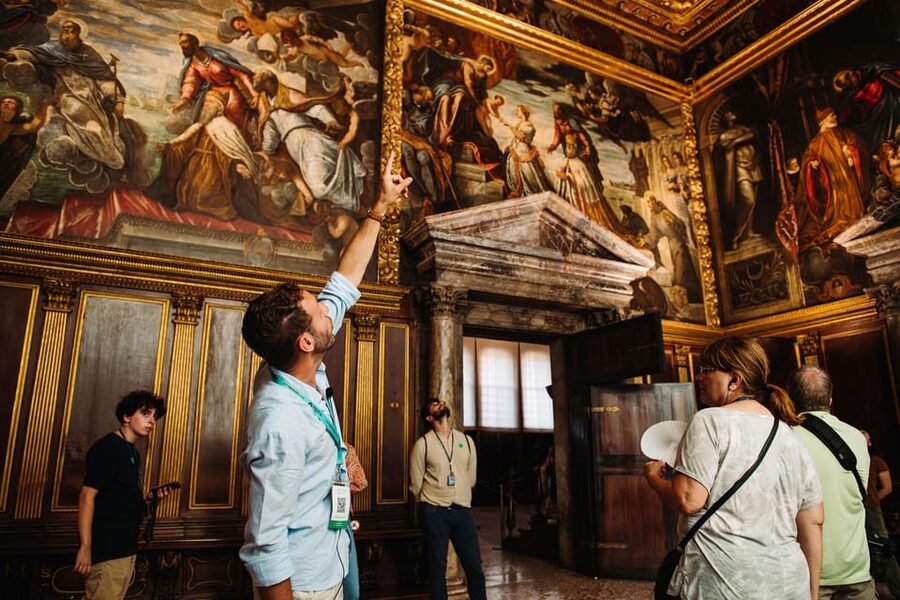
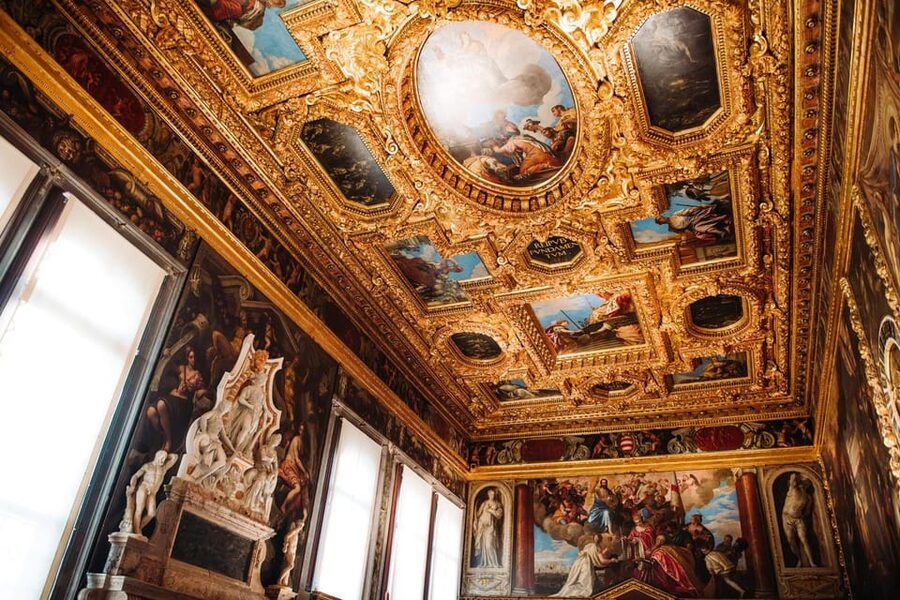
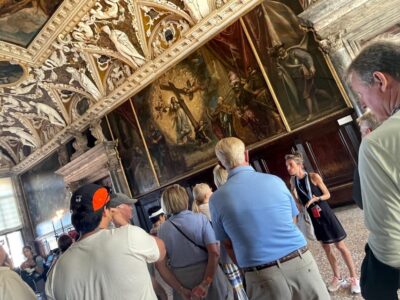
The Chamber of the Great Council is the grandest stop in the palace. This enormous meeting hall was used by the city’s ruling council, and its scale tells you how seriously Venice treated public ceremony and political theater.
Look up for the huge paintings by Veronese and Tintoretto. These works are not quiet devotional images. They present Venice as wealthy, protected, and favored by heaven. The room was built to impress both citizens and foreign visitors.
One of the tour’s more memorable stories concerns the painted series of Venetian doges. One doge is covered by a black veil. Your guide explains the reason, turning what might look like a damaged or unfinished picture into a lesson about political disgrace and public memory.
This is where a good guide earns the fee. A general admission visit lets you admire the scale, but it may not explain why a particular figure was altered or what the room was designed to communicate. Guides such as Elena and Nico have been especially praised for mixing facts with stories, rather than delivering a long, dry lecture.
Give yourself time to look. The room can be visually overwhelming, and the guide will point out details that are easy to miss from the floor. You will also have some quiet moments to take in the ceiling and wall paintings without constant movement around you.
Prisons, armory, and the real Bridge of Sighs
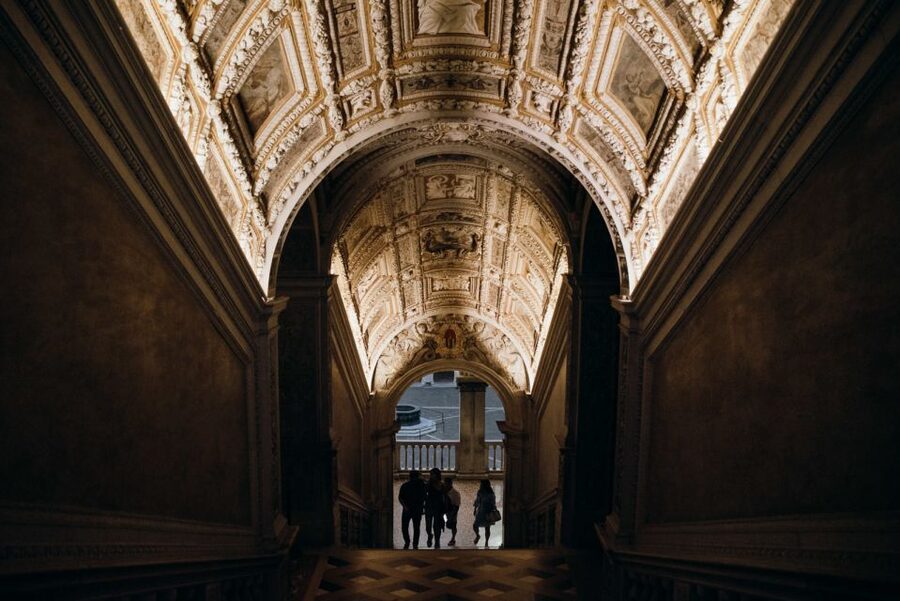
The palace tour shifts tone when you reach the armory and prison areas. The armory shows the military side of the republic, while the prisons provide a darker look at how Venice handled accused and convicted people.
The New Prisons are not decorative spaces. The stone corridors and confined cells feel stark after the palace’s decorated halls. This contrast is one reason the route works well: you see both the official image of Venetian power and the machinery behind it.
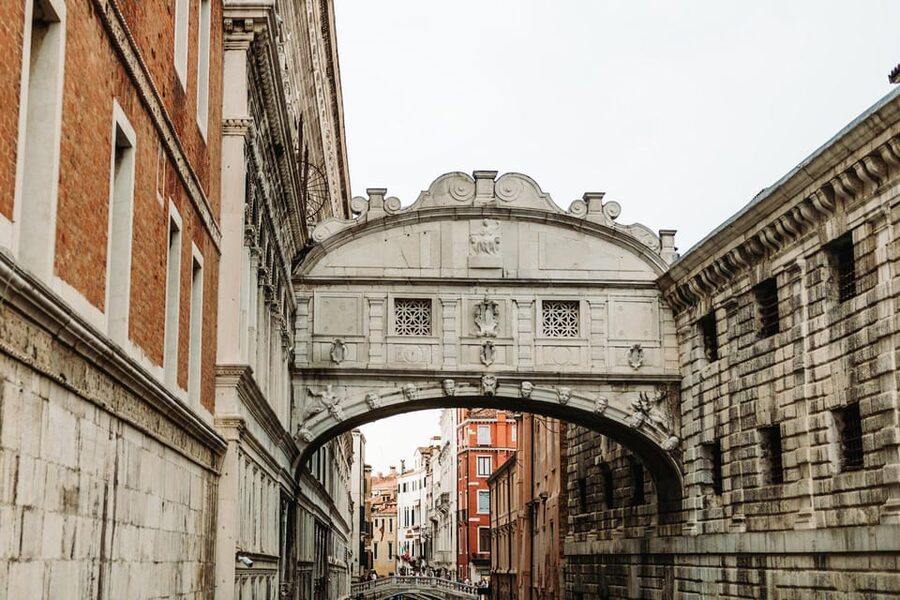
You then cross the Bridge of Sighs from the inside. Its name often gets wrapped in romantic stories, but the original meaning was far less cheerful. Prisoners crossed from the palace courts toward the prisons, and the small windows offered one of their last views of Venice.
The interior crossing is brief, and the windows are small, but the moment connects the grand palace to the prison route. It is a useful reminder that Venice’s beauty and its strict legal system existed side by side.
The route includes stairs and uneven walking, so comfortable shoes are more than a suggestion. The tour is not suitable for wheelchair users, people with mobility impairments, or strollers. You should be able to walk at a moderate pace without difficulty.
A few more Venice bookings to compare
- Venice: Grand Canal Gondola Ride with App Commentary
★ 4.1 · 18,908 reviews - Boat Trip: Glimpse of Murano, Torcello & Burano Islands
★ 4.3 · 15,699 reviews - Venice: Grand Canal by Gondola with Live Commentary
★ 4.1 · 13,681 reviews - Venice: La Fenice Opera House Entry Ticket with Audio Guide
★ 4.6 · 11,742 reviews
The break between the palace and Basilica
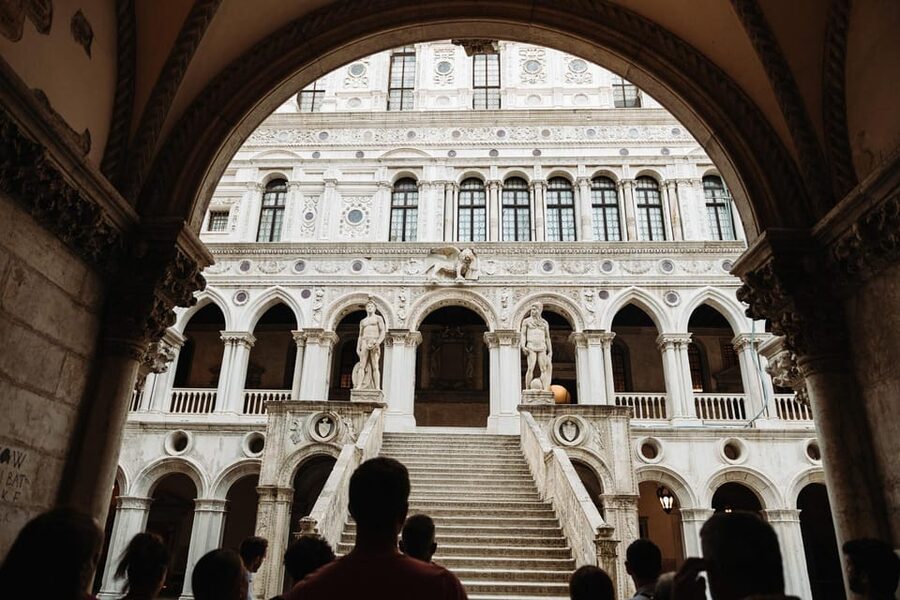
After Doge’s Palace, the tour takes a short break before entering St. Mark’s Basilica. The gap can be as long as 1.5 hours, depending on the schedule and the timing of the evening access.
This is important to know before you book. The break is not necessarily a problem, but it changes how you plan your evening. You can use it for a meal or a snack near the square, though you should keep an eye on the meeting instructions and return time.
One practical advantage is that the pause gives you a chance to rest after the palace section. Three and a half hours of walking, standing, and looking upward can wear you out. Bring water and do not arrive hungry, especially if your starting time is late.
High tide can also affect the route around St. Mark’s Square. Adjustments may be made for safety, but some sections can be restricted without a refund. Occasional closures for religious observances or private events are also possible, so keep a little flexibility in your plans.
St. Mark’s Basilica after closing
The Basilica is the emotional high point for many people on this tour. After the daytime visitors have left, a custodian unlocks the doors for the after-hours group. The lighting is subdued, and the interior feels far less like a public thoroughfare.
St. Mark’s is a Byzantine-style church famous for its gold mosaics. In daylight, the amount of decoration can be hard to process. At night, the slower pace and softer light help you notice the separate scenes, patterns, and layers across the domes and walls.
A particularly striking part of the experience is the gradual lighting of the interior. The Basilica may begin in darkness, then the lights are turned on to reveal the sparkling gold surfaces above you. It is a simple change, but it gives the architecture a theatrical quality without needing any extra show.
You may also sit inside the church while the light comes up. That pause matters. Instead of being pushed along with a daytime line, you have a chance to look, listen, and let the space settle in.
The crowd is not always just your group. Other after-hours groups may be present, and the total number can vary. Even so, the evening arrangement limits how many people are in certain areas at once. Audio headsets help you follow the explanation while taking in the mosaics.
The Pala d’Oro and the crypt
The Pala d’Oro altarpiece deserves careful attention. It is covered with gold and decorated with gemstones, making it one of the Basilica’s most dazzling objects. Without a dense daytime crowd pressing behind you, you have a better chance to study its small figures and ornate surface.
Your guide explains the religious and artistic meaning of the altarpiece rather than treating it as a quick photo stop. The Pala d’Oro is not simply valuable decoration. It reflects Venice’s close links with the eastern Mediterranean and the Byzantine world, themes that also appear throughout the Basilica.
The tour also visits the crypt, where the bones of St. Mark are said to be kept. Access can depend on conditions inside the Basilica, so you should not treat every part of the route as guaranteed. High water, church observances, and private events can force changes.
The Basilica requires modest dress for everyone. Your shoulders and knees must be covered, so wear long pants and a long-sleeved shirt, or bring a scarf or shawl. Shorts and sleeveless shirts are not allowed, and the activity provider cannot take responsibility if you are refused entry for clothing.
Large bags and luggage are also not permitted. Travel light for this one.
The guides make or break the experience
This tour covers a lot in one evening: government, elections, art, prisons, military history, religious symbolism, and Venetian legends. A flat delivery would make it exhausting. The strongest guides make it feel like a connected story.
Roberta is repeatedly praised for her warmth, clear explanations, and ability to make the buildings come alive. Elena is another standout, especially for adding personal stories about growing up in Venice and explaining how the city works today. Her humor helps the long tour pass quickly.
Nico has been praised for his passion and for answering questions in detail. Susan is noted for an especially polished speaking style, while Pamela, Giulia, Ione, Laura, and Mosè have also received strong praise for clear, engaging presentations.
You cannot choose your guide in advance, and the quality of any live tour depends partly on who leads your group. Still, the feedback around this experience is unusually consistent: the guides are not just providing directions and dates. They are helping you understand why Venice built these places and what they meant to the people who used them.
That is especially helpful in the Great Council Hall and Basilica, where a guide can direct your eyes to details you might otherwise pass by.
Is $157.47 a fair price?
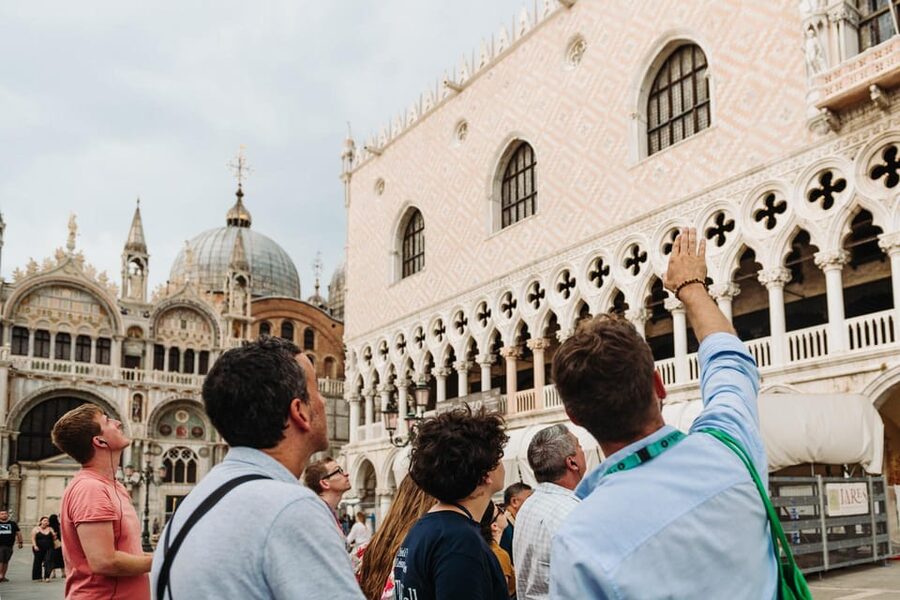
At $157.47 per person, this is expensive compared with buying ordinary daytime admission. You are paying for entry to both sites, after-hours access to the Basilica, a live English guide, skip-the-ticket-line access, and the chance to see the main rooms with far fewer people.
The value depends on what you want from Venice. If you only need to enter the palace and church, the price may feel steep. If you want quiet, context, and a carefully explained visit, the cost is easier to defend.
The Basilica is the strongest reason to pay more. Seeing the gold mosaics light up in a nearly empty church is a different experience from walking through during the day with hundreds of other people. Doge’s Palace also benefits from the evening setting, especially in the Great Council Hall and prison corridors.
The tour is particularly good value for a first visit, for anyone with limited time in Venice, or for people who dislike crowded indoor sights. It is less appealing if you prefer to explore alone, move at your own pace, or spend hours photographing every room.
Free cancellation is available up to 24 hours before the tour, and you can reserve now and pay later. Those options help if your Venice schedule is still changing, but they do not remove the risks connected with high tide, religious observances, or private events.
Who should book this evening tour?
I would recommend it to you if you want the main story of Venice’s political and religious power in one well-organized evening. It suits first-time visitors, couples looking for a quieter atmosphere, solo visitors who want an easy group structure, and anyone who values explanation over a simple admission ticket.
It also works well for repeat visitors. One person who had already visited both buildings several times described this as a far better way to see them, largely because the rooms were not packed. That makes sense: familiar sights can feel new when the noise and pressure disappear.
Families should consider the walking pace and the religious setting. Children who enjoy stories about rulers, prisons, and secret passages may like it, but the tour is not designed for strollers, and young children may struggle with the length.
You should skip it if you need step-free access, cannot walk moderately for several hours, or want a fully private tour. You may also prefer a daytime ticket if your main aim is flexibility rather than atmosphere.
Final verdict: book it for the quiet
I would book this tour if the budget allows and your priority is seeing Venice’s two landmark interiors without the daytime crush. The price is high, but the after-hours access, Pala d’Oro viewing, prison route, and gradual illumination of St. Mark’s Basilica give you more than a standard entry ticket.
The most useful tip is simple: dress correctly, wear good shoes, arrive early, and plan for the possible break between sites. If you can accept those conditions, this is one of the better ways to understand the power, beauty, and darker side of Venice in a single evening.
FAQ
How long does the tour last?
The tour lasts 3.5 hours. Starting times vary, so you need to check availability when booking.
Where does the tour begin?
It begins at the Correr Museum in Piazza San Marco 52. Your guide waits under the portico just outside the museum entrance and holds a green Walks sign.
Where does the tour finish?
The tour finishes back at the meeting point in Piazza San Marco.
Is the tour offered in English?
Yes. The tour has a live English-speaking guide.
What clothing is required for St. Mark’s Basilica?
Your shoulders and knees must be covered. Wear long pants and a long-sleeved shirt, or bring a scarf or shawl. Shorts and sleeveless shirts are not allowed.
Is the tour suitable for wheelchair users or strollers?
No. The tour is not suitable for wheelchair users, people with mobility impairments, or strollers. You should be able to walk at a moderate pace without difficulty.
Recently added around Venice
- Venice Walking Tour and Gondola Ride Combo★ 4.4 · 266 reviews
- Venice: Walking Tour and Shared Gondola Ride★ 4.1 · 466 reviews
- Venice: Private Tour with a Local Guide★ 4.6 · 718 reviews
- Venice: The Footsteps of Commissario Brunetti Walking Tour★ 4.9 · 445 reviews
- Venice: Vivaldi Four Seasons Concert at Vivaldi Church★ 4.8 · 287 reviews
- Venice: Walking Guided Tour of the City Must-See Sites★ 4.7 · 1,095 reviews
- Venice: The Three Tenors Concert Ticket★ 4.8 · 1,183 reviews
- Venice: Lagoon Catamaran Cruise with Music and Drinks★ 4.7 · 419 reviews
Doge's Palace & St Mark's Tours, compared.
Doge’s Palace & St. Mark’s Basilica with Terrace Access Tour
Read our review →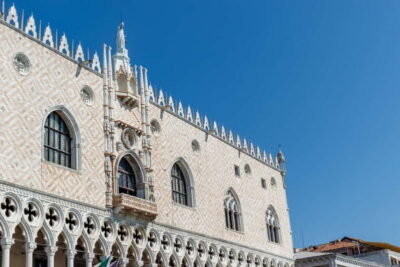
Doge’s Palace, St Mark’s Basilica, and Pala d’Oro
Read our review →
Legendary Venice: Doge’s Palace, St Mark’s & VIP Terrace Access
Read our review →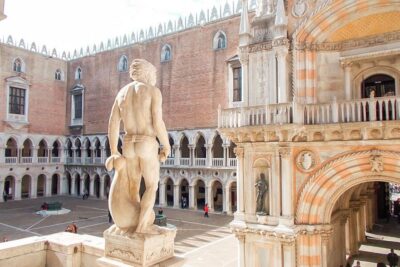
St. Mark’s Basilica & Doge’s Palace Tour with Ticket
Read our review →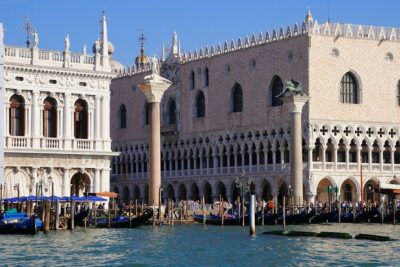
Private 3 hrs Venice Tour: St Mark’s, Walking tour & Boat tour
Read our review →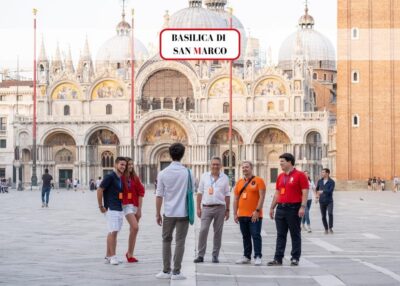
St Mark’s Basilica, Doge Palace, & Bell Tower Option
Read our review →Browse the lists this tour appears in