
Reviewed · VENICE TOURS
Teatro La Fenice Tour in Venice
Venice keeps its best stories indoors. This short Teatro La Fenice tour gives you a close look at one of Italy’s great opera houses, with a local guide explaining its fires, famous performances, lavish rooms, and long connection to Venetian public life. I especially like the chance to see the auditorium and royal box, and the story of how the theater rose again after two devastating fires.
The architecture and decoration are the main reward, even if you know little about opera. I also like the compact one-hour format, which fits neatly into a day of sightseeing. The main caution is reliability: some bookings have suffered from unclear meeting instructions, canceled departures, or guides who spoke too quickly. Check the details carefully before setting out.
In This Review
- Key points to know before booking
- Why La Fenice matters in Venice
- Meeting in Campo San Luca
- The first look at Teatro La Fenice
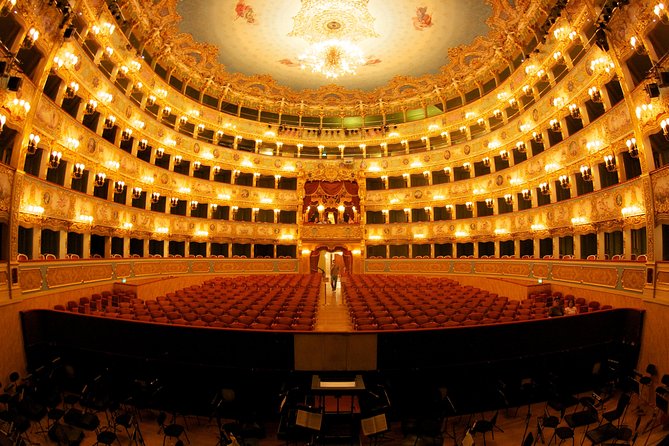
- Inside the auditorium and royal box
- The fires and the phoenix story
- What the 45-minute route really includes
- Guide style can make or break the visit
- Is $30.04 a fair price?
- Who should book this La Fenice visit?
- Booking and cancellation details to keep handy
- FAQ
- Where does the Teatro La Fenice tour start?
- What time does the tour begin?
- How long does the Teatro La Fenice tour last?
- Is the tour offered in English?
- Is admission to Teatro La Fenice included?
- Does the tour include backstage access?
- How many people can join the tour?
- Can I cancel for a full refund?
- Should you book the Teatro La Fenice tour?
Key points to know before booking
- Two fires shaped La Fenice’s identity: The theater burned to the ground twice, making its phoenix name more than a poetic flourish.
- The royal box is a highlight: You can usually see this ornate space, even when access to the main seating area changes.
- The tour is short and focused: The guided visit lasts about 45 minutes, with the entire experience listed at roughly one hour.
- Guide quality matters: Past guides named Nicole, Vanda, Wanda, Nikko, and Sara received very different reactions, so the pace and delivery may vary.
- The meeting details need care: Directions refer to Bucintoro Viaggi in Campo San Luca, while other booking details identify Teatro La Fenice itself. Confirm the exact rendezvous point.
- The price is reasonable for the setting: At about $30.04 per person, the visit is a fair buy if you value explanation, but a self-guided audio visit may suit you better.
Why La Fenice matters in Venice
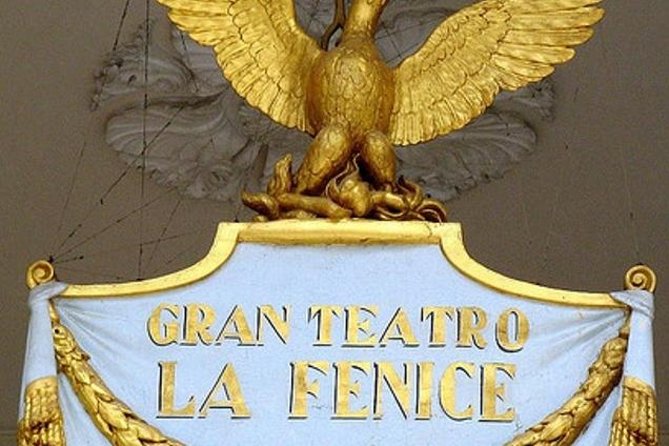
La Fenice means the phoenix. That name fits this theater unusually well. Built in the late 18th century, La Fenice became a meeting place for Venice’s cultural elite, then endured two fires that destroyed the building. Careful restoration returned it to its former style and ceremonial splendor.
A visit here is not only about admiring gold trim and velvet. The building reflects the changing story of Venice itself. French and Austrian occupation, Italian independence, changing musical tastes, and the tastes of wealthy patrons all left their mark on the theater.
La Fenice remains an active performance venue. Its program includes more than one hundred opera performances a year, along with symphonic concerts, ballet, chamber music, contemporary works, and full cycles of symphonies by composers such as Beethoven, Schumann, Brahms, and Mahler. Venetian composers including Luigi Nono and Bruno Maderna have also received special attention.
That ongoing role gives the visit more weight. You are not touring an abandoned palace dressed up for tourists. You are seeing a working theater with a past that still shapes its present.
A few more Venice bookings to compare
- Venice: Doge’s Palace Reserved Entry Ticket
★ 4.6 · 42,716 reviews - Venice: Grand Canal Gondola Ride with App Commentary
★ 4.1 · 18,908 reviews - Boat Trip: Glimpse of Murano, Torcello & Burano Islands
★ 4.3 · 15,699 reviews
Meeting in Campo San Luca
The stated meeting point is Bucintoro Viaggi, a travel agency in Campo San Luca, one of Venice’s central squares. The walk from there to the theater is short. Campo San Luca is a practical place to meet because it sits in the middle of the city, near many major routes through the San Marco area.
Here is the important practical wrinkle: the meeting information also lists Teatro La Fenice at Campo San Fantin, 1965. Because both locations appear in the supplied directions, I would not rely on memory or simply head to the theater without checking your voucher. Confirm whether you are supposed to meet at the agency or directly outside La Fenice.
Arrive early. A few past departures have been affected by confusion over voucher exchange and the meeting arrangement. The tour begins at 12:30 pm, and a little extra time is useful in Venice, where a five-minute walk can become longer when a canal, crowd, or closed passage gets in the way.
The tour is offered in English, with a maximum group size of 20. That is small enough for a personal visit in theory, but the actual experience depends on how clearly the guide addresses the group.
The first look at Teatro La Fenice
The exterior does not prepare you for the interior. Once inside, the tone changes from Venetian street life to theatrical ceremony. The tour begins with an introduction to the building and its place in the city, then moves through the entrance and foyer.
The most successful guides make this opening useful rather than rushed. They explain how the theater functioned as a social space, not just a place to sit in the dark and listen to music. The old private boxes, the royal box, and the formal decoration all point to a time when attending the opera was part performance, part public display.
This is where a guide can add real value. You can admire ornate surfaces on your own, but a good explanation helps you notice why the rooms were arranged as they were and who was meant to occupy them. Guides named Nicole and Vanda, as well as Wanda in another account, were praised for clear delivery, friendly manner, and a comfortable pace.
Still, do not assume every guide will offer the same experience. Some have been described as hurried, soft-spoken, or distracted. If you cannot hear, move closer and ask the guide to speak up. You should not leave a historic theater having heard only half the story.
Inside the auditorium and royal box
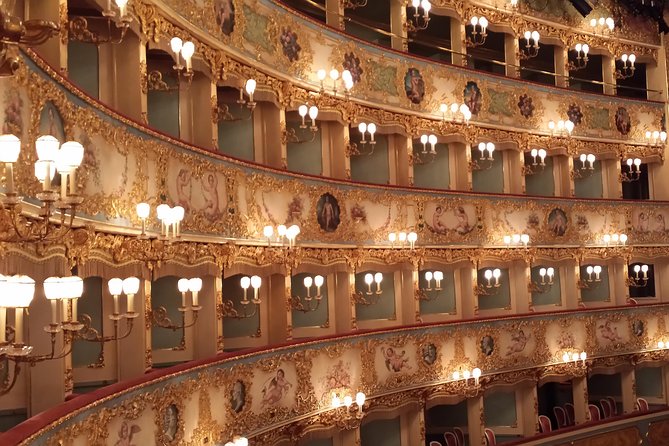
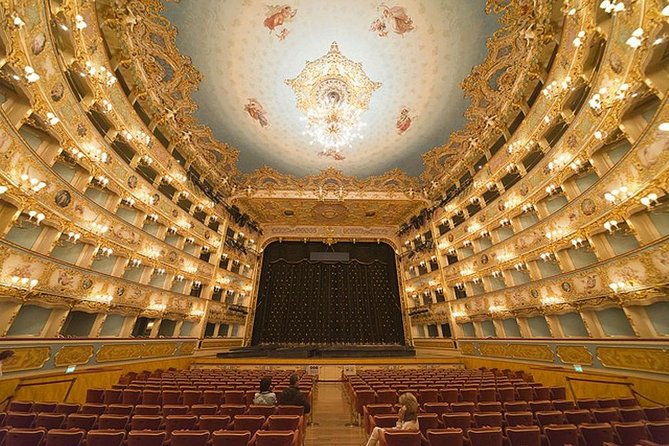
The auditorium is the heart of the visit. This is where you can picture La Traviata and other major operas performed before a dressed-up Venetian audience. Verdi’s La Traviata is closely linked with the theater’s story, and the tour places La Fenice within the larger tradition of Italian opera.
The decoration is deliberately theatrical. Gilded details, velvet seating, and private boxes create the sense of a room built to impress. The craftsmanship is a reminder that old public buildings were often designed to give people a feeling of ceremony, not merely to meet modern standards of comfort and efficiency.
The royal box is a particular highlight. It is ornate, formal, and tied to the political life of the theater. Napoleon is associated with the box, and the space helps explain how rulers and powerful patrons used opera houses as public stages of their own.
Access can vary. One account describes sitting in the theater while the guide explained its past, then visiting the VIP box and smaller recital rooms. Another says the main seating area was not available but the royal box could still be seen. This means you should think of the tour as an interior visit, not a guaranteed chance to enter every part of the auditorium.
There is no backstage tour included. You should not expect access to the orchestra pit, working areas, or hidden production spaces. If those are essential to you, this is probably not the right tour.
Still Venice, but a slower afternoon:
- Venice: Grand Canal by Gondola with Live Commentary
★ 4.1 · 13,681 reviews - Venice: La Fenice Opera House Entry Ticket with Audio Guide
★ 4.6 · 11,742 reviews - Doge’s Palace & St. Mark’s Basilica with Terrace Access Tour
★ 4.7 · 10,697 reviews - Venice: Burano, Torcello & Murano Boat Tour w/Glassblowing
★ 4.4 · 10,245 reviews
The fires and the phoenix story
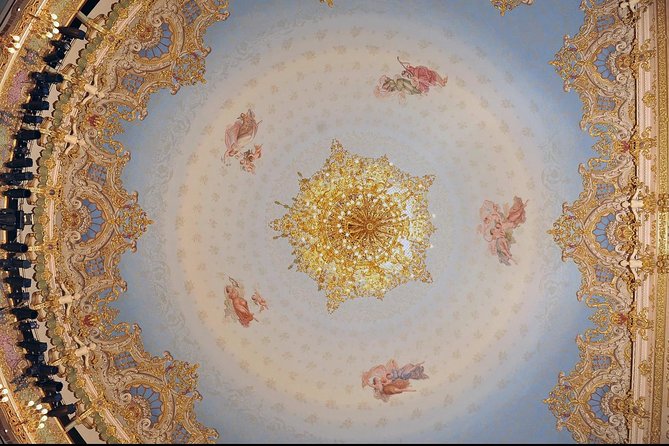
The strongest part of the guided visit is often the account of La Fenice’s two fires. The theater was destroyed on two separate occasions, then restored after painstaking and costly work. The scale of that effort explains why the phoenix name carries such force.
A short visit cannot cover every detail of the restoration, but the basic story gives meaning to what you see. The opulent interiors are not simply original rooms untouched by time. They are the result of a decision to bring the theater back to its former appearance after disaster.
The fires also make La Fenice different from many grand European opera houses. Here, restoration is part of the building’s identity. As you move through the foyer, auditorium, and boxes, you are looking at both a historic design and a modern effort to recover that design.
Guides have also connected the building to the periods of French and Austrian control, then to Italian independence. These details help place La Fenice within Venice’s political story. The opera house was shaped by more than music. It was also shaped by status, government, money, and civic pride.
What the 45-minute route really includes
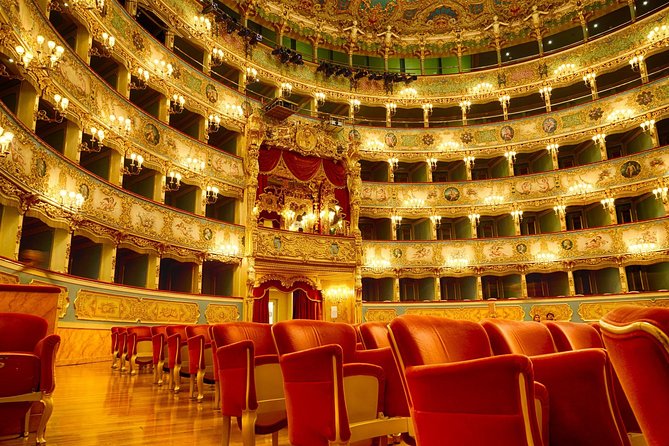
The advertised experience lasts about one hour, while the theater portion is listed at approximately 45 minutes. That makes it easy to add before lunch, after a morning walk, or between major sights in central Venice.
A typical visit includes:
- Meeting the guide and walking or making your way to the theater
- An introduction outside or near the entrance
- The foyer and main interior spaces
- A look at the auditorium when access permits
- The royal box
- Smaller rooms used for recital-style events
- Stories about major performances, musicians, singers, patrons, and the two fires
- Time at the end to take photographs or leave
That is a good amount for 45 minutes, but it also means the guide must keep moving. Some guides have been praised for answering questions clearly. Others seemed pressed for time, leaving little room for conversation.
If you want a slow architectural study, you may find the guided format brisk. If you want a solid introduction before exploring Venice on your own, the length works well. The theater itself may be worth more time than the tour provides, but the visit gives you a useful framework for appreciating it.
Guide style can make or break the visit
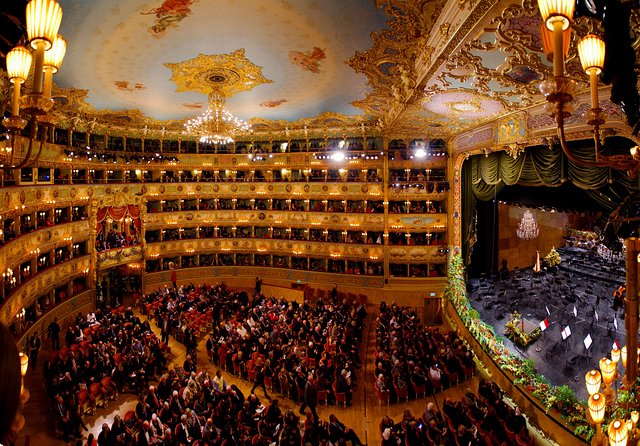
The strongest comments focus on the guide. Nicole was praised for an easy pace and strong command of the material. Vanda was described as clear and articulate in English. Nikko was appreciated for answering questions and explaining the theater in a friendly way.
These are exactly the qualities I want in a short cultural tour: clear English, enough history to make the rooms meaningful, and a willingness to pause for a question. A guide does not need to deliver a university lecture. The best approach is conversational but well organized.
The weaker experiences had a common problem: delivery. One guide spoke so softly that people missed much of the explanation. Another kept turning away from the group. Others were described as curt, rushed, or distracted by a phone.
There is also a possibility of English and Italian being combined in one group. When the guide repeats every point in both languages, the tour takes longer and leaves less time for questions. The guide may be doing the best possible job under the circumstances, but the format can make an already short tour feel compressed.
For the best chance of hearing everything, stay near the guide and ask for a repeat if needed. If you prefer to explore at your own pace, La Fenice also offers a direct ticket and audio guide option according to one account. That may be the better choice for independent visitors who do not need a live explanation.
Is $30.04 a fair price?
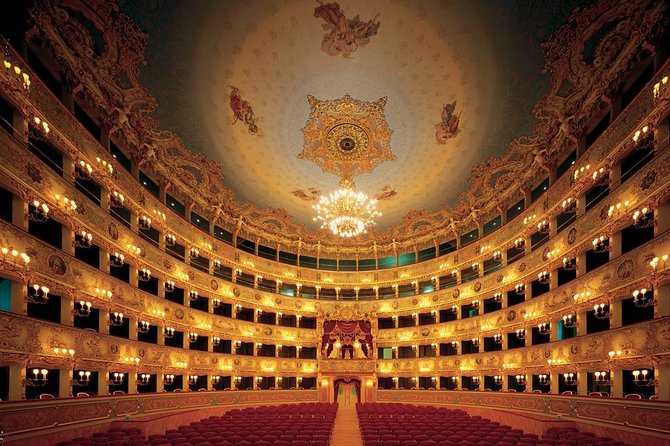
At about $30.04 per person, this is not a bargain-basement attraction, but the price is reasonable for a guided interior visit to one of Venice’s best-known theaters. Admission is included, and you receive a local guide rather than only a ticket.
The value depends on what you want. If you care about the story of the building, the two fires, famous performances, and the royal box, the extra cost over a self-guided visit can be worthwhile. The guide gives you context that decoration alone cannot provide.
If your main goal is simply to see the interior and take photographs, a direct admission with an audio guide may offer better control. You may be able to linger over details instead of following a fixed schedule. The guided tour also does not provide backstage access, so you are not paying for special areas behind the stage.
The small maximum group of 20 is a point in its favor. It should be easier to hear than in a large city tour, though the guide’s speaking volume still matters. Since the experience is offered in English, it suits you best if you want the history explained in that language rather than read it on your own.
Who should book this La Fenice visit?
I would recommend it to you if you:
- Enjoy historic buildings even if you are not an opera fan
- Want a short cultural activity in central Venice
- Like hearing the political and personal stories behind grand interiors
- Are curious about Verdi, La Traviata, Maria Callas, or Italian theater
- Prefer a guide to an audio device
- Want to see the royal box and major public rooms
You do not need to be an opera expert. The theater’s design, social customs, and survival after two fires offer plenty to appreciate.
I would hesitate if you:
- Need guaranteed access to the full seating area
- Expect a backstage or orchestra pit visit
- Want a long, leisurely architectural tour
- Dislike group tours or repeated explanations in more than one language
- Have a tight schedule and cannot tolerate meeting-point confusion
This is also a useful rainy-day activity. Venice gives you plenty of outdoor beauty, but a wet afternoon is a good excuse to spend time among La Fenice’s gilded interiors.
Booking and cancellation details to keep handy
The experience is offered by Bucintoro Viaggi and includes a local guide. Hotel pickup and drop-off are not included, and you return to the meeting point at the end.
Free cancellation is available up to 24 hours before the start time for a full refund. Changes or cancellations made less than 24 hours before the local start time are not accepted for a refund.
Confirmation is normally issued at booking. If you book within one day of the visit, confirmation is sent as soon as possible and depends on availability. If you are making a day trip from outside Venice, check the city access fee rules for your date. Certain dates require a fee, with exemptions and details handled through the official Venice access system.
FAQ
Where does the Teatro La Fenice tour start?
The directions identify Bucintoro Viaggi in Campo San Luca as the meeting point, while the booking details also list Teatro La Fenice at Campo San Fantin, 1965. Check your voucher carefully and confirm the correct location before leaving.
What time does the tour begin?
The stated start time is 12:30 pm.
How long does the Teatro La Fenice tour last?
The overall experience is listed at about one hour. The theater visit itself is described as approximately 45 minutes.
Is the tour offered in English?
Yes. English is the stated tour language.
Is admission to Teatro La Fenice included?
Yes. An admission ticket to the theater is included with the local guide.
Does the tour include backstage access?
No. The experience does not include a backstage tour. Access to the main seating area may vary, while the royal box is included among the spaces visited.
How many people can join the tour?
The maximum group size is 20 people.
Can I cancel for a full refund?
Yes, if you cancel at least 24 hours before the local start time. Cancellations or changes made less than 24 hours before the start are not refundable.
Should you book the Teatro La Fenice tour?
I would book this tour if you want a short, guided introduction to a remarkable theater and care about the building’s story as much as its decoration. The royal box, ornate interiors, famous operas, and account of two fires give the visit real substance.
I would not book it blindly. Confirm the meeting point, allow time for possible voucher confusion, and understand that the tour may last only 45 minutes and does not include backstage areas. If you prefer full control over pace and photography, choose a direct theater visit with an audio guide instead.
For most people who enjoy Venice’s cultural side, La Fenice is worth an hour. Go for the rooms, stay for the phoenix story, and listen closely. In a theater where the building itself has survived two dramatic endings, the history is the main performance.
Recently added around Venice
- Venice Walking Tour and Gondola Ride Combo★ 4.4 · 266 reviews
- Venice: Walking Tour and Shared Gondola Ride★ 4.1 · 466 reviews
- Venice: Private Tour with a Local Guide★ 4.6 · 718 reviews
- Venice: The Footsteps of Commissario Brunetti Walking Tour★ 4.9 · 445 reviews
- Venice: Vivaldi Four Seasons Concert at Vivaldi Church★ 4.8 · 287 reviews
- Venice: Walking Guided Tour of the City Must-See Sites★ 4.7 · 1,095 reviews
- Venice: The Three Tenors Concert Ticket★ 4.8 · 1,183 reviews
- Venice: Lagoon Catamaran Cruise with Music and Drinks★ 4.7 · 419 reviews
Venice Tours, compared.

Grand Canal Gondola Ride with App Commentary
Read our review →
Boat Trip: Glimpse of Murano, Torcello & Burano Islands
Read our review →
La Fenice Opera House Entry Ticket with Audio Guide
Read our review →
Doge’s Palace & St. Mark’s Basilica with Terrace Access Tour
Read our review →
Burano, Torcello & Murano Boat Tour w/Glassblowing
Read our review →
Murano and Burano Boat Tour with Glass Factory Visit
Read our review →Browse the lists this tour appears in