
Reviewed · MUSEUMS
Naples: National Archaeological Museum of Naples Guided Tour
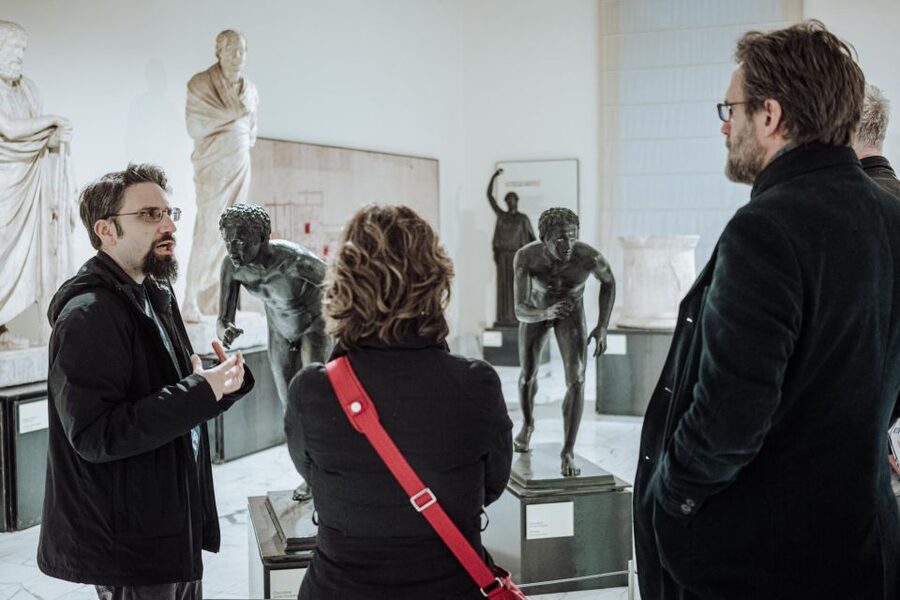
Ancient art makes more sense with a guide. This two-hour visit to Naples’ National Archaeological Museum brings order to a huge collection, with special attention to the Farnese sculptures and the frescoes and mosaics rescued from Pompeii and Herculaneum. I like the skip-the-line entry, and I like that an archaeologist can connect museum pieces with the ruins you may have already seen near Mount Vesuvius. The main drawback is simple: two hours cannot cover every floor of this very large museum.
I also like the small-group feel reported on several departures, with some groups numbering only five or six people. Guides such as Nicoletta, Sylvia, Salvatore, and Gennaro have been praised for clear explanations and lively storytelling. One practical caution: sound quality has not been perfect on every visit, so ask about an earpiece if you have trouble hearing.
In This Review
- Key points to know before booking
- Why this museum deserves a guided visit
- Meeting the guide outside the ticket office
- The first two hours: a focused route through a giant collection
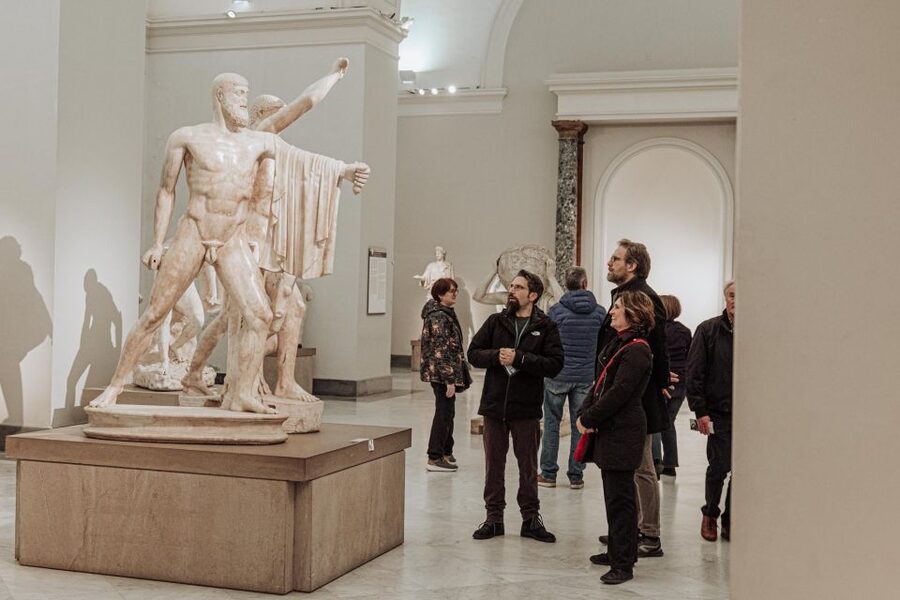
- The Farnese Collection: colossal sculpture with serious presence
- Pompeii and Herculaneum: art frozen by Vesuvius
- Why visiting Pompeii first can help
- The value of an archaeologist rather than an audio guide
- How much the $52 price is worth
- Group size, sound, and the practical walking details
- Who will enjoy this tour most?
- Should you book the Naples Archaeological Museum tour?
- FAQ
- How long does the guided museum tour last?
- Where do I meet the guide?
- What is included in the price?
- Is transportation included?
- Are food and drinks included?
- Which languages are available?
- Can I cancel the booking?
- Is the tour suitable for wheelchair users?
Key points to know before booking
- The Farnese Hercules and Toro Farnese are major stops: These enormous classical sculptures give the tour a strong opening and help explain the museum’s importance.
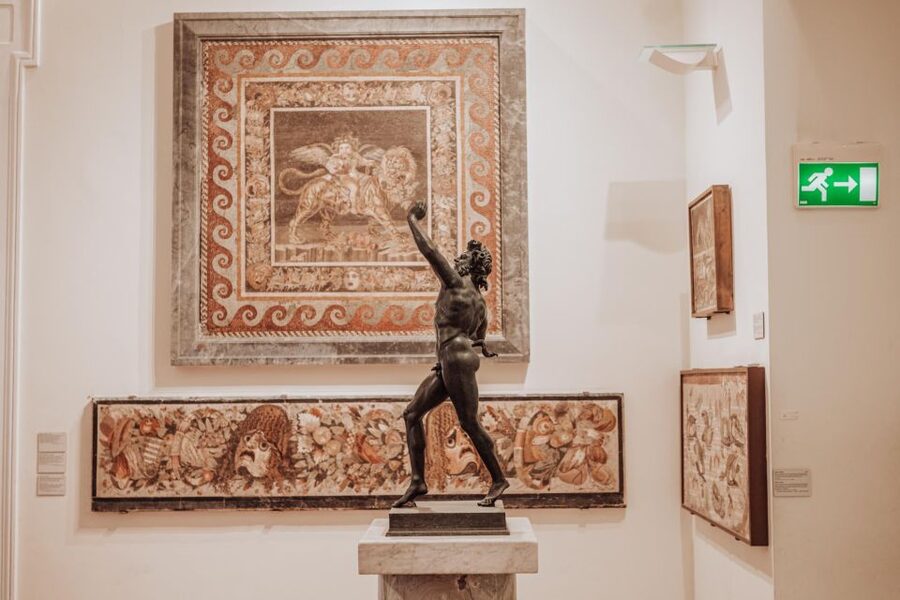
- Pompeii and Herculaneum come alive indoors: Frescoes, mosaics, wall paintings, and household objects survived the eruption of Mount Vesuvius in 79 AD.
- An archaeologist leads the visit: Guides have included working archaeologists and university teachers, adding useful context beyond simple dates and names.
- The museum is too large for one short visit: The guide focuses on major works, then you can spend more time with other galleries on your own.
- The visit works best after Pompeii or Herculaneum: You will recognize objects and artistic details instead of meeting them without context.
- Plan for a walking-heavy experience: Large bags, strollers, oversize luggage, and both manual and electric wheelchairs are not allowed.
Why this museum deserves a guided visit
Naples’ National Archaeological Museum is not a tidy little gallery where you can stroll room by room and understand everything at a glance. It holds Greek and Roman sculptures, Roman paintings, mosaics, coins, frescoes, and objects from the cities buried by Vesuvius.
That scale is part of the pleasure, but it can also be a problem. You may walk past a famous statue without realizing why it matters, or spend twenty minutes admiring a minor object while missing a masterpiece around the corner. A guide gives you a route through the museum and helps you decide what deserves your attention.
I especially value the connection between the museum and the archaeological sites around the Bay of Naples. Pompeii and Herculaneum show ancient buildings in place. The museum gives you the finest portable art and household decoration from those sites, along with the sculpture collection that shaped how later generations viewed the ancient world.
The result is more than a parade of old objects. You can see how Roman homes were decorated, how Greek myths were reused by Roman patrons, and how wealthy families displayed sculpture, mosaics, and painted walls.
More Museum Tours in Naples:
- Naples: National Archaeological Museum Ticket & Audio App
★ 4.4 · 617 reviews - Naples: National Archaeological Museum Tour & Digital Guide
★ 4.2 · 177 reviews - Vatican: Museums & Sistine Chapel Entrance Ticket
★ 4.5 · 144,003 reviews
Meeting the guide outside the ticket office
The meeting point is outside the museum’s ticket office. Look for a guide holding an ASKOS TOURS sign. This detail matters in a busy city, since the museum entrance can feel confusing if you are arriving for the first time.
The tour includes museum admission and skip-the-line access. You do not need to arrange separate transportation as part of the experience, and transportation, food, and drinks are not included. I would arrive with enough time to find the ticket office calmly rather than cutting it close.
The advertised languages are English and Italian. Several guides have been praised for speaking clear English, though one past visit was harder to follow because of a sore throat, and another report noted weak sound equipment. If your hearing is limited, mention it at the start. On at least one departure, the guide provided earpieces, which made a major difference for a participant who was hard of hearing.
The first two hours: a focused route through a giant collection
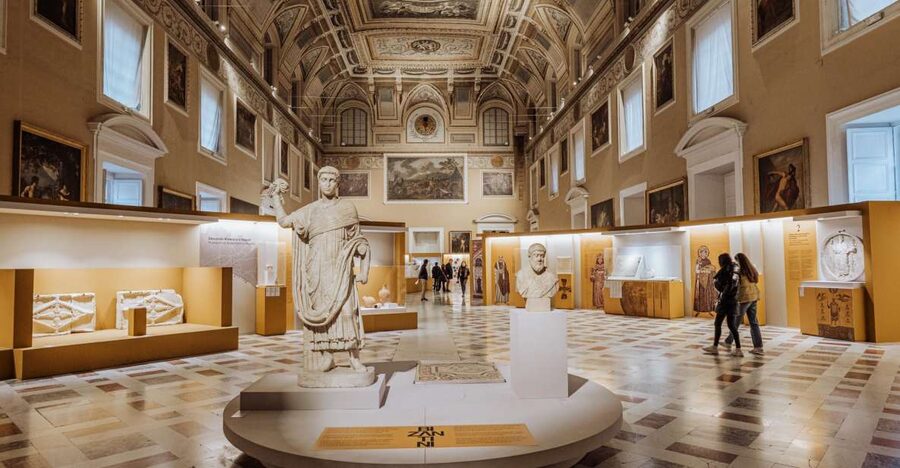
The itinerary is straightforward: meet at the museum, enter with the guide, and spend about two hours seeing selected highlights. The value lies in the selection. You are not trying to march through every room. You are getting a guided introduction to the parts most useful for understanding ancient Campania.
A strong guide will usually link the objects together rather than treat each one as an isolated stop. A Roman sculpture can lead into Greek mythology. A Pompeian mosaic can explain how a wealthy Roman house was decorated. A fresco can show not only artistic skill, but also the taste and social ambitions of the person who commissioned it.
The pace has generally been praised as manageable. You should expect to stand and walk for much of the two hours, with limited time to linger at every display. One useful feature is that you can stay in the museum afterward and revisit favorite works or see rooms the guided route did not include.
That makes the tour a good first pass. You receive the museum’s main ideas, then explore at your own speed if you still have energy.
The Farnese Collection: colossal sculpture with serious presence
The Farnese Collection is one of the main reasons to visit. It is known for major classical sculptures, and the scale of several works can surprise you. These are not delicate pieces meant to be admired only from a short distance. They were designed to impress.
The Farnese Hercules is an obvious highlight. The muscular figure fills the room with physical force, yet the sculpture also rewards a closer look at the pose and expression. Your guide can explain the subject and the way ancient myths were presented through the body.
The Toro Farnese, or Farnese Bull, is another important stop. Its crowded composition and large size make it easy to remember. Without explanation, you might simply see a dramatic group of figures. With a guide, you can better follow the mythological story and understand why this sculpture is considered such an important survival from classical art.
The corridors themselves add to the experience. Busts of Roman emperors, Greek gods, and other figures line the museum, creating the feeling of walking through an ancient cast of characters. A guide helps you read those faces and names rather than treating them as repetitive decoration.
This section may be the strongest part of the visit for anyone interested in sculpture. If your main goal is Pompeii’s domestic art, you will still see plenty, but the Farnese galleries give the tour its grandest moments.
A few more Naples bookings to compare
- Naples: Naples Underground Entry Ticket and Guided Tour
★ 4.4 · 21,781 reviews - From Naples: Pompeii Ruins & Mount Vesuvius Day Tour
★ 4.3 · 11,459 reviews - From Naples: Sorrento, Positano and Amalfi Full-Day Tour
★ 4.6 · 10,988 reviews - From Naples: Sorrento, Positano & Amalfi Coast – Small Group Tour
★ 5.0 · 8,643 reviews
Pompeii and Herculaneum: art frozen by Vesuvius
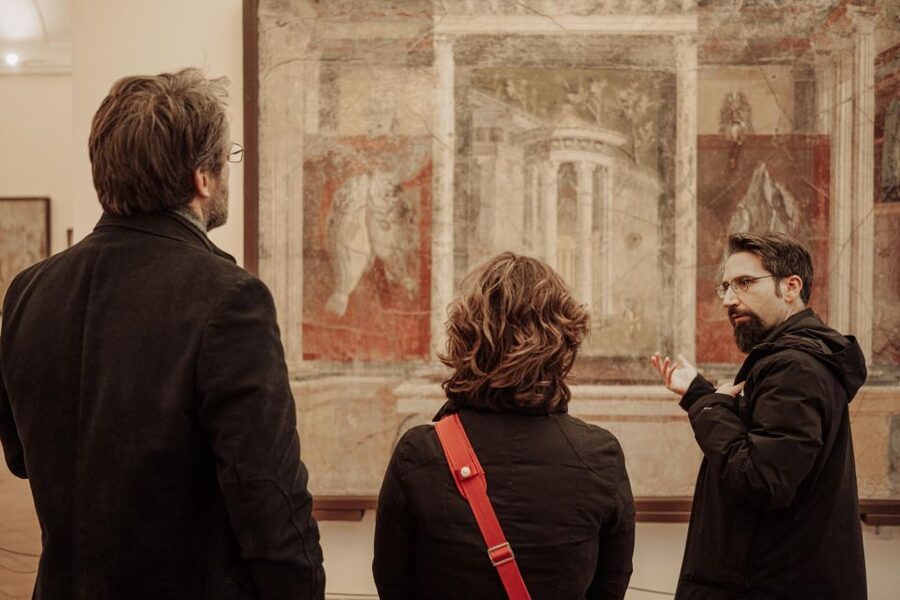
The museum’s ancient wall paintings, frescoes, and mosaics are especially valuable after a visit to Pompeii or Herculaneum. At the ruins, you see rooms, streets, gardens, and shrines where these artistic traditions belonged. At the museum, you can study some of the best-preserved works at close range.
The eruption of Mount Vesuvius in 79 AD buried both cities and preserved objects that would otherwise have vanished. The museum lets you see decorative details that can be difficult to appreciate outdoors, where weather, distance, and crowds may get in the way.
The mosaics are a major draw. They show the precision of ancient artists, from tiny pieces fitted into complex scenes to bold patterns used to frame a room. The famous Alexander the Great and Darius mosaic is an especially memorable work, though its condition or display may vary, and it has been under restoration at times. Even when a major piece is partly obscured, it remains worth seeking out.
Frescoes offer a different kind of lesson. You can see how Roman painters created scenes of myth, architecture, nature, and daily life on plaster walls. The guide can point out details that help you understand the original setting rather than viewing the paintings as flat panels in a museum.
This is where the tour earns its price for many people. It turns a visit to Pompeii from a collection of impressive ruins into part of a larger story about Roman art and domestic life.
Why visiting Pompeii first can help
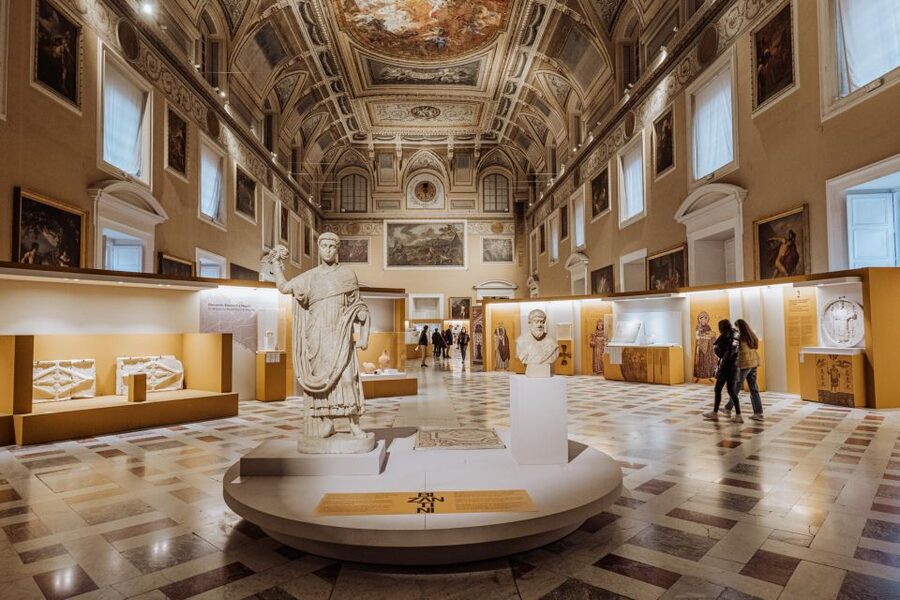
Several guides have suggested seeing Pompeii before the museum, and I agree with that order when your schedule allows. After walking through Pompeii, you will recognize the styles and objects more quickly. The museum then acts as a kind of visual explanation of what you saw in the ruins.
The same applies to Herculaneum. Its preserved buildings and household details give you a sense of how objects were used. The museum lets you look at related art without rushing from one room to the next.
You do not need to visit the archaeological sites first. The guide can explain the background from the beginning, and the museum still works as a stand-alone experience. But the connection becomes much stronger if you have already seen an ancient Roman house, a painted wall, or a mosaic in its original setting.
If you have only one day for ancient sites, choose based on your wider plans. The museum is not a substitute for Pompeii or Herculaneum. It is the place that helps you interpret them.
The value of an archaeologist rather than an audio guide
A recorded guide can give you facts, but a live archaeologist can respond to your questions and adjust the explanation. That difference came through repeatedly in the strongest tour experiences.
Sylvia has been praised as an archaeologist working at Pompeii and as a university teacher. Nicoletta has also received warm praise for connecting the museum to the Roman world around the Bay of Naples. Salvatore has been singled out for making difficult art approachable and answering unexpected questions. Gennaro was praised for bringing the ancient world to life after a visit to Pompeii.
You may not get one of these specific guides, and guide assignments can change. Still, the experience is built around a live English or Italian guide, and the guide’s quality is central to the value.
I like the interactive format. You can ask why a figure is shown in a certain pose, how a mosaic was made, or what a statue tells you about Roman taste. The guide can also slow down at a work that interests your group, something an audio recording cannot do as easily.
The tradeoff is that a group tour cannot follow every personal interest. If you want to spend fifteen minutes with one mosaic, the rest of the group may need to move on. Use the guided portion to learn the museum’s main themes, then return to individual pieces afterward.
How much the $52 price is worth
The tour costs $52 per person and includes the two-hour tour, an archaeologist guide, and museum entry. Standard adult admission is listed as 20 euros, while eligible EU citizens ages 18 to 25 may pay a reduced 2 euro admission.
That means the tour fee covers a substantial amount beyond the ticket itself. You are paying for a clear route through a huge museum, live interpretation, and skip-the-line entry. For a first visit, I consider that a fair use of money, especially if you are short on time or have already paid for Pompeii and Herculaneum and want help tying the sites together.
The value is weaker for three types of visitors. First, if you already have a strong background in Greek and Roman art, you may prefer to explore alone. Second, if you want to see every gallery, two hours may feel too brief. Third, if you qualify for the very low reduced admission price, the guide fee becomes a much larger share of the total cost.
The tour also offers reserve-now-and-pay-later booking and free cancellation up to 24 hours before the start time. Those terms are useful if your Naples plans are still shifting.
Group size, sound, and the practical walking details
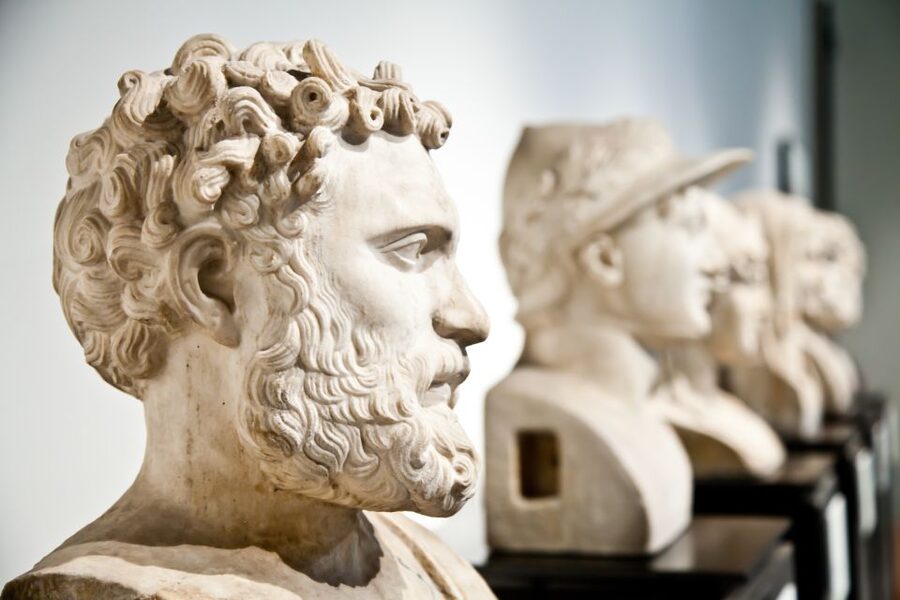
Group size can make or break a museum tour. Departures have included small groups of five, six, or eight people, which makes it easier to hear the guide and move through narrow gallery spaces. The exact size is not guaranteed, so I would still bring patience during busy periods.
Sound has been mostly positive but not flawless. Some people appreciated provided earpieces, while others found a microphone or sound system difficult to hear. If you are sensitive to background noise, stand near the guide and ask for a headset if one is available.
Pack light. Oversize luggage, large bags, baby strollers, non-folding wheelchairs, and electric wheelchairs are not allowed. The tour is not suitable for people with mobility impairments or wheelchair users, so check these restrictions carefully before paying.
You should also expect a museum visit rather than a break-heavy outing. One person wished for more chances to sit and rest. If you need frequent seating, keep that in mind when planning the rest of your day.
Who will enjoy this tour most?
I would choose this tour if you are visiting Naples for the first time, want the main works without studying the museum map, or have little background in ancient art. It also suits families and mixed-age groups, since a lively guide can make the statues and mosaics easier to approach than a wall of labels.
It is particularly good for anyone visiting Pompeii or Herculaneum. The museum completes that experience by showing art and objects outside their original walls, with explanations that connect the places.
History and art lovers will get the most from it, but you do not need prior knowledge. Several guides have been praised for explaining ancient art to beginners in a clear and entertaining way.
You may prefer a self-guided visit if you dislike fixed pacing, need extensive rest breaks, or want to focus on sections outside the main highlights. The museum is enormous, and no two-hour route can do it all.
Should you book the Naples Archaeological Museum tour?
I would book it if you want a strong introduction to one of Naples’ most important museums and especially if Pompeii or Herculaneum is part of your trip. The Farnese Hercules, Toro Farnese, Roman portraits, frescoes, and mosaics give you plenty to remember, while the archaeologist’s explanations help the collection make sense.
Skip it if you are looking for a quiet, unhurried study session or if the mobility restrictions make a long walking visit uncomfortable. For most first-time visitors, though, $52 buys more than entry. It buys a sensible route through a bewildering museum and the chance to ask a real person why these works matter.
FAQ
How long does the guided museum tour last?
The tour lasts two hours.
Where do I meet the guide?
Meet outside the ticket office of the National Archaeological Museum of Naples. The guide will hold an ASKOS TOURS sign.
What is included in the price?
The price includes the guided tour, an archaeologist guide, and entry to the Archaeological Museum of Naples.
Is transportation included?
No. Transportation to and from the museum is not included.
Are food and drinks included?
No. Food and drinks are not included.
Which languages are available?
The live tour guide is available in English or Italian.
Can I cancel the booking?
Yes. You can cancel up to 24 hours in advance for a full refund.
Is the tour suitable for wheelchair users?
No. The activity is not suitable for wheelchair users or people with mobility impairments. Non-folding and electric wheelchairs are not allowed, along with oversize luggage, large bags, and baby strollers.
Recently added around Naples
- Vesuvius National Park Skip-the-Line Ticket★ 3.8 · 221 reviews
- Naples: The Holy Mile 3-Hour Guided Tour★ 4.9 · 711 reviews
- Pompeii and Vesuvius Full-Day Tour from Amalfi Coast★ 4.4 · 319 reviews
- From Naples: Pompeii & Herculaneum with Archaeologist Guide★ 4.8 · 665 reviews
- From Naples: Pompeii and Herculaneum Tour with Lunch★ 4.3 · 444 reviews
- From Naples: Pompeii Guided Tour with Skip-the-Line Tickets★ 4.8 · 1,171 reviews
- Naples: Day Trip to Pompeii and Capri★ 4.4 · 272 reviews
- From Naples: Pompeii & Amalfi Coast Full-Day Trip★ 4.5 · 279 reviews
Museums, compared.


Vatican Museums & Sistine Chapel Tour with Optional Basilica
Read our review →
Vatican Museums, Sistine Chapel & St Peter’s Basilica Guided Tour
Read our review →
Skip-The-Line Uffizi Gallery Timed Entry Ticket
Read our review →
Vatican Museums, Sistine Chapel & Basilica Tour
Read our review →
Vatican Museums & Sistine Chapel Skip-the-Line Entry Ticket
Read our review →Vatican Museums, Sistine Chapel & Basilica Tour
Read our review →
Vatican Museums & Sistine Chapel Guided Tour
Read our review →Browse the lists this tour appears in