
Reviewed · MUSEUMS
Leonardo Da Vinci Museum Entrance Ticket
Genius becomes hands-on here. The Leonardo da Vinci Museum in Florence turns sketches into working models, from flying machines and war devices to civil engineering tools and anatomical studies. I like the wide range of subjects, and I like that you can set your own pace rather than follow a guide or fixed tour.
The museum is also easy to fit into a busy day. Most people spend about one to one and a half hours inside, and the roughly $12.55 admission is fair if you enjoy science, engineering, or family-friendly exhibits. The main drawback is important: this is a museum of models and replicas, not a gallery of Leonardo’s original paintings or manuscripts.
In This Review
- Key points to know before you go
- What the Florence Leonardo museum actually is
- The four rooms and what each one offers
- Working models make the visit more than a display case
- Why families tend to enjoy this stop
- How much time should you plan?
- Location, entry, and the most important booking warning
- Is $12.55 a fair price?
- The atmosphere and level of interpretation
- Accessibility and practical comfort
- Who should book this museum?
- My verdict: book it if the machines interest you
- FAQ
- Where is the Leonardo da Vinci Museum located?
- What are the museum’s opening hours?
- How long does a visit take?
- Is the visit guided?
- Is the admission ticket included?
- Are food and drinks included?
- Is hotel pickup included?
- Is the museum suitable for children?
- Does the museum display Leonardo’s original artwork?
- Can I cancel for a refund?
Key points to know before you go
- More than 50 working models: The displays cover civil engineering, flight, military design, and anatomy.
- Four focused rooms: Each room takes a different look at Leonardo’s work and keeps the visit easy to follow.
- A good family stop: Hands-on devices and a children’s building area give younger visitors something to do.
- A self-guided visit: You can usually move through the museum at your own speed, with many visitors spending about an hour.
- Central Florence location: The museum sits at Galleria Michelangelo on one of the city center’s best-known streets, near public transportation.
- Check the city carefully: This ticket is for Florence. Similar Leonardo museums exist in other Italian cities, and booking the wrong one can be costly.
What the Florence Leonardo museum actually is
The name can set up the wrong expectation. You will not come here to see the Mona Lisa, original Leonardo paintings, or a room of rare Renaissance documents. You come to see how his ideas worked.
The museum presents more than 50 models based on Leonardo’s drawings and studies. Most are working machines or interactive reconstructions. That makes the visit less about looking at precious objects behind glass and more about seeing an idea take shape.
Leonardo worked across art, anatomy, architecture, music, military design, and engineering. The museum reflects that wide reach. One display may show a practical civil machine, while the next explores flight or the movement of the human body.
I find that useful because it corrects the narrow picture many people carry of Leonardo as simply the painter of the Mona Lisa. His notebooks show a restless mind testing how things moved, flew, lifted, turned, and fit together. This museum focuses on that side of him.
The exhibition is housed at the Galleria Michelangelo, a historic meeting place associated with the Macchiaioli artists. The setting adds some atmosphere, especially if you notice the painted ceilings and older architectural details as you move through the rooms.
More Museum Tours in Florence
- Florence: Skip-The-Line Uffizi Gallery Timed Entry Ticket
★ 4.5 · 27,832 reviews - Florence: Leonardo Interactive Museum Entry Ticket
★ 4.5 · 11,763 reviews - Florence Accademia Gallery Tour with Entrance Ticket Included
★ 4.5 · 6,148 reviews
The four rooms and what each one offers
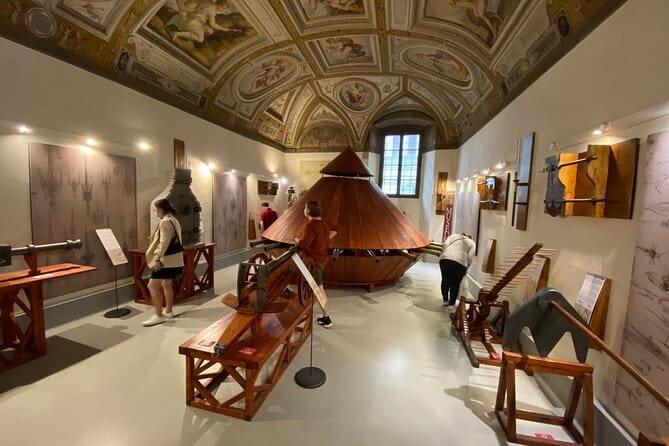
The largest room is dedicated to civil machines. This is where Leonardo’s interest in construction, mechanics, and practical problem-solving comes through most clearly. You might see models that show how his ideas could be used in building, lifting, transporting, or moving heavy materials.
The best way to approach these displays is slowly. Look at the model first, then find the drawing or explanation connected to it. The value is in comparing the compact machine in front of you with the original idea on paper.
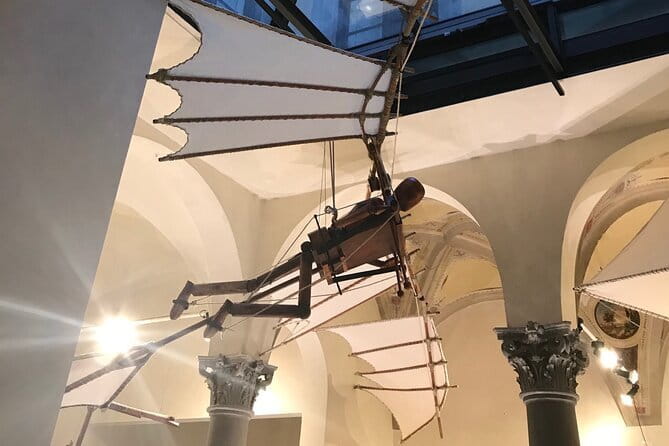
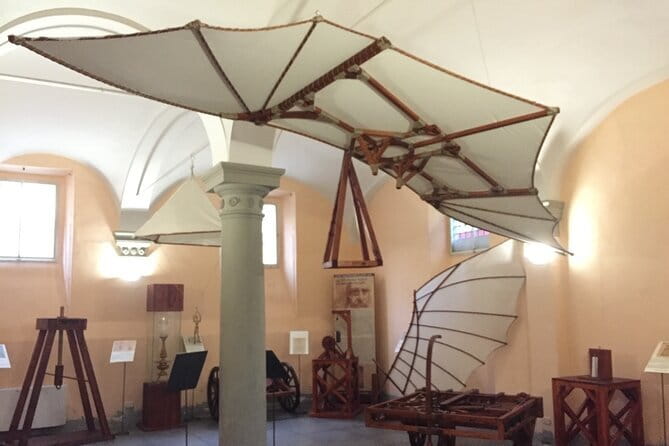
The second room covers flying machines. Leonardo studied birds, air, balance, and wings long before powered flight was possible. The models make those studies easier to understand than a page of notes alone.
Do not expect a modern aviation museum. The appeal is the thought process. Leonardo was asking what allowed a bird to stay aloft and how a person might copy that action. Even when the design could not have worked as planned, the attempt shows careful observation and bold imagination.
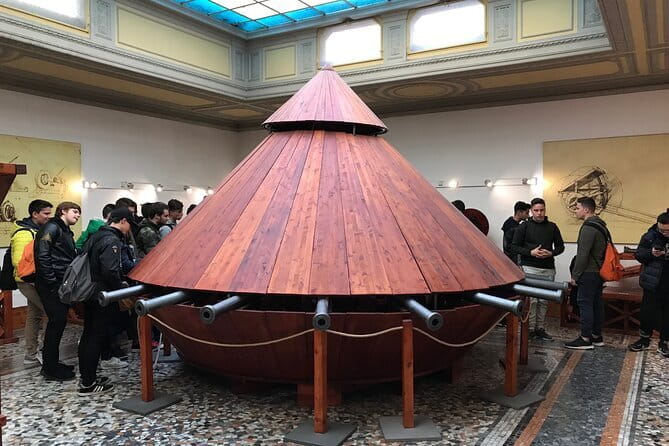
The third room presents war machines. Leonardo designed equipment for military defense and attack, and these models show a less comfortable side of his work. They are useful for understanding that Renaissance artists often worked for powerful patrons who wanted engineering and military solutions as much as paintings.
This room may appeal to older children and adults who like machines, while some younger children will simply enjoy seeing how the devices move. The displays give you a broader picture of Leonardo as an inventor serving real political and military needs.
The fourth room contains the newer collection of anatomical models. Here, the focus shifts from machines made of wood and gears to the structure of the human body. Leonardo’s anatomical studies were part of his effort to understand movement, proportion, and the mechanics of life.
This room helps tie the whole museum together. The flying machines show his interest in nature and motion. The civil and military machines show engineering in action. Anatomy shows the same curious mind studying the body itself.
Working models make the visit more than a display case
The strongest feature is the chance to interact with many of the machines. You can see how gears, levers, screws, and other parts are meant to function instead of treating Leonardo’s drawings as flat historical illustrations.
Some visitors find the interactive elements exciting. Children can experiment, build, and test ideas, and adults can get pulled into the same process. It has the pleasant effect of making you feel like a student in a workshop rather than a person moving quietly from label to label.
Not every exhibit is hands-on. Some displays are for looking only, and a few interactive elements may not always be working. That inconsistency matters if you are choosing the museum mainly for physical demonstrations.
Still, the working replicas do a good job of translating complicated drawings into something you can grasp quickly. You do not need an engineering background. If a design catches your eye, read the accompanying information and see what problem Leonardo was trying to solve.
A documentary about Leonardo’s life and work plays on large screens. It gives useful background if you know little about him, and it can help place the inventions in a wider story. You may want to watch part of it at the beginning, then return to it later if you still have time.
Why families tend to enjoy this stop
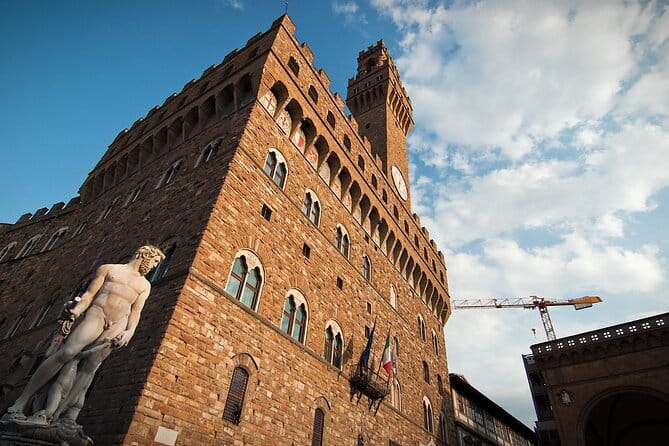
The museum works well for families because it offers more than reading. Children can see large models, handle selected displays, and use a building area located in the basement. That gives younger visitors a break when the written material starts to feel heavy.
The museum also covers several subjects, so different members of a group can find a favorite section. One child may prefer flying machines, another may enjoy the construction models, and an adult may spend more time with anatomy or military design.
The experience is not only for children. Adults who like science or practical design can easily spend the full 60 to 90 minutes here. The museum gives you a visual way to think about Leonardo’s work, even if you do not read every panel.
Families should set expectations before arriving. The models are inspired by Leonardo’s designs, and they are not original Renaissance objects. If your children expect actual paintings or authentic artifacts, explain that this is an invention museum built around reproductions and working models.
The children’s area and interactive displays are a real benefit, but they do not turn the museum into a large entertainment attraction. It remains a fairly compact educational visit.
Still Florence, but a slower afternoon:
- Tuscany Day Trip from Florence: Siena, San Gimignano, Pisa and Lunch at a Winery
★ 5.0 · 21,634 reviews - Florence: Timed Entrance Ticket to Michelangelo’s David
★ 4.6 · 16,983 reviews - Florence: Michelangelo’s David Skip-the-Line Entry Ticket
★ 4.5 · 12,764 reviews - The Best tour in Florence: Renaissance & Medici Tales – guided by a STORYTELLER
★ 5.0 · 12,316 reviews
How much time should you plan?
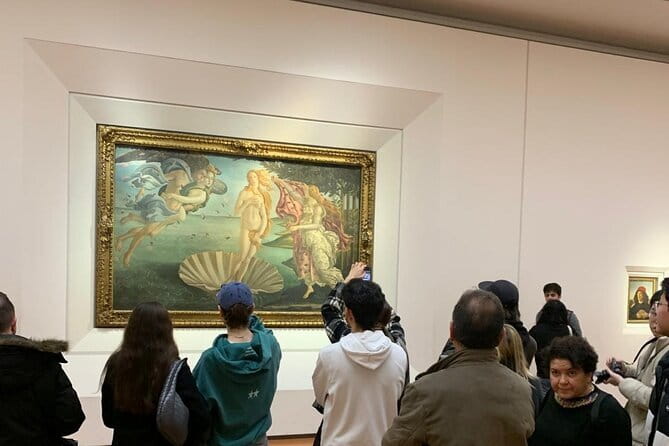
Plan on one hour for a brisk visit. That gives you time to see all four rooms, watch some of the film, and try several interactive displays.
Allow 90 minutes if you want to read more carefully, study the models, and spend time with the documentary. You might need less if you are mainly interested in a quick look at the inventions.
That short length is one of the museum’s practical strengths. Florence can fill every hour with major churches, galleries, and plazas, so a compact stop is useful. You can place this museum between larger sights rather than give it half a day.
Several people find it particularly useful on a hot day because it offers a cool indoor break. The central location also makes it easy to combine with other sightseeing, though you should allow enough time to find the entrance and change your voucher for admission if required.
The museum is open daily from 10 a.m. to 6 p.m. during the stated operating period, from June 29, 2023, through February 16, 2027. Flexible time slots are offered, and the experience is self-guided. Information also indicates that entry can be made during opening hours without a strict time slot, but check the conditions attached to your ticket before you go.
Location, entry, and the most important booking warning
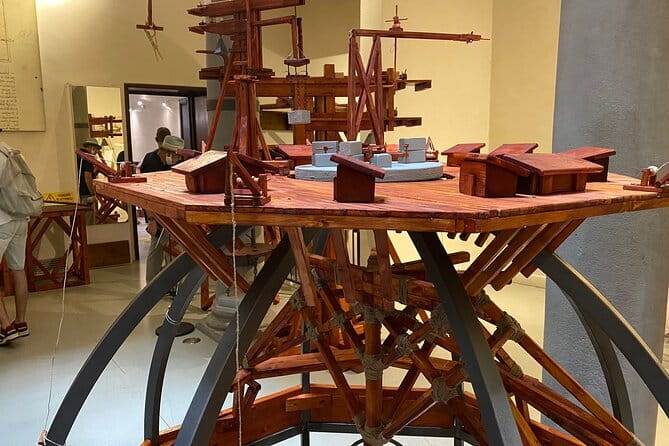
The museum is at Galleria Michelangelo in central Florence, on a well-known street and close to public transportation. Staff members speak English, and the ticket process is generally simple.
Pre-booking can help you avoid a long line and gives you a place in your day’s plan. The group limit is 20 people, although this is an admission visit rather than a guided group tour. You explore independently.
Take care when booking. Florence has more than one Leonardo-themed museum in Italy’s major cities, and the names can look very similar. A ticket for this experience is specifically for Florence, not Rome, Milan, Venice, or another city.
This is not a minor detail. If you reach the wrong museum, the ticket may not be accepted, and changing it may be difficult. Before paying, check the city, museum name, address, and date on your confirmation.
The attraction is near public transportation, but hotel pickup and drop-off are not included. You will make your own way there.
Is $12.55 a fair price?
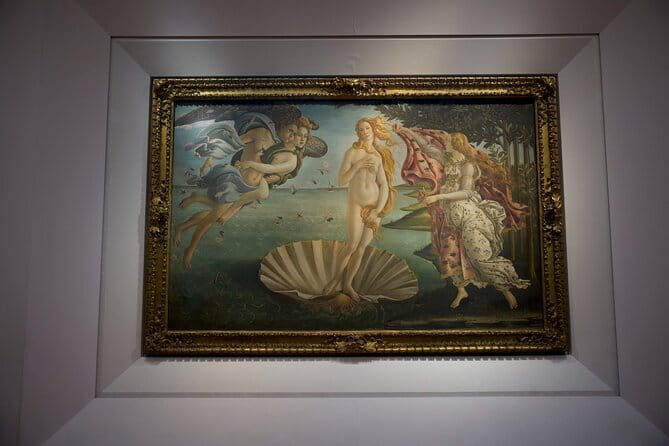
At about $12.55 per person, the admission is reasonable for a one-hour to 90-minute indoor attraction in central Florence. The value is strongest if you like inventions, science, or hands-on learning.
I would also consider it good value for families. A museum that keeps both adults and children occupied, offers interactive activities, and does not require half a day can fit neatly into a costly Florence itinerary.
The value is less convincing if your main goal is fine art or original historical objects. The museum does not include Leonardo’s paintings, and most of what you see consists of models, replicas, and interpretive displays. For some adults, that can feel too basic for the admission price.
The bookshop adds a useful final stop, with books, publications, and Leonardo-themed gadgets. It is not part of the ticket’s main value, but it can help you continue the subject after leaving. A restaurant, Caffé Michelangiolo, is also connected with the exhibition area.
The atmosphere and level of interpretation

The museum is clean and organized, with a documentary and written material to guide you. You can explore without a guide, which keeps the pace relaxed and lets you linger over the machines that interest you.
That freedom is helpful when you are visiting with children or a mixed-interest group. One person can watch the film while another studies a model or moves ahead to the next room.
The downside is that the experience may not provide the depth of a major research museum. Some displays rely on straightforward explanations rather than long historical discussions. If you want detailed context about Leonardo’s patrons, workshop practice, or the authenticity of particular drawings, you may want to read about him before visiting.
A little preparation improves the experience. Learn the basic difference between Leonardo the painter, Leonardo the anatomist, and Leonardo the engineer. Then the four-room arrangement feels less like a random collection of machines and more like a portrait of one unusually curious mind.
Accessibility and practical comfort
The museum has been described as wheelchair friendly, and most people can participate. It is near public transportation, which makes it practical for a central Florence visit.
Food and drinks are not included with admission. You can use the associated Caffé Michelangiolo if you want a meal or refreshment near the exhibition area, but plan to pay separately.
The museum’s size makes it manageable for people who do not want a long walking tour. You can take your time, sit with the documentary, and leave after seeing the main rooms rather than committing to a full-day attraction.
For the smoothest visit, bring your confirmation and check the exact address before setting out. English is offered, and the staff can assist with the basic entry process.
Who should book this museum?
I would recommend it most strongly to families with school-age children, people who enjoy engineering, and anyone curious about how Leonardo’s inventions might have worked.
It also suits a first visit to Florence when you want an introduction to Leonardo beyond the Mona Lisa. The models show his interest in motion, mechanics, anatomy, and military design in a direct way.
Art lovers should think twice if they expect a painting collection. This is not a substitute for Florence’s major art museums, and it does not offer original Leonardo artworks.
Adults who prefer quiet historical museums may find parts of it too light. The experience has educational value, but it is built around replicas and interaction rather than rare objects.
The museum is a particularly sensible choice when you have only an hour to spare. It gives you a change of pace from churches and art galleries, and the compact visit is easy to place in a packed day.
My verdict: book it if the machines interest you
Book this ticket if you want to see Leonardo’s inventions made tangible. The four rooms cover a surprising range, the working models give the visit energy, and the price is manageable for a central Florence activity.
I would be cautious if you want original art, serious scholarly interpretation, or a large museum with extensive collections. You may leave feeling that the displays are too simple, especially if the interactive elements are not your main interest.
For families, curious minds, and visitors who want a short indoor stop, this is a worthwhile choice. Just confirm that you are buying the Florence ticket, and remember what you are paying for: not Leonardo’s original works, but accessible, working models that show the breadth of his ideas.
FAQ
Where is the Leonardo da Vinci Museum located?
The museum is located at the Galleria Michelangelo in central Florence, on one of the city’s renowned streets.
What are the museum’s opening hours?
The stated opening hours are Monday through Sunday, 10 a.m. to 6 p.m., during the listed operating period ending February 16, 2027.
How long does a visit take?
Most visitors need about one hour to one and a half hours, depending on how much time they spend reading and using the displays.
Is the visit guided?
No. This is a self-guided museum visit, so you can explore at your own pace.
Is the admission ticket included?
Yes. The admission ticket to the Leonardo da Vinci Museum is included.
Are food and drinks included?
No. Food and drinks are not included in the ticket price.
Is hotel pickup included?
No. Hotel pickup and drop-off are not included.
Is the museum suitable for children?
Yes. The museum has hands-on displays and a children’s building area in the basement. Several exhibits are designed to be engaging for younger visitors.
Does the museum display Leonardo’s original artwork?
The museum focuses on models and replicas of Leonardo’s machines, rather than his original paintings. The displays cover civil, flying, war, and anatomical designs.
Can I cancel for a refund?
You can cancel for a full refund if you do so at least 24 hours before the experience’s start time. Cancellations or changes made less than 24 hours in advance are not accepted for a refund.
Recently added around Florence
- Florence Uffizi Gallery monolingual Small Group Tour★ 4.0 · 621 reviews
- Florence Private Walking tour with Skip-the-line to Accademia★ 4.5 · 236 reviews
- Uffizi Gallery Entrance Ticket with Priority Access★ 3.5 · 1,029 reviews
- Florence Skip-the-Line Duomo Tour with Guide & Brunelleschi Dome★ 5.0 · 1,176 reviews
- Skip-the-Line Accademia Guided Visit: David Secrets and Beyond★ 4.0 · 525 reviews
- Priority Entrance : Florence Accademia Gallery Timely Tickets★ 4.0 · 603 reviews
- Accademia Gallery Entrance Ticket with Priority Access★ 4.0 · 1,088 reviews
- Skip the line : David Guided Experience★ 4.5 · 1,076 reviews
Museums, compared.
Vatican Museums & Sistine Chapel Tour with Optional Basilica
Read our review →
Vatican Museums, Sistine Chapel & St Peter’s Basilica Guided Tour
Read our review →
Skip-The-Line Uffizi Gallery Timed Entry Ticket
Read our review →
Vatican Museums, Sistine Chapel & Basilica Tour
Read our review →
Vatican Museums & Sistine Chapel Skip-the-Line Entry Ticket
Read our review →Vatican Museums, Sistine Chapel & Basilica Tour
Read our review →
Vatican Museums & Sistine Chapel Guided Tour
Read our review →Browse the lists this tour appears in