
Reviewed · CRUISES & BOAT TOURS
Genoa: Cetacean Watching Cruise with Marine Biologist Guide
The sea decides what you see. That is the honest charm of this 4.5-hour cruise from Genoa into the Pelagos Sanctuary. You go out with marine biologist guides, learn about fin whales, dolphins, sperm whales, and other local species, then wait for nature to make an appearance. I like the 95 percent reported sighting rate and the free return option within one year if no cetaceans appear. I also like that the guides explain conservation, not just animal names.
The main catch is time. Four and a half hours can feel long when the sea stays quiet, and whale sightings are never promised. Recent trips have produced large dolphin groups, including one sighting of around 100 dolphins, plus brief sperm whale encounters. But one calm day brought dolphins without any whales, and the bilingual announcements can feel lengthy or hard to follow.
In This Review
- Key points before you book
- Leaving Genoa from the Aquarium Pier
- Why the Pelagos Sanctuary matters
- The open-water search
- Dolphins may be the main event
- Whale sightings require realistic expectations
- Marine biologists add real value
- Comfort, food, and the four-and-a-half-hour clock
- Weather can change the plan
- Is $53 a fair price?
- Who will enjoy this cruise most?
- Should you book the Genoa cetacean cruise?
- FAQ
- Where does the Genoa cetacean cruise leave from?
- How long does the cruise last?
- Which languages are available?
- Are cetacean sightings guaranteed?
- What happens if no cetaceans are seen?
- Are food and drinks included?
Key points before you book
- The Pelagos Sanctuary is the real setting: You search for marine mammals in open water, not in a contained display or aquarium tank.
- Marine biologists lead the trip: Expect explanations of feeding habits, behavior, species, and conservation work.
- Dolphins are a strong possibility: Common sightings include striped, bottlenose, Risso’s, and short-beaked common dolphins.
- Whales are possible but less predictable: Fin whales, sperm whales, Cuvier’s beaked whales, and long-finned pilot whales may appear.
- The trip lasts 4.5 hours: Bring suitable clothing, and plan for a long stretch on the water.
- No-sighting protection adds value: If you see no cetaceans, you may return free within one year, using the original ticket and a new reservation.
Leaving Genoa from the Aquarium Pier
Your meeting point is easy to locate if you are already near the Aquarium of Genoa. Go to the local partner’s ticket office at the beginning of the Aquarium Pier, Ponte Spinola, on the left side. Arrive at least 15 minutes before departure. The starting and ending point is the same, which keeps the day simple if you are exploring Genoa on foot.
The boat heads out from the city toward the Pelagos Sanctuary, a large protected area of the Mediterranean shared by Italy, France, and Monaco. This is not a short harbor ride. You are setting aside much of a morning or afternoon for open-water wildlife watching.
That matters when planning your day. A 4.5-hour trip can fit nicely around a slower Genoa schedule, but it is not a quick add-on between major sights. If you have only one day in the city, check the departure time carefully. The exact start time depends on availability.
The vessel has indoor and outdoor seating, along with a toilet. A bar service is available for snacks and drinks, but these cost extra. I would bring water and a small snack anyway, especially if you prefer not to rely on the onboard selection.
More Boat Tours in Genoa:
- From Genoa: Boat Tour to Portofino with Free Time to Explore
★ 4.5 · 579 reviews - Aquarium of Genoa Ticket and Whale Watching Cruise
★ 4.2 · 170 reviews - Boat Trip: Glimpse of Murano, Torcello & Burano Islands
★ 4.3 · 15,699 reviews
Why the Pelagos Sanctuary matters
The introduction from the marine biologist gives the outing some purpose before the search begins. You learn how the sanctuary was created, why it is protected, and which marine species use these waters. The guide also explains conservation programs and the rules designed to prevent disturbance.
That last point is important. Wildlife watching should not become a chase. The boat approaches animals in line with non-disturbance directives, giving you a chance to watch natural behavior without treating the animals like performers. You may see a dolphin group moving beside the boat, a whale surfacing in the distance, or a sudden jump that lasts only a few seconds.
I like this approach because it sets sensible expectations. You are not buying a guaranteed show. You are paying for time, expert interpretation, and a careful search in a protected marine area.
The sanctuary can contain several species, including fin whales, sperm whales, Cuvier’s beaked whales, Risso’s dolphins, long-finned pilot whales, striped dolphins, bottlenose dolphins, and short-beaked common dolphins. Each species behaves differently, so even a trip without a whale can still offer useful sightings and lessons.
The open-water search
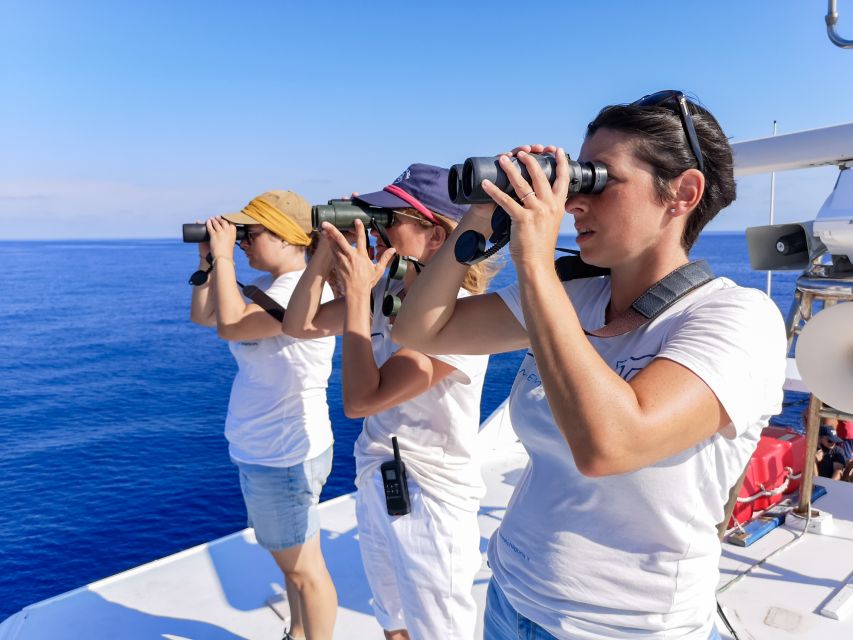
Once the boat reaches favorable areas, the pace changes. There is no fixed sequence of attractions. The crew searches, watches the water, checks likely locations, and waits. You may spend long periods scanning the horizon before a fin, blow, splash, or group of dolphins breaks the stillness.
This waiting is part of the experience, but it is also the point most likely to test your patience. A marine mammal can surface far from the boat and disappear quickly. Even when you see one, it may be only a brief glimpse. Bring patience, and do not expect every sighting to produce a perfect photograph.
The reported sighting rate is about 95 percent, which is encouraging. Still, the exact species and quality of the encounter vary. One trip produced three sperm whales and a group of dolphins. Another offered many large dolphin groups, with an estimated total of about 100 animals, and a short look at a sperm whale as it went back underwater. On a different outing, calm seas and beautiful weather brought excellent dolphins but no whales.
This is the right way to think about the trip: a good chance of seeing cetaceans, not a promise of a whale close to the boat.
Dolphins may be the main event
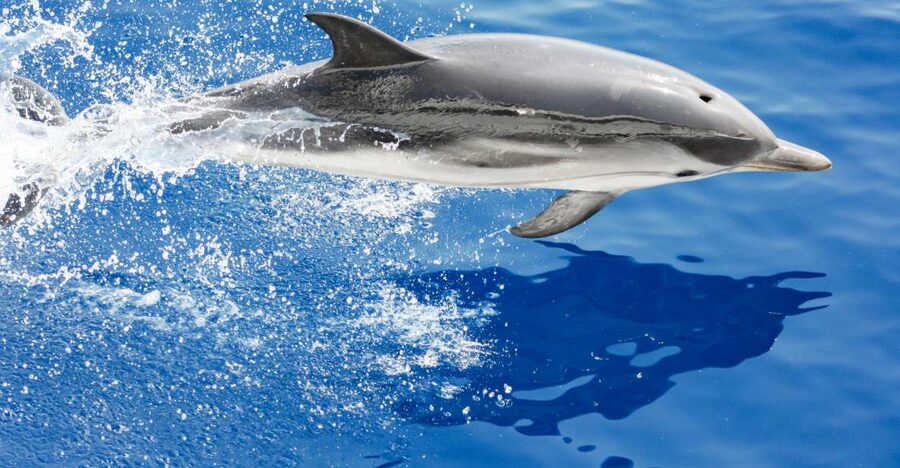
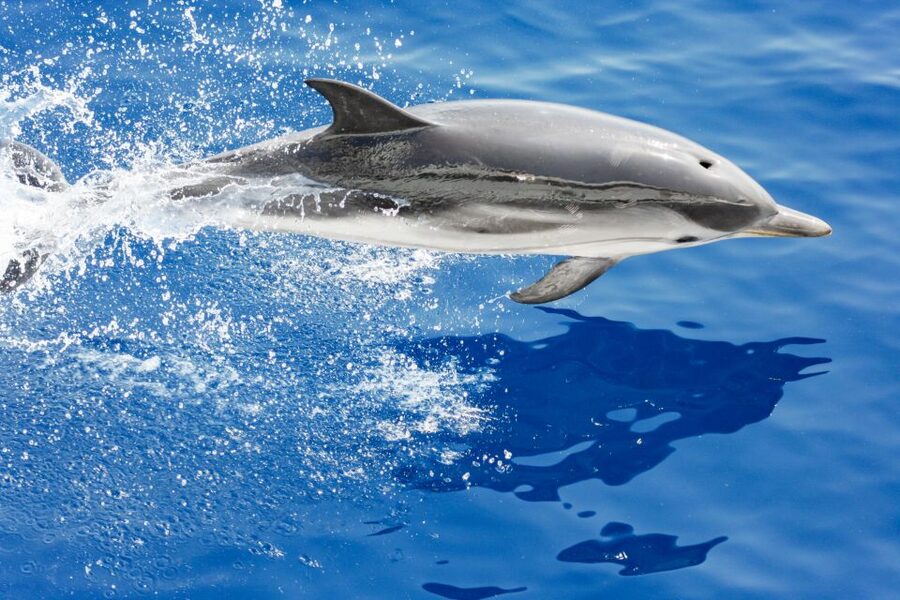
Dolphins often provide the most active sightings. They can travel in groups, move around the boat, and show quick bursts of energy at the surface. The listed species include several kinds, so you may see differences in size, markings, movement, and group behavior.
A large pod can make the trip memorable even if the whales stay hidden. Watching dolphins in their own habitat also gives the guide a chance to explain feeding patterns, social behavior, and how the animals use the sanctuary.
You will want a camera, but keep it ready rather than fixed on the horizon for every minute. A phone can capture a lucky close pass, though distant animals may require patience more than equipment. The best part of the sighting is often the shared moment when the guide spots something and points everyone toward it.
The boat’s indoor and outdoor seating helps here. You can move outside for a clearer view and return indoors if the weather turns cool or the sun becomes tiring. Wear comfortable shoes and clothing suited to the day. Weather at sea can feel different from conditions on land, so a practical extra layer is a good idea.
A few more Genoa bookings to compare
- Genoa: Aquarium of Genoa Entry Ticket
★ 4.5 · 10,075 reviews - Milan: Branca Tower Entrance Ticket
★ 4.1 · 2,045 reviews - Genoa: Hop-on Hop-off Tour Ticket
★ 4.0 · 1,524 reviews - Genoa: Aquarium of Genoa with Lunch
★ 4.3 · 1,449 reviews
Whale sightings require realistic expectations
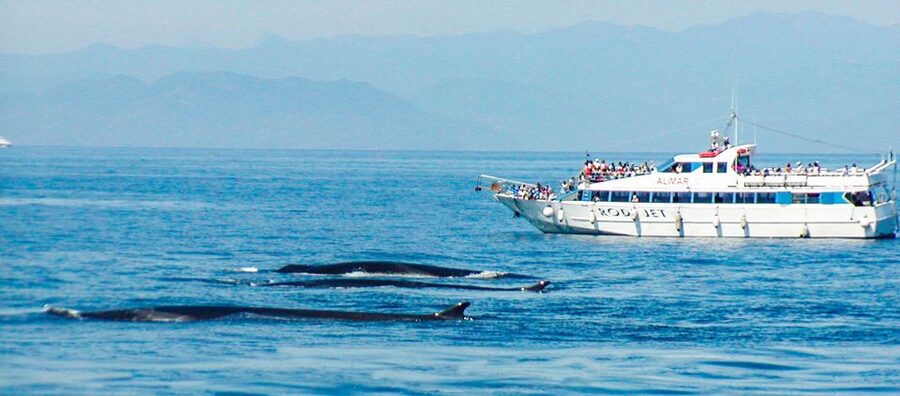
The species list includes fin whales, sperm whales, Cuvier’s beaked whales, and long-finned pilot whales. These are exciting possibilities, but they do not all behave in ways that make easy viewing.
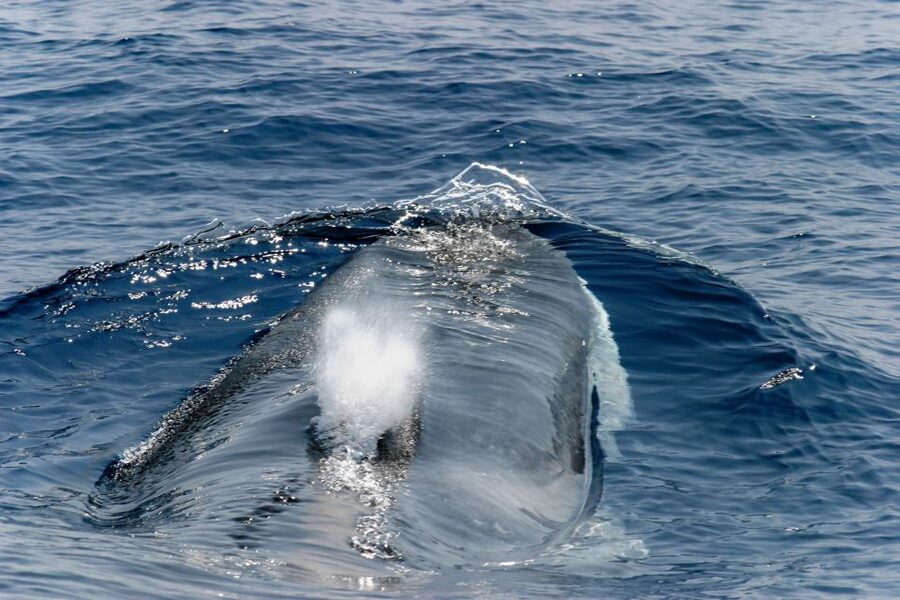
A sperm whale may surface, show part of its body, and then disappear for a longer period. A beaked whale can be especially difficult to spot because it may remain distant and surface briefly. A fin whale may announce itself with a blow, but even that moment can pass quickly.
This explains why the trip can feel successful without producing a close whale encounter. The guide is not simply looking for a dramatic breach. The work also involves identifying species, reading the water, and respecting distance.
You might see a distant breach or a jump from a dolphin pod. You might also spend much of the cruise waiting for a sign and then catch only a short glimpse. Both outcomes are normal for wildlife watching, so I would book this only if the search itself appeals to you.
Marine biologists add real value
The guide is more than a narrator pointing out fins. You can ask questions about the sanctuary, the animals’ diets, their habits, and their mannerisms. The conservation discussion gives context to the sightings, helping you understand why these waters support such a range of marine life.
Italian and English are available. The bilingual format makes the trip accessible to more people, though announcements may take longer when everything is repeated in both languages. One passenger found the English explanations difficult to understand and the speaker volume too high. That is a fair concern if you depend heavily on every spoken detail.
I would treat the commentary as an important bonus rather than the sole reason to book. The quality of wildlife watching will still depend on the sea and the animals. The guide’s role is to improve your understanding and help you make sense of what you see, not to control the outcome.
Comfort, food, and the four-and-a-half-hour clock
The boat has a bar, indoor seats, outdoor seats, and a toilet. Those features matter because this is a long outing with no quick stop back on land. Drinks and snacks are not included, so budget for them or bring what you need if permitted.
Smoking and pets are not allowed. The experience is wheelchair accessible, which makes it a practical choice for visitors who need accessible arrangements, though you should still confirm current boarding details when booking.
The biggest comfort issue is simply duration. Four and a half hours can pass quickly during an active dolphin encounter. It can feel much longer during a quiet search, especially if the sea is rough or the commentary becomes repetitive.
Weather-appropriate clothing is essential. Comfortable shoes are listed as a requirement, and I would take that seriously. The safest packing plan is simple: water, a snack, sun protection, an extra layer, and a camera or phone with enough battery.
Weather can change the plan
The excursion may be canceled one day before departure if weather or sea conditions are poor. That is a sensible safety measure, but it can affect a tightly planned Genoa visit. Keep some flexibility in your schedule if this cruise is a major part of your trip.
You can cancel up to 24 hours in advance for a full refund, and the reserve-now-pay-later option lets you hold a place without paying immediately. These terms are useful when your plans are still shifting, though the weather decision remains outside your control.
If no cetaceans are spotted, you may return free within one year from the original excursion date. You must make a new reservation through the company website and present the original no-sighting ticket at the boarding gate. This is a meaningful safeguard, especially because the trip costs about $53 per person.
Is $53 a fair price?
At $53, the cruise is reasonably priced for a 4.5-hour marine wildlife outing with a specialist guide. You are paying for boat time, crew operation, a marine biologist’s interpretation, and access to a protected area that you cannot experience from Genoa’s waterfront.
The value depends on your expectations. If you want guaranteed whale photographs, no price is truly safe because wild animals do not follow a timetable. If you want a serious chance to see dolphins or other cetaceans while learning about the sanctuary, the cost makes sense.
The free return policy improves the deal. A no-sighting trip is disappointing, but the option to come back within a year gives the booking more protection than a standard sightseeing cruise. You still need to account for paid snacks and drinks onboard.
I consider the price strongest for people who enjoy natural history, photography, and time at sea. It is less appealing if you need a tightly scheduled activity or find long periods of waiting frustrating.
Who will enjoy this cruise most?
I would recommend it to families with older children, couples, photographers, marine-life fans, and anyone who wants a different side of Genoa. The marine biologist guide gives the cruise an educational edge, while the open-water setting keeps it from feeling like a standard city tour.
It also suits people who value conservation and responsible wildlife viewing. The non-disturbance rules are not a minor detail. They show that the aim is to observe animals without causing unnecessary stress.
I would hesitate to recommend it to anyone who dislikes boats, needs a guaranteed schedule, or has little patience for wildlife searches. The 4.5-hour length is not a small commitment. You should also think twice if your main goal is one particular species, such as a humpback whale. Humpbacks are not included among the commonly listed target species, and no sighting is certain.
Should you book the Genoa cetacean cruise?
Book this cruise if you want a well-priced chance to see dolphins and whales in the Pelagos Sanctuary, and if you are happy to let nature set the timetable. The strongest reasons are the marine biologist guides, the conservation focus, the high reported chance of seeing cetaceans, and the free return option after a no-sighting trip.
Skip it if you want a short activity or a guaranteed close encounter. The best attitude is to enjoy the search, listen to the guide, and treat every fin or splash as a gift rather than a scheduled attraction. For the right person, a huge dolphin group or one brief sperm whale sighting can be worth the whole morning.
FAQ
Where does the Genoa cetacean cruise leave from?
The meeting point is the local partner’s ticket office at the beginning of the Aquarium Pier, Ponte Spinola, on the left side. Arrive at least 15 minutes before departure.
How long does the cruise last?
The excursion lasts 4.5 hours. Starting times depend on availability.
Which languages are available?
The live guide service is available in Italian and English.
Are cetacean sightings guaranteed?
No. Sightings are reported as common, at about 95 percent, but they cannot be guaranteed. Possible species include fin whales, sperm whales, Cuvier’s beaked whales, several dolphin species, and long-finned pilot whales.
What happens if no cetaceans are seen?
You may return free within one year of the original excursion date. You must make a new reservation on the company website and present the original ticket for the no-sighting trip at the boarding gate.
Are food and drinks included?
No. Snacks and drinks are not included, but bar service is available onboard for an additional charge.
Recently added around Genoa
- Genoa: Impossible Museum Entry Ticket★ 4.2 · 226 reviews
- Guided Tour of Rolli Palaces UNESCO Site, Genoa★ 4.4 · 539 reviews
- Genoa: Aquarium, Galata Museum and Submarine Entry Tickets★ 4.6 · 190 reviews
- Genova: Segway Tour★ 4.9 · 275 reviews
- Genoa: Historic Guided Tour of Christopher Columbus’ House★ 4.4 · 186 reviews
- Genoa: The City of Children and Young Museum Entry Ticket★ 4.1 · 303 reviews
- Genoa: Half-Day Tour to Portofino★ 4.2 · 1,123 reviews
- Genoa: Food and Wine Tasting Walking Tour★ 4.9 · 215 reviews
Cruises & Boat Tours, compared.
Boat Trip: Glimpse of Murano, Torcello & Burano Islands
Read our review →
Burano, Torcello & Murano Boat Tour w/Glassblowing
Read our review →
Como & Bellagio with Private Lake Como Cruise
Read our review →
Murano and Burano Boat Tour with Glass Factory Visit
Read our review →
Murano & Burano Islands Guided Small-Group Tour by Private Boat
Read our review →
Murano & Burano Panoramic Boat Tour w/ Glassblowing
Read our review →

Browse the lists this tour appears in