
Reviewed · MOUNT ETNA TOURS
Etna: Craters of the 2002 Eruption Trekking Experience
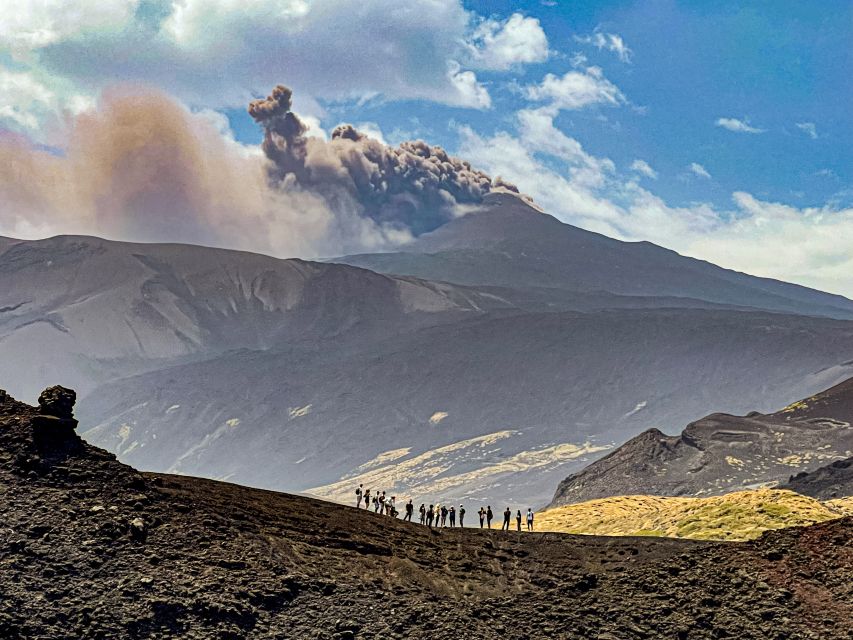
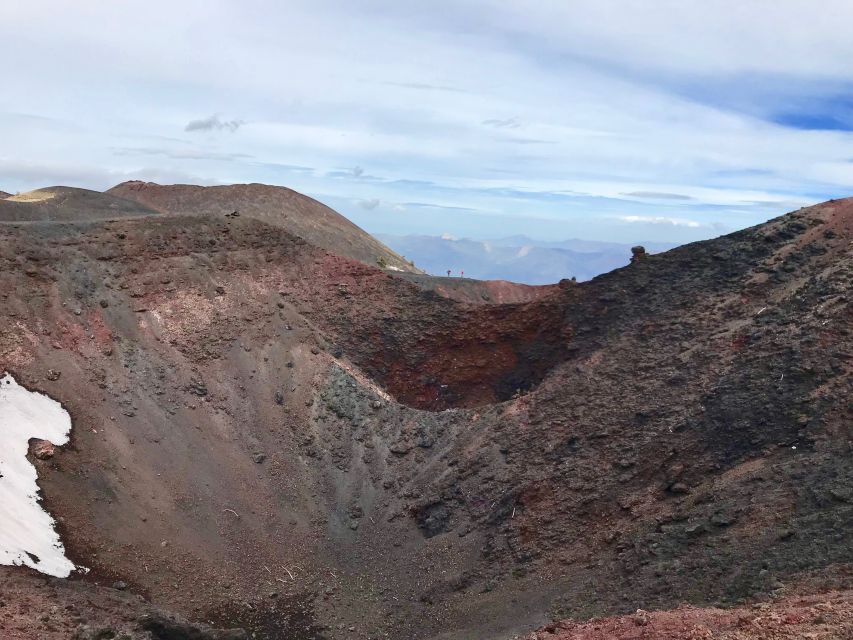
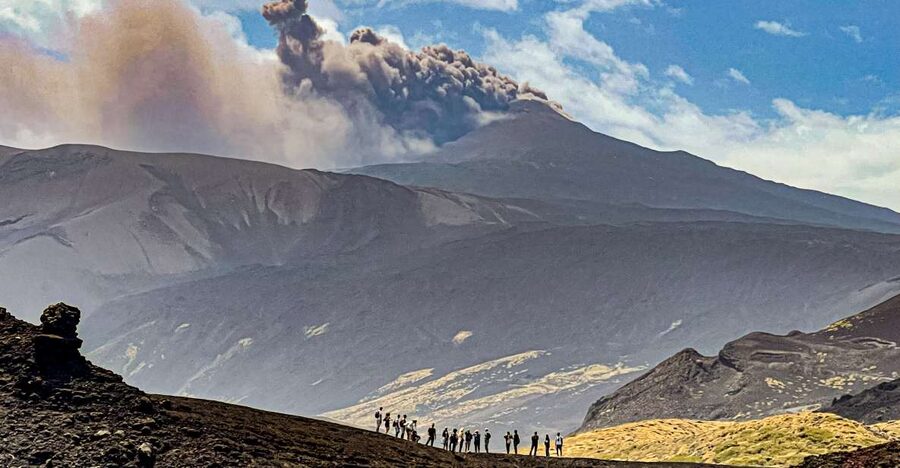
Etna still shows its scars. This three-hour walk on Sicily’s north side takes you through forests, black lava streams, eruptive cracks, and the huge craters formed during the 2002 eruption. I like the focus on real volcanic remains rather than a quick lookout stop, and I like that the route stays away from the busiest tourist areas. The volcano guide adds much more than directions, explaining how the craters, hornitos, cinder cones, and lava flows were formed.
I also like the strong value at $41 per person, since the price includes an official guide and accident insurance. Guides such as Daniele, Davide, Vincenzo, and Niko are praised for mixing clear science with humor, photos, and personal stories. The main caution is the footing: this is not a flat nature walk. Loose volcanic soil, wind, cold, and uphill sections can make the three hours tiring, especially for anyone unused to regular exercise.
In This Review
- Key points before you book
- Why the 2002 eruption makes this walk special
- From Piano Provenzana into Etna’s forest
- Hotel dell Betulle and the human mark of lava
- Lava streams, fractures, and hornitos
- Reaching the crater edges
- The sandy descent back to Piano Provenzana
- What the $41 price really covers
- Meeting point, timing, and languages
- Who should choose this Etna trek?
- Practical packing advice for Etna’s north side
- Should you book the 2002 eruption crater trek?
- FAQ
- How long does the Etna crater trek last?
- Where does the trek meet?
- Is transportation from my accommodation included?
- How much does parking cost?
- Are hiking shoes provided?
- Do I need snowshoes in winter?
- What languages can the guide speak?
- Is the trek suitable for children?
- Can the route change or be stopped?
Key points before you book
- Walk beside the 2002 eruption zone: See the ruins of Hotel dell Betulle, the only visible building left by that lava flow.
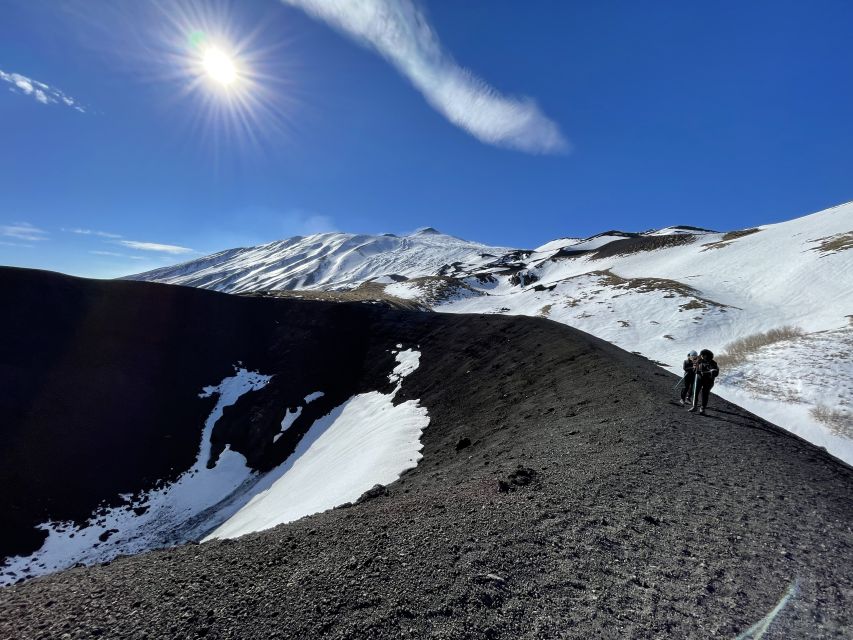
- Expect a real mountain outing: The route includes uphill walking, crater edges, loose ground, and a sandy descent.
- The guide is a major part of the value: Daniele, Davide, Vincenzo, and Niko are praised for clear explanations, humor, and careful pacing.
- Bring the right gear: Hiking shoes, water, a windbreaker, sunglasses, sunscreen, and a jacket matter on exposed Etna.
- Budget for extras: Parking costs €3, rental shoes cost €5, and snowshoes cost €12 in snowy months.
- Meet at the right kiosk: Go to Chiosco Bar Mareneve, not Chiosco Bar Etna Nord in the lower parking area.
Why the 2002 eruption makes this walk special
Mount Etna is not simply a mountain with a crater at the top. It is a working volcano, and its slopes preserve the marks of many eruptions. This trek concentrates on the north side, where the 2002 eruption left a particularly clear set of features.
The route begins at Piano Provenzana and follows the dirt road toward Etna’s upper craters. This gives you time to settle into the pace before the more uneven sections begin. The road itself is not the main attraction. It is the approach to a series of volcanic forms that make the area feel like an open-air geology lesson.
The 2002 eruption was among Etna’s most powerful recent eruptions. Lava moved across the north side and threatened Linguaglossa, while the eruption destroyed Piano Provenzana’s Hotel dell Betulle. The hotel ruins are an important early stop because they put a human scale on the eruption. A volcanic flow can look beautiful from a distance, but a damaged building shows its force in a way that a black rock never quite can.
I find this historical detail useful because the walk is not just about scenery. You are seeing the remains of a recent event, not an ancient story safely separated from modern life. The guide connects the visible rock and broken structure with the eruption’s effect on the area.
More Hiking Tours in Catania
- Mount Etna: Guided Volcano Summit Hiking Tour with Cable Car
★ 4.7 · 3,784 reviews - Mount Etna: Trek to 3000m with cable car and jeep
★ 4.7 · 1,978 reviews - Etna Volcano: South Side Guided Summit Hike
★ 4.7 · 1,545 reviews
From Piano Provenzana into Etna’s forest
The starting point is in the Piano Provenzana area, close to the chairlift used by skiers in winter. This is a high mountain setting, so conditions can differ sharply from the weather in nearby towns. A warm morning in Catania does not guarantee a warm walk on Etna.
From the meeting point, the group follows the dirt road that leads toward the summit craters. The route passes through forested sections before opening onto more exposed volcanic ground. That change is part of the appeal. You begin among trees, then gradually enter a harsher world of ash, cinders, broken lava, and wide views.
The pace is guided, with stops for explanations. That matters because volcanic features can look alike if you do not know what to notice. A good guide helps you separate a lava channel from a cinder slope, and a volcanic fracture from an ordinary crack in the ground.
The strongest part of the guiding is the mix of formal information and personality. Daniele is praised for using photographs and even drawing explanations in the dust. Davide is praised for making the walk varied with humor. Vincenzo combines scientific explanations with jokes and can guide in French, while Niko brings broad experience with volcanoes and Etna in particular.
That style suits this route. You do not need a geology degree, and the walk is not presented as a lecture. The best moments are likely to come when the guide stops beside a feature and explains what happened there, then gives you time to look closely.
Hotel dell Betulle and the human mark of lava
The ruins of Hotel dell Betulle are one of the clearest landmarks on the outing. The lava flow from 2002 destroyed the hotel, leaving it as the only visible structure from that event along the route.
This stop gives the excursion a strong emotional center. Craters and lava fields are dramatic, but they can also feel remote. The ruined hotel shows how quickly a volcanic event can change a place built for ordinary life.
You should not expect a large museum or a preserved interior. The value is in the location and the story. You are looking at a structure beside the material that overwhelmed it, while the guide explains the eruption and the surrounding volcanic forms.
Some guides also use their own photographs and videos to show the eruption. That can be especially useful when the present-day site looks quiet. Etna may be calm during your walk, but the guide’s images help you understand the heat, movement, and scale involved in the 2002 event.
Lava streams, fractures, and hornitos
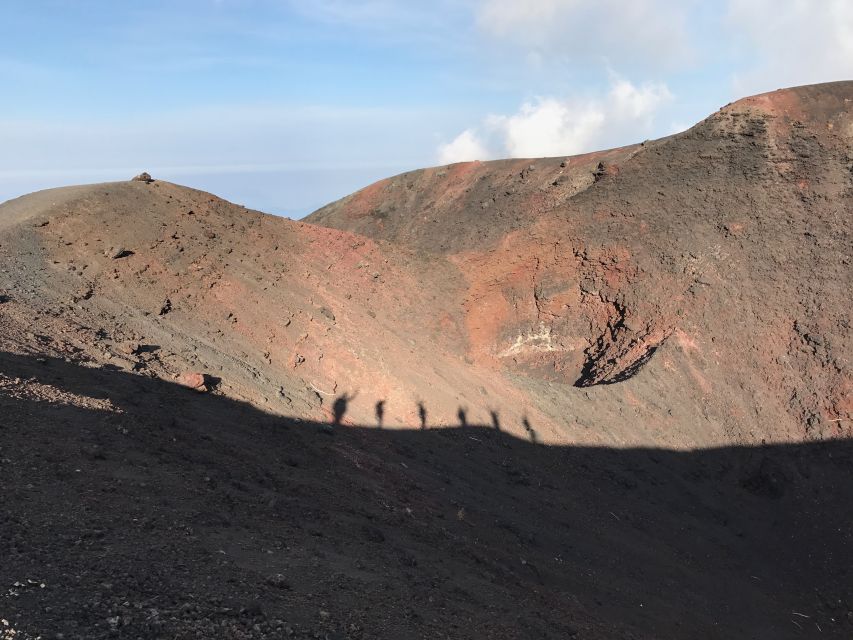
After the hotel ruins, the route becomes more about reading the ground. You will see lava streams, eruptive fractures, cinder cones, and smaller volcanic structures called hornitos.
Hornito means little oven. These small formations can develop around openings in a lava flow, where gas and molten material push upward and build a rough, oven-like shape. They are easy to pass without noticing, which is why the guide’s explanation adds real value.
The eruptive fractures are also important. They show where the volcano opened along its flank, rather than only at the summit. This helps you understand that Etna’s activity can affect broad sections of the mountain. The north-side eruptions left a record of movement across the slope, including the event that threatened Linguaglossa.
You will also climb along cinder cones. The material is loose and uneven, so each step can feel less secure than it would on a normal trail. This is where sturdy shoes and a steady pace matter most. You do not need to race, but you do need to watch the ground and follow the guide’s instructions.
More Etna trips:
- Catania: Mount Etna Morning or Sunset Day Trip with Tasting
★ 4.8 · 4,028 reviews - Catania: Sunset Jeep Tour of Mount Etna and Lava Flow Caves
★ 4.8 · 2,113 reviews - Mount Etna: Summit Crater Trek with Cable Car
★ 4.8 · 1,875 reviews - Sicily: Etna and Alcantara Gorges Full-Day Tour with Lunch
★ 4.8 · 1,766 reviews
Reaching the crater edges
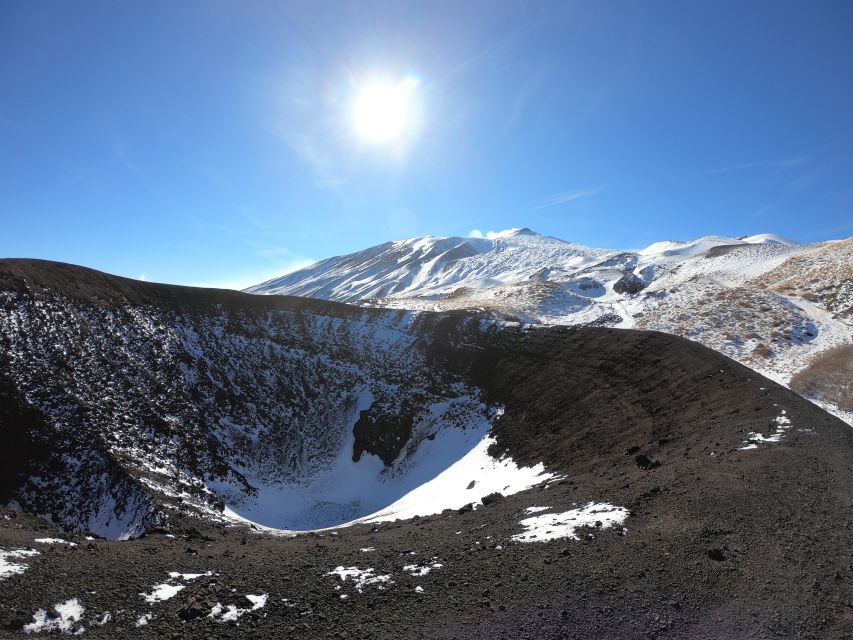
The upper section brings you to the craters and their edges. This is the most dramatic part of the route, but also the section that calls for the most care.
The walk near a crater can cause dizziness for people who are sensitive to heights or exposed edges. The official restrictions exclude people with vertigo or a fear of heights, and that advice deserves attention. Even if you are generally fit, a combination of wind, loose ground, elevation, and a sharp drop can feel demanding.
The view is one of the rewards. From the eruptive area, you can look across the volcanic formations toward the Calabrian Coast. The contrast is striking: dark craters and ash underfoot, with the sea and mainland coast spread out in the distance.
Do not expect perfect visibility every time. Wind and weather can change conditions, and the guide may alter or stop the route if the climate, environment, or volcanic conditions require it. That is not a flaw in the tour. On an active volcano, safety has to outrank a fixed sightseeing plan.
The sandy descent back to Piano Provenzana
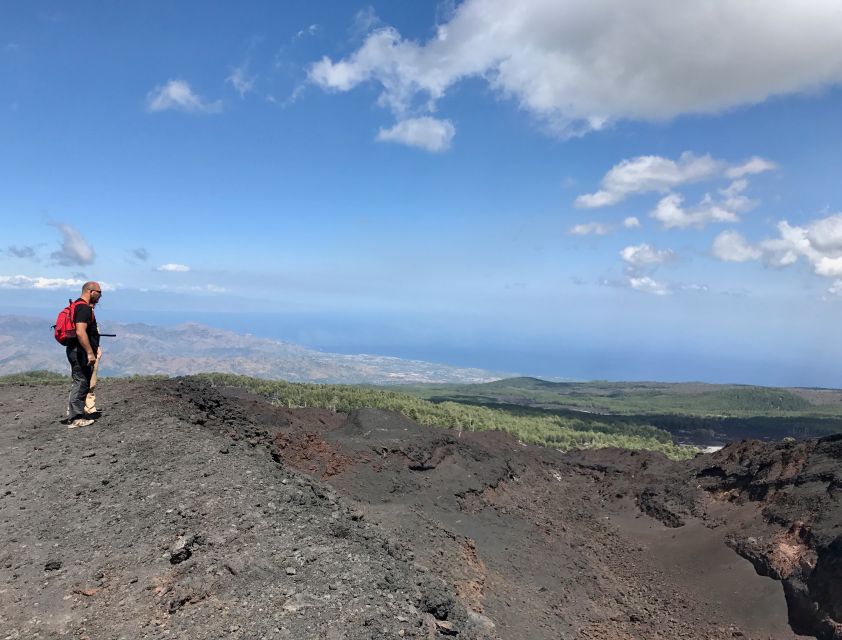
The return route goes down through a sandy channel to the starting area. This is a pleasant change from the ascent, but loose sand can also make your footing uncertain. Trekking poles would help, yet they are not included.
The descent is often where tired legs become noticeable. A three-hour duration may sound modest, but the total time depends on the group’s pace. One outing was described as a slow walk with frequent pauses, while another person in their late 60s found the route hard going but worthwhile.
That is a useful way to judge the activity. You should not treat the three hours as three hours of easy strolling. It is better understood as a moderate mountain walk with pauses for geology and views. A reasonably active person should find the pace manageable, but anyone who does little physical activity may struggle.
What the $41 price really covers
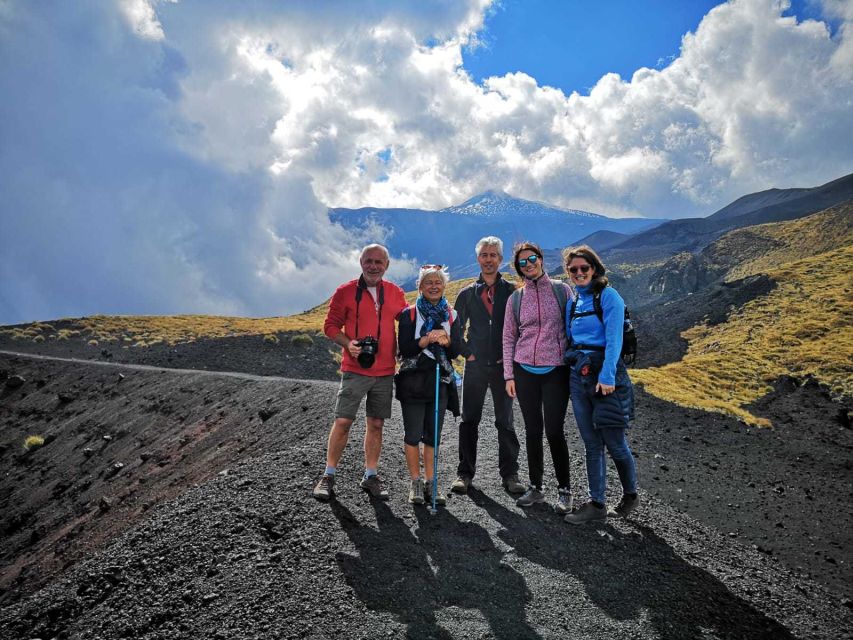
At $41 per person, the cost is fair for a guided volcanic walk. You are paying for an official Volcano Guide and accident insurance, not for transport, food, or a cable-car ride. The guide is the key value. Without one, you could still see black rock and crater rims, but you would miss much of the meaning behind them.
The price becomes less complete once you add the practical extras. Parking costs €3 for the full day and is paid after the excursion. Trekking shoes can be rented locally for €5 per pair, and snowshoes cost €12 per person when snow is present during December, January, February, and March.
Bring your own water and snacks. A windbreaker, jacket, gloves, hat, and sunscreen are also your responsibility. These are not minor details on Etna. Exposed volcanic ground can feel cold and windy even when lower Sicily is mild.
Insurance coverage requires adequate footwear. If you arrive in sandals, slippers, high heels, or unsuitable shoes, you are not properly covered. The rules also exclude skirts, large bags, luggage, and baby strollers, all of which would make the uneven route harder anyway.
Meeting point, timing, and languages
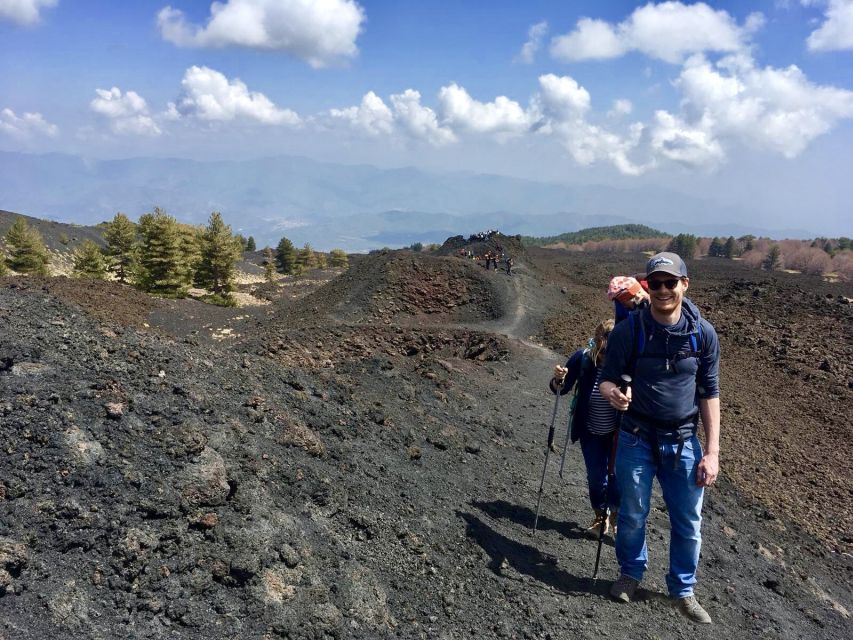
The correct meeting point is Chiosco Bar Mareneve. It is near the winter chairlift and is the second of four buildings in the parking area. Do not go to Chiosco Bar Etna Nord, which is in the lower parking lot.
This distinction matters because the two names are easy to confuse. Plan to arrive early enough to park, pay the €3 fee after the walk, and sort out rental equipment if needed. Transport from your accommodation is not included, so you must arrange your own way to Piano Provenzana.
The walk lasts three hours, but starting times depend on availability. The guide can lead in Italian, French, or English. The minimum group size is four participants in total.
The activity ends where it begins, which keeps the logistics simple. You do not need to arrange a separate pickup from the mountain at the end.
Who should choose this Etna trek?
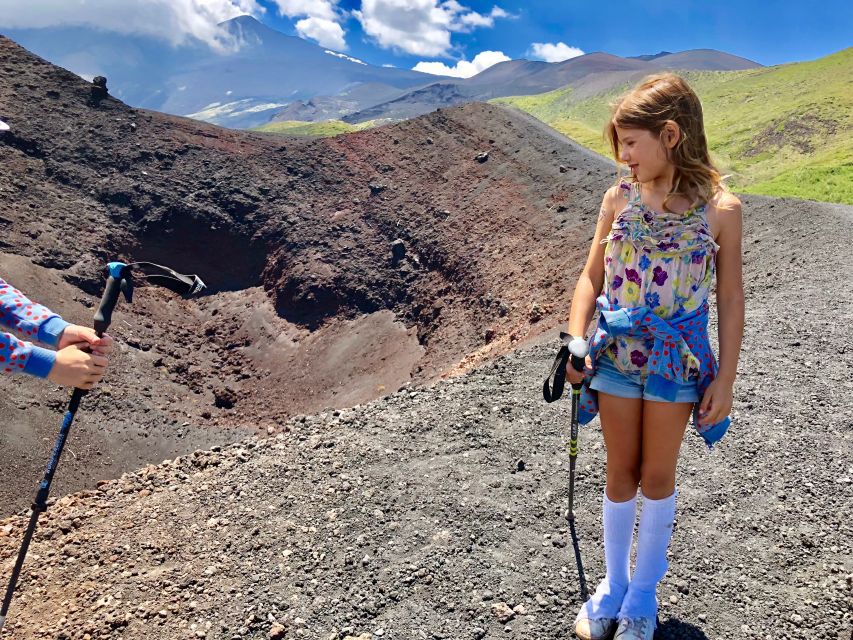
I would choose this outing if you want a close look at Etna’s volcanic features without signing up for a longer, more demanding summit hike. It suits people with moderate fitness who enjoy walking, stopping to learn, and accepting a little uncertainty in the route.
It can also work well as a lighter Etna option. Niko’s guidance is particularly suited to people who want a less demanding trail than a longer hike. The route includes pauses, and several accounts describe the walk as slow and easy in sections.
Still, the formal advice should guide your decision. The activity is not suitable for children under six, pregnant women, people with back, heart, respiratory, or mobility problems, or people with epilepsy. It is also not suitable for people afraid of heights or prone to vertigo.
One group completed the walk with children as young as five and older people over 80, but that should not override the stated restrictions. Fitness, weather, footwear, and individual health make a real difference on volcanic ground.
Practical packing advice for Etna’s north side
You should arrive ready for a mountain, not a beach day. Pack:
- Hiking shoes with a firm sole
- Water and snacks
- A windbreaker and jacket
- Sunglasses and sunscreen
- Gloves and a hat in cooler months
- Comfortable clothing suited to the forecast
- A small daypack
Avoid sandals, flip flops, slippers, high heels, skirts, strollers, luggage, and large bags. In snow, rent snowshoes on site rather than trying to manage the route in ordinary shoes.
Trekking sticks are not included, so bring your own if you normally use them. Do not count on borrowing a jacket, although one guide helped a group that had forgotten to rent one by providing spare jackets. That was a kind gesture, not something you should plan around.
Should you book the 2002 eruption crater trek?
Book it if you want a well-explained look at Etna’s recent volcanic activity, enjoy moderate hiking, and value a guide who can turn rocks and ash into a clear story. The ruined hotel, hornitos, lava streams, crater edges, and Calabrian Coast views give the walk a strong mix of history, science, and scenery.
Skip it if you want a completely easy stroll, need guaranteed warm weather, dislike loose footing, or have health or height concerns listed in the restrictions. You should also allow extra money for parking, footwear, or snowshoes.
At $41, this is good value when you arrive properly equipped and can manage the climb. The guides are the main reason to choose it. Daniele, Davide, Vincenzo, and Niko are praised for being attentive, funny, clear, and reassuring, which is exactly what you want on an active volcano. For an educational Etna outing that stays focused on the evidence of the 2002 eruption, I would put this one on your shortlist.
FAQ
How long does the Etna crater trek last?
The scheduled duration is three hours. The total time can change depending on the group’s general pace and the conditions on the mountain.
Where does the trek meet?
Meet at Chiosco Bar Mareneve near the winter chairlift. It is the second house of the four buildings in the parking area. Do not meet at Chiosco Bar Etna Nord in the lower parking lot.
Is transportation from my accommodation included?
No. Transport from your accommodation to the starting point is not included.
How much does parking cost?
Parking costs €3 for the entire day. The parking ticket is paid after the excursion.
Are hiking shoes provided?
No. Trekking shoes can be rented from authorized local rentals for €5 per pair. Adequate footwear is required for insurance coverage.
Do I need snowshoes in winter?
If there is snow, snowshoes are recommended and can be rented on site for €12 per person. The winter months listed are December, January, February, and March.
What languages can the guide speak?
The guide service is available in Italian, French, and English.
Is the trek suitable for children?
The activity is not suitable for children under six years old. It is also intended for hikers with medium training, so you should consider the child’s fitness and comfort on loose, uneven ground.
Can the route change or be stopped?
Yes. The guide may change or interrupt the excursion because of environmental, climatic, or volcanic conditions.
More Hiking Tours in Mount Etna
- Catania: Mount Etna Trekking Trip off the Tourist Path
★ 4.9 · 1,351 reviews - From Taormina: Etna Tour with Hiking, Cave Visit, & Tastings
★ 4.7 · 518 reviews - From Taormina: Half-Day Mount Etna Morning Trek
★ 4.9 · 504 reviews - Catania: Etna Nature Tour with Hiking, Cave Visit, & Tasting
★ 4.7 · 502 reviews
Recently added around Mount Etna
- Tour Etna & Wine Tasting★ 5.0 · 317 reviews
- Etna, Wine and Alcantara Tour – From Taormina★ 5.0 · 464 reviews
- Etna and Alcantara Gorges Excursion★ 4.5 · 256 reviews
- Mt Etna and Wine tasting tour from Catania★ 5.0 · 282 reviews
- Etna Tour in 4×4★ 5.0 · 583 reviews
- Etna Morning Jeep Tour★ 4.5 · 241 reviews
- Mt. Etna and Taormina village full day tour from Catania★ 5.0 · 1,155 reviews
- Etna Volcano: South Side Guided Summit Hike★ 5.0 · 311 reviews
Mount Etna Tours, compared.
Mount Etna Morning or Sunset Day Trip with Tasting
Read our review →
Mount Etna: Guided Volcano Summit Hiking Tour with Cable Car
Read our review →
Sunset Jeep Tour of Mount Etna and Lava Flow Caves
Read our review →
Mount Etna: Trek to 3000m with cable car and jeep
Read our review →
Mount Etna: Summit Crater Trek with Cable Car
Read our review →
Etna and Alcantara Gorges Full-Day Tour with Lunch
Read our review →
Mount Etna: Roundtrip Cable Car and 4×4 Bus Ticket
Read our review →
Browse the lists this tour appears in