
Reviewed · MUSEUMS
Da Vinci Interactive Museum Venice Scuola di San Rocco
Leonardo’s inventions invite you to touch, turn, and test. At Venice’s Da Vinci Interactive Museum, I like the working replicas of his machines and the clear displays that show how his ideas connect to science, art, anatomy, and engineering. The backlit reproductions of major paintings are another strong point, especially when you want to study details without standing in a crowded gallery.
I also like the low price, about $10.21 per person, and the family-friendly layout. You can see the main exhibition in roughly 45 minutes, though puzzle solvers and curious children may stay longer. The main caution is size: this is a compact, two-floor exhibition, not a grand museum with a large collection of original artworks.
In This Review
- Key Things to Know Before You Go
- What This Museum Actually Is
- The Earth, Water, Air, and Fire Sections
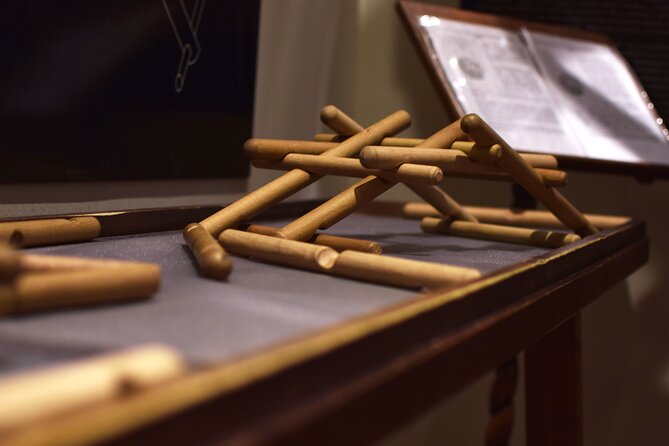
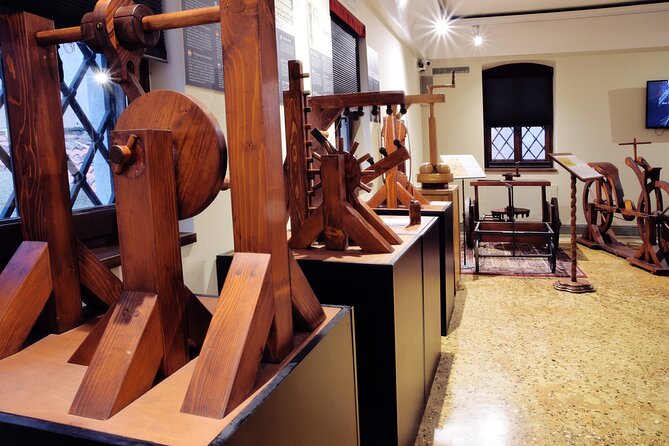
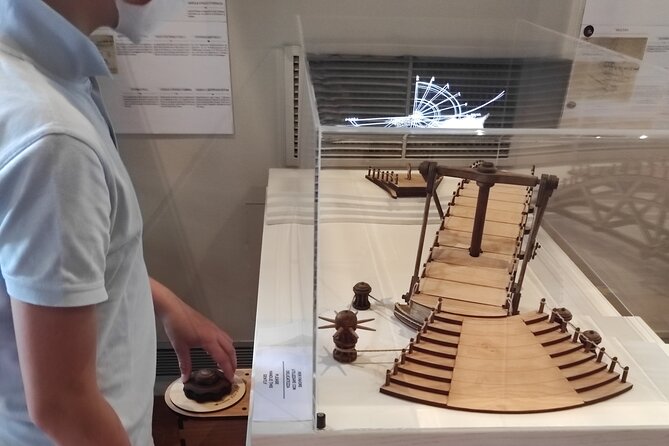
- The Interactive Machines Are the Main Event
- The Art Displays Use Excellent Copies
- How Long You Need and When to Visit
- Finding the Right Leonardo Museum
- Is the $10.21 Price Good Value?
- Who Will Enjoy This Most?
- Booking, Timing, and Cancellation Tips
- Should You Book the Da Vinci Interactive Museum?
- FAQ
- Where is the Da Vinci Interactive Museum located?
- How much does admission cost?
- How long does the museum visit take?
- What are the opening hours?
- Is a professional guide included?
- Are audio guides available?
- What languages are used in the museum?
- Are the paintings originals?
- Is the museum suitable for children?
- Can I cancel my booking?
Key Things to Know Before You Go
- Hands-on machines: You can operate replicas based on Leonardo’s designs, including devices linked to earth, water, air, and fire.
- A compact visit: Many people finish in 20 to 45 minutes, while families who try every mechanism may spend up to an hour or more.
- Copies, not originals: The art displays use high-resolution, backlit reproductions of works such as the Mona Lisa and The Last Supper.
- Useful multilingual text: Explanations are available in Italian, English, French, German, Spanish, and Russian.
- Free audio guides: Audio guides are available at the entrance on request, even though they may not be offered automatically with an online ticket.
- Easy to confuse with another museum: Venice has another Leonardo museum about eight minutes away, so check that your destination is in Campo San Rocco.
What This Museum Actually Is
The name can set up the wrong expectation. This is not a huge art museum, a full-scale multimedia show, or a gallery filled with original Leonardo paintings. It is an educational exhibition built around replicas, diagrams, text panels, videos, and interactive models.
That distinction matters. If you want a quiet look at original Renaissance art, this may feel thin. If you want to understand how Leonardo imagined flying machines, water devices, military tools, and mechanical systems, the exhibition gives you something more active to do than simply look at framed pictures.
I find the best way to think about it is as a compact introduction to Leonardo’s working mind. His notebooks were full of questions. How could a person fly? How could water be moved? How might gears, pulleys, screws, and wings work together? The museum turns some of those questions into objects you can handle.
The exhibition is arranged around four sections: Earth, water, air, and fire. The machines follow Leonardo’s original proportions unless practical changes were needed to make them suitable for display. That gives the models a useful link to his drawings, even though you should not expect every device to function exactly as Leonardo first imagined it.
More Museum Tours in Venice
- Venice: St. Mark Basilica Ticket, Audioguide+History Gallery
★ 3.9 · 4,780 reviews - Venice: Leonardo Da Vinci Museum Entrance Ticket
★ 4.5 · 3,560 reviews - Venice’s Best: Basilica, Doge’s Palace, Gondola & History Gallery
★ 4.5 · 2,478 reviews
The Earth, Water, Air, and Fire Sections
The four-part structure keeps the visit easy to follow. You move through broad areas of Leonardo’s interests rather than a strict year-by-year biography.
The earth section presents machines and designs tied to movement, construction, mechanics, and practical force. This is where the exhibition can feel most rewarding for children and anyone who likes to understand how parts work together. You may be able to turn, lift, or manipulate certain models, then compare the result with Leonardo’s original drawings.
The water section looks at devices connected with flow and movement. Water was a major subject for Leonardo, both as a natural force and as an engineering problem. The museum’s hands-on approach helps you see why a simple sketch of a screw, wheel, or channel could lead to a useful mechanical idea.
The air section is likely to catch the imagination first. Leonardo’s studies of flight are among his most famous experiments, even though his flying machines could not work as he hoped in his own time. Seeing a physical replica makes the drawings easier to read and gives you a better sense of the scale and ambition of the ideas.
The fire section adds another side of Leonardo’s mechanical thinking. Here, the focus is less on a single famous masterpiece and more on devices, force, and the practical use of technology. The sections are not enormous, but they pack in plenty of diagrams and mechanical concepts.
The Interactive Machines Are the Main Event
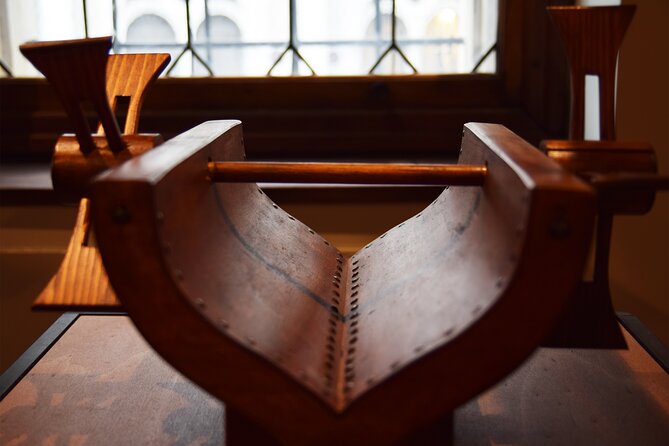
The strongest part of the museum is upstairs, where the replicas and building equipment provide the most direct interaction. You are not simply told that Leonardo studied gears or motion. You can test some of the designs yourself.
That hands-on feature makes a real difference for families. A child may not spend long reading a panel about engineering, but turning a model or solving a mechanical puzzle gives the idea a physical meaning. Adults can enjoy the same feature, particularly if you like puzzles, machines, or the practical side of Renaissance science.
I would allow extra time here instead of rushing through for a quick photograph. Some devices require a little patience. You may need to work out how a mechanism moves before the idea becomes clear.
The interactive displays also help explain why Leonardo was unusual. He was not only a painter. His interests covered anatomy, architecture, water, flight, weaponry, mechanics, and the natural world. The machines make that range visible in a way a short biography cannot.
Still, the word interactive needs a sensible interpretation. This is not an immersive projection show with a constantly changing digital environment. It is a small museum where you can operate selected physical models. If you expect an elaborate theatrical production, the visit may disappoint.
The Art Displays Use Excellent Copies

Leonardo’s paintings appear as high-resolution reproductions with backlighting. This makes the images bright and easy to inspect, but they are still copies.
The displays include major works such as the Mona Lisa and The Last Supper, along with explanations of Leonardo’s artistic methods and interests. The lighting can help you notice details that might be hard to see in a dark or crowded art gallery. The text is offered in six languages, including English.
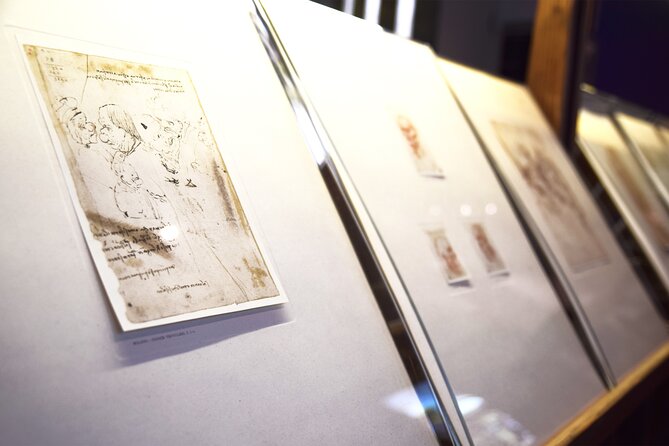
This part of the museum works best as a companion to the machines. It shows how Leonardo’s careful observation served both his art and his scientific studies. His anatomy drawings, for example, connect the artist’s eye with the engineer’s habit of examining structure.
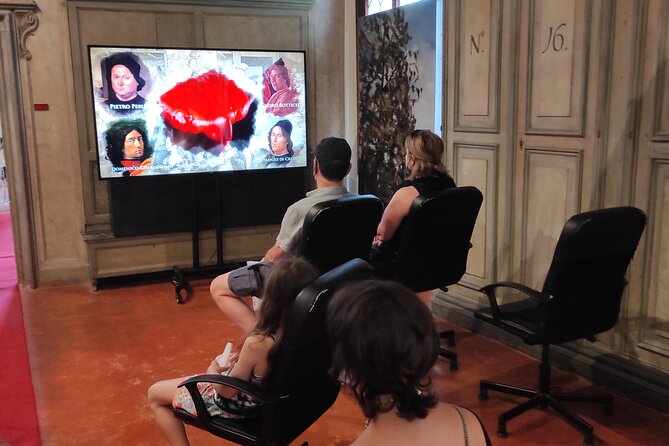
The lower level can feel drier than the hands-on area upstairs. It contains more information about Leonardo’s life, art, and studies, while the interactive machines provide more immediate fun. A short film gives a condensed introduction to his years as an artist and inventor. It is useful for orientation, but it is not the reason to buy a ticket.
If art is your main interest, you may find this section too brief. The museum itself is better suited to visitors who want a broad look at Leonardo’s ideas rather than a close study of his paintings.
Still Venice, but a slower afternoon:
- Venice: Doge’s Palace Reserved Entry Ticket
★ 4.6 · 42,716 reviews - Venice: Grand Canal Gondola Ride with App Commentary
★ 4.1 · 18,908 reviews - Boat Trip: Glimpse of Murano, Torcello & Burano Islands
★ 4.3 · 15,699 reviews - Venice: Grand Canal by Gondola with Live Commentary
★ 4.1 · 13,681 reviews
How Long You Need and When to Visit
The stated visit lasts about 45 minutes, but the practical range is wider. Some people complete the exhibition in about 20 minutes. If you read every panel, request the audio guide, and try the machines, you could spend an hour or even longer.
The museum is open daily from 10:30 a.m. to 4:30 p.m. The last entrance is at 4 p.m. That final-entry rule is important because a late arrival leaves little time for the displays.
I would avoid treating this as an all-day museum stop. It fits neatly into a Venice walking plan, perhaps before lunch, after visiting the nearby Scuola Grande di San Rocco, or between other sights in the San Polo area. The compact size is a weakness if you want a major museum, but it is an advantage when your schedule is tight.
The museum is near public transportation. A mobile ticket is provided, and the experience is offered in English, with written material in several other languages. No professional guide is included, so you should not expect a scheduled talk or personal explanation.
Free audio guides can be requested at the entrance. Ask for one if you want more context. They were not always offered automatically to people presenting an online ticket.
Finding the Right Leonardo Museum
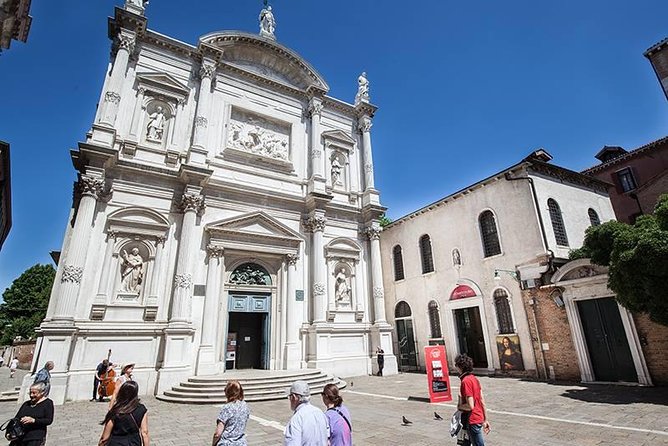
Venice has more than one Leonardo-themed museum, and this creates a genuine practical problem. The Da Vinci Interactive Museum reviewed here is located in Campo San Rocco, near the Scuola Grande di San Rocco.
Another Leonardo museum is about eight minutes away on foot. If you type only Leonardo da Vinci Museum into a map app, you may be sent to the wrong location. Check the address and look for Campo San Rocco before setting out.
The nearby Scuola Grande di San Rocco is a major attraction in its own right. Its grand interior and important works by Tintoretto can make the Leonardo exhibition feel modest by comparison. I would plan the two visits with realistic expectations: one is a compact, hands-on science and art display, while the other offers a much larger historic setting.
Food, drinks, and chewing gum are not allowed in the exhibit areas. Service animals are allowed. Most people can take part, but the exhibition includes stairs between its two floors, so keep that in mind if steps are a concern.
Is the $10.21 Price Good Value?
At about $10.21 per person, the price is fair if you use the museum for what it does well. You receive access to the interactive models, the four themed sections, the art reproductions, multimedia displays, and the bookshop. For a family, the machines can provide a useful activity without the cost or time commitment of a large museum.
The value drops if you expect original paintings, a long guided tour, or a large building. The experience can be over quickly, and some visitors may feel that copies of famous artworks do not justify the admission price by themselves.
I would call it good value for families, students, curious adults, and Leonardo enthusiasts. It is less convincing for someone who has only a short time in Venice and wants to see the city’s most important original art. In that case, use the low price as a bonus, not as the main reason to squeeze it into your day.
The bookshop adds a useful final touch. It offers books and souvenirs connected with Leonardo’s life and work. If the models spark your interest, this is a better place to continue learning than the brief introductory film.
Who Will Enjoy This Most?
Children usually get the clearest benefit from the interactive design. The chance to operate machines and solve puzzles gives them a reason to look closely. A child interested in physical science, design, or how things are built may enjoy the museum more than a child who wants a traditional art gallery.
Adults can enjoy it too, particularly if you approach it as a short lesson in Leonardo’s range. I like that the exhibition shows the inventor and observer behind the famous painter. It reminds you that Leonardo’s genius was not confined to the Mona Lisa.
The museum may not suit you if you want a major collection, original masterpieces, or a polished digital spectacle. The exhibition is relatively small, and the lower level may feel text-heavy. It is also worth skipping if you have already seen a larger Leonardo museum and want something entirely new.
For many people, the best visit lasts around an hour and forms part of a wider walk. Think of it as a focused stop, not the centerpiece of your entire Venice day.
Booking, Timing, and Cancellation Tips
The experience is often booked about 19 days ahead, but the small museum does not necessarily require elaborate planning. A mobile ticket lets you visit during opening hours rather than joining a scheduled guided group.
You can cancel for a full refund if you do so at least 24 hours before the experience begins. Changes or cancellations made less than 24 hours before the start time are not accepted for a refund.
On certain dates, people visiting Venice for the day may need to pay a separate €5 Venice access fee. Check the official city information at cda.ve.it to see which dates apply and whether you qualify for an exemption. This fee is separate from the museum admission.
Should You Book the Da Vinci Interactive Museum?
Book it if you want an affordable, short, hands-on stop and you enjoy seeing how inventions work. It is especially good for families, curious children, and adults who want a broader picture of Leonardo beyond his paintings.
Do not book it expecting a grand gallery or a full theatrical production. The exhibition is small, uses reproductions, and offers only a short film rather than a long presentation. Check the Campo San Rocco location carefully so you do not pay for the wrong museum.
My call: good value when your expectations are set correctly. Pair it with the Scuola Grande di San Rocco, request the audio guide, and give the machines time. If you want original Renaissance art above all else, spend your limited Venice hours elsewhere.
FAQ
Where is the Da Vinci Interactive Museum located?
It is located in Campo San Rocco in Venice, near the Scuola Grande di San Rocco.
How much does admission cost?
The listed price is about $10.21 per person.
How long does the museum visit take?
The stated duration is approximately 45 minutes. Some people finish in about 20 minutes, while visitors who use the interactive machines and read the displays may stay longer.
What are the opening hours?
The museum is open daily from 10:30 a.m. to 4:30 p.m. The last entrance is at 4 p.m.
Is a professional guide included?
No. The ticket includes the exhibition and interactive models, but not a professional guide.
Are audio guides available?
Yes. Free audio guides are available at the entrance upon request.
What languages are used in the museum?
Descriptions are available in Italian, English, French, German, Spanish, and Russian.
Are the paintings originals?
No. The museum displays high-resolution, backlit reproductions of major Leonardo paintings.
Is the museum suitable for children?
Yes. The exhibition is family-friendly, and the interactive machines and puzzles are designed to encourage curiosity among children and adults.
Can I cancel my booking?
You can cancel at least 24 hours before the experience start time for a full refund. Cancellations or changes made less than 24 hours before the start time are not accepted for a refund.
Recently added around Venice
- Venice Walking Tour and Gondola Ride Combo★ 4.4 · 266 reviews
- Venice: Walking Tour and Shared Gondola Ride★ 4.1 · 466 reviews
- Venice: Private Tour with a Local Guide★ 4.6 · 718 reviews
- Venice: The Footsteps of Commissario Brunetti Walking Tour★ 4.9 · 445 reviews
- Venice: Vivaldi Four Seasons Concert at Vivaldi Church★ 4.8 · 287 reviews
- Venice: Walking Guided Tour of the City Must-See Sites★ 4.7 · 1,095 reviews
- Venice: Lagoon Catamaran Cruise with Music and Drinks★ 4.7 · 419 reviews
- Venice: The Three Tenors Concert Ticket★ 4.8 · 1,183 reviews
Museums, compared.
Vatican Museums & Sistine Chapel Tour with Optional Basilica
Read our review →
Vatican Museums, Sistine Chapel & St Peter’s Basilica Guided Tour
Read our review →
Skip-The-Line Uffizi Gallery Timed Entry Ticket
Read our review →
Vatican Museums, Sistine Chapel & Basilica Tour
Read our review →
Vatican Museums & Sistine Chapel Skip-the-Line Entry Ticket
Read our review →Vatican Museums, Sistine Chapel & Basilica Tour
Read our review →
Vatican Museums & Sistine Chapel Guided Tour
Read our review →Browse the lists this tour appears in