
Reviewed · WINE TOURS
Cagliari: natural cultural walking, food wine tasting experience
Taste Sardinia one bite at a time. This 2.5-hour walk pairs local food and wine with Cagliari’s old neighborhoods, green spaces, and stories of island identity. I like the small-group format, capped at eight people, and I like that guide Emanuele, known as Lele, brings his background in anthropology and his close ties to the city into the walk. The main consideration is the hillier route, which can feel strenuous in hot weather.
This is not a food marathon. You will not be stuffed after every stop. Instead, you get a thoughtful sampling of cheeses, cured meats, bread, olive oil, natural wine, and gelato, along with a look at places many first-time visitors miss. The tasting menu does not provide vegetarian or seafood alternatives, so check that point before booking.
In This Review
- Key things to know before you book
- What this Cagliari walk is really about
- Meeting Lele in central Cagliari
- Giardino sotto le Mura and the sound stones
- Food stops built around small producers
- The local shops are part of the lesson
- Cagliari beyond the postcard route
- Why the gelato finish works
- Is $108.89 a fair price?
- Who should book this experience?
- Final verdict: book it for the local view
- FAQ
- How long does the Cagliari food and wine walk last?
- Where does the tour start and finish?
- Is hotel pickup available?
- How many people can join the tour?
- What foods are included?
- Are vegetarian or seafood alternatives available?
- Is the tour offered in English?
- What is the cancellation policy?
Key things to know before you book
- Small groups keep the conversation personal: The maximum is eight people, and some departures are smaller, which makes it easier to ask questions and hear the guide.
- The food tells Sardinia’s story: Expect raw sheep’s milk cheeses, cured meats, Sardinian bread, olive oil, sapa, natural wine, and handmade gelato.
- Giardino sotto le Mura adds a nature stop: This former limestone quarry sits between Castello and Villanova and includes old trees, Sardinian plants, caper bushes, and Pinuccio Sciola’s sound stones.
- Lele is the heart of the experience: Emanuele brings strong knowledge of Sardinian history, language, food, archaeology, and daily life in Cagliari.
- The route includes slopes and warm-weather walking: Good shoes and water matter, especially during summer.
- The price reflects more than lunch: At $108.89 per person, you are paying for a guided city walk, several tastings, small-group attention, and access to local food specialists.
What this Cagliari walk is really about
Many city food tours focus on eating as much as possible. This one takes a slower route. You walk through Cagliari, stop at selected food shops and tasting spots, and use each bite as a way to understand Sardinia.
That difference matters. Sardinia is not simply Italy with better beaches. The island has its own language, customs, food traditions, and long relationship with sheep farming, fishing, olive growing, and winemaking. Lele makes those connections clear without turning the walk into a classroom lecture.
You may hear about Sardinian, the island’s historic language, as well as the many local variations spoken in different areas. You may also hear about archaeological discoveries, fossils in Cagliari’s limestone, old farming practices, and the island’s famous longevity traditions.
The strongest part of the experience is the way the pieces fit together. You are not just told that Fiore Sardo is an old cheese. You taste it, learn that it is made from sheep’s milk, and connect it with the island’s rural culture. You do not simply sip wine. You learn about natural and sometimes unfiltered wines made by small producers.
More Wine Tastings in Sardinia
- Cagliari: Boat Tour with 4 Swim Stops, Snorkeling & Prosecco
★ 4.9 · 865 reviews - Olbia: Gallura Winery Guided Tour with Tasting
★ 4.7 · 451 reviews - Cagliari: Sailing Tour with 4 Stops, Snorkeling and Prosecco
★ 4.8 · 341 reviews
Meeting Lele in central Cagliari
The listed meeting point is Carlo Felice near Rinascente, at 09124 Cagliari. The activity ends back at the meeting point, which makes planning easier if you are staying in the center or have other plans afterward.
Hotel pickup is offered only from hotels in the metropolitan area of Cagliari. If you are staying outside that area, plan to reach the central meeting point yourself. The location is near public transportation.
Emanuele, usually called Lele, receives the strongest praise in this experience. He is described as warm, funny, highly informed, and deeply proud of Sardinia. He also speaks excellent English, and one participant appreciated his willingness to mix Italian and English while offering translations. That could be especially useful if you want a little language practice without being left behind.
Lele’s local connections are part of the appeal. Along the route, he may greet shop owners and people he knows, giving you a glimpse of ordinary social life in Cagliari. This does not feel like a guide reciting memorized facts from a script. His interests include anthropology, local language, music, radio, and television, and those interests give the conversation unusual range.
The small group helps here. With no more than eight people, you can ask about food, history, language, or places to eat later. A larger group would make this kind of personal exchange harder.
Giardino sotto le Mura and the sound stones
The tour includes about 20 minutes at Giardino sotto le Mura, the Gardens under the Walls. This green area lies between the historic districts of Castello and Villanova and occupies a former quarry where limestone blocks were extracted.
That old quarry explains part of Cagliari’s character. The city rises on pale limestone, and the stone appears in its buildings, walls, streets, and views. The park gives Lele a natural setting in which to explain how the city developed.
Look for the old olive tree, carob tree, oaks, and other plants linked to Sardinian flora. Caper bushes grow along the limestone ridge in surprising abundance. This is a small detail, but it is the sort of detail that helps you see a city differently. After the tour, you may notice plants and stonework that you would otherwise walk past.
The park also includes works by Sardinian artist Pinuccio Sciola. His sound stones are sculptures made from basalt and limestone that produce tones when touched or rubbed. They reflect Sciola’s interest in the natural character of stone and the island’s ancient relationship with the earth.
This stop gives the walk a welcome change of pace. You get greenery, art, geology, and history in one compact place. It is also useful in warm weather because shaded or planted areas can make the walk more comfortable.
Food stops built around small producers
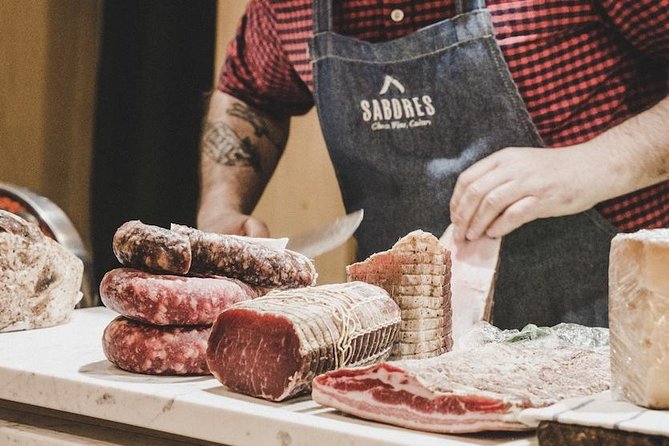
The exact order of the tasting stops may vary, but the experience includes several savory and sweet samples. The food described throughout the tour includes raw sheep’s milk cheeses, pasteurized goat and sheep cheeses, cured meats, Sardinian bread, olive oil, flavored salt, sapa, natural wine, and gelato.
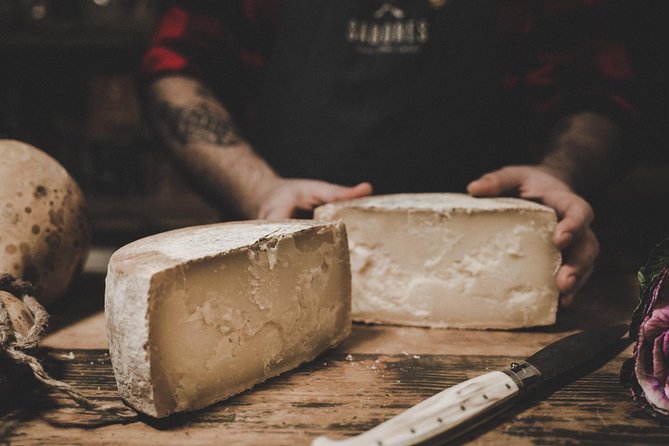
The cheese tasting is a highlight. Fiore Sardo, made from sheep’s milk, is especially important because it is one of Sardinia’s oldest cheeses. You may also sample other raw milk cheeses and goat or sheep cheeses with different textures and flavors.
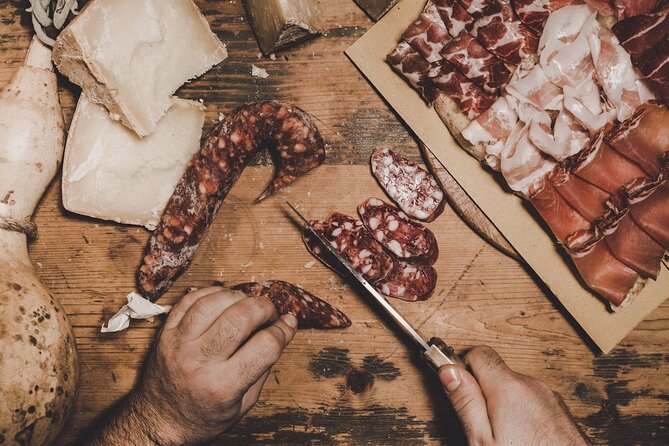
The cured meats add another side of Sardinian cooking. Tasting selections have included prosciutto, coppa, mustela, and wild boar salami. These are served with bread and other local products rather than treated as isolated samples.
Sardinian bread is part of the story too. The tastings may include traditional wholemeal bread with island olive oil, salt flavored with wild fennel seeds, and sapa. Sapa is cooked grape must, a sweet, concentrated ingredient that appears in older Sardinian food traditions.
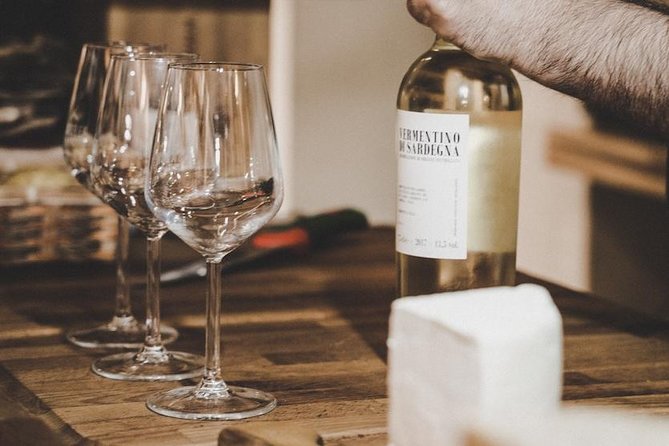
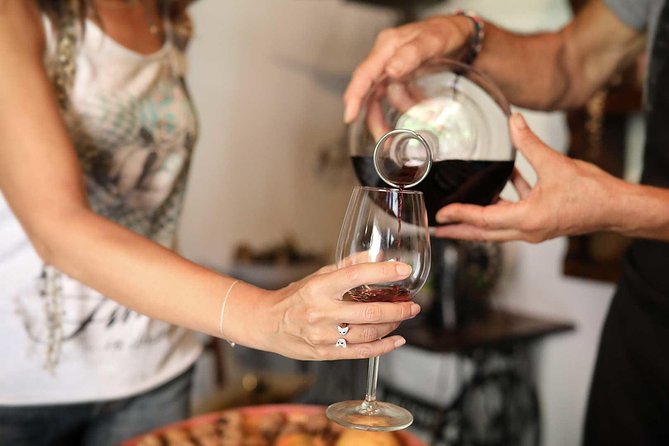
The wine portion is more unusual than a standard winery visit. The tour focuses on natural wines made by small Sardinian producers. Some are spontaneously fermented, and both red and white wines may appear. The wine is made especially for one of the local shops visited on the route, which gives the tasting a direct connection to the people selling and explaining it.
You should think of these stops as a guided introduction rather than a full meal. The portions are described as generous and satisfying, but the tour is designed for tasting and learning. If you arrive hungry, you may want to eat a light meal beforehand or plan lunch afterward.
Still Sardinia, but a slower afternoon:
- From Sardinia: La Maddalena Archipelago Full-Day Boat Tour
★ 4.6 · 4,980 reviews - Golfo Aranci: Eco-Friendly Dolphin Watching Boat Trip
★ 4.8 · 2,846 reviews - Sardinia: La Maddalena Archipelago Full-Day Trip by Boat
★ 4.6 · 2,710 reviews - From Palau: La Maddalena Islands Full-Day Trip by Boat
★ 4.4 · 2,414 reviews
The local shops are part of the lesson
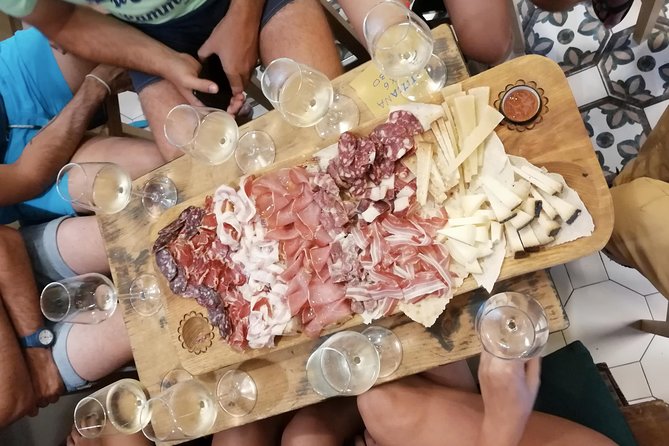
The tasting locations are not just anonymous counters. You may meet shop owners or food specialists who explain how their products are made and where they come from.
That human contact makes the food more memorable. You can ask about raw milk, small producers, natural fermentation, olive oil, curing, and regional differences. The people behind the food help connect the product to Sardinian villages and family traditions.
One of the stops has been described as a small shop that carries handmade products and natural wines from Sardinia. Another may focus more on cured meats and related specialties. The two tastings can overlap, particularly with cheese, bread, wine, and cured products, so do not expect two entirely separate meals.
That repetition is the main weakness of the food portion. If you want a long list of unrelated dishes, this may feel narrow. If you want to understand a few important Sardinian foods properly, the repetition works better. You get time to compare flavors instead of rushing through ten tiny samples.
The connection to Sardinia’s Blue Zone traditions may also come up. The point is not that one tasting explains longevity, but that food quality, local ingredients, daily movement, and community life are all part of the larger discussion.
Cagliari beyond the postcard route
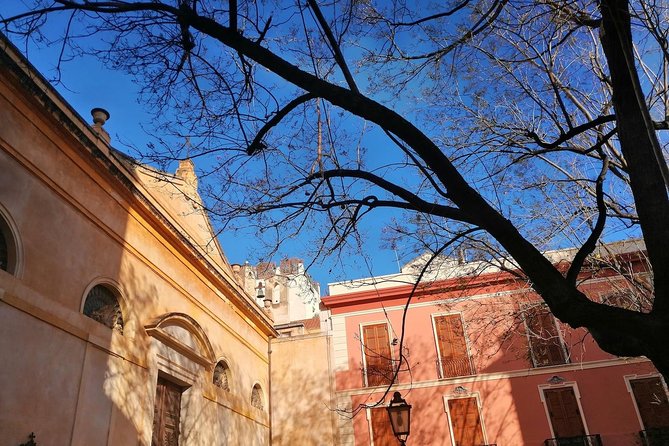
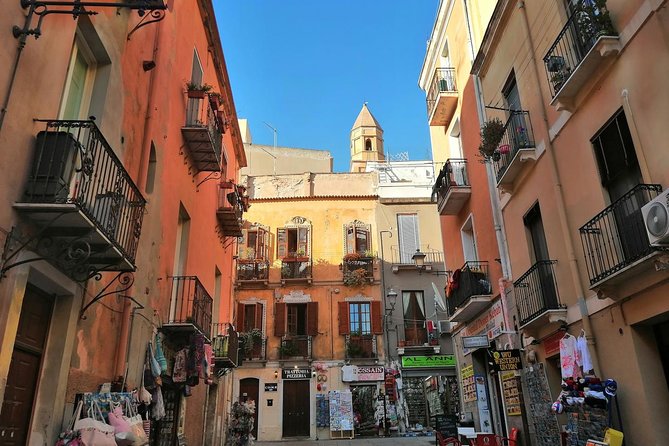
The walk is designed to show both familiar sights and less obvious corners of central Cagliari. You may pass through historic districts, small squares, tree-lined streets, old churches, balconies filled with flowers, and quiet spots where daily life continues away from the main tourist flow.
The city’s setting is one of its great strengths. Cagliari sits among limestone hills, the sea, and wetlands where flamingos can be seen. The route may include viewpoints and terraces with broad views across the city and surrounding areas.
A useful detail from the walk is the attention to trees. Cagliari includes parks and avenues with jacarandas, figs, ficus, oaks, carob trees, pines, and fruit trees. Lele often uses these plants to discuss how greenery affects city life, especially during heat waves.
The route can change with conditions. In hot weather, Lele has adjusted the walk toward shadier, greener areas. That flexibility is valuable, but it does not remove the need for sensible preparation. Wear comfortable shoes, carry water, and be ready for inclines.
One participant found the climb up a steep hill strenuous in the heat. The walking pace and total length were otherwise considered manageable, but Cagliari is not flat. If hills are difficult for you, ask about the route before booking.
Why the gelato finish works
The final sweet stop is usually gelato from a shop that makes it by hand. Sardinian flavors may be available, although the precise choices can change.
After salty cheese, cured meat, bread, and wine, gelato provides a simple finish. It also keeps the experience connected to modern Cagliari. The city is not a museum of old recipes. It has traditional food shops, contemporary bistros, local artists, language activists, and small producers working in the present day.
The gelato stop is especially appealing if you are traveling with mixed appetites. Even people who are less interested in cured meats or natural wine often enjoy this part.
Is $108.89 a fair price?
At $108.89 per person, this is not a bargain if you measure value only by the amount of food. You are not buying a large lunch. You are buying a guided cultural experience that lasts about two and a half hours and combines food, wine, history, nature, art, and neighborhood walking.
The price makes more sense for a small group. A maximum of eight people allows more conversation than a standard city tour, and some departures are smaller. You also receive context that would be difficult to get by visiting a food shop on your own.
The tastings are built around higher-quality Sardinian products from small producers. Raw milk cheeses, selected cured meats, natural wine, olive oil, and handmade gelato can add up quickly if purchased separately. The value is strongest if you care about how the food is produced and want recommendations for the rest of your stay.
I would consider this a good early activity in Cagliari. You get your bearings, learn which foods to look for, and can ask Lele for further suggestions. It is also a good choice for a short stay because the walk covers several themes without taking up a full day.
Who should book this experience?
I would choose this tour if you:
- Want Sardinian food explained rather than simply served
- Prefer small groups and conversation
- Enjoy history, anthropology, language, art, or local customs
- Like walking through ordinary neighborhoods
- Want natural wine, sheep’s milk cheese, cured meats, and gelato
- Are visiting Cagliari for the first time
- Prefer a moderate tasting session to a huge meal
I would think twice if you need vegetarian or seafood substitutions. The tasting menu does not provide those alternatives. I would also be cautious if steep streets or warm-weather walking are a serious problem.
Cruise passengers may find the duration useful, especially if they can reach the meeting point on time. The tour returns to its starting area, but you should allow enough time to get back to your ship or onward transport.
The activity is offered in English, and confirmation arrives within 48 hours of booking, subject to availability. Free cancellation is available until 24 hours before the start time. Changes or cancellations inside that window are not accepted for a refund.
Final verdict: book it for the local view
I recommend this experience if you want more than a checklist of Cagliari sights. Lele’s strength is his personal connection to the city. He explains Sardinian food alongside language, geology, archaeology, greenery, and everyday relationships.
The walk has a few limits. The menu is not suited to vegetarians or people seeking seafood alternatives, two tasting stops may feel similar, and the hills can be demanding in hot weather. Still, the mix of intimate guiding, carefully chosen food, natural wine, the Gardens under the Walls, local shops, and handmade gelato gives you a strong introduction to Cagliari.
Book it when you want to understand the city through its people and its pantry. Skip it only if you are looking for a flat route, a full meal, or a broad survey of many unrelated dishes.
FAQ
How long does the Cagliari food and wine walk last?
The experience lasts approximately 2 hours and 30 minutes.
Where does the tour start and finish?
It starts at Carlo Felice near Rinascente, 09124 Cagliari. The activity ends back at the meeting point.
Is hotel pickup available?
Hotel pickup is available only from hotels in the metropolitan area of Cagliari. The meeting point is also near public transportation.
How many people can join the tour?
The maximum group size is eight people. Some departures may be smaller.
What foods are included?
The tastings can include Sardinian cheeses, including raw sheep’s milk cheeses, cured meats, traditional bread, olive oil, flavored salt, sapa, natural wine, and gelato.
Are vegetarian or seafood alternatives available?
No. The tasting does not provide vegetarian or seafood alternatives.
Is the tour offered in English?
Yes. The experience is offered in English.
What is the cancellation policy?
You can cancel up to 24 hours before the start time for a full refund. Cancellations or changes made less than 24 hours before the start time are not accepted for a refund.
More Walking Tours in Sardinia
- Cagliari: Underground Cagliari Walking Tour
★ 4.7 · 2,329 reviews - Cagliari: Walking Tour of the Old City
★ 4.8 · 560 reviews - Milan: Guided Walking Tour & Last Supper Visit with Ticket
★ 4.7 · 5,409 reviews - Naples: Street Food Walking Tour with Local Guide
★ 4.8 · 4,256 reviews
Recently added around Sardinia
- Villasimius: Capo Carbonara Boat and Snorkeling Tour★ 4.6 · 242 reviews
- Underground Cagliari tour★ 4.5 · 351 reviews
- Cagliari Gulf Boat tour : 5 stops, snorkeling & local aperitif★ 4.5 · 270 reviews
- Dolphin Watching Tour with Snorkeling from Olbia★ 5.0 · 275 reviews
- Tavolara Boat Tour and Snorkeling★ 5.0 · 329 reviews
- 3-Catamaran from Cannigione to the islands of the Archipelago★ 5.0 · 364 reviews
- Snorkeling marine protected area Tavolara★ 5.0 · 267 reviews
- Catamaran excursions in the Asinara island National park★ 5.0 · 312 reviews
Wine Tours, compared.
Tuscany Day Trip from Florence: Siena, San Gimignano, Pisa and Lunch at a Winery
Read our review →
Pisa, Siena, San Gimignano, and Chianti Experience
Read our review →
Small-Group Wine Tasting Experience in the Tuscan Countryside
Read our review →
Tuscany & Montepulciano Day Trip with Lunch & Wine Tasting
Read our review →
SMALL-GROUP Wine Safaris: Tuscan Wine Tasting Tours from Florence
Read our review →
Winner 2025 Florence Sunset Food & Wine Tour by Eating Europe
Read our review →
Siena, San Gimignano, Pisa & Lunch at Winery
Read our review →Browse the lists this tour appears in