
Reviewed · TRAIN EXPERIENCES
Cagliari: Conti Vecchi Salt Flats Train and Tour
Salt, flamingos, and an industrial past make an unusual mix. At the Conti Vecchi Saltworks near Cagliari, you’ll ride a small train into the Santa Gilla Basin, see bright pink birds beside white salt heaps, and learn how salt shaped local life. I especially like the contrast between the working plant and the wild wetland, plus the modest $14 price. The main catch is that the live tour is in Italian, so English speakers may rely on the films and visual setting for some of the detail.
The visit also gives you more than a quick photo stop. You’ll see old tools, documents, a vintage workshop, a restored chemical lab, and the former salt-worker village of Macchiareddu. The train commentary can be hard to hear in the second carriage, and the ride offers limited chances to get out among the pans, but the flamingos and broad views make this a smart short outing from Cagliari.
In This Review
- Key points to know before you go
- Why Cagliari’s saltworks are worth your time
- Starting with Luigi Conti Vecchi and the old saltworks
- Macchiareddu, the village built around salt
- Riding the train through the Santa Gilla Basin
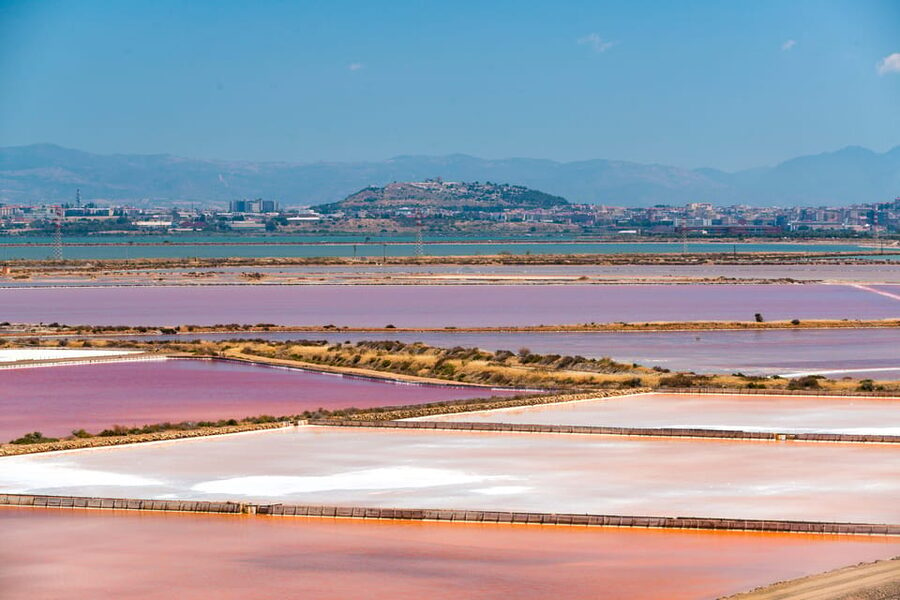
- Flamingos and the color of the salt pans
- How the experience handles language
- Is $14 a good value?
- Who should book the Conti Vecchi Saltworks?
- Should you book it?
- FAQ
- Where is the Conti Vecchi Saltworks?
- How long does the experience last?
- What is included in the price?
- Is the tour available in English?
- Can I see flamingos?
- Is the experience wheelchair accessible?
- Can I cancel or pay later?
Key points to know before you go
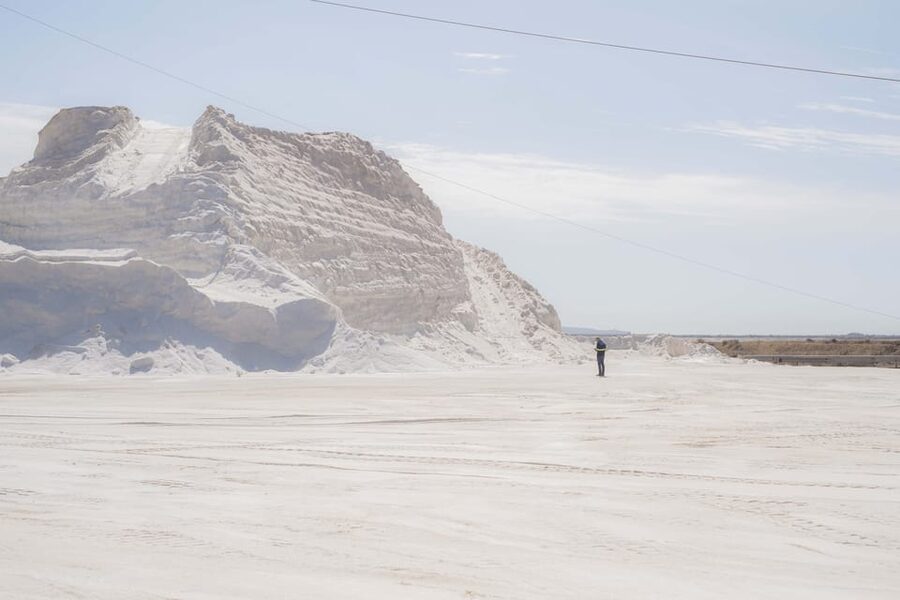
- The one-hour train ride reaches the Santa Gilla Basin, where salt pans, white salt mountains, wetland birds, and flamingos come together.
- The museum explains salt as an economic force, not just a kitchen ingredient, with links to engineer Luigi Conti Vecchi and Cagliari’s growth.
- Two films add useful background, including an English-subtitled documentary that helps English speakers follow the story.
- The saltworks remain operational, so you see an active industrial site alongside restored buildings and historic objects.
- The experience costs $14 and lasts two hours, making it one of the easier low-cost additions to a Cagliari itinerary.
- Italian is the tour language, while the train and the first floor of the old building are wheelchair accessible.
Why Cagliari’s saltworks are worth your time
Cagliari is best known for Roman remains, old lanes, sea views, and Sardinian food. The Conti Vecchi Saltworks shows another side of the city: its working economy and the people who built their lives around salt.
Salt was once valuable enough to earn the nickname white gold. At Santa Gilla, seawater moved through a system of pans, gradually losing moisture until crystals formed. The process required planning, engineering, labor, and patience. A visit here helps you see how a flat, apparently empty area could support an entire industry.
The site is in Assemini and Macchiareddu, an industrial area outside central Cagliari. You park for free in the saltworks area, then walk to the bookshop at the main entrance. This is not a polished city-center attraction. The setting feels practical and workmanlike, which is part of its appeal.
I would allow the full two hours. The timetable combines the museum, old buildings, films, and roughly one hour on the train. If you rush through the indoor section, you lose the story that gives the outdoor views their meaning.
A few more Cagliari bookings to compare
- Bernina Red Train, Swiss Alps & St Moritz From Milan
★ 5.0 · 2,954 reviews - Swiss Alps Bernina Red Train and St.Moritz Tour from Milan
★ 4.5 · 2,369 reviews - Sorrento: Skip-the-Line Pompeii Express Tour by Train
★ 4.8 · 2,038 reviews
Starting with Luigi Conti Vecchi and the old saltworks
The visit begins at the operating salt plant and museum. Your guide introduces the history of the site and the part played by Luigi Conti Vecchi, the engineer associated with the development of the saltworks and the wider economic progress of the area.
This background matters because the salt pans are not simply a natural curiosity. They are the result of human design working with sun, seawater, wind, and shallow basins. You begin to understand why roads, workshops, laboratories, storage areas, and housing were needed around the production process.
The old buildings hold the human side of the story. You’ll see documents and tools connected to the salt workers, along with a vintage workshop and a restored chemical laboratory. These objects are plain, useful things. That makes them effective. A tool worn by repeated work can say more about daily life than a long wall of dates.
The museum also uses two films. One gives broader context about Sardinia and the saltworks, while an English-subtitled documentary has been especially helpful for visitors who do not speak Italian. Watch the films rather than treating them as filler. They explain the operation and history before you head outside.
The indoor tour has received particularly warm praise for its presentation. Elena, one of the guides, is described as enthusiastic and clear, and the staff are welcoming. The old building is wheelchair accessible on the first floor, though the available information does not confirm access to every part of the site.
Macchiareddu, the village built around salt
The saltworks were not just a place where people reported for a shift. Macchiareddu developed as a salt-mining village, linking work, housing, and local life.
As you learn about the village, think about the practical demands of salt production. Workers needed access to the pans, equipment, maintenance areas, and processing facilities. The salt business helped bring income and development to the region, and the site preserves traces of that working community.
This is one of the best parts of the experience for anyone interested in social history. You are not only looking at a machine or a pile of salt. You are seeing how an industry affected employment, settlement, and the fortunes of Cagliari.
The indoor section is also where language matters most. The tour is in Italian, and some English speakers have found that the Italian presentation contains more detail than the English commentary available during the train portion. If you understand some Italian, you’ll get more from the live explanations. If not, give yourself time with the films and displays.
Riding the train through the Santa Gilla Basin
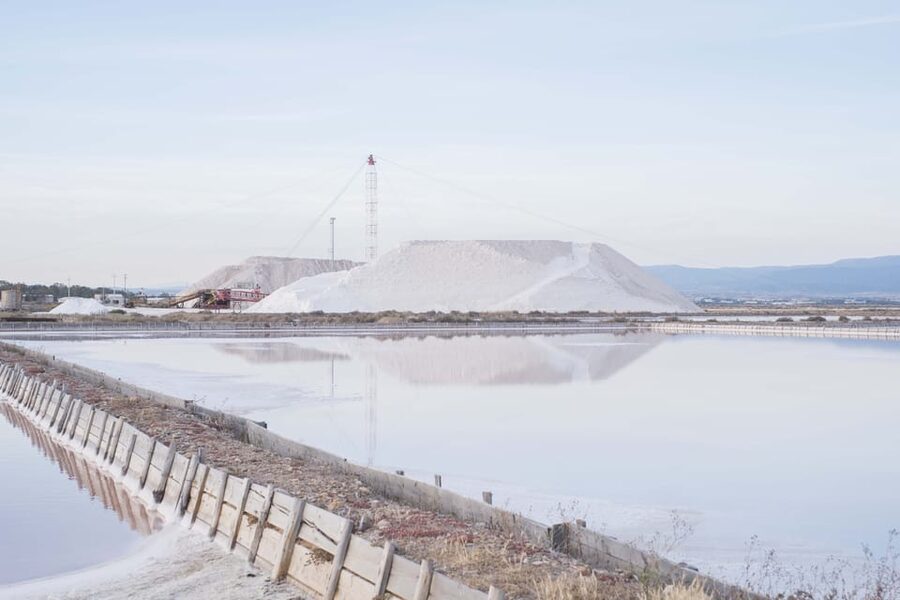
The small train is the main event for many people. It takes about an hour to travel through the salt flats and the natural area of the Santa Gilla Basin, one of Sardinia’s most important wetlands.
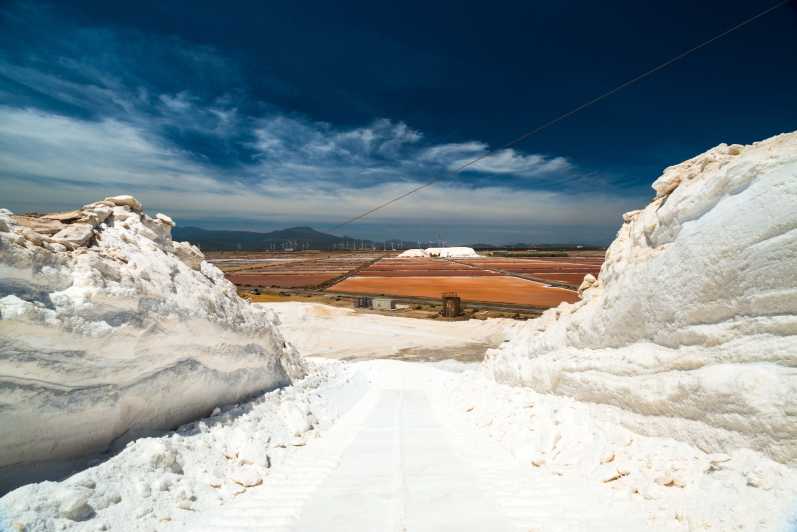
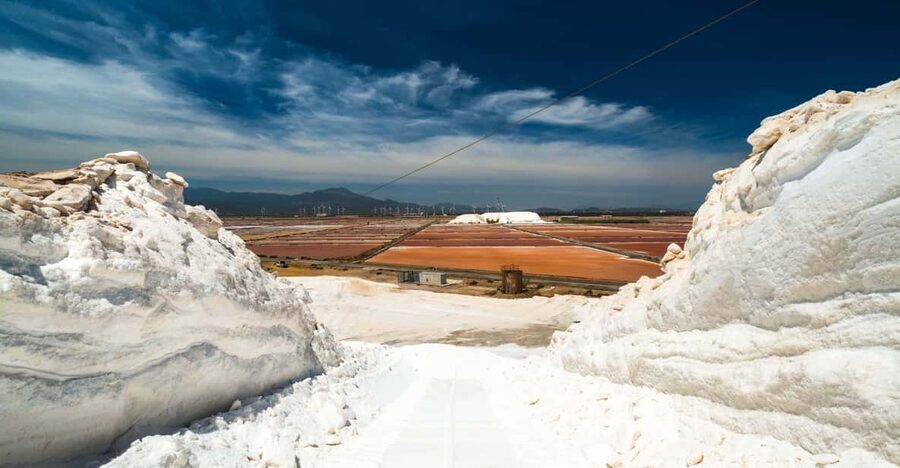
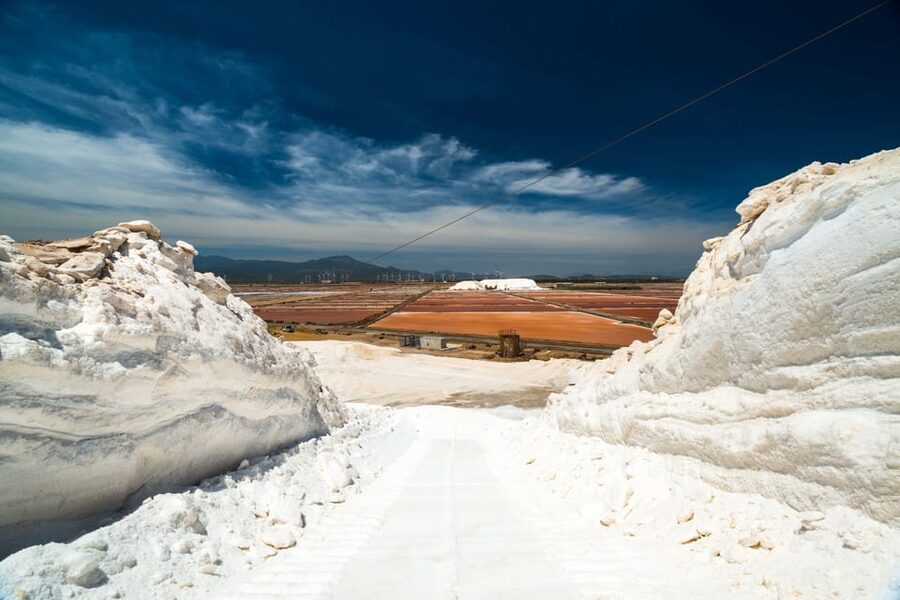
The ride lets you cover a large area without walking across exposed salt pans. You pass different stages of the salt process, look across shallow water, and see the industrial works from inside the site. The tall heaps of salt are the visual payoff. Their stark white color against the sky and the darker water makes the setting feel almost unreal.
The train is not a thrill ride. Its value lies in access and scale. From the carriage, you can grasp how broad the saltworks are and how the production zones fit together. You also avoid turning a short visit into a long, hot walk across open ground.
The train is wheelchair accessible. Still, choose your seat with care if you want to hear the guide. The second carriage can be noisy because of the shaking and movement, and the speaker may be difficult to understand. The train commentary also moves on while the scenery passes, so you might miss a point if you are watching birds or taking photos.
One useful improvement would be a chance to get off the train at some point and experience the salt pans on foot. At present, the ride gives you close views but limited time on the ground. That is a minor drawback, especially for photographers and anyone who wants to examine the salt crystals, water, or industrial equipment more closely.
Still Cagliari, but a slower afternoon:
- Cagliari: Underground Cagliari Walking Tour
★ 4.7 · 2,329 reviews - Cagliari: Devil’s Saddle Boat Tour with Spritz and Chips
★ 4.9 · 1,193 reviews - Cagliari: Boat Tour with 4 Swim Stops, Snorkeling & Prosecco
★ 4.9 · 865 reviews - Cagliari: Walking Tour of the Old City
★ 4.8 · 560 reviews
Flamingos and the color of the salt pans
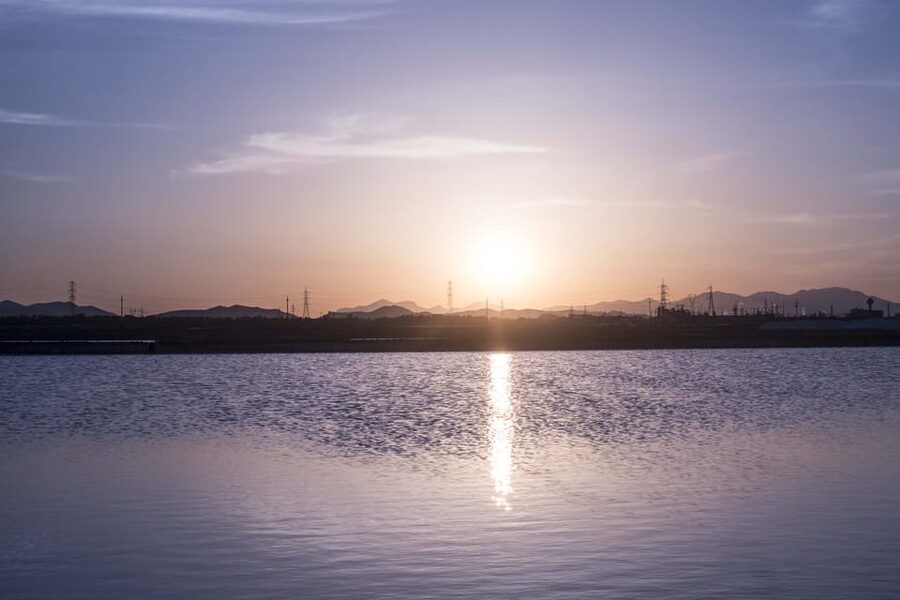
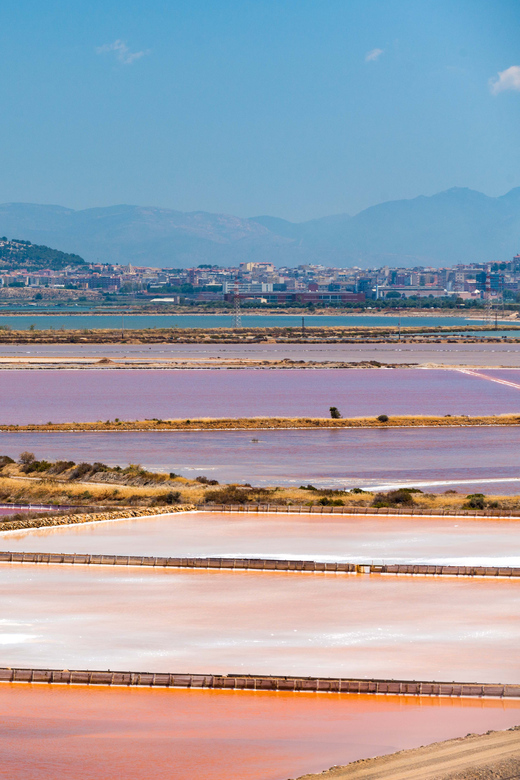
The Santa Gilla Basin is the natural highlight. Pink flamingos may appear beside the salt pans, often against the white heaps and pale water. Seeing them in their own habitat is far more satisfying than viewing them in a formal bird park.
Bring patience. The birds are part of a wetland, not a scheduled performance. You might see a large group, a few birds at a distance, or other species in the area. The train gives you a chance to scan the water and shorelines, but the time available for bird watching is fixed.
The salt ponds can show strong color changes. Depending on the stage of production and conditions, the water may look pink or reddish, creating one of the most memorable views on the trip. The contrast between flamingos, colored water, and white salt is the kind of scene that makes you glad you brought a camera.
Weather can affect the outdoor portion. One afternoon, a thunderstorm forced the train to return early, and the guide had to secure the plastic windows so everyone stayed dry. No attraction can control a Sardinian storm, but the incident points to a practical truth: the bird and salt views are best enjoyed with flexible expectations.
If birds are your main reason for going, avoid scheduling the saltworks as a rushed stop between other appointments. Some visitors would gladly spend more time watching the birds, and the train does not provide unlimited viewing time.
How the experience handles language
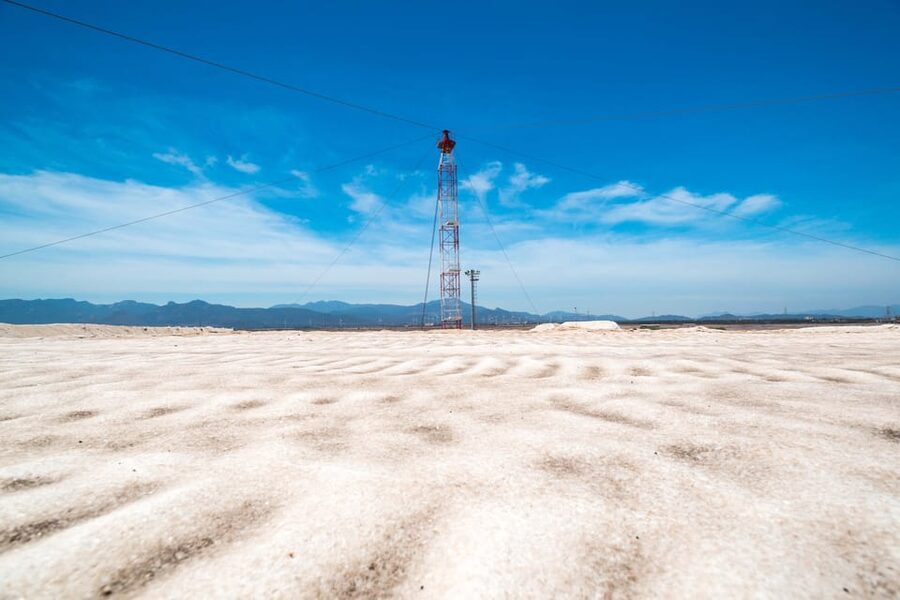
The listed live-tour language is Italian. This is the single most important point for English speakers to understand before booking.
You can still enjoy the visit without Italian. The objects are easy to appreciate, the films provide useful context, and the setting tells much of its own story. An English-subtitled documentary can explain the history of the island and the saltworks before the train departs.
But you should not expect every spoken detail to be repeated fully in English. The building tour may be stronger for English speakers than the train commentary, while the train announcements can be brief or hard to hear. A noisy second carriage makes that problem worse.
My advice is simple: watch both films carefully, stay near the guide when possible, and use the train ride mainly for the views if you do not speak Italian. If the experience is advertised to you with English support, confirm exactly what that means before paying. The saltworks remain worth seeing, but language affects how much history you take away.
Is $14 a good value?
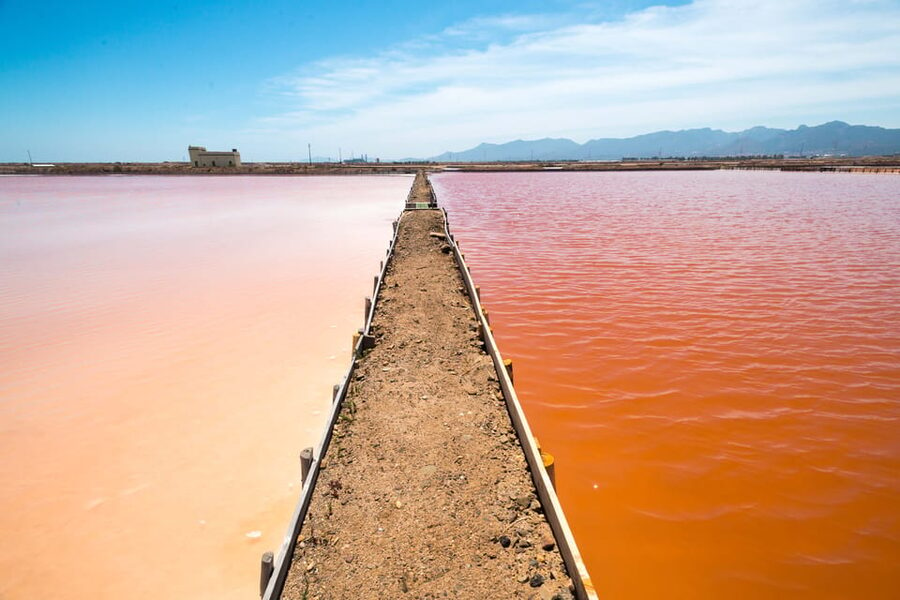
At $14 per person, this is an easy value call for most people who have two spare hours. The fee includes entry, the museum and old buildings, the films, a guide, and the one-hour train ride through the salt flats and wetland.
Many Cagliari sights charge more for a shorter visit, while this outing combines nature, industry, history, and transport. You are also visiting a working salt plant rather than a display built solely for tourism. That gives the experience a sense of purpose.
The price is especially attractive for families, curious adults, and anyone who has already seen Cagliari’s main historic center. It is less suited to someone expecting a full-day wildlife trip, a hands-on salt-making workshop, or extensive walking among the pans.
Hotel pickup and drop-off are not included. You need to reach the Assemini and Macchiareddu industrial area yourself. The parking area is free, but the attraction is outside central Cagliari, so add driving or taxi time to the two-hour visit.
The booking terms also make planning easier. You can reserve and pay later, and cancellation is free up to 24 hours before the start time. Check the available start times for your date, since the whole experience is tied to the operating schedule.
Who should book the Conti Vecchi Saltworks?
I would choose this for you if you like places that explain how a region actually worked. The experience suits history fans, families with older children, photographers, bird watchers, and visitors who want something beyond churches and archaeological ruins.
It also works well as a shorter half-day outing. Two hours is long enough to learn the story and see the basin without taking over your day in Cagliari.
You may want to skip it if you need a fully English-speaking tour, dislike sitting on a moving vehicle, or want guaranteed close-up wildlife viewing. The train is practical, but the speaker can be hard to hear, and flamingos cannot be promised at a particular distance.
Wheelchair users should find the train accessible, and the first floor of the old building is accessible as well. Since the information does not cover every surface or room, contact the site directly if you need access details beyond those areas.
Should you book it?
Book the Conti Vecchi Saltworks if you want a low-cost, compact outing with real local meaning. The best combination is the museum’s story, the train’s broad view of the salt operation, and the chance to see flamingos in the Santa Gilla Basin.
Go with realistic expectations about language, weather, and bird viewing. You may not get out among the salt pans, and the Italian commentary may leave English speakers with less detail than they want. Even so, the white salt mountains, pink water, historic tools, Macchiareddu story, and $14 price make this one of Cagliari’s more distinctive short excursions.
FAQ
Where is the Conti Vecchi Saltworks?
The saltworks are in the Assemini and Macchiareddu industrial area of Cagliari. You enter the industrial area, park for free, and walk to the bookshop at the main entrance.
How long does the experience last?
The full experience lasts about two hours. The train ride inside the salt flats and natural area takes approximately one hour.
What is included in the price?
The $14 admission includes a guide, entry to the Conti Vecchi Salt Flats, the old buildings, two films, and the one-hour train ride.
Is the tour available in English?
The live tour language is Italian. An English-subtitled documentary is available, but the spoken train commentary may provide less detail for English speakers and can be difficult to hear in the second carriage.
Can I see flamingos?
Flamingos live in the Santa Gilla Basin, and you may see them from the train. Wildlife sightings and viewing time are not guaranteed, and weather can shorten the outdoor ride.
Is the experience wheelchair accessible?
The train is wheelchair accessible. The old building is wheelchair accessible on the first floor.
Can I cancel or pay later?
You can reserve now and pay later. Cancellation is free up to 24 hours before the experience for a full refund.
Recently added around Cagliari
- Small-Group Food and Wine Tour from Cagliari★ 5.0 · 237 reviews
- Catamaran tour stops bathing and snorkeling toast with prosecco★ 5.0 · 214 reviews
- Cagliari Vintage Tour★ 5.0 · 185 reviews
- Guided Electric Bicycle Tour in Cagliari★ 5.0 · 320 reviews
- 4×4 Mountains And Beaches – Chia area★ 5.0 · 330 reviews
- Cagliari: Walking Tour of the Old City★ 4.8 · 560 reviews
- Cagliari: Old Town Guided E-Bike Tour★ 4.9 · 189 reviews
- Cagliari: Zodiac Boat Tour, 3-4 SwimStops, Wine & Snorkeling★ 4.9 · 500 reviews
Train Experiences, compared.
Bernina Red Train, Swiss Alps & St Moritz From Milan
Read our review →
Swiss Alps Bernina Red Train and St.Moritz Tour from Milan
Read our review →
Rome to Pompeii Guided Tour with Wine & Lunch by High Speed Train
Read our review →
Guided tour of Pompeii skip-the-line and round-trip train
Read our review →
Pompeii Tour with Wine and Lunch by High Speed Train
Read our review →Browse the lists this tour appears in