
Reviewed · CATANIA TOURS
Benedictine Monastery of Catania – English Guided Tour
Catania keeps its best surprises indoors. I like this 75-minute tour because it opens parts of the Benedictine Monastery that are easy to miss, including the cloisters, Roman remains, old kitchens, and a cellar built on lava. I also like the guides’ lively English, with Carmen, Giovanni, Nicola, and others praised for making complex history clear and entertaining.
The $11 price is excellent for access to areas that are not normally open and for a guided explanation of a huge, confusing building. The main consideration is time: 75 minutes gives you a strong introduction, but not the leisure to study every room or guarantee access to every feature, such as the viewing platform.
In This Review
- Five details that make this tour worth your time
- Entering through Piazza Dante
- Two thousand years beneath one roof
- The two cloisters and the monastic plan
- The Roman House under the university library
- The lava-built cellar and lower levels
- The Garden of the Novices
- Kitchens, dining rooms, and the evidence of wealth
- Vaccarini’s Baroque architecture and monumental staircase
- Thirty years of restoration and a modern architect’s solution
- Why a guide matters here
- What the 75-minute schedule feels like
- Who will get the most from this visit
- Is $11 good value?
- Booking details worth knowing
- Should you book the Benedictine Monastery tour?
- FAQ
- Where does the Benedictine Monastery tour begin?
- How long does the guided tour last?
- What language is the tour in?
- What parts of the monastery can I see?
- Is the tour wheelchair accessible?
- Can I cancel the booking?
- Can I reserve now and pay later?
Five details that make this tour worth your time
- A living monastery and university: The former monastic complex now forms part of the University of Catania, so old stonework and student life share the same halls.
- Roman remains below a modern library: A Roman House can be seen beneath a contemporary mezzanine used by university students.
- Lava under the cellar: The lower levels show how Catania’s volcanic ground shaped the building and its survival.
- Rare access inside the complex: The tour includes areas that are not normally available to independent visitors.
- Guides who bring the rooms to life: Carmen, Giovanni, and Nicola have been praised for clear English, humor, local detail, and patient answers.
- A good short stop: At 75 minutes, this fits neatly into a day of sightseeing without swallowing your whole schedule.
Entering through Piazza Dante
Your visit begins at the main gate on Piazza Dante. Once you pass through, look for the information point in the courtyard on the right. This is the meeting place, and baggage storage is available there, a useful touch if you are carrying shopping bags or traveling between stops.
The first impression is scale. San Nicolò l’Arena is one of Europe’s largest monasteries, and the size helps explain why a guide matters. On your own, you might admire a grand staircase or a handsome courtyard, then move on without understanding how the rooms fit together. With a guide, the complex becomes a connected story rather than a series of impressive but puzzling spaces.
The tour is in English. If English is not your first language, written translations in French or Spanish can be provided. That may help you catch architectural terms, names, and dates while still following the guide’s spoken explanation.
A few more Catania bookings to compare
- Catania: Mount Etna Morning or Sunset Day Trip with Tasting
★ 4.8 · 4,028 reviews - Mount Etna: Guided Volcano Summit Hiking Tour with Cable Car
★ 4.7 · 3,784 reviews - Catania: Sunset Jeep Tour of Mount Etna and Lava Flow Caves
★ 4.8 · 2,113 reviews
Two thousand years beneath one roof
The monastery’s story stretches from the Roman age to the present. That range is the real strength of the visit. You are not seeing a single period preserved in isolation. You are moving through layers of Catania, where ancient remains, late Baroque design, volcanic ground, and contemporary university use occupy the same complex.
The guides connect the monastery to the wider story of the city and Sicily. One especially memorable local idea concerns Mount Etna: a Catanian may miss the volcano when abroad, like a stern but loving mother. Details like this make the history feel local rather than textbook-bound.
I would book this tour if you want context, not simply photographs. Several guides have been praised for giving just the right amount of information, avoiding a long lecture while still explaining how the building changed over time. Their humor also helps. The subject includes architecture, archaeology, religion, and restoration, which could become heavy in less capable hands.
The two cloisters and the monastic plan
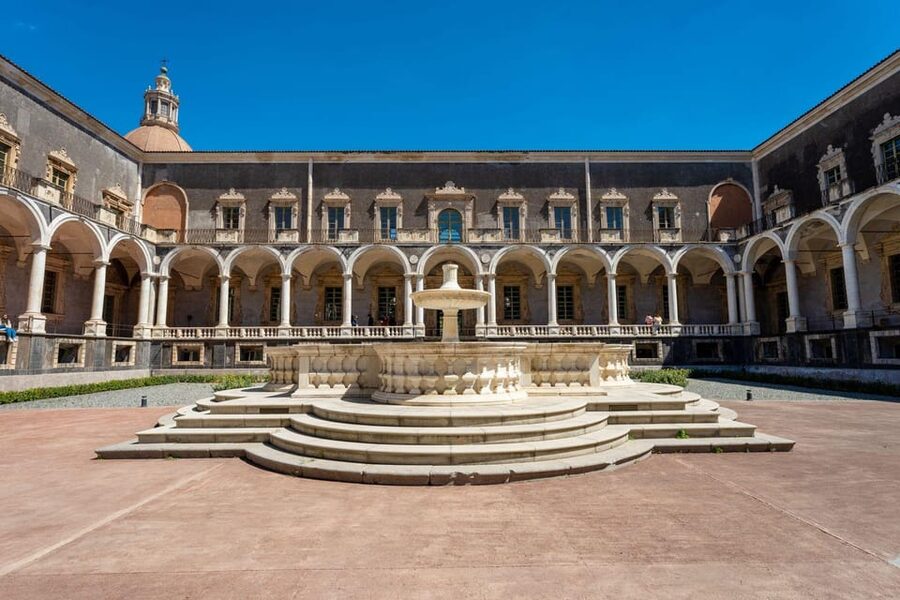
The two cloisters help you understand how the Benedictine community once organized daily life. These open spaces were not just decorative courtyards. They connected important parts of the monastery and gave the complex breathing room.
Your guide explains how the rooms around them served the monastic community. As you pass through corridors and larger formal spaces, you begin to see the difference between areas intended for prayer, study, cooking, storage, and communal life.
The cloisters are also a useful pause between the more crowded-looking parts of the building. The monastery can feel labyrinthine, and the guide’s route gives you a clear path through it. You get time to look around, and the pace is generally relaxed rather than rushed.
The Roman House under the university library
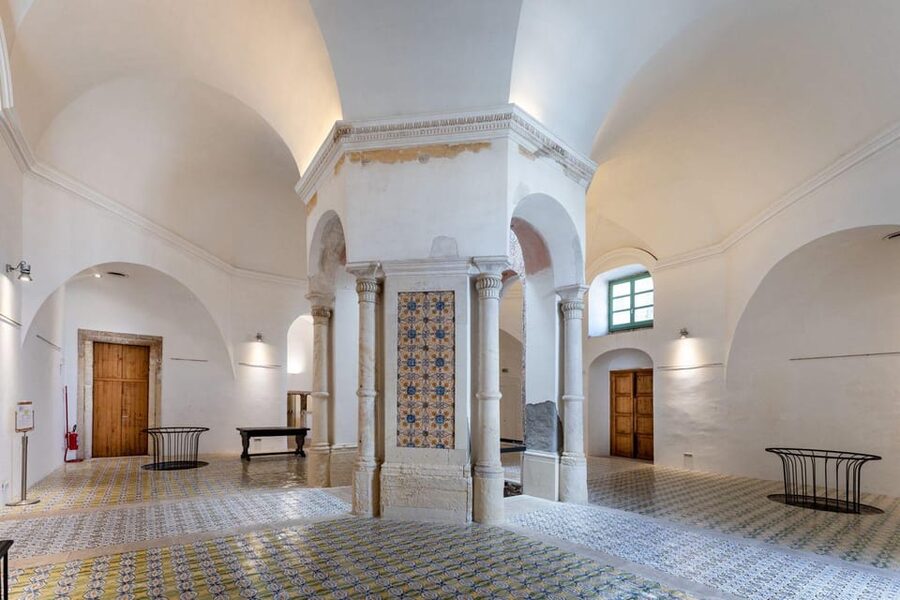
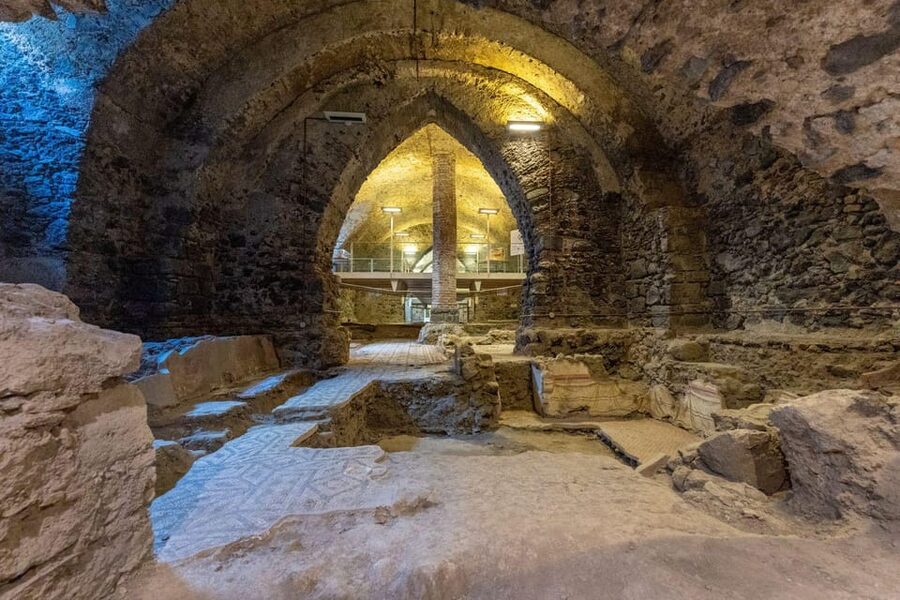
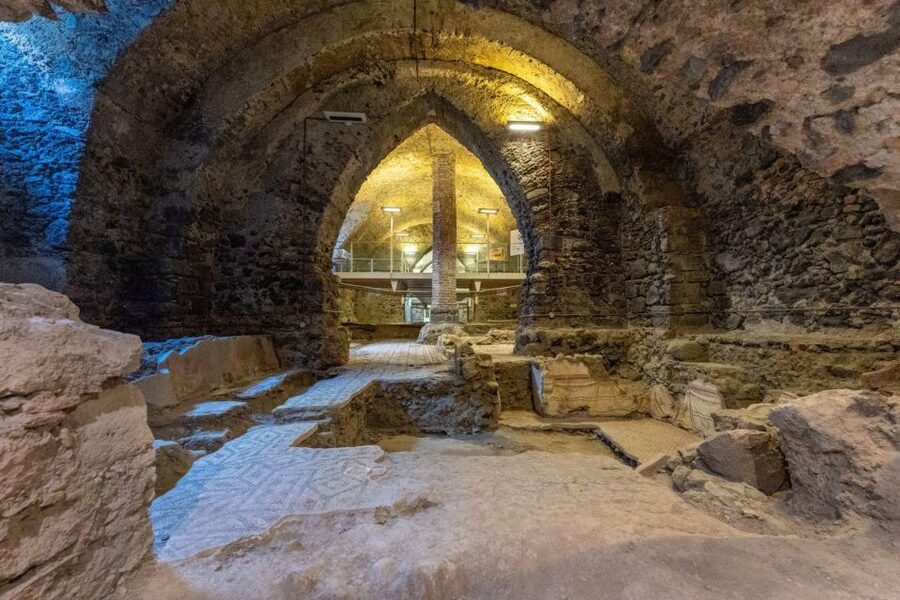
One of the most unusual stops is the Roman House. It sits directly beneath a modern mezzanine used by students as part of the Library of the Department of Humanities at the University of Catania.
That pairing tells you much about the monastery today. Ancient archaeology has not been placed in a separate box and cut off from daily life. Roman remains exist below a working academic space, with students studying above them.
I find this one of the most useful stops for understanding Catania itself. The city has been rebuilt, adapted, and layered repeatedly. Here, you can see that process in a single view. The modern university does not erase the older structure. It gives the building another purpose.
Still Catania, but a slower afternoon:
- Mount Etna: Trek to 3000m with cable car and jeep
★ 4.7 · 1,978 reviews - Sicily: Etna and Alcantara Gorges Full-Day Tour with Lunch
★ 4.8 · 1,766 reviews - Mount Etna: Roundtrip Cable Car and 4×4 Bus Ticket
★ 4.3 · 1,602 reviews - Etna Volcano: South Side Guided Summit Hike
★ 4.7 · 1,545 reviews
The lava-built cellar and lower levels
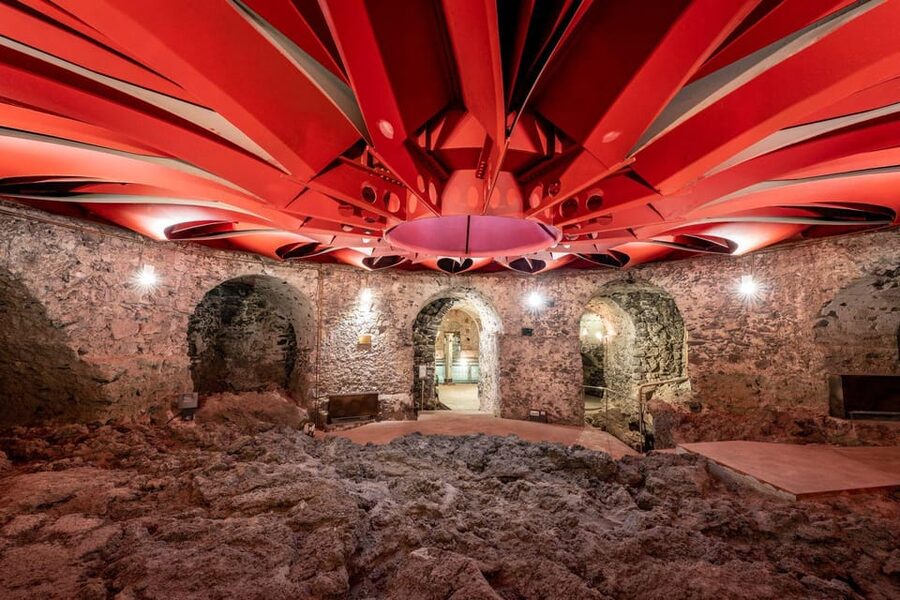
The cellar is built on lava, a detail that makes the lower part of the tour more than a collection of cool underground rooms. Catania’s volcanic setting is part of its architecture. The ground beneath the city is not an abstract backdrop. It directly affects what can be built, preserved, and reused.
In summer, the lower levels can also provide a welcome change from the heat above. One visitor specifically appreciated the cooler underground chambers during hot weather. Do not treat this as a substitute for planning around Sicily’s heat, but it is a pleasant feature of the route.
The 16th-century cellar is now used as part of the university library. Again, the monastery’s past and present sit side by side. A room once linked to monastic life now supports study and research. That practical reuse gives the building a sense of purpose rather than making it feel like a frozen monument.
The Garden of the Novices
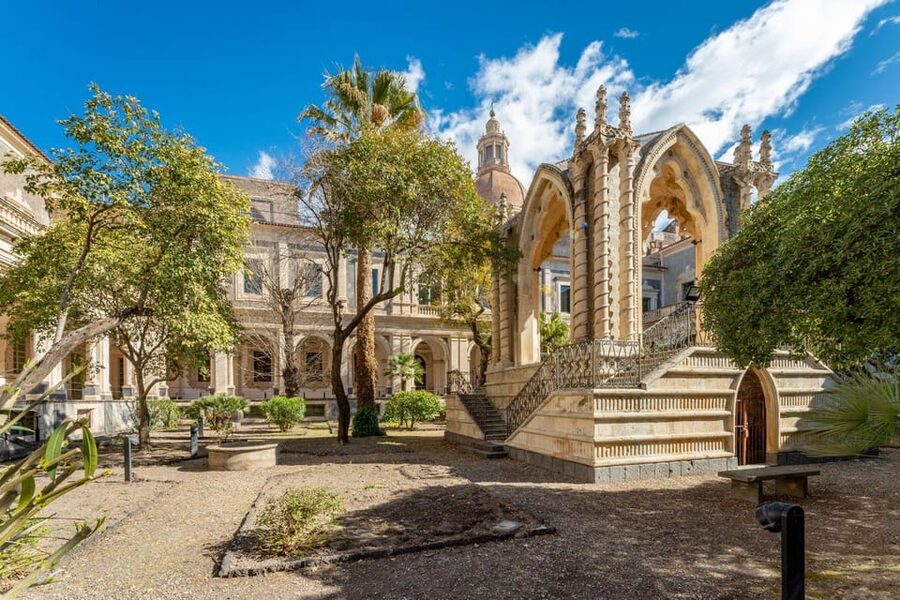
The Garden of the Novices offers another glimpse into the internal life of the monastery. Its name points to the younger members of the order who were learning the rules and routines of Benedictine life.
This stop works best when you listen for the human details. The tour is not only about walls and dates. It helps you picture how people moved through the complex, where they worked, where they ate, and how a large religious community functioned.
You will not spend the whole 75 minutes in gardens or open courtyards. The route moves between outdoor spaces, underground areas, grand interiors, and working university sections. That variety keeps the experience moving, especially for anyone who finds a conventional church tour too static.
Kitchens, dining rooms, and the evidence of wealth
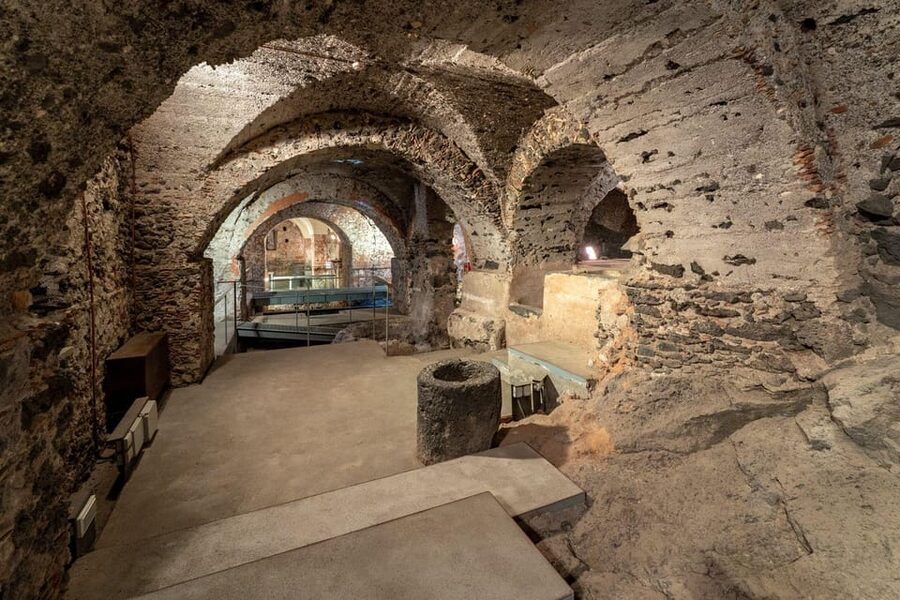
The 18th-century kitchens are among the tour’s most engaging stops. They provide a practical view of monastic life. Rather than focusing only on grand façades, the guide shows where food preparation took place and how the community supported itself.
The dining rooms add another piece to the picture. Together, the kitchens, dining areas, cellars, and service spaces show the scale of the Benedictine order. This was not a small, bare retreat. The architecture and facilities reflect the wealth and influence the order enjoyed.
That contrast is important. The monastery’s grand Baroque spaces can seem detached from ordinary life, but the kitchens and storage areas bring the building back to daily routines. You get a clearer sense of the staff, supplies, meals, and organization needed to keep such a place running.
Vaccarini’s Baroque architecture and monumental staircase
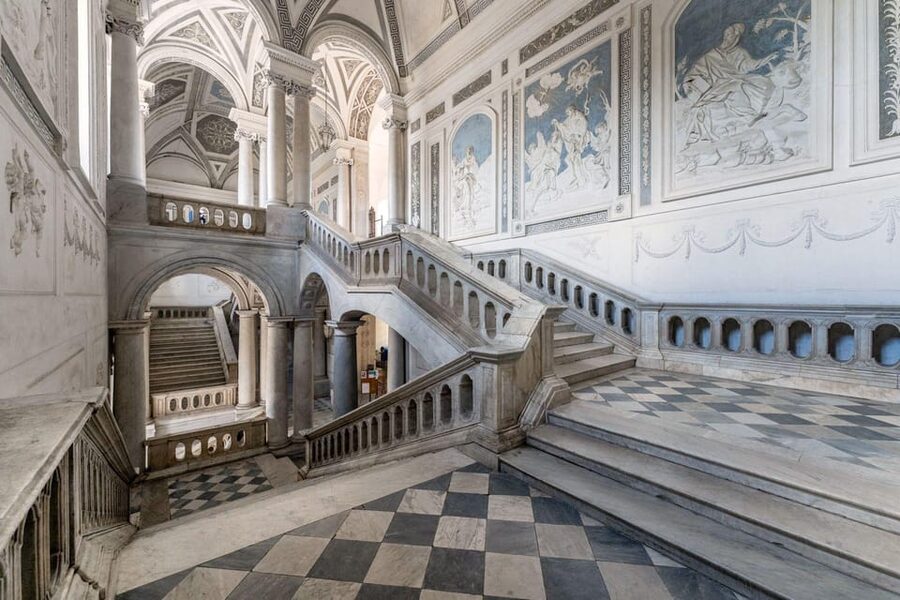
Late Baroque design gives the monastery its theatrical side. The work of architect Giovanni Battista Vaccarini appears in the grander architectural features, including the monumental staircase.
This is where you will want to slow down and look up. The scale is part of the message. The monastery was built to express status, order, and power, not merely to shelter a religious community. The staircase makes that point through proportion and ceremony.
Your guide can also place Vaccarini’s work within the story of Catania’s rebuilding and architectural development. You do not need to be an architecture specialist to enjoy this. The explanations are aimed at general visitors, and the strongest guides use stories and comparisons instead of burying you in technical language.
Thirty years of restoration and a modern architect’s solution
The monastery’s restoration lasted more than 30 years. That long effort explains why the building feels like a meeting point between old and new rather than a perfectly polished historic shell.
Architect Giancarlo De Carlo led the contemporary refurbishment project. His work made it possible for the complex to continue serving the university while preserving important older elements. The result is not a simple return to the monastery’s past. It is an adaptation that lets students use the building today.
I appreciate this part of the tour because it raises a practical question: what should happen to a giant historic building after its original purpose changes? San Nicolò l’Arena offers one answer. Keep the old fabric, add modern functions carefully, and allow the place to remain part of city life.
Why a guide matters here
You can see attractive courtyards and impressive architecture without a guide. You will miss much of the point.
The English guides are the strongest part of the experience. Carmen has been praised for clear explanations, humor, and confident answers. Giovanni is noted for making the tour lively, while Nicola has been praised for funny stories and an engaging presentation. The individual style may vary, but the consistent advantage is interpretation.
A good guide also reveals the less obvious spaces. The Roman House, lower chambers, kitchens, and university areas are much more meaningful when someone explains their purpose and relationship to the rest of the building.
The tour has received a 4.8 rating from 434 reviews, and the repeated praise centers on the guides’ English, pacing, humor, and ability to answer questions. That is useful evidence for an English-language tour. You are paying for more than entry. You are paying for a route through a building that can otherwise feel like a maze.
What the 75-minute schedule feels like
Seventy-five minutes is long enough to cover the major sections without turning the visit into an all-day commitment. You begin and finish at the monastery, so there is no transport between stops and no complicated route through Catania.
The pace is generally relaxed, with time to look at each room. Still, this is an introduction, not a private architectural study session. If you want to inspect every stone, read every sign, or linger over each courtyard, you may wish the tour were longer.
The viewing platform is not always included in every departure. One visitor noted being disappointed that it was unavailable on an earlier tour and suggested checking the timing if that feature matters to you. The supplied information does not promise platform access, so treat it as a possible extra rather than a guaranteed stop.
Who will get the most from this visit
I would recommend the tour to first-time visitors who want a quick but meaningful introduction to Catania. It is especially good if you enjoy architecture, archaeology, religious history, or buildings that have been given a new public role.
Families and mixed-age groups should also find the variety helpful. Underground rooms, Roman remains, large staircases, gardens, and stories about former residents give the visit more range than a standard art lecture.
It suits people with a short Catania schedule, too. You can fit the tour between other central sights, and the 75-minute length makes it easy to plan around meals or transport.
The tour is wheelchair accessible, which is important in a complex this old. Because the building includes different spaces and levels, it is sensible to confirm the current route when booking if you need particular access arrangements.
Is $11 good value?
Yes. At $11 per person, the tour is inexpensive for 75 minutes of guided access inside one of Europe’s largest monasteries. The value is strongest because the admission includes parts of the building that are not normally accessible, plus baggage storage at the meeting point.
You are also getting a lesson in Catania beyond the monastery itself. The guide links Roman remains, Baroque rebuilding, Etna’s influence, restoration, and the modern university. That wider context makes the modest price feel even better.
This is not the right choice if you only want a quiet, independent wander. The route and timing are fixed, and you will be part of a guided group. For most people, though, the guide is precisely what prevents the visit from becoming a quick look at beautiful but unexplained rooms.
Booking details worth knowing
The meeting point is easy to identify: pass through the main gate on Piazza Dante and find the information point in the courtyard on the right.
The tour is conducted in English, with written French or Spanish translations available if English is not your main language. You can cancel up to 24 hours before the start for a full refund, and the reserve-now, pay-later option keeps your schedule flexible.
At the time of booking, check the available starting times. The exact departure can matter if you hope to see the viewing platform or need to coordinate the monastery with other Catania plans.
Should you book the Benedictine Monastery tour?
I would book it. The $11 cost is low, the route covers Roman remains, cloisters, kitchens, gardens, cellars, library spaces, and Baroque architecture, and the English guides have a strong record for clear, lively presentation.
Book it especially if you might otherwise walk past the monastery without understanding what you are seeing. Skip it only if you prefer complete independence or have no interest in historical buildings being reused for modern purposes.
For a short visit to Catania, this is a smart use of 75 minutes. You get grand architecture, archaeology beneath a university, volcanic foundations, and a practical look at monastic life, all in one compact tour.
FAQ
Where does the Benedictine Monastery tour begin?
It begins at the Benedictine Monastery of San Nicolò l’Arena. After passing through the main gate on Piazza Dante, find the information point in the courtyard on the right.
How long does the guided tour last?
The tour lasts 75 minutes and returns to the Benedictine Monastery of San Nicolò l’Arena.
What language is the tour in?
The live tour is in English. Written translations in French or Spanish can be provided if English is not your main language.
What parts of the monastery can I see?
The route includes the two cloisters, the 16th-century cellar used by the university library, the Roman House, Garden of the Novices, 18th-century kitchens and cellars, dining rooms, Vaccarini’s work, and the monumental staircase.
Is the tour wheelchair accessible?
Yes, the activity is listed as wheelchair accessible.
Can I cancel the booking?
Yes. You can cancel up to 24 hours in advance for a full refund.
Can I reserve now and pay later?
Yes. The reserve-now, pay-later option lets you secure a place without paying at the time of booking.
Recently added around Catania
- Tour Etna & Wine Tasting★ 5.0 · 317 reviews
- The Godfather Movie Tour★ 5.0 · 275 reviews
- Etna, Wine and Alcantara Tour – From Taormina★ 5.0 · 464 reviews
- Syracuse, Ortigia and Noto walking tour from Catania★ 5.0 · 273 reviews
- Etna and Alcantara Gorges Excursion★ 4.5 · 256 reviews
- The Original Catania Street Food and Market Tour by Streaty★ 5.0 · 345 reviews
- Mt Etna and Wine tasting tour from Catania★ 5.0 · 282 reviews
- Etna Tour in 4×4★ 5.0 · 583 reviews
Catania Tours, compared.
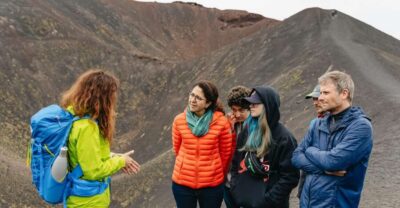
Mount Etna Morning or Sunset Day Trip with Tasting
Read our review →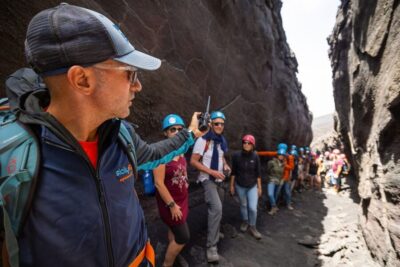
Mount Etna: Guided Volcano Summit Hiking Tour with Cable Car
Read our review →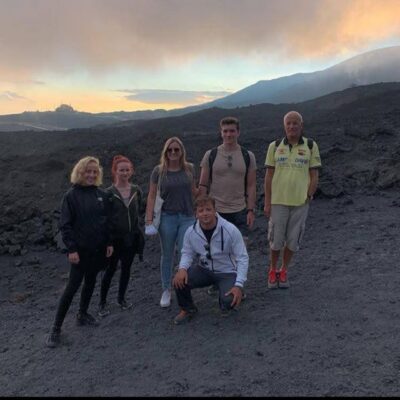
Sunset Jeep Tour of Mount Etna and Lava Flow Caves
Read our review →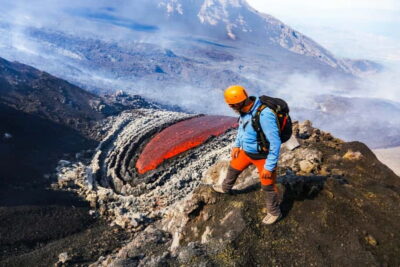
Mount Etna: Trek to 3000m with cable car and jeep
Read our review →
Etna and Alcantara Gorges Full-Day Tour with Lunch
Read our review →
Mount Etna: Roundtrip Cable Car and 4×4 Bus Ticket
Read our review →
Mount Etna Trekking Trip off the Tourist Path
Read our review →Browse the lists this tour appears in